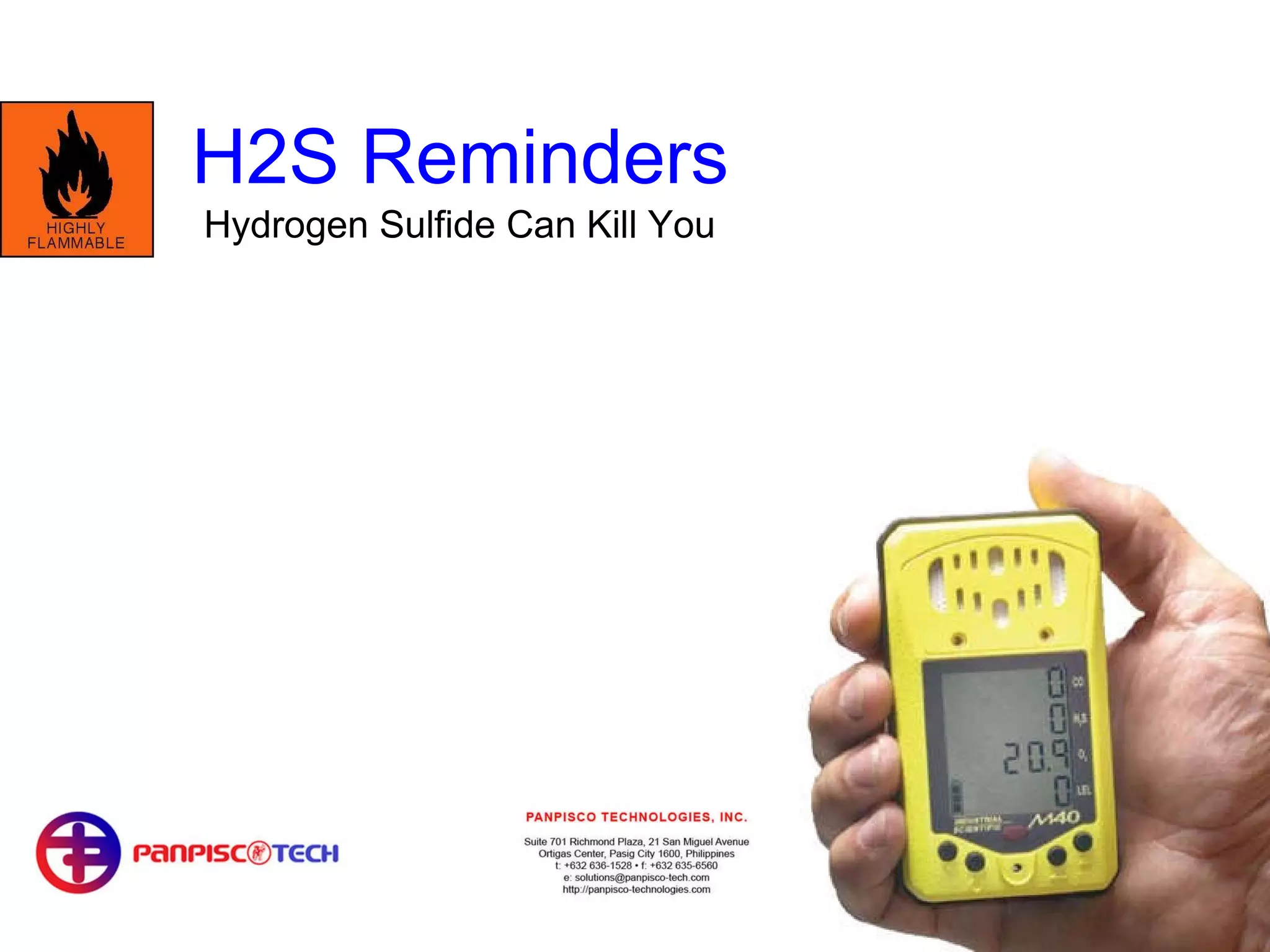
H2S Reminders Hydrogen Sulfide Can Kill You
Effects of Hydrogen Sulfide
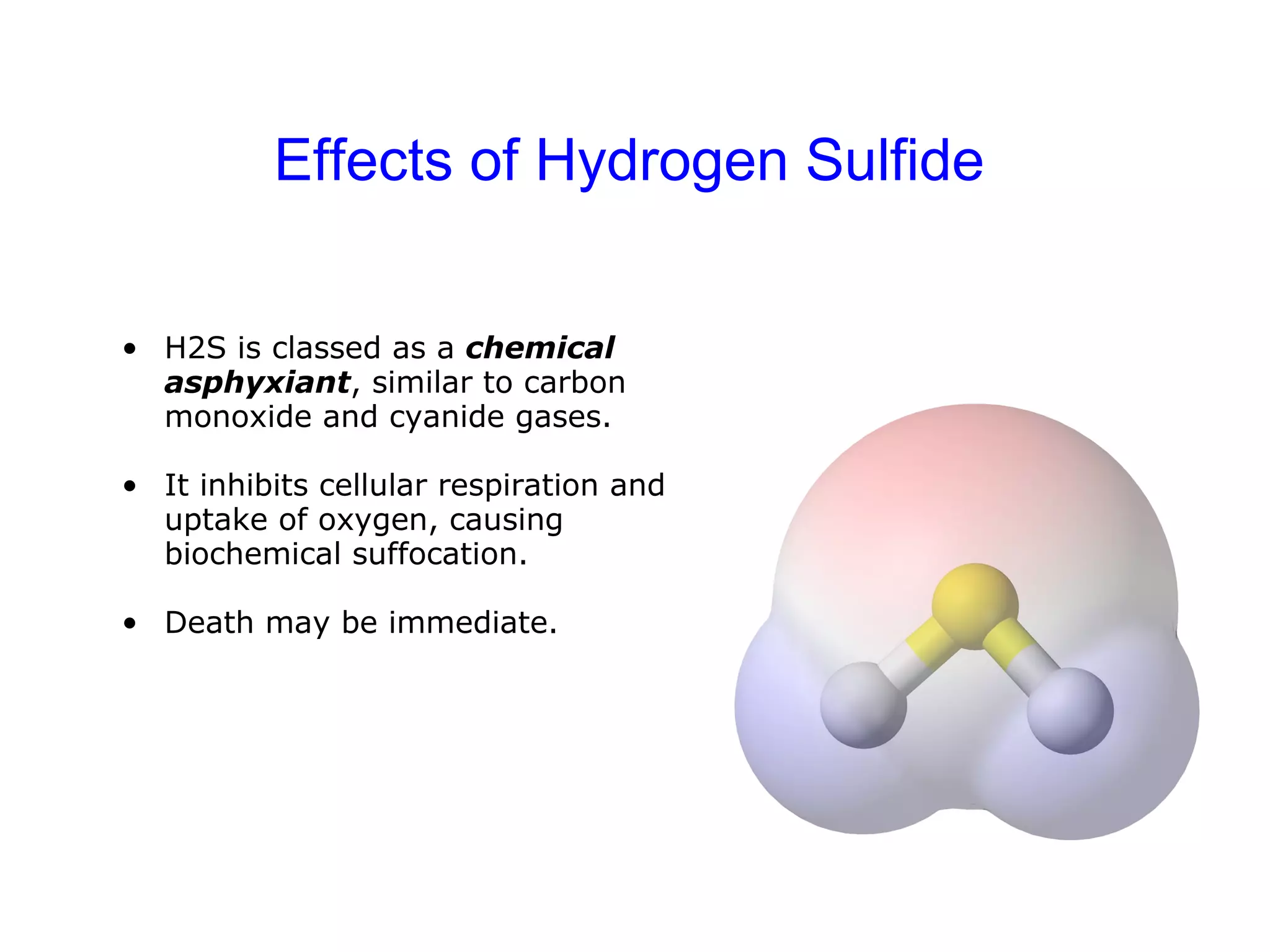
Effects of Hydrogen Sulfide H2S is classed as a  chemical asphyxiant , similar to carbon monoxide and cyanide gases.  It inhibits cellular respiration and uptake of oxygen, causing biochemical suffocation. Death may be immediate.
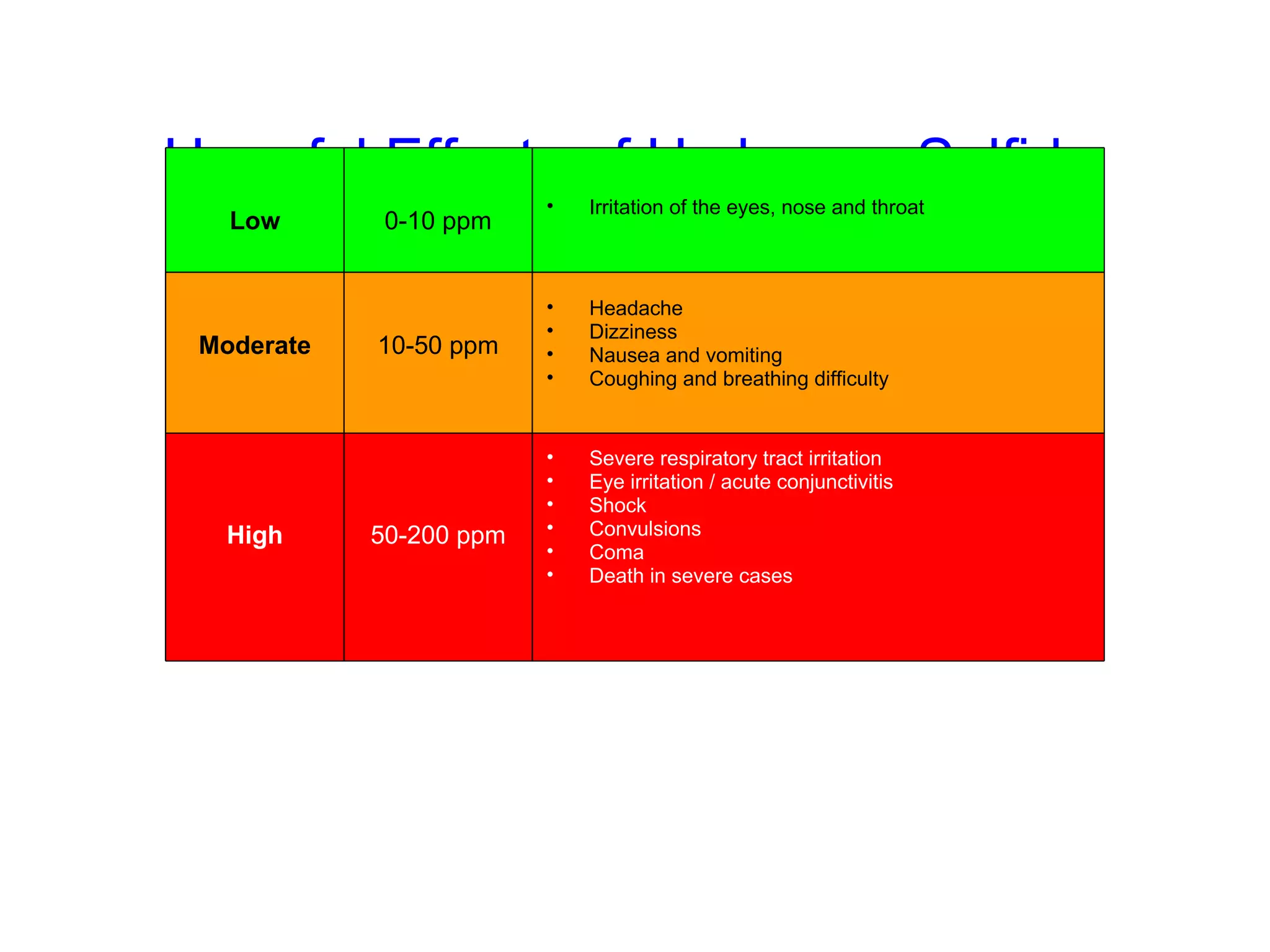
Harmful Effects of Hydrogen Sulfide Typical Exposure SYMPTOMS Low 0-10 ppm Irritation of the eyes, nose and throat Moderate 10-50 ppm Headache  Dizziness  Nausea and vomiting  Coughing and breathing difficulty High 50-200 ppm Severe respiratory tract irritation  Eye irritation / acute conjunctivitis  Shock  Convulsions  Coma  Death in severe cases
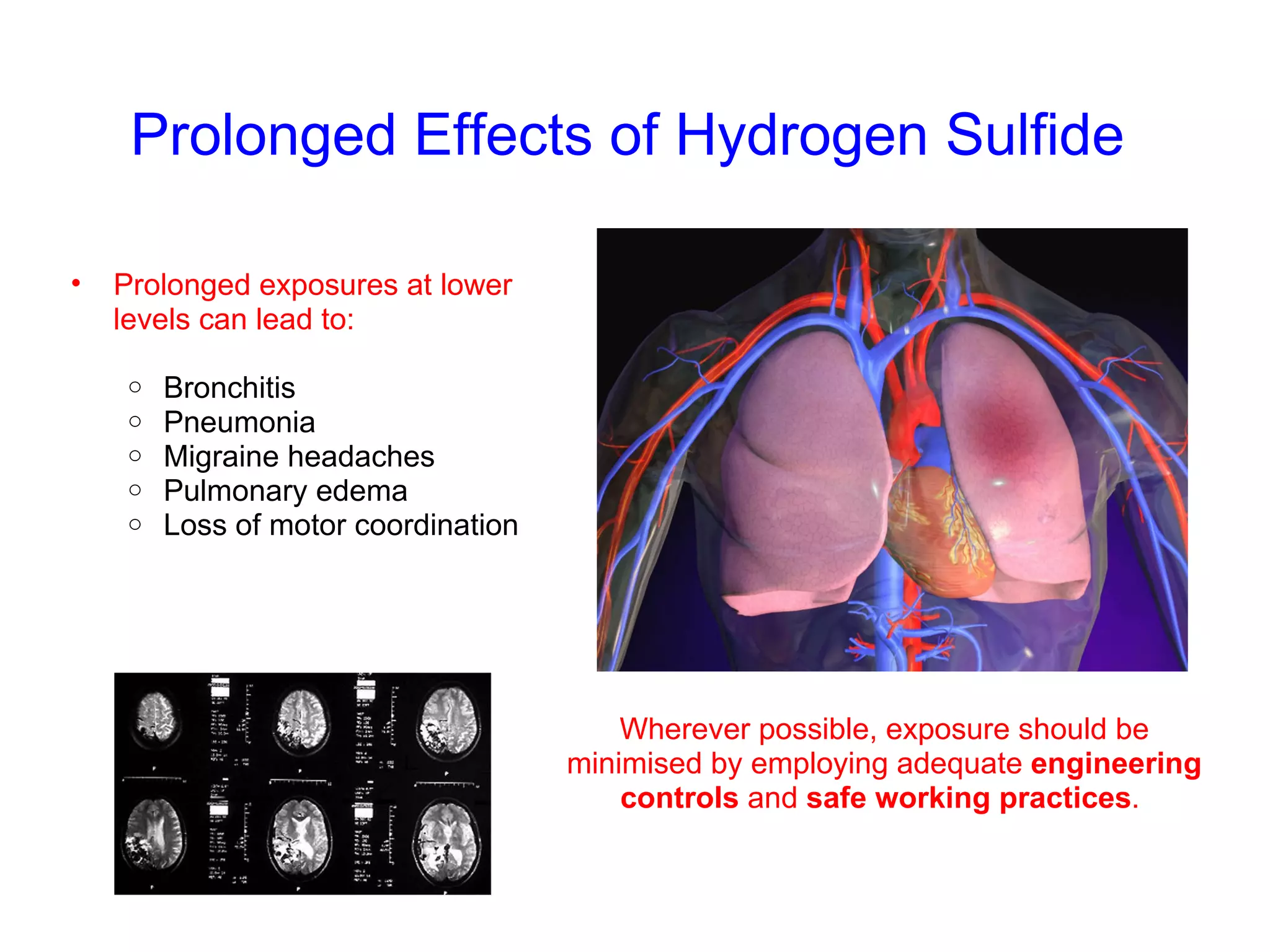
Prolonged Effects of Hydrogen Sulfide Prolonged exposures at lower levels can lead to: Bronchitis Pneumonia Migraine headaches Pulmonary edema Loss of motor coordination Wherever possible, exposure should be minimised by employing adequate  engineering controls  and  safe working practices . 
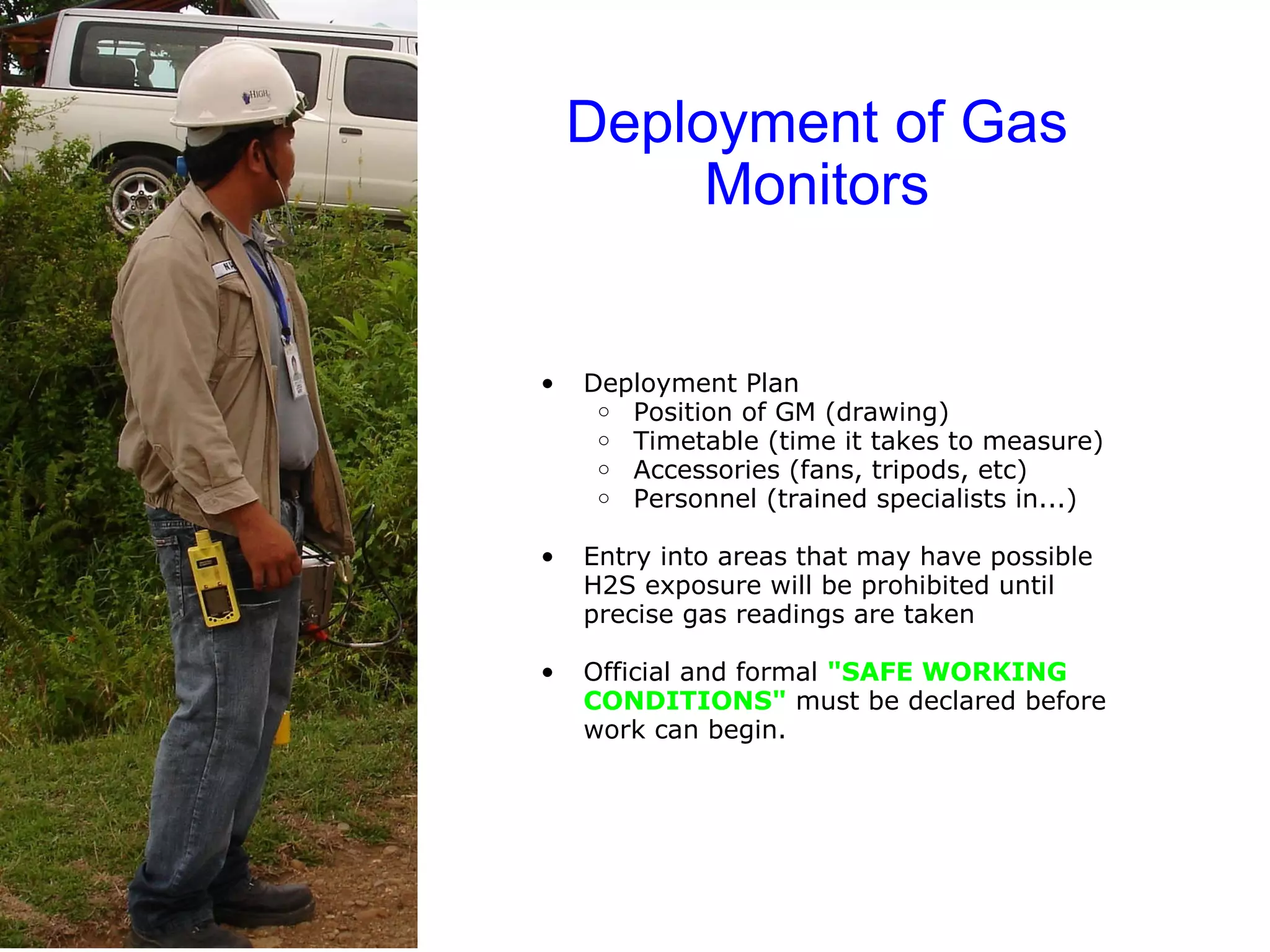
Deployment of Gas Monitors Deployment Plan Position of GM (drawing) Timetable (time it takes to measure) Accessories (fans, tripods, etc) Personnel (trained specialists in...) Entry into areas that may have possible H2S exposure will be prohibited until precise gas readings are taken Official and formal  "SAFE WORKING CONDITIONS"  must be declared before work can begin.
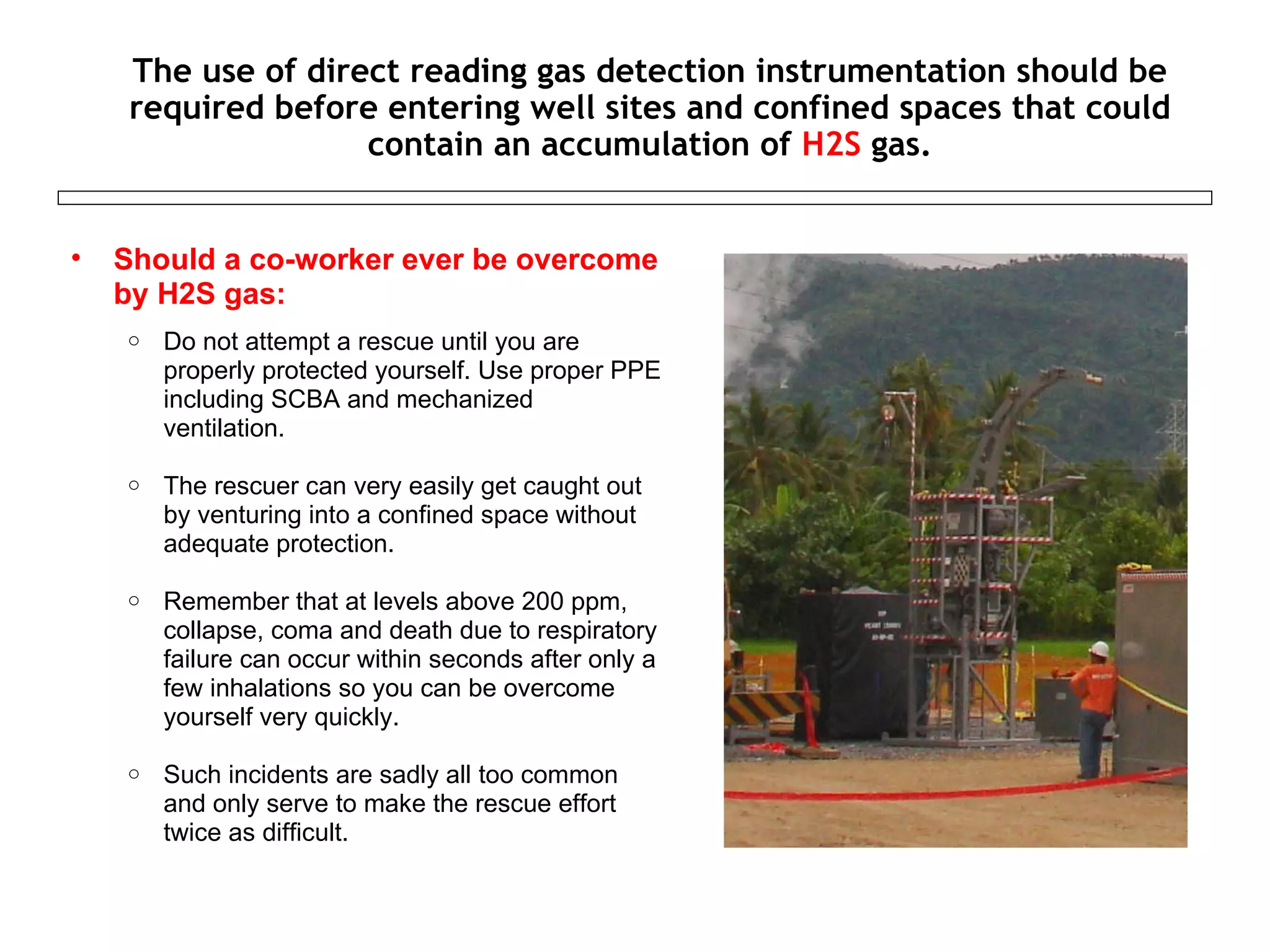
The use of direct reading gas detection instrumentation should be required before entering well sites and confined spaces that could contain an accumulation of  H2S  gas. Should a co-worker ever be overcome by H2S gas:  Do not attempt a rescue until you are properly protected yourself. Use proper PPE including SCBA and mechanized ventilation.  The rescuer can very easily get caught out by venturing into a confined space without adequate protection.  Remember that at levels above 200 ppm, collapse, coma and death due to respiratory failure can occur within seconds after only a few inhalations so you can be overcome yourself very quickly.  Such incidents are sadly all too common and only serve to make the rescue effort twice as difficult.
Procedures when H2S is detected When H2S is detected: Emergency Procedures Restrict area (Tape) Sound Alarm Check wind direction Deploy & Activate: SCBA Ventilation Rescue Harness Mechanical Lift Standby Person

H2S Safety Reminders

  • 1.
    H2S Reminders HydrogenSulfide Can Kill You
  • 2.
  • 3.
    Effects of HydrogenSulfide H2S is classed as a  chemical asphyxiant , similar to carbon monoxide and cyanide gases.  It inhibits cellular respiration and uptake of oxygen, causing biochemical suffocation. Death may be immediate.
  • 4.
    Harmful Effects ofHydrogen Sulfide Typical Exposure SYMPTOMS Low 0-10 ppm Irritation of the eyes, nose and throat Moderate 10-50 ppm Headache  Dizziness  Nausea and vomiting  Coughing and breathing difficulty High 50-200 ppm Severe respiratory tract irritation  Eye irritation / acute conjunctivitis  Shock  Convulsions  Coma  Death in severe cases
  • 5.
    Prolonged Effects ofHydrogen Sulfide Prolonged exposures at lower levels can lead to: Bronchitis Pneumonia Migraine headaches Pulmonary edema Loss of motor coordination Wherever possible, exposure should be minimised by employing adequate  engineering controls  and  safe working practices . 
  • 6.
    Deployment of GasMonitors Deployment Plan Position of GM (drawing) Timetable (time it takes to measure) Accessories (fans, tripods, etc) Personnel (trained specialists in...) Entry into areas that may have possible H2S exposure will be prohibited until precise gas readings are taken Official and formal "SAFE WORKING CONDITIONS" must be declared before work can begin.
  • 7.
    The use ofdirect reading gas detection instrumentation should be required before entering well sites and confined spaces that could contain an accumulation of H2S gas. Should a co-worker ever be overcome by H2S gas:  Do not attempt a rescue until you are properly protected yourself. Use proper PPE including SCBA and mechanized ventilation.  The rescuer can very easily get caught out by venturing into a confined space without adequate protection.  Remember that at levels above 200 ppm, collapse, coma and death due to respiratory failure can occur within seconds after only a few inhalations so you can be overcome yourself very quickly.  Such incidents are sadly all too common and only serve to make the rescue effort twice as difficult.
  • 8.
    Procedures when H2Sis detected When H2S is detected: Emergency Procedures Restrict area (Tape) Sound Alarm Check wind direction Deploy & Activate: SCBA Ventilation Rescue Harness Mechanical Lift Standby Person