Introduction
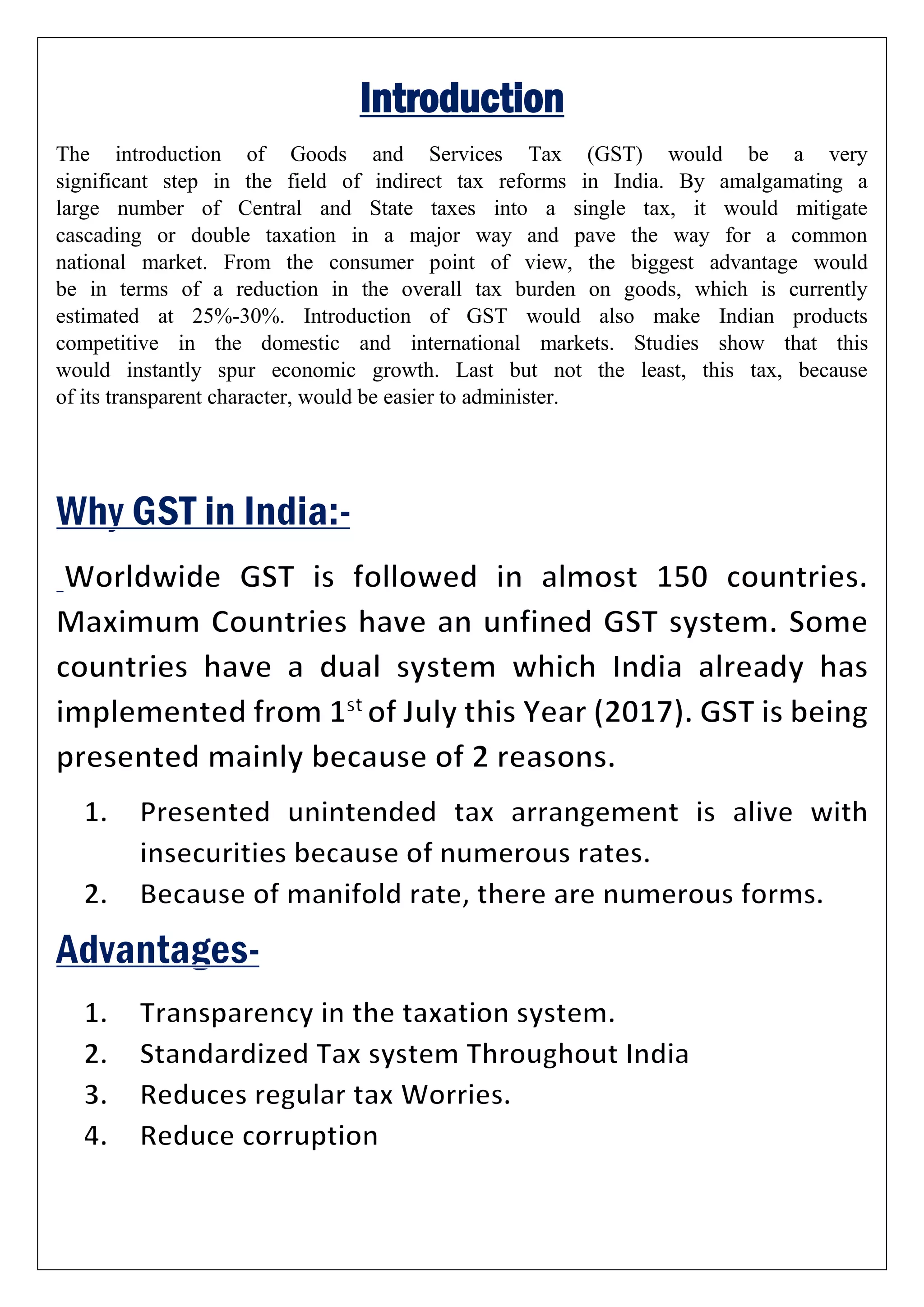
The introduction of Goods and Services Tax (GST) would be a very
significant step in the field of indirect tax reforms in India. By amalgamating a
large number of Central and State taxes into a single tax, it would mitigate
cascading or double taxation in a major way and pave the way for a common
national market. From the consumer point of view, the biggest advantage would
be in terms of a reduction in the overall tax burden on goods, which is currently
estimated at 25%-30%. Introduction of GST would also make Indian products
competitive in the domestic and international markets. Studies show that this
would instantly spur economic growth. Last but not the least, this tax, because
of its transparent character, would be easier to administer.
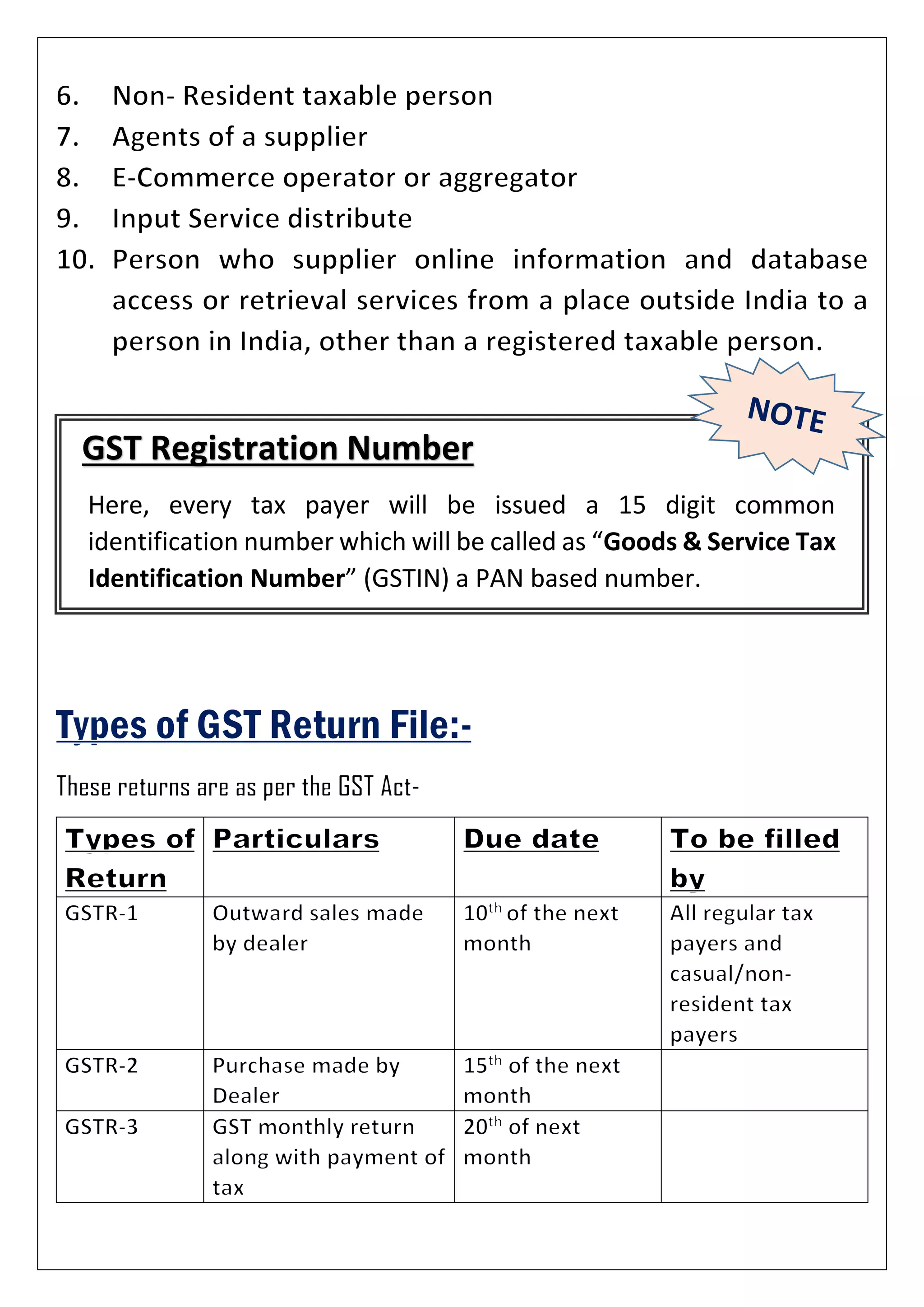
Here, every tax payer will be issued a 15 digit common
identification number which will be called as “Goods & Service Tax
Identification Number” (GSTIN) a PAN based number.
GST Registration Number
Hotels and lodges with
tariff below Rs 1,000,
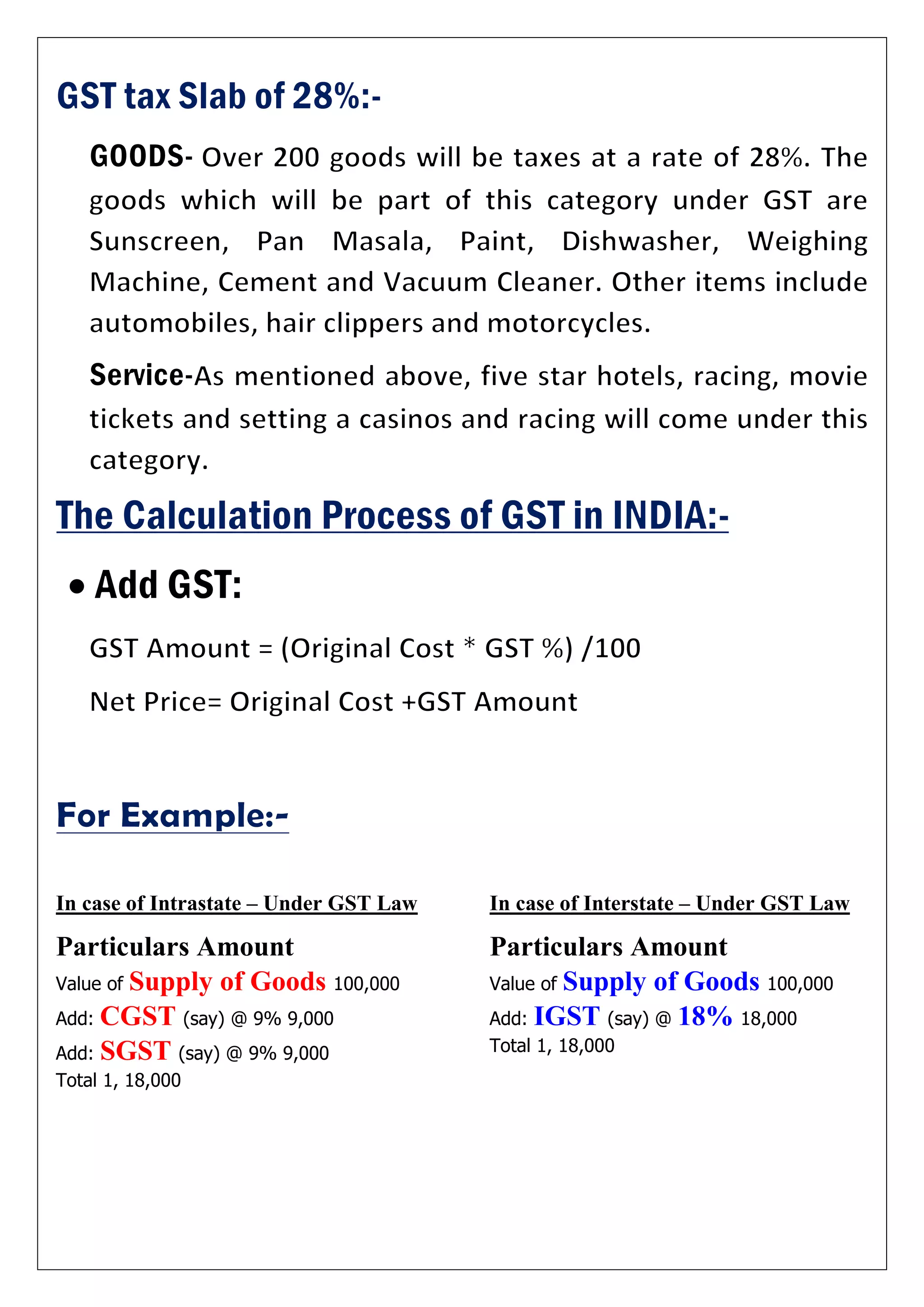
In case of Intrastate – Under GST Law
Particulars Amount
Value of Supply of Goods 100,000
Add: CGST (say) @ 9% 9,000
Add: SGST (say) @ 9% 9,000
Total 1, 18,000
In case of Interstate – Under GST Law
Particulars Amount
Value of Supply of Goods 100,000
Add: IGST (say) @ 18% 18,000
Total 1, 18,000
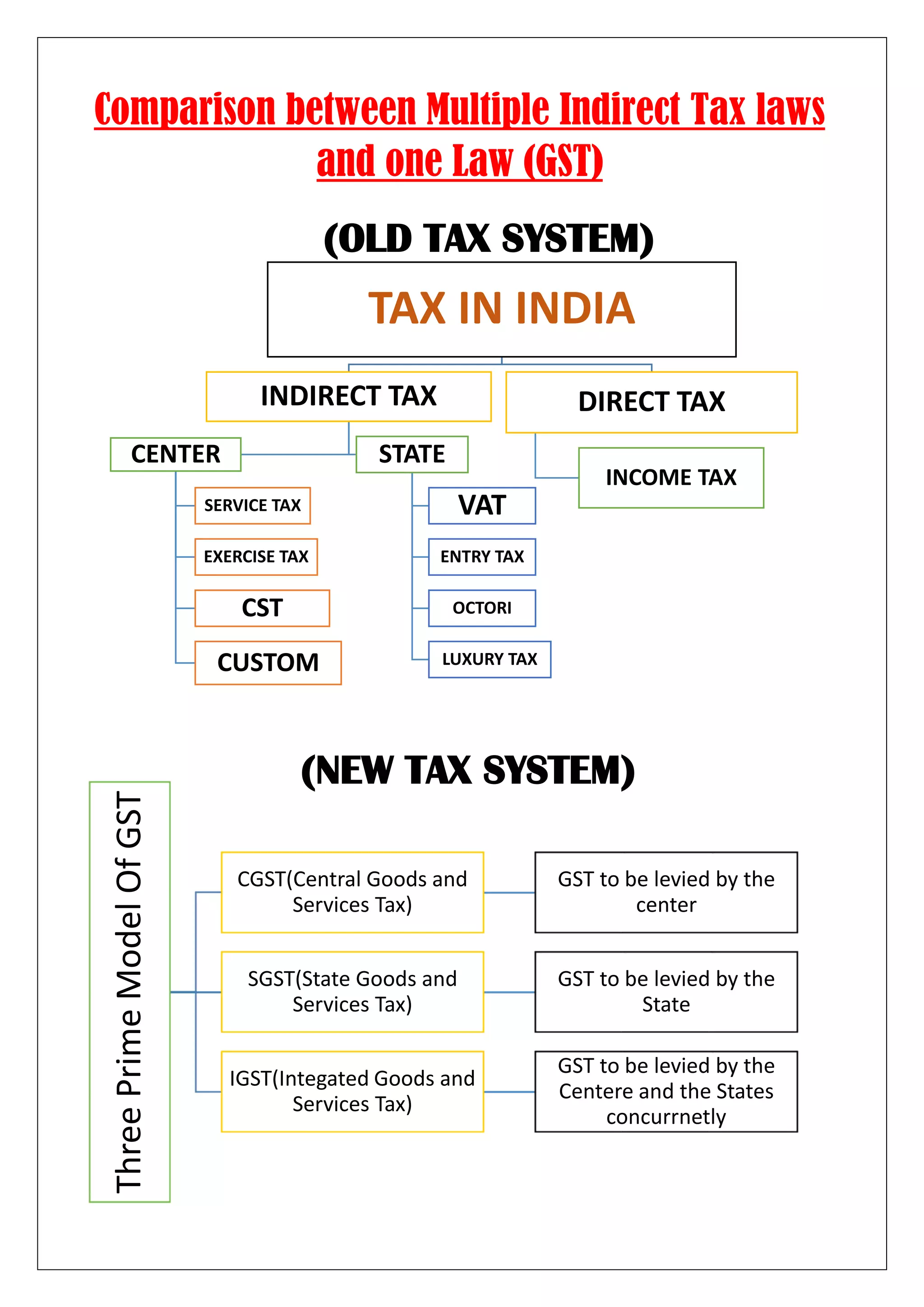
ThreePrimeModelOfGST
CGST(Central Goods and
Services Tax)
GST to be levied by the
center
SGST(State Goods and
Services Tax)
GST to be levied by the
State
IGST(Integated Goods and
Services Tax)
GST to be levied by the
Centere and the States
concurrnetly
TAX IN INDIA
INDIRECT TAX
CENTER
SERVICE TAX
EXERCISE TAX
CST
CUSTOM
STATE
VAT
ENTRY TAX
OCTORI
LUXURY TAX
DIRECT TAX
INCOME TAX
Comparison between Multiple Indirect Tax laws
and one Law (GST)
(OLD TAX SYSTEM)
(NEW TAX SYSTEM)
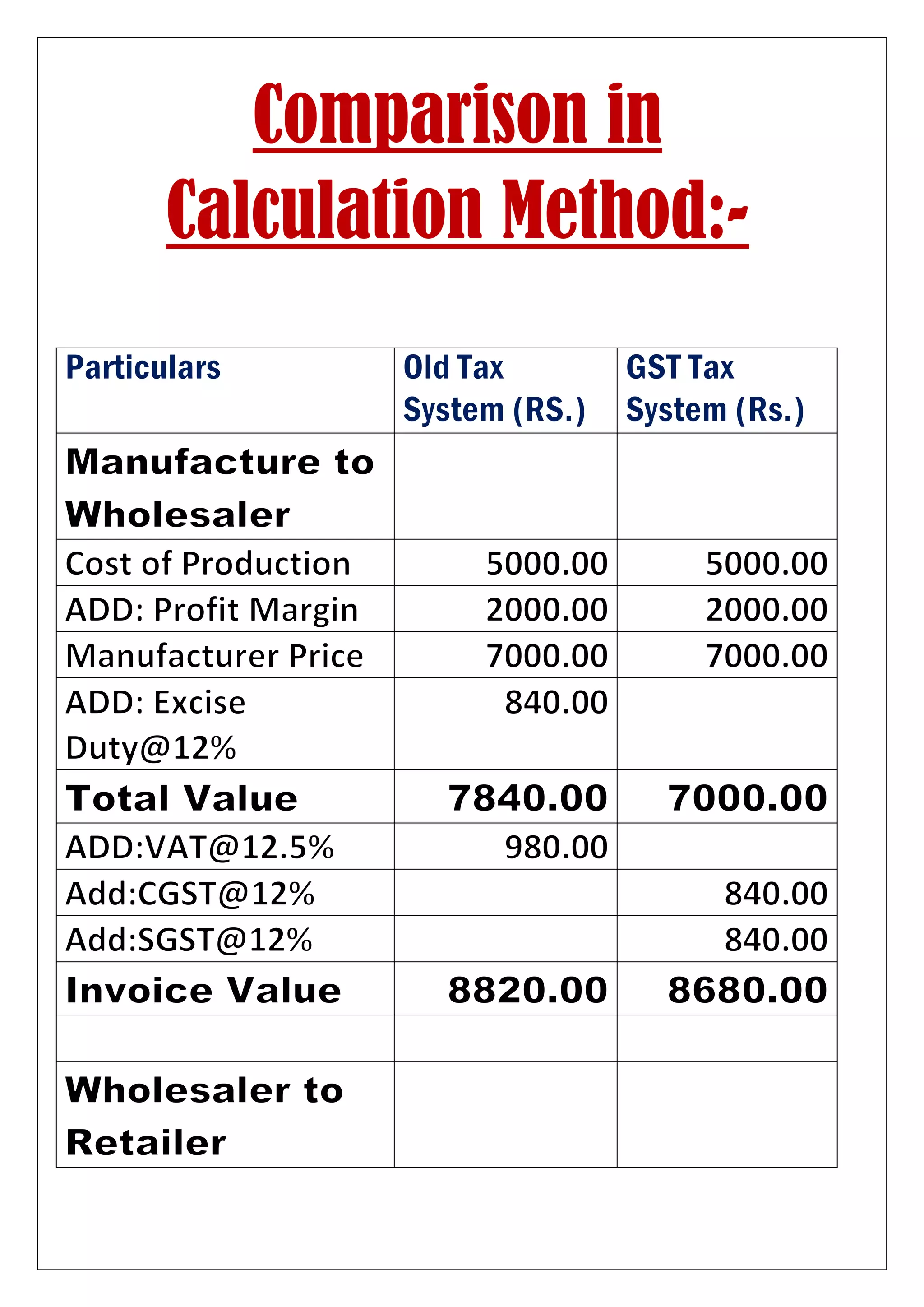
Comparison in
Calculation Method:-
Gst presentation by satyajit das

Gst presentation by satyajit das

  • 2.
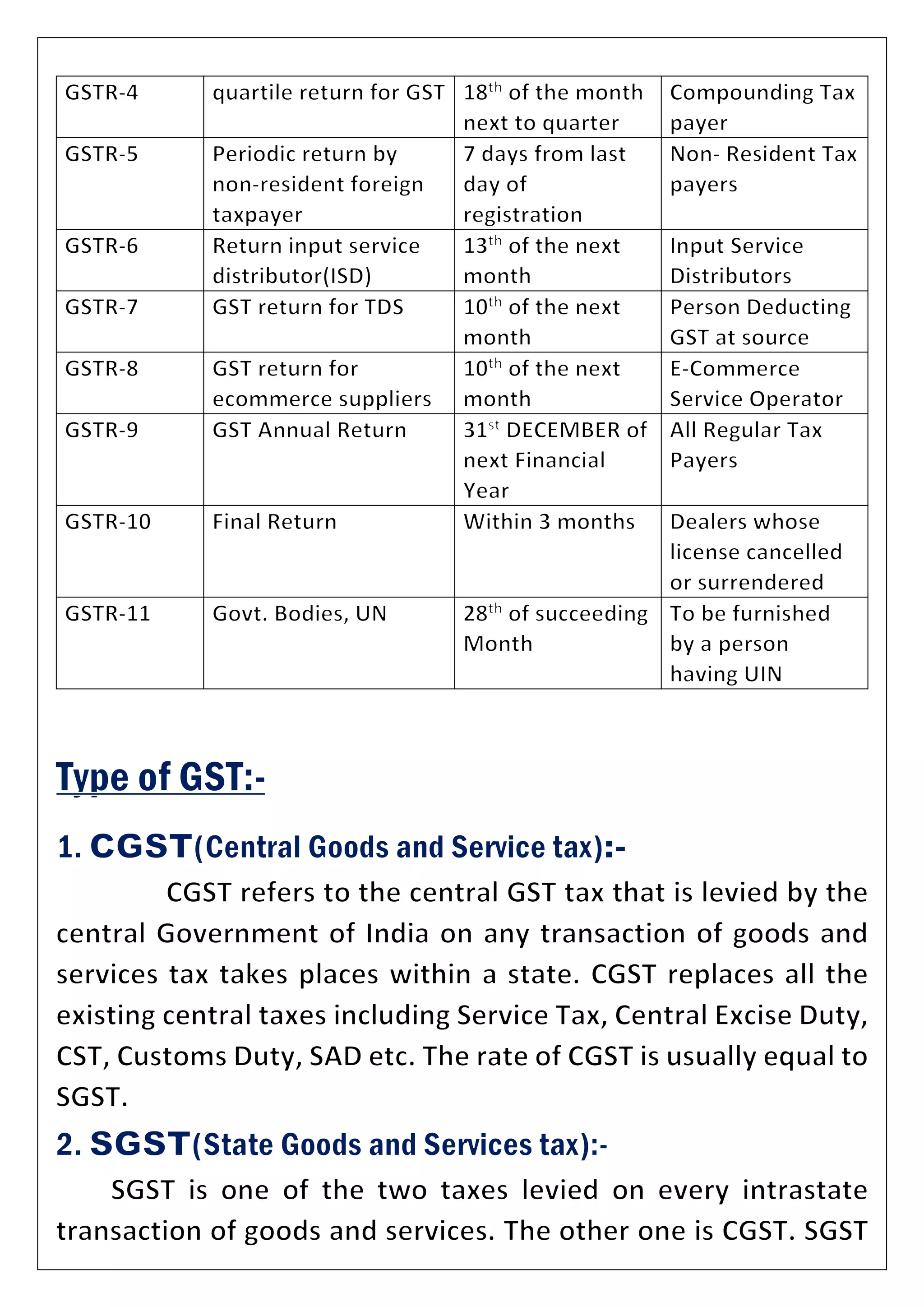
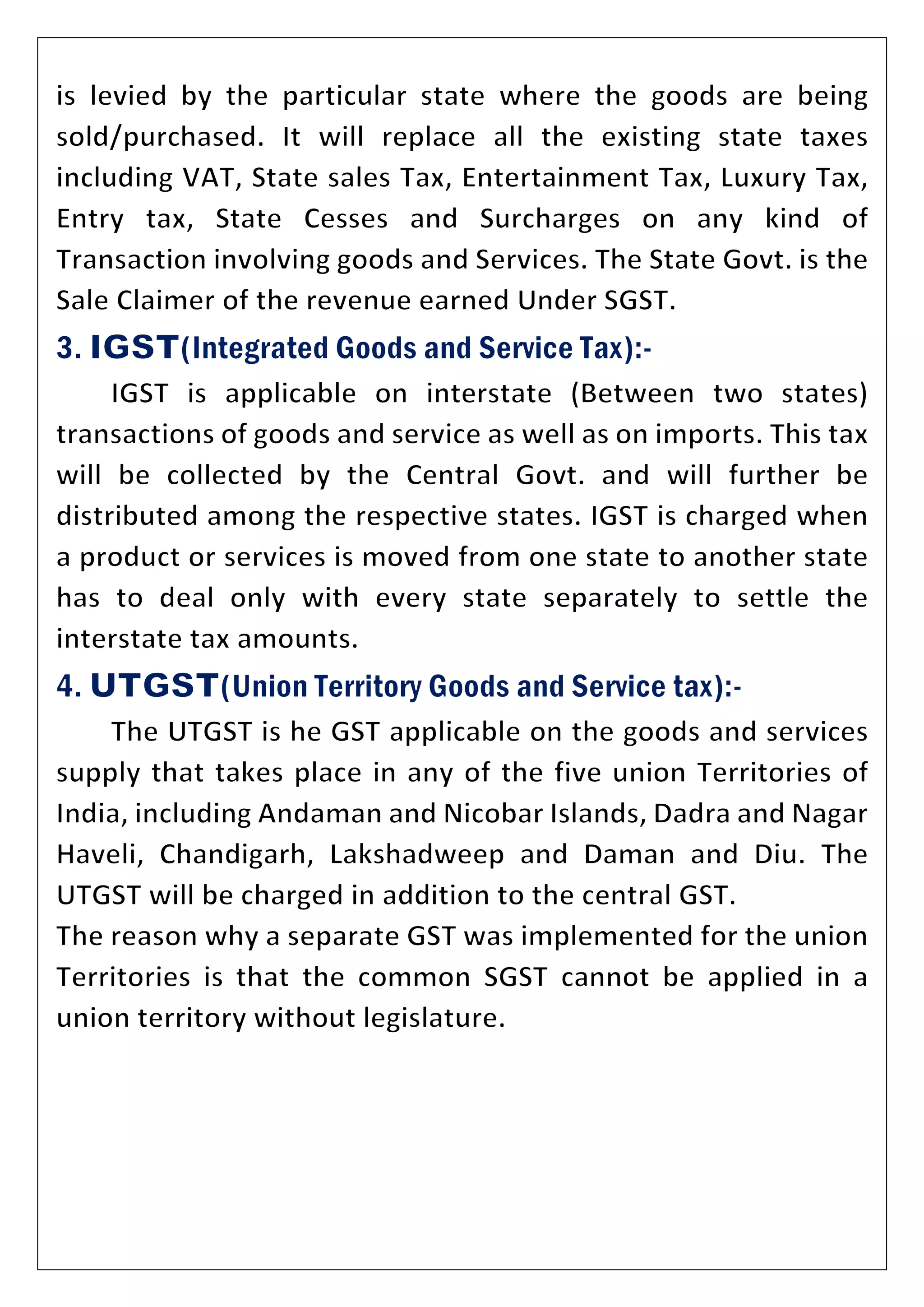
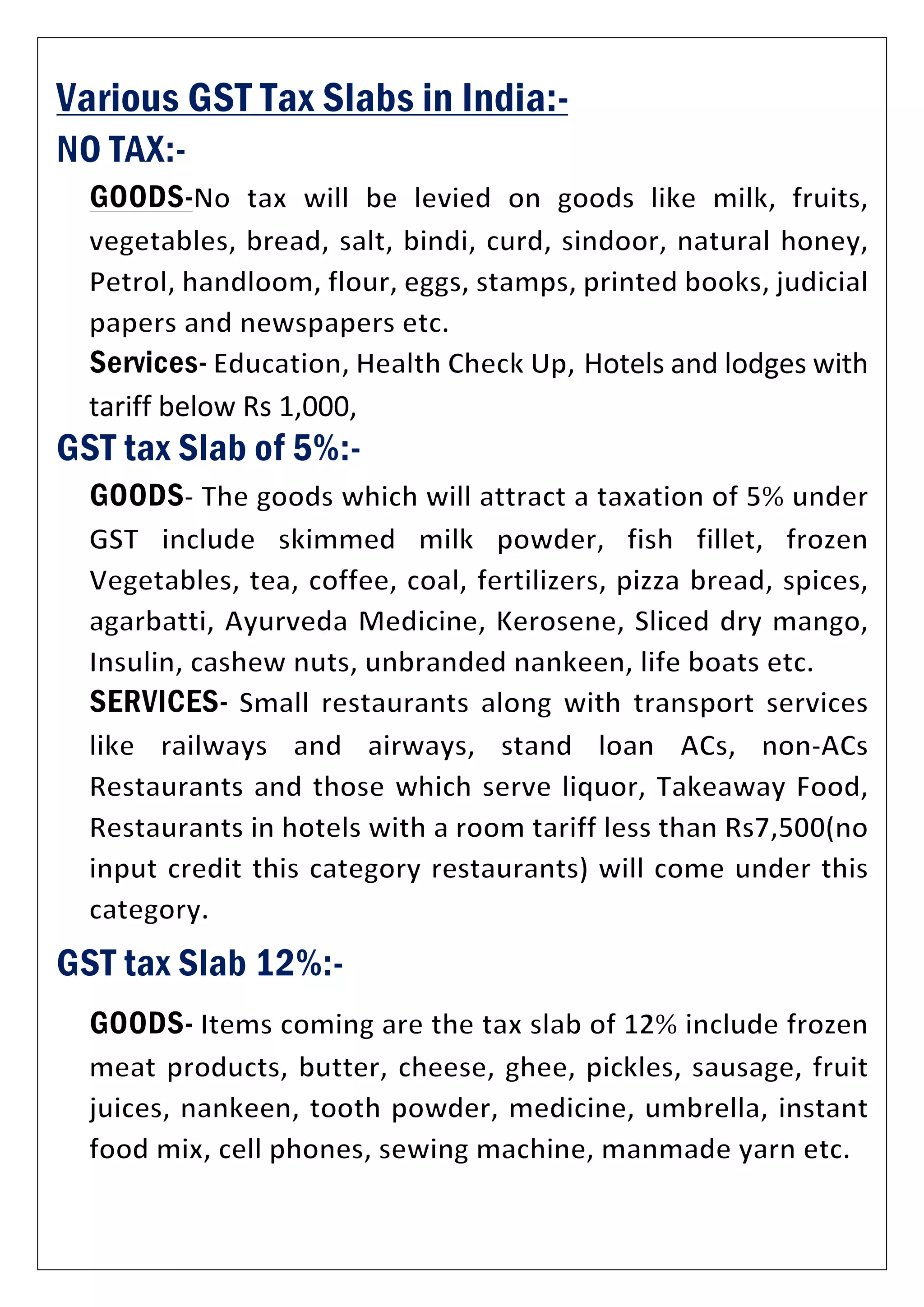
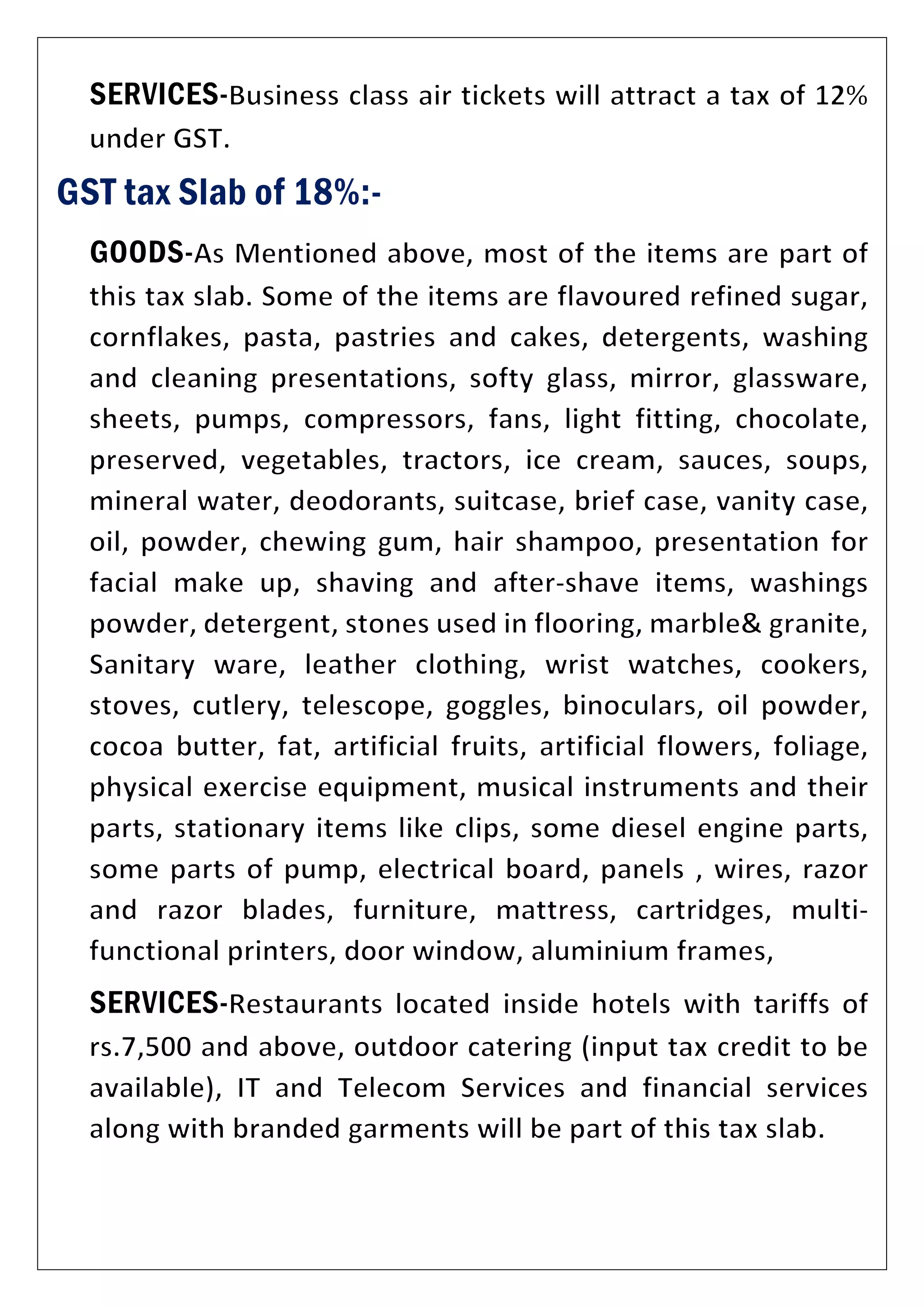
    Introduction The introduction ofGoods and Services Tax (GST) would be a very significant step in the field of indirect tax reforms in India. By amalgamating a large number of Central and State taxes into a single tax, it would mitigate cascading or double taxation in a major way and pave the way for a common national market. From the consumer point of view, the biggest advantage would be in terms of a reduction in the overall tax burden on goods, which is currently estimated at 25%-30%. Introduction of GST would also make Indian products competitive in the domestic and international markets. Studies show that this would instantly spur economic growth. Last but not the least, this tax, because of its transparent character, would be easier to administer.
  • 4.
    Here, every taxpayer will be issued a 15 digit common identification number which will be called as “Goods & Service Tax Identification Number” (GSTIN) a PAN based number. GST Registration Number
  • 7.
    Hotels and lodgeswith tariff below Rs 1,000,
  • 9.
    In case ofIntrastate – Under GST Law Particulars Amount Value of Supply of Goods 100,000 Add: CGST (say) @ 9% 9,000 Add: SGST (say) @ 9% 9,000 Total 1, 18,000 In case of Interstate – Under GST Law Particulars Amount Value of Supply of Goods 100,000 Add: IGST (say) @ 18% 18,000 Total 1, 18,000
  • 10.
    ThreePrimeModelOfGST CGST(Central Goods and ServicesTax) GST to be levied by the center SGST(State Goods and Services Tax) GST to be levied by the State IGST(Integated Goods and Services Tax) GST to be levied by the Centere and the States concurrnetly TAX IN INDIA INDIRECT TAX CENTER SERVICE TAX EXERCISE TAX CST CUSTOM STATE VAT ENTRY TAX OCTORI LUXURY TAX DIRECT TAX INCOME TAX Comparison between Multiple Indirect Tax laws and one Law (GST) (OLD TAX SYSTEM) (NEW TAX SYSTEM)
  • 11.