DR.MUMTAZ ALI
JPMC KARACHI
Anatomy
Clinical Features
 five cases per one million individuals
 fourth and fifth decades of life
 before epiphyseal closure : gigantism
 after puberty : acromegaly
 connective tissue and bone overgrowth
 impaired glucose tolerance
 Musculoskeletal
 Cardiovascular
 respiratory derangements
 premature mortality
Acromegaly
 Coarsening of facial features
 frontal skull bossing
 Prognathism
 Malocclusion
 Macroglossia
 skin thickening
 increased shoe and ring size
 Visceromegaly
 painful osteoarthritis
 spinal kyphoscoliosis
 diffuse skeletal hyperostosis
 barrel chest deformity
 low and deeply resonant pitch
 snoring and sleep apnea
multitiered classification : WHO
 Clinical presentation and secretory activity : GH
Densely granulated :7.1 , 1 : 0.7
sparsely granulated :6.2 , 1 : 1.6
 Histopathologic features, including
immunohistochemical and ultrastructural profile :
 cellular origin
 hormonal content
 ultrastructure
 mitotic figures
 pleomorphism
 (CSF) spread
 Molecular biologic and genetic features :
 X-chromosome inactivation
 proliferation of a single
 Mutation
 AIP, MEN1
 CDKN1B, PRKAR1A
 (MEN1)
 familial isolated pituitary adenomas
 multiple endocrine neoplasia type 4
 Carney’s complex
 Neuroimaging:
 Size
 Hardy
 Wilson
Presentation
 Harmonal excess state
 Pituitary insufficiency
 Pituitary apoplexy
 Mass effect:
 Headache
 visual loss
 bitemporal hemianopia
 hydrocephalus
 cavernous sinus
 mesial temporal lobe
 hypothalamus
D/D
Workup
 Routine
 Specific
Radiology
Endocrine
 Relevant
CT scan
Visual perimetry
Fundoscopy
EEG
Treatment Options
 Medical
 Somatostatin analogue
 Dopamine agonist
 GHRA :Pegvisomant
 Surgery
 Radiotherapy :
 refractory to medical
 refractory to surgery
 Neurovascular invasion
 frequent recurrence
Pre-op evaluation
 medical condition
 Co-morbids
 Prognathism ,soft tissue hypertrophy
 macroglossia
 obstructive sleep apnea
 Visual field & acuity
 MRI ,CT scans & Angiograms :
 nasal septal deviations
 sphenoid septations
 osseous defects in the carotid canal
 degree of sphenoid pneumatization
 extent of bony expansion
 erosion from an aggressive lesion
 Encrochment of cavernous sinus & circle
Trans-sphenoidal Approach
 O.T setup
 Patient preparation :
Nasal decongestion ; HTN ,IHD
oxymetazoline (Afrin) 0.05%
1% lidocaine
 1 : 200,000
chlorhexidine
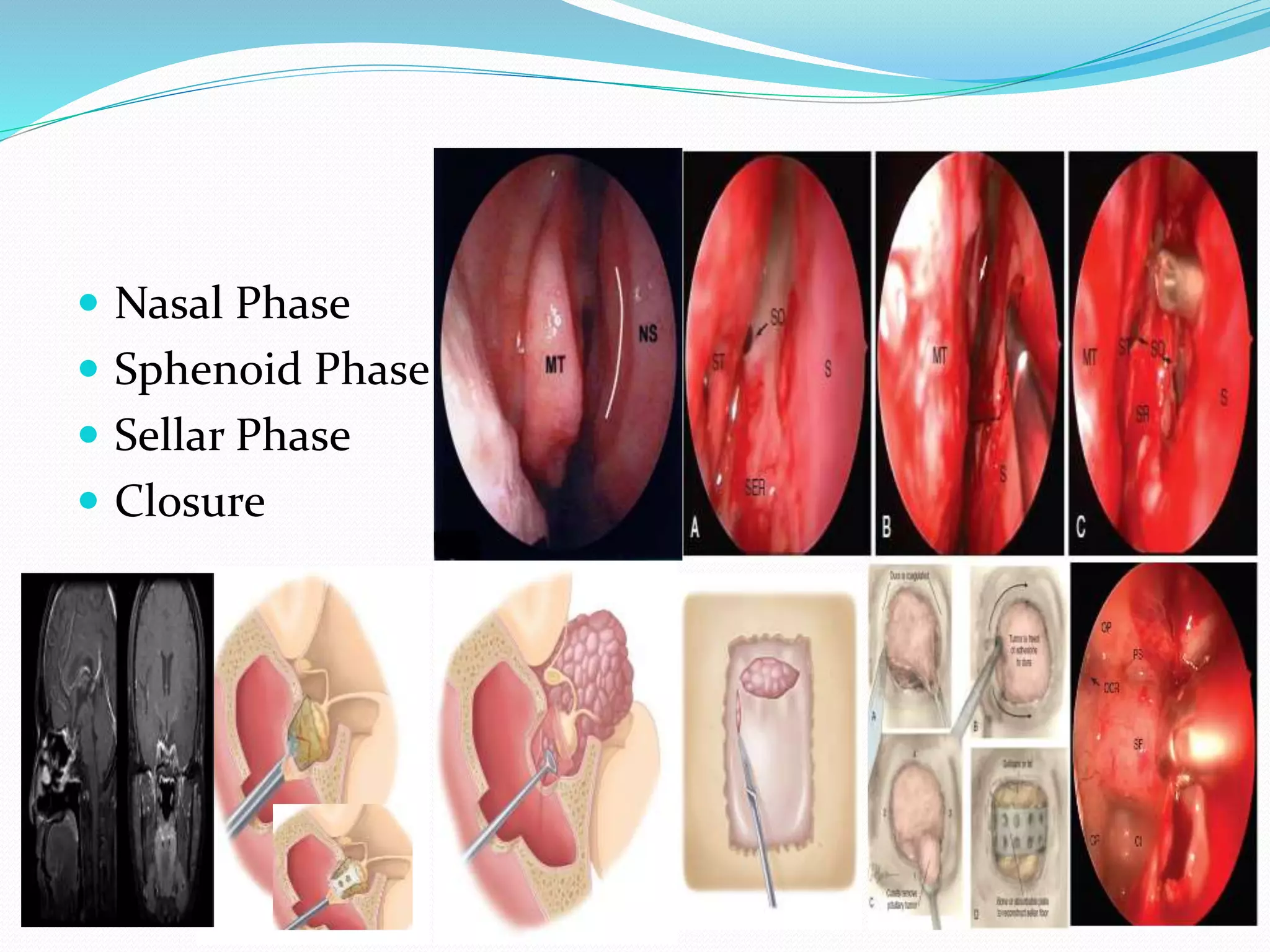
 Nasal Phase
 Sphenoid Phase
 Sellar Phase
 Closure
Complications
THANKYOU

Growth harmone adenoma

  • 1.
  • 2.
  • 3.
    Clinical Features  fivecases per one million individuals  fourth and fifth decades of life  before epiphyseal closure : gigantism  after puberty : acromegaly  connective tissue and bone overgrowth  impaired glucose tolerance  Musculoskeletal  Cardiovascular  respiratory derangements  premature mortality
  • 4.
    Acromegaly  Coarsening offacial features  frontal skull bossing  Prognathism  Malocclusion  Macroglossia  skin thickening  increased shoe and ring size  Visceromegaly  painful osteoarthritis  spinal kyphoscoliosis  diffuse skeletal hyperostosis  barrel chest deformity  low and deeply resonant pitch  snoring and sleep apnea
  • 6.
    multitiered classification :WHO  Clinical presentation and secretory activity : GH Densely granulated :7.1 , 1 : 0.7 sparsely granulated :6.2 , 1 : 1.6
  • 7.
     Histopathologic features,including immunohistochemical and ultrastructural profile :  cellular origin  hormonal content  ultrastructure  mitotic figures  pleomorphism  (CSF) spread
  • 8.
     Molecular biologicand genetic features :  X-chromosome inactivation  proliferation of a single  Mutation  AIP, MEN1  CDKN1B, PRKAR1A  (MEN1)  familial isolated pituitary adenomas  multiple endocrine neoplasia type 4  Carney’s complex
  • 9.
  • 12.
    Presentation  Harmonal excessstate  Pituitary insufficiency  Pituitary apoplexy  Mass effect:  Headache  visual loss  bitemporal hemianopia  hydrocephalus  cavernous sinus  mesial temporal lobe  hypothalamus
  • 13.
  • 14.
    Workup  Routine  Specific Radiology Endocrine Relevant CT scan Visual perimetry Fundoscopy EEG
  • 15.
    Treatment Options  Medical Somatostatin analogue  Dopamine agonist  GHRA :Pegvisomant  Surgery  Radiotherapy :  refractory to medical  refractory to surgery  Neurovascular invasion  frequent recurrence
  • 16.
    Pre-op evaluation  medicalcondition  Co-morbids  Prognathism ,soft tissue hypertrophy  macroglossia  obstructive sleep apnea  Visual field & acuity  MRI ,CT scans & Angiograms :  nasal septal deviations  sphenoid septations  osseous defects in the carotid canal  degree of sphenoid pneumatization  extent of bony expansion  erosion from an aggressive lesion  Encrochment of cavernous sinus & circle
  • 17.
    Trans-sphenoidal Approach  O.Tsetup  Patient preparation : Nasal decongestion ; HTN ,IHD oxymetazoline (Afrin) 0.05% 1% lidocaine  1 : 200,000 chlorhexidine
  • 18.
     Nasal Phase Sphenoid Phase  Sellar Phase  Closure
  • 19.
  • 20.