DEFINITIONS
Growth, a measures of physical maturation, signifies an increase in size of the body and
its various organs.
. Growth is mainly due to multiplication of cells and an increase in intracellular substance
. Thus, it can be measured in terms of centimeters and kilograms
. Tissues show an increase in DNA content
. During second half of pregnancy, an increase in cell size with increase in protein/ DNA
ratio occurs
. Until 10 years of age, this increase is high but thereafter it becomes slow
. Unlike in the adult, growth is an essential feature of the child’s life.
Development is a measure of functional or physiological maturation and myelination of
the nervous system.
It signifies accomplishment of –
. Mental (acquisition of skills)
. Emotional (development of attitudes)
and
. Social ( adaptation to family and society) abilities
Unlike growth, it is rather difficult to assess development
CONT.
. Growth and development are so closely interrelated that it is virtually not possible to
separate one from other
. Growth and development are not synonymous but they are assessed simultaneously
. The growth performance in a child should be coupled with assessment of the
development to get an idea of the child’s performance in overall growth
. Growth and development begin at conception and end at maturity
. They are unique characteristics of children and any obstacle in this process at any stage
can possibly result in aberration of growth and/ or development.
ASSESSMENT OF GROWTH
Growth can be measured in terms of :
. Physical anthropometry –
Weight, length/height, circumferences of head, chest, abdomen and pelvis
. Assessment of tissue growth –
Skin fold thickness and measurement of muscle mass
. Bone age –
Radiological by appearance and fusion of the various epiphyseal centers
. Dental age –
By counting the number of erupted teeth
. Biochemical and histological means
PHYSICAL ANTHROPOMETRY
Physical anthropometry should be done in every child from birth till maturity at regular
intervals
. It needs to be emphasized that the growth measurement needs to be done meticulously
with absolute precision and recorded, so as to allow us on subsequent visit, to ascertain
weather the child has grown optimally
. The measurements should preferably be done by the same person on calibrated checked
equipment to avoid personal human errors
WEIGHT
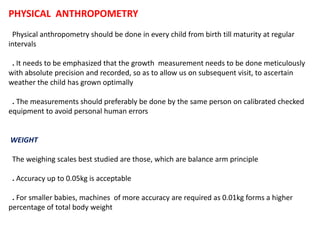
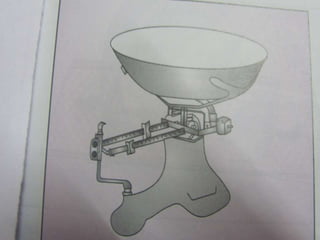
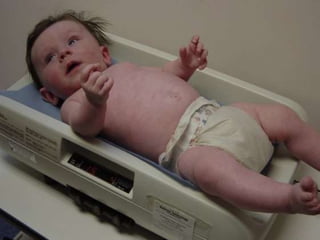
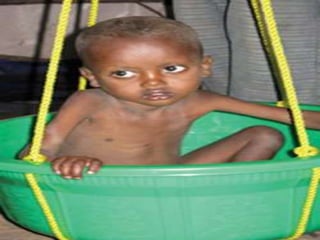
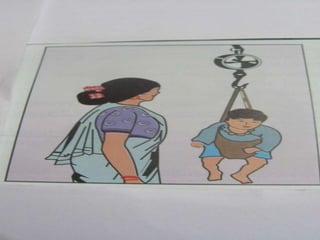
The weighing scales best studied are those, which are balance arm principle
. Accuracy up to 0.05kg is acceptable
. For smaller babies, machines of more accuracy are required as 0.01kg forms a higher
percentage of total body weight
CONT.
More recently, many electronic weighing scales giving accuracy up to 0.01 have been
made available
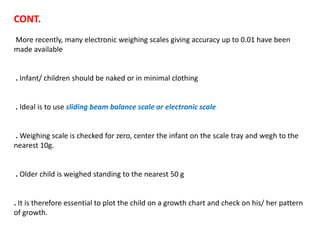
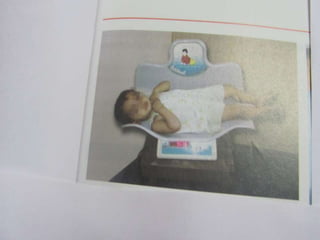
. Infant/ children should be naked or in minimal clothing
. Ideal is to use sliding beam balance scale or electronic scale
. Weighing scale is checked for zero, center the infant on the scale tray and wegh to the
nearest 10g.
. Older child is weighed standing to the nearest 50 g
. It is therefore essential to plot the child on a growth chart and check on his/ her pattern
of growth.
LENGTH
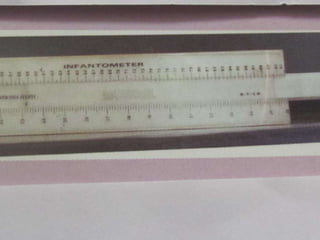
It is measured on an infantometer in children too young to stand until 2 years of age.
Length can be designated as –
. Length (Crown- heel length)
. Stem length (crown rump length) i.e. upper body segment
Length (Crown- heel length)
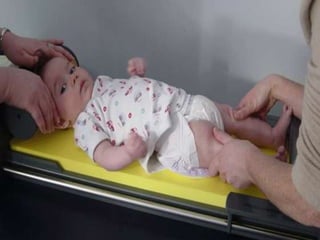
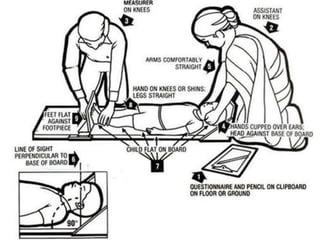
. The length is measured on a measuring board, with a fixed head piece and a movable foot
piece that has wooden scales fixed on both sides
. You will need at least one other person to help you do this
. Make sure that the child is looking upwards when lying on the measuring board
. Your assistant should check if the knees are perfectly extended and you can then
flush the foot piece against both feet.
CONT.
Stem length (crown rump length)
. This denotes the upper body segment
. Stem length is measured using the same measuring board used to measure crown heel
length
. Ensure that the head is fixed firmly with the head piece, so that no gap is left between the
head and the head piece
. The measurement is completed by drawing the foot piece flush against the buttock .
Sitting Height
. The sitting height is the equivalent of the crown rump length in the cooperative child over
5 years of age
. Sitting height is useful to assess body proportion particularly in those with short stature
due skeletal dysplasia or radiation induced damage to spinal epiphysis
HEIGHT
. It is measured on an anthropometric rod or a stadiometer, if the child can stand (>2years
of age)
. In general, length in normal term infants increase about 30% by 5 months of age and more
than 50% by 12 months of age
. Infants grow 25 cm by during the first year and height at 4 years is about the double birth
length
. In boys, half of the adult height is attained around 2 years of age
. In girls, height at 19 months is about half the adult height.
CONT.
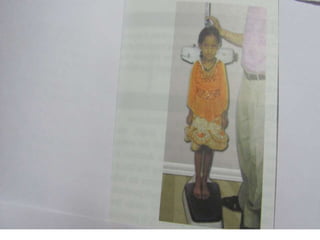
. After the age of 2 years, standing height is recorded by a stadiometer
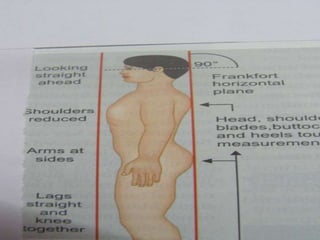
. For recording stature (height), the subject should remove his/her shocks and shoes and
stand perfectly straight with arms relaxed by his/her sides and ankles and knees together
. Before measurement starts, a gentle pressure may be applied over the spine with one
hand while other hand holds the anthropometric rod
. The subject’s head is positioned in Frankfort plane (A LINE PASSING THROUGH THE
INFERIOR MARGIN OF THE ORBIT AND UPPER MARGIN OF EXTERNAL AUDITORY MEATUS)
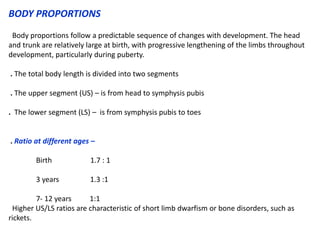
BODY PROPORTIONS
Body proportions follow a predictable sequence of changes with development. The head
and trunk are relatively large at birth, with progressive lengthening of the limbs throughout
development, particularly during puberty.
. The total body length is divided into two segments
. The upper segment (US) – is from head to symphysis pubis
. The lower segment (LS) – is from symphysis pubis to toes
. Ratio at different ages –
Birth 1.7 : 1
3 years 1.3 :1
7- 12 years 1:1
Higher US/LS ratios are characteristic of short limb dwarfism or bone disorders, such as
rickets.
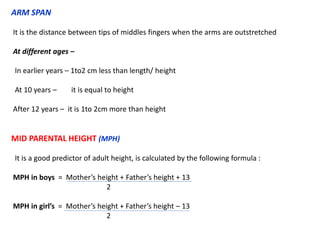
ARM SPAN
It is the distance between tips of middles fingers when the arms are outstretched
At different ages –
In earlier years – 1to2 cm less than length/ height
At 10 years – it is equal to height
After 12 years – it is 1to 2cm more than height
MID PARENTAL HEIGHT (MPH)
It is a good predictor of adult height, is calculated by the following formula :
MPH in boys = Mother’s height + Father’s height + 13
2
MPH in girl’s = Mother’s height + Father’s height – 13
2
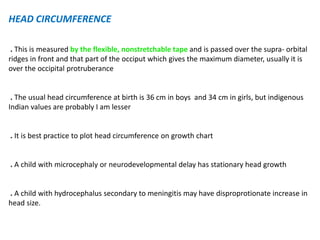
HEAD CIRCUMFERENCE
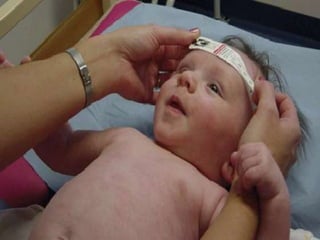
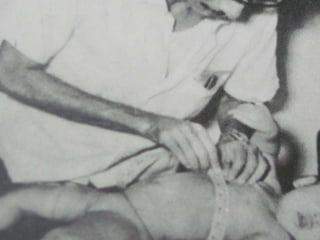
. This is measured by the flexible, nonstretchable tape and is passed over the supra- orbital
ridges in front and that part of the occiput which gives the maximum diameter, usually it is
over the occipital protruberance
. The usual head circumference at birth is 36 cm in boys and 34 cm in girls, but indigenous
Indian values are probably I am lesser
. It is best practice to plot head circumference on growth chart
. A child with microcephaly or neurodevelopmental delay has stationary head growth
. A child with hydrocephalus secondary to meningitis may have disproprotionate increase in
head size.
CHEST CIRCUMFERENCE
. At birth, chest circumference is 3 cm less than the head circumference
. In preterm baby the difference may be greater
. The circumference of head and chest are almost equal by the age of 1 yr
. Thereafter, the chest circumference exceeds the head circumference
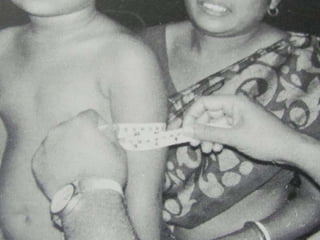
. The chest circumference is measured ideally by a fibre glass tape; if not available, an
ordinary linen measuring tape is used
. The tape is passed through the xiphi-sternal junction and surronds the chest in that plane
. The measurement is done midway between inspiration and expiration
. The tape should not be passed through the nipple, as nipple line may be variable.
MIDARM CIRCUMFEFENCE (For children from 1 – 5 yr of age)
The accepted area for measurement is over the left tricepcs
. With the arm hanging loosely by the side, a non- stretchable tape is passed around
circumference of the arm
. The measurement is noted at the midpoint of the left arm, that is, mid way between the
tip of the acromion and olecrenon processes
. It measures –
At birth – 9.8 cm
Around 1 year – 14.5 cm
Between 1 year and 5years of age – slow increase from 14.8 cm to 16.5 cm
CONT.
In field surveys, it helps in diagnosis of mal/ undernutrition
. A value > 13.5 cm is taken as normal nourished
12.5 to 13.5 moderate malnutrition
<12.5cm is severe malnutrition
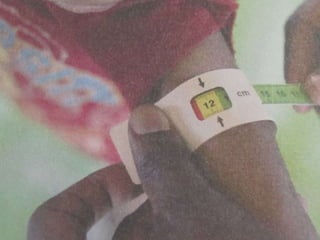
. Shakir’s tape is used for quick monitoring in community
. MAC
> 13.5cm GREEN
12.5 13.5 cm YELLOW
<12.5 cm RED
SKIN-FOLD THICKNESS
. This measurement is done for special purposes and is not used in routine clinical practice
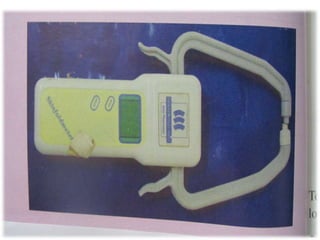
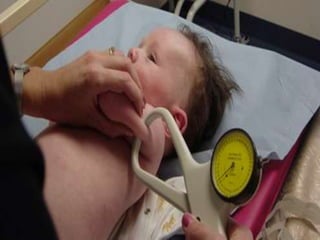
. It is measured with a skin-fold caliper
. Around 50% of body fat is located under the skin
. Measurement of triceps and biceps skin-fold thickness gives estimate of peripheral fat
. Subcapsular and supra- iliac skin-fold thickness i9ndicates amount of central fat
. The Lange’s or Harpenden’s skin-fold calipers are used
. Ratio of total body water and body weight is a more accurate index of body fat, correlating
at about 0.62 with skin- fold thickness.
CONT. ‘
Measurements are done as follows :
Triceps –Midpoint between the tip of the olecranon process and acromion process of the
left arm, hanging loosely by the side; 11 mm or more is normal
Biceps – At the mid point of their muscle belly, specially on the left side
Subcapsular – below the inferior angle of scapula 45 ͦ to vertical
Supra- iliac – Above the iliac crest in mid- axillary line ( approximately 2.5 cm above the hip
bone)
BODY MASS INDEX (BMI)
. Body mass index correlates well with the subcutaneous fat and the total body fat and yet
allows a variation in the lean body mass
. It is a good indicator of variability of energy status
BMI values are as follows –
Remains constant (15 – 25 kg/met²) up to the age of 5 years
> 30 kg/ met² establishes obesity
25- 30 kg/met² points to overweight
<15 kg/met² points to undernutrition
> 95th percentile suggests obesity
85th to 95th percentile suggests overweight
< 5th percentile points undernutrition
It is given by the following formula :
Weight (kg)
BMI =
Height (met²)
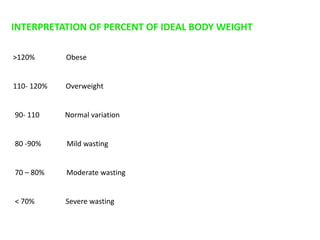
INTERPRETATION OF PERCENT OF IDEAL BODY WEIGHT
>120% Obese
110- 120% Overweight
90- 110 Normal variation
80 -90% Mild wasting
70 – 80% Moderate wasting
< 70% Severe wasting
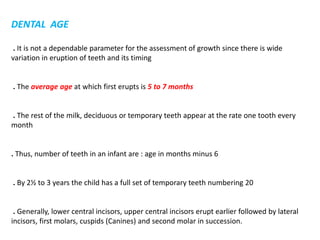
DENTAL AGE
. It is not a dependable parameter for the assessment of growth since there is wide
variation in eruption of teeth and its timing
. The average age at which first erupts is 5 to 7 months
. The rest of the milk, deciduous or temporary teeth appear at the rate one tooth every
month
. Thus, number of teeth in an infant are : age in months minus 6
. By 2½ to 3 years the child has a full set of temporary teeth numbering 20
. Generally, lower central incisors, upper central incisors erupt earlier followed by lateral
incisors, first molars, cuspids (Canines) and second molar in succession.
CONT.
. The first permanent teeth appear at about 6 years the first molar
. Rarely a baby may be born with an already erupted tooth (natal tooth). It is harmless as
long as it is not loose and does not interfere with feeding
. Discoloration of temporary teeth right from the start may well be related to ingestion of
tetracyclines by the mother during the third trimester of pregnancy
. There is no truth in the community – held belief that teething cause diarrhea or fever.
However, teething may be responsible for excessive salivation and drooling, irritability,
painful gums and disturbed sleep
DELAYED DENTITION – is usually considered when there are no teeth by approximately 13
months of age
Common cause include :
. Idiopathic
. Familial and/or racial tendency
. Poor nutritional status
. Hypothyroid
. Hypoparathyroid
. Rickets
. Osteogenesis imperfecta
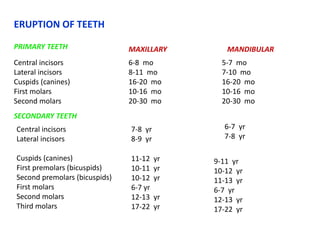
ERUPTION OF TEETH
PRIMARY TEETH
Central incisors
Lateral incisors
Cuspids (canines)
First molars
Second molars
MAXILLARY MANDIBULAR
6-8 mo
8-11 mo
16-20 mo
10-16 mo
20-30 mo
5-7 mo
7-10 mo
16-20 mo
10-16 mo
20-30 mo
SECONDARY TEETH
Central incisors
Lateral incisors
Cuspids (canines)
First premolars (bicuspids)
Second premolars (bicuspids)
First molars
Second molars
Third molars
7-8 yr
8-9 yr
6-7 yr
7-8 yr
11-12 yr
10-11 yr
10-12 yr
6-7 yr
12-13 yr
17-22 yr
9-11 yr
10-12 yr
11-13 yr
6-7 yr
12-13 yr
17-22 yr
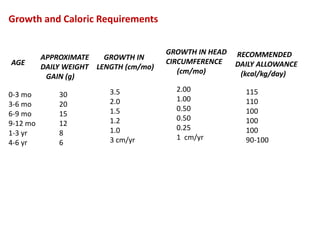
Growth and Caloric Requirements
AGE
0-3 mo
3-6 mo
6-9 mo
9-12 mo
1-3 yr
4-6 yr
APPROXIMATE
DAILY WEIGHT
GAIN (g)
30
20
15
12
8
6
GROWTH IN
LENGTH (cm/mo)
3.5
2.0
1.5
1.2
1.0
3 cm/yr
GROWTH IN HEAD
CIRCUMFERENCE
(cm/mo)
2.00
1.00
0.50
0.50
0.25
1 cm/yr
RECOMMENDED
DAILY ALLOWANCE
(kcal/kg/day)
115
110
100
100
100
90-100
BONE AGE
. Reference standards for bone maturation facilitate estimation of bone age
. Bone age correlates well with stage of pubertal development and can be helpful in
predicting adult height in early – or late – maturing adolescents
. Bone age, assessed through radiological examination of certain bones and then
comparing the appearance and fusion of epiphyseal centers with standard normal
radiographs
. Appearance and fusion of epiphyseal centers follow a definite sequence related to
chronologic age (actual age) from birth to maturity
. Estimation of bone age/ skeletal age is done by assessing the skeletal maturation on a
left hand and wrist radiograph using Gerulich and Pyle method or Tanner- whitehouse
technique.
CONT.
. Radiological examination of knee, wrist and elbow is usually considered for bone age
assessment
. X-ray of the lower end of femur and talus is used for the assessment of maturity of
newborn babies
. An average full – term newborn has the following 5 radiologically demonstrable ossification
centers :
. Distal end of femur
. Proximal end of tibia
. Talus
. Calcaneus
. Cuboid
Recommended sites (for X- ray) for bone age determination –
. Newborn Knee and ankle
. 3- 9 months Shoulder
. 1- 12 years Hands and wrists
. 12 – 14 years Elbow and hip
CONT.
. By the age of 6 months, ossification centers for two carpal bones, i.e. capitate and hamate,
appear
. It will be a useful guide to remember that number of centers at wrist is equal to age in
years plus one
. Epiphyseal development of the girls is consistently ahead of the boys
. Thus, a child of 2 years should have 3 centers in an X- ray of wrist
Advanced bone age may occur in –
. Thyrotoxicosis
. Aderenal hyperplasia
. Precocious puberty
. Gigantism
. Pseudohypoparathyroidism
Retardation in bone age is a characteristic feature of congenital hypothyroidism.
FACTORS INFLUENCING GROWTH AND DEVELOPMENT
. Genetic
. Nutritional
. Socioeconomic
. Environmental
. Chronic diseases
. Growth potentials
. Prenatal and intrauterine
. Emotional
. Hormonal
Genetics factors –
It is well that certain hereditary influences may have a bearing on the ultimate
constitution of the body
. Parental traits –
Tall parents are likely to have tall offsprings. Likewise. Level of intelligence of parents
influences the IQ of their children
. Genetic disorders/ abnormal genes –
transmission of some abnormal genes may result in familial illness which affects the
physical and/or functional maturation, e.g. phenylketonuria (PKU), thalassemia,
hemophilia, mucopolysaccharidosis, galactosemia etc.
. Chromosomal disorders –
Many chromosomal disorders, including Down syndrome, Turner syndrome, Klinefelter
syndrome etc. are known to manifest in the form opf growth and developmental
aberrations
Race –
Growth potential varies from race to race
Sex –
Generally speaking, at birth, boys are taller and heavier tan girls. When they mature
towards adulthood, average height and weight of boys score over the girls
Biorhythm –
Girls usually follow the same pattern of menarche and menstrual cycle As their mothers
Twining –
Multiple pregnancies usually result in small babies who are likely to attain low height and
weight in the long run.
Nutritional factors –
. Nutritional deficiency of proteins, calories, minerals, and essential amino acids
especially lysine both quantitative and qualitative, considerably retards physical growth
and development
. Also other debilitating illness which interfere with adequate nutrition (say,
malabsorption syndrome, tuberculosis, malignancy, chronic diarrhea/ dysentery,
intestinal parasitic infestations) exert similar effect
. Malnourished mothers, particularly if they continue to be fed poorly during pregnancy,
are known to produce low birthweight babies, especially with IUGR
. On the other hand, average birthweight of infants whose mother are fed well during
pregnancy far higher
. It is worth mentioning that undernutrition affects the growth in weight far more than
that of length/height
. Chronic undernutrition spread over significant period leads to stunting
Socioeconomic factors
. Poverty is associated with diminished and affluence with good health
. Children from well- to- do families usually are better nourished
Environmental and seasonal factors
. Physical surroundings (sunshine, hygiene, living standard), psychological and social factors
(relationship with family members, teachers, friends etc.) affects growth and development
. It has also been observed that maximum weight gain during fall and maximum height gain
during spring
Chronic diseases
. Chronic diseases of the heart (congenital and chronic rheumatic), chest (tuberculosis,
cystic fibrosis and asthma), kidney (recurrent UTI, nephrotic syndrome, nephritis, bladder
neck obstruction), liver (cirrhosis, hydatid cyst), neoplasms, digestive or absorptive
disorders, hypothyroidism, hypopituitarism,etc. impair growth
. Adrenocortical overactivity causes excessive height in early childhood
. Metabolic disorders (glycogen storage disease, renal tubular acidosis) and mental
retardation are associated with retarded growth
. High level of growth hormone result in gigantism
. Acute illnesses, in general, do not have any noteworthy effect on growth and
development.
Growth Potentials
. The smaller the child at birth (especially in the context of gestation) the smaller he/she is
likely to be in subsequent years
. The larger the child at birth, the larger he/she is likely to be in later years
. Thus, the growth potential is somewhat indicated by child’s size at birth
Prenatal and Intrauterine Factors
. The size of the baby is primarily influenced by maternal health and uterine environment
. Common causes of fetal growth impairment in India are maternal malnutrition and
anemia
. Disorders leading to placental insufficiency like PIH, congenital infections, multiple
pregnancies, placental hemorrhage, chronic systemic disorders, radiation, maternal
tobacco/ alcohol abuse are other important causes of fetal growth impairment
Emotional Factors
. Emotional deprivation, anxiety and insecurity influence the neurochemical regulation
growth hormone and may affect the child’s growth
Hormonal Influences
. Hormones play a significant part in regulating growth in children
. The endocrine influences in growth are mediated by growth hormone (GH), thyroxine,
cortisol, gonadal steroids, insulin and growth factors, chiefly insulin like growth factor (IGF- I
& II)
Thyroid Hormones
. Fetal thyroxine may not play a significant role in the early development of the human fetus
. At this time, maternal thyroxine is sufficient to sustain fetal growth.
. The crucial period of thyroid dependent brain growth extends from last weeks of
pregnancy to several months in the post natal period
. The thyroid hormones play an important role in maintaining somatic growth in infancy
and beyond
. The thyroid hormones appear to modulate skeletal growth, the organisation and
maturation of cells in the growth plate
. Thyroxine also possibly influences the synthesis and secretion of GH by the pituitary
. Thyroxine deficiency (from maternal hypothyroidism, medications with antithyroid drugs
and iodides in second half of pregnancy) may cause fatal goiter and hypothyroidism with
retardation of the skeletal growth of the fetus
Growth hormone (GH)
GH is the most abundant hormone in the human pituitary and plays a pivotal role in
cotrolling postnatal growth
. GH influences on growth become increasingly important through mid childhood and
critically so in puberty
. The promoting effect of growth hormone growth factors in serum IGF I & IGF II
. IGF-I is synthesized by all tissues of the body and the main bulk is produced in the liver in
response to GH
. GH works in conjunction with IGF-I and acts on the growth plate to promote longitudinal
growth, to promote cell proliferation and protein synthesis in both skeletal and extra-
skeletal tissues
. IGF- II is a mitogen and probably plays a significant role in intrauterine growth
Insulin
. Insulin is an anabolic hormone and bears homology to the other growth promoting
hormone IGF-I
. Diabetic mothers cause increase in fetal blood sugar that leads to hyperplasia of islets of
Langerhans and elevation of insulin production resulting in stimulation of fetal growth
leads to large for date baby
. Similar influence is exerted by a polypeptide by placenta, the insulin like growth factor
(IGF-II)
Glucocorticoids
. Glucocorticoticoids act directly on the growth plate to inihibit cell differentiation and
clonal expansion
. They do not supress GH secretion
. Endogenous cortisol that is secreted in moderate amount does not interfere with the cell
biology of the growth plate.
Gonadal Steroids
. Testosterone and its active metabolite dihydrotestosterone are potent anabolic agents
that promote linear growth and weight gain
. The presence of GH is essential for the effective promotion of somatic growth by
androgen
. The synchrony of the growth and gonadal activation are key features in the timing and
pubertal maturation
. Oestrogens have growth promoting effects in small doses but the net effect is to cause
fusion of the epiphyses and therefore halt further growth
. Oestrogen in small dose are used to kick start the pubertal process in girls in constitutional
delay of growth and puberty.
ASSESSMENT OF DEVELOPMENT
Development refers to qualitative and quantitative changes and acquisition of a variety
of competencies for functioning optimally in a social milieu.
. Further, development is a continuous process from birth to maturity
. It depends on maturation and myelination of brain; unless that has occurred, no
amount of practice can make the child learn that skill
. The process of development is an between the child and his/her required
environment
. It may be stressed that besides 10% prevalence of developmental delay, the early
identification remains difficult
Development can be studied under
. Motor (gross and fine motor)
. Linguistic
. Adaptive and personal social
. Vision and hearing
CONT..
. Although severe disorders can be recognized in infancy, it is usual to diagnose speech
impairment, hyperactivity or emotional disorders before the age of 3 or 4 years and learning
disabilities are rarely recognized children start schooling
. If one can diagnose early stage developmental delay in early stages of growth, the
intervention can minimize long- term quantum of disability
. It takes long time, great patience and perseverance to assess the development of a child
. The development is assessed by –
. Gesell’s method
. Denver Development Screening Test (DDST)
. Bayley Scale of Infant Development
. Brazelton Neonatal Behavioral Assessment Scale (NBAS)
. Pathak’s Baroda scale
. Trivandrum Developmental Screening test
. Wechsler Intelligence Scale for Children
. Stanford- Binet Intelligence Scale
. Vinland Adaptive Behavior Scale
. Goodenough- Harris drawing test
. Cognitive Adaptive Test/Clinical Linguistic Auditory Milestone Scale ( CAT/CALM)

Growth and development

  • 2.
    DEFINITIONS Growth, a measuresof physical maturation, signifies an increase in size of the body and its various organs. . Growth is mainly due to multiplication of cells and an increase in intracellular substance . Thus, it can be measured in terms of centimeters and kilograms . Tissues show an increase in DNA content . During second half of pregnancy, an increase in cell size with increase in protein/ DNA ratio occurs . Until 10 years of age, this increase is high but thereafter it becomes slow . Unlike in the adult, growth is an essential feature of the child’s life.
  • 3.
    Development is ameasure of functional or physiological maturation and myelination of the nervous system. It signifies accomplishment of – . Mental (acquisition of skills) . Emotional (development of attitudes) and . Social ( adaptation to family and society) abilities Unlike growth, it is rather difficult to assess development
  • 4.
    CONT. . Growth anddevelopment are so closely interrelated that it is virtually not possible to separate one from other . Growth and development are not synonymous but they are assessed simultaneously . The growth performance in a child should be coupled with assessment of the development to get an idea of the child’s performance in overall growth . Growth and development begin at conception and end at maturity . They are unique characteristics of children and any obstacle in this process at any stage can possibly result in aberration of growth and/ or development.
  • 5.
    ASSESSMENT OF GROWTH Growthcan be measured in terms of : . Physical anthropometry – Weight, length/height, circumferences of head, chest, abdomen and pelvis . Assessment of tissue growth – Skin fold thickness and measurement of muscle mass . Bone age – Radiological by appearance and fusion of the various epiphyseal centers . Dental age – By counting the number of erupted teeth . Biochemical and histological means
  • 6.
    PHYSICAL ANTHROPOMETRY Physical anthropometryshould be done in every child from birth till maturity at regular intervals . It needs to be emphasized that the growth measurement needs to be done meticulously with absolute precision and recorded, so as to allow us on subsequent visit, to ascertain weather the child has grown optimally . The measurements should preferably be done by the same person on calibrated checked equipment to avoid personal human errors WEIGHT The weighing scales best studied are those, which are balance arm principle . Accuracy up to 0.05kg is acceptable . For smaller babies, machines of more accuracy are required as 0.01kg forms a higher percentage of total body weight
  • 7.
    CONT. More recently, manyelectronic weighing scales giving accuracy up to 0.01 have been made available . Infant/ children should be naked or in minimal clothing . Ideal is to use sliding beam balance scale or electronic scale . Weighing scale is checked for zero, center the infant on the scale tray and wegh to the nearest 10g. . Older child is weighed standing to the nearest 50 g . It is therefore essential to plot the child on a growth chart and check on his/ her pattern of growth.
  • 18.
    LENGTH It is measuredon an infantometer in children too young to stand until 2 years of age. Length can be designated as – . Length (Crown- heel length) . Stem length (crown rump length) i.e. upper body segment Length (Crown- heel length) . The length is measured on a measuring board, with a fixed head piece and a movable foot piece that has wooden scales fixed on both sides . You will need at least one other person to help you do this . Make sure that the child is looking upwards when lying on the measuring board . Your assistant should check if the knees are perfectly extended and you can then flush the foot piece against both feet.
  • 19.
    CONT. Stem length (crownrump length) . This denotes the upper body segment . Stem length is measured using the same measuring board used to measure crown heel length . Ensure that the head is fixed firmly with the head piece, so that no gap is left between the head and the head piece . The measurement is completed by drawing the foot piece flush against the buttock . Sitting Height . The sitting height is the equivalent of the crown rump length in the cooperative child over 5 years of age . Sitting height is useful to assess body proportion particularly in those with short stature due skeletal dysplasia or radiation induced damage to spinal epiphysis
  • 20.
    HEIGHT . It ismeasured on an anthropometric rod or a stadiometer, if the child can stand (>2years of age) . In general, length in normal term infants increase about 30% by 5 months of age and more than 50% by 12 months of age . Infants grow 25 cm by during the first year and height at 4 years is about the double birth length . In boys, half of the adult height is attained around 2 years of age . In girls, height at 19 months is about half the adult height.
  • 21.
    CONT. . After theage of 2 years, standing height is recorded by a stadiometer . For recording stature (height), the subject should remove his/her shocks and shoes and stand perfectly straight with arms relaxed by his/her sides and ankles and knees together . Before measurement starts, a gentle pressure may be applied over the spine with one hand while other hand holds the anthropometric rod . The subject’s head is positioned in Frankfort plane (A LINE PASSING THROUGH THE INFERIOR MARGIN OF THE ORBIT AND UPPER MARGIN OF EXTERNAL AUDITORY MEATUS)
  • 22.
    BODY PROPORTIONS Body proportionsfollow a predictable sequence of changes with development. The head and trunk are relatively large at birth, with progressive lengthening of the limbs throughout development, particularly during puberty. . The total body length is divided into two segments . The upper segment (US) – is from head to symphysis pubis . The lower segment (LS) – is from symphysis pubis to toes . Ratio at different ages – Birth 1.7 : 1 3 years 1.3 :1 7- 12 years 1:1 Higher US/LS ratios are characteristic of short limb dwarfism or bone disorders, such as rickets.
  • 23.
    ARM SPAN It isthe distance between tips of middles fingers when the arms are outstretched At different ages – In earlier years – 1to2 cm less than length/ height At 10 years – it is equal to height After 12 years – it is 1to 2cm more than height MID PARENTAL HEIGHT (MPH) It is a good predictor of adult height, is calculated by the following formula : MPH in boys = Mother’s height + Father’s height + 13 2 MPH in girl’s = Mother’s height + Father’s height – 13 2
  • 26.
    HEAD CIRCUMFERENCE . Thisis measured by the flexible, nonstretchable tape and is passed over the supra- orbital ridges in front and that part of the occiput which gives the maximum diameter, usually it is over the occipital protruberance . The usual head circumference at birth is 36 cm in boys and 34 cm in girls, but indigenous Indian values are probably I am lesser . It is best practice to plot head circumference on growth chart . A child with microcephaly or neurodevelopmental delay has stationary head growth . A child with hydrocephalus secondary to meningitis may have disproprotionate increase in head size.
  • 28.
    CHEST CIRCUMFERENCE . Atbirth, chest circumference is 3 cm less than the head circumference . In preterm baby the difference may be greater . The circumference of head and chest are almost equal by the age of 1 yr . Thereafter, the chest circumference exceeds the head circumference . The chest circumference is measured ideally by a fibre glass tape; if not available, an ordinary linen measuring tape is used . The tape is passed through the xiphi-sternal junction and surronds the chest in that plane . The measurement is done midway between inspiration and expiration . The tape should not be passed through the nipple, as nipple line may be variable.
  • 31.
    MIDARM CIRCUMFEFENCE (Forchildren from 1 – 5 yr of age) The accepted area for measurement is over the left tricepcs . With the arm hanging loosely by the side, a non- stretchable tape is passed around circumference of the arm . The measurement is noted at the midpoint of the left arm, that is, mid way between the tip of the acromion and olecrenon processes . It measures – At birth – 9.8 cm Around 1 year – 14.5 cm Between 1 year and 5years of age – slow increase from 14.8 cm to 16.5 cm
  • 32.
    CONT. In field surveys,it helps in diagnosis of mal/ undernutrition . A value > 13.5 cm is taken as normal nourished 12.5 to 13.5 moderate malnutrition <12.5cm is severe malnutrition . Shakir’s tape is used for quick monitoring in community . MAC > 13.5cm GREEN 12.5 13.5 cm YELLOW <12.5 cm RED
  • 35.
    SKIN-FOLD THICKNESS . Thismeasurement is done for special purposes and is not used in routine clinical practice . It is measured with a skin-fold caliper . Around 50% of body fat is located under the skin . Measurement of triceps and biceps skin-fold thickness gives estimate of peripheral fat . Subcapsular and supra- iliac skin-fold thickness i9ndicates amount of central fat . The Lange’s or Harpenden’s skin-fold calipers are used . Ratio of total body water and body weight is a more accurate index of body fat, correlating at about 0.62 with skin- fold thickness.
  • 36.
    CONT. ‘ Measurements aredone as follows : Triceps –Midpoint between the tip of the olecranon process and acromion process of the left arm, hanging loosely by the side; 11 mm or more is normal Biceps – At the mid point of their muscle belly, specially on the left side Subcapsular – below the inferior angle of scapula 45 ͦ to vertical Supra- iliac – Above the iliac crest in mid- axillary line ( approximately 2.5 cm above the hip bone)
  • 37.
    BODY MASS INDEX(BMI) . Body mass index correlates well with the subcutaneous fat and the total body fat and yet allows a variation in the lean body mass . It is a good indicator of variability of energy status BMI values are as follows – Remains constant (15 – 25 kg/met²) up to the age of 5 years > 30 kg/ met² establishes obesity 25- 30 kg/met² points to overweight <15 kg/met² points to undernutrition > 95th percentile suggests obesity 85th to 95th percentile suggests overweight < 5th percentile points undernutrition It is given by the following formula : Weight (kg) BMI = Height (met²)
  • 38.
    INTERPRETATION OF PERCENTOF IDEAL BODY WEIGHT >120% Obese 110- 120% Overweight 90- 110 Normal variation 80 -90% Mild wasting 70 – 80% Moderate wasting < 70% Severe wasting
  • 39.
    DENTAL AGE . Itis not a dependable parameter for the assessment of growth since there is wide variation in eruption of teeth and its timing . The average age at which first erupts is 5 to 7 months . The rest of the milk, deciduous or temporary teeth appear at the rate one tooth every month . Thus, number of teeth in an infant are : age in months minus 6 . By 2½ to 3 years the child has a full set of temporary teeth numbering 20 . Generally, lower central incisors, upper central incisors erupt earlier followed by lateral incisors, first molars, cuspids (Canines) and second molar in succession.
  • 40.
    CONT. . The firstpermanent teeth appear at about 6 years the first molar . Rarely a baby may be born with an already erupted tooth (natal tooth). It is harmless as long as it is not loose and does not interfere with feeding . Discoloration of temporary teeth right from the start may well be related to ingestion of tetracyclines by the mother during the third trimester of pregnancy . There is no truth in the community – held belief that teething cause diarrhea or fever. However, teething may be responsible for excessive salivation and drooling, irritability, painful gums and disturbed sleep
  • 41.
    DELAYED DENTITION –is usually considered when there are no teeth by approximately 13 months of age Common cause include : . Idiopathic . Familial and/or racial tendency . Poor nutritional status . Hypothyroid . Hypoparathyroid . Rickets . Osteogenesis imperfecta
  • 42.
    ERUPTION OF TEETH PRIMARYTEETH Central incisors Lateral incisors Cuspids (canines) First molars Second molars MAXILLARY MANDIBULAR 6-8 mo 8-11 mo 16-20 mo 10-16 mo 20-30 mo 5-7 mo 7-10 mo 16-20 mo 10-16 mo 20-30 mo SECONDARY TEETH Central incisors Lateral incisors Cuspids (canines) First premolars (bicuspids) Second premolars (bicuspids) First molars Second molars Third molars 7-8 yr 8-9 yr 6-7 yr 7-8 yr 11-12 yr 10-11 yr 10-12 yr 6-7 yr 12-13 yr 17-22 yr 9-11 yr 10-12 yr 11-13 yr 6-7 yr 12-13 yr 17-22 yr
  • 43.
    Growth and CaloricRequirements AGE 0-3 mo 3-6 mo 6-9 mo 9-12 mo 1-3 yr 4-6 yr APPROXIMATE DAILY WEIGHT GAIN (g) 30 20 15 12 8 6 GROWTH IN LENGTH (cm/mo) 3.5 2.0 1.5 1.2 1.0 3 cm/yr GROWTH IN HEAD CIRCUMFERENCE (cm/mo) 2.00 1.00 0.50 0.50 0.25 1 cm/yr RECOMMENDED DAILY ALLOWANCE (kcal/kg/day) 115 110 100 100 100 90-100
  • 44.
    BONE AGE . Referencestandards for bone maturation facilitate estimation of bone age . Bone age correlates well with stage of pubertal development and can be helpful in predicting adult height in early – or late – maturing adolescents . Bone age, assessed through radiological examination of certain bones and then comparing the appearance and fusion of epiphyseal centers with standard normal radiographs . Appearance and fusion of epiphyseal centers follow a definite sequence related to chronologic age (actual age) from birth to maturity . Estimation of bone age/ skeletal age is done by assessing the skeletal maturation on a left hand and wrist radiograph using Gerulich and Pyle method or Tanner- whitehouse technique.
  • 45.
    CONT. . Radiological examinationof knee, wrist and elbow is usually considered for bone age assessment . X-ray of the lower end of femur and talus is used for the assessment of maturity of newborn babies . An average full – term newborn has the following 5 radiologically demonstrable ossification centers : . Distal end of femur . Proximal end of tibia . Talus . Calcaneus . Cuboid Recommended sites (for X- ray) for bone age determination – . Newborn Knee and ankle . 3- 9 months Shoulder . 1- 12 years Hands and wrists . 12 – 14 years Elbow and hip
  • 46.
    CONT. . By theage of 6 months, ossification centers for two carpal bones, i.e. capitate and hamate, appear . It will be a useful guide to remember that number of centers at wrist is equal to age in years plus one . Epiphyseal development of the girls is consistently ahead of the boys . Thus, a child of 2 years should have 3 centers in an X- ray of wrist Advanced bone age may occur in – . Thyrotoxicosis . Aderenal hyperplasia . Precocious puberty . Gigantism . Pseudohypoparathyroidism Retardation in bone age is a characteristic feature of congenital hypothyroidism.
  • 47.
    FACTORS INFLUENCING GROWTHAND DEVELOPMENT . Genetic . Nutritional . Socioeconomic . Environmental . Chronic diseases . Growth potentials . Prenatal and intrauterine . Emotional . Hormonal
  • 48.
    Genetics factors – Itis well that certain hereditary influences may have a bearing on the ultimate constitution of the body . Parental traits – Tall parents are likely to have tall offsprings. Likewise. Level of intelligence of parents influences the IQ of their children . Genetic disorders/ abnormal genes – transmission of some abnormal genes may result in familial illness which affects the physical and/or functional maturation, e.g. phenylketonuria (PKU), thalassemia, hemophilia, mucopolysaccharidosis, galactosemia etc. . Chromosomal disorders – Many chromosomal disorders, including Down syndrome, Turner syndrome, Klinefelter syndrome etc. are known to manifest in the form opf growth and developmental aberrations
  • 49.
    Race – Growth potentialvaries from race to race Sex – Generally speaking, at birth, boys are taller and heavier tan girls. When they mature towards adulthood, average height and weight of boys score over the girls Biorhythm – Girls usually follow the same pattern of menarche and menstrual cycle As their mothers Twining – Multiple pregnancies usually result in small babies who are likely to attain low height and weight in the long run.
  • 50.
    Nutritional factors – .Nutritional deficiency of proteins, calories, minerals, and essential amino acids especially lysine both quantitative and qualitative, considerably retards physical growth and development . Also other debilitating illness which interfere with adequate nutrition (say, malabsorption syndrome, tuberculosis, malignancy, chronic diarrhea/ dysentery, intestinal parasitic infestations) exert similar effect . Malnourished mothers, particularly if they continue to be fed poorly during pregnancy, are known to produce low birthweight babies, especially with IUGR . On the other hand, average birthweight of infants whose mother are fed well during pregnancy far higher . It is worth mentioning that undernutrition affects the growth in weight far more than that of length/height . Chronic undernutrition spread over significant period leads to stunting
  • 51.
    Socioeconomic factors . Povertyis associated with diminished and affluence with good health . Children from well- to- do families usually are better nourished Environmental and seasonal factors . Physical surroundings (sunshine, hygiene, living standard), psychological and social factors (relationship with family members, teachers, friends etc.) affects growth and development . It has also been observed that maximum weight gain during fall and maximum height gain during spring
  • 52.
    Chronic diseases . Chronicdiseases of the heart (congenital and chronic rheumatic), chest (tuberculosis, cystic fibrosis and asthma), kidney (recurrent UTI, nephrotic syndrome, nephritis, bladder neck obstruction), liver (cirrhosis, hydatid cyst), neoplasms, digestive or absorptive disorders, hypothyroidism, hypopituitarism,etc. impair growth . Adrenocortical overactivity causes excessive height in early childhood . Metabolic disorders (glycogen storage disease, renal tubular acidosis) and mental retardation are associated with retarded growth . High level of growth hormone result in gigantism . Acute illnesses, in general, do not have any noteworthy effect on growth and development.
  • 53.
    Growth Potentials . Thesmaller the child at birth (especially in the context of gestation) the smaller he/she is likely to be in subsequent years . The larger the child at birth, the larger he/she is likely to be in later years . Thus, the growth potential is somewhat indicated by child’s size at birth Prenatal and Intrauterine Factors . The size of the baby is primarily influenced by maternal health and uterine environment . Common causes of fetal growth impairment in India are maternal malnutrition and anemia . Disorders leading to placental insufficiency like PIH, congenital infections, multiple pregnancies, placental hemorrhage, chronic systemic disorders, radiation, maternal tobacco/ alcohol abuse are other important causes of fetal growth impairment
  • 54.
    Emotional Factors . Emotionaldeprivation, anxiety and insecurity influence the neurochemical regulation growth hormone and may affect the child’s growth Hormonal Influences . Hormones play a significant part in regulating growth in children . The endocrine influences in growth are mediated by growth hormone (GH), thyroxine, cortisol, gonadal steroids, insulin and growth factors, chiefly insulin like growth factor (IGF- I & II) Thyroid Hormones . Fetal thyroxine may not play a significant role in the early development of the human fetus . At this time, maternal thyroxine is sufficient to sustain fetal growth.
  • 55.
    . The crucialperiod of thyroid dependent brain growth extends from last weeks of pregnancy to several months in the post natal period . The thyroid hormones play an important role in maintaining somatic growth in infancy and beyond . The thyroid hormones appear to modulate skeletal growth, the organisation and maturation of cells in the growth plate . Thyroxine also possibly influences the synthesis and secretion of GH by the pituitary . Thyroxine deficiency (from maternal hypothyroidism, medications with antithyroid drugs and iodides in second half of pregnancy) may cause fatal goiter and hypothyroidism with retardation of the skeletal growth of the fetus
  • 56.
    Growth hormone (GH) GHis the most abundant hormone in the human pituitary and plays a pivotal role in cotrolling postnatal growth . GH influences on growth become increasingly important through mid childhood and critically so in puberty . The promoting effect of growth hormone growth factors in serum IGF I & IGF II . IGF-I is synthesized by all tissues of the body and the main bulk is produced in the liver in response to GH . GH works in conjunction with IGF-I and acts on the growth plate to promote longitudinal growth, to promote cell proliferation and protein synthesis in both skeletal and extra- skeletal tissues . IGF- II is a mitogen and probably plays a significant role in intrauterine growth
  • 57.
    Insulin . Insulin isan anabolic hormone and bears homology to the other growth promoting hormone IGF-I . Diabetic mothers cause increase in fetal blood sugar that leads to hyperplasia of islets of Langerhans and elevation of insulin production resulting in stimulation of fetal growth leads to large for date baby . Similar influence is exerted by a polypeptide by placenta, the insulin like growth factor (IGF-II) Glucocorticoids . Glucocorticoticoids act directly on the growth plate to inihibit cell differentiation and clonal expansion . They do not supress GH secretion . Endogenous cortisol that is secreted in moderate amount does not interfere with the cell biology of the growth plate.
  • 58.
    Gonadal Steroids . Testosteroneand its active metabolite dihydrotestosterone are potent anabolic agents that promote linear growth and weight gain . The presence of GH is essential for the effective promotion of somatic growth by androgen . The synchrony of the growth and gonadal activation are key features in the timing and pubertal maturation . Oestrogens have growth promoting effects in small doses but the net effect is to cause fusion of the epiphyses and therefore halt further growth . Oestrogen in small dose are used to kick start the pubertal process in girls in constitutional delay of growth and puberty.
  • 59.
    ASSESSMENT OF DEVELOPMENT Developmentrefers to qualitative and quantitative changes and acquisition of a variety of competencies for functioning optimally in a social milieu. . Further, development is a continuous process from birth to maturity . It depends on maturation and myelination of brain; unless that has occurred, no amount of practice can make the child learn that skill . The process of development is an between the child and his/her required environment . It may be stressed that besides 10% prevalence of developmental delay, the early identification remains difficult Development can be studied under . Motor (gross and fine motor) . Linguistic . Adaptive and personal social . Vision and hearing
  • 60.
    CONT.. . Although severedisorders can be recognized in infancy, it is usual to diagnose speech impairment, hyperactivity or emotional disorders before the age of 3 or 4 years and learning disabilities are rarely recognized children start schooling . If one can diagnose early stage developmental delay in early stages of growth, the intervention can minimize long- term quantum of disability . It takes long time, great patience and perseverance to assess the development of a child . The development is assessed by – . Gesell’s method . Denver Development Screening Test (DDST) . Bayley Scale of Infant Development . Brazelton Neonatal Behavioral Assessment Scale (NBAS) . Pathak’s Baroda scale . Trivandrum Developmental Screening test . Wechsler Intelligence Scale for Children . Stanford- Binet Intelligence Scale . Vinland Adaptive Behavior Scale . Goodenough- Harris drawing test . Cognitive Adaptive Test/Clinical Linguistic Auditory Milestone Scale ( CAT/CALM)