Hypertensive
Disorders in
Pregnancy
MANOJIT SARKAR
MALDA MEDICAL COLLEGE AND
HOSPITAL
MALDA
INTRODUCTION
 It is associated with severe maternal obstetric
complications.
 Incidence is 5-10%.
 The most frequent cause of iatrogenic
prematurity.
 Preterm delivery
 Intrauterine growth restriction (IUGR)
 Perinatal death
 Maternal cerebrovascular accidents
 Placental abruption
Hypertension in Pregnancy
 Systolic B.P. ≥ 140 mmHg
 and/or
 Diastolic B.P. ≥ 90 mmHg
 Documented on two occasions
 At least 6 hours apart
 Not more than 7 days apart
 Readings should be confirmed using appropriate
measurement technique, and should be remeasured after
10-15 minutes of rest.
 Other Criteria (Not part of definition currently)
 SBP increased by 30mmHg
 DBP increased by 15mmHg
 Mean Arterial Pressure increased by 20mmHg
SEVERITY HYPERTENSION
 Non-severe hypertension: SBP
140-159 mmHg or DBP 90-109
mmHg.
Mild: SBP 140-149 mmHg or
DBP 90-99mmHg.
Moderate: SBP 150-160 mmHg
or DBP 100-110 mmHg.
 Severe hypertension: SBP >
160 mm Hg or DBP > 110 mmHg
or both.
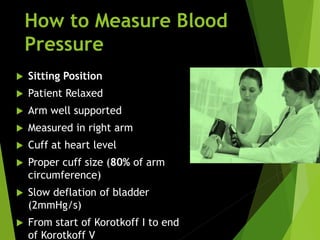
How to Measure Blood
Pressure
 Sitting Position
 Patient Relaxed
 Arm well supported
 Measured in right arm
 Cuff at heart level
 Proper cuff size (80% of arm
circumference)
 Slow deflation of bladder
(2mmHg/s)
 From start of Korotkoff I to end
of Korotkoff V
Normal Blood Pressure
changes in Pregnancy
• Decreases during the first
trimester,
• Reaching its lowest point at 20
weeks,
• Returns to pre-pregnancy
levels during the third
trimester.
What is Significant
Proteinuria in Pregnancy
Total protein in 24 hours urine
> 300mg
Protein : Creatinine ratio in
random sample > 0.1
Classification and
Definitions
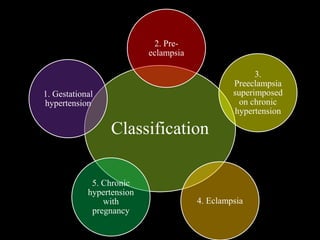
Classification
2. Pre-
eclampsia
4. Eclampsia
3.
Preeclampsia
superimposed
on chronic
hypertension
5. Chronic
hypertension
with
pregnancy
1. Gestational
hypertension
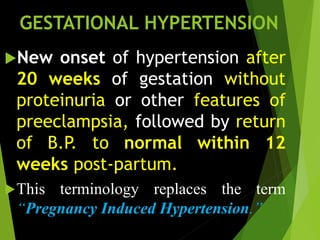
GESTATIONAL HYPERTENSION
New onset of hypertension after
20 weeks of gestation without
proteinuria or other features of
preeclampsia, followed by return
of B.P. to normal within 12
weeks post-partum.
This terminology replaces the term
“Pregnancy Induced Hypertension.”
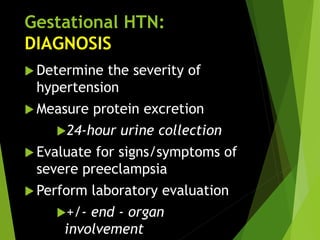
Gestational HTN:
DIAGNOSIS
 Determine the severity of
hypertension
 Measure protein excretion
24-hour urine collection
 Evaluate for signs/symptoms of
severe preeclampsia
 Perform laboratory evaluation
+/- end - organ
involvement
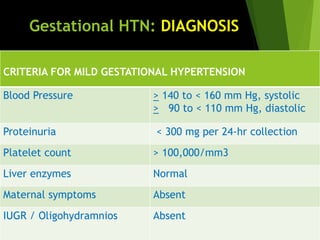
Gestational HTN: DIAGNOSIS
CRITERIA FOR MILD GESTATIONAL HYPERTENSION
Blood Pressure > 140 to < 160 mm Hg, systolic
> 90 to < 110 mm Hg, diastolic
Proteinuria < 300 mg per 24-hr collection
Platelet count > 100,000/mm3
Liver enzymes Normal
Maternal symptoms Absent
IUGR / Oligohydramnios Absent
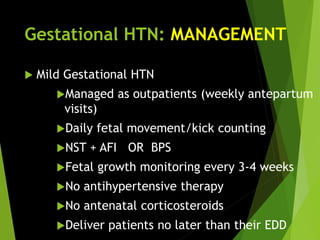
Gestational HTN: MANAGEMENT
 Mild Gestational HTN
Managed as outpatients (weekly antepartum
visits)
Daily fetal movement/kick counting
NST + AFI OR BPS
Fetal growth monitoring every 3-4 weeks
No antihypertensive therapy
No antenatal corticosteroids
Deliver patients no later than their EDD
Gestational HTN: MANAGEMENT
Severe Gestational HTN
SBP ≥160 mmHg or DBP
≥110 mmHg is treated with
antihypertensive agents
> 34 wks AOG  DELIVER!
< 34 wks AOG  give
steroids
Gestational HTN:
Risk of Progression to Preeclampsia
15-25% risk
Women with early onset of
gestational hypertension
are more likely to progress
to preeclampsia than
women with late onset
Gestational HTN:
RECURRENCE
Prevalence: 22 - 47 % (2nd
pregnancy)
tends to recur with
subsequent pregnancies
Gestational HTN:
LONG-TERM PROGNOSIS
associated with
development of HTN later
in life
associated with
development of diseases
related to hypertension
(CVD, CKD,DM)
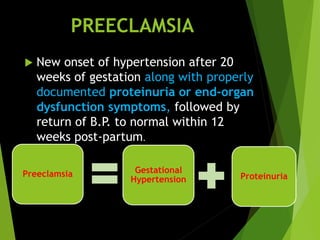
PREECLAMSIA
 New onset of hypertension after 20
weeks of gestation along with properly
documented proteinuria or end-organ
dysfunction symptoms, followed by
return of B.P. to normal within 12
weeks post-partum.
Preeclamsia Gestational
Hypertension Proteinuria
Note it……………………..
 Preeclampsia can also occur
without proteinuria, with end-
organ dysfunction manifestations.
 Edema is no longer considered a
specific diagnostic criterion for
preeclampsia.
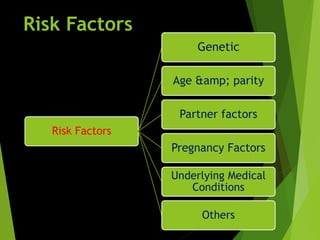
Risk Factors
Genetic
Age &amp; parity
Partner factors
Pregnancy Factors
Underlying Medical
Conditions
Others
Risk Factors
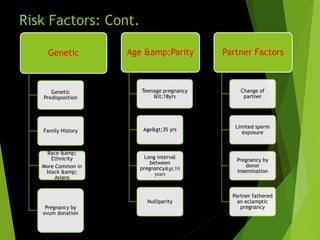
Risk Factors: Cont.
Genetic
Genetic
Predisposition
Family History
Race &amp;
Ethnicity
More Common in
black &amp;
Asians
Pregnancy by
ovum donation
Age &amp;Parity
Teenage pregnancy
&lt;18yrs
Age&gt;35 yrs
Long interval
between
pregnancy&gt;10
years
Nulliparity
Partner Factors
Change of
partner
Limited sperm
exposure
Pregnancy by
donor
insemination
Partner fathered
an eclamptic
pregnancy
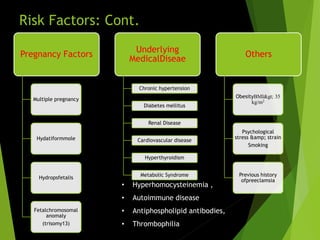
Risk Factors: Cont.
Pregnancy Factors
Multiple pregnancy
Hydatiformmole
Hydropsfetalis
Fetalchromosomal
anomaly
(trisomy13)
Underlying
MedicalDiseae
Chronic hypertension
Diabetes mellitus
Renal Disease
Cardiovascular disease
Hyperthyroidism
Metabolic Syndrome
Others
ObesityBMI&gt; 35
kg/m2
Psychological
stress &amp; strain
Smoking
Previous history
ofpreeclamsia
• Hyperhomocysteinemia ,
• Autoimmune disease
• Antiphospholipid antibodies,
• Thrombophilia
PATHOPHYSIOLOGY
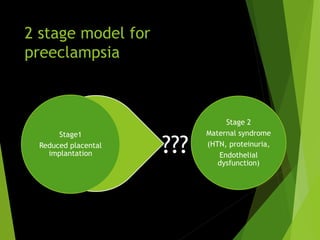
2 stage model for
preeclampsia
Stage 2
Maternal syndrome
(HTN, proteinuria,
Endothelial
dysfunction)
Stage1
Reduced placental
implantation ???
Reduced placental
implantation –Stage-1
PREDISPOSING FACTORS:
Abnormal implantation
Association with microvascular
diseases (diabetes,
hypertension etc.)
 Association with large
placentas (hydrops, multiple
gestation, hydatidiform mole)
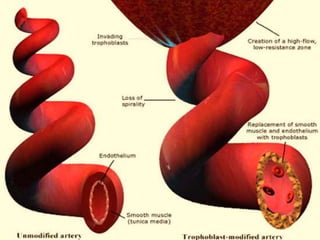
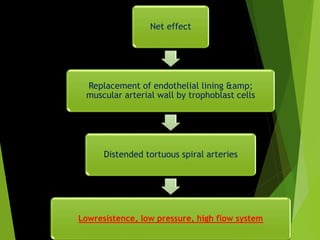
Net effect
Replacement of endothelial lining &amp;
muscular arterial wall by trophoblast cells
Distended tortuous spiral arteries
Lowresistence, low pressure, high flow system
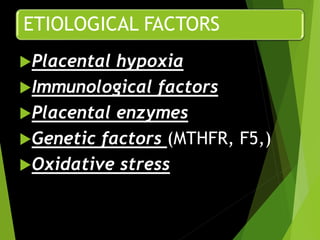
ETIOLOGICAL FACTORS
Placental hypoxia
Immunological factors
Placental enzymes
Genetic factors (MTHFR, F5,)
Oxidative stress
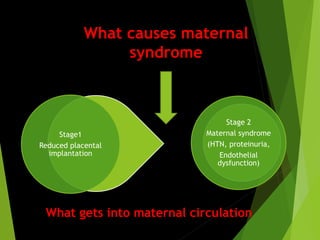
What causes maternal
syndrome
Stage 2
Maternal syndrome
(HTN, proteinuria,
Endothelial
dysfunction)
Stage1
Reduced placental
implantation
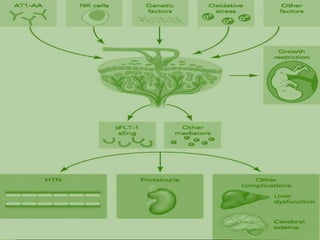
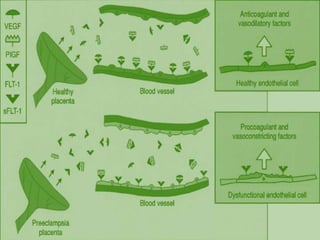
What gets into maternal circulation
Maternal Syndrome
stage-II
Not just hypertension and
proteinuria
But also involves different end
organs
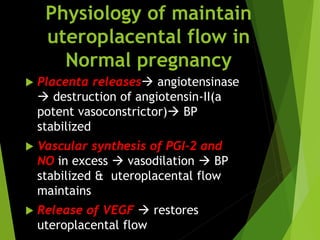
Physiology of maintain
uteroplacental flow in
Normal pregnancy
 Placenta releases angiotensinase
 destruction of angiotensin-II(a
potent vasoconstrictor) BP
stabilized
 Vascular synthesis of PGI-2 and
NO in excess  vasodilation  BP
stabilized & uteroplacental flow
maintains
 Release of VEGF  restores
uteroplacental flow
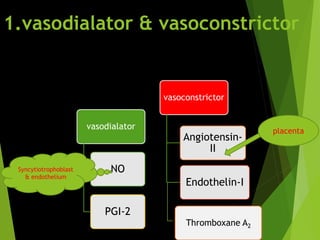
Normal balance of agonist &
anta-gonistic factors:
1.vasodialator &
vasoconstrictor
2. angiogenic and
antiangiogenic factors
1.vasodialator & vasoconstrictor
vasodialator
NO
PGI-2
vasoconstrictor
Angiotensin-
II
Endothelin-I
Thromboxane A2
placenta
Syncytiotrophoblast
& endothelium
2. angiogenic and
antiangiogenic factors

Angiogenicfactor
•VEGF
•TFG-beta
•PlGF
Antiangiogenicfactor
• sFlt-1
• sEng
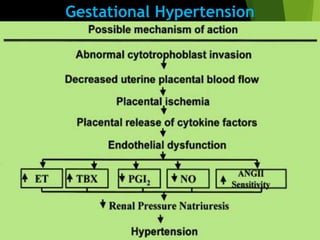
Gestational Hypertension
Basic mechanism of different
organ damage
Increased vasoconstriction
Decreased organ perfusion
Increased endothelial dysfunction –
capillary leak, oedema, Pulmonary
oedema, proteinuria.
Activation of coagulation: DIC, low
platelets
Haemoconcentration
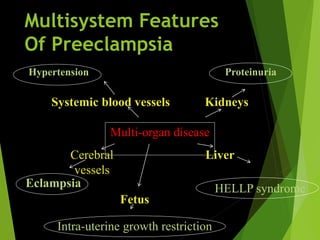
Multisystem Features
Of Preeclampsia
Hypertension Proteinuria
Eclampsia HELLP syndrome
Intra-uterine growth restriction
Multi-organ disease
Cerebral
vessels
Fetus
Liver
Systemic blood vessels Kidneys
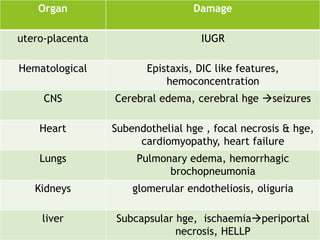
Organ Damage
utero-placenta IUGR
Hematological Epistaxis, DIC like features,
hemoconcentration
CNS Cerebral edema, cerebral hge seizures
Heart Subendothelial hge , focal necrosis & hge,
cardiomyopathy, heart failure
Lungs Pulmonary edema, hemorrhagic
brochopneumonia
Kidneys glomerular endotheliosis, oliguria
liver Subcapsular hge, ischaemiaperiportal
necrosis, HELLP
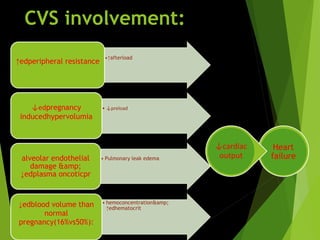
CVS involvement:
•↑afterload
↑edperipheral resistance
• ↓preload↓edpregnancy
inducedhypervolumia
• Pulmonary leak edemaalveolar endothelial
damage &amp;
↓edplasma oncoticpr
• hemoconcentration&amp;
↑edhematocrit
↓edblood volume than
normal
pregnancy(16%vs50%):
Heart
failure
↓cardiac
output
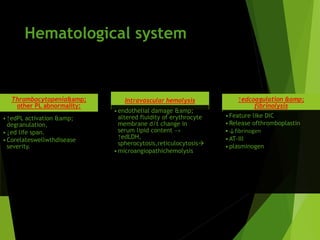
Hematological system
Thrombocytopenia&amp;
other PL abnormality:
•↑edPL activation &amp;
degranulation,
•↓ed life span.
•Corelateswellwthdisease
severity.
Intravascular hemolysis
•endothelial damage &amp;
altered fluidity of erythrocyte
membrane d/t change in
serum lipid content →
↑edLDH,
spherocytosis,reticulocytosis
•microangiopathichemolysis
↑edcoagulation &amp;
fibrinolysis
•Feature like DIC
•Release ofthromboplastin
•↓fibrinogen
•AT-III
•plasminogen
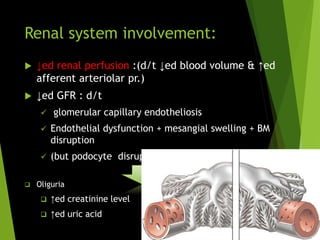
Renal system involvement:
 ↓ed renal perfusion :(d/t ↓ed blood volume & ↑ed
afferent arteriolar pr.)
 ↓ed GFR : d/t
 glomerular capillary endotheliosis
 Endothelial dysfunction + mesangial swelling + BM
disruption
 (but podocyte disruption minimal)
 Oliguria
 ↑ed creatinine level
 ↑ed uric acid
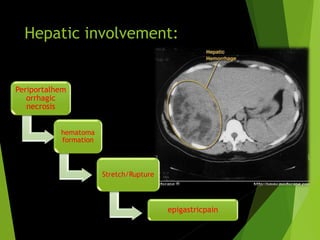
Hepatic involvement:
Periportalhem
orrhagic
necrosis
hematoma
formation
Stretch/Rupture
epigastricpain
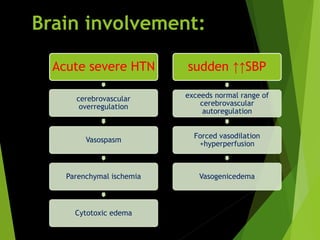
Brain involvement:
Acute severe HTN
cerebrovascular
overregulation
Vasospasm
Parenchymal ischemia
Cytotoxic edema
sudden ↑↑SBP
exceeds normal range of
cerebrovascular
autoregulation
Forced vasodilation
+hyperperfusion
Vasogenicedema
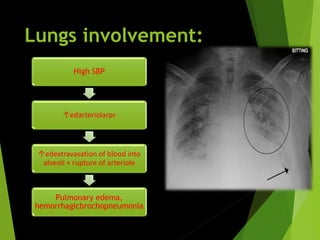
Lungs involvement:
High SBP
↑edarteriolarpr
↑edextravasation of blood into
alveoli + rupture of arteriole
Pulmonary edema,
hemorrhagicbrochopneumonia
PREECLAMPSIA PREDICTION
 There are many test during early pregnancy—
or across pregnancy—of various biological,
biochemical, and biophysical markers
implicated for preeclampsia prediction.
 The most predictive investigative procedures
are cumbersome, time-consuming and with
poor sensitivity and with poor positive
predictive value for preeclampsia.
 The efficacy of the preventive methods is
questionable too
 Currently, no screening tests are predictably
reliable, valid, and economical
(Kleinrouweler, 2012).
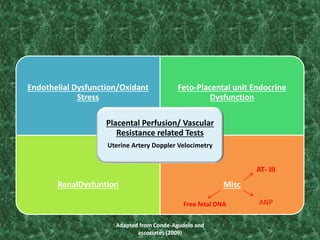
Endothelial Dysfunction/Oxidant
Stress
Feto-Placental unit Endocrine
Dysfunction
RenalDysfuntion Misc
Placental Perfusion/ Vascular
Resistance related Tests
Uterine Artery Doppler Velocimetry
AT- III
ANPFree fetal DNA
Adapted from Conde-Agudelo and
associates (2009)
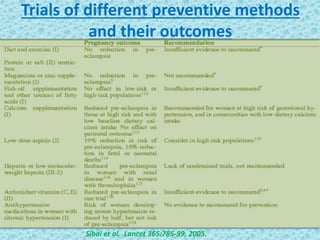
Trials of different preventive methods
and their outcomes
Sibai et al. Lancet 365:785-99, 2005.
Provocative
Pressure Tests
Three tests have been extensively
evaluated to assess the blood pressure
rise in response to a stimulus.
1.Roll-over test
After resting in the left lateral
position turning to a supine
position induces a rise in
diastolic pressure of 20 mmHg
or more is a positive test
indicative of tendency to
develop pre-eclampsia.
Perform at 28 to 32 weeks
pregnancy.
2.Hand-grip test
 Isometric (sustained) contraction of
striated muscles is known to cause
general sympathetic activation and hence
increase systemic arterial pressure in
healthy adults. The patient compresses
an inflated sphygmomanometer cuff for a
3-minutes period at maximal and then at
50% of maximal voluntary contraction. An
increase in diastolic pressure >20 mmHg
at 28-32 weeks’ gestation is associated
with an increased incidence of GHTN and
eclampsia.
3. Angiotensin II sensitivity
Sensitivity to infused angiotensin II: is
increased may be due to alteration in
vascular smooth muscle A II receptors.
Sensitivities of all above three tests to
range from 55 to 70 percent, and
specificities approximated 85 percent.
(metaanalysis, Conde-Agudelo and
associates 2014)
• is most promising, but currently, none of them
is completely suitable for clinical use. (Conde-
Agudelo, 2014; Kleinrouweler, 2012; Myatt,
2012a).
• These have value for fetal-growth restriction
but not preeclampsia (ACOG, 2013a).
• As a result of these trials, some methods to
prevent Preeclampsia have been theorized…
Uterine Artery Doppler Velocimetry
(abnormal flow resistance/ diastolic notch in
2nd/ 3rd trimester)
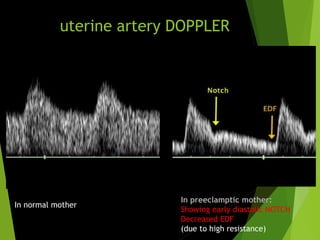
uterine artery DOPPLER
In preeclamptic mother:
Showing early diastolic NOTCH
Decreased EDF
(due to high resistance)
In normal mother
Urinary assays
a. Micro-albuminuria: detected by
radioimmunoassay before albuminuria can
be detected by the ordinary methods. The
drawback is that not all proteinuric pre-
eclampsia are preceded by this phase.
Sensitivities ranging from 7 to 90% and
specificities between 29 and 97 % (Conde-
Agudelo,2014).
b. 24 hours urinary calcium excretion: is
lower in women with pre-eclampsia than
normotensive pregnant women.
Urinary assays
c.Kallikrein/creatinine ratio: is reduced
in patients who develop PIH later on
if compared to the increased ratio in
normal pregnancy. Kallikrein is a
blood pressure reducing agent.
d. Prostaglandins metabolites: The end
metabolite of prostacyclin is
decreased while thromboxane B2 (the
metabolite of thromboxane A2) is
increased in urine of pre-eclamptic
women.
Blood tests
 a. Plasma urate: serial increase is a
warning of PIH before appearance
of other clinical features.
 b.Platelet count: a reduction
occurs early in pre-eclampsia.
 c. Anti-thrombin - III activity: begin
to decline as much as 13 weeks
prior to the development of clinical
manifestations of pre-eclampsia.
PREVENTION
 Prepregnancy
• Weight loss to ideal BMI
• Control of glucose in diabetes
• Control of BP in CHTN (diet, exercise)
 Low dose aspirin 75 mg in High risk
patient (from 12 wks) once a day
 Calcium 500mg twice a day.
 Not recommended
• Vitamins C & E
• Dietary salt restriction
• Anti-HTN therapy to prevent
preeclampsia
History -special points
• Patient Particulars: Age young or >35 yrs, nulliparity, low
SES -risk factors
• Chief Complaints: Swelling of legs or other parts of body
(face, abdominal wall, vulva, or whole body and tightness
of the ring on the finger.) Severe disease -Headache,
visual changes, nausea, vomiting, abdominal or
epigastric pain, and oliguria, insomnia, vaginal bleeding,
seizures.
• Present Obstetric History: Onset, Duration, Severity of
Htn/Proteinuria and H/o drug intake
• Past Obstetric History: H/o any hypertensive disorder of
pregnancy with week of onset. Also note the interval since
last pregnancy, gestational age at delivery. Any foetal
complications.
• Past History: of pre-existing hypertension, renal disease,
diabetes, thrombophilia, or thyroid disorder.
• Family History: of Htn, Preeclampsia, Diabetes, CVD
Physical Examination:
● Obesity/BMI >35 kg/m2
● Weight (serial measurements): Gain in wt at the rate of >500gs a week or
2.5kgs a month in the later months of pregnancy may be the earliest sign
of preeclampsia.
● Oedema (all sites): has to be pathological, meaning visible pitting edema
demonstratable over the ankles after 12 hrs bed rest.

● Pulse
● B.P.:
○ right arm, sitting/supine, arm at level of heart, cuff length=1.5
times of arm circumference, diastolic BP is the disappearance of
Korotkoff sounds (phase V)
○ taken on 2 occasions at least 6 hrs apart for confirmation of
diagnosis.
● CVS examination: auscultation for heart rate, rhythm, splitting of S2,
murmurs.
● Ophthalmic examination: retinal haemorrage, nicking of veins,
arteriole/vein ratio 3:1 from 3:2, papilloedema
● Deep tendon reflexes: hyperreflexia/presence of clonus
Obstetric Examination:
Nothing special is found except features
of IUGR, oligohydramnios in some
cases.
Maternal Investigations:
Tests may be abnormal even when BP elevation is minimal.
• Urine dipstick testing for proteinuria
o Quantitation by laboratory methods if ≥1+ on dipstick testing
o Urinary ACR(albumin-creatinine ratio) to detect significant
proteinuria (≥30mg/mmol)
o 24 hour urine collection is not necessary in routine clinical
management
• Routine Blood Examination: TLC, DLC, Peripheral Smear, BT, CT,
Hb%
• Serum Urea, creatinine, electrolytes including lactate
dehydrogenase (LDH) and uric acid.
• Liver function tests (LFT) -AST, ALT >70 IU/l
 • Skiagram of chest –PA view, Pulmonary Capillary Wedge
Pressure (PCWP), Brain Natriuretic Peptide (BNP)  for
detection of pulmpnary oedema
Diagnosing Preeclampsia-Eclampsia:
• Blood pressure ≥ 140/90 mm of Hg (at
or after 20 weeks of gestation) on 2
occasions at least 6 hours apart during
bed rest. (160/90 mm of Hg is severe
disease)
• accompanied by one or more of:
o significant proteinuria
-urinary dipstick 1+
-random urinary
protein/creatinine
ratio ≥ 30 mg/mmol
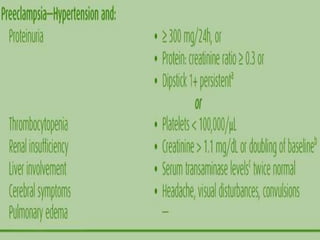
-24 hour urine excretion ≥300
mg/24 hrs
o renal involvement
-serum creatinine ≥ 90 mmol/L
or
-oliguria (<400 ml in 24 hrs)
o haematological involvement
-platelet count <1 lakh
o liver involvement
-raised AST, ALT (>70 IU/l)
-severe upper abdominal pain
o neurological involvement
-severe headache
-persistent visual disturbances
-hyperreflexia with sustained
clonus
-convulsions (eclampsia)
-stroke
o pulmonary oedema
o fetal growth restriction
o placental abruption
Foetal Investigations:
• Cardiotocograph (CTG)
• Ultrasound scan (USS) assessment
of:
o fetal growth
o amniotic fluid volume (AFV)
o umbilical artery flow (Doppler)
Differential Diagnosis
Pre-existing hypertension
New/gestational hypertension
Pre-eclampsia
Eclampsia
Exacerbation of underlying renal
disease/Superimposed pre-eclampsia-
eclampsia
SLE
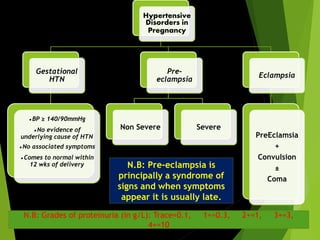
N.B: Grades of proteinuria (in g/L): Trace=0.1, 1+=0.3, 2+=1, 3+=3,
4+=10
Hypertensive
Disorders in
Pregnancy
Gestational
HTN
●BP ≥ 140/90mmHg
●No evidence of
underlying cause of HTN
●No associated symptoms
●Comes to normal within
12 wks of delivery
Pre-
eclampsia
Non Severe Severe
Eclampsia
PreEclamsia
+
Convulsion
±
Coma
N.B: Pre-eclampsia is
principally a syndrome of
signs and when symptoms
appear it is usually late.
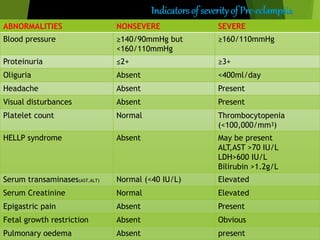
Indicators of severity of Pre-eclampsia
ABNORMALITIES NONSEVERE SEVERE
Blood pressure ≥140/90mmHg but
<160/110mmHg
≥160/110mmHg
Proteinuria ≤2+ ≥3+
Oliguria Absent <400ml/day
Headache Absent Present
Visual disturbances Absent Present
Platelet count Normal Thrombocytopenia
(<100,000/mm3)
HELLP syndrome Absent May be present
ALT,AST >70 IU/L
LDH>600 IU/L
Bilirubin >1.2g/L
Serum transaminases(AST,ALT) Normal (<40 IU/L) Elevated
Serum Creatinine Normal Elevated
Epigastric pain Absent Present
Fetal growth restriction Absent Obvious
Pulmonary oedema Absent present
MANAGEMENT
Definitive treatment: DELIVERY!
Based on:
AOG
Severity of PE
Maternal / Fetal condition
NONSEVERE PE: MANAGEMENT
Deliver at ≥37 weeks of
gestation
Labor induction encouraged
For Nonsevere - controlled disease :
There afterinduction may be done at
termdepending on cervical condition
Can bemanaged expectantlytill term
athome/hospitaland continuedtill term.
74
What is EXPECTANT MANAGEMENT?
NO
YES
Neither forced nor
restricted
EXPECTANT ANTEPARTUM MANAGEMENT OF
NONSEVERE PREECLAMPSIA
 Inpatient vs outpatient care
Close maternal monitoring upon diagnosis
of preeclampsia is important to establish
disease severity and the rate of
progression
Hospitalization is useful for making these
assessments and facilitates rapid
intervention in the event of rapid
progression
Outpatient care is a cost-effective option
for women with stable mild preeclampsia
after initial dx evaluation
EXPECTANT ANTEPARTUM MANAGEMENT
OF NONSEVERE PREECLAMPSIA
 Laboratory follow – up
platelet count, serum creatinine,
serum AST
1-2x/wk, assess disease
progression
 Assessment of fetal well-being
daily fetal movement count
twice weekly fetal NST with AFI
or
 twice weekly BPS
UMA Doppler indices evaluation
EXPECTANT ANTEPARTUM MANAGEMENT
OF NONSEVERE PREECLAMPSIA
 Assessment of fetal growth
Sonographic estimation of fetal weight
done to look for growth restriction and
oligohydramnios at the time of diagnosis
of PE , repeated every 3 weeks if the
initial examination is normal
 Antenatal corticosteroids
< 34 weeks AOG
But wait…can antihypertensives be used in
expectant management???
• In non-severe Pregnancy hypertension – No clear
Evidence of benefit other than to reduce
The Frequency of Episodes of Severe
hypertension
• May Adversely Effect Fetal Growthvelocity
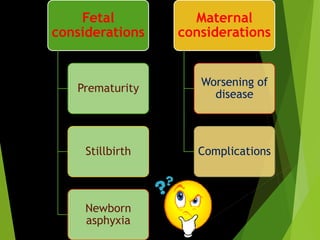
Fetal
considerations
Prematurity
Stillbirth
Newborn
asphyxia
Maternal
considerations
Worsening of
disease
Complications
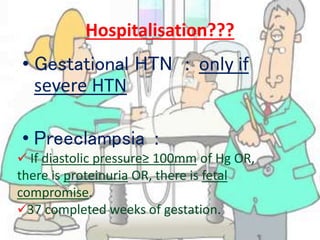
Hospitalisation???
• Gestational HTN : only if
severe HTN
• Preeclampsia :
 If diastolic pressure≥ 100mm of Hg OR,
there is proteinuria OR, there is fetal
compromise.
37 completed weeks of gestation.
INTRAPARTUM MANAGEMENT
 Intrapartum monitoring
 Fluids
monitored closely to avoid
excessive administration,
since women with severe
disease are at risk of
pulmonary edema and
significant third-spacing
DELIVERY CARE
• For any HDP, vaginal delivery should be
considered unless a CS is required for the
usual obstetric indications.
• Antihypertensives : continued throughout
labour to maintain BP < 160/110 mmHg .
• 3rd Stage : actively managed with 10 units IM,
particularly in the presence of
thrombocytopenia or coagulopathy. (I-A)
• Ergometrine should NOT be given
PES: MANAGEMENT
Deliver regardless of gestational age
 if proteinuria ( ≥5 grams) is the
only criteria for severe disease 
managed as nonsevere PE
mild fetal growth restriction with
reassuring Doppler velocimetry 
treat conservatively *
 severe hypertension  treat
conservatively *
NOTE: * remote from term
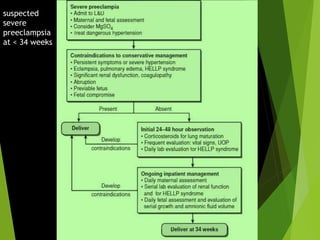
For early onset severe preeclampsia:
• Controversy regarding termination in
early onset disease
• But there is no beneficial role for
mother, as well as perinatal mortality is
also high instead of conservative
management
• So…
85
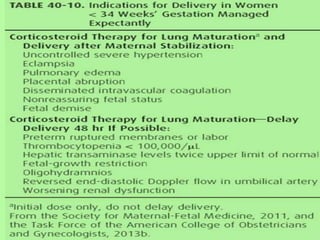
termination is seriously considered
suspected
severe
preeclampsia
at < 34 weeks
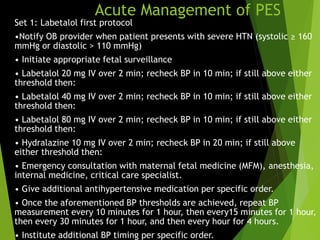
Acute Management of PES
Set 1: Labetalol first protocol
•Notify OB provider when patient presents with severe HTN (systolic ≥ 160
mmHg or diastolic > 110 mmHg)
• Initiate appropriate fetal surveillance
• Labetalol 20 mg IV over 2 min; recheck BP in 10 min; if still above either
threshold then:
• Labetalol 40 mg IV over 2 min; recheck BP in 10 min; if still above either
threshold then:
• Labetalol 80 mg IV over 2 min; recheck BP in 10 min; if still above either
threshold then:
• Hydralazine 10 mg IV over 2 min; recheck BP in 20 min; if still above
either threshold then:
• Emergency consultation with maternal fetal medicine (MFM), anesthesia,
internal medicine, critical care specialist.
• Give additional antihypertensive medication per specific order.
• Once the aforementioned BP thresholds are achieved, repeat BP
measurement every 10 minutes for 1 hour, then every15 minutes for 1 hour,
then every 30 minutes for 1 hour, and then every hour for 4 hours.
• Institute additional BP timing per specific order.
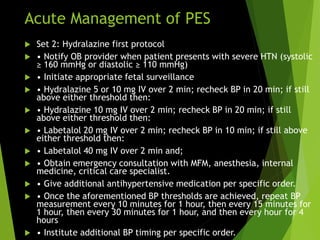
Acute Management of PES
 Set 2: Hydralazine first protocol
 • Notify OB provider when patient presents with severe HTN (systolic
≥ 160 mmHg or diastolic ≥ 110 mmHg)
 • Initiate appropriate fetal surveillance
 • Hydralazine 5 or 10 mg IV over 2 min; recheck BP in 20 min; if still
above either threshold then:
 • Hydralazine 10 mg IV over 2 min; recheck BP in 20 min; if still
above either threshold then:
 • Labetalol 20 mg IV over 2 min; recheck BP in 10 min; if still above
either threshold then:
 • Labetalol 40 mg IV over 2 min and;
 • Obtain emergency consultation with MFM, anesthesia, internal
medicine, critical care specialist.
 • Give additional antihypertensive medication per specific order.
 • Once the aforementioned BP thresholds are achieved, repeat BP
measurement every 10 minutes for 1 hour, then every 15 minutes for
1 hour, then every 30 minutes for 1 hour, and then every hour for 4
hours
 • Institute additional BP timing per specific order.
TARGET BP
 130 to 150 mm Hg systolic and 80 to 100
mm Hg diastolic OR reduce MAP by no
more than 25% over 2hrs
 Cerebral or myocardial ischemia or
infarction can be induced by aggressive
antihypertensive therapy if the blood
pressure falls below the range at which
tissue perfusion can be maintained by
autoregulation.
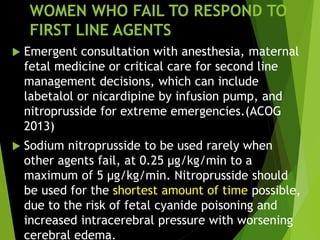
WOMEN WHO FAIL TO RESPOND TO
FIRST LINE AGENTS
 Emergent consultation with anesthesia, maternal
fetal medicine or critical care for second line
management decisions, which can include
labetalol or nicardipine by infusion pump, and
nitroprusside for extreme emergencies.(ACOG
2013)
 Sodium nitroprusside to be used rarely when
other agents fail, at 0.25 μg/kg/min to a
maximum of 5 μg/kg/min. Nitroprusside should
be used for the shortest amount of time possible,
due to the risk of fetal cyanide poisoning and
increased intracerebral pressure with worsening
cerebral edema.
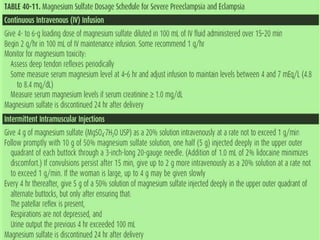
Seizure Prophylaxis
MgS04 given to mild / severe PE
Loading dose: 4-6 g, slow IV
push, over 15-20 mins
Continuous infusion: 1-2 g/hr
OR 5g IM into each buttock
(total 10 g) followed by 5 g IM,
alternate buttocks ever 4h
continued for 24 hours after last
convulsion or delivery.
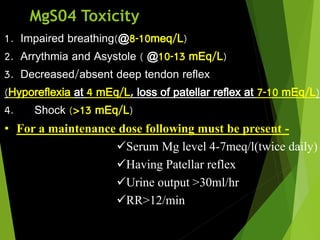
MgS04 Toxicity
1. Impaired breathing(@8-10meq/L)
2. Arrythmia and Asystole ( @10-13 mEq/L)
3. Decreased/absent deep tendon reflex
(Hyporeflexia at 4 mEq/L, loss of patellar reflex at 7-10 mEq/L)
4. Shock (>13 mEq/L)
• For a maintenance dose following must be present -
Serum Mg level 4-7meq/l(twice daily)
Having Patellar reflex
Urine output >30ml/hr
RR>12/min
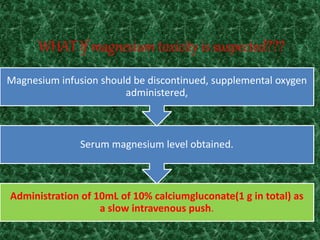
WHAT If magnesium toxicity is suspected???
Administration of 10mL of 10% calciumgluconate(1 g in total) as
a slow intravenous push.
Serum magnesium level obtained.
Magnesium infusion should be discontinued, supplemental oxygen
administered,
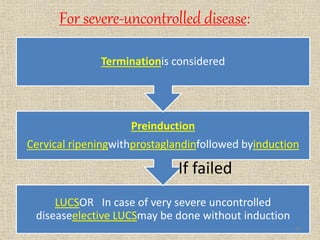
For severe-uncontrolled disease:
LUCSOR In case of very severe uncontrolled
diseaseelective LUCSmay be done without induction
Preinduction
Cervical ripeningwithprostaglandinfollowed byinduction
Terminationis considered
95
If failed
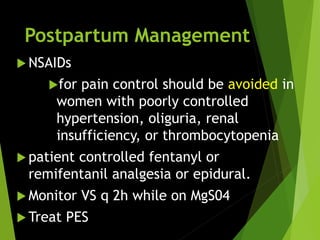
Postpartum Management
 NSAIDs
for pain control should be avoided in
women with poorly controlled
hypertension, oliguria, renal
insufficiency, or thrombocytopenia
 patient controlled fentanyl or
remifentanil analgesia or epidural.
 Monitor VS q 2h while on MgS04
 Treat PES
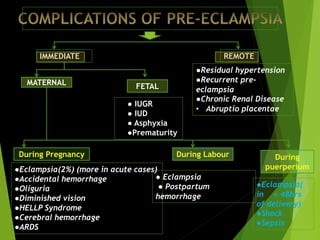
IMMEDIATE REMOTE
MATERNAL FETAL
● IUGR
● IUD
● Asphyxia
●Prematurity
During Pregnancy During Labour During
puerperium●Eclampsia(2%) (more in acute cases)
●Accidental hemorrhage
●Oliguria
●Diminished vision
●HELLP Syndrome
●Cerebral hemorrhage
●ARDS
● Eclampsia
● Postpartum
hemorrhage
●Eclampsia(
in < 48hrs
of delivery)
●Shock
●Sepsis
●Residual hypertension
●Recurrent pre-
eclampsia
●Chronic Renal Disease
• Abruptio placentae
HELLP Syndrome
This is an acronym for Hemolysis, Elevated Liver
enzymes, and Low Platelet count.
It is a rare multisystem disorder that complicates
pregnancy with lab evidences of micro-
angiopathic hemolysis, hepatic dysfunctioning &
thrombocytopenia.
It is a complication mostly associated with Pre-
eclampsia but can also be diagnosed (rarely
though) in the absence of these disorders.
Incidence 20% of women with severe
preeclampsia.
HEMOLYSIS
(due to
passage of
RBCs
through
partially
obstructed
vessel)
s)
HEPATIC
DYSFUNCTION
(due to
intravascular
fibrin
deposition
&amp;sinosoid
alobst.)
Decreased
Liver blood
flow
HELLP
Syndrome
THROMBO-
CYTOPENIA(
due to
platelet
aggregation
&amp;diposit
ionin the
sites
ofendothheli
aldamage)
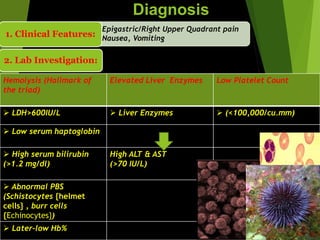
Diagnosis
Hemolysis (Hallmark of
the triad)
Elevated Liver Enzymes Low Platelet Count
 LDH>600IU/L  Liver Enzymes  (<100,000/cu.mm)
 Low serum haptoglobin
 High serum bilirubin
(>1.2 mg/dl)
High ALT & AST
(>70 IU/L)
 Abnormal PBS
(Schistocytes {helmet
cells} , burr cells
{Echinocytes})
 Later-low Hb%
• ●Epigastric/Right Upper Quadrant pain
• ●Nausea, Vomiting
1. Clinical Features:
2. Lab Investigation:
HELLP Syndrome
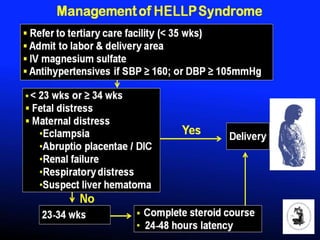
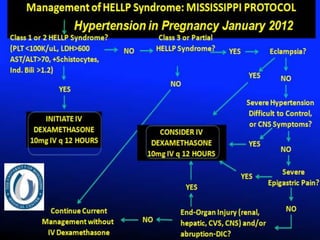
Initiate IV Dexamethasone:
 Only for dangerously low platelet counts
<50,000/uL
 The 2013 Task Force does not recommend
for HELLP syndrome
 Antepartum: Dex 10mg q12 hrs
 Postpartum: Dex 10+10+5+5
@ 0,12,24,36 hrs
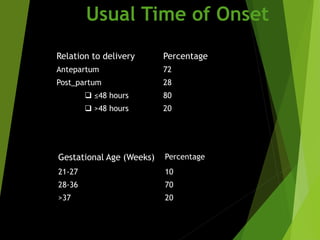
Usual Time of Onset
Relation to delivery Percentage
Antepartum 72
Post_partum 28
 ≤48 hours 80
 >48 hours 20
Gestational Age (Weeks) Percentage
21-27 10
28-36 70
>37 20
SUPERIMPOSED PREECLAMPSIA
ON CHRONIC HYPERTENSION
New onset proteinuria in
hypertensive women but no
proteinuria before 20 weeks' gestation
A sudden increase in proteinuria or
blood pressure or platelet count <
100,000/L in women with
hypertension and proteinuria before
20 weeks' gestation
ECLAMPSIA
 Generalized tonic-clonic seizure in a
patient with Preeclampsia not attributed
to any other cause.
 If seizures occur beyond 48-72 hours postpartum
causes may be more likely other than eclampsia.
 occurs in 2 to 3 percent of severely preeclamptic
women not receiving anti-seizure prophylaxis
Eclampsia Preeclampsia
Seizure/
Convulsion/
Coma
D/D ECLAMPSIA
Epilepsy,
Intracranial
haemorrhage/thrombosis,
Meningitis,
Cerebral malaria,
Amniotic fluid embolism
can mimic eclampsia.
PATHOGENESIS OF SEIZURES
1. Cerebral overregulation in
response to high systemic blood
pressure
vasospasm of cerebral arteries
underperfusion of the brain
localizedischemia/infarction
cytotoxic (intracellular) edema
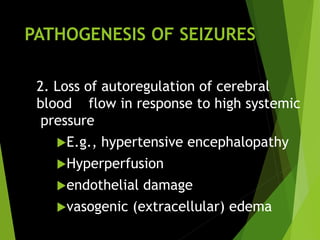
PATHOGENESIS OF SEIZURES
2. Loss of autoregulation of cerebral
blood flow in response to high systemic
pressure
E.g., hypertensive encephalopathy
Hyperperfusion
endothelial damage
vasogenic (extracellular) edema
MANAGEMENT
Iinitial Mx: Maintenance of airway
patency and prevention of
aspiration
Gravida rolled onto her left side
Protect from trauma
Supplemental O2 (8-10L/min via
face mask)
Management of severe hypertension,
if present
Prevention of recurrent seizures
Evaluation for prompt delivery
definitive treatment of eclampsia
is delivery, irrespective of
gestational age
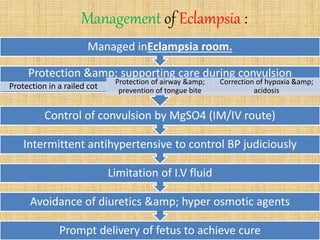
Management of Eclampsia :
Prompt delivery of fetus to achieve cure
Avoidance of diuretics &amp; hyper osmotic agents
Limitation of I.V fluid
Intermittent antihypertensive to control BP judiciously
Control of convulsion by MgSO4 (IM/IV route)
Protection &amp; supporting care during convulsion
Protection in a railed cot
Protection of airway &amp;
prevention of tongue bite
Correction of hypoxia &amp;
acidosis
Managed inEclampsia room.
113
to control convulsion
“It is the most effective drug
to control even recurrent
seizures without any central
nervous system depression to
mother & fetus”
114
Magnesium
sulphate
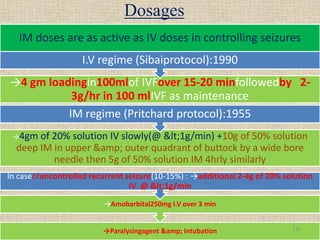
Dosages
→Paralysingagent &amp; Intubation
→Amobarbital250mg I.V over 3 min
In caseofuncontrolled recurrent seizure(10-15%) : →additional 2-4g of 20% solution
IV @ &lt;1g/min
→4gm of 20% solution IV slowly(@ &lt;1g/min) +10g of 50% solution
deep IM in upper &amp; outer quadrant of buttock by a wide bore
needle then 5g of 50% solution IM 4hrly similarly
IM regime (Pritchard protocol):1955
→4 gm loadingin100mlof IVFover 15-20 minfollowedby 2-
3g/hr in 100 mlIVF as maintenance
I.V regime (Sibaiprotocol):1990
IM doses are as active as IV doses in controlling seizures
115
• Duration : 24 hrs from last convulsion
or from delivery which one is longer.
116
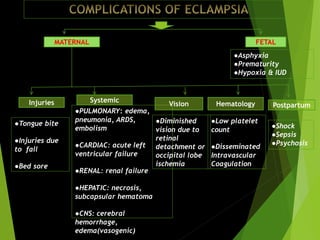
MATERNAL FETAL
●Asphyxia
●Prematurity
●Hypoxia & IUD
Injuries Systemic
●Tongue bite
●Injuries due
to fall
●Bed sore
●PULMONARY: edema,
pneumonia, ARDS,
embolism
●CARDIAC: acute left
ventricular failure
●RENAL: renal failure
●HEPATIC: necrosis,
subcapsular hematoma
●CNS: cerebral
hemorrhage,
edema(vasogenic)
Vision
●Diminished
vision due to
retinal
detachment or
occipital lobe
ischemia
Hematology
●Low platelet
count
●Disseminated
Intravascular
Coagulation
Postpartum
●Shock
●Sepsis
●Psychosis
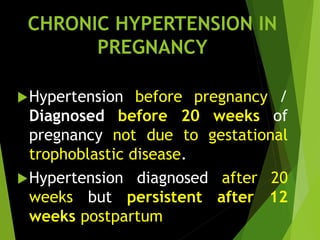
CHRONIC HYPERTENSION IN
PREGNANCY
Hypertension before pregnancy /
Diagnosed before 20 weeks of
pregnancy not due to gestational
trophoblastic disease.
Hypertension diagnosed after 20
weeks but persistent after 12
weeks postpartum
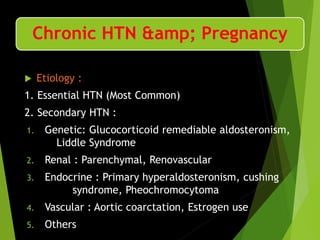
Chronic HTN &amp; Pregnancy
 Etiology :
1. Essential HTN (Most Common)
2. Secondary HTN :
1. Genetic: Glucocorticoid remediable aldosteronism,
Liddle Syndrome
2. Renal : Parenchymal, Renovascular
3. Endocrine : Primary hyperaldosteronism, cushing
syndrome, Pheochromocytoma
4. Vascular : Aortic coarctation, Estrogen use
5. Others
Thank you…

HDP - eclampsia and preeclamsia

  • 1.
  • 2.
    INTRODUCTION  It isassociated with severe maternal obstetric complications.  Incidence is 5-10%.  The most frequent cause of iatrogenic prematurity.  Preterm delivery  Intrauterine growth restriction (IUGR)  Perinatal death  Maternal cerebrovascular accidents  Placental abruption
  • 3.
    Hypertension in Pregnancy Systolic B.P. ≥ 140 mmHg  and/or  Diastolic B.P. ≥ 90 mmHg  Documented on two occasions  At least 6 hours apart  Not more than 7 days apart  Readings should be confirmed using appropriate measurement technique, and should be remeasured after 10-15 minutes of rest.  Other Criteria (Not part of definition currently)  SBP increased by 30mmHg  DBP increased by 15mmHg  Mean Arterial Pressure increased by 20mmHg
  • 4.
    SEVERITY HYPERTENSION  Non-severehypertension: SBP 140-159 mmHg or DBP 90-109 mmHg. Mild: SBP 140-149 mmHg or DBP 90-99mmHg. Moderate: SBP 150-160 mmHg or DBP 100-110 mmHg.  Severe hypertension: SBP > 160 mm Hg or DBP > 110 mmHg or both.
  • 5.
    How to MeasureBlood Pressure  Sitting Position  Patient Relaxed  Arm well supported  Measured in right arm  Cuff at heart level  Proper cuff size (80% of arm circumference)  Slow deflation of bladder (2mmHg/s)  From start of Korotkoff I to end of Korotkoff V
  • 6.
    Normal Blood Pressure changesin Pregnancy • Decreases during the first trimester, • Reaching its lowest point at 20 weeks, • Returns to pre-pregnancy levels during the third trimester.
  • 7.
    What is Significant Proteinuriain Pregnancy Total protein in 24 hours urine > 300mg Protein : Creatinine ratio in random sample > 0.1
  • 8.
  • 9.
    Classification 2. Pre- eclampsia 4. Eclampsia 3. Preeclampsia superimposed onchronic hypertension 5. Chronic hypertension with pregnancy 1. Gestational hypertension
  • 10.
    GESTATIONAL HYPERTENSION New onsetof hypertension after 20 weeks of gestation without proteinuria or other features of preeclampsia, followed by return of B.P. to normal within 12 weeks post-partum. This terminology replaces the term “Pregnancy Induced Hypertension.”
  • 11.
    Gestational HTN: DIAGNOSIS  Determinethe severity of hypertension  Measure protein excretion 24-hour urine collection  Evaluate for signs/symptoms of severe preeclampsia  Perform laboratory evaluation +/- end - organ involvement
  • 12.
    Gestational HTN: DIAGNOSIS CRITERIAFOR MILD GESTATIONAL HYPERTENSION Blood Pressure > 140 to < 160 mm Hg, systolic > 90 to < 110 mm Hg, diastolic Proteinuria < 300 mg per 24-hr collection Platelet count > 100,000/mm3 Liver enzymes Normal Maternal symptoms Absent IUGR / Oligohydramnios Absent
  • 13.
    Gestational HTN: MANAGEMENT Mild Gestational HTN Managed as outpatients (weekly antepartum visits) Daily fetal movement/kick counting NST + AFI OR BPS Fetal growth monitoring every 3-4 weeks No antihypertensive therapy No antenatal corticosteroids Deliver patients no later than their EDD
  • 14.
    Gestational HTN: MANAGEMENT SevereGestational HTN SBP ≥160 mmHg or DBP ≥110 mmHg is treated with antihypertensive agents > 34 wks AOG  DELIVER! < 34 wks AOG  give steroids
  • 16.
    Gestational HTN: Risk ofProgression to Preeclampsia 15-25% risk Women with early onset of gestational hypertension are more likely to progress to preeclampsia than women with late onset
  • 17.
    Gestational HTN: RECURRENCE Prevalence: 22- 47 % (2nd pregnancy) tends to recur with subsequent pregnancies
  • 18.
    Gestational HTN: LONG-TERM PROGNOSIS associatedwith development of HTN later in life associated with development of diseases related to hypertension (CVD, CKD,DM)
  • 19.
    PREECLAMSIA  New onsetof hypertension after 20 weeks of gestation along with properly documented proteinuria or end-organ dysfunction symptoms, followed by return of B.P. to normal within 12 weeks post-partum. Preeclamsia Gestational Hypertension Proteinuria
  • 20.
    Note it……………………..  Preeclampsiacan also occur without proteinuria, with end- organ dysfunction manifestations.  Edema is no longer considered a specific diagnostic criterion for preeclampsia.
  • 22.
    Risk Factors Genetic Age &amp;parity Partner factors Pregnancy Factors Underlying Medical Conditions Others Risk Factors
  • 23.
    Risk Factors: Cont. Genetic Genetic Predisposition FamilyHistory Race &amp; Ethnicity More Common in black &amp; Asians Pregnancy by ovum donation Age &amp;Parity Teenage pregnancy &lt;18yrs Age&gt;35 yrs Long interval between pregnancy&gt;10 years Nulliparity Partner Factors Change of partner Limited sperm exposure Pregnancy by donor insemination Partner fathered an eclamptic pregnancy
  • 24.
    Risk Factors: Cont. PregnancyFactors Multiple pregnancy Hydatiformmole Hydropsfetalis Fetalchromosomal anomaly (trisomy13) Underlying MedicalDiseae Chronic hypertension Diabetes mellitus Renal Disease Cardiovascular disease Hyperthyroidism Metabolic Syndrome Others ObesityBMI&gt; 35 kg/m2 Psychological stress &amp; strain Smoking Previous history ofpreeclamsia • Hyperhomocysteinemia , • Autoimmune disease • Antiphospholipid antibodies, • Thrombophilia
  • 25.
  • 26.
    2 stage modelfor preeclampsia Stage 2 Maternal syndrome (HTN, proteinuria, Endothelial dysfunction) Stage1 Reduced placental implantation ???
  • 27.
    Reduced placental implantation –Stage-1 PREDISPOSINGFACTORS: Abnormal implantation Association with microvascular diseases (diabetes, hypertension etc.)  Association with large placentas (hydrops, multiple gestation, hydatidiform mole)
  • 30.
    Net effect Replacement ofendothelial lining &amp; muscular arterial wall by trophoblast cells Distended tortuous spiral arteries Lowresistence, low pressure, high flow system
  • 31.
    ETIOLOGICAL FACTORS Placental hypoxia Immunologicalfactors Placental enzymes Genetic factors (MTHFR, F5,) Oxidative stress
  • 32.
    What causes maternal syndrome Stage2 Maternal syndrome (HTN, proteinuria, Endothelial dysfunction) Stage1 Reduced placental implantation What gets into maternal circulation
  • 33.
    Maternal Syndrome stage-II Not justhypertension and proteinuria But also involves different end organs
  • 34.
    Physiology of maintain uteroplacentalflow in Normal pregnancy  Placenta releases angiotensinase  destruction of angiotensin-II(a potent vasoconstrictor) BP stabilized  Vascular synthesis of PGI-2 and NO in excess  vasodilation  BP stabilized & uteroplacental flow maintains  Release of VEGF  restores uteroplacental flow
  • 35.
    Normal balance ofagonist & anta-gonistic factors: 1.vasodialator & vasoconstrictor 2. angiogenic and antiangiogenic factors
  • 36.
  • 37.
    2. angiogenic and antiangiogenicfactors Angiogenicfactor •VEGF •TFG-beta •PlGF Antiangiogenicfactor • sFlt-1 • sEng
  • 39.
  • 40.
    Basic mechanism ofdifferent organ damage Increased vasoconstriction Decreased organ perfusion Increased endothelial dysfunction – capillary leak, oedema, Pulmonary oedema, proteinuria. Activation of coagulation: DIC, low platelets Haemoconcentration
  • 42.
    Multisystem Features Of Preeclampsia HypertensionProteinuria Eclampsia HELLP syndrome Intra-uterine growth restriction Multi-organ disease Cerebral vessels Fetus Liver Systemic blood vessels Kidneys
  • 43.
    Organ Damage utero-placenta IUGR HematologicalEpistaxis, DIC like features, hemoconcentration CNS Cerebral edema, cerebral hge seizures Heart Subendothelial hge , focal necrosis & hge, cardiomyopathy, heart failure Lungs Pulmonary edema, hemorrhagic brochopneumonia Kidneys glomerular endotheliosis, oliguria liver Subcapsular hge, ischaemiaperiportal necrosis, HELLP
  • 44.
    CVS involvement: •↑afterload ↑edperipheral resistance •↓preload↓edpregnancy inducedhypervolumia • Pulmonary leak edemaalveolar endothelial damage &amp; ↓edplasma oncoticpr • hemoconcentration&amp; ↑edhematocrit ↓edblood volume than normal pregnancy(16%vs50%): Heart failure ↓cardiac output
  • 45.
    Hematological system Thrombocytopenia&amp; other PLabnormality: •↑edPL activation &amp; degranulation, •↓ed life span. •Corelateswellwthdisease severity. Intravascular hemolysis •endothelial damage &amp; altered fluidity of erythrocyte membrane d/t change in serum lipid content → ↑edLDH, spherocytosis,reticulocytosis •microangiopathichemolysis ↑edcoagulation &amp; fibrinolysis •Feature like DIC •Release ofthromboplastin •↓fibrinogen •AT-III •plasminogen
  • 46.
    Renal system involvement: ↓ed renal perfusion :(d/t ↓ed blood volume & ↑ed afferent arteriolar pr.)  ↓ed GFR : d/t  glomerular capillary endotheliosis  Endothelial dysfunction + mesangial swelling + BM disruption  (but podocyte disruption minimal)  Oliguria  ↑ed creatinine level  ↑ed uric acid
  • 47.
  • 48.
    Brain involvement: Acute severeHTN cerebrovascular overregulation Vasospasm Parenchymal ischemia Cytotoxic edema sudden ↑↑SBP exceeds normal range of cerebrovascular autoregulation Forced vasodilation +hyperperfusion Vasogenicedema
  • 49.
    Lungs involvement: High SBP ↑edarteriolarpr ↑edextravasationof blood into alveoli + rupture of arteriole Pulmonary edema, hemorrhagicbrochopneumonia
  • 50.
    PREECLAMPSIA PREDICTION  Thereare many test during early pregnancy— or across pregnancy—of various biological, biochemical, and biophysical markers implicated for preeclampsia prediction.  The most predictive investigative procedures are cumbersome, time-consuming and with poor sensitivity and with poor positive predictive value for preeclampsia.  The efficacy of the preventive methods is questionable too  Currently, no screening tests are predictably reliable, valid, and economical (Kleinrouweler, 2012).
  • 51.
    Endothelial Dysfunction/Oxidant Stress Feto-Placental unitEndocrine Dysfunction RenalDysfuntion Misc Placental Perfusion/ Vascular Resistance related Tests Uterine Artery Doppler Velocimetry AT- III ANPFree fetal DNA Adapted from Conde-Agudelo and associates (2009)
  • 52.
    Trials of differentpreventive methods and their outcomes Sibai et al. Lancet 365:785-99, 2005.
  • 53.
    Provocative Pressure Tests Three testshave been extensively evaluated to assess the blood pressure rise in response to a stimulus.
  • 54.
    1.Roll-over test After restingin the left lateral position turning to a supine position induces a rise in diastolic pressure of 20 mmHg or more is a positive test indicative of tendency to develop pre-eclampsia. Perform at 28 to 32 weeks pregnancy.
  • 55.
    2.Hand-grip test  Isometric(sustained) contraction of striated muscles is known to cause general sympathetic activation and hence increase systemic arterial pressure in healthy adults. The patient compresses an inflated sphygmomanometer cuff for a 3-minutes period at maximal and then at 50% of maximal voluntary contraction. An increase in diastolic pressure >20 mmHg at 28-32 weeks’ gestation is associated with an increased incidence of GHTN and eclampsia.
  • 56.
    3. Angiotensin IIsensitivity Sensitivity to infused angiotensin II: is increased may be due to alteration in vascular smooth muscle A II receptors. Sensitivities of all above three tests to range from 55 to 70 percent, and specificities approximated 85 percent. (metaanalysis, Conde-Agudelo and associates 2014)
  • 57.
    • is mostpromising, but currently, none of them is completely suitable for clinical use. (Conde- Agudelo, 2014; Kleinrouweler, 2012; Myatt, 2012a). • These have value for fetal-growth restriction but not preeclampsia (ACOG, 2013a). • As a result of these trials, some methods to prevent Preeclampsia have been theorized… Uterine Artery Doppler Velocimetry (abnormal flow resistance/ diastolic notch in 2nd/ 3rd trimester)
  • 58.
    uterine artery DOPPLER Inpreeclamptic mother: Showing early diastolic NOTCH Decreased EDF (due to high resistance) In normal mother
  • 59.
    Urinary assays a. Micro-albuminuria:detected by radioimmunoassay before albuminuria can be detected by the ordinary methods. The drawback is that not all proteinuric pre- eclampsia are preceded by this phase. Sensitivities ranging from 7 to 90% and specificities between 29 and 97 % (Conde- Agudelo,2014). b. 24 hours urinary calcium excretion: is lower in women with pre-eclampsia than normotensive pregnant women.
  • 60.
    Urinary assays c.Kallikrein/creatinine ratio:is reduced in patients who develop PIH later on if compared to the increased ratio in normal pregnancy. Kallikrein is a blood pressure reducing agent. d. Prostaglandins metabolites: The end metabolite of prostacyclin is decreased while thromboxane B2 (the metabolite of thromboxane A2) is increased in urine of pre-eclamptic women.
  • 61.
    Blood tests  a.Plasma urate: serial increase is a warning of PIH before appearance of other clinical features.  b.Platelet count: a reduction occurs early in pre-eclampsia.  c. Anti-thrombin - III activity: begin to decline as much as 13 weeks prior to the development of clinical manifestations of pre-eclampsia.
  • 62.
    PREVENTION  Prepregnancy • Weightloss to ideal BMI • Control of glucose in diabetes • Control of BP in CHTN (diet, exercise)  Low dose aspirin 75 mg in High risk patient (from 12 wks) once a day  Calcium 500mg twice a day.  Not recommended • Vitamins C & E • Dietary salt restriction • Anti-HTN therapy to prevent preeclampsia
  • 63.
    History -special points •Patient Particulars: Age young or >35 yrs, nulliparity, low SES -risk factors • Chief Complaints: Swelling of legs or other parts of body (face, abdominal wall, vulva, or whole body and tightness of the ring on the finger.) Severe disease -Headache, visual changes, nausea, vomiting, abdominal or epigastric pain, and oliguria, insomnia, vaginal bleeding, seizures. • Present Obstetric History: Onset, Duration, Severity of Htn/Proteinuria and H/o drug intake • Past Obstetric History: H/o any hypertensive disorder of pregnancy with week of onset. Also note the interval since last pregnancy, gestational age at delivery. Any foetal complications. • Past History: of pre-existing hypertension, renal disease, diabetes, thrombophilia, or thyroid disorder. • Family History: of Htn, Preeclampsia, Diabetes, CVD
  • 64.
    Physical Examination: ● Obesity/BMI>35 kg/m2 ● Weight (serial measurements): Gain in wt at the rate of >500gs a week or 2.5kgs a month in the later months of pregnancy may be the earliest sign of preeclampsia. ● Oedema (all sites): has to be pathological, meaning visible pitting edema demonstratable over the ankles after 12 hrs bed rest. ● Pulse ● B.P.: ○ right arm, sitting/supine, arm at level of heart, cuff length=1.5 times of arm circumference, diastolic BP is the disappearance of Korotkoff sounds (phase V) ○ taken on 2 occasions at least 6 hrs apart for confirmation of diagnosis. ● CVS examination: auscultation for heart rate, rhythm, splitting of S2, murmurs. ● Ophthalmic examination: retinal haemorrage, nicking of veins, arteriole/vein ratio 3:1 from 3:2, papilloedema ● Deep tendon reflexes: hyperreflexia/presence of clonus
  • 65.
    Obstetric Examination: Nothing specialis found except features of IUGR, oligohydramnios in some cases.
  • 66.
    Maternal Investigations: Tests maybe abnormal even when BP elevation is minimal. • Urine dipstick testing for proteinuria o Quantitation by laboratory methods if ≥1+ on dipstick testing o Urinary ACR(albumin-creatinine ratio) to detect significant proteinuria (≥30mg/mmol) o 24 hour urine collection is not necessary in routine clinical management • Routine Blood Examination: TLC, DLC, Peripheral Smear, BT, CT, Hb% • Serum Urea, creatinine, electrolytes including lactate dehydrogenase (LDH) and uric acid. • Liver function tests (LFT) -AST, ALT >70 IU/l  • Skiagram of chest –PA view, Pulmonary Capillary Wedge Pressure (PCWP), Brain Natriuretic Peptide (BNP)  for detection of pulmpnary oedema
  • 67.
    Diagnosing Preeclampsia-Eclampsia: • Bloodpressure ≥ 140/90 mm of Hg (at or after 20 weeks of gestation) on 2 occasions at least 6 hours apart during bed rest. (160/90 mm of Hg is severe disease) • accompanied by one or more of: o significant proteinuria -urinary dipstick 1+ -random urinary protein/creatinine ratio ≥ 30 mg/mmol -24 hour urine excretion ≥300 mg/24 hrs o renal involvement -serum creatinine ≥ 90 mmol/L or -oliguria (<400 ml in 24 hrs) o haematological involvement -platelet count <1 lakh o liver involvement -raised AST, ALT (>70 IU/l) -severe upper abdominal pain o neurological involvement -severe headache -persistent visual disturbances -hyperreflexia with sustained clonus -convulsions (eclampsia) -stroke o pulmonary oedema o fetal growth restriction o placental abruption
  • 68.
    Foetal Investigations: • Cardiotocograph(CTG) • Ultrasound scan (USS) assessment of: o fetal growth o amniotic fluid volume (AFV) o umbilical artery flow (Doppler)
  • 69.
    Differential Diagnosis Pre-existing hypertension New/gestationalhypertension Pre-eclampsia Eclampsia Exacerbation of underlying renal disease/Superimposed pre-eclampsia- eclampsia SLE
  • 70.
    N.B: Grades ofproteinuria (in g/L): Trace=0.1, 1+=0.3, 2+=1, 3+=3, 4+=10 Hypertensive Disorders in Pregnancy Gestational HTN ●BP ≥ 140/90mmHg ●No evidence of underlying cause of HTN ●No associated symptoms ●Comes to normal within 12 wks of delivery Pre- eclampsia Non Severe Severe Eclampsia PreEclamsia + Convulsion ± Coma N.B: Pre-eclampsia is principally a syndrome of signs and when symptoms appear it is usually late.
  • 71.
    Indicators of severityof Pre-eclampsia ABNORMALITIES NONSEVERE SEVERE Blood pressure ≥140/90mmHg but <160/110mmHg ≥160/110mmHg Proteinuria ≤2+ ≥3+ Oliguria Absent <400ml/day Headache Absent Present Visual disturbances Absent Present Platelet count Normal Thrombocytopenia (<100,000/mm3) HELLP syndrome Absent May be present ALT,AST >70 IU/L LDH>600 IU/L Bilirubin >1.2g/L Serum transaminases(AST,ALT) Normal (<40 IU/L) Elevated Serum Creatinine Normal Elevated Epigastric pain Absent Present Fetal growth restriction Absent Obvious Pulmonary oedema Absent present
  • 72.
    MANAGEMENT Definitive treatment: DELIVERY! Basedon: AOG Severity of PE Maternal / Fetal condition
  • 73.
    NONSEVERE PE: MANAGEMENT Deliverat ≥37 weeks of gestation Labor induction encouraged
  • 74.
    For Nonsevere -controlled disease : There afterinduction may be done at termdepending on cervical condition Can bemanaged expectantlytill term athome/hospitaland continuedtill term. 74
  • 75.
    What is EXPECTANTMANAGEMENT? NO YES Neither forced nor restricted
  • 76.
    EXPECTANT ANTEPARTUM MANAGEMENTOF NONSEVERE PREECLAMPSIA  Inpatient vs outpatient care Close maternal monitoring upon diagnosis of preeclampsia is important to establish disease severity and the rate of progression Hospitalization is useful for making these assessments and facilitates rapid intervention in the event of rapid progression Outpatient care is a cost-effective option for women with stable mild preeclampsia after initial dx evaluation
  • 77.
    EXPECTANT ANTEPARTUM MANAGEMENT OFNONSEVERE PREECLAMPSIA  Laboratory follow – up platelet count, serum creatinine, serum AST 1-2x/wk, assess disease progression  Assessment of fetal well-being daily fetal movement count twice weekly fetal NST with AFI or  twice weekly BPS UMA Doppler indices evaluation
  • 78.
    EXPECTANT ANTEPARTUM MANAGEMENT OFNONSEVERE PREECLAMPSIA  Assessment of fetal growth Sonographic estimation of fetal weight done to look for growth restriction and oligohydramnios at the time of diagnosis of PE , repeated every 3 weeks if the initial examination is normal  Antenatal corticosteroids < 34 weeks AOG
  • 79.
    But wait…can antihypertensivesbe used in expectant management??? • In non-severe Pregnancy hypertension – No clear Evidence of benefit other than to reduce The Frequency of Episodes of Severe hypertension • May Adversely Effect Fetal Growthvelocity
  • 80.
  • 81.
    Hospitalisation??? • Gestational HTN: only if severe HTN • Preeclampsia :  If diastolic pressure≥ 100mm of Hg OR, there is proteinuria OR, there is fetal compromise. 37 completed weeks of gestation.
  • 82.
    INTRAPARTUM MANAGEMENT  Intrapartummonitoring  Fluids monitored closely to avoid excessive administration, since women with severe disease are at risk of pulmonary edema and significant third-spacing
  • 83.
    DELIVERY CARE • Forany HDP, vaginal delivery should be considered unless a CS is required for the usual obstetric indications. • Antihypertensives : continued throughout labour to maintain BP < 160/110 mmHg . • 3rd Stage : actively managed with 10 units IM, particularly in the presence of thrombocytopenia or coagulopathy. (I-A) • Ergometrine should NOT be given
  • 84.
    PES: MANAGEMENT Deliver regardlessof gestational age  if proteinuria ( ≥5 grams) is the only criteria for severe disease  managed as nonsevere PE mild fetal growth restriction with reassuring Doppler velocimetry  treat conservatively *  severe hypertension  treat conservatively * NOTE: * remote from term
  • 85.
    For early onsetsevere preeclampsia: • Controversy regarding termination in early onset disease • But there is no beneficial role for mother, as well as perinatal mortality is also high instead of conservative management • So… 85 termination is seriously considered
  • 86.
  • 88.
    Acute Management ofPES Set 1: Labetalol first protocol •Notify OB provider when patient presents with severe HTN (systolic ≥ 160 mmHg or diastolic > 110 mmHg) • Initiate appropriate fetal surveillance • Labetalol 20 mg IV over 2 min; recheck BP in 10 min; if still above either threshold then: • Labetalol 40 mg IV over 2 min; recheck BP in 10 min; if still above either threshold then: • Labetalol 80 mg IV over 2 min; recheck BP in 10 min; if still above either threshold then: • Hydralazine 10 mg IV over 2 min; recheck BP in 20 min; if still above either threshold then: • Emergency consultation with maternal fetal medicine (MFM), anesthesia, internal medicine, critical care specialist. • Give additional antihypertensive medication per specific order. • Once the aforementioned BP thresholds are achieved, repeat BP measurement every 10 minutes for 1 hour, then every15 minutes for 1 hour, then every 30 minutes for 1 hour, and then every hour for 4 hours. • Institute additional BP timing per specific order.
  • 89.
    Acute Management ofPES  Set 2: Hydralazine first protocol  • Notify OB provider when patient presents with severe HTN (systolic ≥ 160 mmHg or diastolic ≥ 110 mmHg)  • Initiate appropriate fetal surveillance  • Hydralazine 5 or 10 mg IV over 2 min; recheck BP in 20 min; if still above either threshold then:  • Hydralazine 10 mg IV over 2 min; recheck BP in 20 min; if still above either threshold then:  • Labetalol 20 mg IV over 2 min; recheck BP in 10 min; if still above either threshold then:  • Labetalol 40 mg IV over 2 min and;  • Obtain emergency consultation with MFM, anesthesia, internal medicine, critical care specialist.  • Give additional antihypertensive medication per specific order.  • Once the aforementioned BP thresholds are achieved, repeat BP measurement every 10 minutes for 1 hour, then every 15 minutes for 1 hour, then every 30 minutes for 1 hour, and then every hour for 4 hours  • Institute additional BP timing per specific order.
  • 90.
    TARGET BP  130to 150 mm Hg systolic and 80 to 100 mm Hg diastolic OR reduce MAP by no more than 25% over 2hrs  Cerebral or myocardial ischemia or infarction can be induced by aggressive antihypertensive therapy if the blood pressure falls below the range at which tissue perfusion can be maintained by autoregulation.
  • 91.
    WOMEN WHO FAILTO RESPOND TO FIRST LINE AGENTS  Emergent consultation with anesthesia, maternal fetal medicine or critical care for second line management decisions, which can include labetalol or nicardipine by infusion pump, and nitroprusside for extreme emergencies.(ACOG 2013)  Sodium nitroprusside to be used rarely when other agents fail, at 0.25 μg/kg/min to a maximum of 5 μg/kg/min. Nitroprusside should be used for the shortest amount of time possible, due to the risk of fetal cyanide poisoning and increased intracerebral pressure with worsening cerebral edema.
  • 92.
    Seizure Prophylaxis MgS04 givento mild / severe PE Loading dose: 4-6 g, slow IV push, over 15-20 mins Continuous infusion: 1-2 g/hr OR 5g IM into each buttock (total 10 g) followed by 5 g IM, alternate buttocks ever 4h continued for 24 hours after last convulsion or delivery.
  • 93.
    MgS04 Toxicity 1. Impairedbreathing(@8-10meq/L) 2. Arrythmia and Asystole ( @10-13 mEq/L) 3. Decreased/absent deep tendon reflex (Hyporeflexia at 4 mEq/L, loss of patellar reflex at 7-10 mEq/L) 4. Shock (>13 mEq/L) • For a maintenance dose following must be present - Serum Mg level 4-7meq/l(twice daily) Having Patellar reflex Urine output >30ml/hr RR>12/min
  • 94.
    WHAT If magnesiumtoxicity is suspected??? Administration of 10mL of 10% calciumgluconate(1 g in total) as a slow intravenous push. Serum magnesium level obtained. Magnesium infusion should be discontinued, supplemental oxygen administered,
  • 95.
    For severe-uncontrolled disease: LUCSORIn case of very severe uncontrolled diseaseelective LUCSmay be done without induction Preinduction Cervical ripeningwithprostaglandinfollowed byinduction Terminationis considered 95 If failed
  • 96.
    Postpartum Management  NSAIDs forpain control should be avoided in women with poorly controlled hypertension, oliguria, renal insufficiency, or thrombocytopenia  patient controlled fentanyl or remifentanil analgesia or epidural.  Monitor VS q 2h while on MgS04  Treat PES
  • 97.
    IMMEDIATE REMOTE MATERNAL FETAL ●IUGR ● IUD ● Asphyxia ●Prematurity During Pregnancy During Labour During puerperium●Eclampsia(2%) (more in acute cases) ●Accidental hemorrhage ●Oliguria ●Diminished vision ●HELLP Syndrome ●Cerebral hemorrhage ●ARDS ● Eclampsia ● Postpartum hemorrhage ●Eclampsia( in < 48hrs of delivery) ●Shock ●Sepsis ●Residual hypertension ●Recurrent pre- eclampsia ●Chronic Renal Disease • Abruptio placentae
  • 98.
    HELLP Syndrome This isan acronym for Hemolysis, Elevated Liver enzymes, and Low Platelet count. It is a rare multisystem disorder that complicates pregnancy with lab evidences of micro- angiopathic hemolysis, hepatic dysfunctioning & thrombocytopenia. It is a complication mostly associated with Pre- eclampsia but can also be diagnosed (rarely though) in the absence of these disorders. Incidence 20% of women with severe preeclampsia.
  • 99.
    HEMOLYSIS (due to passage of RBCs through partially obstructed vessel) s) HEPATIC DYSFUNCTION (dueto intravascular fibrin deposition &amp;sinosoid alobst.) Decreased Liver blood flow HELLP Syndrome THROMBO- CYTOPENIA( due to platelet aggregation &amp;diposit ionin the sites ofendothheli aldamage)
  • 100.
    Diagnosis Hemolysis (Hallmark of thetriad) Elevated Liver Enzymes Low Platelet Count  LDH>600IU/L  Liver Enzymes  (<100,000/cu.mm)  Low serum haptoglobin  High serum bilirubin (>1.2 mg/dl) High ALT & AST (>70 IU/L)  Abnormal PBS (Schistocytes {helmet cells} , burr cells {Echinocytes})  Later-low Hb% • ●Epigastric/Right Upper Quadrant pain • ●Nausea, Vomiting 1. Clinical Features: 2. Lab Investigation:
  • 102.
    HELLP Syndrome Initiate IVDexamethasone:  Only for dangerously low platelet counts <50,000/uL  The 2013 Task Force does not recommend for HELLP syndrome  Antepartum: Dex 10mg q12 hrs  Postpartum: Dex 10+10+5+5 @ 0,12,24,36 hrs
  • 105.
    Usual Time ofOnset Relation to delivery Percentage Antepartum 72 Post_partum 28  ≤48 hours 80  >48 hours 20 Gestational Age (Weeks) Percentage 21-27 10 28-36 70 >37 20
  • 106.
    SUPERIMPOSED PREECLAMPSIA ON CHRONICHYPERTENSION New onset proteinuria in hypertensive women but no proteinuria before 20 weeks' gestation A sudden increase in proteinuria or blood pressure or platelet count < 100,000/L in women with hypertension and proteinuria before 20 weeks' gestation
  • 107.
    ECLAMPSIA  Generalized tonic-clonicseizure in a patient with Preeclampsia not attributed to any other cause.  If seizures occur beyond 48-72 hours postpartum causes may be more likely other than eclampsia.  occurs in 2 to 3 percent of severely preeclamptic women not receiving anti-seizure prophylaxis Eclampsia Preeclampsia Seizure/ Convulsion/ Coma
  • 108.
  • 109.
    PATHOGENESIS OF SEIZURES 1.Cerebral overregulation in response to high systemic blood pressure vasospasm of cerebral arteries underperfusion of the brain localizedischemia/infarction cytotoxic (intracellular) edema
  • 110.
    PATHOGENESIS OF SEIZURES 2.Loss of autoregulation of cerebral blood flow in response to high systemic pressure E.g., hypertensive encephalopathy Hyperperfusion endothelial damage vasogenic (extracellular) edema
  • 111.
    MANAGEMENT Iinitial Mx: Maintenanceof airway patency and prevention of aspiration Gravida rolled onto her left side Protect from trauma Supplemental O2 (8-10L/min via face mask)
  • 112.
    Management of severehypertension, if present Prevention of recurrent seizures Evaluation for prompt delivery definitive treatment of eclampsia is delivery, irrespective of gestational age
  • 113.
    Management of Eclampsia: Prompt delivery of fetus to achieve cure Avoidance of diuretics &amp; hyper osmotic agents Limitation of I.V fluid Intermittent antihypertensive to control BP judiciously Control of convulsion by MgSO4 (IM/IV route) Protection &amp; supporting care during convulsion Protection in a railed cot Protection of airway &amp; prevention of tongue bite Correction of hypoxia &amp; acidosis Managed inEclampsia room. 113
  • 114.
    to control convulsion “Itis the most effective drug to control even recurrent seizures without any central nervous system depression to mother & fetus” 114 Magnesium sulphate
  • 115.
    Dosages →Paralysingagent &amp; Intubation →Amobarbital250mgI.V over 3 min In caseofuncontrolled recurrent seizure(10-15%) : →additional 2-4g of 20% solution IV @ &lt;1g/min →4gm of 20% solution IV slowly(@ &lt;1g/min) +10g of 50% solution deep IM in upper &amp; outer quadrant of buttock by a wide bore needle then 5g of 50% solution IM 4hrly similarly IM regime (Pritchard protocol):1955 →4 gm loadingin100mlof IVFover 15-20 minfollowedby 2- 3g/hr in 100 mlIVF as maintenance I.V regime (Sibaiprotocol):1990 IM doses are as active as IV doses in controlling seizures 115
  • 116.
    • Duration :24 hrs from last convulsion or from delivery which one is longer. 116
  • 117.
    MATERNAL FETAL ●Asphyxia ●Prematurity ●Hypoxia &IUD Injuries Systemic ●Tongue bite ●Injuries due to fall ●Bed sore ●PULMONARY: edema, pneumonia, ARDS, embolism ●CARDIAC: acute left ventricular failure ●RENAL: renal failure ●HEPATIC: necrosis, subcapsular hematoma ●CNS: cerebral hemorrhage, edema(vasogenic) Vision ●Diminished vision due to retinal detachment or occipital lobe ischemia Hematology ●Low platelet count ●Disseminated Intravascular Coagulation Postpartum ●Shock ●Sepsis ●Psychosis
  • 118.
    CHRONIC HYPERTENSION IN PREGNANCY Hypertensionbefore pregnancy / Diagnosed before 20 weeks of pregnancy not due to gestational trophoblastic disease. Hypertension diagnosed after 20 weeks but persistent after 12 weeks postpartum
  • 119.
    Chronic HTN &amp;Pregnancy  Etiology : 1. Essential HTN (Most Common) 2. Secondary HTN : 1. Genetic: Glucocorticoid remediable aldosteronism, Liddle Syndrome 2. Renal : Parenchymal, Renovascular 3. Endocrine : Primary hyperaldosteronism, cushing syndrome, Pheochromocytoma 4. Vascular : Aortic coarctation, Estrogen use 5. Others
  • 120.