Grownups on Facebook and Twitter??Social Media for Learning NetworksLiz Dorland     @LDinSTL_ChimeraWashington University in St. Louisdorland@wustl.edu
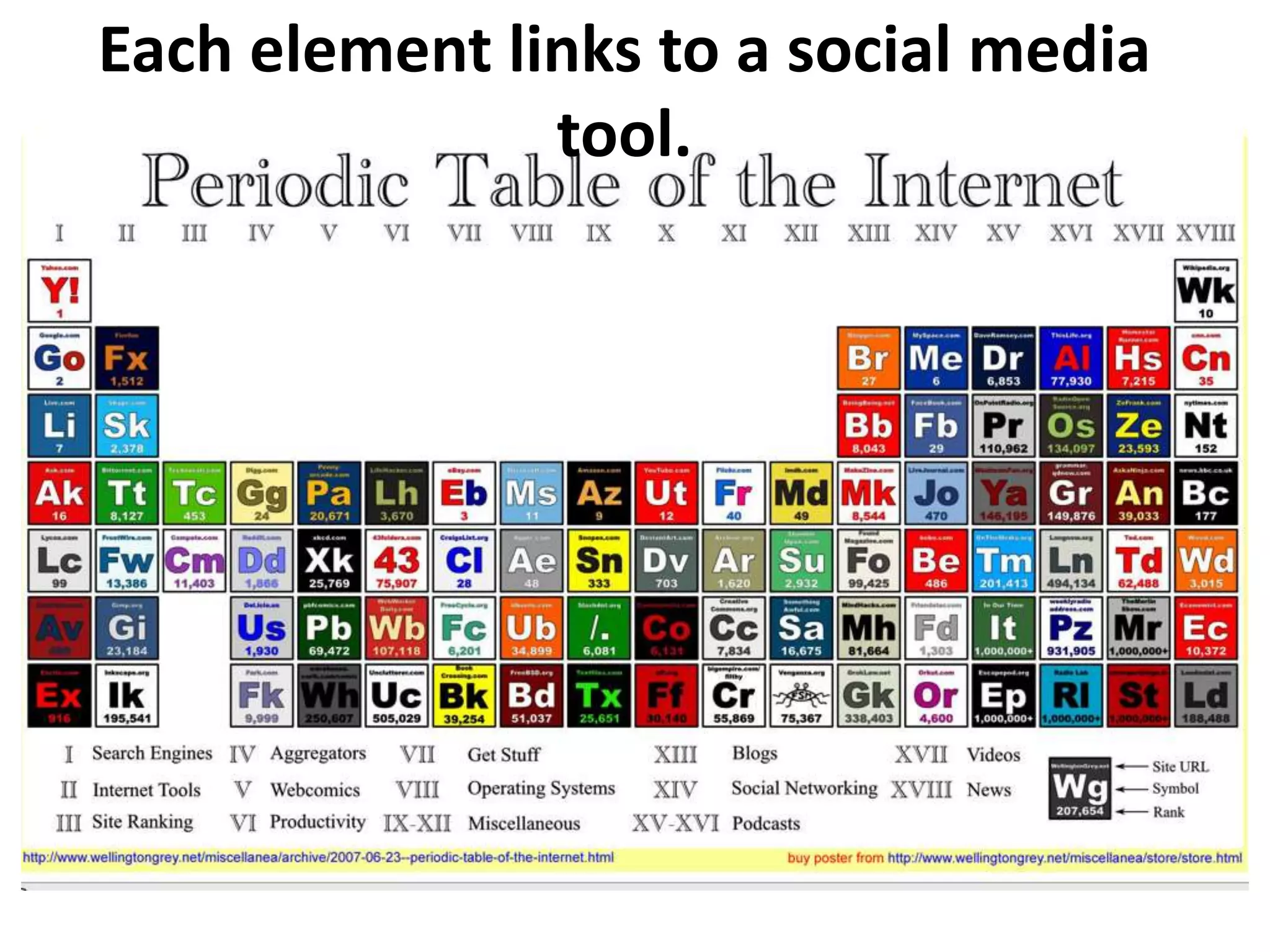
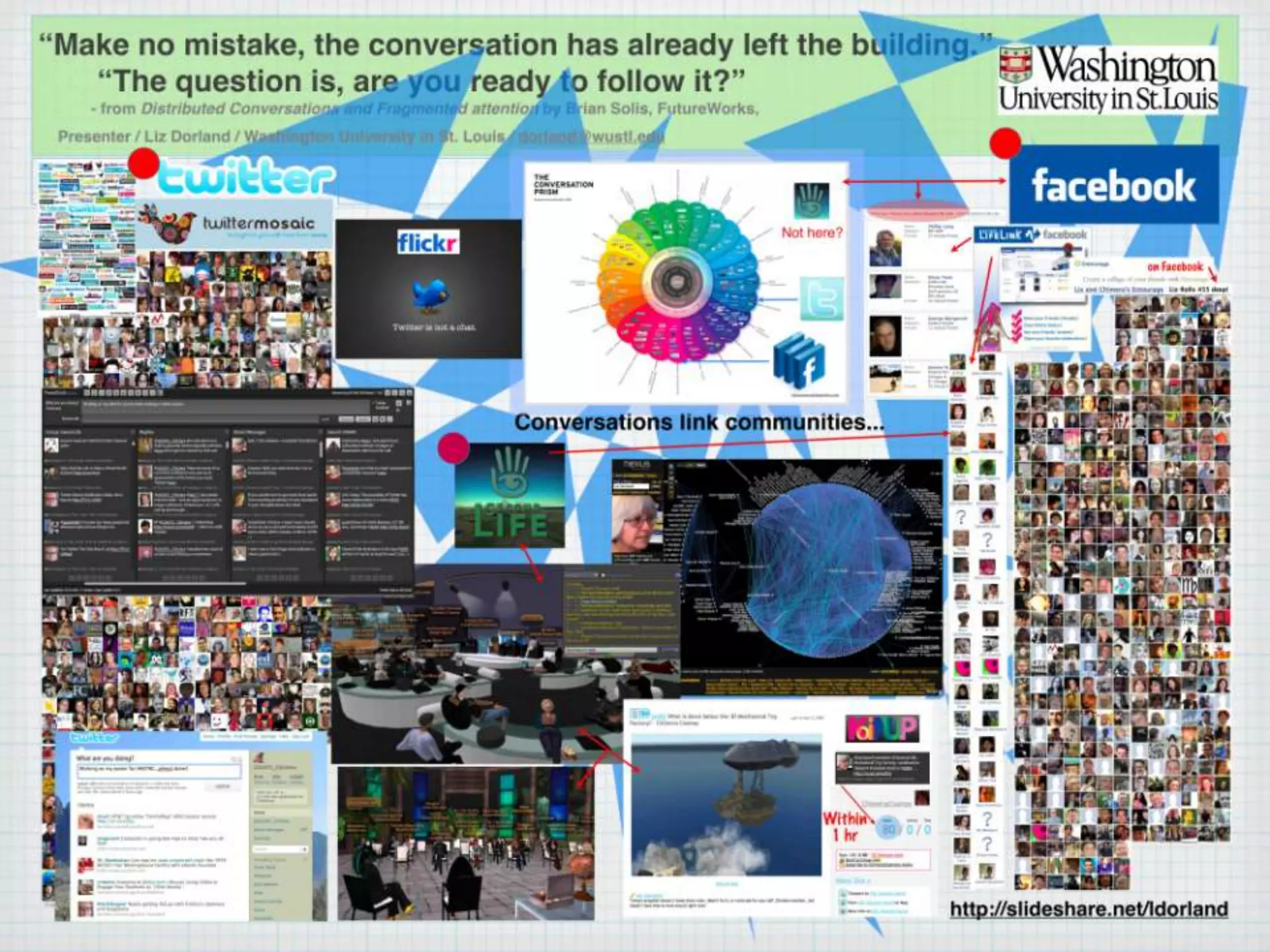
Each element links to a social media tool.
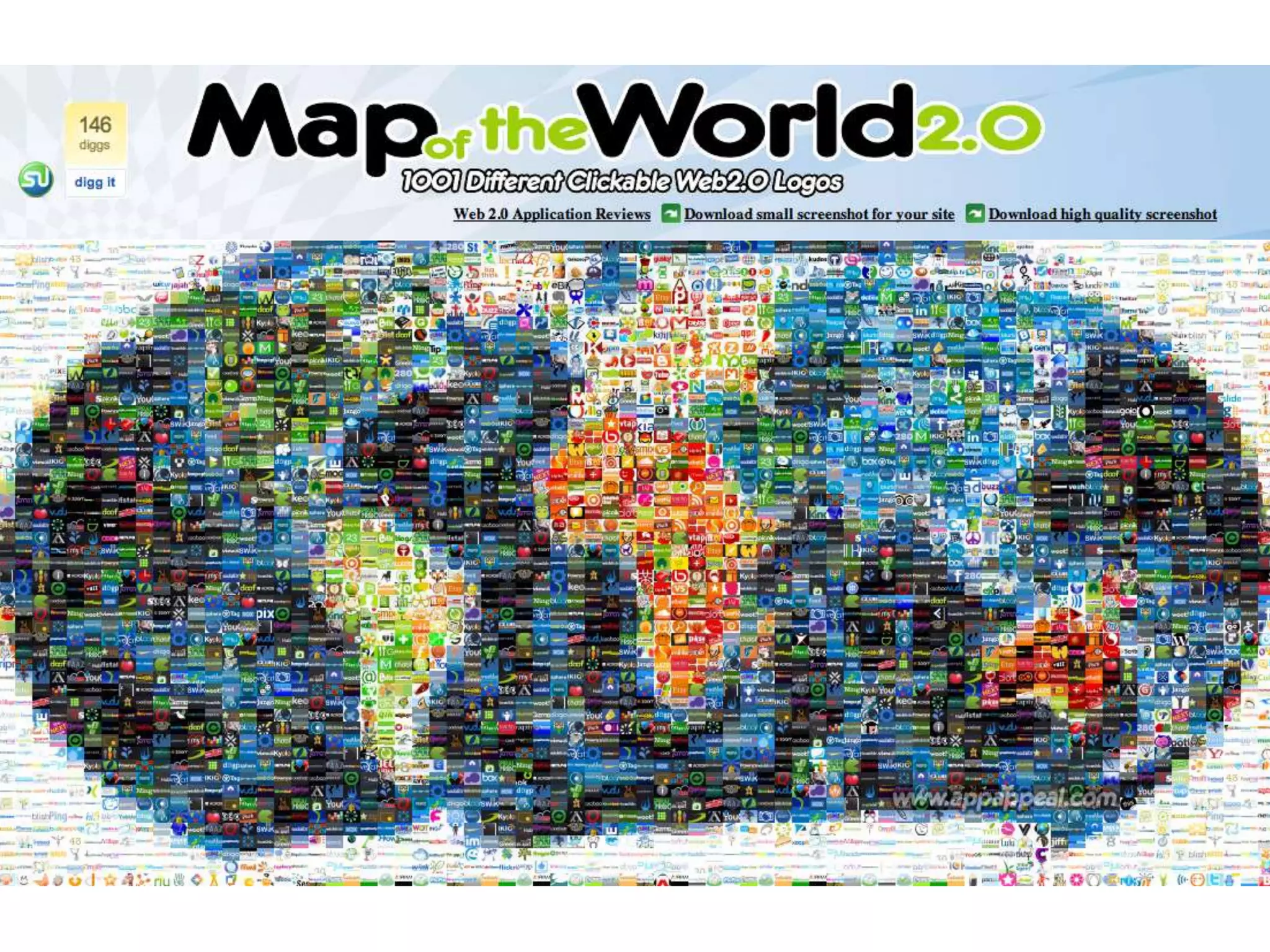
Map of the World 2.0
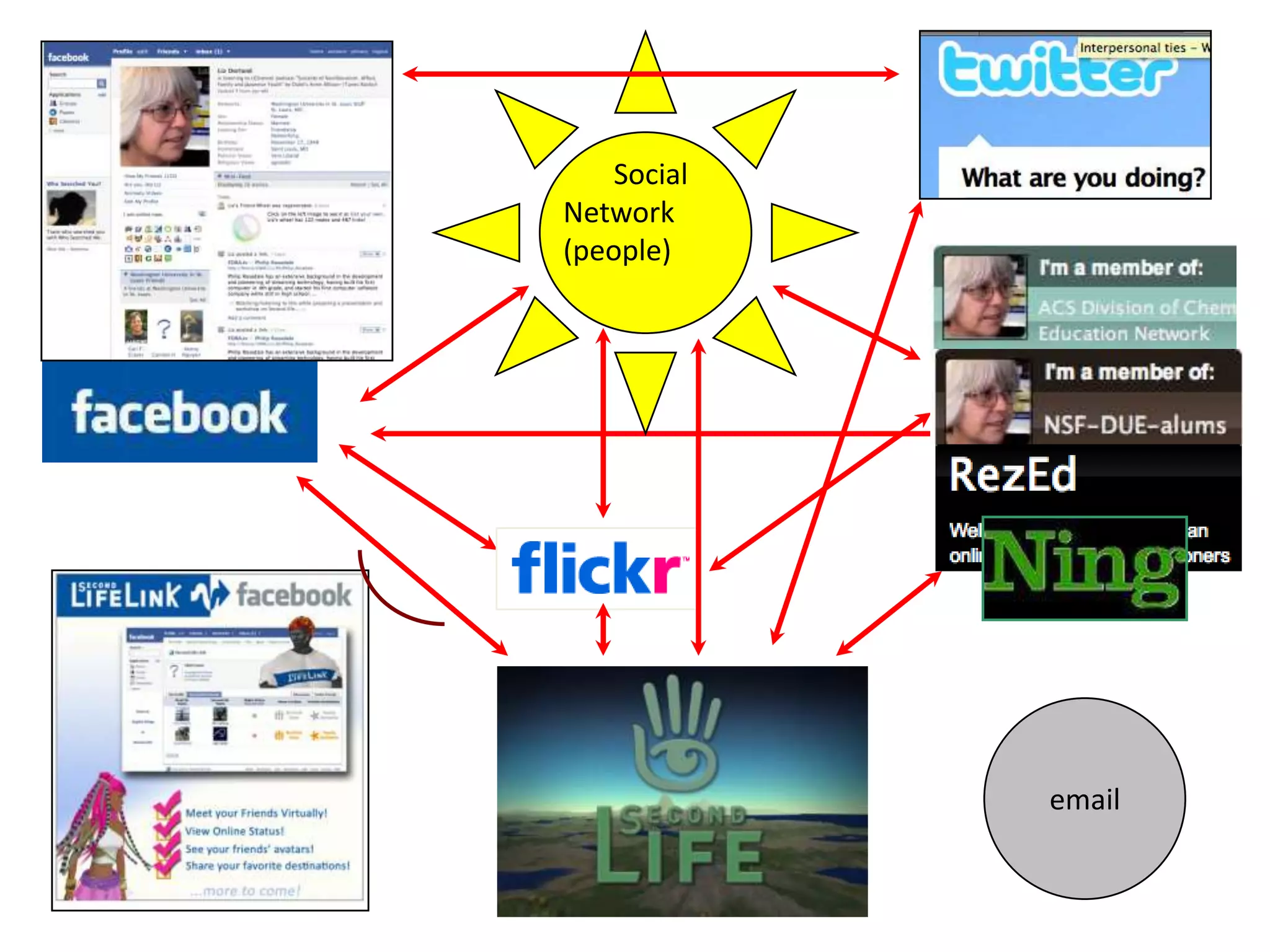
SocialNetwork(people)email
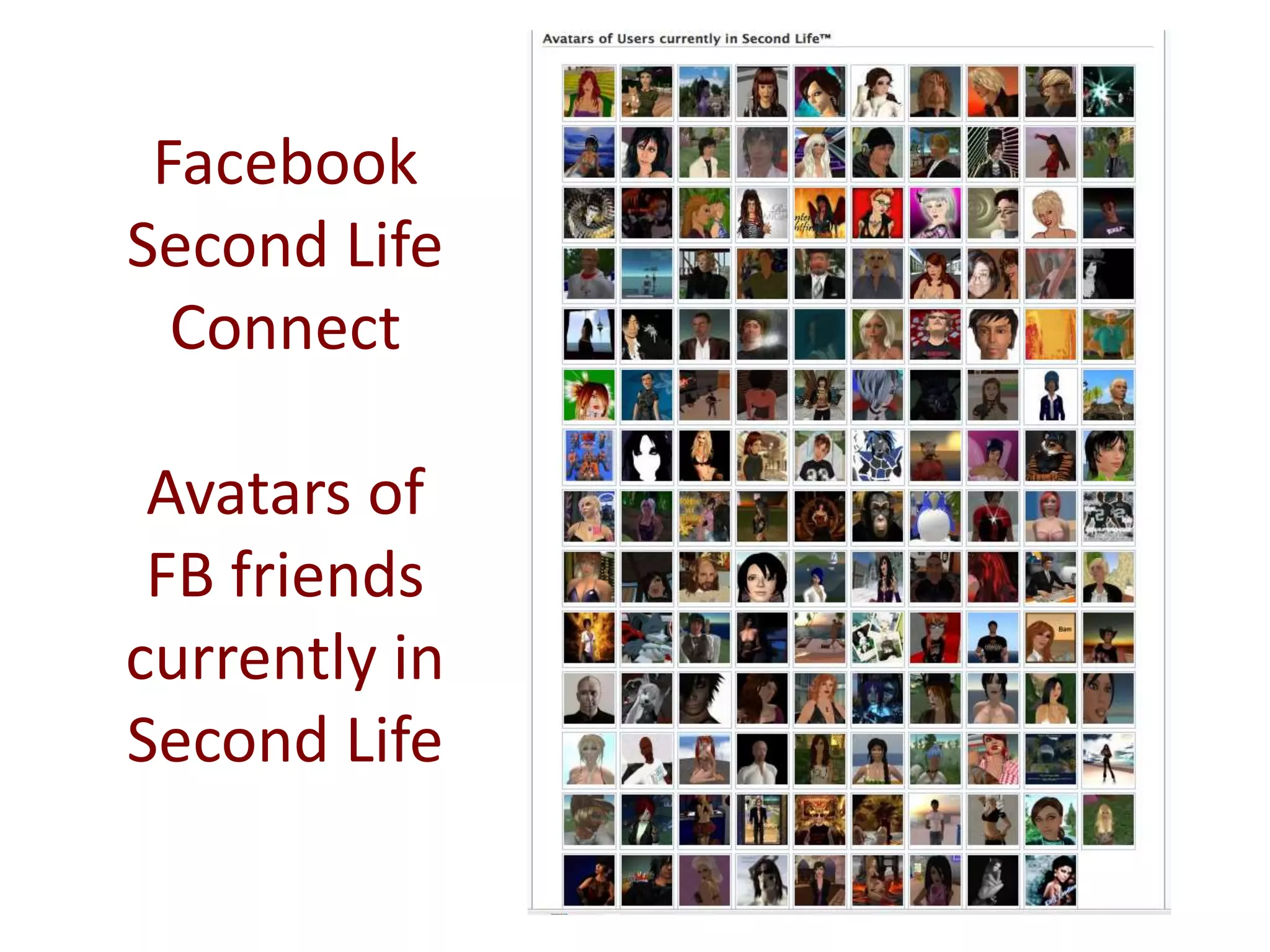
Facebook  Second LifeConnectAvatars of FB friends currently in Second Life
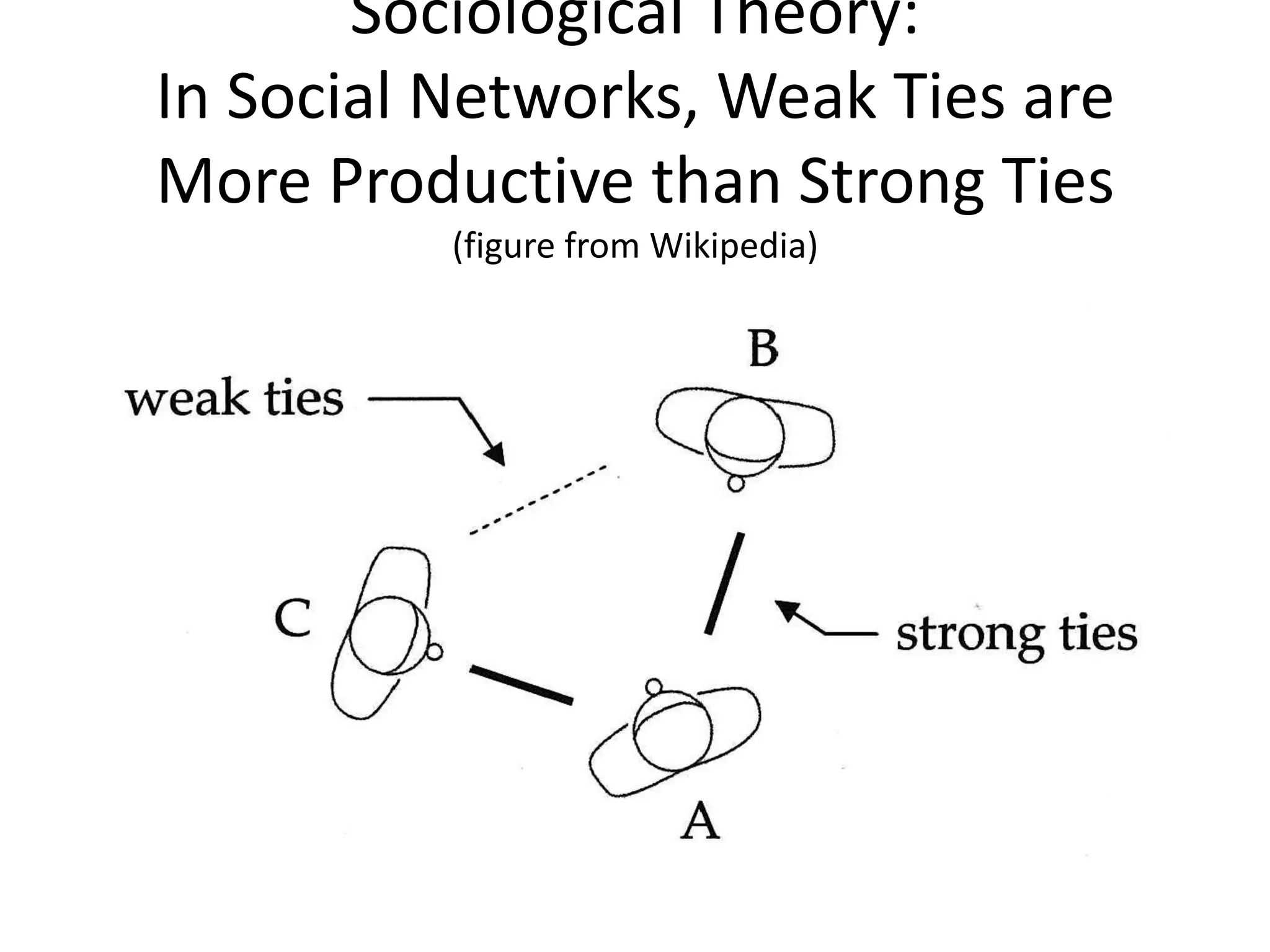
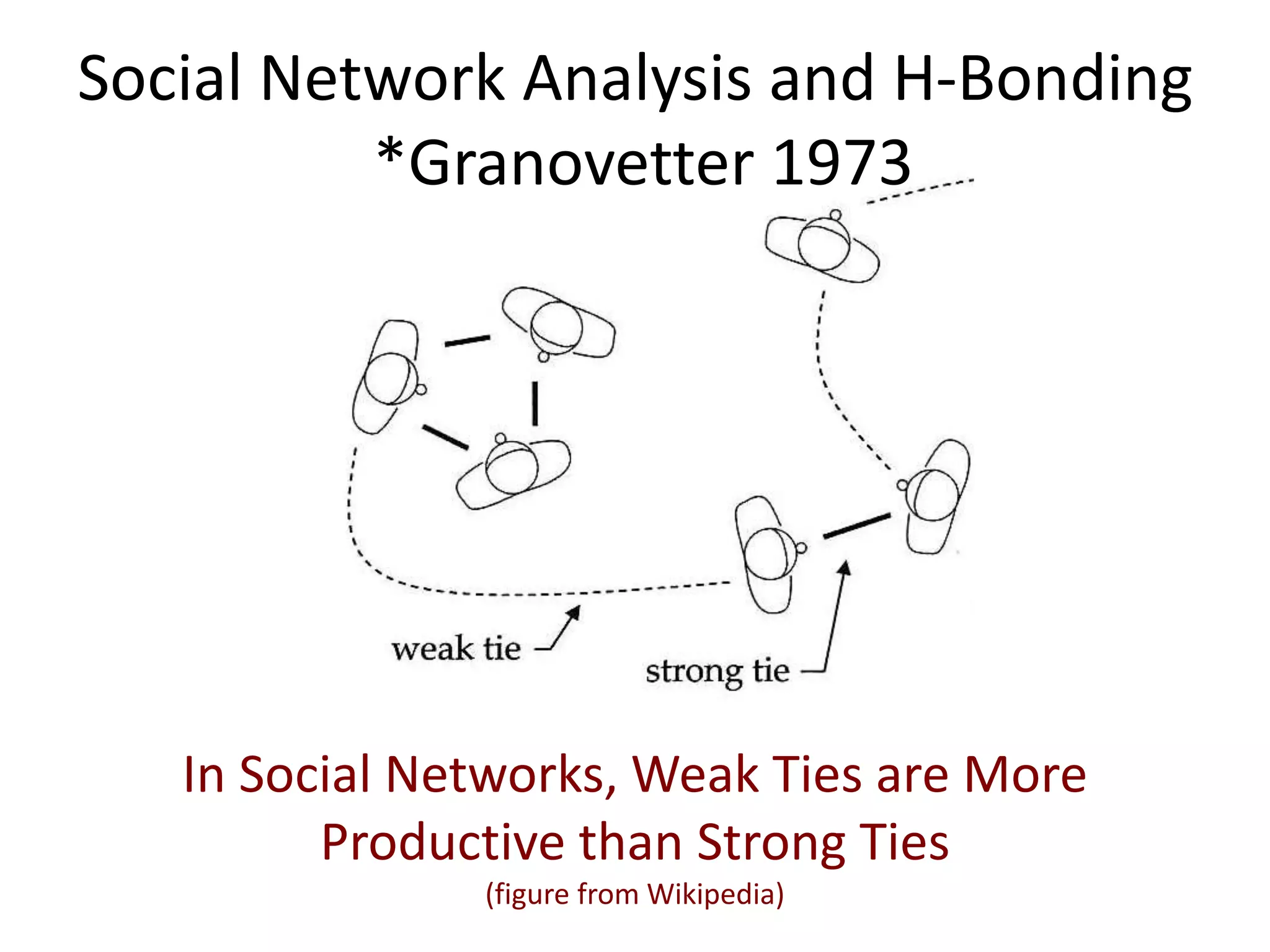
Sociological Theory: In Social Networks, Weak Ties are More Productive than Strong Ties(figure from Wikipedia)
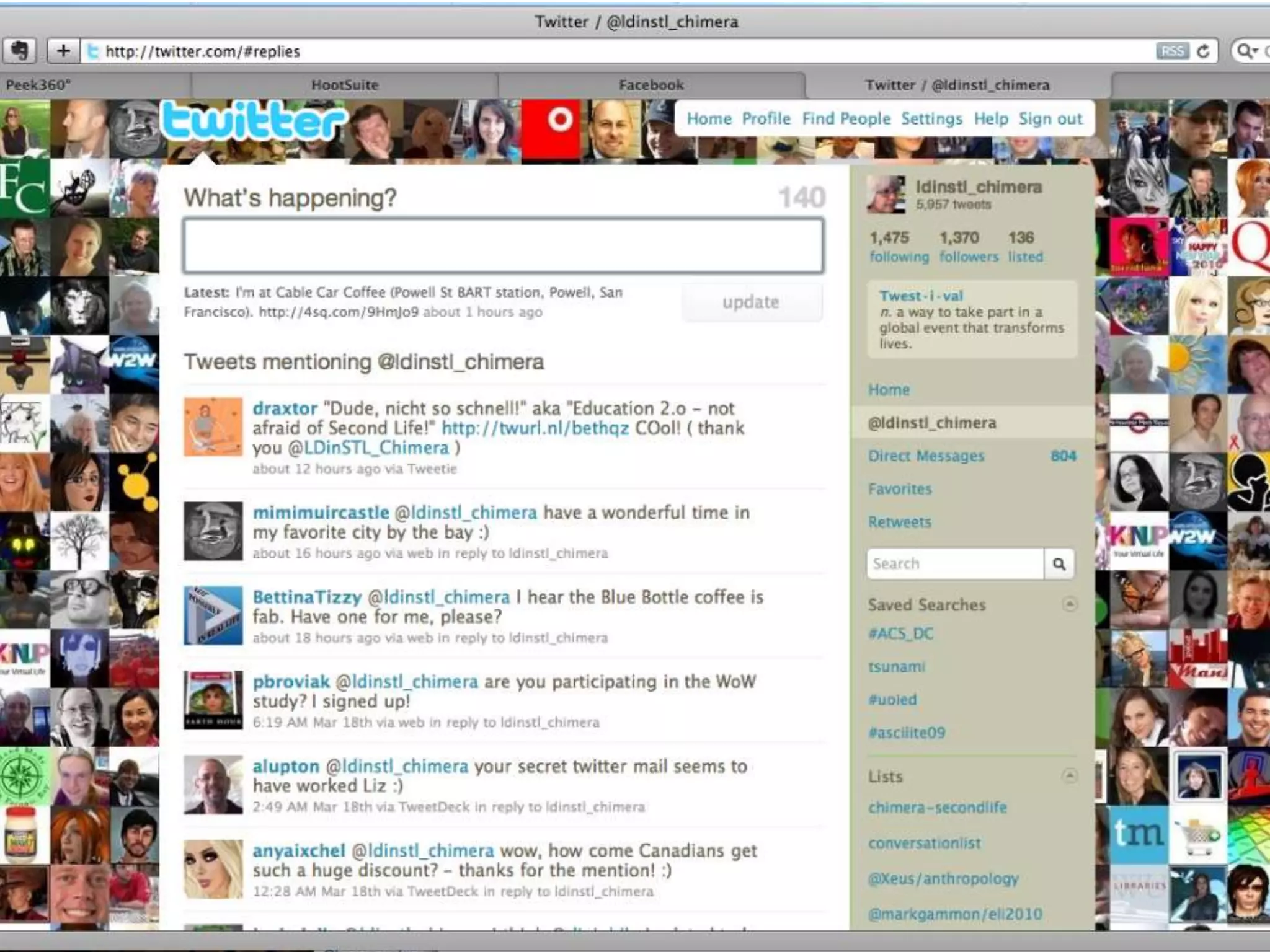
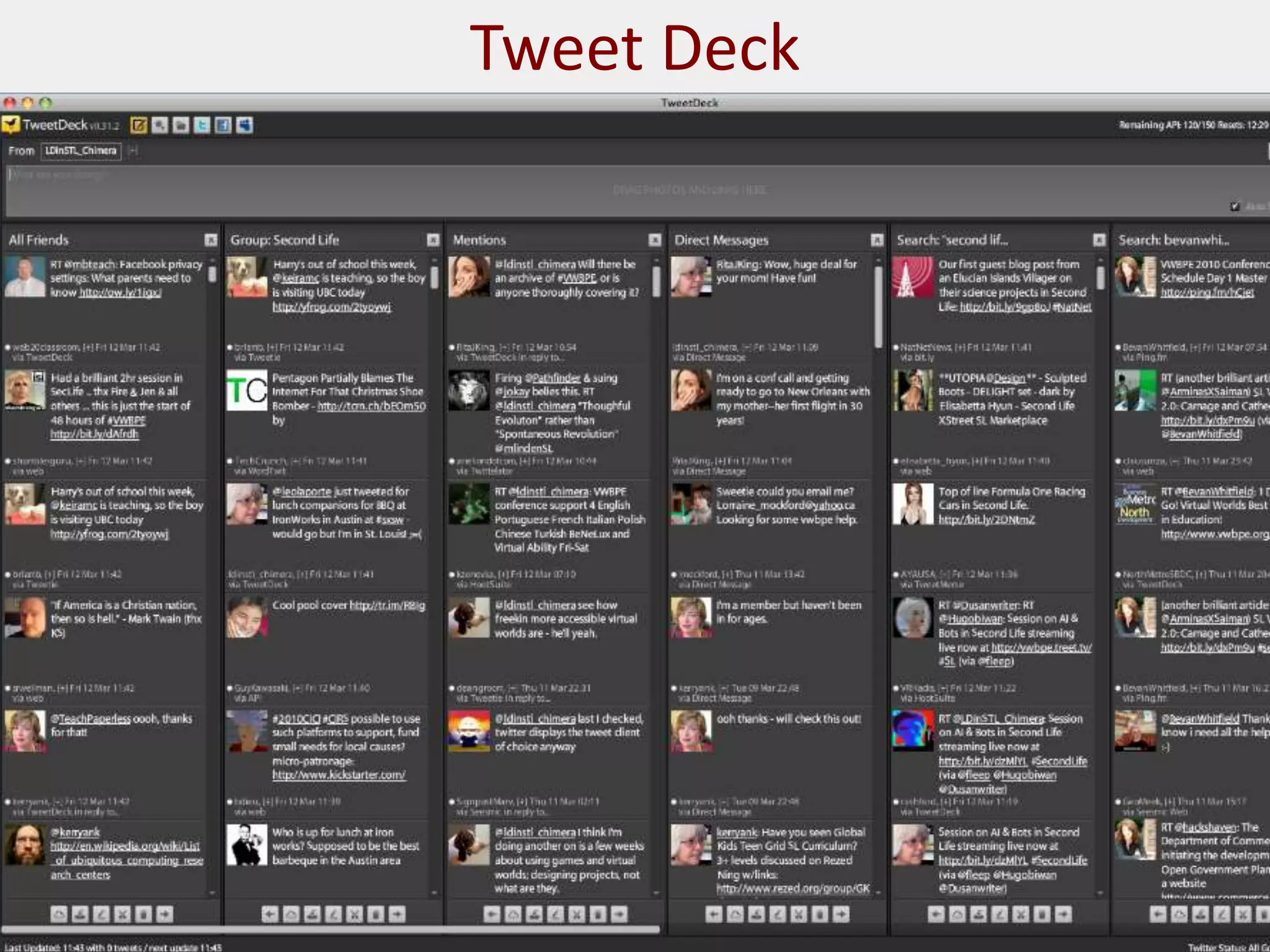
Tweet Deck
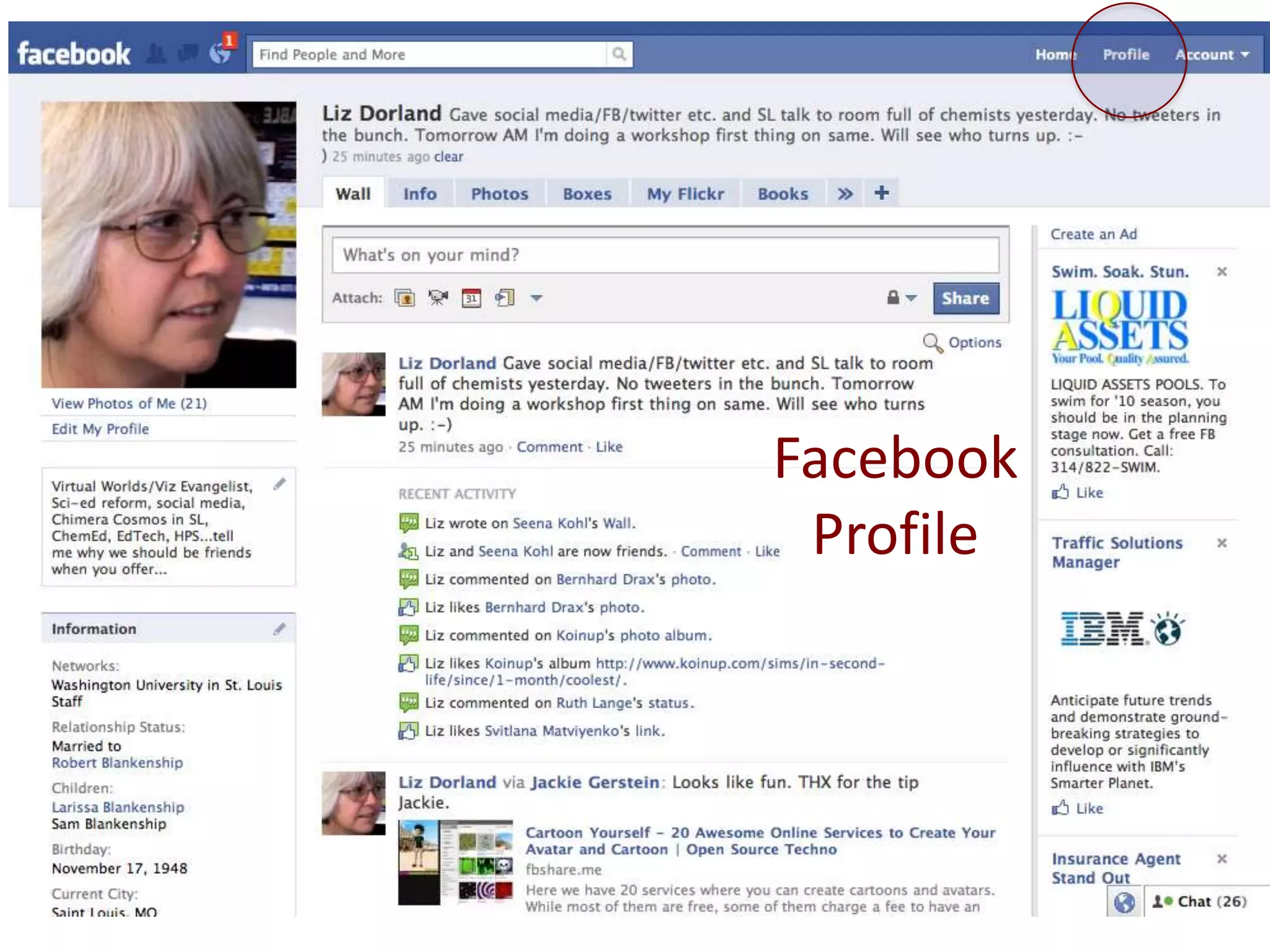
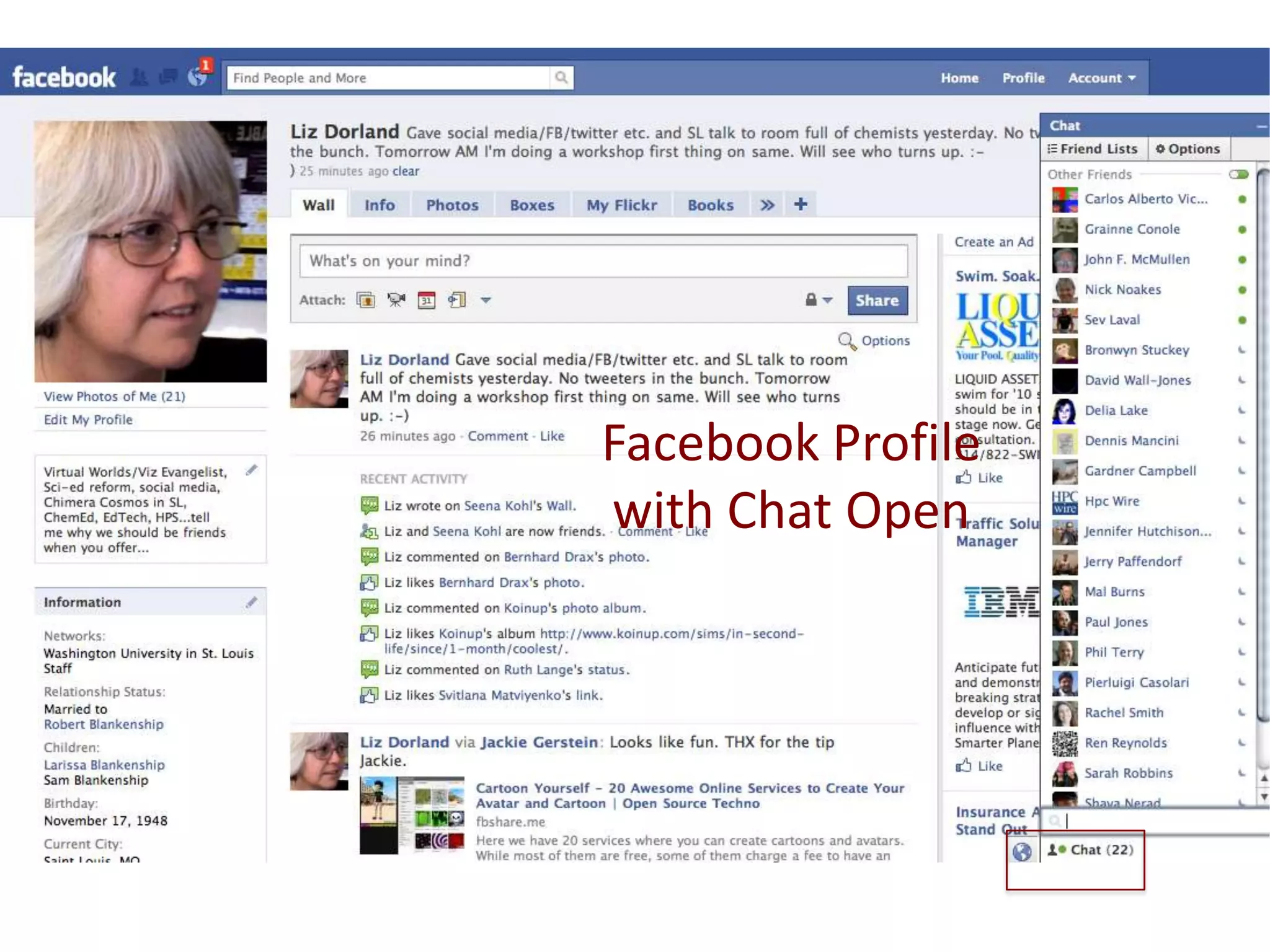
FacebookProfile
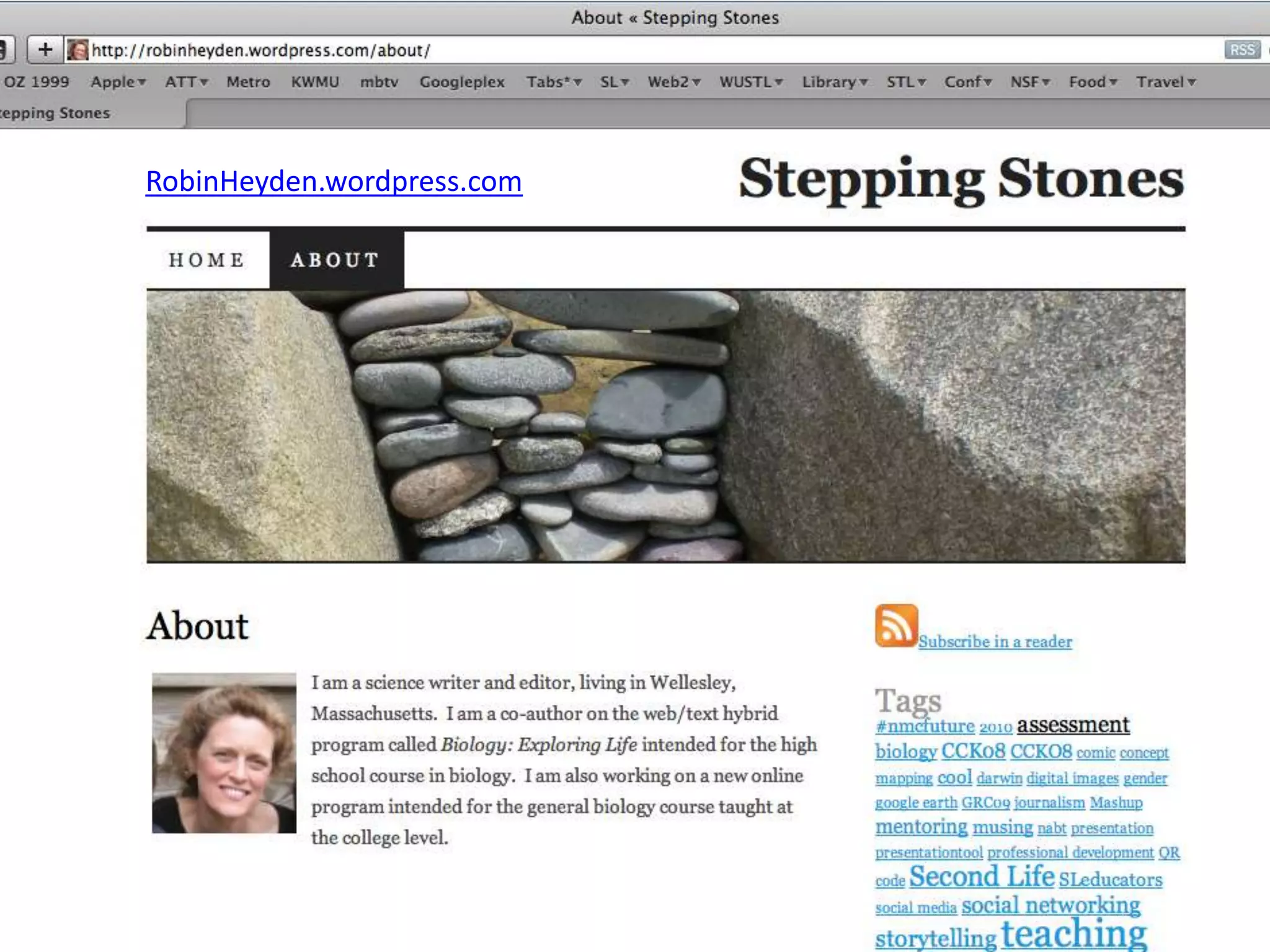
Robin HeydenRobinHeyden.wordpress.com
Robin Heyden in BLC workshop	Now let’s move onto a specific Case Here you have a screen shot from my blog – which I call “Stepping Stones”.  Back in July, I posted a blog entry about a jaguar conservation activity that makes use of Google Earth.  It was a really cool activity that a HS teacher in St. Louis made up and I knew that other HS teachers would want to find out about it – and possibly use it.  So, after talking with the teacher to make sure I understood how it worked, I blogged about it.  The blog entry was about 1000 words long – so it was pretty meaty. Once I’d posted the blog entry, I began to advertise it.  I put up a brief description of the idea and a link to my blog post on a teaching listserv that I am a member of.  I also sent out a tweet about it.  And I emailed a few of my other friends and teaching colleagues, who aren’t on twitter or on the listserv.  That advertising phase took me about 5 minutes. 	And the results? 	Page views went from the daily average of 35-40 to 1000 in one day. 	Comments led me to two other new bloggers with similar interests and ideas. Well over 100 high school teachers, who read the post, emailed for more information on how to use the activity. If I were a business, I would now have well over 1000 new and well-qualified customers. It’s all about building community and harnessing the network effect.
Facebook Profile with Chat Open
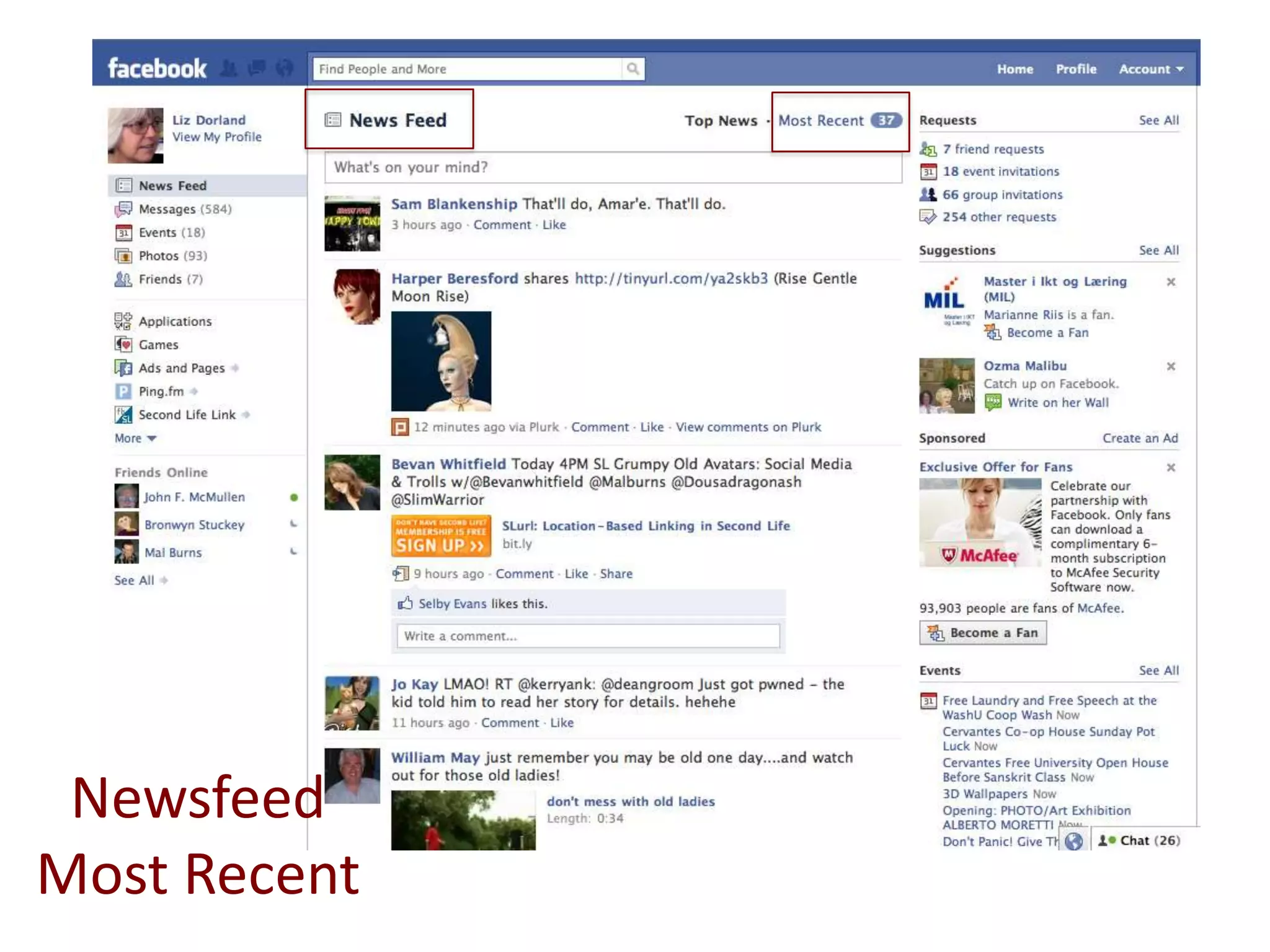
Newsfeed Most Recent
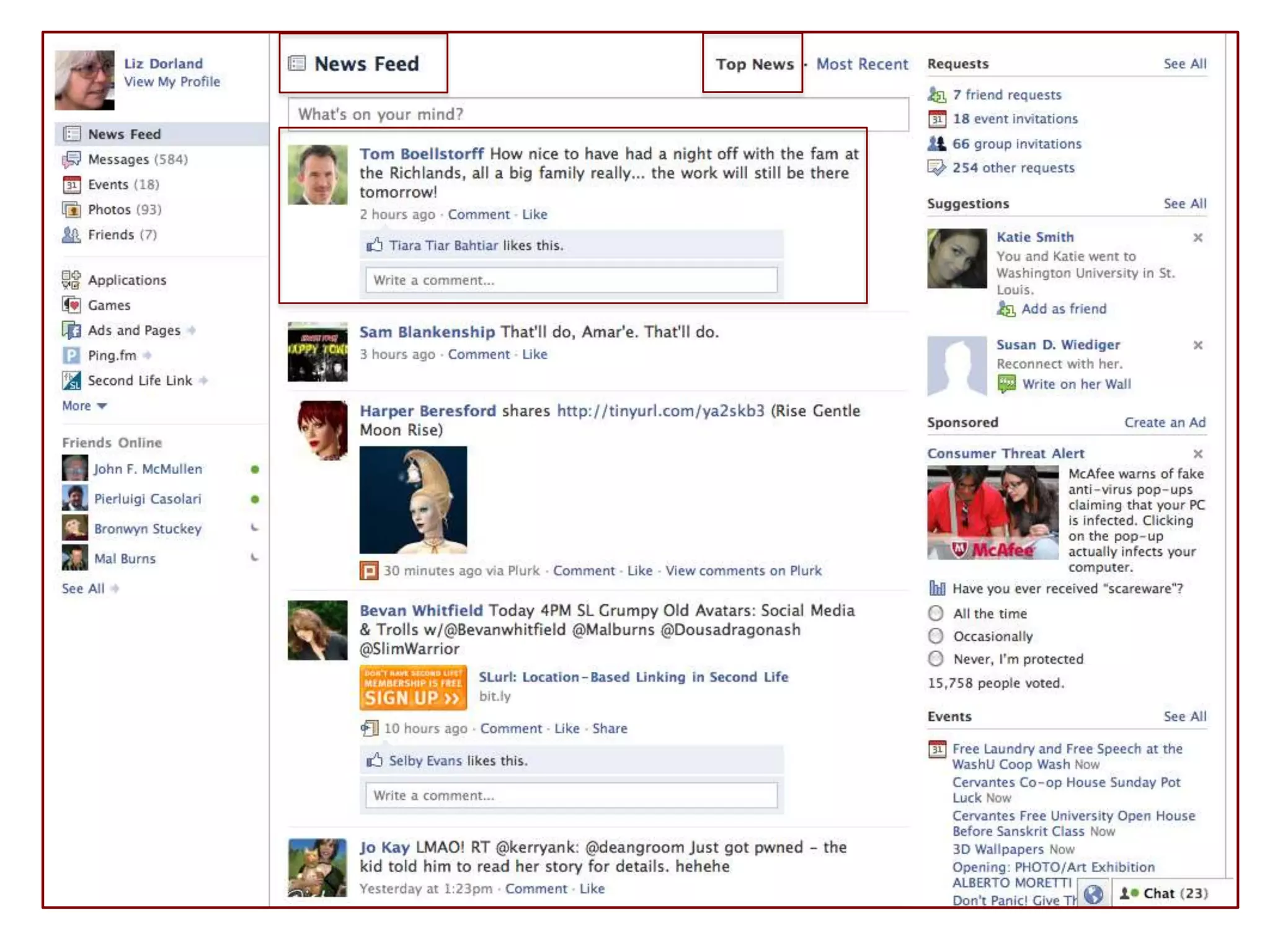
Newsfeed Top News
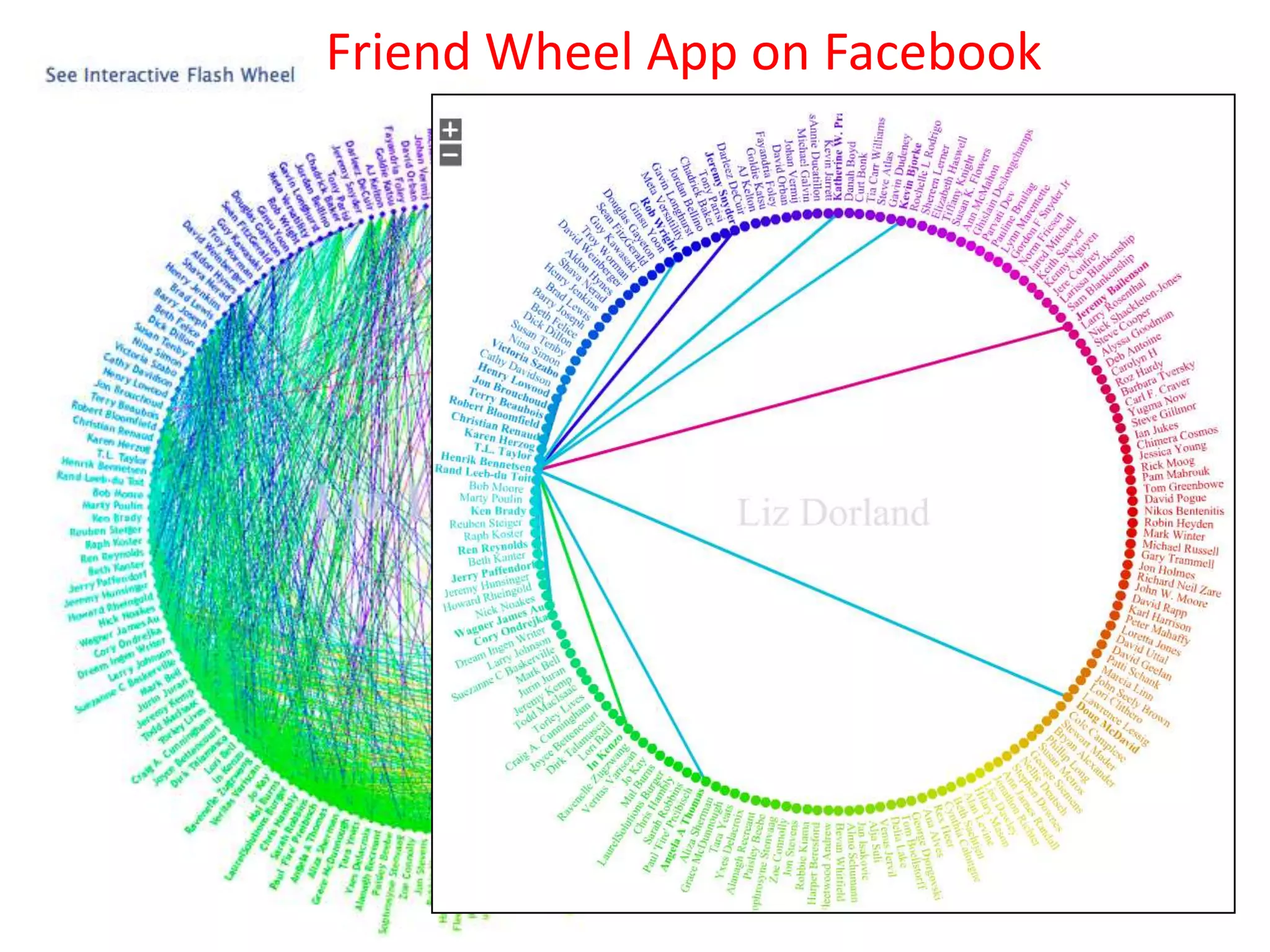
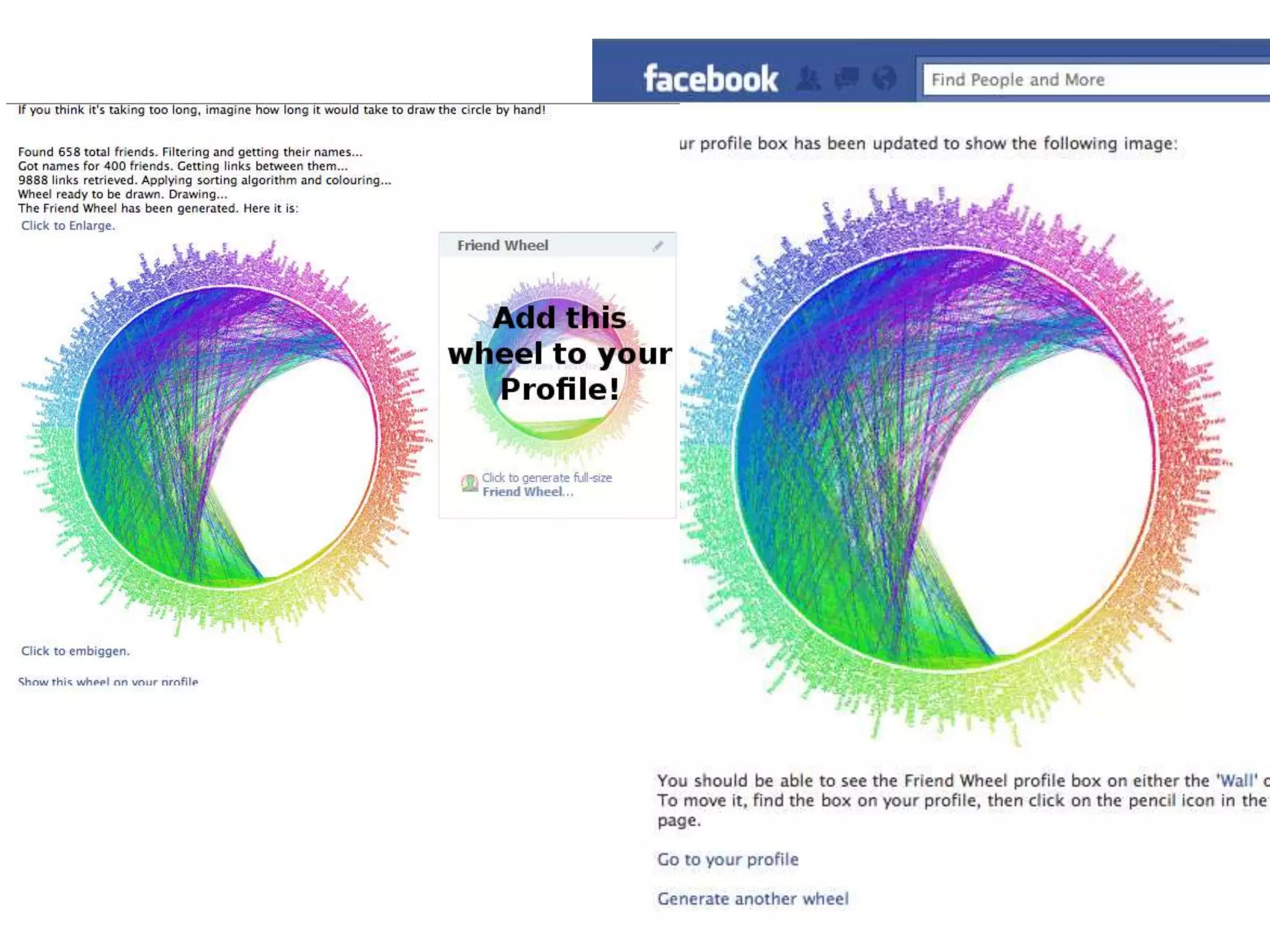
Friend Wheel App on FacebookWhere are the Chemists?
Add Friend Wheel to Profile
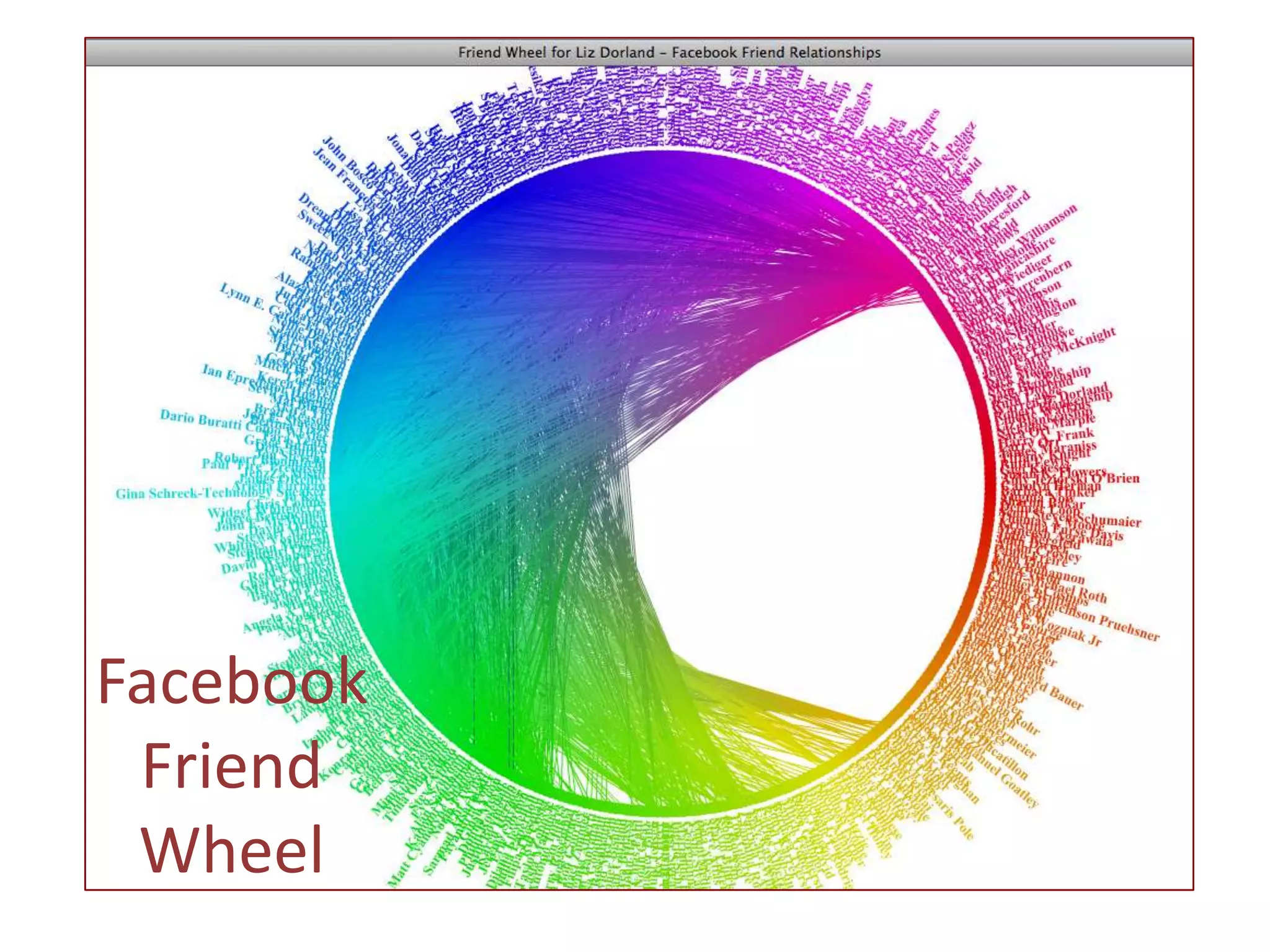
FacebookFriend Wheel
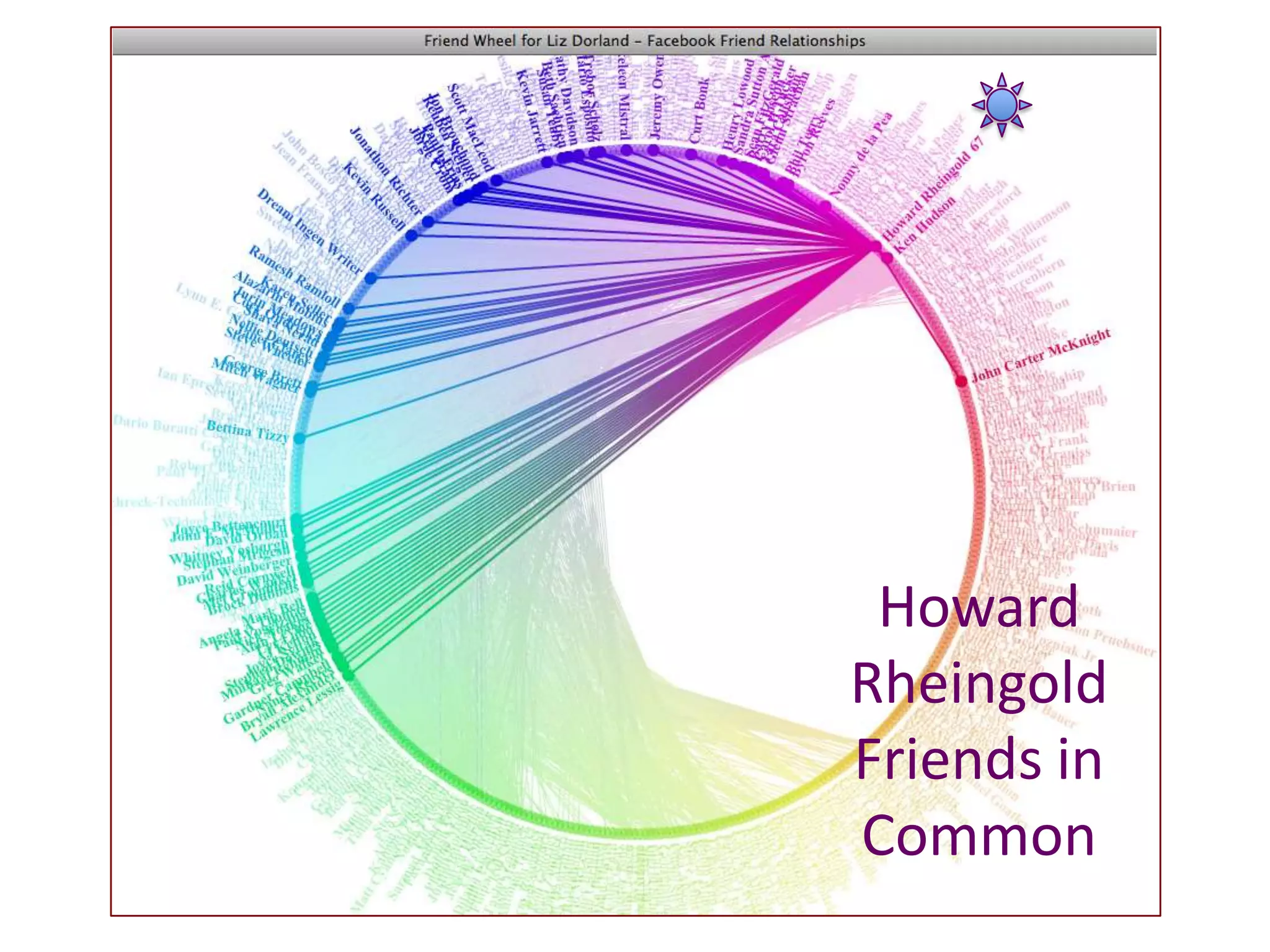
HowardRheingold Friends in Common
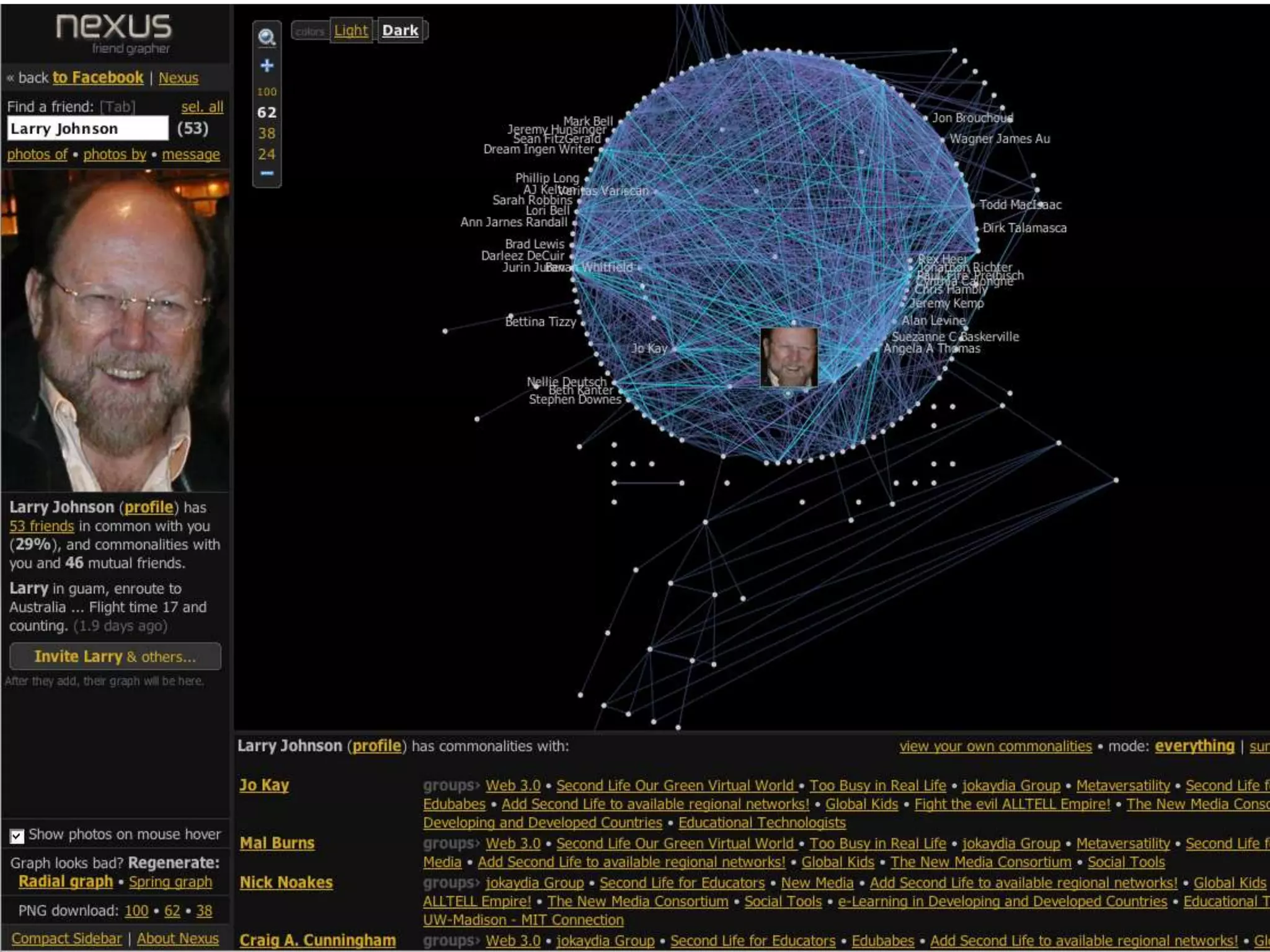
New Media Consortium CEO Larry Johnson
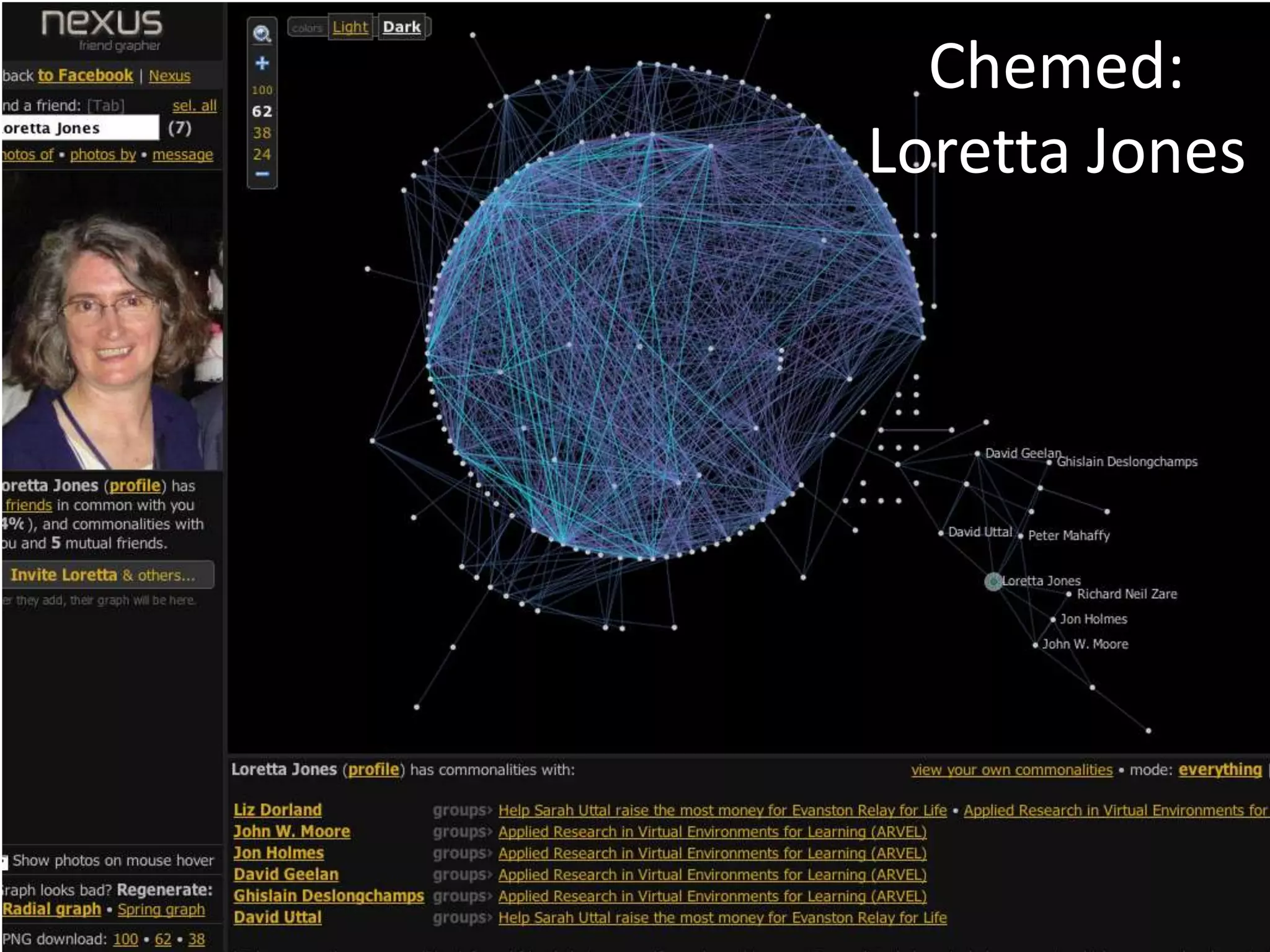
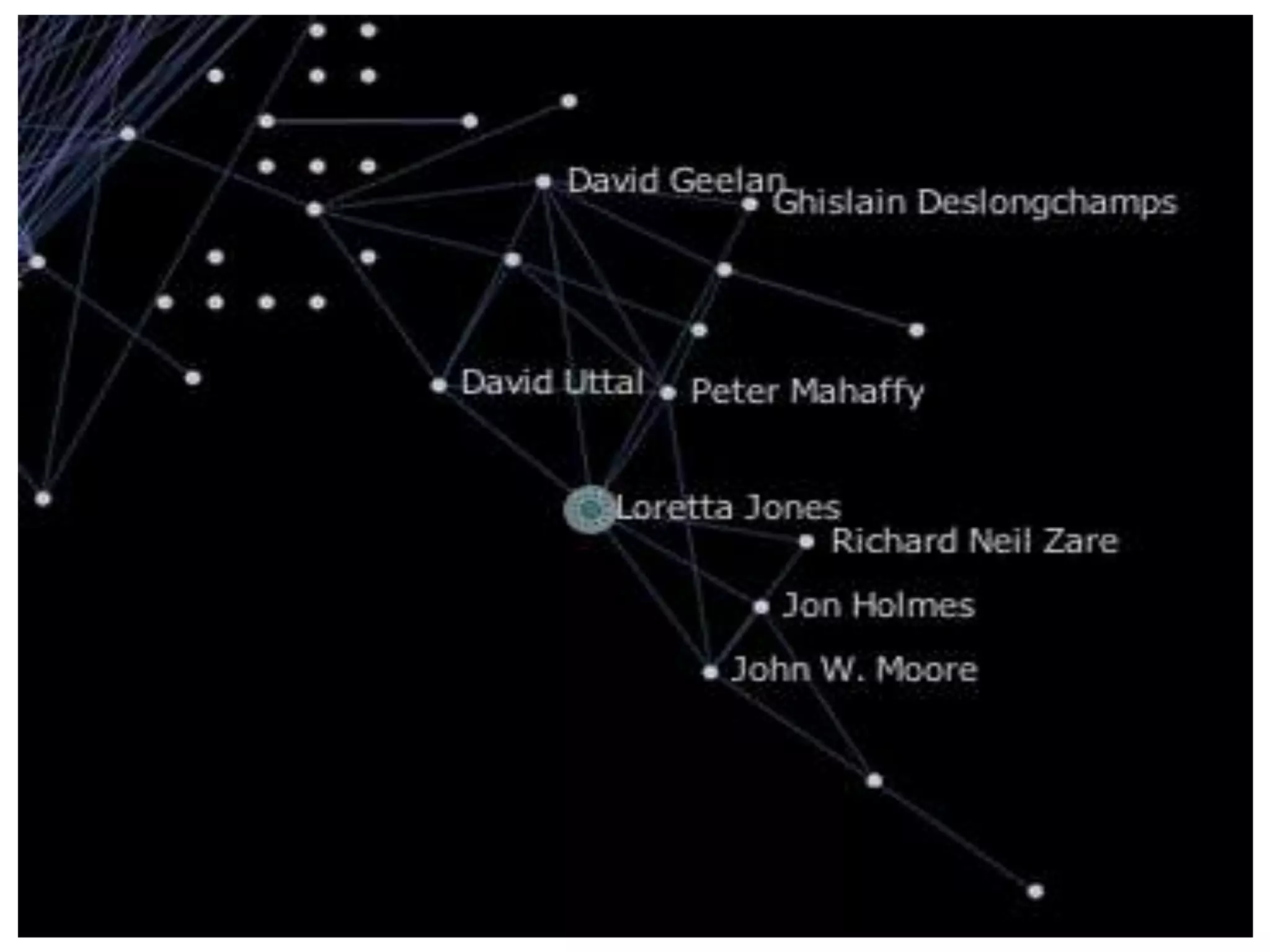
Chemed:Loretta Jones
GRC Visualization in Education
Social Network Analysis and H-Bonding *Granovetter 1973In Social Networks, Weak Ties are More Productive than Strong Ties(figure from Wikipedia)
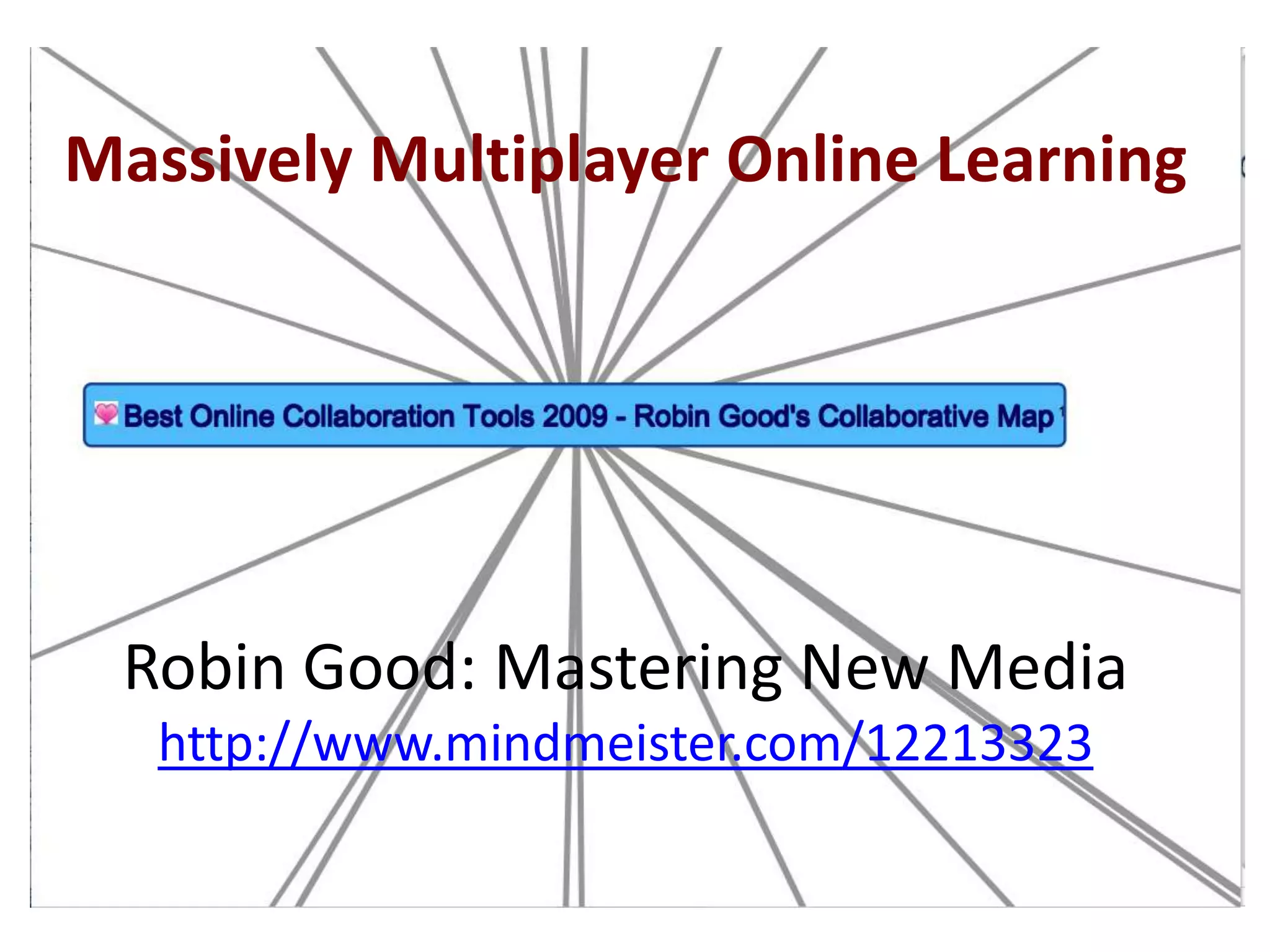
Massively Multiplayer Online LearningRobin Good: Mastering New Mediahttp://www.mindmeister.com/12213323
http://personaldemocracy.com/pdf-2009-speakers
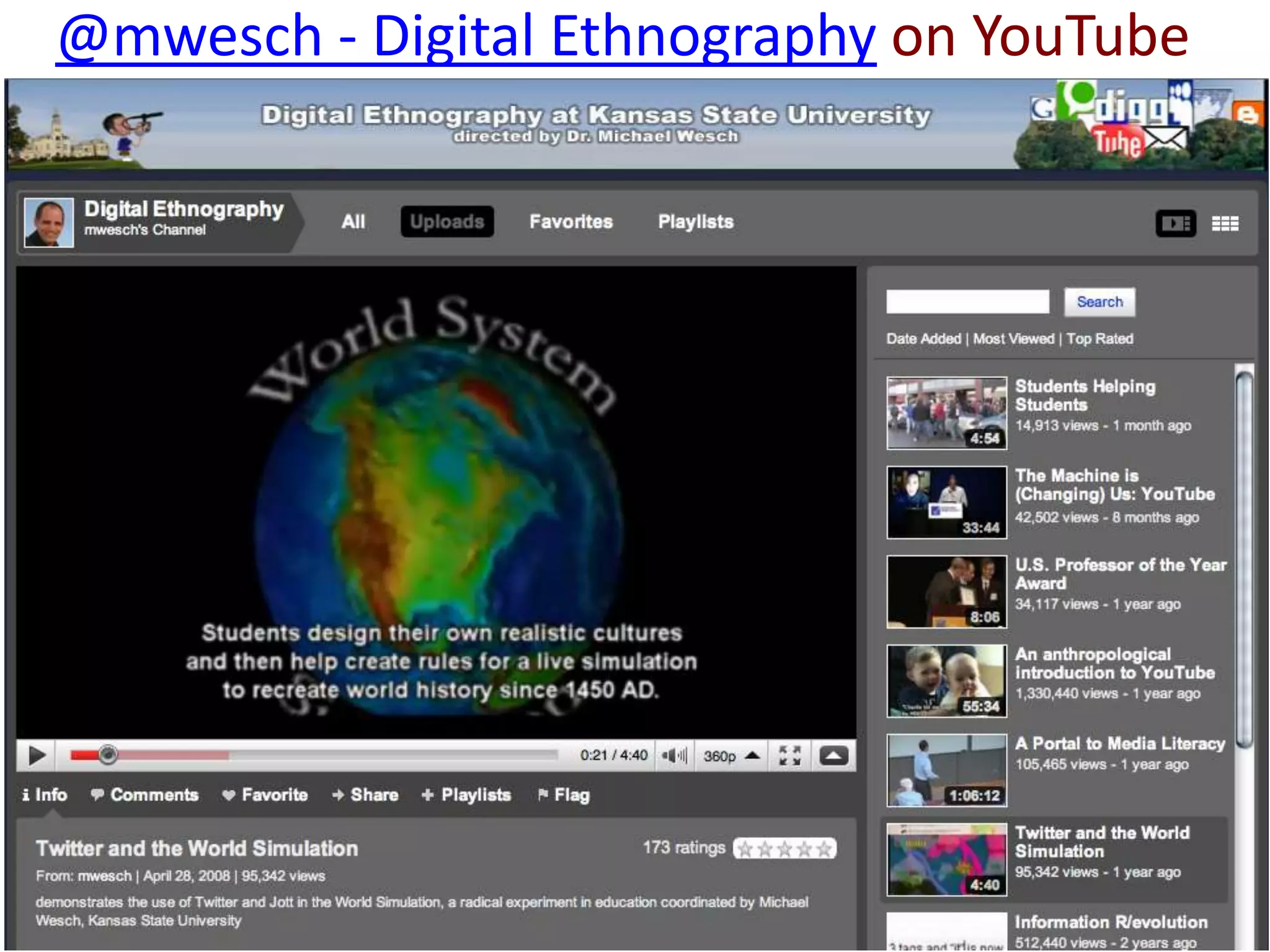
@mwesch - Digital Ethnography on YouTube
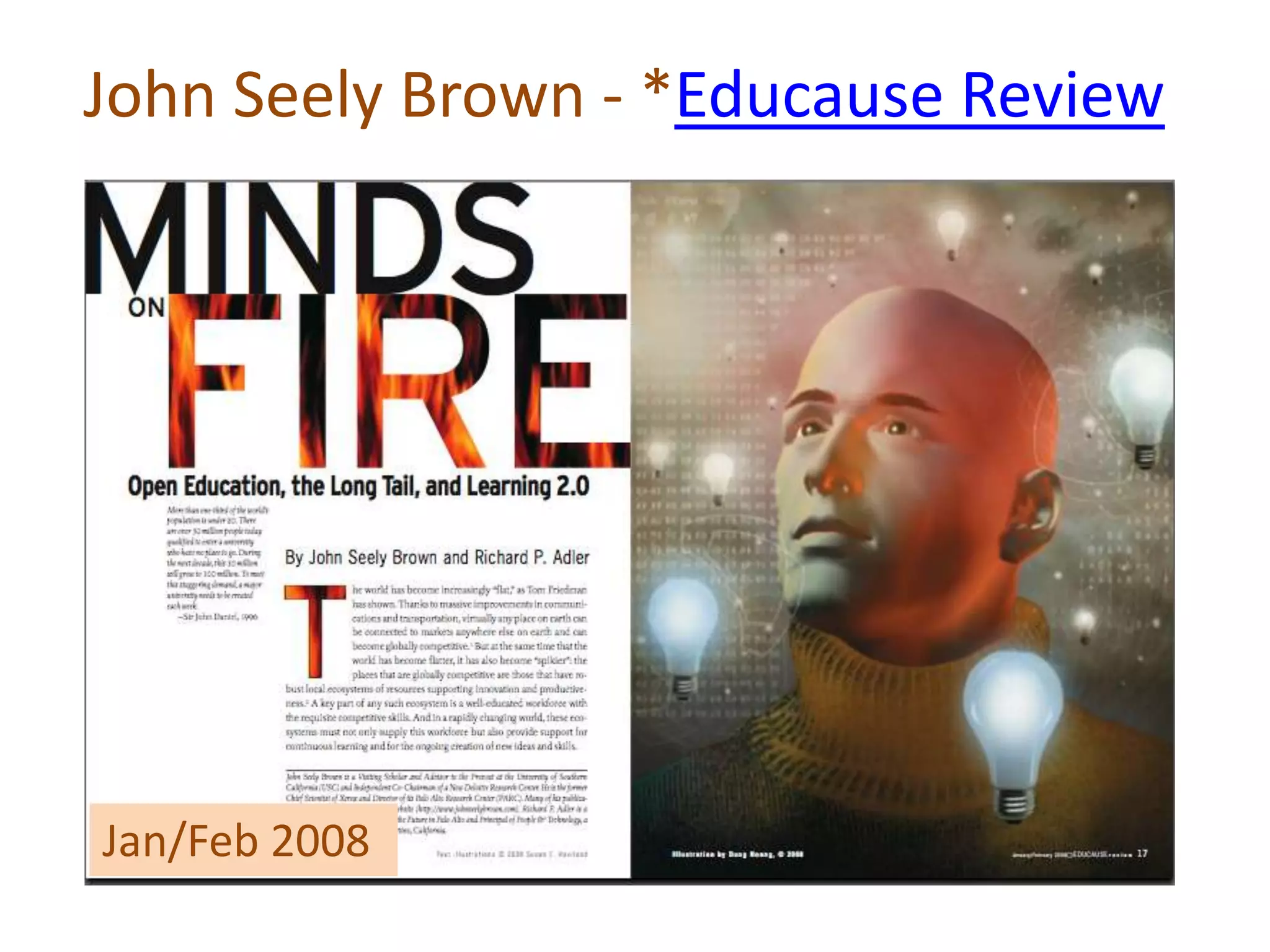
John Seely Brown - *Educause ReviewJan/Feb 2008
John Seely Brown presentation*
“It seems likely that a great deal of informal learning is taking place both on and off campus via the online social networks.”John Seely BrownEducause Review
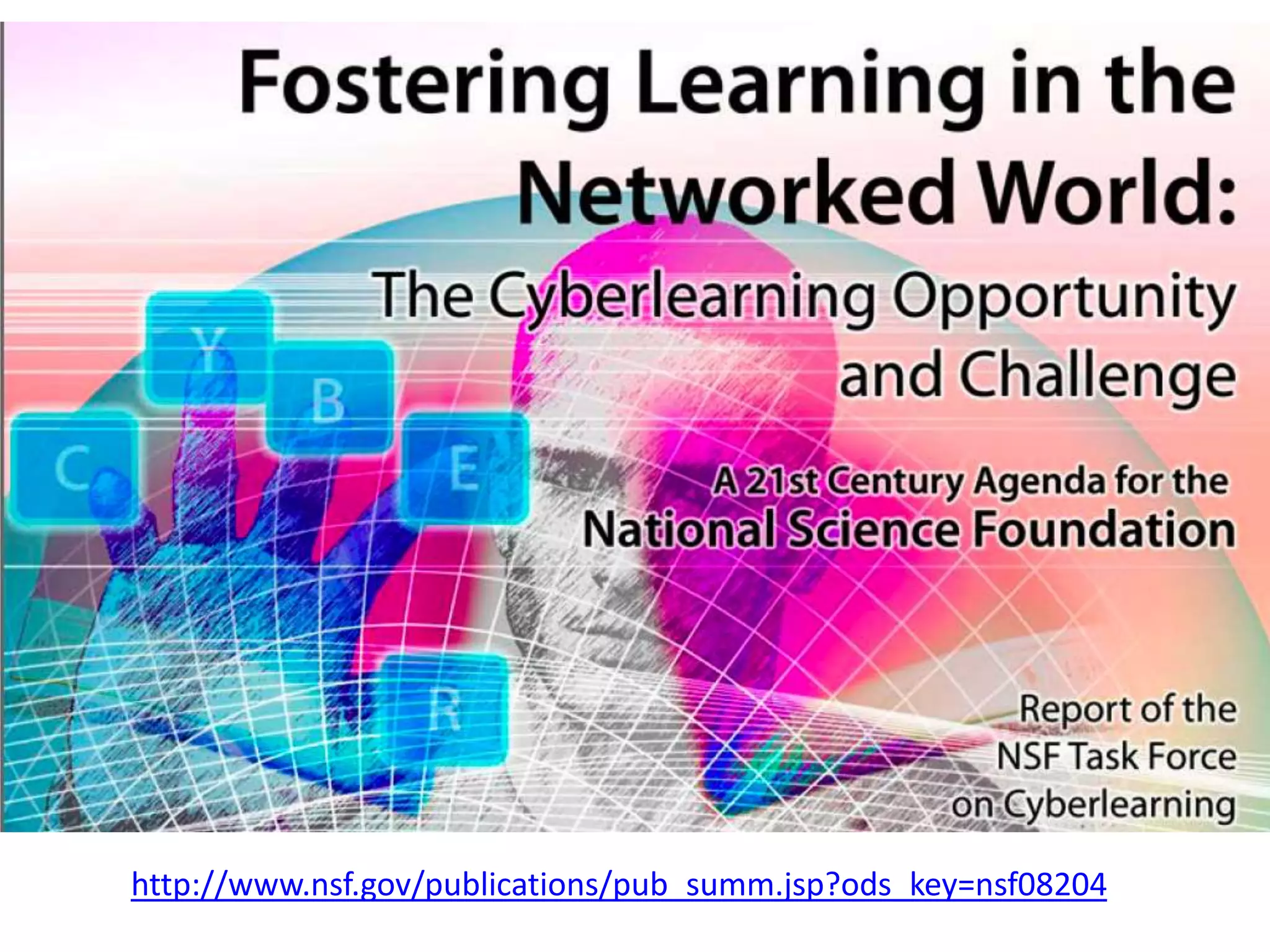
http://www.nsf.gov/publications/pub_summ.jsp?ods_key=nsf08204
NSF: Cyberlearning Report 2008	A new participatory Web culture…New Web functionalities during the past several years have made participatory media culture a reality, contributing to the personal, professional, and educational lives of learners 	(Henry Jenkins, MIT 2006)http://www.henryjenkins.org/
NSF Report: Learning is Different	...scientists working in collaboratories conduct inquiries inside computer models of weather systems, fluid flows, or disease propagation… 	…reason through the representations with which they interact to make inferences about the world that they represent…
danahboydresearches the use of online social network communities and is the co-creator of the Vizster visualization tool for online social networks.“Students are likely to have created and posted content on the web by using YouTube,Facebook, Wikis, Blogs, or any of the wide variety of freely available tools commonly described as "Web 2.0" or "The Read-Write Web.”
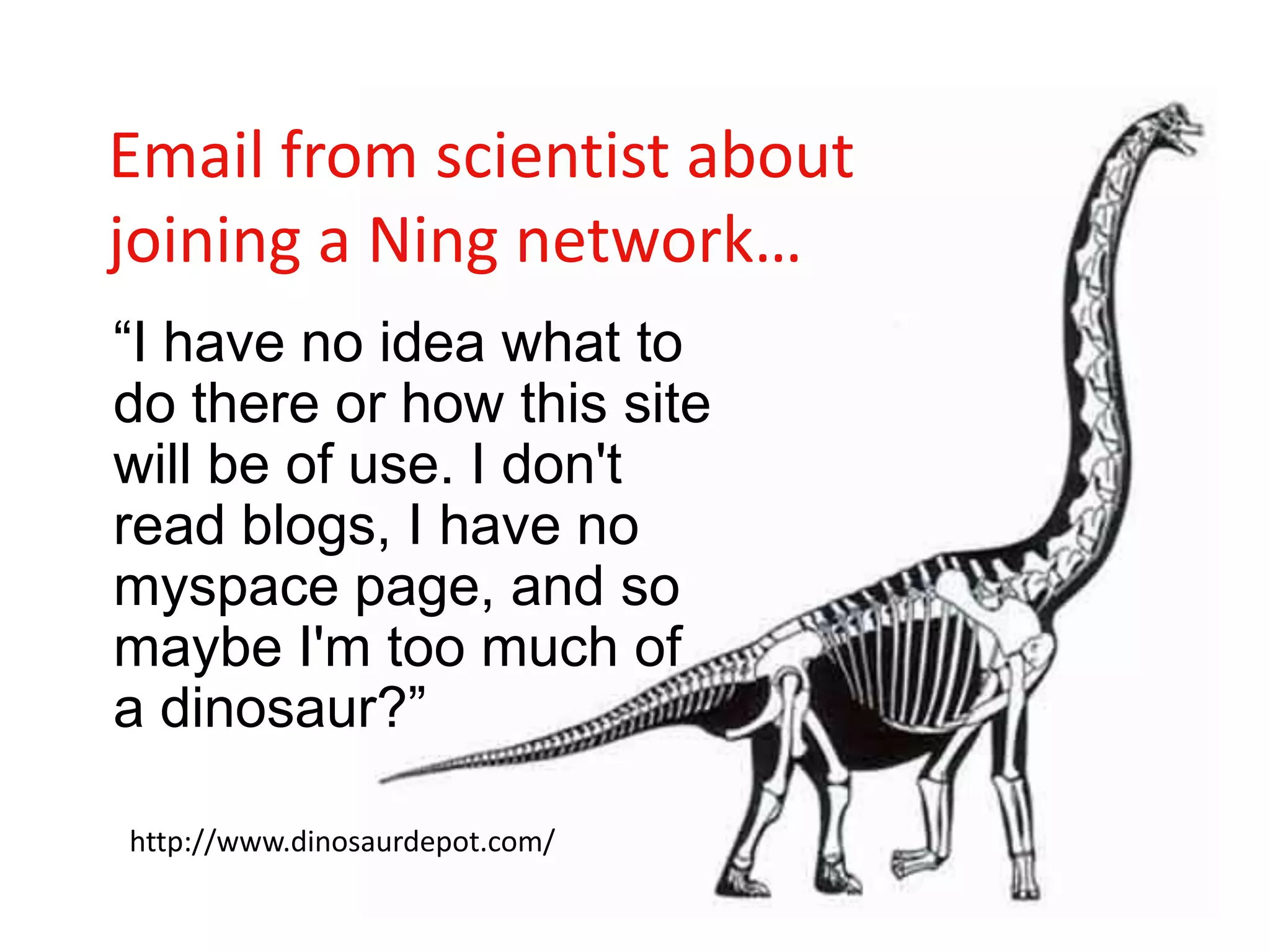
Email from scientist about joining a Ning network…	“I have no idea what to do there or how this site will be of use. I don't read blogs, I have no myspace page, and so maybe I'm too much of a dinosaur?”http://www.dinosaurdepot.com/

Grownups on Facebook and Twitter??

  • 1.
    Grownups on Facebookand Twitter??Social Media for Learning NetworksLiz Dorland @LDinSTL_ChimeraWashington University in St. Louisdorland@wustl.edu
  • 2.
    Each element linksto a social media tool.
  • 3.
    Map of theWorld 2.0
  • 4.
  • 5.
    Facebook SecondLifeConnectAvatars of FB friends currently in Second Life
  • 6.
    Sociological Theory: InSocial Networks, Weak Ties are More Productive than Strong Ties(figure from Wikipedia)
  • 9.
  • 10.
  • 11.
  • 12.
    Robin Heyden inBLC workshop Now let’s move onto a specific Case Here you have a screen shot from my blog – which I call “Stepping Stones”.  Back in July, I posted a blog entry about a jaguar conservation activity that makes use of Google Earth.  It was a really cool activity that a HS teacher in St. Louis made up and I knew that other HS teachers would want to find out about it – and possibly use it.  So, after talking with the teacher to make sure I understood how it worked, I blogged about it.  The blog entry was about 1000 words long – so it was pretty meaty. Once I’d posted the blog entry, I began to advertise it.  I put up a brief description of the idea and a link to my blog post on a teaching listserv that I am a member of.  I also sent out a tweet about it.  And I emailed a few of my other friends and teaching colleagues, who aren’t on twitter or on the listserv.  That advertising phase took me about 5 minutes.  And the results? Page views went from the daily average of 35-40 to 1000 in one day. Comments led me to two other new bloggers with similar interests and ideas. Well over 100 high school teachers, who read the post, emailed for more information on how to use the activity. If I were a business, I would now have well over 1000 new and well-qualified customers. It’s all about building community and harnessing the network effect.
  • 13.
  • 14.
  • 15.
  • 16.
    Friend Wheel Appon FacebookWhere are the Chemists?
  • 17.
  • 18.
  • 19.
  • 20.
    New Media ConsortiumCEO Larry Johnson
  • 21.
  • 22.
  • 23.
    Social Network Analysisand H-Bonding *Granovetter 1973In Social Networks, Weak Ties are More Productive than Strong Ties(figure from Wikipedia)
  • 24.
    Massively Multiplayer OnlineLearningRobin Good: Mastering New Mediahttp://www.mindmeister.com/12213323
  • 25.
  • 26.
    @mwesch - DigitalEthnography on YouTube
  • 27.
    John Seely Brown- *Educause ReviewJan/Feb 2008
  • 28.
    John Seely Brownpresentation*
  • 29.
    “It seems likelythat a great deal of informal learning is taking place both on and off campus via the online social networks.”John Seely BrownEducause Review
  • 30.
  • 31.
    NSF: Cyberlearning Report2008 A new participatory Web culture…New Web functionalities during the past several years have made participatory media culture a reality, contributing to the personal, professional, and educational lives of learners (Henry Jenkins, MIT 2006)http://www.henryjenkins.org/
  • 32.
    NSF Report: Learningis Different ...scientists working in collaboratories conduct inquiries inside computer models of weather systems, fluid flows, or disease propagation… …reason through the representations with which they interact to make inferences about the world that they represent…
  • 33.
    danahboydresearches the useof online social network communities and is the co-creator of the Vizster visualization tool for online social networks.“Students are likely to have created and posted content on the web by using YouTube,Facebook, Wikis, Blogs, or any of the wide variety of freely available tools commonly described as "Web 2.0" or "The Read-Write Web.”
  • 34.
    Email from scientistabout joining a Ning network… “I have no idea what to do there or how this site will be of use. I don't read blogs, I have no myspace page, and so maybe I'm too much of a dinosaur?”http://www.dinosaurdepot.com/