Groupwork with WebPA

   Peer Feedback and Assessment for
   Science and Engineering Workshop
          17th December 2010
Background to use
  • Increasing numbers of students
    – Rising from 16 in 2008 to 74 in 2010


  • Feedback from students on groupwork
    – ↑ groupwork in assignments


  • Feedback from students on peer assessment
    – Recognition of input into the groupwork
    – Not all group members receiving the same mark
Why WebPA?
 • JISC-recommended tool
 • Met our assessment development
   requirements
 • Simple interface
 • Discussion with Stephen Vickers
 • Intrepid students willing to take part in
   the pilot
 • Free!
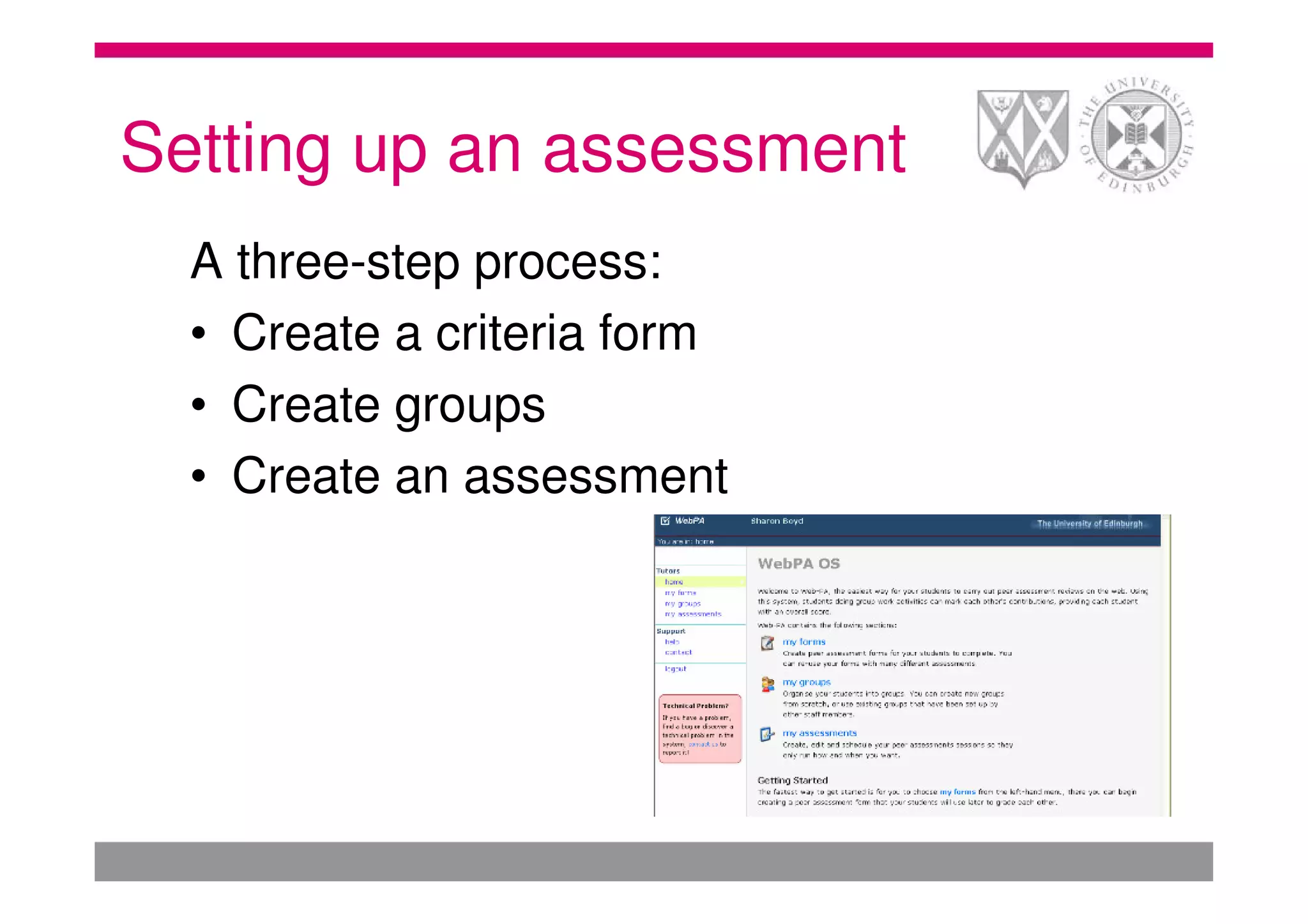
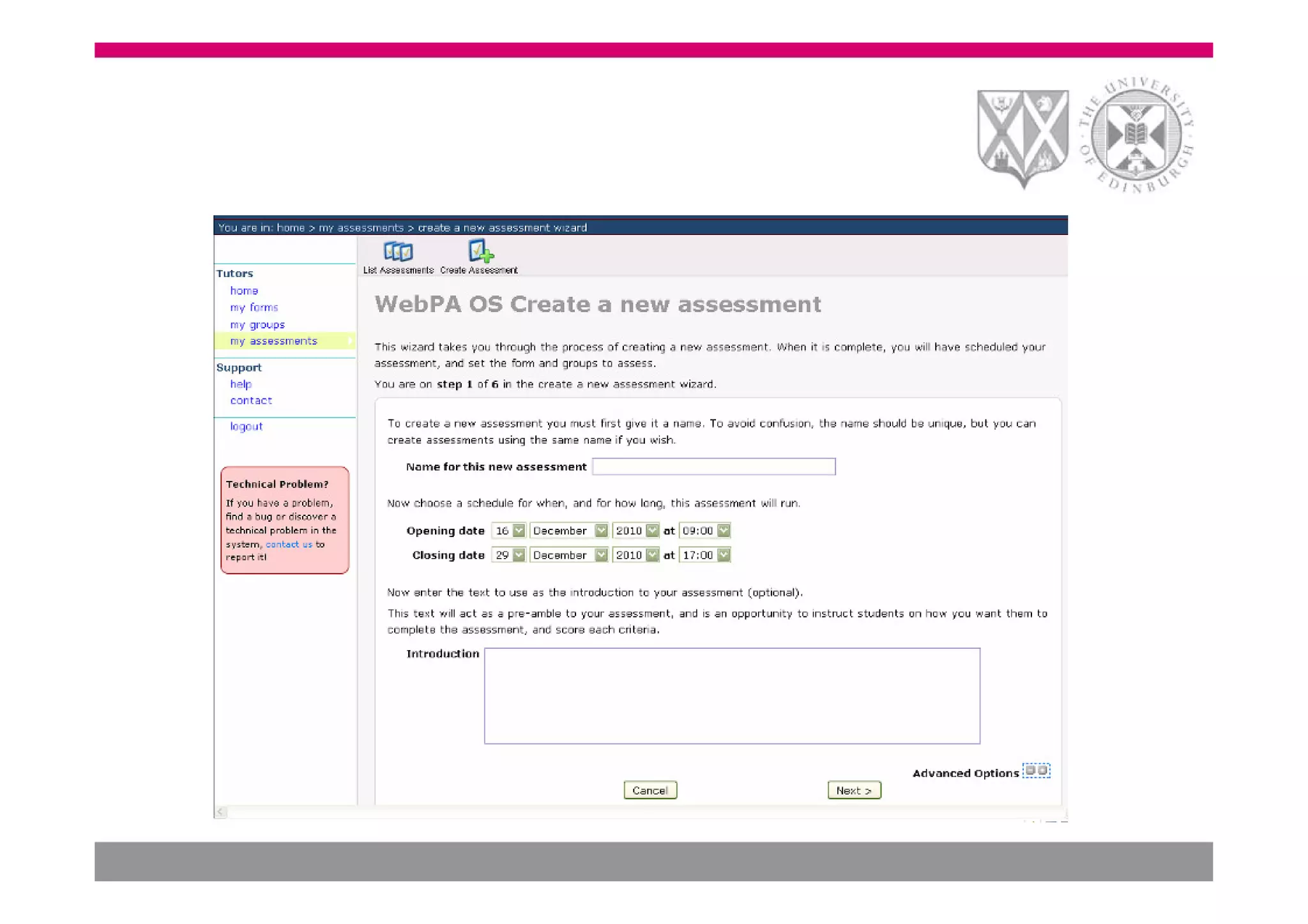
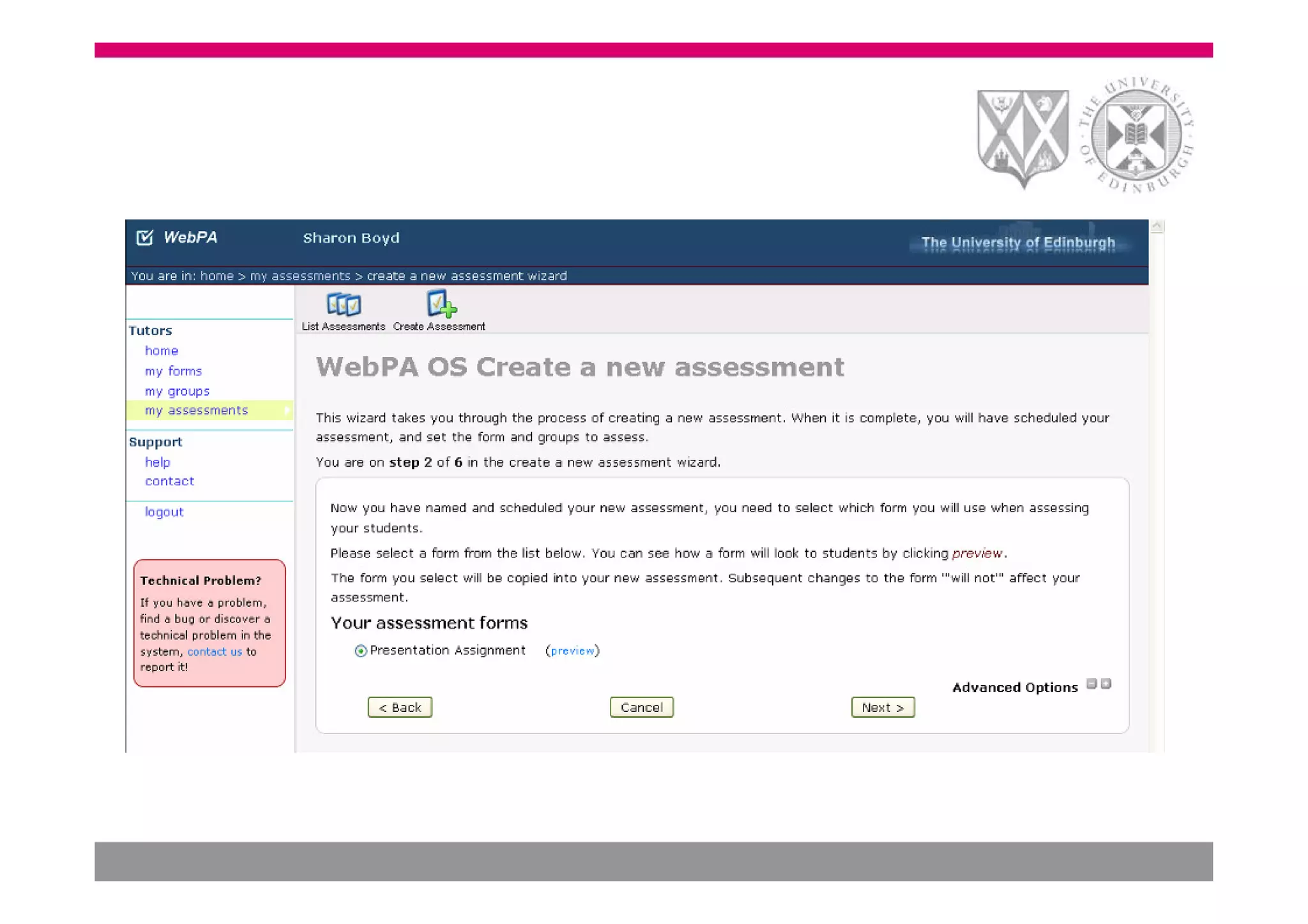
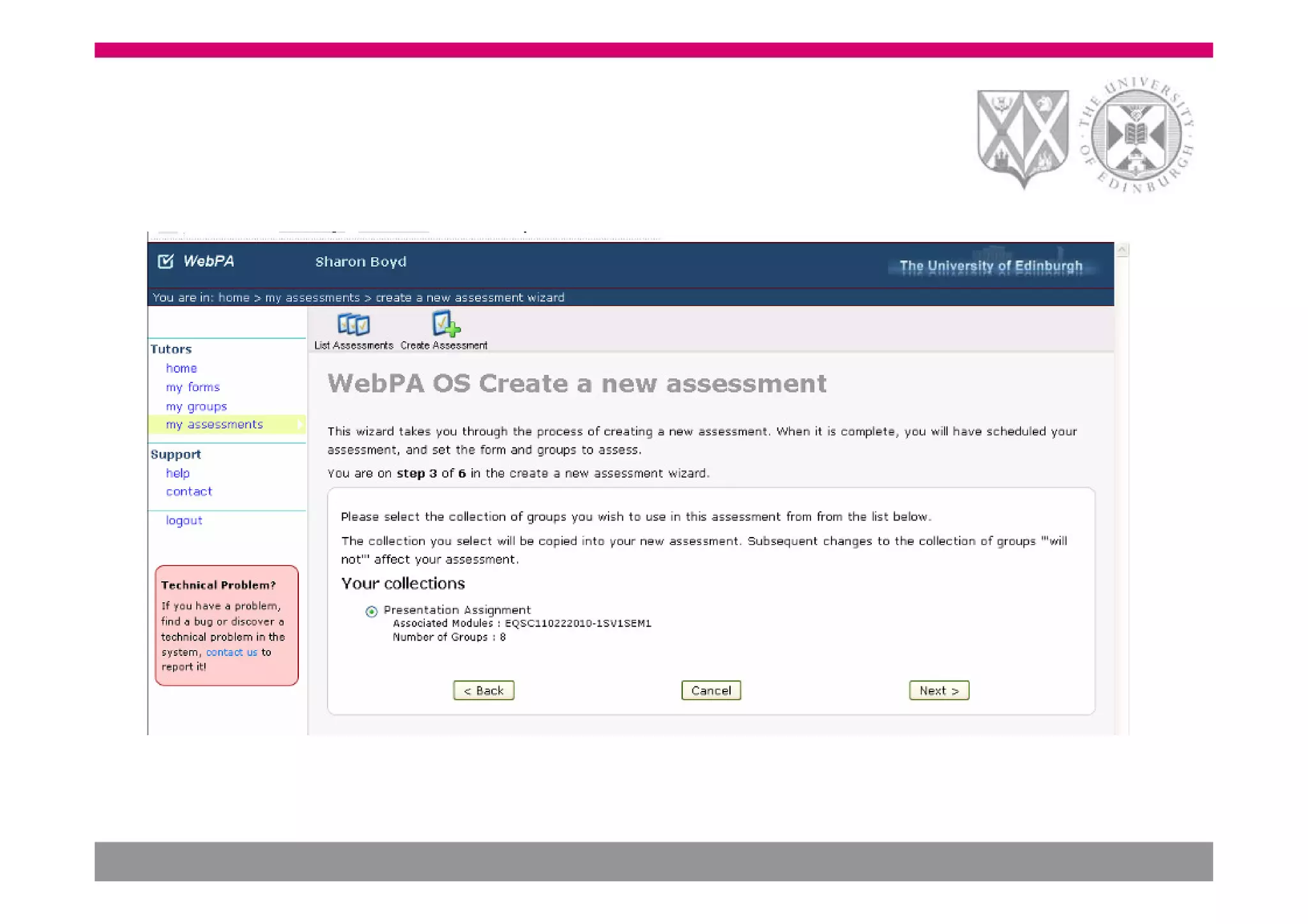
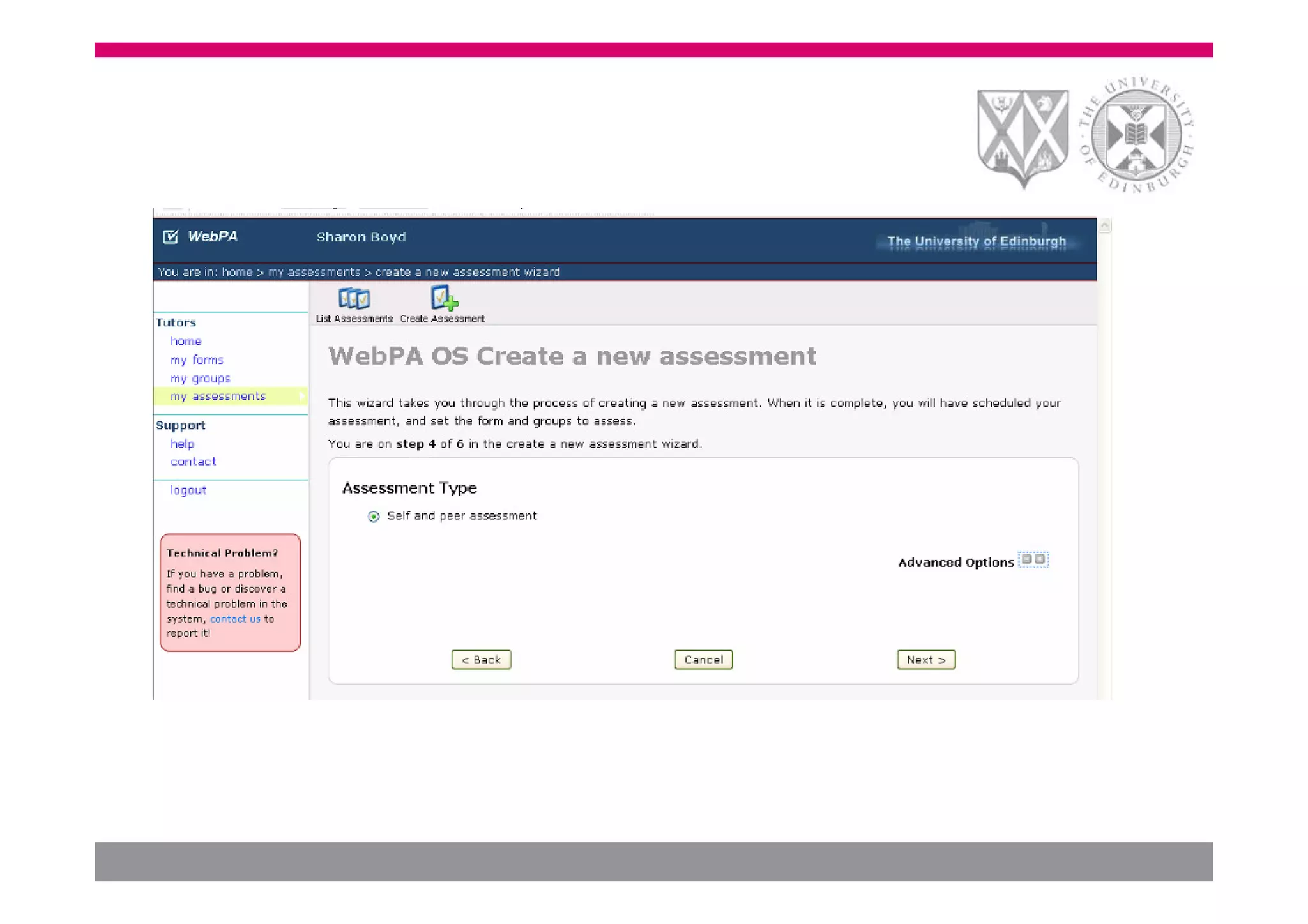
Setting up an assessment
  A three-step process:
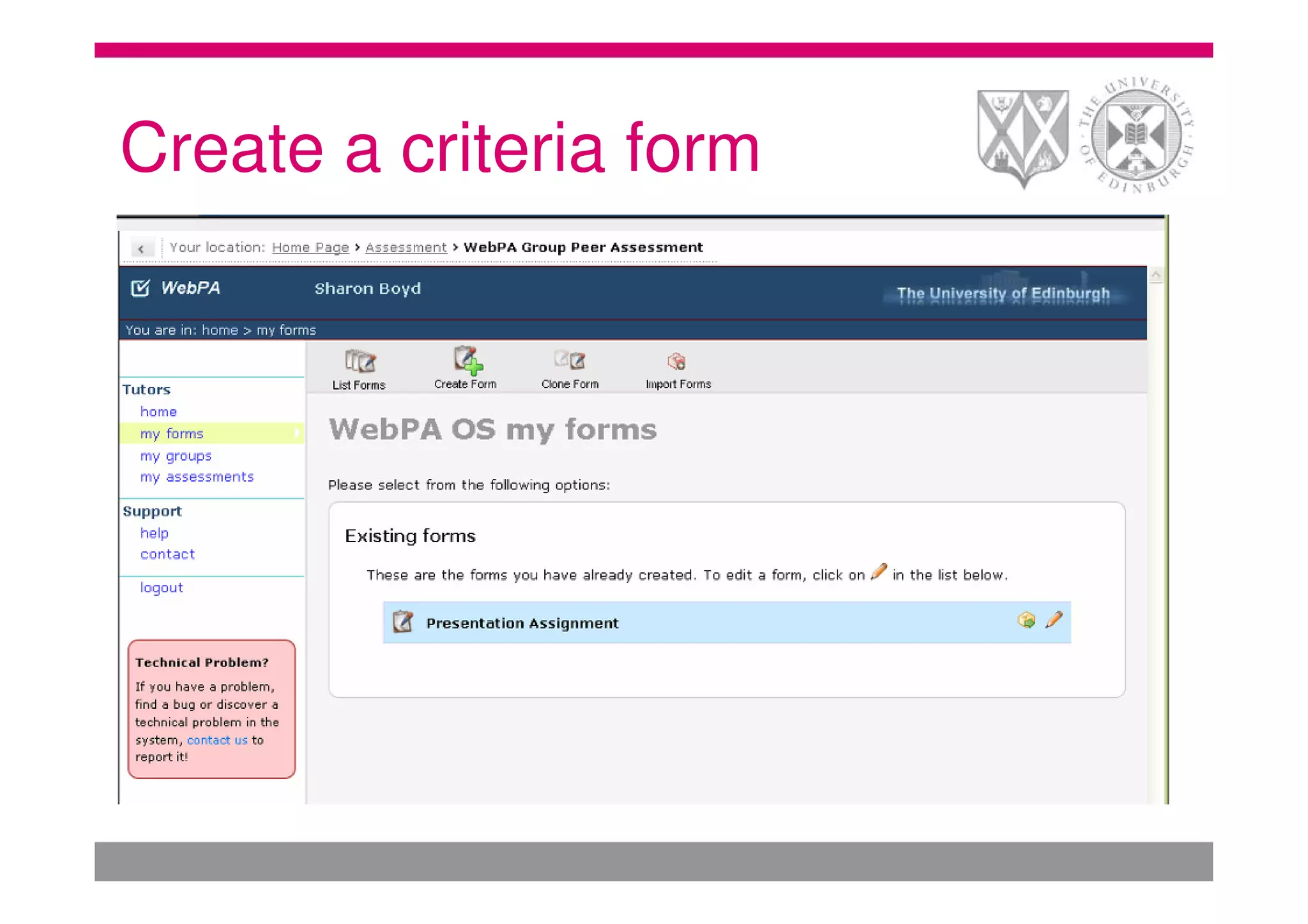
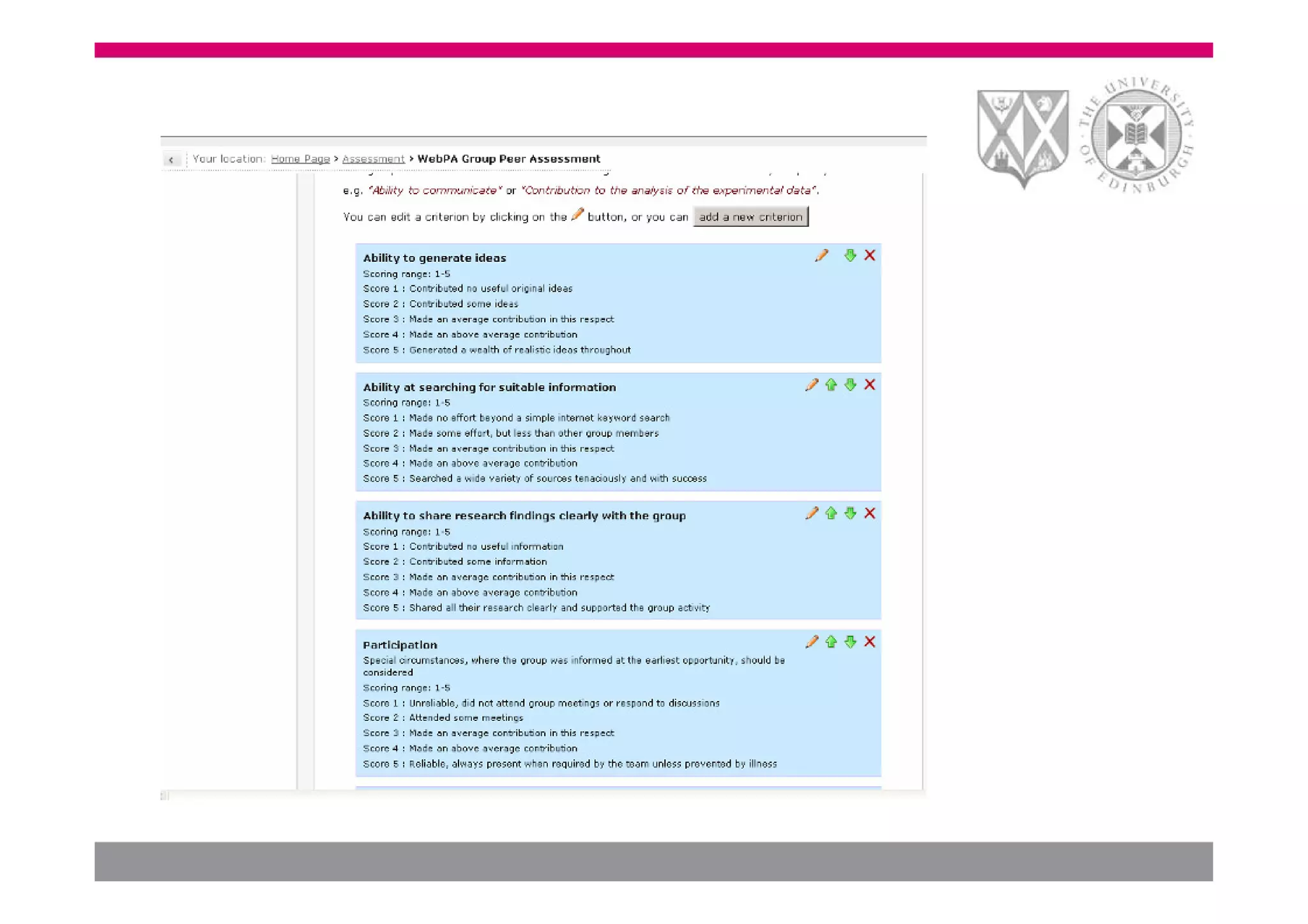
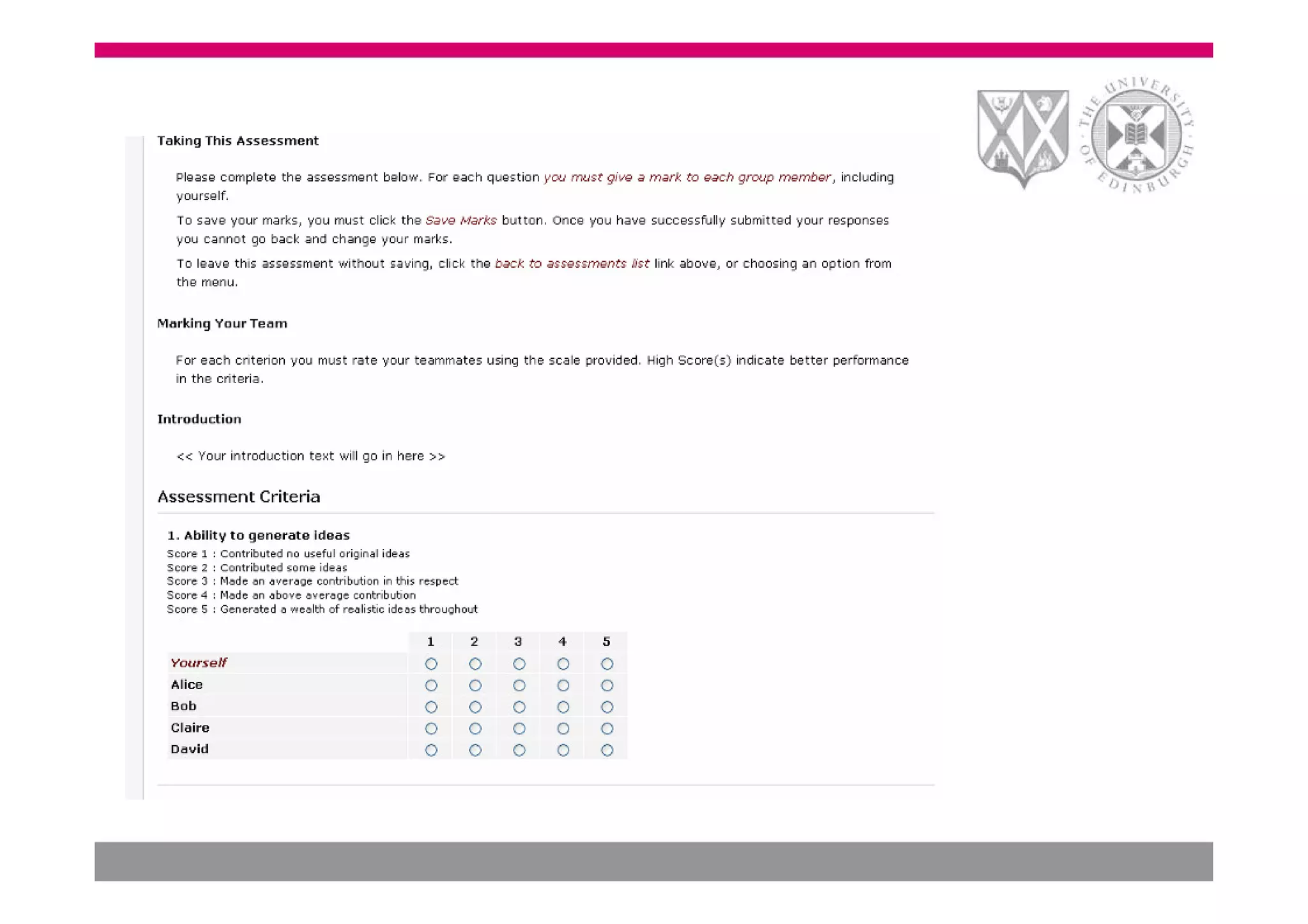
  • Create a criteria form
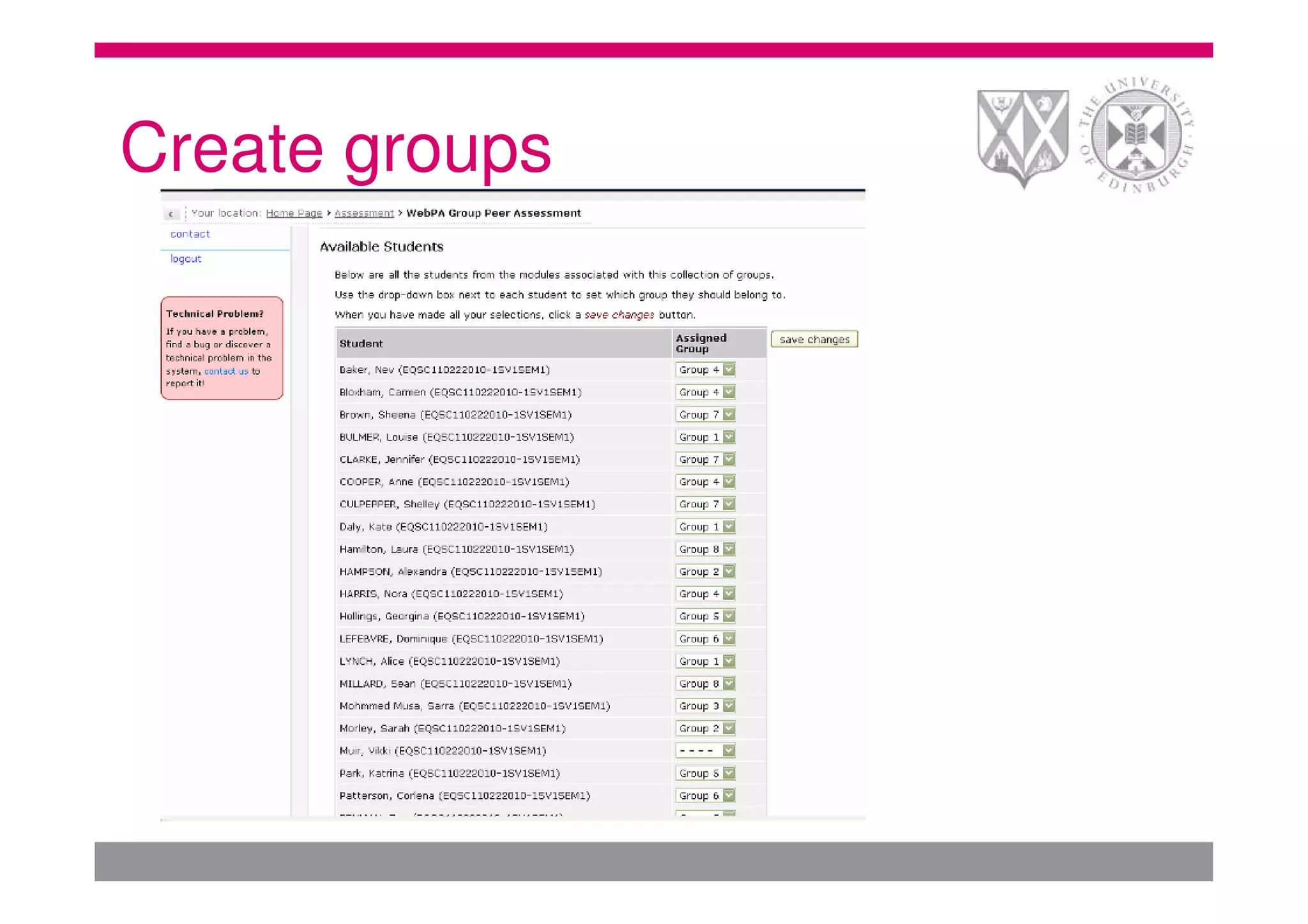
  • Create groups
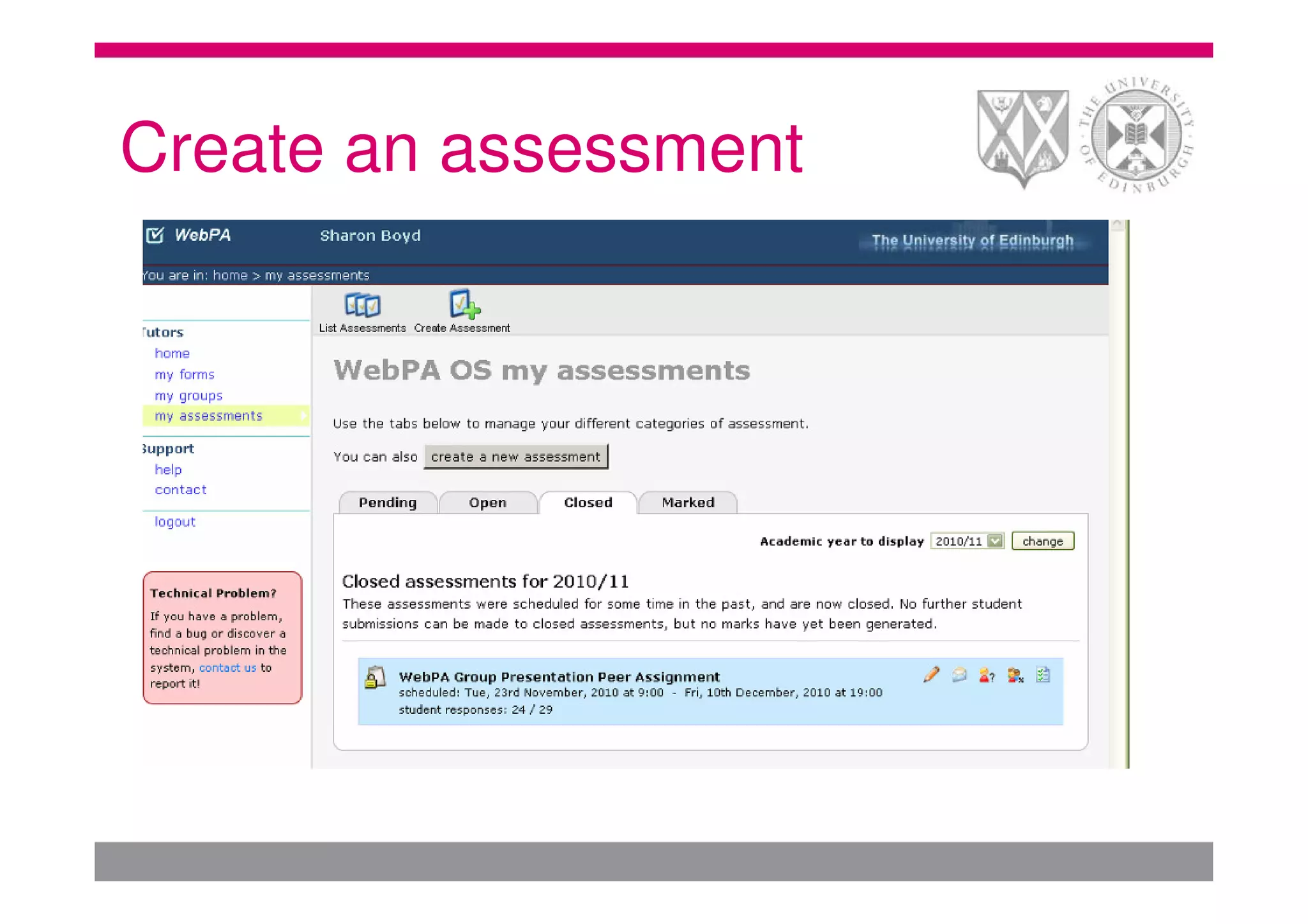
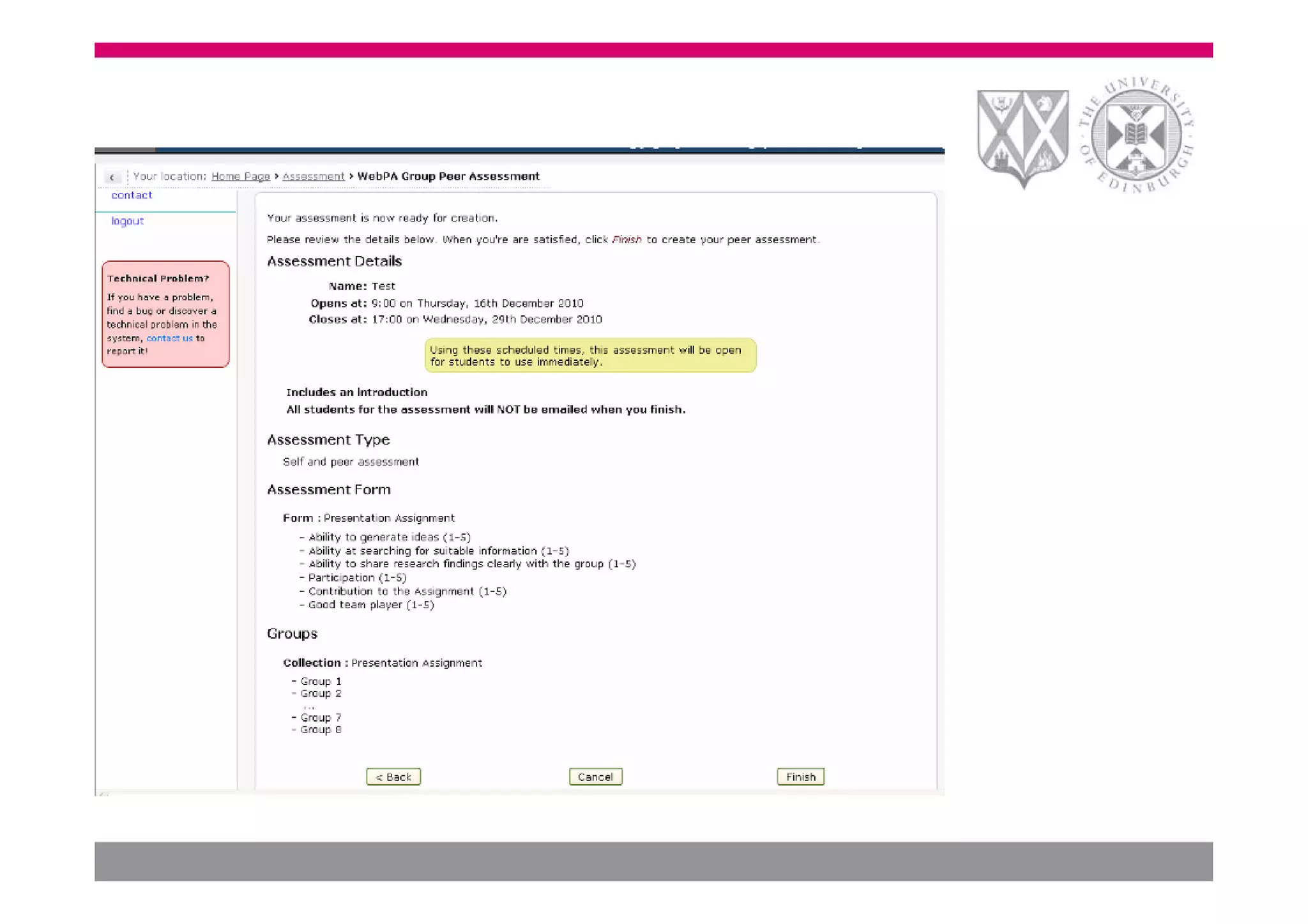
  • Create an assessment
Create a criteria form
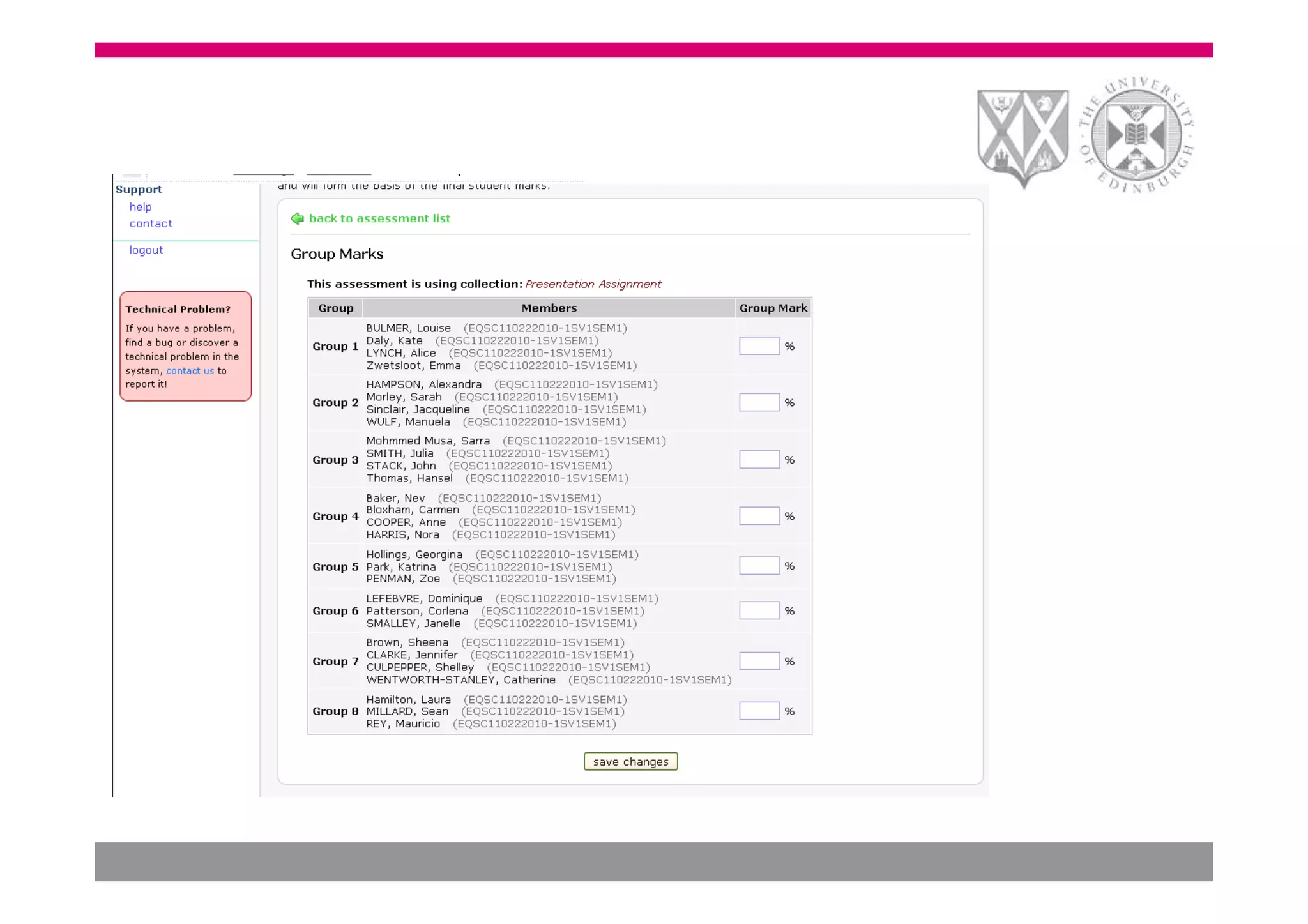
Create groups
Create an assessment
Grading assessments
  • Straightforward tool for students and
    staff
  • The WebPA grading algorithm adapts
    the group mark from the student grading
    results to create the final mark
  • Good range of reports and report
    formats available
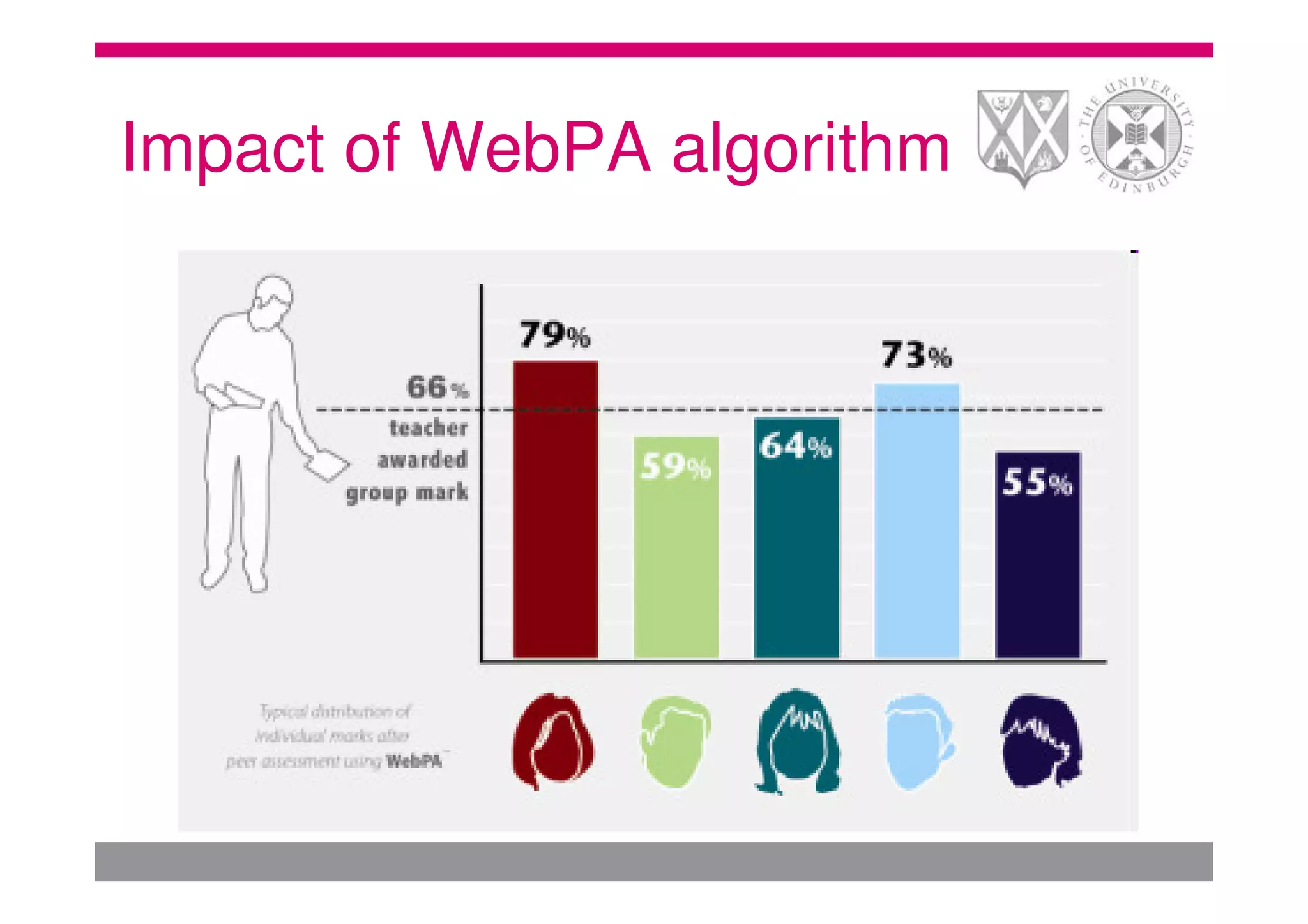
Impact of WebPA algorithm
Assessment types used
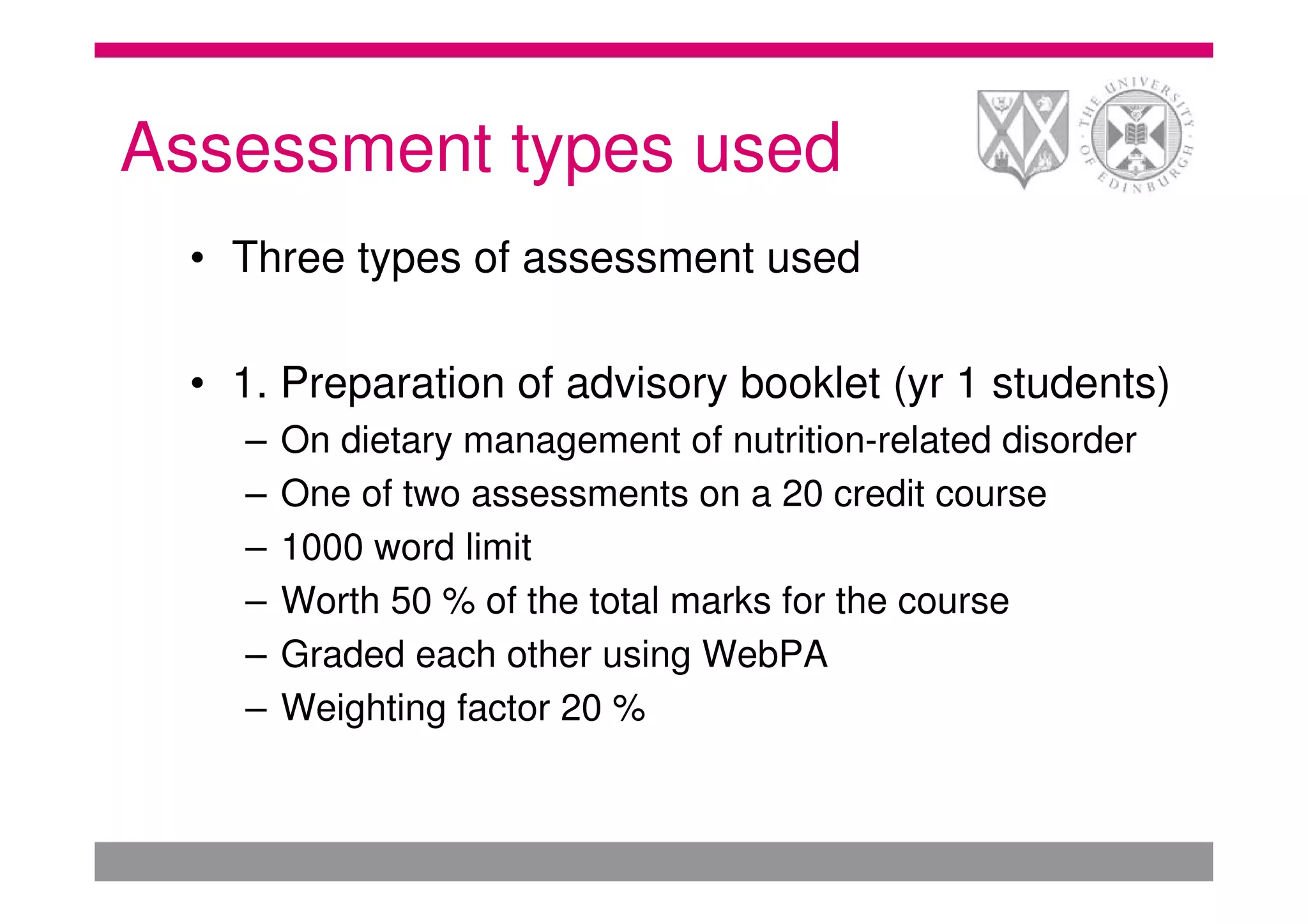
  • Three types of assessment used

  • 1. Preparation of advisory booklet (yr 1 students)
    –   On dietary management of nutrition-related disorder
    –   One of two assessments on a 20 credit course
    –   1000 word limit
    –   Worth 50 % of the total marks for the course
    –   Graded each other using WebPA
    –   Weighting factor 20 %
Assessment types used
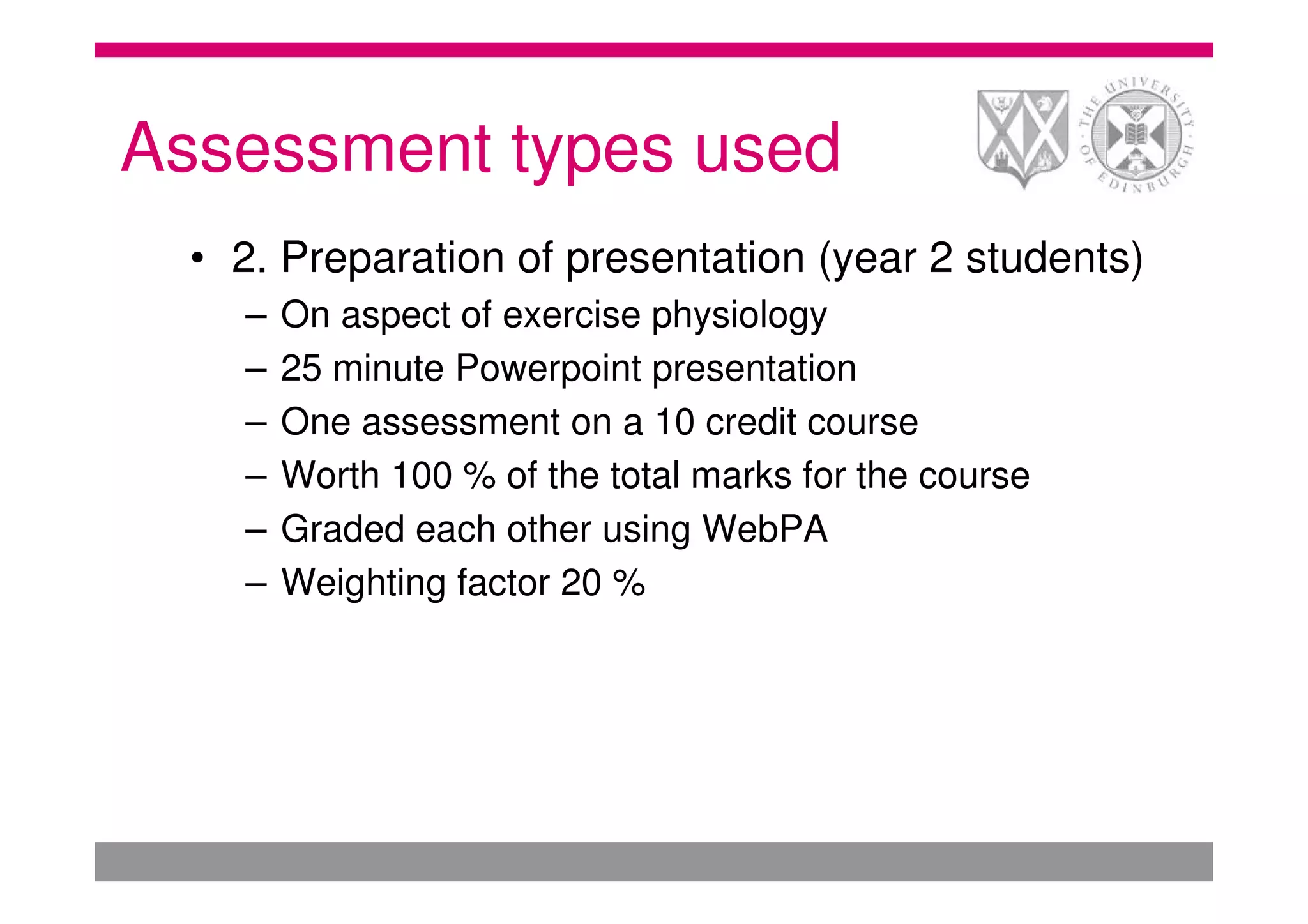
  • 2. Preparation of presentation (year 2 students)
    –   On aspect of exercise physiology
    –   25 minute Powerpoint presentation
    –   One assessment on a 10 credit course
    –   Worth 100 % of the total marks for the course
    –   Graded each other using WebPA
    –   Weighting factor 20 %
Assessment types used
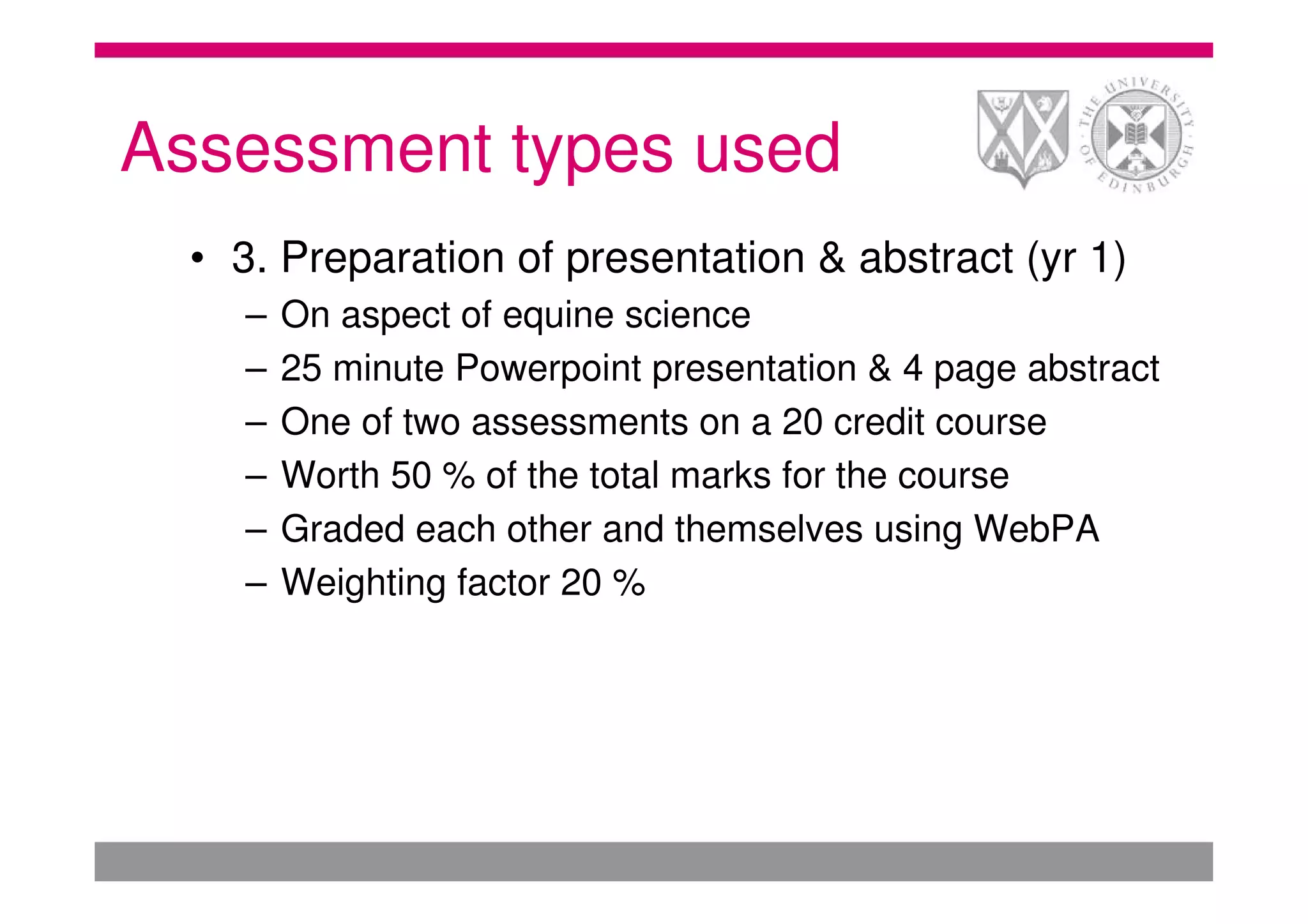
  • 3. Preparation of presentation & abstract (yr 1)
    –   On aspect of equine science
    –   25 minute Powerpoint presentation & 4 page abstract
    –   One of two assessments on a 20 credit course
    –   Worth 50 % of the total marks for the course
    –   Graded each other and themselves using WebPA
    –   Weighting factor 20 %
Feedback booklet - positive
  • Most students said they would be happy to use WebPA
    again

  • A small number of students had technical difficulties, but
    these were resolved

  • Many students liked the group work and felt it brought the
    group together

  • Many liked that their mark could be partially influenced by
    their peers
Feedback booklet - comments
  “The group assignment was quite challenging to get
  everybody together but it definitely opened my eyes to
  how other people work differently to achieve the same
  goals. Also it is a good lesson in compromise, you have
  to accept other peoples perspective because the
  assignment belongs to the whole group.”
Feedback booklet - negative
  • A small number of students did not like the group work

  • A small number of students did not like the use of peer
    assessment

  • “I don’t think its fair that the peers grade each other as
    due to individual time constraints some people are not
    able to be able to be as involved when the others want
    them to be causing a negative feedback from the other
    peers.”
Feedback booklet - negative
  • “I don’t understand why the peer assessment was a
    part of the assignment mark? How is our ability to peer
    assess be relevant to our mark for Equine Science? I
    see the benefit of doing it but I don’t think it should be
    part of an assessment.”
Feedback presentation &
abstract - positive
 • Most students said happy to use WebPA again

 • A few students had technical difficulties, but these were
   resolved
    – “WebPA was easy to use.”

 • Some students liked the group work and felt it brought
   the group together (not as many as year 1)

 • Some liked that their mark could be partially influenced
   by their peers (not as may as year 1)
Feedback presentation &
abstract - negative
 • Some students did not like the group work

 • Some students did not like the use of peer assessment

 • Some students had technical difficulties

 • “WebPA was difficult to use for me. Only with prof help I
   resolved the technical hitches.”
Feedback presentation &
abstract – negative

  “I did not like the group assignment. I do recognize
  the importance of work in a group, but I believe that
  we as adults with social lives, work and study cope
  with these issues very regularly. And the assignment
  didn't feel as my personal work, which I regret and
  had to do differently. At the same time the lessons
  were going on and it was hard to perform both tasks
  well in only 5 weeks.”
Feedback overall
  • Overall the feedback was positive

  • The technical support was key to the success

  • One student misunderstood how the group mark was
    affected

  • Clarification on WebPA adjustment of mark resolved
    this
Where do we go from here?
  • Still in the pilot phase
  • WebCT course authentication process

  • Contact IS Helpline:
    IS.Helpline@ed.ac.uk
Thank you
 • Jo-Anne Murray
   jo-anne.murray@ed.ac.uk

 • Sharon Boyd
   sharon.boyd@ed.ac.uk

Groupwork with WebPA - Sharon Boyd and Jo-Anne Murray

  • 1.
    Groupwork with WebPA Peer Feedback and Assessment for Science and Engineering Workshop 17th December 2010
  • 2.
    Background to use • Increasing numbers of students – Rising from 16 in 2008 to 74 in 2010 • Feedback from students on groupwork – ↑ groupwork in assignments • Feedback from students on peer assessment – Recognition of input into the groupwork – Not all group members receiving the same mark
  • 3.
    Why WebPA? •JISC-recommended tool • Met our assessment development requirements • Simple interface • Discussion with Stephen Vickers • Intrepid students willing to take part in the pilot • Free!
  • 4.
    Setting up anassessment A three-step process: • Create a criteria form • Create groups • Create an assessment
  • 5.
  • 7.
  • 8.
  • 15.
    Grading assessments • Straightforward tool for students and staff • The WebPA grading algorithm adapts the group mark from the student grading results to create the final mark • Good range of reports and report formats available
  • 16.
    Impact of WebPAalgorithm
  • 18.
    Assessment types used • Three types of assessment used • 1. Preparation of advisory booklet (yr 1 students) – On dietary management of nutrition-related disorder – One of two assessments on a 20 credit course – 1000 word limit – Worth 50 % of the total marks for the course – Graded each other using WebPA – Weighting factor 20 %
  • 19.
    Assessment types used • 2. Preparation of presentation (year 2 students) – On aspect of exercise physiology – 25 minute Powerpoint presentation – One assessment on a 10 credit course – Worth 100 % of the total marks for the course – Graded each other using WebPA – Weighting factor 20 %
  • 20.
    Assessment types used • 3. Preparation of presentation & abstract (yr 1) – On aspect of equine science – 25 minute Powerpoint presentation & 4 page abstract – One of two assessments on a 20 credit course – Worth 50 % of the total marks for the course – Graded each other and themselves using WebPA – Weighting factor 20 %
  • 21.
    Feedback booklet -positive • Most students said they would be happy to use WebPA again • A small number of students had technical difficulties, but these were resolved • Many students liked the group work and felt it brought the group together • Many liked that their mark could be partially influenced by their peers
  • 22.
    Feedback booklet -comments “The group assignment was quite challenging to get everybody together but it definitely opened my eyes to how other people work differently to achieve the same goals. Also it is a good lesson in compromise, you have to accept other peoples perspective because the assignment belongs to the whole group.”
  • 23.
    Feedback booklet -negative • A small number of students did not like the group work • A small number of students did not like the use of peer assessment • “I don’t think its fair that the peers grade each other as due to individual time constraints some people are not able to be able to be as involved when the others want them to be causing a negative feedback from the other peers.”
  • 24.
    Feedback booklet -negative • “I don’t understand why the peer assessment was a part of the assignment mark? How is our ability to peer assess be relevant to our mark for Equine Science? I see the benefit of doing it but I don’t think it should be part of an assessment.”
  • 25.
    Feedback presentation & abstract- positive • Most students said happy to use WebPA again • A few students had technical difficulties, but these were resolved – “WebPA was easy to use.” • Some students liked the group work and felt it brought the group together (not as many as year 1) • Some liked that their mark could be partially influenced by their peers (not as may as year 1)
  • 26.
    Feedback presentation & abstract- negative • Some students did not like the group work • Some students did not like the use of peer assessment • Some students had technical difficulties • “WebPA was difficult to use for me. Only with prof help I resolved the technical hitches.”
  • 27.
    Feedback presentation & abstract– negative “I did not like the group assignment. I do recognize the importance of work in a group, but I believe that we as adults with social lives, work and study cope with these issues very regularly. And the assignment didn't feel as my personal work, which I regret and had to do differently. At the same time the lessons were going on and it was hard to perform both tasks well in only 5 weeks.”
  • 28.
    Feedback overall • Overall the feedback was positive • The technical support was key to the success • One student misunderstood how the group mark was affected • Clarification on WebPA adjustment of mark resolved this
  • 29.
    Where do wego from here? • Still in the pilot phase • WebCT course authentication process • Contact IS Helpline: IS.Helpline@ed.ac.uk
  • 30.
    Thank you •Jo-Anne Murray jo-anne.murray@ed.ac.uk • Sharon Boyd sharon.boyd@ed.ac.uk