Physics Education Research
            The University of Edinburgh


PeerWise in Physics 1A Semester 1 2010


   Simon Bates           s.p.bates@ed.ac.uk
                                              1
Physics Education Research
                The University of Edinburgh


Motivation – why
 bother?

Implementation – what
  was done and how?

Suggestions for local
  implementation

                                              2
Physics Education Research
                   The University of Edinburgh


Motivation – why bother?

Richer student-generated feedback on presentations

Student engagement with presentations other than their
  own

Need to be time efficient

Little previous use of this application of EVS


                                                         3
Physics Education Research
                  The University of Edinburgh


Implementation – class details

Hons (year 3) Media and Eng Lit class

No previous use of EVS handsets

3 sessions with seminar groups of 15-20 students

Student assessment of their peers was not summative


                                                      4
Physics Education Research
                  The University of Edinburgh


Implementation – assessment details

Instructor assessed summatively – content, delivery,
   timing visuals

Student assessment questions criteria determined
  through discussion with previous year’s class

Based on tutor Qs but adapted for student perspective

Most Qs scored on numerical scale of 1-10

                                                        5
Physics Education Research
            The University of Edinburgh


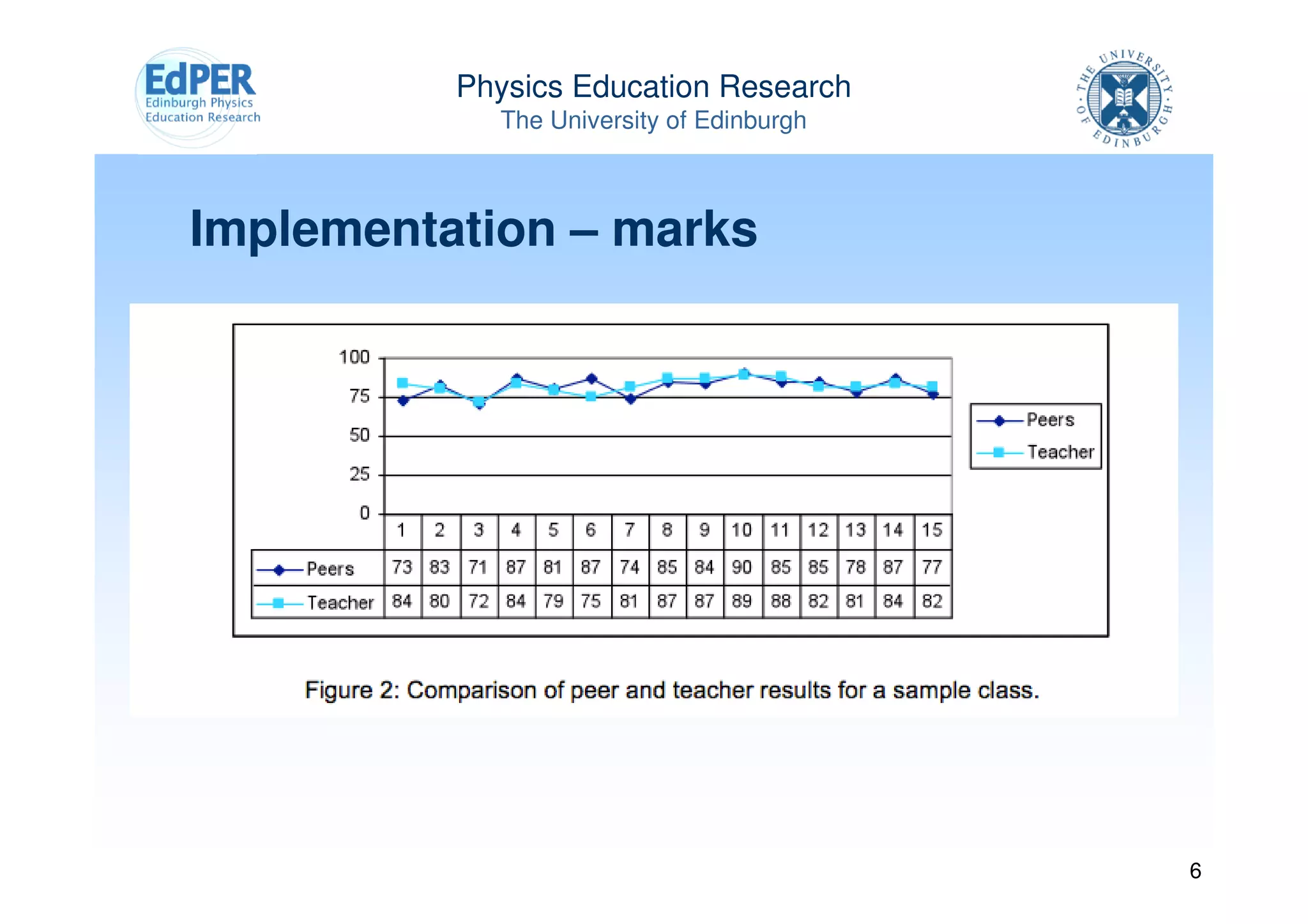
Implementation – marks


                                          6
Physics Education Research
                       The University of Edinburgh


Implementation – marks

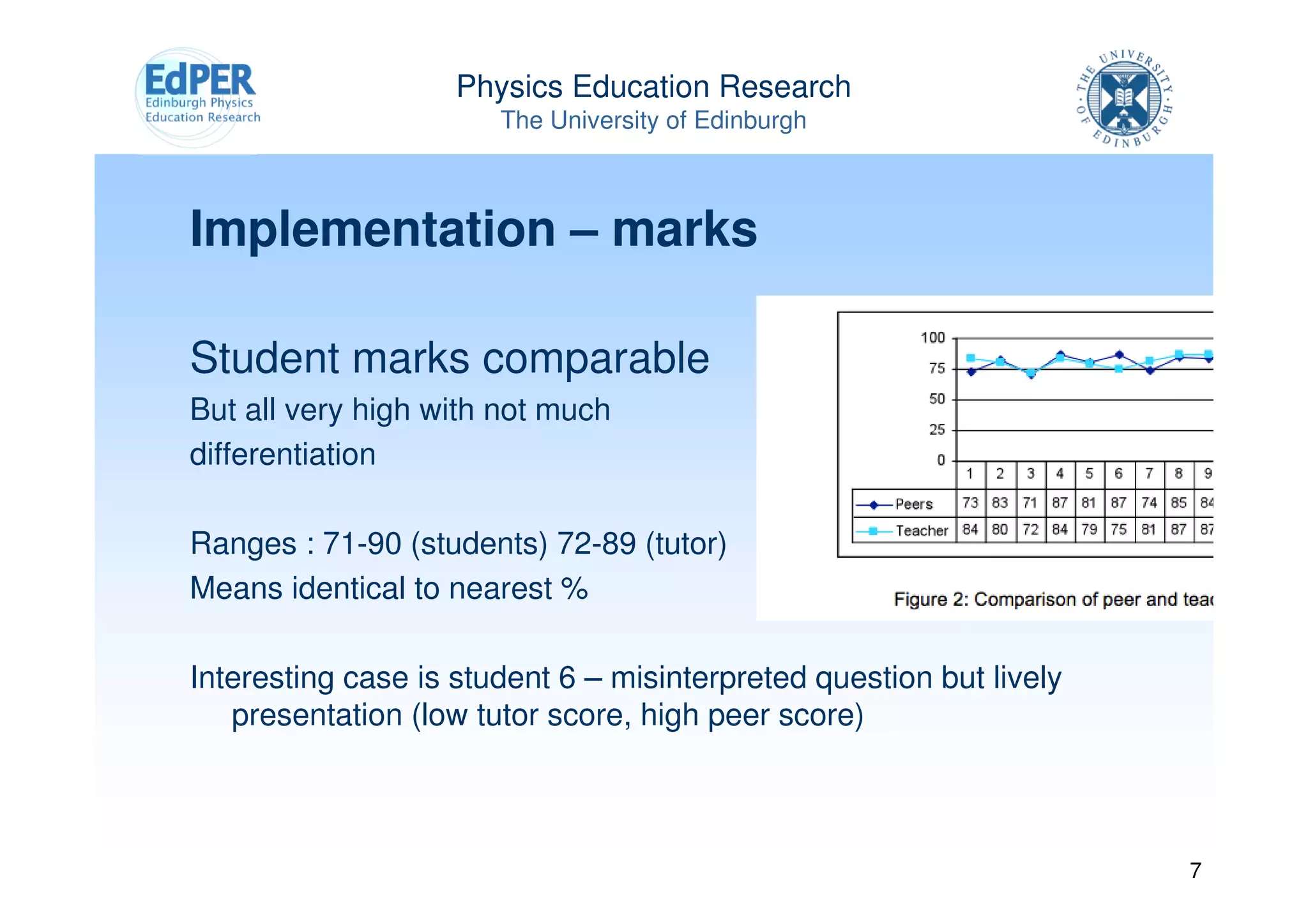
Student marks comparable
But all very high with not much
differentiation

Ranges : 71-90 (students) 72-89 (tutor)
Means identical to nearest %

Interesting case is student 6 – misinterpreted question but lively
   presentation (low tutor score, high peer score)


                                                                     7
Physics Education Research
                      The University of Edinburgh


Implementation – student feedback

Anonymity of handsets appreciated

Engagement - more attentive to session

Assessment over several sessions – ‘fixing’

Serial Q responses – slow

10Qs per student – ‘button fatigue’

Unanimous that it should not be summative

                                                    8
Physics Education Research
                      The University of Edinburgh


Evaluation – my thoughts

An interesting study in an appropriate area

Achieved some of its aims


    Were I to do it, I would do things slightly differently


                                                              9
Physics Education Research
                The University of Edinburgh


1. Can’t assume students are confident
  assessors, partly because they rarely
  assess

Need to run a dummy exercise as a training
 session

Illustrate with short examples of ‘staged’ good,
   average and poor presentations


                                                   10
Physics Education Research
                The University of Edinburgh


2. Students should feel some ownership of
  the peer assessment component

Develop assessment criteria and questions with
 whole class discussion input (this year’s class!)

Trial with training exercise presentations

Discuss and if necessary refine


                                                     11
Physics Education Research
                 The University of Edinburgh


3. Simplify the questions / choices

10 point scale is far too fine

Suggest replacing it with statements rated on a
  5 point Likert scale (or 6 point Osgood)

Reduce the number of questions to the
 minimum needed to cover all the assessment
 issues

                                                  12
Physics Education Research
                The University of Edinburgh


4. Consider letting students assess different
  things to tutor

If similar criteria assessing same components of
   presentation, won’t you always expect similar
   scores?

Why not let students assess suitability of e.g.
 content, subject to development of criteria
 through training?

                                                   13
Physics Education Research
                  The University of Edinburgh


Consequences

+ Students as partners in the development of
  PA criteria
+ Normalisation of expectations ahead of real
  session: ‘on the same page’
+ Encourages reflection before students create
  and deliver their own presentations

- Takes 1-2 hrs additional class time
  (but probably time well spent)
                                                 14
Physics Education Research
                The University of Edinburgh


Finally…..

I think you could allocate a proportion of the
   summative assessment to this process, if
   criteria transparent and students trained as
   suggested.


                                                  15
Physics Education Research
  The University of Edinburgh


                                16

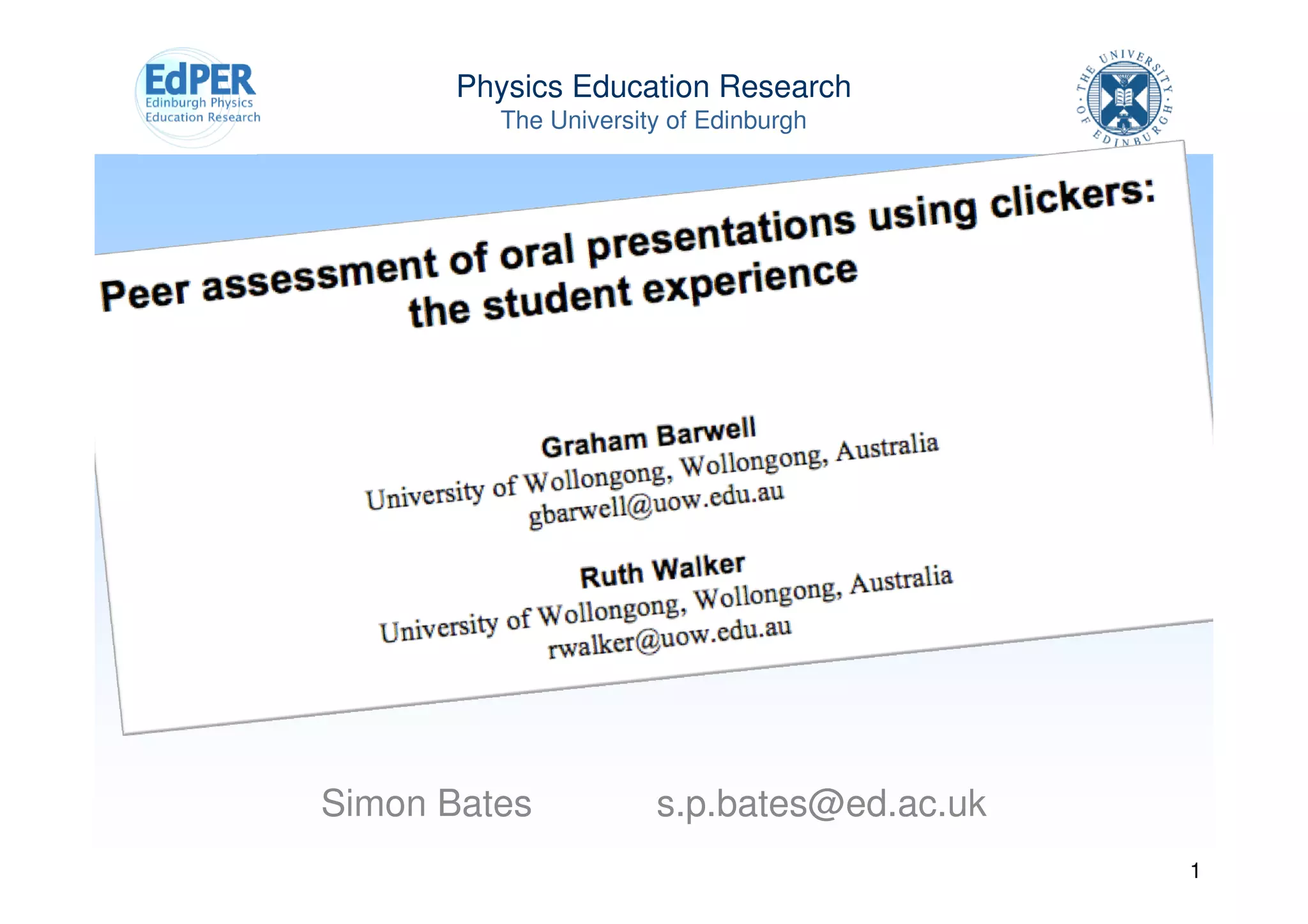
Peer assessment of presentations - Simon Bates

  • 1.
    Physics Education Research The University of Edinburgh PeerWise in Physics 1A Semester 1 2010 Simon Bates s.p.bates@ed.ac.uk 1
  • 2.
    Physics Education Research The University of Edinburgh Motivation – why bother? Implementation – what was done and how? Suggestions for local implementation 2
  • 3.
    Physics Education Research The University of Edinburgh Motivation – why bother? Richer student-generated feedback on presentations Student engagement with presentations other than their own Need to be time efficient Little previous use of this application of EVS 3
  • 4.
    Physics Education Research The University of Edinburgh Implementation – class details Hons (year 3) Media and Eng Lit class No previous use of EVS handsets 3 sessions with seminar groups of 15-20 students Student assessment of their peers was not summative 4
  • 5.
    Physics Education Research The University of Edinburgh Implementation – assessment details Instructor assessed summatively – content, delivery, timing visuals Student assessment questions criteria determined through discussion with previous year’s class Based on tutor Qs but adapted for student perspective Most Qs scored on numerical scale of 1-10 5
  • 6.
    Physics Education Research The University of Edinburgh Implementation – marks 6
  • 7.
    Physics Education Research The University of Edinburgh Implementation – marks Student marks comparable But all very high with not much differentiation Ranges : 71-90 (students) 72-89 (tutor) Means identical to nearest % Interesting case is student 6 – misinterpreted question but lively presentation (low tutor score, high peer score) 7
  • 8.
    Physics Education Research The University of Edinburgh Implementation – student feedback Anonymity of handsets appreciated Engagement - more attentive to session Assessment over several sessions – ‘fixing’ Serial Q responses – slow 10Qs per student – ‘button fatigue’ Unanimous that it should not be summative 8
  • 9.
    Physics Education Research The University of Edinburgh Evaluation – my thoughts An interesting study in an appropriate area Achieved some of its aims Were I to do it, I would do things slightly differently 9
  • 10.
    Physics Education Research The University of Edinburgh 1. Can’t assume students are confident assessors, partly because they rarely assess Need to run a dummy exercise as a training session Illustrate with short examples of ‘staged’ good, average and poor presentations 10
  • 11.
    Physics Education Research The University of Edinburgh 2. Students should feel some ownership of the peer assessment component Develop assessment criteria and questions with whole class discussion input (this year’s class!) Trial with training exercise presentations Discuss and if necessary refine 11
  • 12.
    Physics Education Research The University of Edinburgh 3. Simplify the questions / choices 10 point scale is far too fine Suggest replacing it with statements rated on a 5 point Likert scale (or 6 point Osgood) Reduce the number of questions to the minimum needed to cover all the assessment issues 12
  • 13.
    Physics Education Research The University of Edinburgh 4. Consider letting students assess different things to tutor If similar criteria assessing same components of presentation, won’t you always expect similar scores? Why not let students assess suitability of e.g. content, subject to development of criteria through training? 13
  • 14.
    Physics Education Research The University of Edinburgh Consequences + Students as partners in the development of PA criteria + Normalisation of expectations ahead of real session: ‘on the same page’ + Encourages reflection before students create and deliver their own presentations - Takes 1-2 hrs additional class time (but probably time well spent) 14
  • 15.
    Physics Education Research The University of Edinburgh Finally….. I think you could allocate a proportion of the summative assessment to this process, if criteria transparent and students trained as suggested. 15
  • 16.
    Physics Education Research The University of Edinburgh 16