Dysentery
Definition:
A painful intestinal infection that is usually caused
by bacteria or parasites, usually accompanied by
abdominal pain
A general term for a group of gastrointestinal disorder
characterized by inflammation of the intestinal
particularly the colon
CAUSES OF Dysentery
Dysentery is usually cause by bacterial or protozoa
infection or infection of parasitic worms or viral .
The tow most common causes are infection with a
bacillus of the shield group and infestation by an
amoeba
When it is caused by bacillus called bacillary dysentery
, and when it is caused by an amoeba called
amoebic dysentery
RISK FACTOR OF DYSENTER Y
1) Contaminated water
2) Contaminated food
3) International travel
4) Clothing
5) Poor sanitation
6) Flied on food
Type of dysentery
 1/ amoebic :
 dysentery acute infectious disease of intestine
causes by enatamoeba histolytic amoeba .
 is more common in the tropic and part of rural
Canada do get reports of amoebic dysentery .
 The amoeba group together and form a cysts , the
cysts come out of the body in human faces . In area
poor sanitation these cysts can survive for along
time and also can linger in infected people `s hand
after going to risk of infecting other people .
CONT….
 Bacillary dysentery:
o A cut infectious disease of bowel , sigmoid colon , and rectum
o There symptom tend to appear from one to three days after
the person has been infected . For many symptom are so
mild they don’t even bother going to the doctor and the
problem resolve in a few days . Initial the infected person
goes to the toilet frequently with diarrhea
 Source of infection:
o Infected cases pass bacilli with in2 -6 weeks
o Chronic carrier
o Convalescent carrier
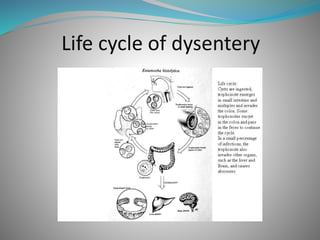
Life cycle of dysentery
Clinical manifestation
 Abdominal pain
 Fever and chills
 nausea and vomiting
 Watery diarrhea , which can contain blood , mucus or
pus
 Fatigue
 Intermittent constipation
 Painful passing of stool
Cont…
 Loss of appetite
 Headache.
 dehydration
Complication of dysentery
0Dehydration :
Diarrhea and vomiting can quickly to dehydration . This
can happen especially quickly with infant and young
children
0 liver abscess:
If the amoeba spreads to the liver
Diagnosis
Physical exam :
 The mouth , skin and lips may appear dry due to dehydration .
Lower abdominal tenderness may also be present
Stool and blood tests
 Cultures of stool are examined in order to identify the
organism causing dysentery
 Blood tests can be used to measure abnormalities in the level of
essential
 Minerals and salts
Treatment
 Medical management :
 -ciprofloxacin
 -metronidazole
 -paromomycin sulfate
 -iodoqui0l
 -paracetamol
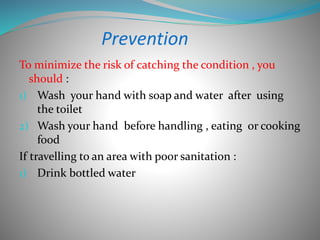
Prevention
To minimize the risk of catching the condition , you
should :
1) Wash your hand with soap and water after using
the toilet
2) Wash your hand before handling , eating or cooking
food
If travelling to an area with poor sanitation :
1) Drink bottled water
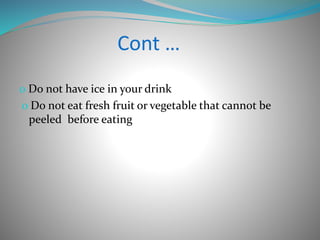
Cont …
0 Do not have ice in your drink
o Do not eat fresh fruit or vegetable that cannot be
peeled before eating

Group10 dysentery

  • 1.
    Dysentery Definition: A painful intestinalinfection that is usually caused by bacteria or parasites, usually accompanied by abdominal pain A general term for a group of gastrointestinal disorder characterized by inflammation of the intestinal particularly the colon
  • 2.
    CAUSES OF Dysentery Dysenteryis usually cause by bacterial or protozoa infection or infection of parasitic worms or viral . The tow most common causes are infection with a bacillus of the shield group and infestation by an amoeba When it is caused by bacillus called bacillary dysentery , and when it is caused by an amoeba called amoebic dysentery
  • 3.
    RISK FACTOR OFDYSENTER Y 1) Contaminated water 2) Contaminated food 3) International travel 4) Clothing 5) Poor sanitation 6) Flied on food
  • 4.
    Type of dysentery 1/ amoebic :  dysentery acute infectious disease of intestine causes by enatamoeba histolytic amoeba .  is more common in the tropic and part of rural Canada do get reports of amoebic dysentery .  The amoeba group together and form a cysts , the cysts come out of the body in human faces . In area poor sanitation these cysts can survive for along time and also can linger in infected people `s hand after going to risk of infecting other people .
  • 5.
    CONT….  Bacillary dysentery: oA cut infectious disease of bowel , sigmoid colon , and rectum o There symptom tend to appear from one to three days after the person has been infected . For many symptom are so mild they don’t even bother going to the doctor and the problem resolve in a few days . Initial the infected person goes to the toilet frequently with diarrhea  Source of infection: o Infected cases pass bacilli with in2 -6 weeks o Chronic carrier o Convalescent carrier
  • 6.
    Life cycle ofdysentery
  • 7.
    Clinical manifestation  Abdominalpain  Fever and chills  nausea and vomiting  Watery diarrhea , which can contain blood , mucus or pus  Fatigue  Intermittent constipation  Painful passing of stool
  • 8.
    Cont…  Loss ofappetite  Headache.  dehydration
  • 13.
    Complication of dysentery 0Dehydration: Diarrhea and vomiting can quickly to dehydration . This can happen especially quickly with infant and young children 0 liver abscess: If the amoeba spreads to the liver
  • 14.
    Diagnosis Physical exam : The mouth , skin and lips may appear dry due to dehydration . Lower abdominal tenderness may also be present Stool and blood tests  Cultures of stool are examined in order to identify the organism causing dysentery  Blood tests can be used to measure abnormalities in the level of essential  Minerals and salts
  • 15.
    Treatment  Medical management:  -ciprofloxacin  -metronidazole  -paromomycin sulfate  -iodoqui0l  -paracetamol
  • 16.
    Prevention To minimize therisk of catching the condition , you should : 1) Wash your hand with soap and water after using the toilet 2) Wash your hand before handling , eating or cooking food If travelling to an area with poor sanitation : 1) Drink bottled water
  • 17.
    Cont … 0 Donot have ice in your drink o Do not eat fresh fruit or vegetable that cannot be peeled before eating