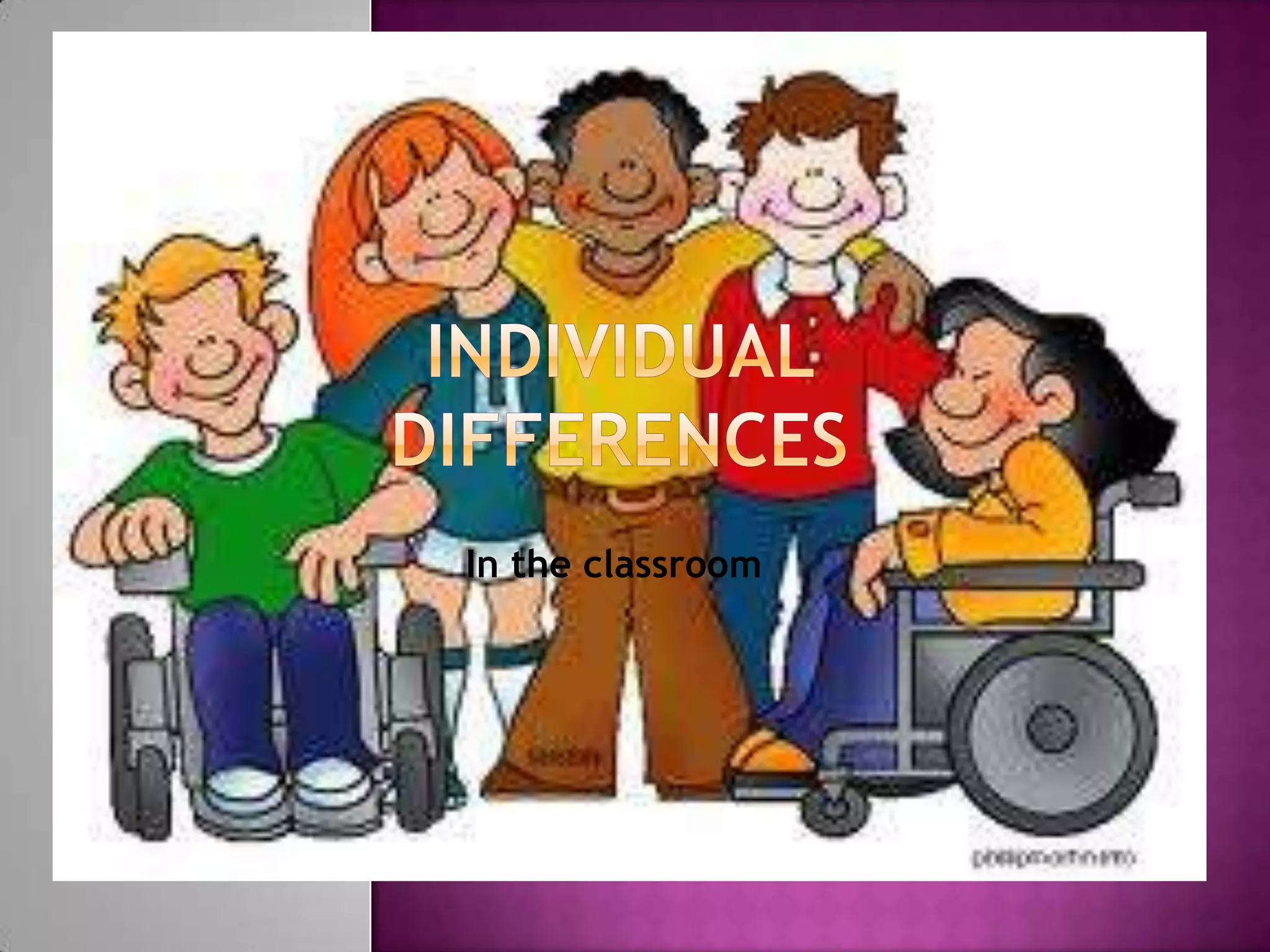
In the classroom
Sociable and responsive to others; friendly
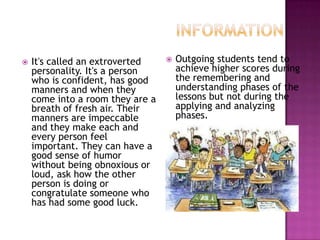
   It's called an extroverted       Outgoing students tend to
    personality. It's a person        achieve higher scores during
    who is confident, has good        the remembering and
    manners and when they             understanding phases of the
    come into a room they are a       lessons but not during the
    breath of fresh air. Their        applying and analyzing
    manners are impeccable            phases.
    and they make each and
    every person feel
    important. They can have a
    good sense of humor
    without being obnoxious or
    loud, ask how the other
    person is doing or
    congratulate someone who
    has had some good luck.
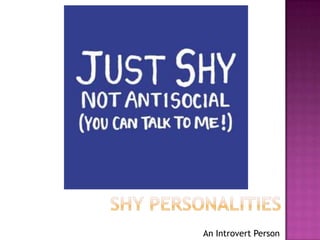
An Introvert Person
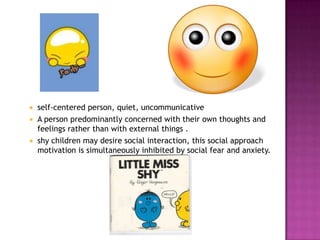
 self-centered person, quiet, uncommunicative
 A person predominantly concerned with their own thoughts and
  feelings rather than with external things .
 shy children may desire social interaction, this social approach
  motivation is simultaneously inhibited by social fear and anxiety.
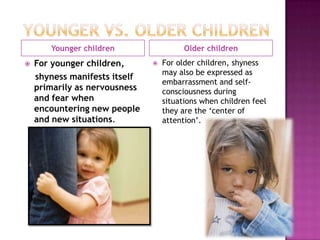
Younger children                  Older children
   For younger children,         For older children, shyness
                                   may also be expressed as
    shyness manifests itself
                                   embarrassment and self-
    primarily as nervousness       consciousness during
    and fear when                  situations when children feel
    encountering new people        they are the ‘center of
    and new situations.            attention’.
Education Programs
Intellectually gifted   • educational enrichment, honors
and academically
talented students are   classes
able to learn           • after school and summer programs
material rapidly and    featuring special course work
understand concepts     • mentor programs in which children
deeply. Keeping
them challenged         are matched with professionals in the
and learning to their   community for special learning
capacity can require    experiences.
changes in their
regular school
programs.
Some parents choose not to accelerate their child because of fears
that the child will suffer emotional, social or academic damages,
               but recent studies prove the opposite.

   Social/ Emotional                          Academics

          Studies show                Studies show that children
   that Accelerated                   who have been
   students report                    educationally accelerated do
   heightened interest in             not suffer academically.
   and enthusiasm for                 Their grades are higher than
   school. Studies also               those of their peers who
   prove that accelerated             chose not to accelerate, and
   children tend to adjust            they compare favorably with
   well to the change.                those of older students in
                                      their classes.
While some students are overall advance and
able to comprehend all subject matters, there are
some students who are advance in one particular
          subject and behind in the rest.
            This is common amongst students with
                  learning disabilities such as;
                            •Autism
                        •Asperger's Disorder
                            •ADHD

Group project

  • 1.
  • 2.
    Sociable and responsiveto others; friendly
  • 3.
    It's called an extroverted  Outgoing students tend to personality. It's a person achieve higher scores during who is confident, has good the remembering and manners and when they understanding phases of the come into a room they are a lessons but not during the breath of fresh air. Their applying and analyzing manners are impeccable phases. and they make each and every person feel important. They can have a good sense of humor without being obnoxious or loud, ask how the other person is doing or congratulate someone who has had some good luck.
  • 4.
  • 5.
     self-centered person,quiet, uncommunicative  A person predominantly concerned with their own thoughts and feelings rather than with external things .  shy children may desire social interaction, this social approach motivation is simultaneously inhibited by social fear and anxiety.
  • 6.
    Younger children Older children  For younger children,  For older children, shyness may also be expressed as shyness manifests itself embarrassment and self- primarily as nervousness consciousness during and fear when situations when children feel encountering new people they are the ‘center of and new situations. attention’.
  • 8.
    Education Programs Intellectually gifted • educational enrichment, honors and academically talented students are classes able to learn • after school and summer programs material rapidly and featuring special course work understand concepts • mentor programs in which children deeply. Keeping them challenged are matched with professionals in the and learning to their community for special learning capacity can require experiences. changes in their regular school programs.
  • 9.
    Some parents choosenot to accelerate their child because of fears that the child will suffer emotional, social or academic damages, but recent studies prove the opposite. Social/ Emotional Academics Studies show Studies show that children that Accelerated who have been students report educationally accelerated do heightened interest in not suffer academically. and enthusiasm for Their grades are higher than school. Studies also those of their peers who prove that accelerated chose not to accelerate, and children tend to adjust they compare favorably with well to the change. those of older students in their classes.
  • 10.
    While some studentsare overall advance and able to comprehend all subject matters, there are some students who are advance in one particular subject and behind in the rest. This is common amongst students with learning disabilities such as; •Autism •Asperger's Disorder •ADHD