Downloaded 128 times
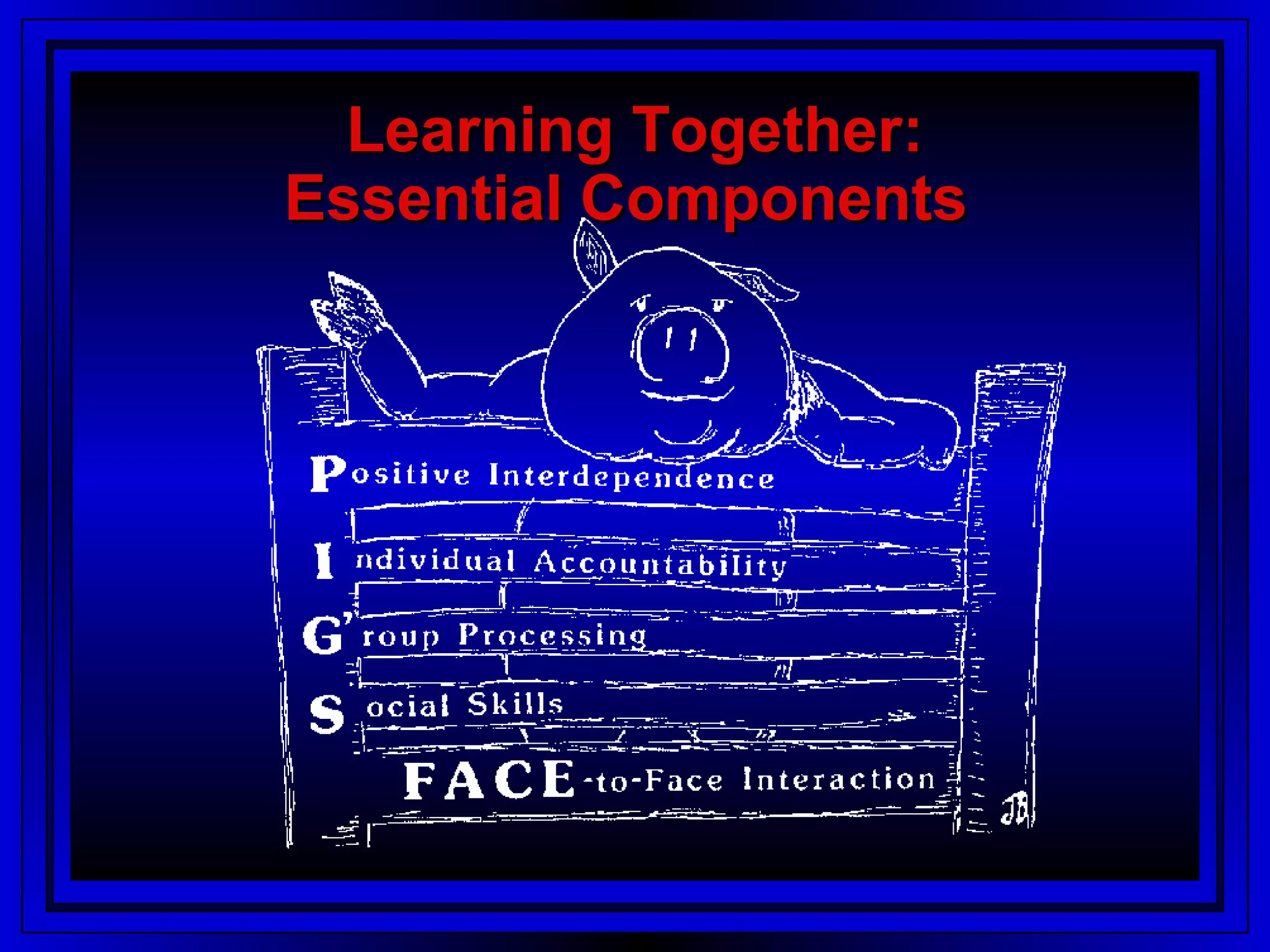

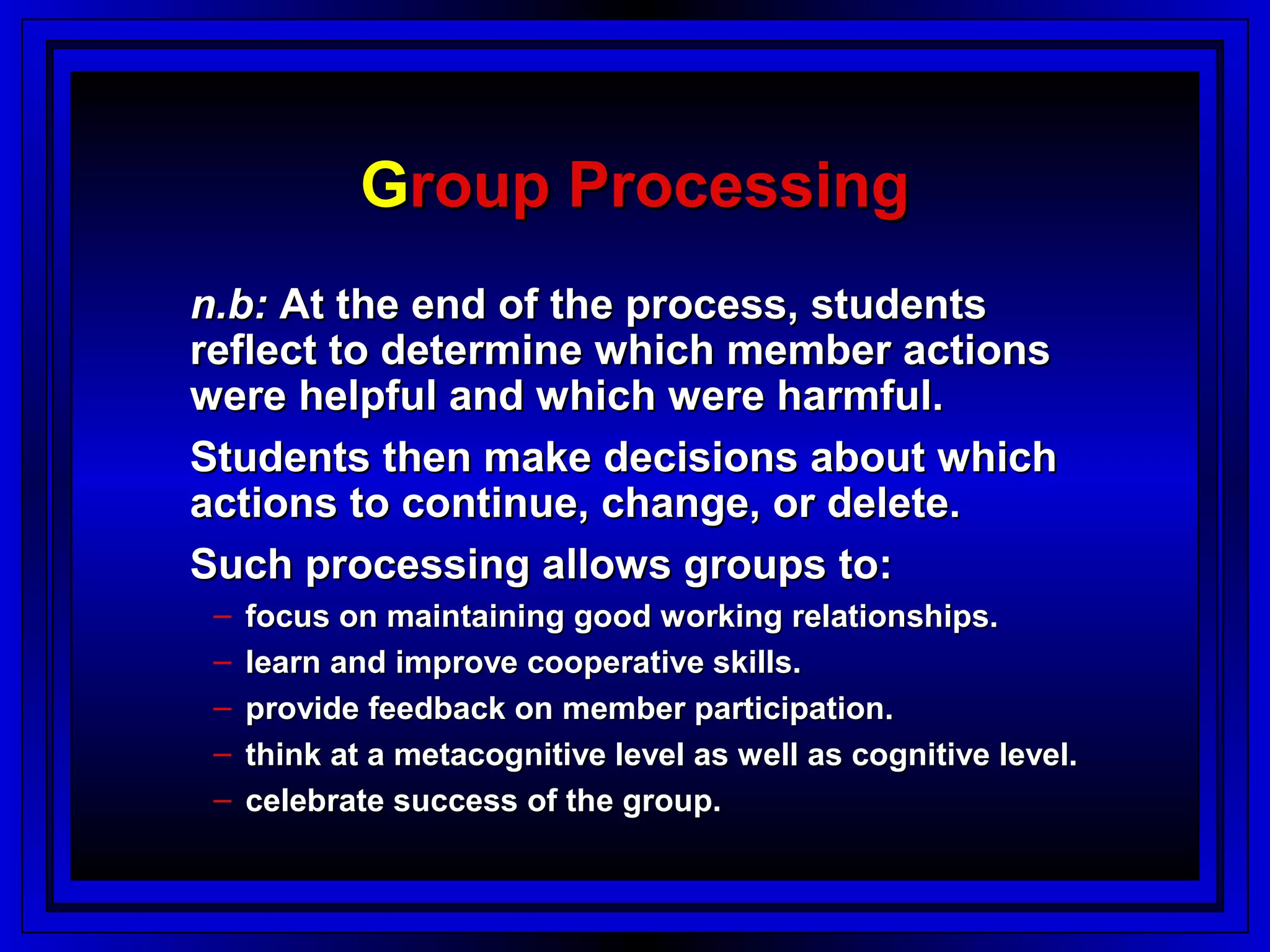
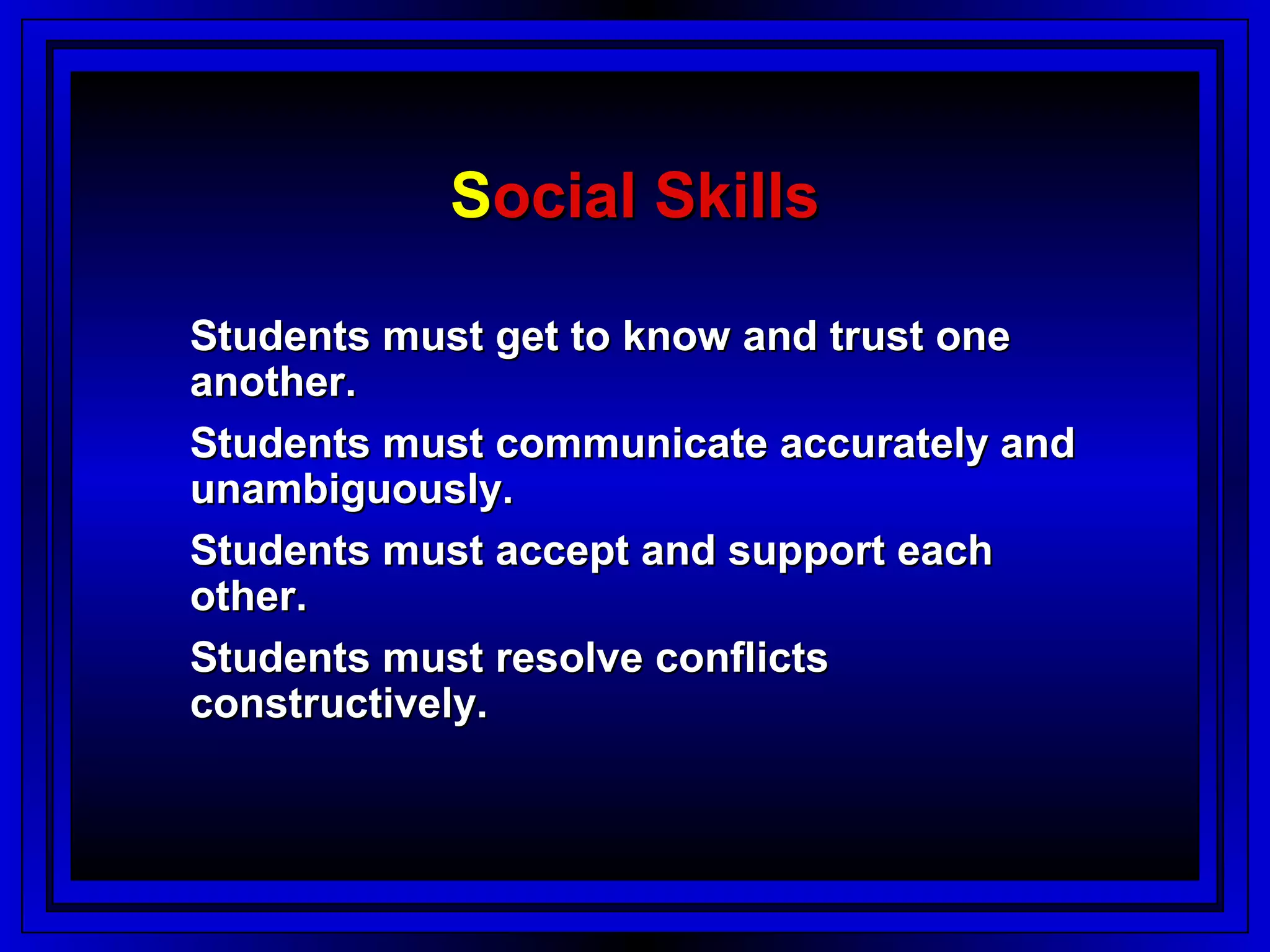
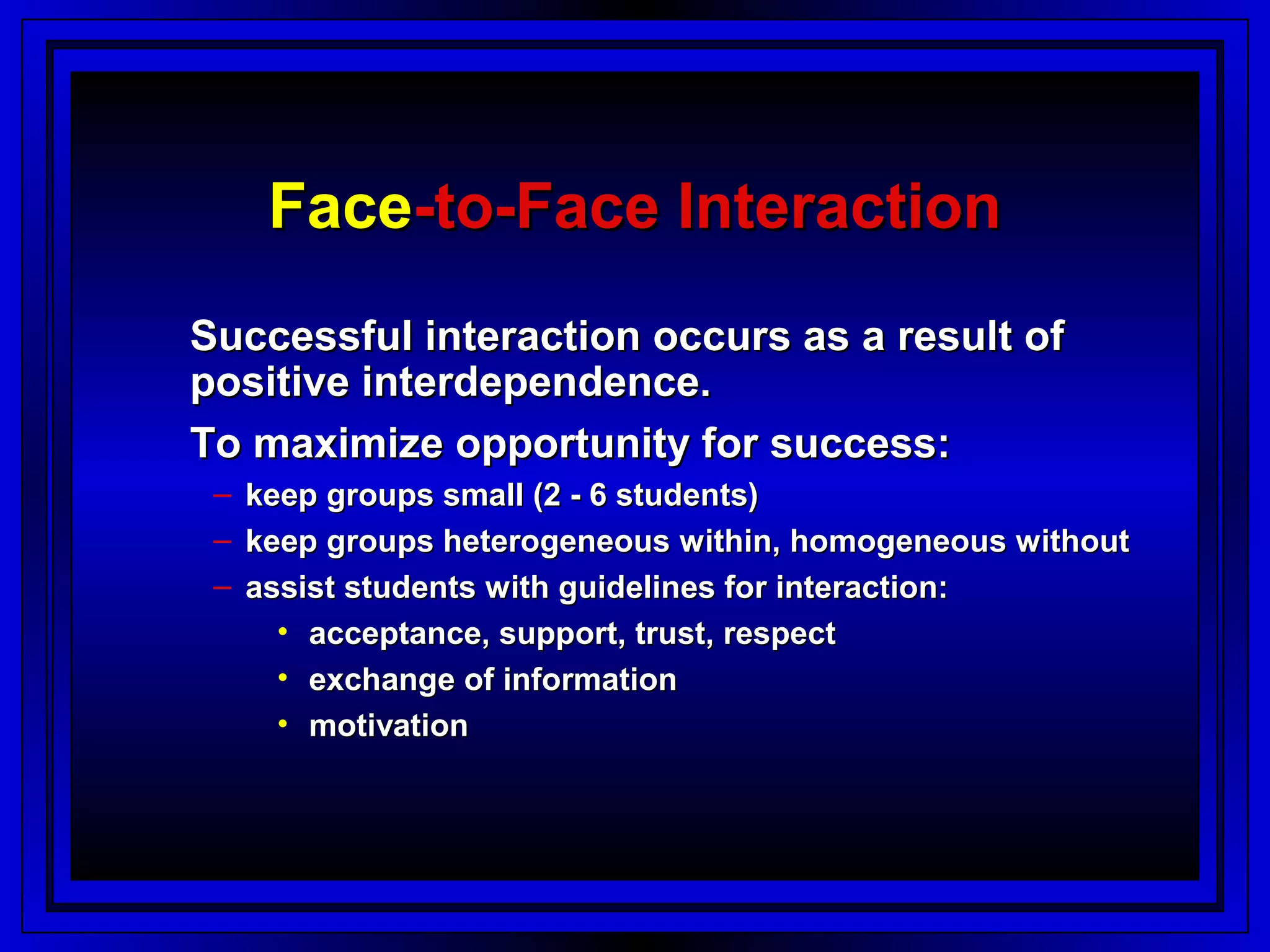
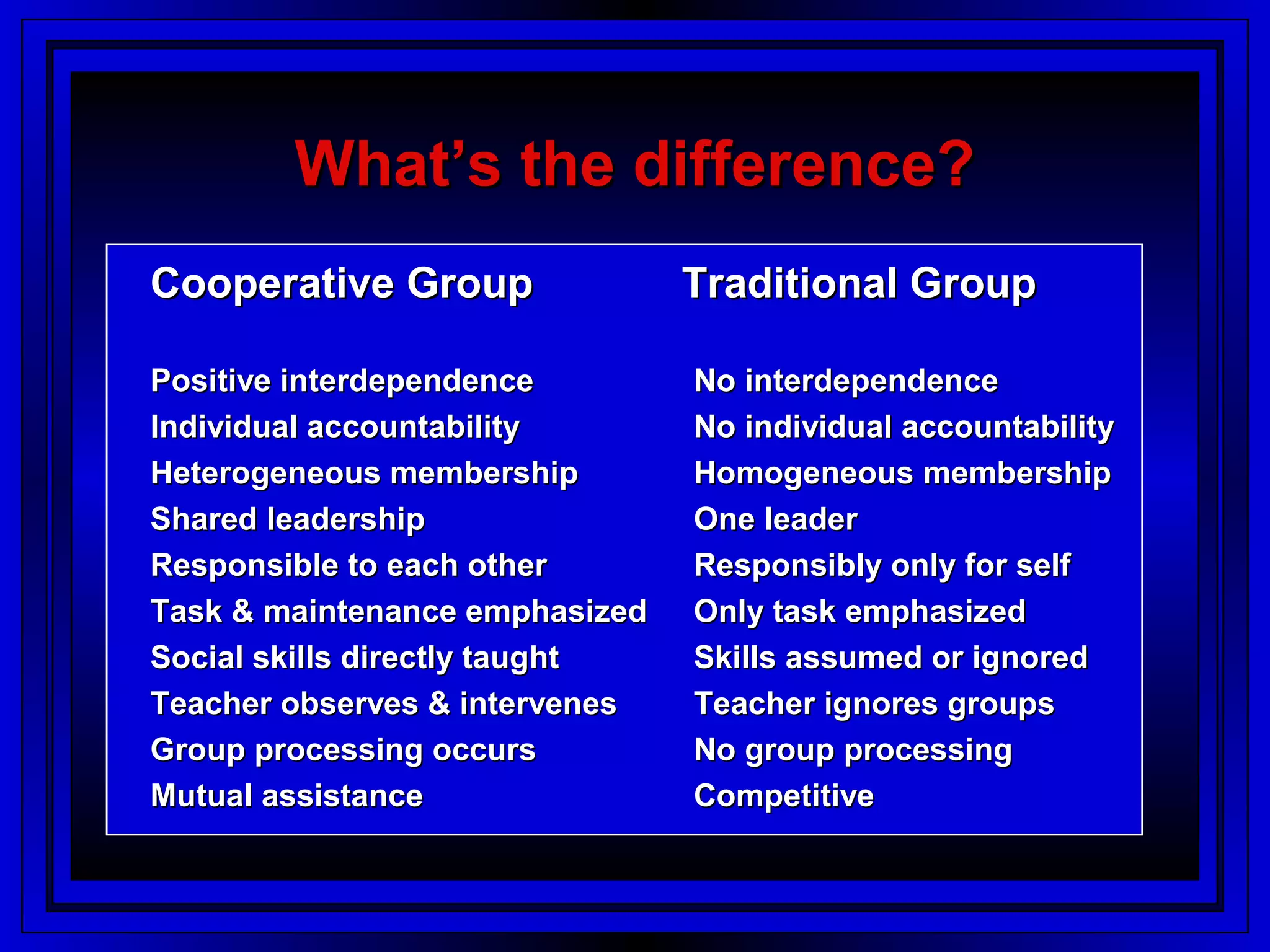

Cooperative learning involves students working in small groups to help each other learn. It has several key components: positive interdependence where students rely on each other to succeed, individual accountability, group processing to improve cooperation, development of social skills, and face-to-face interaction. Cooperative learning has been shown to promote higher-level thinking and social development more than traditional learning methods where students work independently or competitively. The document provides an example of applying cooperative learning principles to a physics lesson where students work together to answer questions about energy conservation.


