MUJI 無 印 良
       品
心理三   蕭卉秀
            497742318   王雅涵
財法四   簡妤庭
英文四   周芳    499411200   劉敬亭
英文四   謝沛恩   499411468   周彥君
資管四   郭筱玫               黃筱筑
資管四   王雅函   496542321   蕭名君
企四丙   林世昀
                        賴品如
Introduction of MUJI


               MUJI 無印良
• They dedicated to promoting a philosophy of
  life that offers their consumers with simple,
  natural, high-quality and affordable life-
  related products, instead of wasting extra
  materials in making their products. That is,
  they focus on both the consumers’ needs
  and the environmental issues.

• Today, MUJI has became a world-wide
  famous brand which has stores all over the
  world.

                                   MUJI 無印良
How to Make It Work?
• They cooperated by bringing a brand new Life Style
  Store into Taiwan. The central idea of a Life Style Store is
  to promote the simplicity and nature in life with a
  reasonable product price. (Which meet most of the
  consumers’ needs)

• This kind of idea is put into designing all kinds of items.
  Such as clothes, household items, food, etc.

• Consumers like it → They want it → They buy it
  → Success
CEO


 Matsui, Tadamitsu ( 松井忠三 )
Management
• Open style design
  -Combination of stocks and stores
  -Increase the visibility of goods and reduce
   inventory pressure

• Further strengthen the power of
  commodities
  -From visual and touch
     to smell and taste.
Management
• Direct Selling Store Innovation
  -CEO personally re-selection, arrangement,
  training and inspecting stores

• Elastic expand stores
  -open new stores before making a profit
  -In Taiwan : according to the development of
  district property to do with customers and to
  show flexibility in strategy
Management

• Team to simplify
 - design and planning department: 15
  people
 - Design Advisory Committee: 8 people
 - Overseas designers :4 people
No-brand brand

• Simple. Functional. Affordable
• Recycling or reselling the unsold products
  in the same condition.
• MUJI promotes a Pleasant Life it’s
  philosophy-
  1. NO BRAND QUALITY GOODS
  2. SELECTION OF MATERIALS
  3. PACKAGING
MUJI'S PHILOSOPHY OF 'NO
            BRAND QUALITY GOODS'
1.Most suitable raw materials
                                      1.Making the best
2. Industrial materials
                                      use of materials
3.Recycling unused materials
                                      while considering
                                      environmental
                                      issues.


                                1.Simplicity
                                2.Conserving resources
                                and reducing waste.
Three Promises for Corporate
              Operation
                         Rise to the challenge
                         of global growth
                         and development


1.Customers
                            Offer new value and
2.Growers
                            appeal,
3.Manufacturers
                            From customer viewpoint.
Design and Style

      Brand
       And
    Philosophy
Design and Style
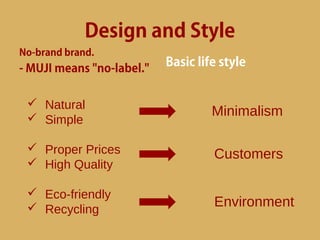
No-brand brand.
- MUJI means "no-label."
                           Basic life style


  Natural
  Simple
                                    Minimalism

  Proper Prices                    Customers
  High Quality

  Eco-friendly
  Recycling                        Environment
MUJI’s Popular Products

   Why are they different?
Pencil Refills


Recyclable paper
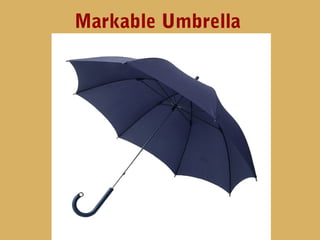
Markable Umbrella
• Attaching a name tag
• Recognize your umbrella!
• Avoid getting the wrong umbrella.
Towel with further options
•   Tower > Bath mat > Floor/Dust cloth
•   Textured surface doesn’t unravel fabric
•   The lines act as a marker
•   Reusable!
Wall Mounted CD Player
•                          Creativity,
            more aviliable More available space
                           space More
• Just pull the cable!
SWOT Analysis
• Strength
Products- what you see is exactly what you
  get speech.
Perfectly clear and global brand personality
Eco-friendly
More and more products
High quality
SWOT Analysis
• Weakness
Could have more fancy design
DIY might be difficulty to somebody
Higher quality lead to higher prices
SWOT Analysis
• Opportunity
Increasing – friendly market
Strong customer demand
More channel to achieve products
   ex.http:// www.books.com.tw
SWOT Analysis
• Threat
More and more competitor ex. Working
  house, DAISO, Hands Tailung
Economic slump
Overtaken by others
Thanks for your ATTENTION!!

Group 4 (MUJI)

  • 1.
    MUJI 無 印良 品 心理三 蕭卉秀 497742318 王雅涵 財法四 簡妤庭 英文四 周芳 499411200 劉敬亭 英文四 謝沛恩 499411468 周彥君 資管四 郭筱玫 黃筱筑 資管四 王雅函 496542321 蕭名君 企四丙 林世昀 賴品如
  • 2.
    Introduction of MUJI MUJI 無印良
  • 3.
    • They dedicatedto promoting a philosophy of life that offers their consumers with simple, natural, high-quality and affordable life- related products, instead of wasting extra materials in making their products. That is, they focus on both the consumers’ needs and the environmental issues. • Today, MUJI has became a world-wide famous brand which has stores all over the world. MUJI 無印良
  • 4.
    How to MakeIt Work? • They cooperated by bringing a brand new Life Style Store into Taiwan. The central idea of a Life Style Store is to promote the simplicity and nature in life with a reasonable product price. (Which meet most of the consumers’ needs) • This kind of idea is put into designing all kinds of items. Such as clothes, household items, food, etc. • Consumers like it → They want it → They buy it → Success
  • 5.
    CEO Matsui, Tadamitsu( 松井忠三 )
  • 6.
    Management • Open styledesign -Combination of stocks and stores -Increase the visibility of goods and reduce inventory pressure • Further strengthen the power of commodities -From visual and touch to smell and taste.
  • 7.
    Management • Direct SellingStore Innovation -CEO personally re-selection, arrangement, training and inspecting stores • Elastic expand stores -open new stores before making a profit -In Taiwan : according to the development of district property to do with customers and to show flexibility in strategy
  • 8.
    Management • Team tosimplify - design and planning department: 15 people - Design Advisory Committee: 8 people - Overseas designers :4 people
  • 9.
    No-brand brand • Simple.Functional. Affordable • Recycling or reselling the unsold products in the same condition. • MUJI promotes a Pleasant Life it’s philosophy- 1. NO BRAND QUALITY GOODS 2. SELECTION OF MATERIALS 3. PACKAGING
  • 10.
    MUJI'S PHILOSOPHY OF'NO BRAND QUALITY GOODS' 1.Most suitable raw materials 1.Making the best 2. Industrial materials use of materials 3.Recycling unused materials while considering environmental issues. 1.Simplicity 2.Conserving resources and reducing waste.
  • 11.
    Three Promises forCorporate Operation Rise to the challenge of global growth and development 1.Customers Offer new value and 2.Growers appeal, 3.Manufacturers From customer viewpoint.
  • 12.
    Design and Style Brand And Philosophy
  • 13.
    Design and Style No-brandbrand. - MUJI means "no-label." Basic life style  Natural  Simple Minimalism  Proper Prices Customers  High Quality  Eco-friendly  Recycling Environment
  • 14.
    MUJI’s Popular Products Why are they different?
  • 15.
  • 16.
  • 17.
    • Attaching aname tag • Recognize your umbrella! • Avoid getting the wrong umbrella.
  • 18.
  • 19.
    Tower > Bath mat > Floor/Dust cloth • Textured surface doesn’t unravel fabric • The lines act as a marker • Reusable!
  • 20.
    Wall Mounted CDPlayer • Creativity, more aviliable More available space space More
  • 21.
    • Just pullthe cable!
  • 22.
    SWOT Analysis • Strength Products-what you see is exactly what you get speech. Perfectly clear and global brand personality Eco-friendly More and more products High quality
  • 23.
    SWOT Analysis • Weakness Couldhave more fancy design DIY might be difficulty to somebody Higher quality lead to higher prices
  • 24.
    SWOT Analysis • Opportunity Increasing– friendly market Strong customer demand More channel to achieve products ex.http:// www.books.com.tw
  • 25.
    SWOT Analysis • Threat Moreand more competitor ex. Working house, DAISO, Hands Tailung Economic slump Overtaken by others
  • 26.
    Thanks for yourATTENTION!!

Editor's Notes

  • #19 The edge of the fabric or cloth will get loose easily.