497120352 Bella 鍾曉雲

UNIQLO   497120572 Linda 邱欣怡
         497120663 Agnes 冼敏婷
         498702468 Ted 吳建德
         498702418 Alice 陳欣亞
         498702248 Jessie 侯君潔
Outline
•   Introduce
•   Logo
•   Advertisement
•   Strategy
•   SWOT
•   Suggestions
•   Reference
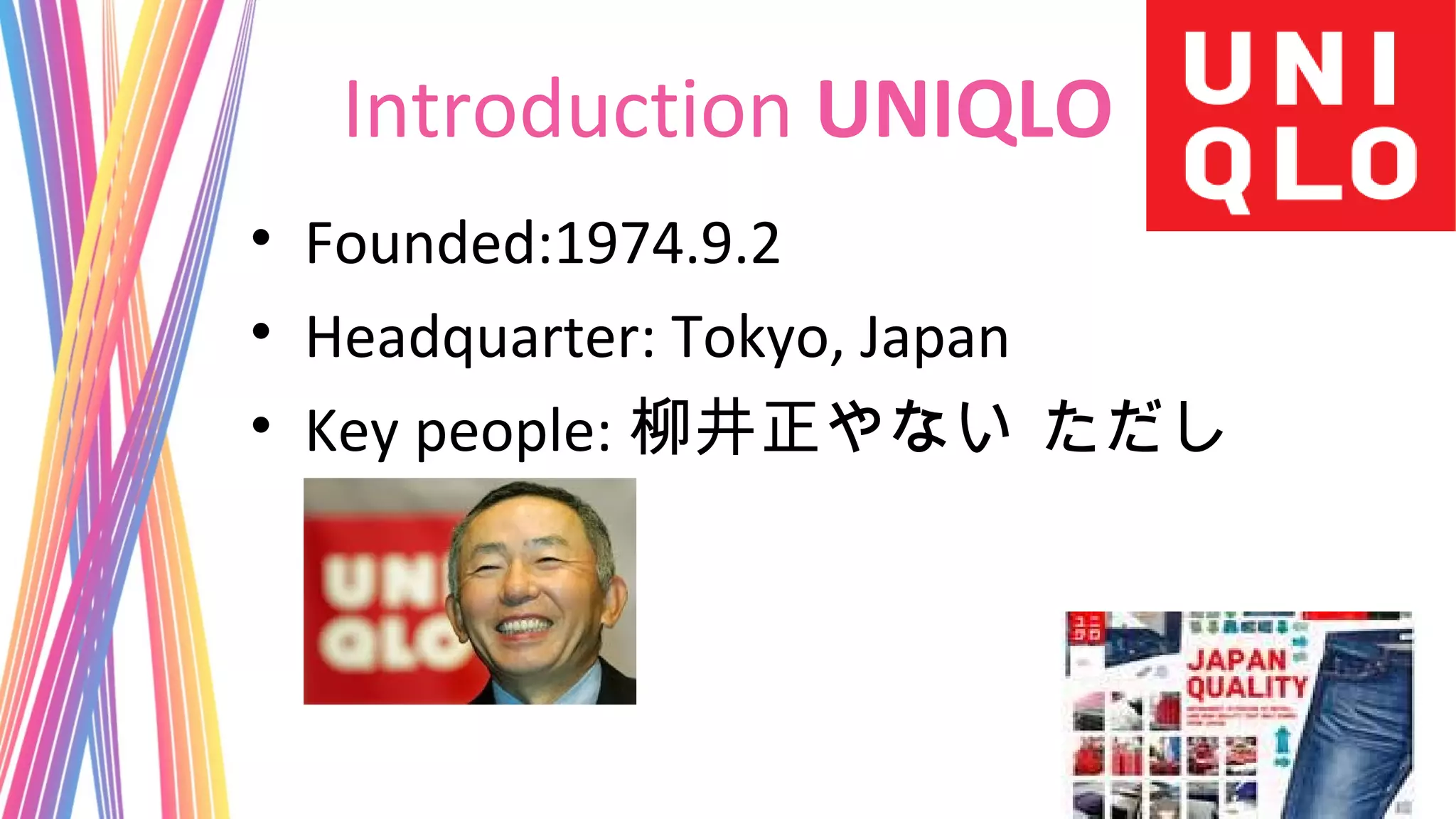
Introduction UNIQLO
• Founded:1974.9.2
• Headquarter: Tokyo, Japan
• Key people: 柳井正やない ただし
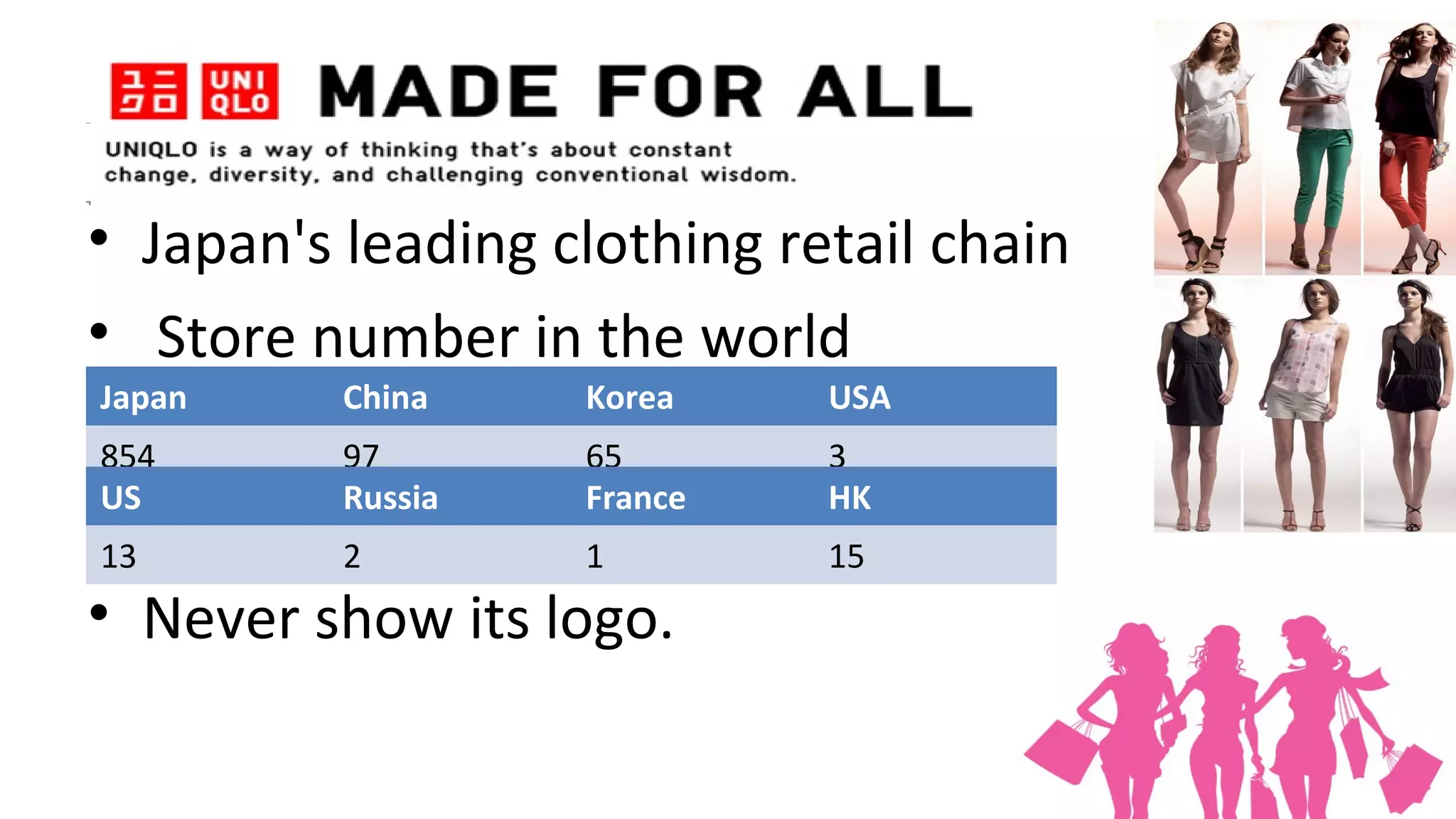
• Japan's leading clothing retail chain
• Store number in the world
Japan     China    Korea     USA
854       97       65        3
US        Russia   France    HK
13        2        1         15
• Never show its logo.
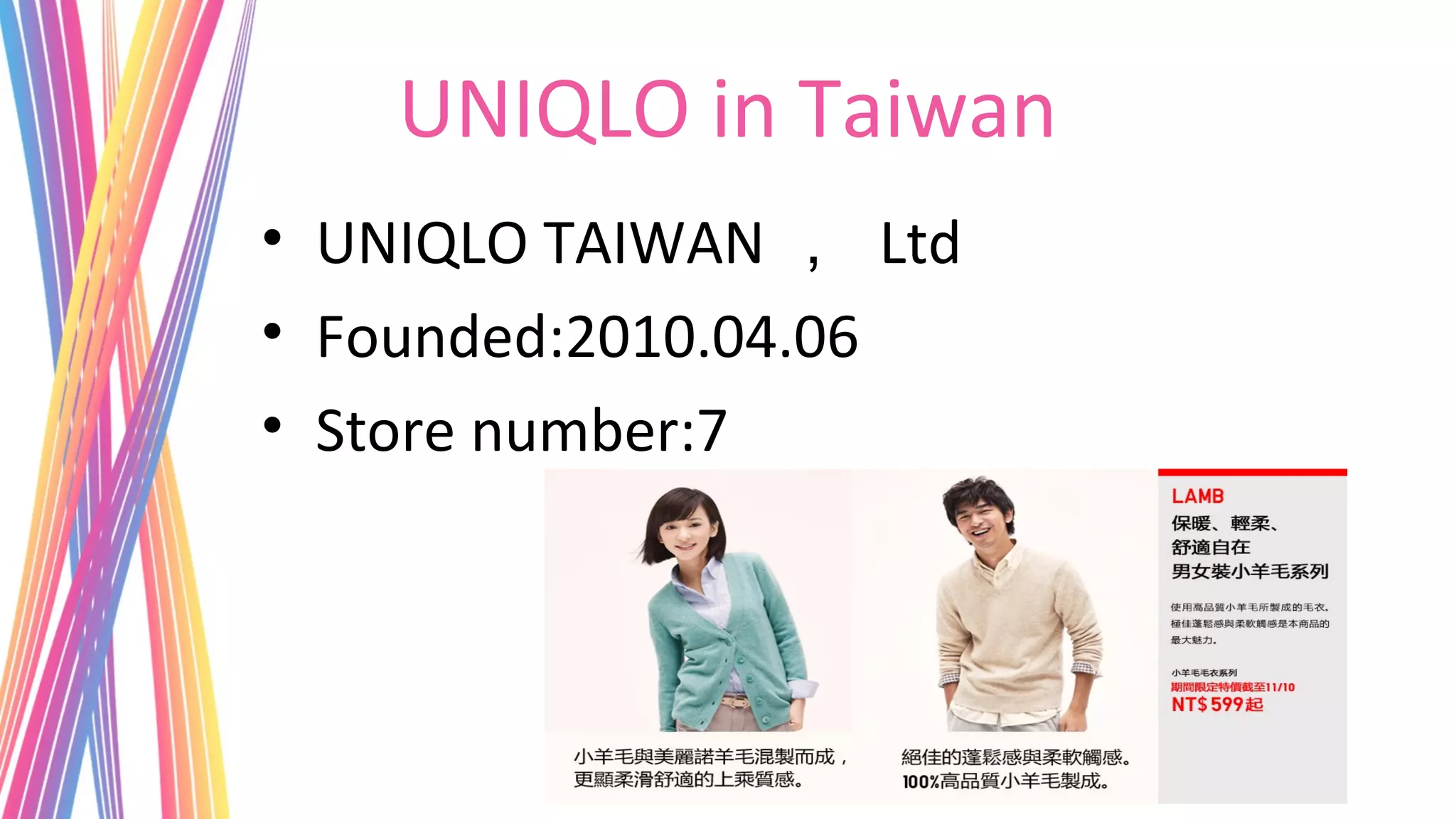
UNIQLO in Taiwan
• UNIQLO TAIWAN , Ltd
• Founded:2010.04.06
• Store number:7
Logo
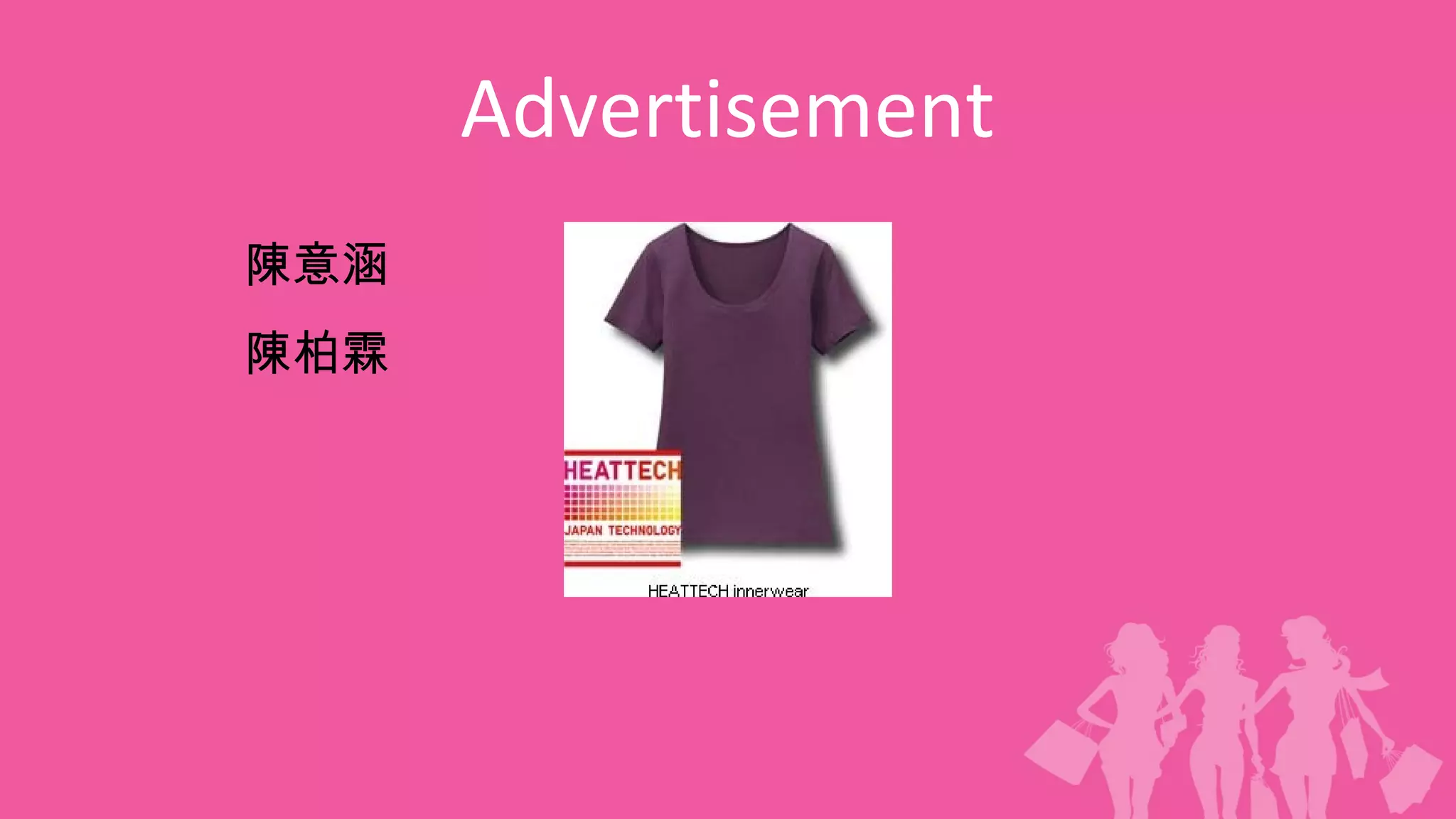
Advertisement
陳意涵
陳柏霖
Demand
  Change the clothes, change the world


   Strategy
1.Developing products of exceptionally high quality
  ※Product development based on customer feedback
  ※Material procurement from around the world
  ※Expert technical guidance at factories emphasizes quality
2. Expanding the women’s line of apparel
  ※Market for Women's Wear Twice that of Men's

3.Global flagship stores
  The first global flagship store opened in New York's
  Soho area in fall 2006.
  Since then, global flagship stores have opened in
  London, Paris, Shanghai, and Osaka's Shinsaibashi.
  Preparations are now underway to open another
  global flagship store on New York's Fifth Avenue in
  fall 2011.
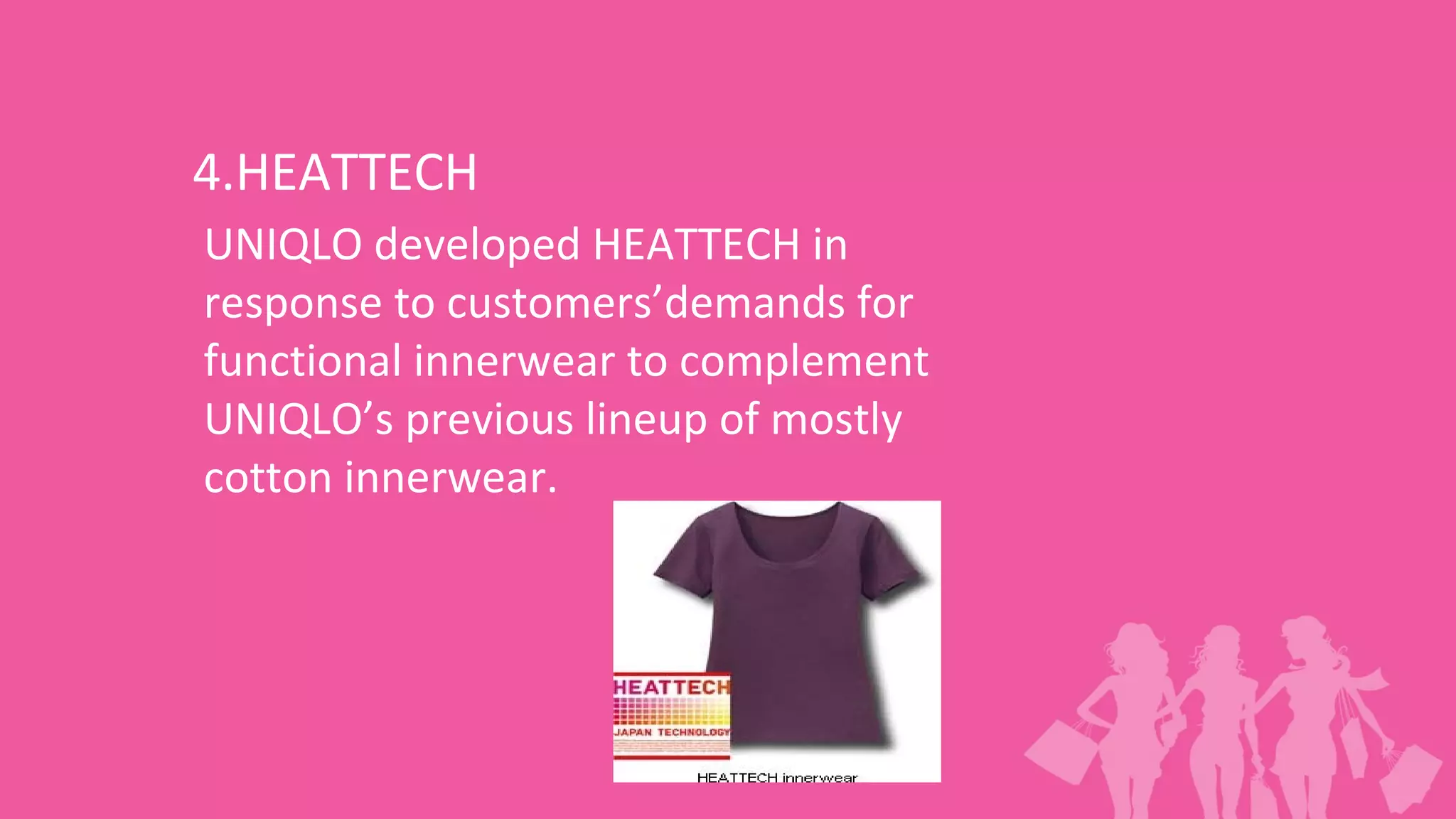
4.HEATTECH
UNIQLO developed HEATTECH in
response to customers’demands for
functional innerwear to complement
UNIQLO’s previous lineup of mostly
cotton innerwear.
What is SWOT analysis?
SWOT analysis is a strategic
planning method used to evaluate
the Strengths, Weaknesses, 
Opportunities, and Threats involved in
a project or in a business venture.
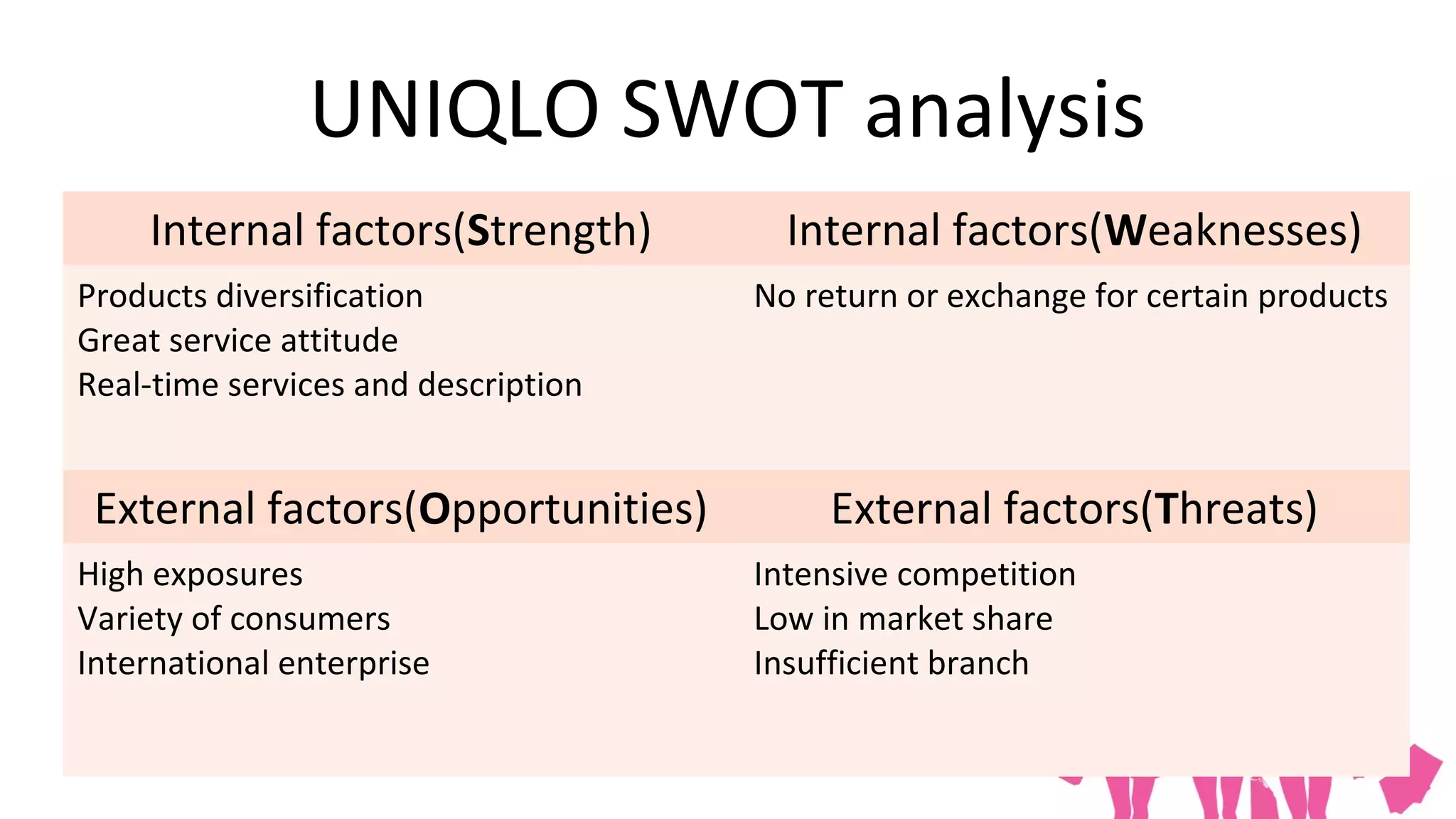
UNIQLO SWOT analysis
    Internal factors(Strength)         Internal factors(Weaknesses)
Products diversification             No return or exchange for certain products
Great service attitude
Real-time services and description


 External factors(Opportunities)          External factors(Threats)
High exposures                       Intensive competition
Variety of consumers                 Low in market share
International enterprise             Insufficient branch
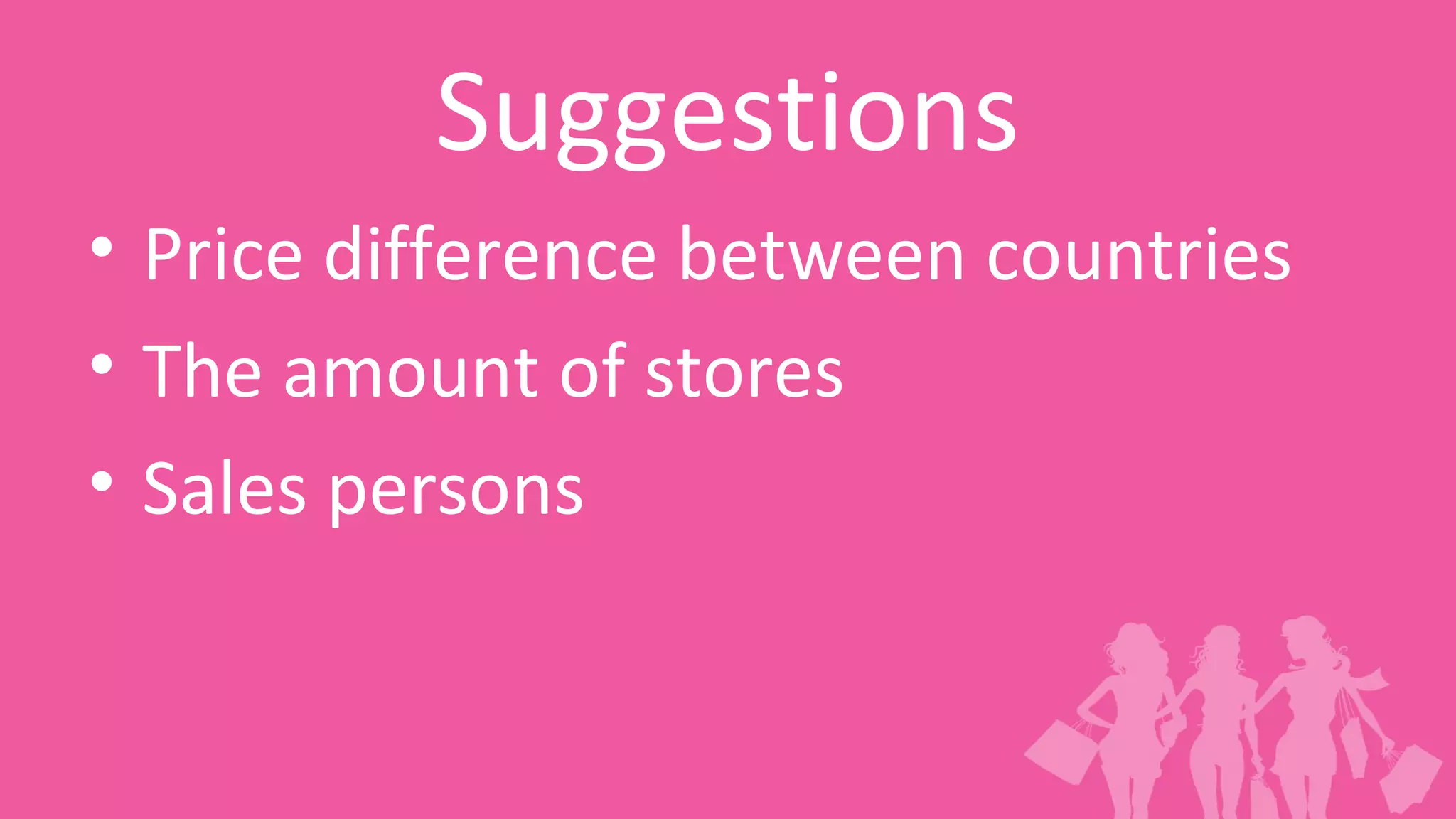
Suggestions
• Price difference between countries
• The amount of stores
• Sales persons
Reference
• http://www.uniqlo.com/tw/corp/pressr
  elease/
Thank you.

Group 5 (UNIQLO)

  • 1.
    497120352 Bella 鍾曉雲 UNIQLO 497120572 Linda 邱欣怡 497120663 Agnes 冼敏婷 498702468 Ted 吳建德 498702418 Alice 陳欣亞 498702248 Jessie 侯君潔
  • 2.
    Outline • Introduce • Logo • Advertisement • Strategy • SWOT • Suggestions • Reference
  • 3.
    Introduction UNIQLO • Founded:1974.9.2 •Headquarter: Tokyo, Japan • Key people: 柳井正やない ただし
  • 4.
    • Japan's leadingclothing retail chain • Store number in the world Japan China Korea USA 854 97 65 3 US Russia France HK 13 2 1 15 • Never show its logo.
  • 5.
    UNIQLO in Taiwan •UNIQLO TAIWAN , Ltd • Founded:2010.04.06 • Store number:7
  • 6.
  • 7.
  • 8.
    Demand Changethe clothes, change the world Strategy 1.Developing products of exceptionally high quality ※Product development based on customer feedback ※Material procurement from around the world ※Expert technical guidance at factories emphasizes quality
  • 9.
    2. Expanding thewomen’s line of apparel ※Market for Women's Wear Twice that of Men's 3.Global flagship stores The first global flagship store opened in New York's Soho area in fall 2006. Since then, global flagship stores have opened in London, Paris, Shanghai, and Osaka's Shinsaibashi. Preparations are now underway to open another global flagship store on New York's Fifth Avenue in fall 2011.
  • 10.
    4.HEATTECH UNIQLO developed HEATTECHin response to customers’demands for functional innerwear to complement UNIQLO’s previous lineup of mostly cotton innerwear.
  • 12.
    What is SWOTanalysis? SWOT analysis is a strategic planning method used to evaluate the Strengths, Weaknesses,  Opportunities, and Threats involved in a project or in a business venture.
  • 13.
    UNIQLO SWOT analysis Internal factors(Strength) Internal factors(Weaknesses) Products diversification No return or exchange for certain products Great service attitude Real-time services and description External factors(Opportunities) External factors(Threats) High exposures Intensive competition Variety of consumers Low in market share International enterprise Insufficient branch
  • 14.
    Suggestions • Price differencebetween countries • The amount of stores • Sales persons
  • 15.
  • 16.