
Analyzing the effect(s) of competitive marketing
  strategies: A case study of Ben & Jerry’s and
           Häagen-Dazs’ brand equity


                      Group 3:
    Aditya Sharma   Robin Agarwal   Prasan Arora
Contents
Objective

Overview

Competition profiling

Industry trends

Research methodology

Hypothesis

Probable research outcomes
Objective


 Analyzing the effect(s) of competitive
marketing strategies of Ben and Jerry’s &
      Haagen-Dazs’ brand equity
Overview


       In 2011, the segment grew 4% to reach $118 million

       Average unit price increased in 2011

       From 2012-2016, the Ice-cream industry expected to
       register a constant value CAGR of 2%


Source: Euro monitor report – Ice Cream in Singapore
Competition Profiling

   Brand                      Company                      2007   2008   2009   2010

   Wall's         Unilever Singapore Pte Ltd               12.8   12.8    13    12.7

 Magnolia            F&N Foods (S) Pte Ltd                 13.3   13.3   12.7   12.3

Häagen-Dazs        General Mills Asia Pte Ltd              10.1   10.1   10.3   10.5

Ben & Jerry's Unilever Singapore Pte Ltd                   5.4    5.4    5.6    5.7

Standard brands: Wall’s, Magnolia
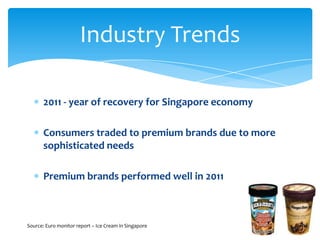
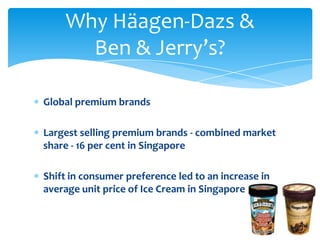
Premium brands: Häagen-Dazs & Ben & Jerry’s
    Source: Euro monitor report – Ice Cream in Singapore
Industry Trends

       2011 - year of recovery for Singapore economy

       Consumers traded to premium brands due to more
       sophisticated needs

       Premium brands performed well in 2011


Source: Euro monitor report – Ice Cream in Singapore
Why Häagen-Dazs &
      Ben & Jerry’s?

Global premium brands

Largest selling premium brands - combined market
share - 16 per cent in Singapore

Shift in consumer preference led to an increase in
average unit price of Ice Cream in Singapore.
Research Methodology

Initial Analysis (Secondary Data)
 Examining historical data from journals, research papers and
 industry reports
 Examining company data – advertising budget

Qualitative Research (Primary Data)
  Interviews with Brand Manager & Marketing team
  Focus Group Interviews
  Customer Survey

Quantitative Research (Primary Data)
  Verifying differential parameters and attributes
Hypothesis

The marketing strategies employed substantially
affect the brand equity

Aggressive competitive marketing strategies against
each other
Possible Research Outcomes

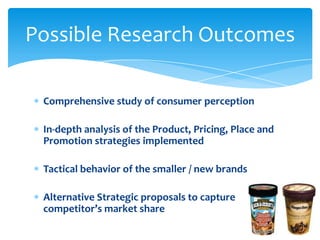
 Comprehensive study of consumer perception

 In-depth analysis of the Product, Pricing, Place and
 Promotion strategies implemented

 Tactical behavior of the smaller / new brands

 Alternative Strategic proposals to capture
 competitor’s market share
References

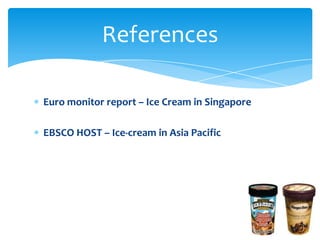
Euro monitor report – Ice Cream in Singapore

EBSCO HOST – Ice-cream in Asia Pacific
Thank You!

Group 3 arp

  • 1.
    Analyzing the effect(s)of competitive marketing strategies: A case study of Ben & Jerry’s and Häagen-Dazs’ brand equity Group 3: Aditya Sharma Robin Agarwal Prasan Arora
  • 2.
    Contents Objective Overview Competition profiling Industry trends Researchmethodology Hypothesis Probable research outcomes
  • 3.
    Objective Analyzing theeffect(s) of competitive marketing strategies of Ben and Jerry’s & Haagen-Dazs’ brand equity
  • 4.
    Overview In 2011, the segment grew 4% to reach $118 million Average unit price increased in 2011 From 2012-2016, the Ice-cream industry expected to register a constant value CAGR of 2% Source: Euro monitor report – Ice Cream in Singapore
  • 5.
    Competition Profiling Brand Company 2007 2008 2009 2010 Wall's Unilever Singapore Pte Ltd 12.8 12.8 13 12.7 Magnolia F&N Foods (S) Pte Ltd 13.3 13.3 12.7 12.3 Häagen-Dazs General Mills Asia Pte Ltd 10.1 10.1 10.3 10.5 Ben & Jerry's Unilever Singapore Pte Ltd 5.4 5.4 5.6 5.7 Standard brands: Wall’s, Magnolia Premium brands: Häagen-Dazs & Ben & Jerry’s Source: Euro monitor report – Ice Cream in Singapore
  • 6.
    Industry Trends 2011 - year of recovery for Singapore economy Consumers traded to premium brands due to more sophisticated needs Premium brands performed well in 2011 Source: Euro monitor report – Ice Cream in Singapore
  • 7.
    Why Häagen-Dazs & Ben & Jerry’s? Global premium brands Largest selling premium brands - combined market share - 16 per cent in Singapore Shift in consumer preference led to an increase in average unit price of Ice Cream in Singapore.
  • 8.
    Research Methodology Initial Analysis(Secondary Data) Examining historical data from journals, research papers and industry reports Examining company data – advertising budget Qualitative Research (Primary Data) Interviews with Brand Manager & Marketing team Focus Group Interviews Customer Survey Quantitative Research (Primary Data) Verifying differential parameters and attributes
  • 9.
    Hypothesis The marketing strategiesemployed substantially affect the brand equity Aggressive competitive marketing strategies against each other
  • 10.
    Possible Research Outcomes Comprehensive study of consumer perception In-depth analysis of the Product, Pricing, Place and Promotion strategies implemented Tactical behavior of the smaller / new brands Alternative Strategic proposals to capture competitor’s market share
  • 11.
    References Euro monitor report– Ice Cream in Singapore EBSCO HOST – Ice-cream in Asia Pacific
  • 12.

Editor's Notes

  • #7 2011 was a year of recovery for the Singapore economy. Premium brands in the Ice Cream industry have performed well in 2011; consumers have traded up to premium brands. Furthermore, consumer tastes in Singapore have become more sophisticated resulting in consumers trading up to premium brands. Therefore, this shift in consumer preference has led to an increase in average unit price of Ice Cream in Singapore. This trend indicates that there is a huge preference for premium Ice Cream brands in Singapore.