
KEEPING THINGS ORGANIC AT
BEN AND JERRY’S
BY
MUBASHIR AHMED
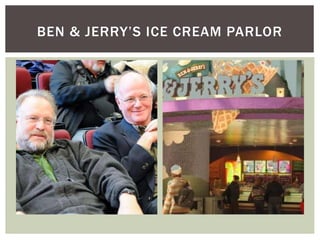
BEN & JERRY’S ICE CREAM PARLOR
 According to our research on company profile it was not was
forced to grow.
 They were growing on there on grounds to strong them.
 Although the market for super premium ice cream was
maturing in the mid 1980’s and there was new host of new
competitor, but they were growing to make brand image, not
to compete with there competitors.
1) BEN & JERRY FORCED TO GROW? EXPLANATION
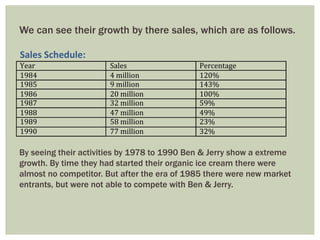
We can see their growth by there sales, which are as follows.
Sales Schedule:
Year Sales Percentage
1984 4 million 120%
1985 9 million 143%
1986 20 million 100%
1987 32 million 59%
1988 47 million 49%
1989 58 million 23%
1990 77 million 32%
By seeing their activities by 1978 to 1990 Ben & Jerry show a extreme
growth. By time they had started their organic ice cream there were
almost no competitor. But after the era of 1985 there were new market
entrants, but were not able to compete with Ben & Jerry.
 I agree with this statement, the concept of humanization
is there.
 Firm is concern for its people like, managers are allowed
to we wear casual cloths, providing free therapy sessions
for handicap people.
 Compensation planning is also a motivational factor for
the lowest paid workers. Due to their this style of
management Ben & Jerry’s is known around the world.
2) ORGANIZATIONS CONTROL PEOPLE AS MUCH AS OR PEOPLE CONTROL
ORGANIZATIONS? DO YOU AGREE OR DISAGREE WITH THIS STATEMENT?
DISCUSS.
 Ben & Jerry’s original culture is unique in style with some flaws in it.
 This culture was good with internal organization but as organization
grow larger the organization needed to be more rational and look
towards the profit to sustain.
 The continuation of the 5 to 1 ratio salary procedure has created the
problems with in the organization and in recruiting process.
 Other problems were departments were duplicating work,
communication broke down. This mixed strategy was huge block in
their way to growth.
3) IS BEN & JERRY’S ORIGINAL CULTURE NOW HINDERING
THE ORGANIZATION’S EFFECTIVENESS?
 For constant growth it is essential for Ben & Jerry’s to make certain
changes in their structure to become centralized because their
involvement in the social responsibility can turn away their goals .
 Tasks are big and more complex now and they require significant
integration of resources and employees in order to achieve strategic
goals.
 Their understanding towards employees can create barrier for them in
their way of generating profits.
 Though it is not essential for Ben and Jerry to compromise their
“positive philosophy” behind business. They can still continue to follow
it by offering their employees flexible working hours, health facilities
and entertainment at workplace.
4) CAN BEN AND JERRY’S MAINTAIN THEIR ORIGINAL CULTURE
AND, AT THE SAME TIME CONTINUE TO GROW?
Previously it had an Organic structure:
 High decentralization and low formalization.
 Horizontal organizational structure.
 Informal communication and joyful workplace environment.
 Flexibility
 Adaptive and social friendly organization.
Now it is a Mechanistic structure:
 less flexibility and high departmentalization.
 Centralized decision making and reduced two-way communication
 Pressures to meet company’s emerging goals
 Impersonal attitudes.
5) WHAT T YPE OF STRUCTURE BEN AND JERRY’S HAVE IN ITS EARLY
YEARS? TODAY? WHAT FACTORS BROUGHT ABOUT THIS
CHANGE?
Decentralizing the firm
Change 5 to 1 salary ratio
Gain employees trust
Consistency in environmental friendly approach
6) IF YOU WERE A MANAGEMENT CONSULTANT WHAT ADVICE
WOULD YOU GIVE TO BEN COHEN?
Ben & Jerry Organizational Design

Ben & Jerry Organizational Design

  • 1.
    KEEPING THINGS ORGANICAT BEN AND JERRY’S BY MUBASHIR AHMED
  • 2.
    BEN & JERRY’SICE CREAM PARLOR
  • 3.
     According toour research on company profile it was not was forced to grow.  They were growing on there on grounds to strong them.  Although the market for super premium ice cream was maturing in the mid 1980’s and there was new host of new competitor, but they were growing to make brand image, not to compete with there competitors. 1) BEN & JERRY FORCED TO GROW? EXPLANATION
  • 4.
    We can seetheir growth by there sales, which are as follows. Sales Schedule: Year Sales Percentage 1984 4 million 120% 1985 9 million 143% 1986 20 million 100% 1987 32 million 59% 1988 47 million 49% 1989 58 million 23% 1990 77 million 32% By seeing their activities by 1978 to 1990 Ben & Jerry show a extreme growth. By time they had started their organic ice cream there were almost no competitor. But after the era of 1985 there were new market entrants, but were not able to compete with Ben & Jerry.
  • 5.
     I agreewith this statement, the concept of humanization is there.  Firm is concern for its people like, managers are allowed to we wear casual cloths, providing free therapy sessions for handicap people.  Compensation planning is also a motivational factor for the lowest paid workers. Due to their this style of management Ben & Jerry’s is known around the world. 2) ORGANIZATIONS CONTROL PEOPLE AS MUCH AS OR PEOPLE CONTROL ORGANIZATIONS? DO YOU AGREE OR DISAGREE WITH THIS STATEMENT? DISCUSS.
  • 6.
     Ben &Jerry’s original culture is unique in style with some flaws in it.  This culture was good with internal organization but as organization grow larger the organization needed to be more rational and look towards the profit to sustain.  The continuation of the 5 to 1 ratio salary procedure has created the problems with in the organization and in recruiting process.  Other problems were departments were duplicating work, communication broke down. This mixed strategy was huge block in their way to growth. 3) IS BEN & JERRY’S ORIGINAL CULTURE NOW HINDERING THE ORGANIZATION’S EFFECTIVENESS?
  • 7.
     For constantgrowth it is essential for Ben & Jerry’s to make certain changes in their structure to become centralized because their involvement in the social responsibility can turn away their goals .  Tasks are big and more complex now and they require significant integration of resources and employees in order to achieve strategic goals.  Their understanding towards employees can create barrier for them in their way of generating profits.  Though it is not essential for Ben and Jerry to compromise their “positive philosophy” behind business. They can still continue to follow it by offering their employees flexible working hours, health facilities and entertainment at workplace. 4) CAN BEN AND JERRY’S MAINTAIN THEIR ORIGINAL CULTURE AND, AT THE SAME TIME CONTINUE TO GROW?
  • 8.
    Previously it hadan Organic structure:  High decentralization and low formalization.  Horizontal organizational structure.  Informal communication and joyful workplace environment.  Flexibility  Adaptive and social friendly organization. Now it is a Mechanistic structure:  less flexibility and high departmentalization.  Centralized decision making and reduced two-way communication  Pressures to meet company’s emerging goals  Impersonal attitudes. 5) WHAT T YPE OF STRUCTURE BEN AND JERRY’S HAVE IN ITS EARLY YEARS? TODAY? WHAT FACTORS BROUGHT ABOUT THIS CHANGE?
  • 9.
    Decentralizing the firm Change5 to 1 salary ratio Gain employees trust Consistency in environmental friendly approach 6) IF YOU WERE A MANAGEMENT CONSULTANT WHAT ADVICE WOULD YOU GIVE TO BEN COHEN?