GROUNDNUTS
• Shah Fahad
• The University of Agriculture Peshawar
(PAKISTAN)
• shahfahad974@gmail.com
Peanuts/ Ground nut
• The peanut also known as Ground nut and
moong phalli
• It is a legume crop grown in tropics and
subtropics
• It is classified as both legume crop and oil crop,
• Because of its high oil content
• World annual production is 42 million tonnes in
2014
• Peanut pods develop underground rather than
above ground ,linnaeus assigned the specific
name hypogaea
• Which means under the earth
• Groundnut belong to family fabaceae
(leguminosae)
• Like other legumes peanuts harbor symbiotic
nitrogen fixing bacteria in root nudules making it
valuable in
• Crop rotation
• Peanuts are similar in taste and nutritional
profile to
• Tree nuts like walnuts and almonds
• Nut is a fruit whose ovary becomes very hard at
maturity there fore peanuts are not true nuts
• But rather a legume
History
• The oldest archeological remains of pods have
been dated at about 7600 year old in Peru in
early phase of
• Domestication
• Many pre Columbian cultures depicted peanuts
in their art
• Cultivation was well established in meso
America
• Before the Spanish arrived
• The pea nut was later spread worldwide by
european Traders
History
• peanuts was only a garden crop in colonial period
• It was mostly used as animal feed stock until the
1930s
• Cultivated peanut (A.hypogaea) arose from hybrid
• Between two wild species of peanut,thought to be
• A.DURANNSIS and A. IPANSIS
• HYDRIDIZATION GAVE RISE to A. monticola(a wild
form of peanut)
• The process of domestication in Argentina or
southeastern Bolivia through artificial selection made
A.hypogaea dramatically different from its wild
relatives
• In pakistan groundnut was first cultivated in
1949-1950
• On 500 hac in rawalpindi area of Pothwar
region.
• It gave the highest economic return per hac
among
• Kharif crops in semi-arid barani area of the
country
• It is now grown on an area of 9800 ha with an
annual production of 104,000 tonnes in the
country
• Ground nut occupies 14400 ha of the cropped
area in kharif season in KPK
• It is mainly grown in SWABI district of the
Uses
• Groundnut kernal is palatable and tasty .it is roasted
• And consumed directly like dry fruits.
• It contributes significant amount of fat ,protein
,mineral, and vitamin
• Ground nut oil is edible and serves as an exellent
cooking oil it is free of toxic compound and contains
no linolenic acid (which causes oxidative rancidity )
• Peanuts are used to help fight malnutrition in
developing countries by WHO, UNICEF
• PAINT VARNISH, lubricating oil leather dressing
• Furniture polish, insecticides are made from peanut
oil
NOMENCLATURE
• Order Fabales
• Family Fabaceae
• Sub family faboideae
• Genus arachis
• bionomial name Arachis hypogaea
Characteristics
• self pollinated
kharif
day neutral
• dicot
• epigeal germination
• tap root system
• harbicious
• normally 30-50 cm tall
• annual
• Indeterminate
Flower
• small
• yellowish orange
• grow singly or in
cluster (2 to 4)
• close to the ground
• 1.0 to 1.5 cm long
• born on axillary
clusters on stem
Pegging
• peanut pods develop underground
unusual feature
• known as Geocarpy
• after fertilization a short stalk ,at the base
of ovary (pedicel) elongates to form a
thread like structure
• known as peg.
• this peg containing ovary grows down into
the soil
• and develops into a mature peanut pod.
Cultural practices
• loose soil Fertile ovule penetrate easily
• Land should be ploughed (15 _20) deep
• Grow best in light , sandy loam soil
• pH 5.9 _7
Fertilizer
• NPK ratio should be 1:4:2
• Benifical fertilizer dose at sowing is
• 20 80 40 kg/ha
• adequate levels of P K Ca Mg and micro
nutrients are
• also necessary for good yield
Time and method of sowing
• Sowing of ground nuts depends on rainfall
• Barani mid march to end of April
• Irrigated area April till may
• Seed rate for erect type 70 _75 kg/ha
• Spreading type 60_65 kg/ha
• R to R distance 75 cm
• P to P 30 cm
• Seed rate varies with type of cultivar to be
grown
• Seed should be innoculated with Rhizobia
Thining
• Ground nuts need thining to keep the plant
population of 150,000 per ha in case erect
type .
• In case of spreading type 75000 per ha
• The weak and dry plants should be
uprooted
Irrigation
• Groundnut is mostly grown in barani area
• they can be grown with as little as 350
mm.
• give best yeild at 500 mm
• however field should be irrigated with an
interval
• of two weeks after seeding
Insect
• termites
• jassids
• white fly
• White grub
• Pod sucking bug
Diseases
• Leaf spot
• Seed rot
• Brown and damaged pods are susceptible
to fungal attack which produce aflatoxins
• Aflatoxins may develop jaundice , allergy
and cancer.
Harvesting and storage
• harvested when fully matured
• inderminate
• harvested in october
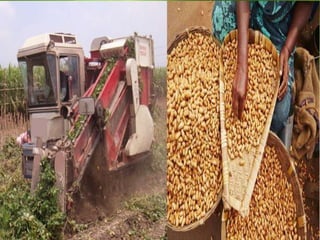
• hand pulling and machinary methods are
used
• sun drying for 15 days till moisture
content remain
• 8 to 10 %
• the dry pods are stored in clean bags and
stored in fumigated and clean bins.
Yield and composition
• varies with cultivars
• average national yield -
---
• Kpk yield
Nutritional value
• Oil content 44- 56 %
• protein 22-23%
•
• essential fatty acid
• oleic acid 60 %
• linoleic acid 20 %
cultivars
• bari 189, bard -479, g- 17
• spreading type
• runner type
• more productive
• bard -699 banki CG -527
Groundnuts

Groundnuts

  • 1.
    GROUNDNUTS • Shah Fahad •The University of Agriculture Peshawar (PAKISTAN) • shahfahad974@gmail.com
  • 3.
    Peanuts/ Ground nut •The peanut also known as Ground nut and moong phalli • It is a legume crop grown in tropics and subtropics • It is classified as both legume crop and oil crop, • Because of its high oil content • World annual production is 42 million tonnes in 2014 • Peanut pods develop underground rather than above ground ,linnaeus assigned the specific name hypogaea • Which means under the earth
  • 4.
    • Groundnut belongto family fabaceae (leguminosae) • Like other legumes peanuts harbor symbiotic nitrogen fixing bacteria in root nudules making it valuable in • Crop rotation • Peanuts are similar in taste and nutritional profile to • Tree nuts like walnuts and almonds • Nut is a fruit whose ovary becomes very hard at maturity there fore peanuts are not true nuts • But rather a legume
  • 5.
    History • The oldestarcheological remains of pods have been dated at about 7600 year old in Peru in early phase of • Domestication • Many pre Columbian cultures depicted peanuts in their art • Cultivation was well established in meso America • Before the Spanish arrived • The pea nut was later spread worldwide by european Traders
  • 6.
    History • peanuts wasonly a garden crop in colonial period • It was mostly used as animal feed stock until the 1930s • Cultivated peanut (A.hypogaea) arose from hybrid • Between two wild species of peanut,thought to be • A.DURANNSIS and A. IPANSIS • HYDRIDIZATION GAVE RISE to A. monticola(a wild form of peanut) • The process of domestication in Argentina or southeastern Bolivia through artificial selection made A.hypogaea dramatically different from its wild relatives
  • 7.
    • In pakistangroundnut was first cultivated in 1949-1950 • On 500 hac in rawalpindi area of Pothwar region. • It gave the highest economic return per hac among • Kharif crops in semi-arid barani area of the country • It is now grown on an area of 9800 ha with an annual production of 104,000 tonnes in the country • Ground nut occupies 14400 ha of the cropped area in kharif season in KPK • It is mainly grown in SWABI district of the
  • 8.
    Uses • Groundnut kernalis palatable and tasty .it is roasted • And consumed directly like dry fruits. • It contributes significant amount of fat ,protein ,mineral, and vitamin • Ground nut oil is edible and serves as an exellent cooking oil it is free of toxic compound and contains no linolenic acid (which causes oxidative rancidity ) • Peanuts are used to help fight malnutrition in developing countries by WHO, UNICEF • PAINT VARNISH, lubricating oil leather dressing • Furniture polish, insecticides are made from peanut oil
  • 10.
    NOMENCLATURE • Order Fabales •Family Fabaceae • Sub family faboideae • Genus arachis • bionomial name Arachis hypogaea
  • 11.
    Characteristics • self pollinated kharif dayneutral • dicot • epigeal germination • tap root system • harbicious • normally 30-50 cm tall • annual • Indeterminate
  • 12.
    Flower • small • yellowishorange • grow singly or in cluster (2 to 4) • close to the ground • 1.0 to 1.5 cm long • born on axillary clusters on stem
  • 13.
    Pegging • peanut podsdevelop underground unusual feature • known as Geocarpy • after fertilization a short stalk ,at the base of ovary (pedicel) elongates to form a thread like structure • known as peg. • this peg containing ovary grows down into the soil • and develops into a mature peanut pod.
  • 15.
    Cultural practices • loosesoil Fertile ovule penetrate easily • Land should be ploughed (15 _20) deep • Grow best in light , sandy loam soil • pH 5.9 _7
  • 16.
    Fertilizer • NPK ratioshould be 1:4:2 • Benifical fertilizer dose at sowing is • 20 80 40 kg/ha • adequate levels of P K Ca Mg and micro nutrients are • also necessary for good yield
  • 17.
    Time and methodof sowing • Sowing of ground nuts depends on rainfall • Barani mid march to end of April • Irrigated area April till may • Seed rate for erect type 70 _75 kg/ha • Spreading type 60_65 kg/ha • R to R distance 75 cm • P to P 30 cm • Seed rate varies with type of cultivar to be grown • Seed should be innoculated with Rhizobia
  • 18.
    Thining • Ground nutsneed thining to keep the plant population of 150,000 per ha in case erect type . • In case of spreading type 75000 per ha • The weak and dry plants should be uprooted
  • 19.
    Irrigation • Groundnut ismostly grown in barani area • they can be grown with as little as 350 mm. • give best yeild at 500 mm • however field should be irrigated with an interval • of two weeks after seeding
  • 20.
    Insect • termites • jassids •white fly • White grub • Pod sucking bug
  • 21.
    Diseases • Leaf spot •Seed rot • Brown and damaged pods are susceptible to fungal attack which produce aflatoxins • Aflatoxins may develop jaundice , allergy and cancer.
  • 22.
    Harvesting and storage •harvested when fully matured • inderminate • harvested in october • hand pulling and machinary methods are used • sun drying for 15 days till moisture content remain • 8 to 10 % • the dry pods are stored in clean bags and stored in fumigated and clean bins.
  • 24.
    Yield and composition •varies with cultivars • average national yield - --- • Kpk yield
  • 26.
    Nutritional value • Oilcontent 44- 56 % • protein 22-23% • • essential fatty acid • oleic acid 60 % • linoleic acid 20 %
  • 27.
    cultivars • bari 189,bard -479, g- 17 • spreading type • runner type • more productive • bard -699 banki CG -527