Content Marketing Programmes
Keith Feighery
Outline
• Overview of Content Marketing Programmes
• Class exercise
• Leveraging Owned Media Assets
• Managing Content Marketing Initiatives
• Content Marketing for Business to Consumer
• Relevant Case Studies
• Content Marketing for Business to Business
• Relevant Case Studies
• Project Pitch
Key Points
• Content = valuable and useful information NOT just orchestrated
messages
• Focus on what a customer needs rather than what you sell
– Address user needs in all published content
• Valuable communications is what differentiates you from
competition
• Marketers are publishers today
• Customer relationships don’t end with a payment
– Use content to increase retention rates
• Without good content, community is impossible
• 90% of corporate websites talk about “How great they are”
• Buyers are more in control today than ever – not sales
organisations
Content Driven Marketing
Content types
• The content and digital media on your Web site, other microsites,
partner sites etc..
• Facebook/MySpace/Bebo fan pages and posts
• Tweets, status updates
• E-mail newsletters
• Blog posts, reader comments and reactions
• Whitepapers, case studies, webinars, podcasts
• Videos, demos, presentations, and custom animations
• Product/service reviews
• Forums
• Articles and other intellectual property or knowledge sharing –
professional contributions etc.
Who creates the content
• Internally
– Find employees who are knowledgeable and want to write
– Re-purpose content that has been created over time for different
media
• Partners, customers and third party experts
– Publish whitepapers, webinars, eBooks, articles etc…with partners
• Customers
– If you create a community you can allow them to create feedback,
suggest ideas, generate comments, develop engaged community
etc..
– You can allow customers to make product recommendations –
crowdsourcing
What we want our content to do
• Attention - your content needs to get noticed - and not just by anyone - by the audience you've
targeted.
Awareness - once people have engaged with your content, they should have some thoughts about
your company - preferably favorable ones worth remembering.
• Mindshare - we need people to spend enough time with our content to actually "get" the ideas it's
sharing.
• Anchor - once people have ingested the ideas, your content needs to work to make sure that those
ideas take precedence in forming how your audience thinks about the topic.
• Action - your content is sent out on a mission to get people to DO something.
• Conversation - beyond the action your content requests, it needs to ensure that the audience has
a clear enough understanding that they can now talk with others and share your ideas with them
in their own words.?
• Confidence - the learning your content provides needs to help people feel certain that they know
what they need to take the next step...and just what that might be.
• Competence - your content must provide evidence that your company can actually do what it says
it can.
• Invitation - content must entice people to spend more time with your company - whether through
opting in for a newsletter, attending a webinar, subscribing to an RSS feed
Authority - content must inspire reliance on your company for consistently valuable insights
Owned Media Solutions
Leveraging Owned Media Assets
• Recognise the value in your owned media assets
– Websites, mobile applications, digital conversations/interactions etc.
• Brands/Businesses are becoming publishers and media outlets
– No limits to what an organisation can publish online for the
consumption of their consituencies
• Become trusted knowledge experts in your business or sphere of
operations
• Establish trust and develop relationships with customers and
prospects
– Be engaging, entertaining, educative, informative etc..
– Allow user participation and transparent engagement
Advantages
• Creates demand generation and awareness through value add
publishing
• Creates a less-frictional way of converting prospects into sales
– When used in conjunction with lead management systems
• Helps build long-term relationships rather than one-off sales
• Creates stickiness to your owned media assets (rather than to
paid ones)
• Once started, provides an ongoing process and framework to
control and publish valuable information
Content Mktg: Success Vs Failure
• Characteristics of Success
– Understanding the informational needs of your customers
– Knowing how those informational needs mix with your marketing
goals and objectives
– Mapping content schedule to user profiles and buyer cycles
– Being consistent (content marketing is a marathon, not a sprint)
– Listen and continually evolve the program
• Characteristics of Failure
– Always selling, rather than informing and educating
– Not listening, thus not evolving the content program
– Waiting for perfection to come before you deliver the content.
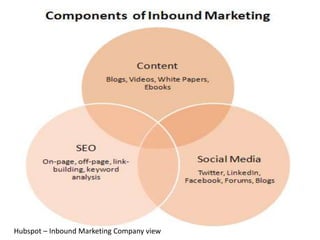
Inbound Marketing V Content Marketing
Debate – Semantics?
Hubspot – Inbound Marketing Company view
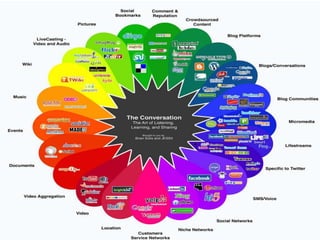
Social Media Landscape

2. GriffithCollege-ContentMarketingProgrammes

  • 1.
  • 2.
    Outline • Overview ofContent Marketing Programmes • Class exercise • Leveraging Owned Media Assets • Managing Content Marketing Initiatives • Content Marketing for Business to Consumer • Relevant Case Studies • Content Marketing for Business to Business • Relevant Case Studies • Project Pitch
  • 3.
    Key Points • Content= valuable and useful information NOT just orchestrated messages • Focus on what a customer needs rather than what you sell – Address user needs in all published content • Valuable communications is what differentiates you from competition • Marketers are publishers today • Customer relationships don’t end with a payment – Use content to increase retention rates • Without good content, community is impossible • 90% of corporate websites talk about “How great they are” • Buyers are more in control today than ever – not sales organisations
  • 4.
  • 5.
    Content types • Thecontent and digital media on your Web site, other microsites, partner sites etc.. • Facebook/MySpace/Bebo fan pages and posts • Tweets, status updates • E-mail newsletters • Blog posts, reader comments and reactions • Whitepapers, case studies, webinars, podcasts • Videos, demos, presentations, and custom animations • Product/service reviews • Forums • Articles and other intellectual property or knowledge sharing – professional contributions etc.
  • 6.
    Who creates thecontent • Internally – Find employees who are knowledgeable and want to write – Re-purpose content that has been created over time for different media • Partners, customers and third party experts – Publish whitepapers, webinars, eBooks, articles etc…with partners • Customers – If you create a community you can allow them to create feedback, suggest ideas, generate comments, develop engaged community etc.. – You can allow customers to make product recommendations – crowdsourcing
  • 7.
    What we wantour content to do • Attention - your content needs to get noticed - and not just by anyone - by the audience you've targeted. Awareness - once people have engaged with your content, they should have some thoughts about your company - preferably favorable ones worth remembering. • Mindshare - we need people to spend enough time with our content to actually "get" the ideas it's sharing. • Anchor - once people have ingested the ideas, your content needs to work to make sure that those ideas take precedence in forming how your audience thinks about the topic. • Action - your content is sent out on a mission to get people to DO something. • Conversation - beyond the action your content requests, it needs to ensure that the audience has a clear enough understanding that they can now talk with others and share your ideas with them in their own words.? • Confidence - the learning your content provides needs to help people feel certain that they know what they need to take the next step...and just what that might be. • Competence - your content must provide evidence that your company can actually do what it says it can. • Invitation - content must entice people to spend more time with your company - whether through opting in for a newsletter, attending a webinar, subscribing to an RSS feed Authority - content must inspire reliance on your company for consistently valuable insights
  • 8.
  • 9.
    Leveraging Owned MediaAssets • Recognise the value in your owned media assets – Websites, mobile applications, digital conversations/interactions etc. • Brands/Businesses are becoming publishers and media outlets – No limits to what an organisation can publish online for the consumption of their consituencies • Become trusted knowledge experts in your business or sphere of operations • Establish trust and develop relationships with customers and prospects – Be engaging, entertaining, educative, informative etc.. – Allow user participation and transparent engagement
  • 10.
    Advantages • Creates demandgeneration and awareness through value add publishing • Creates a less-frictional way of converting prospects into sales – When used in conjunction with lead management systems • Helps build long-term relationships rather than one-off sales • Creates stickiness to your owned media assets (rather than to paid ones) • Once started, provides an ongoing process and framework to control and publish valuable information
  • 11.
    Content Mktg: SuccessVs Failure • Characteristics of Success – Understanding the informational needs of your customers – Knowing how those informational needs mix with your marketing goals and objectives – Mapping content schedule to user profiles and buyer cycles – Being consistent (content marketing is a marathon, not a sprint) – Listen and continually evolve the program • Characteristics of Failure – Always selling, rather than informing and educating – Not listening, thus not evolving the content program – Waiting for perfection to come before you deliver the content.
  • 12.
    Inbound Marketing VContent Marketing Debate – Semantics?
  • 13.
    Hubspot – InboundMarketing Company view
  • 14.