Greenfoot in Problem Solving and
Artificial Intelligence
Dr Scott Turner
Department of Computing and Immersive Technologies
University of Northampton
Case Study 1: Problem-solvingCase Study 1: Problem-solving
Building on some of earlier work of using
robots and graphics to teaching and
develop Java programming skills.
GreenfootGreenfoot
Greenfoot (Greenfoot, 2013) is an
interactive environment based around
Java that enables two-dimensional
graphical games and simulations to be
set-up relatively simply.
free software (under a GPL licence) and
is multiplatform.
Why?Why?
- The students focus on the problem
solving aspects.
- The software is free and multiplatform -
enables the students to download and
run the software on their own machines.
- It is java-based.
ApproachApproach
The problems set were gradually
increasing in difficulty but only up to a
set level.
Guided solutions to the problems are
designed take students up to a basic
level
Task have built in extra challenges to
encourage those students further along
with sign-posting to extra resources.
Case Study 2: Problem-solvingCase Study 2: Problem-solving
AssignmentAssignment
Previous assignment in problem-solving
part of the module have involved robots
(Turner and Hill, 2008; Turner and Hill,
2010).
Problem raised by the students, robots
were not always available when they
wanted them.
Case Study 2: Problem-solvingCase Study 2: Problem-solving
AssignmentAssignment
The assignment approach has been
changed to be a Greenfoot based
assignment, in part from that feedback.
Allows students to focus on task without
being distracted on how this image
interacts with another or how to layout
the icons on the screens; these skills will
be taught, developed and assessed
later in the module.
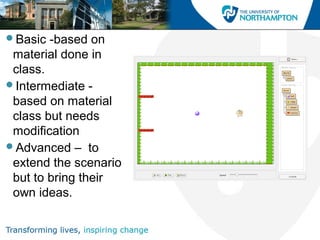
Basic -based on
material done in
class.
Intermediate -
based on material
class but needs
modification
Advanced – to
extend the scenario
but to bring their
own ideas.
Case Study 3: Artificial IntelligenceCase Study 3: Artificial Intelligence
In a similar way to Case study 2,
Greenfoot has been used within an
assignment, mostly for the students can
concentrate on coding their solution
without having to focus on how to make
the various parts move.
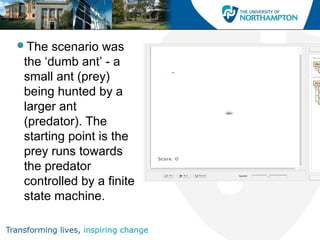
The scenario was
the ‘dumb ant’ - a
small ant (prey)
being hunted by a
larger ant
(predator). The
starting point is the
prey runs towards
the predator
controlled by a finite
state machine.
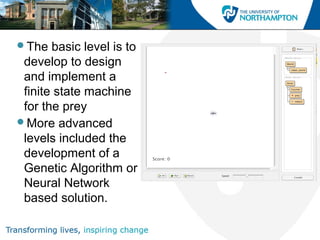
The basic level is to
develop to design
and implement a
finite state machine
for the prey
More advanced
levels included the
development of a
Genetic Algorithm or
Neural Network
based solution.
ConclusionsConclusions
Greenfoot’s visual nature provides an
engaging environment, based on
student feedback, whilst enabling the
students to concentrate on coding the
task not the environment. The software
is free and multiplatform so it didn’t
matter whether the students were
running it on a Mac, PC or Linux-based
machine. This enables the students to
download and run the software on their
own machines.

Greenfoot in Problem-solving and Artificial Intelligence

  • 1.
    Greenfoot in ProblemSolving and Artificial Intelligence Dr Scott Turner Department of Computing and Immersive Technologies University of Northampton
  • 2.
    Case Study 1:Problem-solvingCase Study 1: Problem-solving Building on some of earlier work of using robots and graphics to teaching and develop Java programming skills.
  • 3.
    GreenfootGreenfoot Greenfoot (Greenfoot, 2013)is an interactive environment based around Java that enables two-dimensional graphical games and simulations to be set-up relatively simply. free software (under a GPL licence) and is multiplatform.
  • 4.
    Why?Why? - The studentsfocus on the problem solving aspects. - The software is free and multiplatform - enables the students to download and run the software on their own machines. - It is java-based.
  • 5.
    ApproachApproach The problems setwere gradually increasing in difficulty but only up to a set level. Guided solutions to the problems are designed take students up to a basic level Task have built in extra challenges to encourage those students further along with sign-posting to extra resources.
  • 6.
    Case Study 2:Problem-solvingCase Study 2: Problem-solving AssignmentAssignment Previous assignment in problem-solving part of the module have involved robots (Turner and Hill, 2008; Turner and Hill, 2010). Problem raised by the students, robots were not always available when they wanted them.
  • 7.
    Case Study 2:Problem-solvingCase Study 2: Problem-solving AssignmentAssignment The assignment approach has been changed to be a Greenfoot based assignment, in part from that feedback. Allows students to focus on task without being distracted on how this image interacts with another or how to layout the icons on the screens; these skills will be taught, developed and assessed later in the module.
  • 8.
    Basic -based on materialdone in class. Intermediate - based on material class but needs modification Advanced – to extend the scenario but to bring their own ideas.
  • 9.
    Case Study 3:Artificial IntelligenceCase Study 3: Artificial Intelligence In a similar way to Case study 2, Greenfoot has been used within an assignment, mostly for the students can concentrate on coding their solution without having to focus on how to make the various parts move.
  • 10.
    The scenario was the‘dumb ant’ - a small ant (prey) being hunted by a larger ant (predator). The starting point is the prey runs towards the predator controlled by a finite state machine.
  • 11.
    The basic levelis to develop to design and implement a finite state machine for the prey More advanced levels included the development of a Genetic Algorithm or Neural Network based solution.
  • 12.
    ConclusionsConclusions Greenfoot’s visual natureprovides an engaging environment, based on student feedback, whilst enabling the students to concentrate on coding the task not the environment. The software is free and multiplatform so it didn’t matter whether the students were running it on a Mac, PC or Linux-based machine. This enables the students to download and run the software on their own machines.