
Sustainable Housing and
Building Green
August 22, 2013
What Agents Should Know
Seminar Outline
1.Real Estate Licensees and Green
Building
2.Sustainable Building Concepts
3.Energy Audits
Learning Objectives
A.Summarize the ways that real estate licensees assist consumers by
resources and laying out options
B. Differentiate between sustainable and green building
C. Identify tipping points that have led to greater green awareness
D. Recognize that the federal government is not setting standards for
sustainable housing or building green
E. Explain the value of life cycle analysis when choosing green
materials
1. Real Estate Licensees and Green
Building
Overview
A. Impact of Buildings on the Environment
B. Real Estate Licensees Challenged to Better Assist
Consumers
Annual Energy Outlook 2013
Meeting Consumer Concerns
A. Licensee Roles
1. Licensee as Gate Keeper
2. Licensee as Educator
3. Licensee as Fiduciary
B. Dispelling Myths
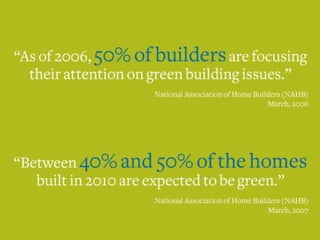
1. Myth # 1: Green Building is Complicated
2. Myth #2: Consumers are not concerned with building green
3. Myth #3 : Green building is expensive
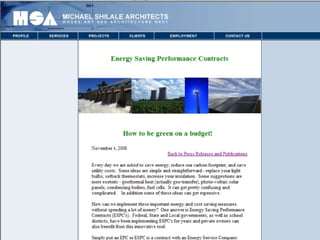
EPC’s – Energy Saving Performance Contracts
Integrative Design
Key Findings
American Institute of Architects
Nationwide Voter Survey 2009
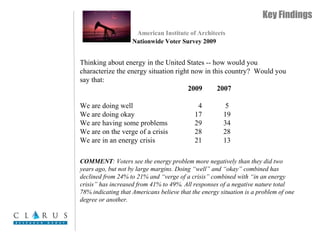
Thinking about energy in the United States -- how would you
characterize the energy situation right now in this country? Would you
say that:
2009 2007
We are doing well 4 5
We are doing okay 17 19
We are having some problems 29 34
We are on the verge of a crisis 28 28
We are in an energy crisis 21 13
COMMENT: Voters see the energy problem more negatively than they did two
years ago, but not by large margins. Doing “well” and “okay” combined has
declined from 24% to 21% and “verge of a crisis” combined with “in an energy
crisis” has increased from 41% to 49%. All responses of a negative nature total
78% indicating that Americans believe that the energy situation is a problem of one
degree or another.
Key Findings
American Institute of Architects
Nationwide Voter Survey 2009
Thinking about energy in the United States -- how would you
characterize the energy situation right now in this country? Would you
say that:
2009 2007
We are doing well 4 5
We are doing okay 17 19
We are having some problems 29 34
We are on the verge of a crisis 28 28
We are in an energy crisis 21 13
COMMENT: Voters see the energy problem more negatively than they did two
years ago, but not by large margins. Doing “well” and “okay” combined has
declined from 24% to 21% and “verge of a crisis” combined with “in an energy
crisis” has increased from 41% to 49%. All responses of a negative nature total
78% indicating that Americans believe that the energy situation is a problem of one
degree or another.
Key Findings
American Institute of Architects
Nationwide Voter Survey 2009
Issue importance (10-point scale): 9s and 10s
2009 Mean 2009 2007 2004
Making U.S. less dependent on foreign oil 8.60 65 61 51
Controlling medical insurance costs 8.33 64 67
Protecting against air and water pollution 7.89 44 48 41*
Increasing # of energy efficient buildings 7.67 39 36
Holding down the price of gasoline 7.55 47 51
Controlling electricity and utility rates 7.51 41 46 47
Reducing greenhouse gas emissions
that may cause global warming 6.85 35 42
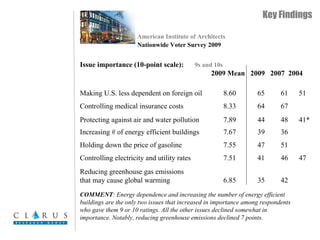
COMMENT: Energy dependence and increasing the number of energy efficient
buildings are the only two issues that increased in importance among respondents
who gave them 9 or 10 ratings. All the other issues declined somewhat in
importance. Notably, reducing greenhouse emissions declined 7 points.
Key Findings
American Institute of Architects
Nationwide Voter Survey 2009
Issue importance (10-point scale): 9s and 10s
2009 Mean 2009 2007 2004
Making U.S. less dependent on foreign oil 8.60 65 61 51
Controlling medical insurance costs 8.33 64 67
Protecting against air and water pollution 7.89 44 48 41*
Increasing # of energy efficient buildings 7.67 39 36
Holding down the price of gasoline 7.55 47 51
Controlling electricity and utility rates 7.51 41 46 47
Reducing greenhouse gas emissions
that may cause global warming 6.85 35 42
COMMENT: Energy dependence and increasing the number of energy efficient
buildings are the only two issues that increased in importance among respondents
who gave them 9 or 10 ratings. All the other issues declined somewhat in
importance. Notably, reducing greenhouse emissions declined 7 points.
Differences between Sustainable and Green Building
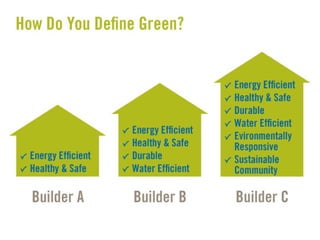
A. Green Building
1. 5 Categories Sites, Water, Energy, Resources, IEQ
2. Healthier for Living and Working
3. Green Buyers are Happier
4. Less Damage than standard building
B. Sustainable Buildings
1. Derived from Agriculture Terms
2. Sustainable Communities Protect Diversity of Environment
3. Zero Energy-Zero Waste Buildings
4. Not just less damage but Restorative
Shift to Thinking Green
A. Industry Tipping Points
1. Compact Fluorescent Lamps(CFLs) 3 colors
2. Light-emitting Diode (LED) lamps
3. Buildings Produce as Much Energy as They Consume
B. Energy Costs
1. Increasing Electricity Costs
2. Rising Costs of Utilities Negatively Impact Home Buying Power
C. Influence of Global Warming/Climate Change
1. Warming Due to Air Pollution and Greenhouse Gases
2. Green Components in Commercial Building Filtering into
Residential Market
Emerging Quantifiable Rating Systems
A. Voluntary Standards
1. Not Set by Government Agencies - Yet
2. EnergyStar.Gov
3. Commercial Specifications Redrawn from Commercial to Residential
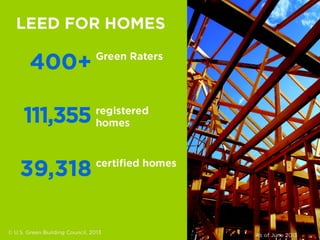
• LEED
• NAHB -ICC 700
• ICC Green Building Code
• Green Globes
Life Cycle Analysis
Regional Priority
New Responsibilities
A. Building for Special Tax Considerations
1. Must Meet Certain Environmental Standards to Qualify
2. Possible Penalties if Standards Not Met
3. Importance of Specificity in Contract Language. Turn back
money
B. Changing Roles of Real Estate Licensees
2. Sustainable Building
Concepts
Learning Objectives
Sustainable Building Concepts
A. Name and Define Three Green Building Principles
B. Describe Components of Green Building
C. Identify the Advantages of Using Brownfields and Renovating Existing
Buildings
D. Compare Differences Between Fiberglass Insulation, Cellulose Insulation,
and Spray Foam
E. List Ways to Effectively Tighten the Building Envelope
Overview
A. Consumers Are Unaware
B. Green Building Mantra: Reduce, Reuse, Recycle
C. Common Misinterpretations and Misuse of
Environmental Efforts
Sustainable Design and Building
A. Building Green
1. Energy Efficient
2. Minimize Environmental Impact
B. Five Principles of Sustainability.
1. Optimize use of sun
2. Improve indoor air quality
3. Use the land responsibly
4. Create high-performance and moisture-resistant houses
5. Wisely use the Earth's natural resources
Whole Building Approach
A. Must Consider Total Picture - Triple Bottom Line
1. Economic Costs
2. Energy Performance
3. Environmental Issues
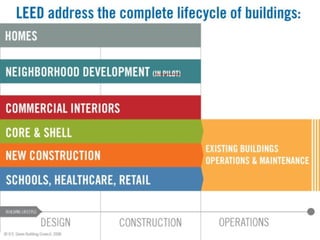
USGBC
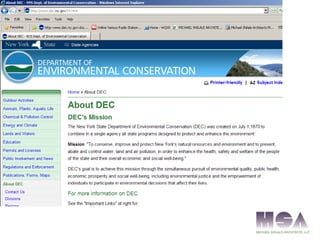
NYSDEC
Detached Single Family Homes
Low-Mid Rise Multifamily
Attached Single Family HomesMixed Use (min 50% Residential)
Project Management
1. Team Approach Critical to Finished Project On Time
a) No Statistical Difference Between Cost of Building Green and
Traditional Building
b) Owners Set the Stage
c) "How Can We Do This?"
2. Integrated Design
a) An Element Has More than One Function
b) Color – Light – HVAC Equipment
c) Flooding - Drought - Water Use
3. Licensee Role
a) Be Aware of Marketability of Energy-Efficient Buildings
b) Provide Information to Builders and Developers
Use Land Responsibly
1 . Basic Site Considerations
a) Minimize Building Footprint
b) Avoid Building on Wetlands and Disturbing Wildlife Habitats
c) Take Advantage of Tree Shading
d) Reduce Impervious Area
2. Reclaim Brownfields
a) Property that Are, Were, or Are Contaminated
b) Can Assist in Reviving Depressed Areas
Build Close to Transportation
1. Transit oriented development (TOD)
a) Easily Use and Depend on Mass Transportation
b) High-Density, Mixed-Use Communities
2. Encouraged by Rating Systems
Energy Efficiency
1. Conserve Energy
a) Reduce Demand
b) Rely on Energy Not Created by Fossil Fuels
2. Use Renewable Energy
a) Avoid Fossil Fuels (Petroleum-Based)
b) Power from Sun, Water, Wind, Geothermal, Waves,
Biofuels
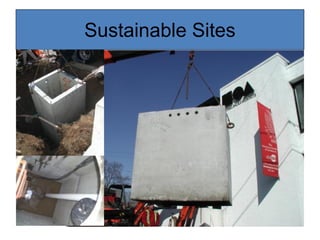
Maintenance of a building’s site is a
fundamental component of comprehensive,
sustainable building operation.
Sustainable Sites
The United States alone loses 2 billion tons
of topsoil per year. This is of great
ecological concern as one inch of topsoil
can take 500 years to form naturally
Sustainable Sites
Sustainable Sites
Sustainable Sites
Sustainable Sites
Sustainable Sites
Energy and Atmosphere
Dr. Nocera said human activities, in energy
terms, right now are essentially a “12.8
trillion watt light bulb.” Our energy thirst will
probably be 30 trillion watts, or 30
terrawatts, by 2050 with the human
population heading toward 9 billion.
• - Cut down every plant on Earth and make it into a fuel.
You get 7 terawatts, but you need 30. And you don’t
eat.
• - Build nuclear plants. Around 8 terawatts could be
gotten from nuclear power if you built a new billion-watt
plant every 1.6 days until 2050.
• - Take all the wind energy available close to Earth’s
surface and you get 2 terawatts.
• - You get 1 more terawatt if you dam every other river
on the planet and reach 30.
Then he turned to the sun, his research focus, which
bathes the planet in 800 terawatts of energy continually.
“We only need 18 of those terawatts,” he said. But the
current level of investment in pursuing that energy, he
said, isn’t even close to sufficient .
• Features of ENERGY STAR Qualified New
Homes
• To earn the ENERGY STAR, a home must meet
guidelines for energy efficiency set by the U.S.
Environmental Protection Agency. These homes
are at least 15% more energy efficient than
homes built to the
2004 International Residential Code (IRC), and
include additional energy-saving features that
typically make them 20–30% more efficient than
standard homes.
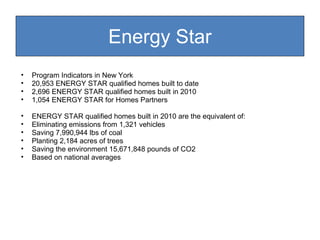
Energy Star
• Program Indicators in New York
• 20,953 ENERGY STAR qualified homes built to date
• 2,696 ENERGY STAR qualified homes built in 2010
• 1,054 ENERGY STAR for Homes Partners
• ENERGY STAR qualified homes built in 2010 are the equivalent of:
• Eliminating emissions from 1,321 vehicles
• Saving 7,990,944 lbs of coal
• Planting 2,184 acres of trees
• Saving the environment 15,671,848 pounds of CO2
• Based on national averages
Energy Star
Tight Envelope To Reduce Air Leakage
1. Windows
a)Low Emissivity (Low-E) Glaze to Reflect Radiant Indoor Heat
b) U-value: Measure the Rate of Heat Passing Through a Barrier,
Lower Numbers More Efficient
c) Solar Heat Gain Coefficient (SHGC): Measures How Well
Window Prevents Heat from Sun from Entering Building, Lower
Numbers More Efficient
2. Insulation Prevents Loss of Conditioned Air
a) R-factor: Rates Ability of Insulation to Prevent Flow of Heat,
Higher Numbers Prevent More Heat Loss
b) Fiberglass insulation: Recycles Materials, Difficult to Ignite but
Burns Fast, R-Values Deteriorate with Temperature Differentials
c) Cellulose insulation: Recycled Newspapers, Burning Retarded,
Fills Nooks and Crevices
d) Spray Foam – Polyurethane, air and heat barrier
G. Tight Envelope To Reduce Air Leakage
3. Structural Insulated Panels (SIPs)
a) Two Layers of Structural Board
b) Insulating Foam in Between
c) Lightweight and Modular
d) Easy to Use and to Move
e) Less HVAC Required
f) SIP Rooms Do Not Require Blower Door Test or Duct Blaster Test
g) Lower Costs Overall
Use Electricity Wisely
A. Reduce Plug Load
a) Many Appliances Continually "On" Pulling Power
b) Appliances More than 10 Years Should be Replaced
c) Use Electronic Power Controller for Appliances more
than 10 years old
d) Computers and printers are major energy users
www.energystar.gov/
B Choose Energy-Efficient Appliances
a) Tankless Water Heaters
b) Programmable Thermostats
c) Ductless Air Conditioning
d) Geothermal Heat Pumps
Programmable Thermostats – Energy
Management Systems
Computer Load Management - Hundreds of leading
organizations have activated power management
features on computers saving as much as $50 per
computer annually
http://www.energystar.gov/index.cfm?c=power_mgt.
Occupancy and Daylight Sensors
Use Electricity Wisely
C. Renewal Power Sources
1. Solar Power
a) Photovoltaic CPV) Cells Convert Sun's Energy into
Electricity
b) Manufacture and Disposal of PV Cells have
Environmental Impact
c) Cost Expected to Drop
d) Danial Nocera – artificial photosynthesis
2. Wind Power
a) Turbine Blades Convert Wind to Electricity
b) Smaller Turbines for Residential Use
c) Wind Farms Being Built Off-Shore
Energy & Atmosphere
June 21st
Summer
Solstice
9:00 am to 5:00 pm
Energy & Atmosphere
Sept 21st
Autumnal
Equinox
9:00 am to 5:00 pm
D. Conserve Water
1. Saving Potable Water
a) Preparing for Droughts
b) Effects of Paving and Buildings: Less Water Absorbed
c) All Certifications Place Premium on Conserving Water
d) Droughts and Flooding?
2. Green Roofs
a) Usually Not Accessible to Foot Traffic
b) Reduce Heating and Cooling Load on Building
c) Reduce Storm Water Runoff and Filter Pollutants
d) Increase Habitat for Displaced Wildlife
e) Can be Virtually Self-Sustaining, Requiring Minimal Care
Conserve Water
Flooding and Droughts
Mississippi
•1968 National Flood Insurance Program
•100 yr flood protection
•Corps of Engineers wanted a minimum 500-year
standard for densely populated areas
•Developers wanted 50 yrs std.
Conserve Water
“The reality is that, over the 30-year life of a typical
home mortgage, there is a 26% chance of a flood that exceeds
the 100-year standard. Over the course of a century, there is a
63% chance that a flood greater than the 100-year standard will
strike, a 26% chance of two such floods, and an 8% chance of
three such floods. So it is hardly a statistical surprise that the
upper Midwest suffered 100-year floods in 1993 and 2008.”
WSJ Article 4-30-2011
Conserve Water
Japan and the Netherlands, for example, protect
against river floods to a 2,000-year standard for
densely populated areas and a 200-year standard
for rural zones.
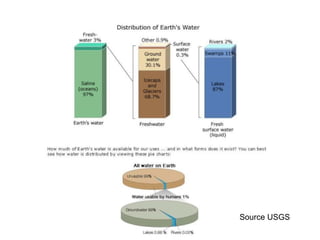
Water Efficiency
Americans extract 3700 billion gallons per
year more than they return to the natural
water system to recharge aquifers and other
water sources.
Source USGS
Water Efficiency
D. Conserve Water
3. Beneficial Landscaping
a) Preserve Existing Ecosystems, such as Wildlife Habitat
b) Reduce Need for Excess Water for Landscaping
c) Reduce Possibility of Groundwater and Soil Contamination
4. Xeric plants Requirements
a) Less Water
b) Less Attention
c) Fewer Chemicals
d)Fewer Pesticides
D. Conserve Water
6. Microdrip Water Systems
a) Use 20 to 50 Percent Less Water than Sprinkler Systems
b) Little or No Water Lost to Evaporation
c) Water Delivered Directly to Plants
d) Up front Costs More than Traditional Sprinkler Systems
e) Save on Water Usage
7. Water Collection Systems
a) Most Used for Irrigation
b) Thousands of Gallons of Water Gained from Collection
Rain Gardens
Rain Barrels
Water Saving .5 gpm aerators
1.0 or .5 gpm (.35 gpm)
<$5
Water Saving Automatic Shut off Faucets
Metering Lavatory Faucet
Price: $131 - $214 *
Proximity Lavatory Faucet
Price: $509
Water Use Calculations
Material Efficiency
1.Reduce
a) Print Double Sided
b) Coffee Mugs , Refilable Water Bottles.
c) Bldg Materials - Roof Insulation
3. Reuse
a) Use Same Product for Same Purpose or New Purpose
b) Examples: Refillable Glass Bottles, Washable Cloth
Diapers, Renovatable Buildings
c) Trade-offs
d) Deconstruction
e) Reconstruction
4. Recycle
a) Break Down Materials
b) Reassemble for New Purpose
c) Examples: Newspapers, Concrete, Glass, Aluminum
F. Manage Construction and Demolition (C&C) Debris
1. Deconstruction
a) Dismantle and Remove Before Building Torn Down
b) Advantages: Lower Overall Building Removal; Reduce Impact to
Site; Save Space in Landfills; Creates More Jobs
c) Example: Big Dig House, Lexington, MA
d) Benefits Calculator: Deconstruction Institute
2. Factory-Built Construction Advantages
a) Better Use of Expensive Materials
b) Protect from Weather and Theft
c) More Exacting Construction Standards
d) Higher Quality Control
e) Less Waste
E. Indoor Air Quality
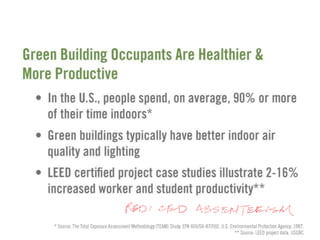
I. Time Indoors Equals 90%
a) Live in Conditioned Air
b) Indoor Air up to 90% Less Healthy than Outdoor Air
c) Accounts for Many Missed Days of Work
d) Many Pollutants Cause Problems
2. Minimize Mold
a) Relative Humidity Less than 55%
b) Repair Water Leaks Promptly
3. Minimize off- gassing
a) Release of Gases into Air of Chemicals Used in
Manufacture of
Product
b) Called Volatile Organic Compounds (VOCs)
c) Formaldehyde Main Culprit
d) Use Paints wi th Low or No VOCs
E. Indoor Air Quality
4. Bring in Fresh Air
a) Air Tight Buildings Control Conditioned Air
b) Use Air Exchangers
5. Indoor air Issues in Commercial Buildings
a) Sick Building Syndrome (SBS): 20% of Occupants Complain, No
Link Found
b) Building related illness (BRI): Specific Pollutant Identified as
Causing Personal Injury
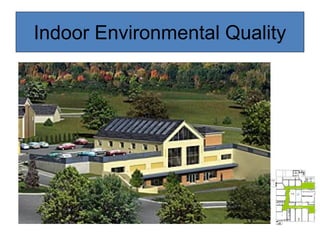
Indoor Environmental Quality
3. Energy Audits
Learning Objectives
A. Discuss the Value of an Energy Audit
B. Identify Problems Common to Many Houses and Develop Possible
Solutions
C. Explain Issues that Result from Inadequate Insulation Levels
D. Recognize the Dangers of Back Drafting
E. List Components of an Effective Energy Audit
F. Summarize the Role of a Real Estate Licensee When Clients Call
for an Energy Audit
Energy Audits
A. Professional Energy Audits
1. Value
a) Determines Energy Efficiency of Building's Energy-Using Systems
b) Identifies Health and Safety Issues, Building Durability
c) Owners Should Identify any Known Indoor Environmental Problems,
Humidity Issues
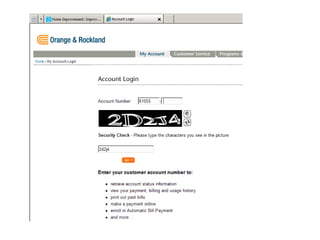
d) Assemble Year's Worth of Energy Bills
e) Identify Usage During Weekdays
2. Blower Door Test
a) Powerful Variable-Speed Fan Mounted into Frame of Exterior Door
b) Pressure Gauge to Measure Pressure Differences Inside and Out
c) Airflow Manometer and Hoses to Measure the Airflow
as well
Energy Audits
A. Professional Energy Audits
3. Duct Leakage Testing
a)Leakage May Cause Back-Drafting of Combustion Appliances
b) Properly Sealed Ductwork Increases Energy Efficiency
c) More Comfortable Living Spaces
d) Calibrated, Portable Fan Pressurizes the Ducts and Measures Airflow to
Indicate Total Leakage
Energy Audits
A.Professional Energy Audits
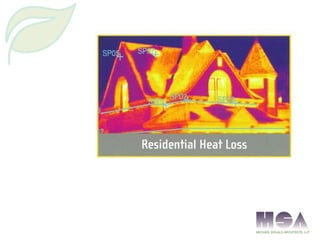
4. Thermographic Inspections
a) Infrared Scanning to Detect Thermal Defects and Air Leakage in Building
Envelope
b) Measures Surface Temperatures, especially during Blower Door Testing
c) Checks Insulation Effectiveness
d) Do on New Construction as well
Energy Audits
B. Hiring a Third Party
1. No National Guidelines
a) Home Energy Rating System (HERS) developed by Residential Energy
Services Network (RESNET)
b) Used by Federal Government and Many Others
2. Hiring Guidelines
a) Gather Information about Experience in Testing for Energy Consumption,
Accreditation, Certification
b) Obtain Proof of Errors and Omissions Insurance
c) Check References
Energy Audits
B. Hiring a Third Party
3. Test- in/Test-out
a) Homeowner Should be Present Both Times
b) Ideally Involve Three Steps: First Company Does Audit, Make the
Upgrades, Different Company Tests Results of Upgrades
c) Ethically, Company Must Disclose any Financial Interest in Upgrades
4. Residential Audits
a) Local Utilities Often Offer Audits
b) Real Estate Licensees Should be Aware of Opportunities
c) Should Not Make Recommendation for Specific Company
5. Commercial Audits
a) Many States Offer Financial Incentives
b) Licensees Should be Aware
Energy Audits
C. Do It Yourself Audits
1. Energy Star Home Energy Yardstick
a) Requires Last Twelve Months of Utility Bills
b) Basic Information About Property
2. Home Energy Saver (HES)
a) Maintained by Lawrence Berkeley National Laboratory
b) Calculates Savings by Making Energy-Efficiency Improvements
c) Uses Zip Codes to Identify Applicable Utility Costs for that Climate
Energy Audits
Common Problems and Solutions
1 . Inadequate Insulation Levels Allows Conditioned Air to Escape
b) Ice Dams: Frozen Water in Gutters Backs up Melting Water from Warm
Roof .
c) Recessed Lighting in Vaulted Ceilings
c) Proper Insulation: Lower Energy Costs and Prevention of Air Drafts
2. Air Leakage
a) Requires More Energy to Run HVAC
b) Results in Uneven Air Temperatures in Different Parts of Room/House
3. Excessive Moisture
a) Use Dehumidifier in Summer Months
b) Install Air Exchanger
4. Improperly Vented Appliances
a) Prevent Back Drafting: Flow of Fumes into House and Not Up the
Chimney
b) Carbon Monoxide Especially Dangerous
c) Electrical Appliances Not As Dangerous
Audits in the Real Estate Transaction
A. Role of the Real Estate Licensee
1. Be the Source of the Resource, Not the Source of the Information
2. No Recommendations
3. No Affiliation with Suppliers
B. Useful for Sellers
1. Determine If Feature or Appliance Adds To or Detracts From Asking
Price
2. Energy-Saving Features Added to Multiple Listing Service (MLS)
Information
C. Useful for Buyers
1. Consider Impact of Energy Technology
2. May Choose to Pay More for Lower Utility Costs
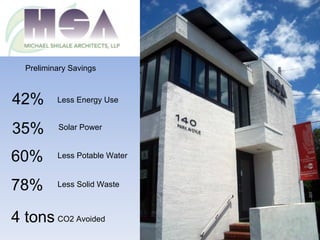
4 tons CO2 Avoided
78% Less Solid Waste
Solar Power35%
Preliminary Savings
42% Less Energy Use
60% Less Potable Water
Sustainable Housing and Building Green

Sustainable Housing and Building Green

  • 1.
    Sustainable Housing and BuildingGreen August 22, 2013 What Agents Should Know
  • 2.
    Seminar Outline 1.Real EstateLicensees and Green Building 2.Sustainable Building Concepts 3.Energy Audits
  • 3.
    Learning Objectives A.Summarize theways that real estate licensees assist consumers by resources and laying out options B. Differentiate between sustainable and green building C. Identify tipping points that have led to greater green awareness D. Recognize that the federal government is not setting standards for sustainable housing or building green E. Explain the value of life cycle analysis when choosing green materials 1. Real Estate Licensees and Green Building
  • 4.
    Overview A. Impact ofBuildings on the Environment B. Real Estate Licensees Challenged to Better Assist Consumers
  • 7.
  • 9.
    Meeting Consumer Concerns A.Licensee Roles 1. Licensee as Gate Keeper 2. Licensee as Educator 3. Licensee as Fiduciary
  • 10.
    B. Dispelling Myths 1.Myth # 1: Green Building is Complicated 2. Myth #2: Consumers are not concerned with building green 3. Myth #3 : Green building is expensive EPC’s – Energy Saving Performance Contracts Integrative Design
  • 11.
    Key Findings American Instituteof Architects Nationwide Voter Survey 2009 Thinking about energy in the United States -- how would you characterize the energy situation right now in this country? Would you say that: 2009 2007 We are doing well 4 5 We are doing okay 17 19 We are having some problems 29 34 We are on the verge of a crisis 28 28 We are in an energy crisis 21 13 COMMENT: Voters see the energy problem more negatively than they did two years ago, but not by large margins. Doing “well” and “okay” combined has declined from 24% to 21% and “verge of a crisis” combined with “in an energy crisis” has increased from 41% to 49%. All responses of a negative nature total 78% indicating that Americans believe that the energy situation is a problem of one degree or another.
  • 12.
    Key Findings American Instituteof Architects Nationwide Voter Survey 2009 Thinking about energy in the United States -- how would you characterize the energy situation right now in this country? Would you say that: 2009 2007 We are doing well 4 5 We are doing okay 17 19 We are having some problems 29 34 We are on the verge of a crisis 28 28 We are in an energy crisis 21 13 COMMENT: Voters see the energy problem more negatively than they did two years ago, but not by large margins. Doing “well” and “okay” combined has declined from 24% to 21% and “verge of a crisis” combined with “in an energy crisis” has increased from 41% to 49%. All responses of a negative nature total 78% indicating that Americans believe that the energy situation is a problem of one degree or another.
  • 13.
    Key Findings American Instituteof Architects Nationwide Voter Survey 2009 Issue importance (10-point scale): 9s and 10s 2009 Mean 2009 2007 2004 Making U.S. less dependent on foreign oil 8.60 65 61 51 Controlling medical insurance costs 8.33 64 67 Protecting against air and water pollution 7.89 44 48 41* Increasing # of energy efficient buildings 7.67 39 36 Holding down the price of gasoline 7.55 47 51 Controlling electricity and utility rates 7.51 41 46 47 Reducing greenhouse gas emissions that may cause global warming 6.85 35 42 COMMENT: Energy dependence and increasing the number of energy efficient buildings are the only two issues that increased in importance among respondents who gave them 9 or 10 ratings. All the other issues declined somewhat in importance. Notably, reducing greenhouse emissions declined 7 points.
  • 14.
    Key Findings American Instituteof Architects Nationwide Voter Survey 2009 Issue importance (10-point scale): 9s and 10s 2009 Mean 2009 2007 2004 Making U.S. less dependent on foreign oil 8.60 65 61 51 Controlling medical insurance costs 8.33 64 67 Protecting against air and water pollution 7.89 44 48 41* Increasing # of energy efficient buildings 7.67 39 36 Holding down the price of gasoline 7.55 47 51 Controlling electricity and utility rates 7.51 41 46 47 Reducing greenhouse gas emissions that may cause global warming 6.85 35 42 COMMENT: Energy dependence and increasing the number of energy efficient buildings are the only two issues that increased in importance among respondents who gave them 9 or 10 ratings. All the other issues declined somewhat in importance. Notably, reducing greenhouse emissions declined 7 points.
  • 28.
    Differences between Sustainableand Green Building A. Green Building 1. 5 Categories Sites, Water, Energy, Resources, IEQ 2. Healthier for Living and Working 3. Green Buyers are Happier 4. Less Damage than standard building B. Sustainable Buildings 1. Derived from Agriculture Terms 2. Sustainable Communities Protect Diversity of Environment 3. Zero Energy-Zero Waste Buildings 4. Not just less damage but Restorative
  • 32.
    Shift to ThinkingGreen A. Industry Tipping Points 1. Compact Fluorescent Lamps(CFLs) 3 colors 2. Light-emitting Diode (LED) lamps 3. Buildings Produce as Much Energy as They Consume B. Energy Costs 1. Increasing Electricity Costs 2. Rising Costs of Utilities Negatively Impact Home Buying Power C. Influence of Global Warming/Climate Change 1. Warming Due to Air Pollution and Greenhouse Gases 2. Green Components in Commercial Building Filtering into Residential Market
  • 33.
    Emerging Quantifiable RatingSystems A. Voluntary Standards 1. Not Set by Government Agencies - Yet 2. EnergyStar.Gov 3. Commercial Specifications Redrawn from Commercial to Residential • LEED • NAHB -ICC 700 • ICC Green Building Code • Green Globes Life Cycle Analysis Regional Priority
  • 34.
    New Responsibilities A. Buildingfor Special Tax Considerations 1. Must Meet Certain Environmental Standards to Qualify 2. Possible Penalties if Standards Not Met 3. Importance of Specificity in Contract Language. Turn back money B. Changing Roles of Real Estate Licensees
  • 35.
    2. Sustainable Building Concepts LearningObjectives Sustainable Building Concepts A. Name and Define Three Green Building Principles B. Describe Components of Green Building C. Identify the Advantages of Using Brownfields and Renovating Existing Buildings D. Compare Differences Between Fiberglass Insulation, Cellulose Insulation, and Spray Foam E. List Ways to Effectively Tighten the Building Envelope
  • 36.
    Overview A. Consumers AreUnaware B. Green Building Mantra: Reduce, Reuse, Recycle C. Common Misinterpretations and Misuse of Environmental Efforts
  • 37.
    Sustainable Design andBuilding A. Building Green 1. Energy Efficient 2. Minimize Environmental Impact B. Five Principles of Sustainability. 1. Optimize use of sun 2. Improve indoor air quality 3. Use the land responsibly 4. Create high-performance and moisture-resistant houses 5. Wisely use the Earth's natural resources
  • 38.
    Whole Building Approach A.Must Consider Total Picture - Triple Bottom Line 1. Economic Costs 2. Energy Performance 3. Environmental Issues USGBC NYSDEC
  • 44.
    Detached Single FamilyHomes Low-Mid Rise Multifamily Attached Single Family HomesMixed Use (min 50% Residential)
  • 45.
    Project Management 1. TeamApproach Critical to Finished Project On Time a) No Statistical Difference Between Cost of Building Green and Traditional Building b) Owners Set the Stage c) "How Can We Do This?" 2. Integrated Design a) An Element Has More than One Function b) Color – Light – HVAC Equipment c) Flooding - Drought - Water Use 3. Licensee Role a) Be Aware of Marketability of Energy-Efficient Buildings b) Provide Information to Builders and Developers
  • 46.
    Use Land Responsibly 1. Basic Site Considerations a) Minimize Building Footprint b) Avoid Building on Wetlands and Disturbing Wildlife Habitats c) Take Advantage of Tree Shading d) Reduce Impervious Area 2. Reclaim Brownfields a) Property that Are, Were, or Are Contaminated b) Can Assist in Reviving Depressed Areas
  • 47.
    Build Close toTransportation 1. Transit oriented development (TOD) a) Easily Use and Depend on Mass Transportation b) High-Density, Mixed-Use Communities 2. Encouraged by Rating Systems Energy Efficiency 1. Conserve Energy a) Reduce Demand b) Rely on Energy Not Created by Fossil Fuels 2. Use Renewable Energy a) Avoid Fossil Fuels (Petroleum-Based) b) Power from Sun, Water, Wind, Geothermal, Waves, Biofuels
  • 48.
    Maintenance of abuilding’s site is a fundamental component of comprehensive, sustainable building operation. Sustainable Sites
  • 49.
    The United Statesalone loses 2 billion tons of topsoil per year. This is of great ecological concern as one inch of topsoil can take 500 years to form naturally Sustainable Sites
  • 51.
  • 52.
  • 53.
  • 54.
  • 55.
    Energy and Atmosphere Dr.Nocera said human activities, in energy terms, right now are essentially a “12.8 trillion watt light bulb.” Our energy thirst will probably be 30 trillion watts, or 30 terrawatts, by 2050 with the human population heading toward 9 billion.
  • 56.
    • - Cutdown every plant on Earth and make it into a fuel. You get 7 terawatts, but you need 30. And you don’t eat. • - Build nuclear plants. Around 8 terawatts could be gotten from nuclear power if you built a new billion-watt plant every 1.6 days until 2050. • - Take all the wind energy available close to Earth’s surface and you get 2 terawatts. • - You get 1 more terawatt if you dam every other river on the planet and reach 30. Then he turned to the sun, his research focus, which bathes the planet in 800 terawatts of energy continually. “We only need 18 of those terawatts,” he said. But the current level of investment in pursuing that energy, he said, isn’t even close to sufficient .
  • 57.
    • Features ofENERGY STAR Qualified New Homes • To earn the ENERGY STAR, a home must meet guidelines for energy efficiency set by the U.S. Environmental Protection Agency. These homes are at least 15% more energy efficient than homes built to the 2004 International Residential Code (IRC), and include additional energy-saving features that typically make them 20–30% more efficient than standard homes. Energy Star
  • 58.
    • Program Indicatorsin New York • 20,953 ENERGY STAR qualified homes built to date • 2,696 ENERGY STAR qualified homes built in 2010 • 1,054 ENERGY STAR for Homes Partners • ENERGY STAR qualified homes built in 2010 are the equivalent of: • Eliminating emissions from 1,321 vehicles • Saving 7,990,944 lbs of coal • Planting 2,184 acres of trees • Saving the environment 15,671,848 pounds of CO2 • Based on national averages Energy Star
  • 61.
    Tight Envelope ToReduce Air Leakage 1. Windows a)Low Emissivity (Low-E) Glaze to Reflect Radiant Indoor Heat b) U-value: Measure the Rate of Heat Passing Through a Barrier, Lower Numbers More Efficient c) Solar Heat Gain Coefficient (SHGC): Measures How Well Window Prevents Heat from Sun from Entering Building, Lower Numbers More Efficient 2. Insulation Prevents Loss of Conditioned Air a) R-factor: Rates Ability of Insulation to Prevent Flow of Heat, Higher Numbers Prevent More Heat Loss b) Fiberglass insulation: Recycles Materials, Difficult to Ignite but Burns Fast, R-Values Deteriorate with Temperature Differentials c) Cellulose insulation: Recycled Newspapers, Burning Retarded, Fills Nooks and Crevices d) Spray Foam – Polyurethane, air and heat barrier
  • 62.
    G. Tight EnvelopeTo Reduce Air Leakage 3. Structural Insulated Panels (SIPs) a) Two Layers of Structural Board b) Insulating Foam in Between c) Lightweight and Modular d) Easy to Use and to Move e) Less HVAC Required f) SIP Rooms Do Not Require Blower Door Test or Duct Blaster Test g) Lower Costs Overall
  • 63.
    Use Electricity Wisely A.Reduce Plug Load a) Many Appliances Continually "On" Pulling Power b) Appliances More than 10 Years Should be Replaced c) Use Electronic Power Controller for Appliances more than 10 years old d) Computers and printers are major energy users www.energystar.gov/ B Choose Energy-Efficient Appliances a) Tankless Water Heaters b) Programmable Thermostats c) Ductless Air Conditioning d) Geothermal Heat Pumps
  • 64.
    Programmable Thermostats –Energy Management Systems
  • 65.
    Computer Load Management- Hundreds of leading organizations have activated power management features on computers saving as much as $50 per computer annually http://www.energystar.gov/index.cfm?c=power_mgt.
  • 66.
  • 67.
    Use Electricity Wisely C.Renewal Power Sources 1. Solar Power a) Photovoltaic CPV) Cells Convert Sun's Energy into Electricity b) Manufacture and Disposal of PV Cells have Environmental Impact c) Cost Expected to Drop d) Danial Nocera – artificial photosynthesis 2. Wind Power a) Turbine Blades Convert Wind to Electricity b) Smaller Turbines for Residential Use c) Wind Farms Being Built Off-Shore
  • 68.
    Energy & Atmosphere June21st Summer Solstice 9:00 am to 5:00 pm
  • 69.
    Energy & Atmosphere Sept21st Autumnal Equinox 9:00 am to 5:00 pm
  • 70.
    D. Conserve Water 1.Saving Potable Water a) Preparing for Droughts b) Effects of Paving and Buildings: Less Water Absorbed c) All Certifications Place Premium on Conserving Water d) Droughts and Flooding? 2. Green Roofs a) Usually Not Accessible to Foot Traffic b) Reduce Heating and Cooling Load on Building c) Reduce Storm Water Runoff and Filter Pollutants d) Increase Habitat for Displaced Wildlife e) Can be Virtually Self-Sustaining, Requiring Minimal Care
  • 71.
    Conserve Water Flooding andDroughts Mississippi •1968 National Flood Insurance Program •100 yr flood protection •Corps of Engineers wanted a minimum 500-year standard for densely populated areas •Developers wanted 50 yrs std.
  • 72.
    Conserve Water “The realityis that, over the 30-year life of a typical home mortgage, there is a 26% chance of a flood that exceeds the 100-year standard. Over the course of a century, there is a 63% chance that a flood greater than the 100-year standard will strike, a 26% chance of two such floods, and an 8% chance of three such floods. So it is hardly a statistical surprise that the upper Midwest suffered 100-year floods in 1993 and 2008.” WSJ Article 4-30-2011
  • 73.
    Conserve Water Japan andthe Netherlands, for example, protect against river floods to a 2,000-year standard for densely populated areas and a 200-year standard for rural zones.
  • 74.
    Water Efficiency Americans extract3700 billion gallons per year more than they return to the natural water system to recharge aquifers and other water sources.
  • 75.
  • 76.
  • 77.
    D. Conserve Water 3.Beneficial Landscaping a) Preserve Existing Ecosystems, such as Wildlife Habitat b) Reduce Need for Excess Water for Landscaping c) Reduce Possibility of Groundwater and Soil Contamination 4. Xeric plants Requirements a) Less Water b) Less Attention c) Fewer Chemicals d)Fewer Pesticides
  • 78.
    D. Conserve Water 6.Microdrip Water Systems a) Use 20 to 50 Percent Less Water than Sprinkler Systems b) Little or No Water Lost to Evaporation c) Water Delivered Directly to Plants d) Up front Costs More than Traditional Sprinkler Systems e) Save on Water Usage 7. Water Collection Systems a) Most Used for Irrigation b) Thousands of Gallons of Water Gained from Collection
  • 79.
  • 80.
  • 81.
    Water Saving .5gpm aerators 1.0 or .5 gpm (.35 gpm) <$5
  • 82.
    Water Saving AutomaticShut off Faucets Metering Lavatory Faucet Price: $131 - $214 * Proximity Lavatory Faucet Price: $509
  • 83.
  • 85.
    Material Efficiency 1.Reduce a) PrintDouble Sided b) Coffee Mugs , Refilable Water Bottles. c) Bldg Materials - Roof Insulation 3. Reuse a) Use Same Product for Same Purpose or New Purpose b) Examples: Refillable Glass Bottles, Washable Cloth Diapers, Renovatable Buildings c) Trade-offs d) Deconstruction e) Reconstruction 4. Recycle a) Break Down Materials b) Reassemble for New Purpose c) Examples: Newspapers, Concrete, Glass, Aluminum
  • 86.
    F. Manage Constructionand Demolition (C&C) Debris 1. Deconstruction a) Dismantle and Remove Before Building Torn Down b) Advantages: Lower Overall Building Removal; Reduce Impact to Site; Save Space in Landfills; Creates More Jobs c) Example: Big Dig House, Lexington, MA d) Benefits Calculator: Deconstruction Institute 2. Factory-Built Construction Advantages a) Better Use of Expensive Materials b) Protect from Weather and Theft c) More Exacting Construction Standards d) Higher Quality Control e) Less Waste
  • 88.
    E. Indoor AirQuality I. Time Indoors Equals 90% a) Live in Conditioned Air b) Indoor Air up to 90% Less Healthy than Outdoor Air c) Accounts for Many Missed Days of Work d) Many Pollutants Cause Problems 2. Minimize Mold a) Relative Humidity Less than 55% b) Repair Water Leaks Promptly 3. Minimize off- gassing a) Release of Gases into Air of Chemicals Used in Manufacture of Product b) Called Volatile Organic Compounds (VOCs) c) Formaldehyde Main Culprit d) Use Paints wi th Low or No VOCs
  • 89.
    E. Indoor AirQuality 4. Bring in Fresh Air a) Air Tight Buildings Control Conditioned Air b) Use Air Exchangers 5. Indoor air Issues in Commercial Buildings a) Sick Building Syndrome (SBS): 20% of Occupants Complain, No Link Found b) Building related illness (BRI): Specific Pollutant Identified as Causing Personal Injury
  • 90.
  • 91.
  • 92.
    3. Energy Audits LearningObjectives A. Discuss the Value of an Energy Audit B. Identify Problems Common to Many Houses and Develop Possible Solutions C. Explain Issues that Result from Inadequate Insulation Levels D. Recognize the Dangers of Back Drafting E. List Components of an Effective Energy Audit F. Summarize the Role of a Real Estate Licensee When Clients Call for an Energy Audit
  • 94.
    Energy Audits A. ProfessionalEnergy Audits 1. Value a) Determines Energy Efficiency of Building's Energy-Using Systems b) Identifies Health and Safety Issues, Building Durability c) Owners Should Identify any Known Indoor Environmental Problems, Humidity Issues d) Assemble Year's Worth of Energy Bills e) Identify Usage During Weekdays 2. Blower Door Test a) Powerful Variable-Speed Fan Mounted into Frame of Exterior Door b) Pressure Gauge to Measure Pressure Differences Inside and Out c) Airflow Manometer and Hoses to Measure the Airflow as well
  • 95.
    Energy Audits A. ProfessionalEnergy Audits 3. Duct Leakage Testing a)Leakage May Cause Back-Drafting of Combustion Appliances b) Properly Sealed Ductwork Increases Energy Efficiency c) More Comfortable Living Spaces d) Calibrated, Portable Fan Pressurizes the Ducts and Measures Airflow to Indicate Total Leakage
  • 97.
    Energy Audits A.Professional EnergyAudits 4. Thermographic Inspections a) Infrared Scanning to Detect Thermal Defects and Air Leakage in Building Envelope b) Measures Surface Temperatures, especially during Blower Door Testing c) Checks Insulation Effectiveness d) Do on New Construction as well
  • 99.
    Energy Audits B. Hiringa Third Party 1. No National Guidelines a) Home Energy Rating System (HERS) developed by Residential Energy Services Network (RESNET) b) Used by Federal Government and Many Others 2. Hiring Guidelines a) Gather Information about Experience in Testing for Energy Consumption, Accreditation, Certification b) Obtain Proof of Errors and Omissions Insurance c) Check References
  • 100.
    Energy Audits B. Hiringa Third Party 3. Test- in/Test-out a) Homeowner Should be Present Both Times b) Ideally Involve Three Steps: First Company Does Audit, Make the Upgrades, Different Company Tests Results of Upgrades c) Ethically, Company Must Disclose any Financial Interest in Upgrades 4. Residential Audits a) Local Utilities Often Offer Audits b) Real Estate Licensees Should be Aware of Opportunities c) Should Not Make Recommendation for Specific Company 5. Commercial Audits a) Many States Offer Financial Incentives b) Licensees Should be Aware
  • 101.
    Energy Audits C. DoIt Yourself Audits 1. Energy Star Home Energy Yardstick a) Requires Last Twelve Months of Utility Bills b) Basic Information About Property 2. Home Energy Saver (HES) a) Maintained by Lawrence Berkeley National Laboratory b) Calculates Savings by Making Energy-Efficiency Improvements c) Uses Zip Codes to Identify Applicable Utility Costs for that Climate
  • 106.
    Energy Audits Common Problemsand Solutions 1 . Inadequate Insulation Levels Allows Conditioned Air to Escape b) Ice Dams: Frozen Water in Gutters Backs up Melting Water from Warm Roof . c) Recessed Lighting in Vaulted Ceilings c) Proper Insulation: Lower Energy Costs and Prevention of Air Drafts 2. Air Leakage a) Requires More Energy to Run HVAC b) Results in Uneven Air Temperatures in Different Parts of Room/House 3. Excessive Moisture a) Use Dehumidifier in Summer Months b) Install Air Exchanger 4. Improperly Vented Appliances a) Prevent Back Drafting: Flow of Fumes into House and Not Up the Chimney b) Carbon Monoxide Especially Dangerous c) Electrical Appliances Not As Dangerous
  • 107.
    Audits in theReal Estate Transaction A. Role of the Real Estate Licensee 1. Be the Source of the Resource, Not the Source of the Information 2. No Recommendations 3. No Affiliation with Suppliers B. Useful for Sellers 1. Determine If Feature or Appliance Adds To or Detracts From Asking Price 2. Energy-Saving Features Added to Multiple Listing Service (MLS) Information C. Useful for Buyers 1. Consider Impact of Energy Technology 2. May Choose to Pay More for Lower Utility Costs
  • 110.
    4 tons CO2Avoided 78% Less Solid Waste Solar Power35% Preliminary Savings 42% Less Energy Use 60% Less Potable Water

Editor's Notes

  • #2 Get to know audience - res comm? Leed, etc. Ask these questions Questions   Why do you want to learn about green buildings? Why should it matter? What makes a green building
  • #5 Intro Miami Beach, Galveston Tx, Atlantic City, Honolulu, Boston, New Orleans.. all with a meter or so of sea level.   48% CO2 75% electrical use CULPRITS/SOLUTIONS     Climate Change, dispute Catastrophic events, MOM dinner No questioning our Limitation of fossil fuel, (Thom Friedmen, instrument of oppression) Energy Costs… Buildings, Transportation, industry
  • #7 who knows what fuel is used to generate most of our electricity?
  • #19 Ask what is it like in the Hudson valley
  • #20 Reduced absenteeism
  • #40 Three e’s three p’s people, profit, ???
  • #56 Check these numbers??
  • #57 Check these numbers??
  • #75 Feeling a bit parched? While about 70 percent of the Earth&apos;s surface is covered with water, 97 percent of the water is salty ocean water, which is unfit for human consum­ption. Of the 3 percent that&apos;s fresh water, 2 percent is frozen into glaciers , leaving only 1 percent of the entire world&apos;s water supply fit to drink. Think of that the next time you take a really long shower.
  • #76 Feeling a bit parched? While about 70 percent of the Earth&apos;s surface is covered with water, 97 percent of the water is salty ocean water, which is unfit for human consum­ption. Of the 3 percent that&apos;s fresh water, 2 percent is frozen into glaciers , leaving only 1 percent of the entire world&apos;s water supply fit to drink. Think of that the next time you take a really long shower.
  • #77 Feeling a bit parched? While about 70 percent of the Earth&apos;s surface is covered with water, 97 percent of the water is salty ocean water, which is unfit for human consum­ption. Of the 3 percent that&apos;s fresh water, 2 percent is frozen into glaciers , leaving only 1 percent of the entire world&apos;s water supply fit to drink. Think of that the next time you take a really long shower.
  • #91 Prerequisite 2 must recycle all mercury containing light bulbs
  • #92 Prerequisite 2 must recycle all mercury containing light bulbs