
Graphic Design Principles
Despite their apparent simplicity, effective graphic design is not created randomly or by
chance. Outstanding graphic design follows design principles that aid in their success.
These principles are conceptual ideas that assist graphic designers in the creation of great
designs.

A few of the basic design rules: Balance, Rhythm and Unity


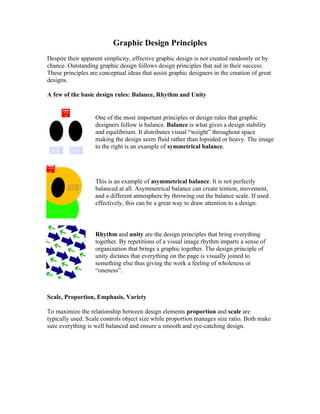
                   One of the most important principles or design rules that graphic
                   designers follow is balance. Balance is what gives a design stability
                   and equilibrium. It distributes visual “weight” throughout space
                   making the design seem fluid rather than lopsided or heavy. The image
                   to the right is an example of symmetrical balance.


                   This is an example of asymmetrical balance. It is not perfectly
                   balanced at all. Asymmetrical balance can create tention, movement,
                   and a different atmosphere by throwing out the balance scale. If used
                   effectively, this can be a great way to draw attention to a design.


                   Rhythm and unity are the design principles that bring everything
                   together. By repetitions of a visual image rhythm imparts a sense of
                   organization that brings a graphic together. The design principle of
                   unity dictates that everything on the page is visually joined to
                   something else thus giving the work a feeling of wholeness or
                   “oneness”.


Scale, Proportion, Emphasis, Variety

To maximize the relationship between design elements proportion and scale are
typically used. Scale controls object size while proportion manages size ratio. Both make
sure everything is well balanced and ensure a smooth and eye-catching design.
Emphasis is the design principle that makes sure attention is drawn to
                   the most important part of a design. This can be seen in the design to
                   the left. This design uses scale and proportion to draw your attention
                   to the main focal point.


                   Variety on the other hand can be used to harmonize the effect of
                   emphasis by spreading interest throughout the design keeping it lively
                   and interesting.


Graphic design principles, used correctly in a balanced way, are the keys to an effective
and elegant design that can successfully deliver its message in a dynamic way.

Sources: msu.edu, desktoppub.about.com, math.duke.com, wikipedia.com

Graphic design principles

  • 1.
    Graphic Design Principles Despitetheir apparent simplicity, effective graphic design is not created randomly or by chance. Outstanding graphic design follows design principles that aid in their success. These principles are conceptual ideas that assist graphic designers in the creation of great designs. A few of the basic design rules: Balance, Rhythm and Unity One of the most important principles or design rules that graphic designers follow is balance. Balance is what gives a design stability and equilibrium. It distributes visual “weight” throughout space making the design seem fluid rather than lopsided or heavy. The image to the right is an example of symmetrical balance. This is an example of asymmetrical balance. It is not perfectly balanced at all. Asymmetrical balance can create tention, movement, and a different atmosphere by throwing out the balance scale. If used effectively, this can be a great way to draw attention to a design. Rhythm and unity are the design principles that bring everything together. By repetitions of a visual image rhythm imparts a sense of organization that brings a graphic together. The design principle of unity dictates that everything on the page is visually joined to something else thus giving the work a feeling of wholeness or “oneness”. Scale, Proportion, Emphasis, Variety To maximize the relationship between design elements proportion and scale are typically used. Scale controls object size while proportion manages size ratio. Both make sure everything is well balanced and ensure a smooth and eye-catching design.
  • 2.
    Emphasis is thedesign principle that makes sure attention is drawn to the most important part of a design. This can be seen in the design to the left. This design uses scale and proportion to draw your attention to the main focal point. Variety on the other hand can be used to harmonize the effect of emphasis by spreading interest throughout the design keeping it lively and interesting. Graphic design principles, used correctly in a balanced way, are the keys to an effective and elegant design that can successfully deliver its message in a dynamic way. Sources: msu.edu, desktoppub.about.com, math.duke.com, wikipedia.com