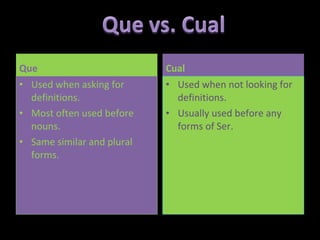
Que Used when asking for definitions. Most often used before nouns. Same similar and plural forms. Cual Used when not looking for definitions. Usually used before any forms of Ser.
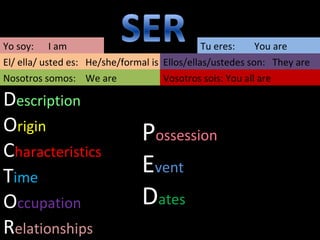
Yo soy:  I am  Tu eres:  You are El/ ella/ usted es:  He/she/formal is  Ellos/ellas/ustedes son:  They are  Nosotros somos:  We are Vosotros sois: You all are D escription O rigin C haracteristics T ime O ccupation R elationships P ossession E vent D ates
 
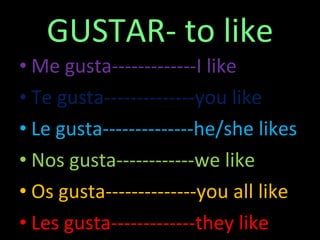
GUSTAR- to like Me gusta-------------I like Te gusta--------------you like Le gusta--------------he/she likes Nos gusta------------we like Os gusta--------------you all like Les gusta-------------they like
 
Imperfect Verbs AR: aba abas aba abamos abais aban IR : ia ias ia iamos iais ian ER: ia ias ia iamos iais ian Ir: Iba Ibas Iba Ibamos Ibais iban Ser: era eras era eramos erais eran Ver: Veia Veias Veia Veiamos Veiais veian Uses: Ongoing action Repeated action No definate beginning or end time/date/age/feelings/descriptions Interrupted activity
Triggers Todos los dias A menudo  A veces Siempre Cada dia Los lunes Generalmente Mientras De vez en cuando Muchas veces Frecuentemente
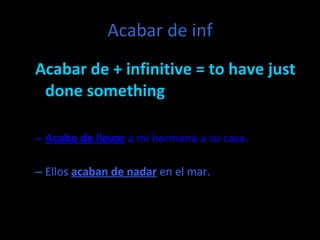
Acabar de inf Acabar de + infinitive = to have just done something   Acabo de llevar  a mi hermana a su casa. Ellos  acaban de nadar  en el mar.
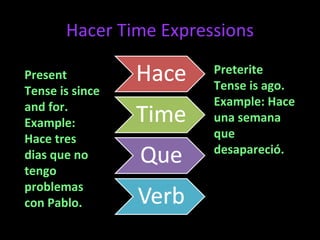
Hacer Time Expressions Present Tense is since and for. Example: Hace tres dias que no tengo problemas con Pablo. Preterite Tense is ago. Example: Hace una semana que  desapareció.
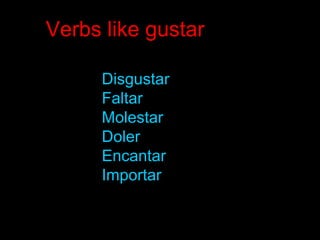
Verbs like gustar Disgustar Faltar Molestar Doler Encantar Importar
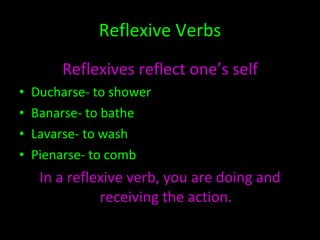
Reflexive Verbs Reflexives reflect one’s self Ducharse- to shower Banarse- to bathe Lavarse- to wash Pienarse- to comb In a reflexive verb, you are doing and receiving the action.
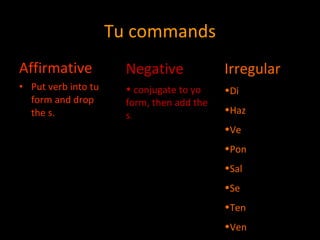
Tu commands Affirmative Put verb into tu form and drop the s. Negative conjugate to yo form, then add the s . Irregular Di Haz Ve Pon Sal Se Ten Ven
DOP and placement  A direct object receives the action of the verb. Bill hit the ball. "Ball" receives the action of the verb "hit." Sherry reads the book. "Book" receives the action of the verb "reads.“

Grammar book

  • 1.
  • 2.
  • 3.
    Que Used whenasking for definitions. Most often used before nouns. Same similar and plural forms. Cual Used when not looking for definitions. Usually used before any forms of Ser.
  • 4.
    Yo soy: I am Tu eres: You are El/ ella/ usted es: He/she/formal is Ellos/ellas/ustedes son: They are Nosotros somos: We are Vosotros sois: You all are D escription O rigin C haracteristics T ime O ccupation R elationships P ossession E vent D ates
  • 5.
  • 6.
    GUSTAR- to likeMe gusta-------------I like Te gusta--------------you like Le gusta--------------he/she likes Nos gusta------------we like Os gusta--------------you all like Les gusta-------------they like
  • 7.
  • 8.
    Imperfect Verbs AR:aba abas aba abamos abais aban IR : ia ias ia iamos iais ian ER: ia ias ia iamos iais ian Ir: Iba Ibas Iba Ibamos Ibais iban Ser: era eras era eramos erais eran Ver: Veia Veias Veia Veiamos Veiais veian Uses: Ongoing action Repeated action No definate beginning or end time/date/age/feelings/descriptions Interrupted activity
  • 9.
    Triggers Todos losdias A menudo A veces Siempre Cada dia Los lunes Generalmente Mientras De vez en cuando Muchas veces Frecuentemente
  • 10.
    Acabar de infAcabar de + infinitive = to have just done something Acabo de llevar a mi hermana a su casa. Ellos acaban de nadar en el mar.
  • 11.
    Hacer Time ExpressionsPresent Tense is since and for. Example: Hace tres dias que no tengo problemas con Pablo. Preterite Tense is ago. Example: Hace una semana que desapareció.
  • 12.
    Verbs like gustarDisgustar Faltar Molestar Doler Encantar Importar
  • 13.
    Reflexive Verbs Reflexivesreflect one’s self Ducharse- to shower Banarse- to bathe Lavarse- to wash Pienarse- to comb In a reflexive verb, you are doing and receiving the action.
  • 14.
    Tu commands AffirmativePut verb into tu form and drop the s. Negative conjugate to yo form, then add the s . Irregular Di Haz Ve Pon Sal Se Ten Ven
  • 15.
    DOP and placement A direct object receives the action of the verb. Bill hit the ball. "Ball" receives the action of the verb "hit." Sherry reads the book. "Book" receives the action of the verb "reads.“