

GRAMMAR
English Teacher
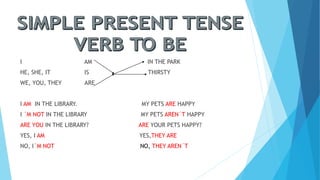
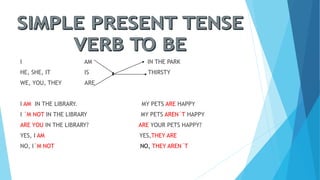
I AM IN THE PARK
HE, SHE, IT IS THIRSTY
WE, YOU, THEY ARE
I AM IN THE LIBRARY. MY PETS ARE HAPPY
I ´M NOT IN THE LIBRARY MY PETS AREN´T HAPPY
ARE YOU IN THE LIBRARY? ARE YOUR PETS HAPPY?
YES, I AM YES,THEY ARE
NO, I´M NOT NO, THEY AREN´T
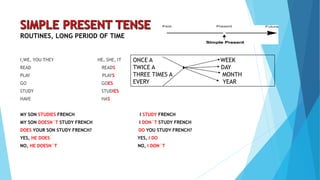
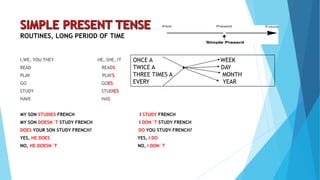
ROUTINES, LONG PERIOD OF TIME
I,WE, YOU THEY HE, SHE, IT
READ READS
PLAY PLAYS
GO GOES
STUDY STUDIES
HAVE HAS
MY SON STUDIES FRENCH I STUDY FRENCH
MY SON DOESN´T STUDY FRENCH I DON´T STUDY FRENCH
DOES YOUR SON STUDY FRENCH? DO YOU STUDY FRENCH?
YES, HE DOES YES, I DO
NO, HE DOESN´T NO, I DON´T
ONCE A WEEK
TWICE A DAY
THREE TIMES A MONTH
EVERY YEAR
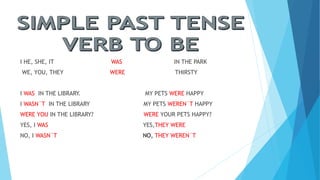
I HE, SHE, IT WAS IN THE PARK
WE, YOU, THEY WERE THIRSTY
I WAS IN THE LIBRARY. MY PETS WERE HAPPY
I WASN´T IN THE LIBRARY MY PETS WEREN´T HAPPY
WERE YOU IN THE LIBRARY? WERE YOUR PETS HAPPY?
YES, I WAS YES,THEY WERE
NO, I WASN´T NO, THEY WEREN´T
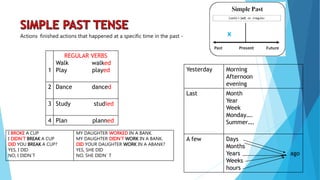
Actions finished actions that happened at a specific time in the past -
1
REGULAR VERBS
Walk walked
Play played
2 Dance danced
3 Study studied
4 Plan planned
Yesterday Morning
Afternoon
evening
Last Month
Year
Week
Monday….
Summer….
A few Days
Months
Years ago
Weeks
hours
I BROKE A CUP
I DIDN´T BREAK A CUP
DID YOU BREAK A CUP?
YES, I DID
NO, I DIDN´T
MY DAUGHTER WORKED IN A BANK.
MY DAUGHTER DIDN´T WORK IN A BANK.
DID YOUR DAUGHTER WORK IN A ABANK?
YES, SHE DID
NO, SHE DIDN´ T
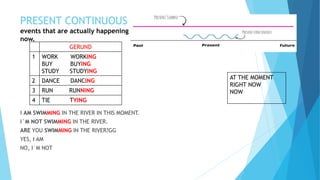
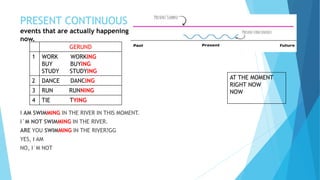
PRESENT CONTINUOUS
events that are actually happening
now.
I AM SWIMMING IN THE RIVER IN THIS MOMENT.
I´M NOT SWIMMING IN THE RIVER.
ARE YOU SWIMMING IN THE RIVER?GG
YES, I AM
NO, I´M NOT
AT THE MOMENT
RIGHT NOW
NOW
GERUND
1 WORK WORKING
BUY BUYING
STUDY STUDYING
2 DANCE DANCING
3 RUN RUNNING
4 TIE TYING
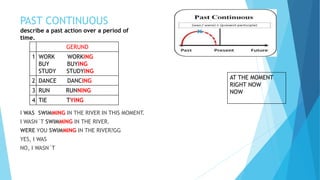
PAST CONTINUOUS
describe a past action over a period of
time.
I WAS SWIMMING IN THE RIVER IN THIS MOMENT.
I WASN´T SWIMMING IN THE RIVER.
WERE YOU SWIMMING IN THE RIVER?GG
YES, I WAS
NO, I WASN´T
AT THE MOMENT
RIGHT NOW
NOW
GERUND
1 WORK WORKING
BUY BUYING
STUDY STUDYING
2 DANCE DANCING
3 RUN RUNNING
4 TIE TYING
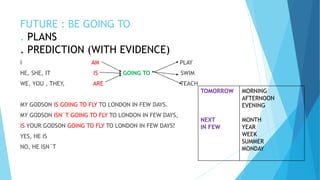
FUTURE : BE GOING TO
. PLANS
. PREDICTION (WITH EVIDENCE)
I AM PLAY
HE, SHE, IT IS GOING TO SWIM
WE, YOU , THEY, ARE TEACH
MY GODSON IS GOING TO FLY TO LONDON IN FEW DAYS.
MY GODSON ISN´T GOING TO FLY TO LONDON IN FEW DAYS,
IS YOUR GODSON GOING TO FLY TO LONDON IN FEW DAYS?
YES, HE IS
NO, HE ISN´T
TOMORROW
NEXT
IN FEW
MORNING
AFTERNOON
EVENING
MONTH
YEAR
WEEK
SUMMER
MONDAY
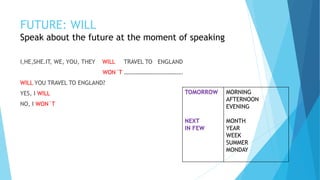
FUTURE: WILL
Speak about the future at the moment of speaking
I,HE,SHE.IT, WE, YOU, THEY WILL TRAVEL TO ENGLAND
WON´T ………………………………….
WILL YOU TRAVEL TO ENGLAND?
YES, I WILL
NO, I WON´T
TOMORROW
NEXT
IN FEW
MORNING
AFTERNOON
EVENING
MONTH
YEAR
WEEK
SUMMER
MONDAY
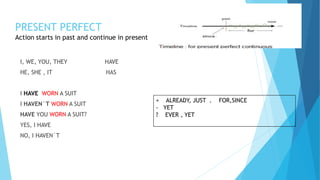
PRESENT PERFECT
Action starts in past and continue in present
I, WE, YOU, THEY HAVE
HE, SHE , IT HAS
I HAVE WORN A SUIT
I HAVEN´T WORN A SUIT
HAVE YOU WORN A SUIT?
YES, I HAVE
NO, I HAVEN´T
+ ALREADY, JUST . FOR,SINCE
- YET
? EVER , YET
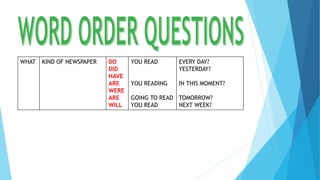
WHAT KIND OF NEWSPAPER DO
DID
HAVE
ARE
WERE
ARE
WILL
YOU READ
YOU READING
GOING TO READ
YOU READ
EVERY DAY?
YESTERDAY?
IN THIS MOMENT?
TOMORROW?
NEXT WEEK?
PRESENT CONTINUOUS
events that are actually happening
now.
I AM SWIMMING IN THE RIVER IN THIS MOMENT.
I´M NOT SWIMMING IN THE RIVER.
ARE YOU SWIMMING IN THE RIVER?GG
YES, I AM
NO, I´M NOT
AT THE MOMENT
RIGHT NOW
NOW
GERUND
1 WORK WORKING
BUY BUYING
STUDY STUDYING
2 DANCE DANCING
3 RUN RUNNING
4 TIE TYING
I AM IN THE PARK
HE, SHE, IT IS THIRSTY
WE, YOU, THEY ARE
I AM IN THE LIBRARY. MY PETS ARE HAPPY
I ´M NOT IN THE LIBRARY MY PETS AREN´T HAPPY
ARE YOU IN THE LIBRARY? ARE YOUR PETS HAPPY?
YES, I AM YES,THEY ARE
NO, I´M NOT NO, THEY AREN´T
ROUTINES, LONG PERIOD OF TIME
I,WE, YOU THEY HE, SHE, IT
READ READS
PLAY PLAYS
GO GOES
STUDY STUDIES
HAVE HAS
MY SON STUDIES FRENCH I STUDY FRENCH
MY SON DOESN´T STUDY FRENCH I DON´T STUDY FRENCH
DOES YOUR SON STUDY FRENCH? DO YOU STUDY FRENCH?
YES, HE DOES YES, I DO
NO, HE DOESN´T NO, I DON´T
ONCE A WEEK
TWICE A DAY
THREE TIMES A MONTH
EVERY YEAR
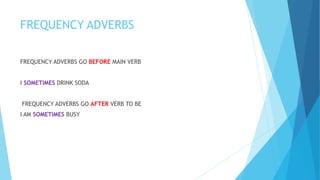
FREQUENCY ADVERBS
FREQUENCY ADVERBS GO BEFORE MAIN VERB
I SOMETIMES DRINK SODA
FREQUENCY ADVERBS GO AFTER VERB TO BE
I AM SOMETIMES BUSY
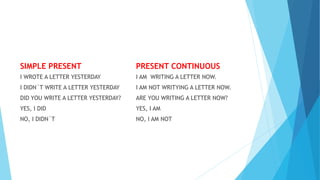
SIMPLE PRESENT
I WROTE A LETTER YESTERDAY
I DIDN´T WRITE A LETTER YESTERDAY
DID YOU WRITE A LETTER YESTERDAY?
YES, I DID
NO, I DIDN´T
PRESENT CONTINUOUS
I AM WRITING A LETTER NOW.
I AM NOT WRITYING A LETTER NOW.
ARE YOU WRITING A LETTER NOW?
YES, I AM
NO, I AM NOT
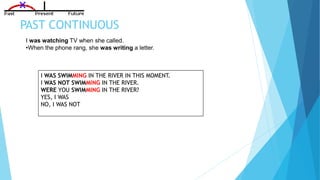
PAST CONTINUOUS
Interrupted Action in the Past
I was watching TV when she called.
•When the phone rang, she was writing a letter.
I WAS SWIMMING IN THE RIVER IN THIS MOMENT.
I WAS NOT SWIMMING IN THE RIVER.
WERE YOU SWIMMING IN THE RIVER?
YES, I WAS
NO, I WAS NOT
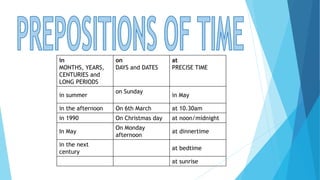
in
MONTHS, YEARS,
CENTURIES and
LONG PERIODS
on
DAYS and DATES
at
PRECISE TIME
in summer
on Sunday
in May
in the afternoon On 6th March at 10.30am
in 1990 On Christmas day at noon/midnight
In May
On Monday
afternoon
at dinnertime
in the next
century
at bedtime
at sunrise
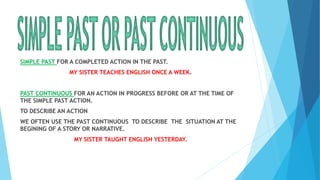
SIMPLE PAST FOR A COMPLETED ACTION IN THE PAST.
MY SISTER TEACHES ENGLISH ONCE A WEEK.
PAST CONTINUOUS FOR AN ACTION IN PROGRESS BEFORE OR AT THE TIME OF
THE SIMPLE PAST ACTION.
TO DESCRIBE AN ACTION
WE OFTEN USE THE PAST CONTINUOUS TO DESCRIBE THE SITUATION AT THE
BEGINING OF A STORY OR NARRATIVE.
MY SISTER TAUGHT ENGLISH YESTERDAY.
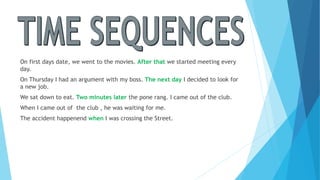
On first days date, we went to the movies. After that we started meeting every
day.
On Thursday I had an argument with my boss. The next day I decided to look for
a new job.
We sat down to eat. Two minutes later the pone rang. I came out of the club.
When I came out of the club , he was waiting for me.
The accident happenend when I was crossing the Street.
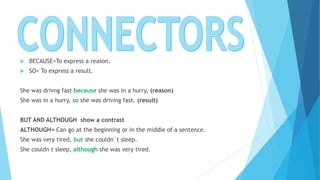
 BECAUSE=To express a reason.
 SO= To express a result.
She was drivng fast because she was in a hurry, (reason)
She was in a hurry, so she was driving fast. (result)
BUT AND ALTHOUGH show a contrast
ALTHOUGH= Can go at the beginning or in the middle of a sentence.
She was very tired, but she couldn´t sleep.
She couldn t sleep, although she was very tired.
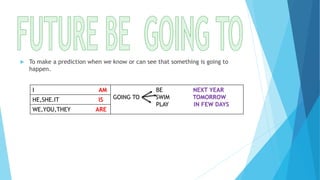
 To make a prediction when we know or can see that something is going to
happen.
I AM BE NEXT YEAR
GOING TO SWIM TOMORROW
PLAY IN FEW DAYS
HE,SHE.IT IS
WE,YOU,THEY ARE
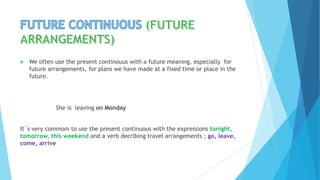
 We often use the present continouus with a future meaning, especially for
future arrangements, for plans we have made at a fixed time or place in the
future.
She is leaving on Monday
It´s very commom to use the present continuous with the expressions tonight,
tomorrow, this weekend and a verb decribing travel arrangements ; go, leave,
come, arrive
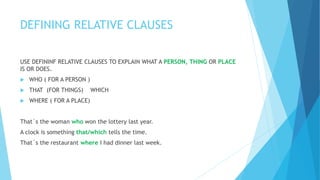
DEFINING RELATIVE CLAUSES
USE DEFININF RELATIVE CLAUSES TO EXPLAIN WHAT A PERSON, THING OR PLACE
IS OR DOES.
 WHO ( FOR A PERSON )
 THAT (FOR THINGS) WHICH
 WHERE ( FOR A PLACE)
That´s the woman who won the lottery last year.
A clock is something that/which tells the time.
That´s the restaurant where I had dinner last week.
Do
 We use the verb 'do' when someone performs an action, activity or task.
do a crossword
do the ironing
do the laundry
do the washing
do the washing up
 'Do' is often used when referring to work of any kind.
do your work
do homework
do housework
do your job
 Important Expressions with 'Do'
There are a number of standard expressions that take the verb 'do'. The best solution is to try to learn them.
do badly
do business
do the dishes
do a favour
do good
do harm
do time - (to go to prison)
do well
do your best
do your hair
do your nails
do your worst
 Make
 We use the verb 'make' for constructing, building or
creating
make a dress
make food
make a cup of tea / coffee
'Make' is often used when referring to preparing food of any kind.
make a meal - breakfast / lunch / dinner
!Note - these activities usually create something that you can touch. Important Expressions with 'Make'
There are a number of standard expressions that take the verb 'make'. The best solution is to try to
learn them.
make amends
make arrangements
make believe - (to pretend)
make a choice
make a comment
make a decision
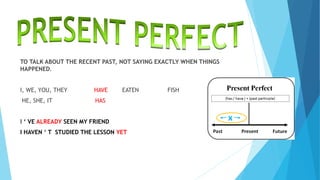
TO TALK ABOUT THE RECENT PAST, NOT SAYING EXACTLY WHEN THINGS
HAPPENED.
I, WE, YOU, THEY HAVE EATEN FISH
HE, SHE, IT HAS
I ‘ VE ALREADY SEEN MY FRIEND
I HAVEN ‘ T STUDIED THE LESSON YET
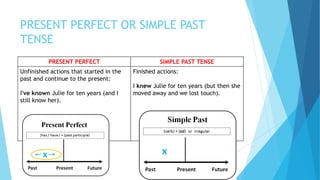
PRESENT PERFECT OR SIMPLE PAST
TENSE
PRESENT PERFECT SIMPLE PAST TENSE
Unfinished actions that started in the
past and continue to the present:
I've known Julie for ten years (and I
still know her).
Finished actions:
I knew Julie for ten years (but then she
moved away and we lost touch).
Grammar

Grammar

  • 1.
  • 2.
    I AM INTHE PARK HE, SHE, IT IS THIRSTY WE, YOU, THEY ARE I AM IN THE LIBRARY. MY PETS ARE HAPPY I ´M NOT IN THE LIBRARY MY PETS AREN´T HAPPY ARE YOU IN THE LIBRARY? ARE YOUR PETS HAPPY? YES, I AM YES,THEY ARE NO, I´M NOT NO, THEY AREN´T
  • 3.
    ROUTINES, LONG PERIODOF TIME I,WE, YOU THEY HE, SHE, IT READ READS PLAY PLAYS GO GOES STUDY STUDIES HAVE HAS MY SON STUDIES FRENCH I STUDY FRENCH MY SON DOESN´T STUDY FRENCH I DON´T STUDY FRENCH DOES YOUR SON STUDY FRENCH? DO YOU STUDY FRENCH? YES, HE DOES YES, I DO NO, HE DOESN´T NO, I DON´T ONCE A WEEK TWICE A DAY THREE TIMES A MONTH EVERY YEAR
  • 4.
    I HE, SHE,IT WAS IN THE PARK WE, YOU, THEY WERE THIRSTY I WAS IN THE LIBRARY. MY PETS WERE HAPPY I WASN´T IN THE LIBRARY MY PETS WEREN´T HAPPY WERE YOU IN THE LIBRARY? WERE YOUR PETS HAPPY? YES, I WAS YES,THEY WERE NO, I WASN´T NO, THEY WEREN´T
  • 5.
    Actions finished actionsthat happened at a specific time in the past - 1 REGULAR VERBS Walk walked Play played 2 Dance danced 3 Study studied 4 Plan planned Yesterday Morning Afternoon evening Last Month Year Week Monday…. Summer…. A few Days Months Years ago Weeks hours I BROKE A CUP I DIDN´T BREAK A CUP DID YOU BREAK A CUP? YES, I DID NO, I DIDN´T MY DAUGHTER WORKED IN A BANK. MY DAUGHTER DIDN´T WORK IN A BANK. DID YOUR DAUGHTER WORK IN A ABANK? YES, SHE DID NO, SHE DIDN´ T
  • 6.
    PRESENT CONTINUOUS events thatare actually happening now. I AM SWIMMING IN THE RIVER IN THIS MOMENT. I´M NOT SWIMMING IN THE RIVER. ARE YOU SWIMMING IN THE RIVER?GG YES, I AM NO, I´M NOT AT THE MOMENT RIGHT NOW NOW GERUND 1 WORK WORKING BUY BUYING STUDY STUDYING 2 DANCE DANCING 3 RUN RUNNING 4 TIE TYING
  • 7.
    PAST CONTINUOUS describe apast action over a period of time. I WAS SWIMMING IN THE RIVER IN THIS MOMENT. I WASN´T SWIMMING IN THE RIVER. WERE YOU SWIMMING IN THE RIVER?GG YES, I WAS NO, I WASN´T AT THE MOMENT RIGHT NOW NOW GERUND 1 WORK WORKING BUY BUYING STUDY STUDYING 2 DANCE DANCING 3 RUN RUNNING 4 TIE TYING
  • 8.
    FUTURE : BEGOING TO . PLANS . PREDICTION (WITH EVIDENCE) I AM PLAY HE, SHE, IT IS GOING TO SWIM WE, YOU , THEY, ARE TEACH MY GODSON IS GOING TO FLY TO LONDON IN FEW DAYS. MY GODSON ISN´T GOING TO FLY TO LONDON IN FEW DAYS, IS YOUR GODSON GOING TO FLY TO LONDON IN FEW DAYS? YES, HE IS NO, HE ISN´T TOMORROW NEXT IN FEW MORNING AFTERNOON EVENING MONTH YEAR WEEK SUMMER MONDAY
  • 9.
    FUTURE: WILL Speak aboutthe future at the moment of speaking I,HE,SHE.IT, WE, YOU, THEY WILL TRAVEL TO ENGLAND WON´T …………………………………. WILL YOU TRAVEL TO ENGLAND? YES, I WILL NO, I WON´T TOMORROW NEXT IN FEW MORNING AFTERNOON EVENING MONTH YEAR WEEK SUMMER MONDAY
  • 10.
    PRESENT PERFECT Action startsin past and continue in present I, WE, YOU, THEY HAVE HE, SHE , IT HAS I HAVE WORN A SUIT I HAVEN´T WORN A SUIT HAVE YOU WORN A SUIT? YES, I HAVE NO, I HAVEN´T + ALREADY, JUST . FOR,SINCE - YET ? EVER , YET
  • 11.
    WHAT KIND OFNEWSPAPER DO DID HAVE ARE WERE ARE WILL YOU READ YOU READING GOING TO READ YOU READ EVERY DAY? YESTERDAY? IN THIS MOMENT? TOMORROW? NEXT WEEK?
  • 12.
    PRESENT CONTINUOUS events thatare actually happening now. I AM SWIMMING IN THE RIVER IN THIS MOMENT. I´M NOT SWIMMING IN THE RIVER. ARE YOU SWIMMING IN THE RIVER?GG YES, I AM NO, I´M NOT AT THE MOMENT RIGHT NOW NOW GERUND 1 WORK WORKING BUY BUYING STUDY STUDYING 2 DANCE DANCING 3 RUN RUNNING 4 TIE TYING
  • 13.
    I AM INTHE PARK HE, SHE, IT IS THIRSTY WE, YOU, THEY ARE I AM IN THE LIBRARY. MY PETS ARE HAPPY I ´M NOT IN THE LIBRARY MY PETS AREN´T HAPPY ARE YOU IN THE LIBRARY? ARE YOUR PETS HAPPY? YES, I AM YES,THEY ARE NO, I´M NOT NO, THEY AREN´T
  • 14.
    ROUTINES, LONG PERIODOF TIME I,WE, YOU THEY HE, SHE, IT READ READS PLAY PLAYS GO GOES STUDY STUDIES HAVE HAS MY SON STUDIES FRENCH I STUDY FRENCH MY SON DOESN´T STUDY FRENCH I DON´T STUDY FRENCH DOES YOUR SON STUDY FRENCH? DO YOU STUDY FRENCH? YES, HE DOES YES, I DO NO, HE DOESN´T NO, I DON´T ONCE A WEEK TWICE A DAY THREE TIMES A MONTH EVERY YEAR
  • 15.
    FREQUENCY ADVERBS FREQUENCY ADVERBSGO BEFORE MAIN VERB I SOMETIMES DRINK SODA FREQUENCY ADVERBS GO AFTER VERB TO BE I AM SOMETIMES BUSY
  • 16.
    SIMPLE PRESENT I WROTEA LETTER YESTERDAY I DIDN´T WRITE A LETTER YESTERDAY DID YOU WRITE A LETTER YESTERDAY? YES, I DID NO, I DIDN´T PRESENT CONTINUOUS I AM WRITING A LETTER NOW. I AM NOT WRITYING A LETTER NOW. ARE YOU WRITING A LETTER NOW? YES, I AM NO, I AM NOT
  • 17.
    PAST CONTINUOUS Interrupted Actionin the Past I was watching TV when she called. •When the phone rang, she was writing a letter. I WAS SWIMMING IN THE RIVER IN THIS MOMENT. I WAS NOT SWIMMING IN THE RIVER. WERE YOU SWIMMING IN THE RIVER? YES, I WAS NO, I WAS NOT
  • 18.
    in MONTHS, YEARS, CENTURIES and LONGPERIODS on DAYS and DATES at PRECISE TIME in summer on Sunday in May in the afternoon On 6th March at 10.30am in 1990 On Christmas day at noon/midnight In May On Monday afternoon at dinnertime in the next century at bedtime at sunrise
  • 19.
    SIMPLE PAST FORA COMPLETED ACTION IN THE PAST. MY SISTER TEACHES ENGLISH ONCE A WEEK. PAST CONTINUOUS FOR AN ACTION IN PROGRESS BEFORE OR AT THE TIME OF THE SIMPLE PAST ACTION. TO DESCRIBE AN ACTION WE OFTEN USE THE PAST CONTINUOUS TO DESCRIBE THE SITUATION AT THE BEGINING OF A STORY OR NARRATIVE. MY SISTER TAUGHT ENGLISH YESTERDAY.
  • 20.
    On first daysdate, we went to the movies. After that we started meeting every day. On Thursday I had an argument with my boss. The next day I decided to look for a new job. We sat down to eat. Two minutes later the pone rang. I came out of the club. When I came out of the club , he was waiting for me. The accident happenend when I was crossing the Street.
  • 21.
     BECAUSE=To expressa reason.  SO= To express a result. She was drivng fast because she was in a hurry, (reason) She was in a hurry, so she was driving fast. (result) BUT AND ALTHOUGH show a contrast ALTHOUGH= Can go at the beginning or in the middle of a sentence. She was very tired, but she couldn´t sleep. She couldn t sleep, although she was very tired.
  • 22.
     To makea prediction when we know or can see that something is going to happen. I AM BE NEXT YEAR GOING TO SWIM TOMORROW PLAY IN FEW DAYS HE,SHE.IT IS WE,YOU,THEY ARE
  • 23.
     We oftenuse the present continouus with a future meaning, especially for future arrangements, for plans we have made at a fixed time or place in the future. She is leaving on Monday It´s very commom to use the present continuous with the expressions tonight, tomorrow, this weekend and a verb decribing travel arrangements ; go, leave, come, arrive
  • 24.
    DEFINING RELATIVE CLAUSES USEDEFININF RELATIVE CLAUSES TO EXPLAIN WHAT A PERSON, THING OR PLACE IS OR DOES.  WHO ( FOR A PERSON )  THAT (FOR THINGS) WHICH  WHERE ( FOR A PLACE) That´s the woman who won the lottery last year. A clock is something that/which tells the time. That´s the restaurant where I had dinner last week.
  • 25.
    Do  We usethe verb 'do' when someone performs an action, activity or task. do a crossword do the ironing do the laundry do the washing do the washing up  'Do' is often used when referring to work of any kind. do your work do homework do housework do your job  Important Expressions with 'Do' There are a number of standard expressions that take the verb 'do'. The best solution is to try to learn them. do badly do business do the dishes do a favour do good do harm do time - (to go to prison) do well do your best do your hair do your nails do your worst
  • 26.
     Make  Weuse the verb 'make' for constructing, building or creating make a dress make food make a cup of tea / coffee 'Make' is often used when referring to preparing food of any kind. make a meal - breakfast / lunch / dinner !Note - these activities usually create something that you can touch. Important Expressions with 'Make' There are a number of standard expressions that take the verb 'make'. The best solution is to try to learn them. make amends make arrangements make believe - (to pretend) make a choice make a comment make a decision
  • 27.
    TO TALK ABOUTTHE RECENT PAST, NOT SAYING EXACTLY WHEN THINGS HAPPENED. I, WE, YOU, THEY HAVE EATEN FISH HE, SHE, IT HAS I ‘ VE ALREADY SEEN MY FRIEND I HAVEN ‘ T STUDIED THE LESSON YET
  • 28.
    PRESENT PERFECT ORSIMPLE PAST TENSE PRESENT PERFECT SIMPLE PAST TENSE Unfinished actions that started in the past and continue to the present: I've known Julie for ten years (and I still know her). Finished actions: I knew Julie for ten years (but then she moved away and we lost touch).

Editor's Notes

  • #27 make amends make arrangements make believe - (to pretend) make a choice make a comment make a decision make a difference make an effort make an enquiry make an excuse make a fool of yourself make a fortune make friends make a fuss make a journey make love make a mess make a mistake make money make a move make a noise make a payment make a phone call make a plan make a point make a profit make a promise make a remark make a sound make a speech make a suggestion make time make a visit make your bed - See more at: http://www.learnenglish.de/grammar/doormake.html#sthash.p682H9vS.dpuf