LESSON 1: MUSIC OF
CORDILLERA
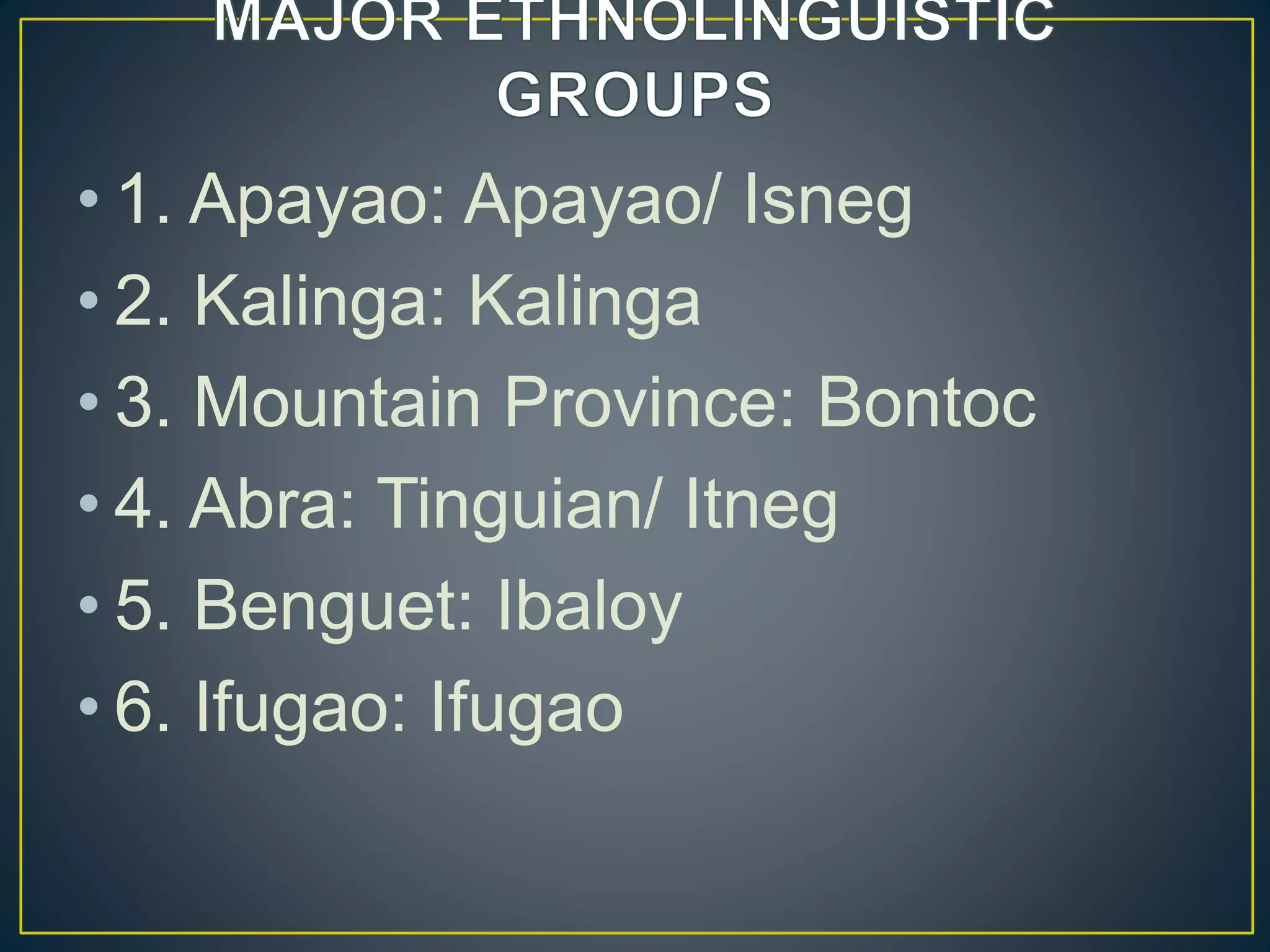
• 1. Apayao: Apayao/ Isneg
• 2. Kalinga: Kalinga
• 3. Mountain Province: Bontoc
• 4. Abra: Tinguian/ Itneg
• 5. Benguet: Ibaloy
• 6. Ifugao: Ifugao
• Hudhud- is an oral epic chanted by the Ifugao community,
which tells about wealth, bravery and beauty of women.
-is made of more than 200 stories with more than 40
episodes
-is a narrative of the feats of mythical heroes and
heroines who represents the best Ifugao character.
-the compelete narration could take up to 3-4 days to
finish
-is traditionally performed during rice-sowing season, at
harvest, and at funeral wakes with the ritual cleansing of
the bones of the dead.
-it manifests the simple living of Cordilleranss and the
heroism of Aliguyon, a brave warrior
• Munhaw-e – the lead chanter of the hudhud
- often an elderly woman who should be familiar
•1. BEAUTY AND WEALTH
•2. CLOSE FAMILY
RELATIONSHIPS
•3. VALOR
•4. INFLUENTIAL
REPUTATION
•SALIDUMAY
- A song famous in the
cordilleras
- Was introduced during World
War II
-It is usually sung by groups
and for the use in
•BAD-IW
-Is an Ibaloy death ritual song.
-It uses a leader- chorus type
of singing.
-The ritual usually gives hope
of gaining favors for the living
from the spirit relatives
•OG-GAYAM
-Is an Itneg song
-Performed during festivals,
weddings peace agreements,
harvest time or welcoming
guests.
•GANGSA
-It is a flat gong without boss and
considered as the most treasured
instrument among the kalinga
-are played during festivities like
peace agreements, burial rites or
head hunting ceremonies
• GANGSA- TOPAYYA
• -It is a set of six graduated gongs tied to the
belts of six men who kneel down and lay their
gongs on their lap.
• -The player strikes and slides the gong to make
a ringing sound by using the left hand and
producing a dampened sound as they slide the
right hand forward on the surface of the gong.
• Accompanied by a dancing couple in a formal
gathering
• GANGSA- PALOOK
•-It requires 6 or more
striking the inner side of the
gong with stick allowing
them to vibrate
• BUNKAKA OR BALINGBING
-it is a bamboo tube with an opening
or split at one end.
-The way of playing it is by striking
the split ends against the palm of the
hand to produce a buzzing sound
-It is used by women to comfort them
before they do their everyday routine
•PATANGGUK
-it is made of one internode
of long slender variety of
bamboo
-It is struck against a
bamboo tube or piece of
hard wood
•PATATAG OR PATETEG
-it is a set of bamboo
blades in graduated
sizes.
- It is played in an
ensemble of 6 members
by one or two sticks
•TONGGATONG
-These are stamping tubes
consisting of 6 bamboo tubes of
different lengths with a node base
but open at the upper ends.
- It is played by women in groups
of 6 for healing rites
•ULIBAW
-It is a bamboo instrument made
of a thin, narrow strip of bamboo
brass.
-It is played through plucking or
striking the tip of the instrument to
produce a vibrating sound
-It is used for courtship and
entertainment
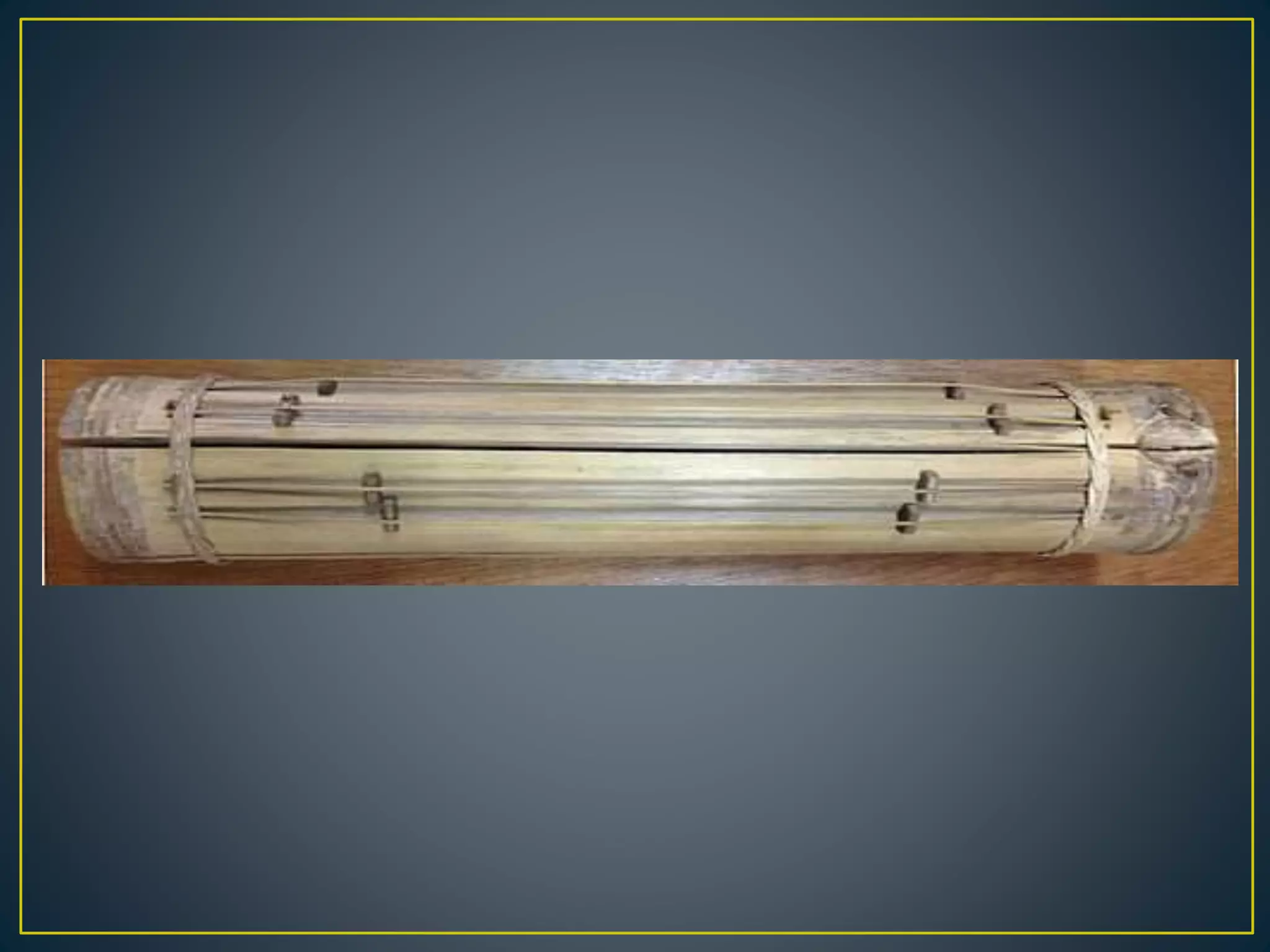
•KOLITONG OR KULITONG
-It is a stringed instrument
made of a single bamboo
piece around 3-4 inches in
diameter with a node at
each end.
•SAGGEYPO
-It is a set of 5 or 6 bamboo
pipes with different sizes played
in 3 or more ensembles.
-it is played by both men and
women during relaxation periods
and when they socialize with
other tribes
•DIWDIW-AS
-It is a row of 5 or more slim
bamboo tubes of varying
lengths tied to each other
-It is played by both men and
women during leisure hours
•TONGALI
-It is a nose flute instrument
-it is played solo by men to woo
women for general entertainement
Other names:
Kaleleng & Kankanai- Bontoc
Baliing- Isneg
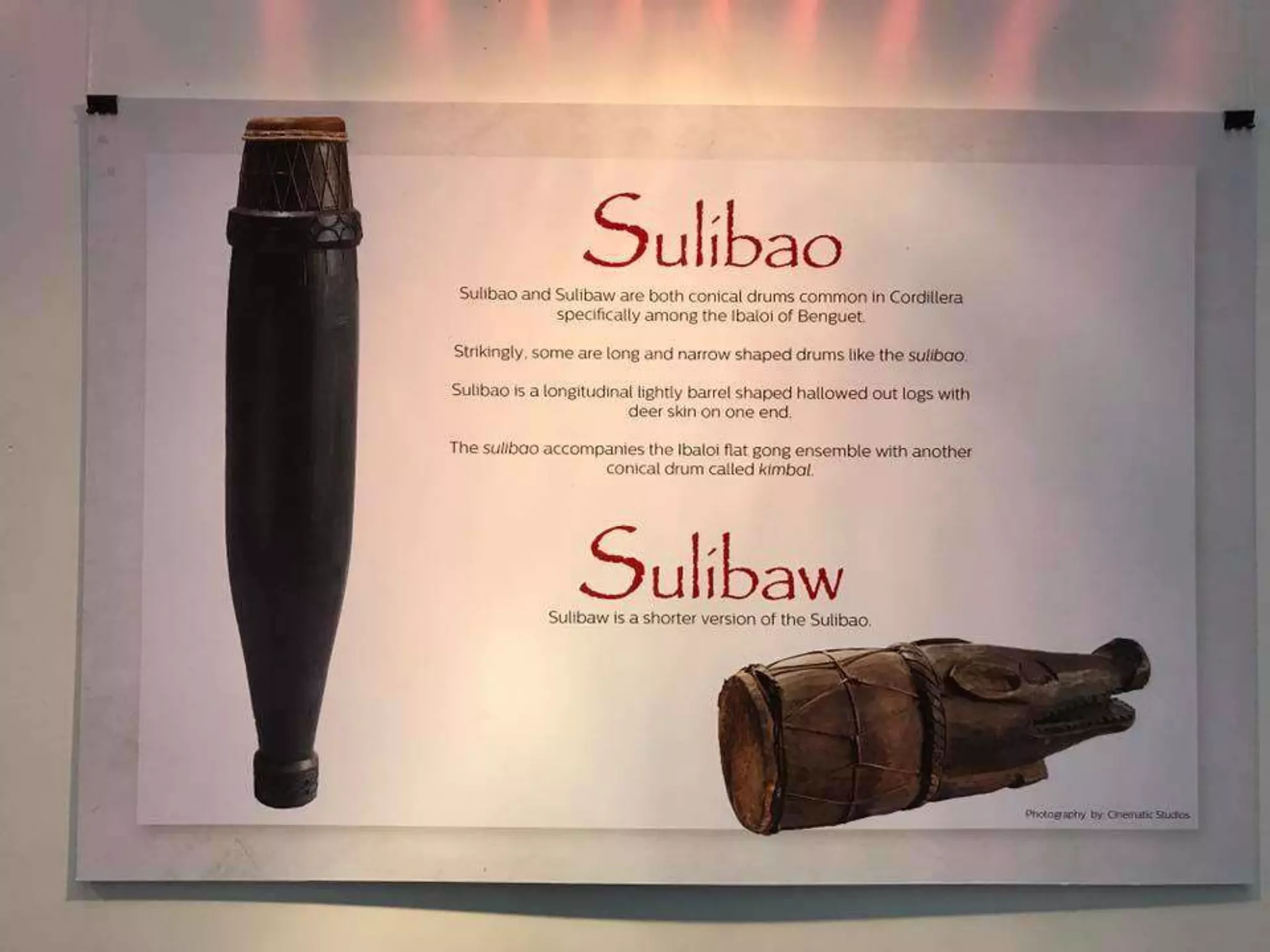
•SULIBAW
-It is a drum with a skin
head played with a
padded stick or by
tapping using open
hands
•PALDONG
-It is a traditional lip-
valley flute
-it is played by men for
serenading, courting
women or passing by
leisure time
• Aerophone- sounds produced by air
• Chordophone- sounds produced by
strings
• Idiophone- sounds produced by way
of the instrument itself vibrating
without the use of strings
• Membranophone- sounds produced
by a skin attached on the instrument

Grade 7 2nd Quarter Lesson 1 (music)

  • 1.
    LESSON 1: MUSICOF CORDILLERA
  • 2.
    • 1. Apayao:Apayao/ Isneg • 2. Kalinga: Kalinga • 3. Mountain Province: Bontoc • 4. Abra: Tinguian/ Itneg • 5. Benguet: Ibaloy • 6. Ifugao: Ifugao
  • 3.
    • Hudhud- isan oral epic chanted by the Ifugao community, which tells about wealth, bravery and beauty of women. -is made of more than 200 stories with more than 40 episodes -is a narrative of the feats of mythical heroes and heroines who represents the best Ifugao character. -the compelete narration could take up to 3-4 days to finish -is traditionally performed during rice-sowing season, at harvest, and at funeral wakes with the ritual cleansing of the bones of the dead. -it manifests the simple living of Cordilleranss and the heroism of Aliguyon, a brave warrior • Munhaw-e – the lead chanter of the hudhud - often an elderly woman who should be familiar
  • 4.
    •1. BEAUTY ANDWEALTH •2. CLOSE FAMILY RELATIONSHIPS •3. VALOR •4. INFLUENTIAL REPUTATION
  • 5.
    •SALIDUMAY - A songfamous in the cordilleras - Was introduced during World War II -It is usually sung by groups and for the use in
  • 6.
    •BAD-IW -Is an Ibaloydeath ritual song. -It uses a leader- chorus type of singing. -The ritual usually gives hope of gaining favors for the living from the spirit relatives
  • 7.
    •OG-GAYAM -Is an Itnegsong -Performed during festivals, weddings peace agreements, harvest time or welcoming guests.
  • 8.
    •GANGSA -It is aflat gong without boss and considered as the most treasured instrument among the kalinga -are played during festivities like peace agreements, burial rites or head hunting ceremonies
  • 10.
    • GANGSA- TOPAYYA •-It is a set of six graduated gongs tied to the belts of six men who kneel down and lay their gongs on their lap. • -The player strikes and slides the gong to make a ringing sound by using the left hand and producing a dampened sound as they slide the right hand forward on the surface of the gong. • Accompanied by a dancing couple in a formal gathering
  • 12.
    • GANGSA- PALOOK •-Itrequires 6 or more striking the inner side of the gong with stick allowing them to vibrate
  • 15.
    • BUNKAKA ORBALINGBING -it is a bamboo tube with an opening or split at one end. -The way of playing it is by striking the split ends against the palm of the hand to produce a buzzing sound -It is used by women to comfort them before they do their everyday routine
  • 17.
    •PATANGGUK -it is madeof one internode of long slender variety of bamboo -It is struck against a bamboo tube or piece of hard wood
  • 19.
    •PATATAG OR PATETEG -itis a set of bamboo blades in graduated sizes. - It is played in an ensemble of 6 members by one or two sticks
  • 21.
    •TONGGATONG -These are stampingtubes consisting of 6 bamboo tubes of different lengths with a node base but open at the upper ends. - It is played by women in groups of 6 for healing rites
  • 23.
    •ULIBAW -It is abamboo instrument made of a thin, narrow strip of bamboo brass. -It is played through plucking or striking the tip of the instrument to produce a vibrating sound -It is used for courtship and entertainment
  • 25.
    •KOLITONG OR KULITONG -Itis a stringed instrument made of a single bamboo piece around 3-4 inches in diameter with a node at each end.
  • 27.
    •SAGGEYPO -It is aset of 5 or 6 bamboo pipes with different sizes played in 3 or more ensembles. -it is played by both men and women during relaxation periods and when they socialize with other tribes
  • 29.
    •DIWDIW-AS -It is arow of 5 or more slim bamboo tubes of varying lengths tied to each other -It is played by both men and women during leisure hours
  • 31.
    •TONGALI -It is anose flute instrument -it is played solo by men to woo women for general entertainement Other names: Kaleleng & Kankanai- Bontoc Baliing- Isneg
  • 33.
    •SULIBAW -It is adrum with a skin head played with a padded stick or by tapping using open hands
  • 35.
    •PALDONG -It is atraditional lip- valley flute -it is played by men for serenading, courting women or passing by leisure time
  • 37.
    • Aerophone- soundsproduced by air • Chordophone- sounds produced by strings • Idiophone- sounds produced by way of the instrument itself vibrating without the use of strings • Membranophone- sounds produced by a skin attached on the instrument