The Philippine Festivals and
Theatrical Forms
Content Standards:
The learner demonstrates understanding of
theater and performance as syntheses of arts
and significant expressions of the celebration
of life in various Philippine communities.
Essential Understandings:
Students will understand...
 appreciation and exposure to the arts
of the people in the Philippines into
these cultures and the human
experience in general.
Essential Questions
 In what way does appreciation to the arts
of the people from Philippine helps us
gain insight into these cultures and the
human experience in general?
What is the name of
the festival in your
town or city?
“It’s more fun in the Philippines”
 is a popular government slogan you must have
heard or read.
What readily catches your attention
when you attend a celebration or a
festivals?
What are the
festivals celebrated
all over the country
throughout the year?
The festivals celebrated
all over the celebrated
throughout the year are
divided into two: religious
and non-religious or
cultural festivals.
What are the
elements and
principles of arts in
Philippine festivals?
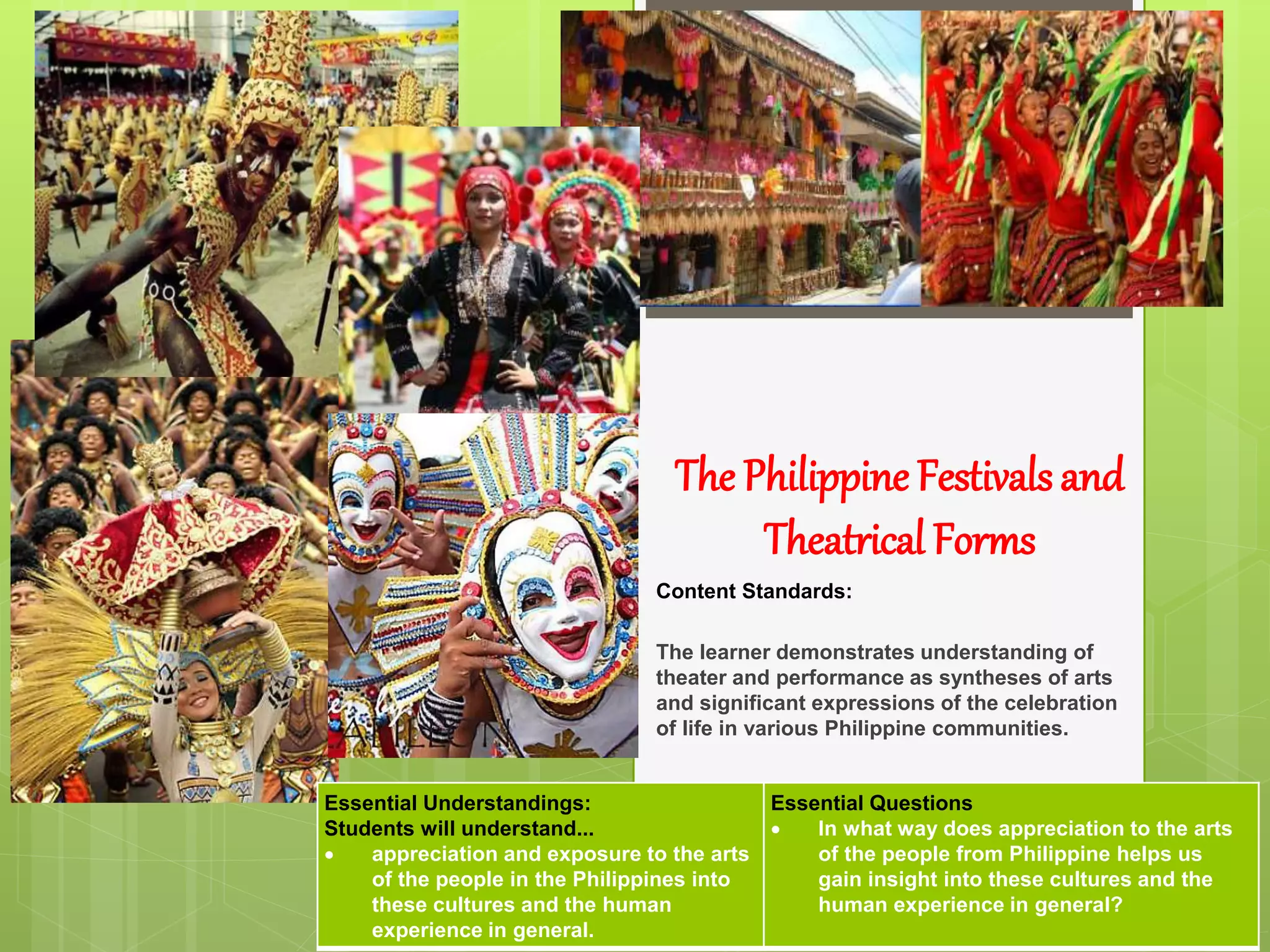
Philippine festivals are
famous for their colorful and
artistic costumes, masks,
and props.
The art elements like color, lines, and
textures are considered, and their
principles like repetition and balance
are used to come up with good designs.
What are
some
Religious
festivals?
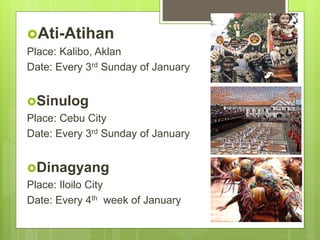
Ati-Atihan
Place: Kalibo, Aklan
Date: Every 3rd Sunday of January
Sinulog
Place: Cebu City
Date: Every 3rd Sunday of January
Dinagyang
Place: Iloilo City
Date: Every 4th week of January
Moriones
Place: Marinduque
Date: Every Holy week- March or April
Carabao Festival
Place: Pulilan, Bulacan
Date: Every 14th -15th of May
Pahiyas
Place: Lucban, Quezon
Date: Every 15th of May
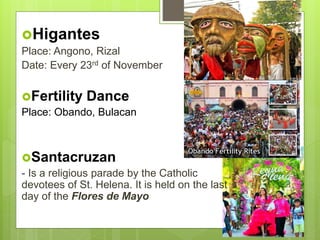
Higantes
Place: Angono, Rizal
Date: Every 23rd of November
Fertility Dance
Place: Obando, Bulacan
Santacruzan
- Is a religious parade by the Catholic
devotees of St. Helena. It is held on the last
day of the Flores de Mayo
What are
Non-
Religious
festivals?
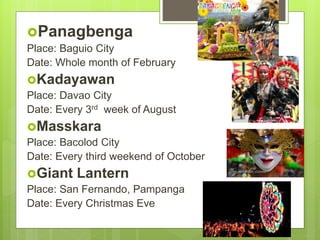
Panagbenga
Place: Baguio City
Date: Whole month of February
Kadayawan
Place: Davao City
Date: Every 3rd week of August
Masskara
Place: Bacolod City
Date: Every third weekend of October
Giant Lantern
Place: San Fernando, Pampanga
Date: Every Christmas Eve
What are
Philippine
Theatrical
Forms?
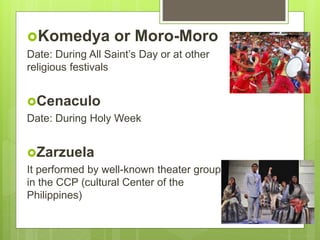
Komedya or Moro-Moro
Date: During All Saint’s Day or at other
religious festivals
Cenaculo
Date: During Holy Week
Zarzuela
It performed by well-known theater groups
in the CCP (cultural Center of the
Philippines)
The philippine festivals and theatrical forms

The philippine festivals and theatrical forms

  • 1.
    The Philippine Festivalsand Theatrical Forms Content Standards: The learner demonstrates understanding of theater and performance as syntheses of arts and significant expressions of the celebration of life in various Philippine communities. Essential Understandings: Students will understand...  appreciation and exposure to the arts of the people in the Philippines into these cultures and the human experience in general. Essential Questions  In what way does appreciation to the arts of the people from Philippine helps us gain insight into these cultures and the human experience in general?
  • 2.
    What is thename of the festival in your town or city?
  • 3.
    “It’s more funin the Philippines”  is a popular government slogan you must have heard or read. What readily catches your attention when you attend a celebration or a festivals?
  • 4.
    What are the festivalscelebrated all over the country throughout the year?
  • 5.
    The festivals celebrated allover the celebrated throughout the year are divided into two: religious and non-religious or cultural festivals.
  • 6.
    What are the elementsand principles of arts in Philippine festivals?
  • 7.
    Philippine festivals are famousfor their colorful and artistic costumes, masks, and props. The art elements like color, lines, and textures are considered, and their principles like repetition and balance are used to come up with good designs.
  • 8.
  • 9.
    Ati-Atihan Place: Kalibo, Aklan Date:Every 3rd Sunday of January Sinulog Place: Cebu City Date: Every 3rd Sunday of January Dinagyang Place: Iloilo City Date: Every 4th week of January
  • 10.
    Moriones Place: Marinduque Date: EveryHoly week- March or April Carabao Festival Place: Pulilan, Bulacan Date: Every 14th -15th of May Pahiyas Place: Lucban, Quezon Date: Every 15th of May
  • 11.
    Higantes Place: Angono, Rizal Date:Every 23rd of November Fertility Dance Place: Obando, Bulacan Santacruzan - Is a religious parade by the Catholic devotees of St. Helena. It is held on the last day of the Flores de Mayo
  • 12.
  • 13.
    Panagbenga Place: Baguio City Date:Whole month of February Kadayawan Place: Davao City Date: Every 3rd week of August Masskara Place: Bacolod City Date: Every third weekend of October Giant Lantern Place: San Fernando, Pampanga Date: Every Christmas Eve
  • 14.
  • 15.
    Komedya or Moro-Moro Date:During All Saint’s Day or at other religious festivals Cenaculo Date: During Holy Week Zarzuela It performed by well-known theater groups in the CCP (cultural Center of the Philippines)