
Bacteria
(Grade 11 Content)
Mr A. Mendonca 16 August 2023
LIFE SCIENCES
Bacteria
Bacteria belong to
the Kingdom
Monera. Bacteria
are found
everywhere on
Earth. Some are
pathogenic and
some are very useful.
Characteristics of Bacteria
Bacterial cell structure:
• Bacteria are unicellular (one celled) organisms
• Bacteria are lager than virus & can be seen using a light
microscope.
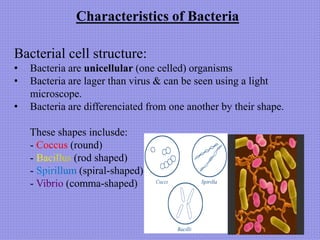
• Bacteria are differenciated from one another by their shape.
These shapes inclusde:
- Coccus (round)
- (rod shaped)
- (spiral-shaped)
- Vibrio (comma-shaped)
Bacteria contain:
•a singular, circular
piece of DNA
•tiny circular pieces
of DNA called
plasmids
•ribosomes
Structural Characteristics
Bacteria have cell walls made of:
•peptidoglycan (polysaccharide linked
with chains of amino acids).
•this may be covered with an outer
membrane of lipopolysaccharide
(chain of sugar with a lipid
attached).
Some bacteria:
• have a jelly-like layer called a
capsule surrounding the cell wall.
• form thick-walled endospores around
chromosomes when they are
exposed to harsh conditions
(drought, ) -
these types cause botulism
Some bacteria have:
• flagella for
locomotion.
• pili (short, thicker
outgrowths that
help cell to
attach to
surfaces)
There are three types of
bacteria based on how they
obtain energy: heterotrophs,
photosynthetic, and
chemoautotrophs.
This is the
anthrax
bacterium.
1.Most are heterotrophs:
– feed on and recycle organic
material
b. Pathogens – parasitic, disease-causing
bacteria
• Either attack cells or secrete toxins
c. Nitrogen-fixing bacteria (Rhizobium)
• Found in nodules of soybeans, peanuts,
alfalfa, and clover
• Convert atmospheric nitrogen (N2) into
ammonia, called nitrogen fixation.
• Used in crop rotation
2. Some, like Cyanobacteria, are
.
•These are autotrophs that use the
sun’s energy to make food.
This bacteria has
and uses the
process of photosynthesis
to produce food very much
like a plant.
3.
•Obtain energy by removing electrons from
inorganic molecules such as ammonia
and methane to make food.
•Examples: Nitrobacter and Nitrosomonas
- live in soil
- have a crucial role in nitrification (turn
ammonia into nitrates, the
form of nitrogen commonly
used by plants).
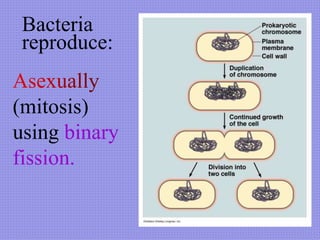
Bacteria
reproduce:
(mitosis)
using binary
fission.
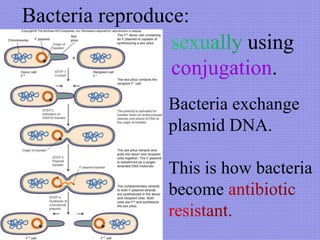
Bacteria reproduce:
Bacteria exchange
plasmid DNA.
This is how bacteria
become
using
conjugation.
References
Gombert, B. (2011). Chapter 21: Bacteria. Available from SlideShare at
https://www.slideshare.net/bethgombert/bacteria-power-point
Maskare, U. (2017). Microoganism: Bacteria_Structure, Classification and
Morphology. Available from SlideShare at
https://www.slideshare.net/UmeshMaskare/bacteria-bacteria-
structure?from_search=4
Msheiki, M. (2023). Bacteria. Available from SlideShare at
https://www/slideshare.net/MohamedAliMsheik/bacteria-
255202497?from_search=3
Sheama, T. (2015). Introduction bacteria, cell organelles, importance of bacteria.
Available from SlideShare at https://www/slideshare.net/SheamaT/bacteria-
4752843
Wasale, D. (2020). Bacteria, Shapes arrangements, Characteristics, Classification,
Nutrition, Reproduction, Growth curve, Metabolism, Cyanobacteria, Archaea,
Actinomyces, Ricketstsia, Plant pathogenic Bacteria, Disease cycle. Available from
SlideShare at https://www.slideshare.net/DHIRAJWASALE/bacteria-
234034530?from_search=14

Grade 11 - Microorganisms: Bacteria

  • 1.
    Bacteria (Grade 11 Content) MrA. Mendonca 16 August 2023 LIFE SCIENCES
  • 2.
    Bacteria Bacteria belong to theKingdom Monera. Bacteria are found everywhere on Earth. Some are pathogenic and some are very useful.
  • 3.
    Characteristics of Bacteria Bacterialcell structure: • Bacteria are unicellular (one celled) organisms • Bacteria are lager than virus & can be seen using a light microscope. • Bacteria are differenciated from one another by their shape. These shapes inclusde: - Coccus (round) - (rod shaped) - (spiral-shaped) - Vibrio (comma-shaped)
  • 4.
    Bacteria contain: •a singular,circular piece of DNA •tiny circular pieces of DNA called plasmids •ribosomes Structural Characteristics
  • 5.
    Bacteria have cellwalls made of: •peptidoglycan (polysaccharide linked with chains of amino acids). •this may be covered with an outer membrane of lipopolysaccharide (chain of sugar with a lipid attached).
  • 6.
    Some bacteria: • havea jelly-like layer called a capsule surrounding the cell wall. • form thick-walled endospores around chromosomes when they are exposed to harsh conditions (drought, ) - these types cause botulism
  • 7.
    Some bacteria have: •flagella for locomotion. • pili (short, thicker outgrowths that help cell to attach to surfaces)
  • 8.
    There are threetypes of bacteria based on how they obtain energy: heterotrophs, photosynthetic, and chemoautotrophs. This is the anthrax bacterium.
  • 9.
    1.Most are heterotrophs: –feed on and recycle organic material b. Pathogens – parasitic, disease-causing bacteria • Either attack cells or secrete toxins c. Nitrogen-fixing bacteria (Rhizobium) • Found in nodules of soybeans, peanuts, alfalfa, and clover • Convert atmospheric nitrogen (N2) into ammonia, called nitrogen fixation. • Used in crop rotation
  • 10.
    2. Some, likeCyanobacteria, are . •These are autotrophs that use the sun’s energy to make food. This bacteria has and uses the process of photosynthesis to produce food very much like a plant.
  • 11.
    3. •Obtain energy byremoving electrons from inorganic molecules such as ammonia and methane to make food. •Examples: Nitrobacter and Nitrosomonas - live in soil - have a crucial role in nitrification (turn ammonia into nitrates, the form of nitrogen commonly used by plants).
  • 12.
  • 13.
    Bacteria reproduce: Bacteria exchange plasmidDNA. This is how bacteria become using conjugation.
  • 14.
    References Gombert, B. (2011).Chapter 21: Bacteria. Available from SlideShare at https://www.slideshare.net/bethgombert/bacteria-power-point Maskare, U. (2017). Microoganism: Bacteria_Structure, Classification and Morphology. Available from SlideShare at https://www.slideshare.net/UmeshMaskare/bacteria-bacteria- structure?from_search=4 Msheiki, M. (2023). Bacteria. Available from SlideShare at https://www/slideshare.net/MohamedAliMsheik/bacteria- 255202497?from_search=3 Sheama, T. (2015). Introduction bacteria, cell organelles, importance of bacteria. Available from SlideShare at https://www/slideshare.net/SheamaT/bacteria- 4752843 Wasale, D. (2020). Bacteria, Shapes arrangements, Characteristics, Classification, Nutrition, Reproduction, Growth curve, Metabolism, Cyanobacteria, Archaea, Actinomyces, Ricketstsia, Plant pathogenic Bacteria, Disease cycle. Available from
  • 15.