Sanjaya Mani Dixit
Assistant Prof of Pharmacology
Introduction to
Pharmacology
Topic Contents
History
Terms and Definitions
Pharmacology Textbooks
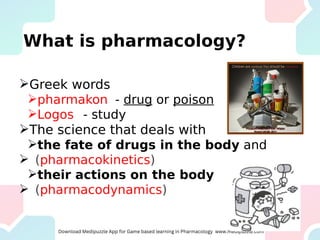
What is pharmacology?
Greek words
pharmakon - drug or poison
Logos - study
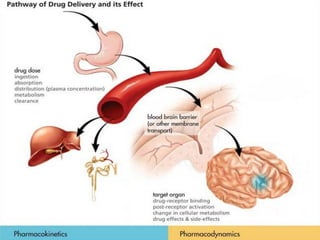
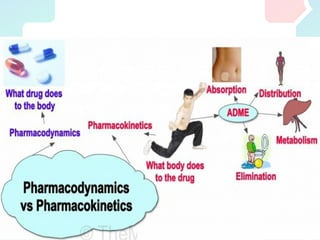
The science that deals with
the fate of drugs in the body and
 (pharmacokinetics)
their actions on the body
 (pharmacodynamics)
Pharmacokinetics Vs Pharmacodynamics
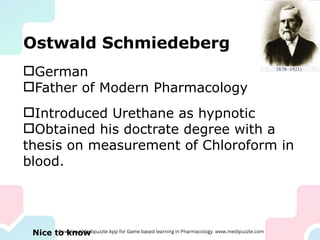
Ostwald Schmiedeberg
German
Father of Modern Pharmacology
Introduced Urethane as hypnotic
Obtained his doctrate degree with a
thesis on measurement of Chloroform in
blood.
Nice to know
Drugs
Any substance used for the purpose
of diagnosis, prevention, relief or cure
of a disease.
WHO definition (1966):
“Drug is any substance or product that
is used or is intended to be used to
modify or explore physiological systems
or pathological states for benefit of the
recipient.”
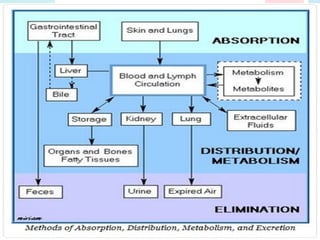
Pharmacokinetics
Greek word: kinesis- movement
Pharmacokinetics is the quantitative
movement of drug in, through and out of the
body.
Pharmacokinetics comprises of
absorption,
distribution,
metabolism, and
excretion.
Pharmacokinetics
Pharmacokinetic considerations, therefore,
determine
◦ the route(s) of administration,
◦ dose,
◦ latency of onset,
◦ time of peak action,
◦ duration of action, and
◦ frequency of administration of drug.
Pharmacokinetics
Pharmacodynamics
Greek word: dynamics- power
It refers to the action of the drug at
the cellular level.
It consists of the binding of a drug to
its receptor or site of binding,
relationship of dose and therapeutic
level to physiologic response, and
relationship of drug action and efficacy
to dosage interval.
Clinical pharmacology
It is scientific study of drugs in
humans.
Includes P.K and P.D investigation in
healthy volunteers and in patients,
evaluation of efficacy and safety of
drugs and comparative trails with other
forms of treatment, surveillance of
patterns of drugs use, adverse effects
etc.
Toxicology
The study of undesirable effects of
chemical agents (industrial pollutants,
natural organic and non-organic
chemicals) on living systems.
Adverse effects of therapeutic agent
given in large doses.
Measurement and detection of
poisons as well as treatment of
poisoning
Other Terms
Pharmacognosy: It is the science
that deals with natural drugs and their
constituents
Pharmacotherapeutics: The
application of pharmacological
information together with knowledge of
the disease for its prevention, mitigation
or cure.
Continued
Pharmacy: the science of identification,
selection, preservation, standardization,
compounding, proper utilization and
dispensing of medicinal substances
Chemotherapy: The effect of drugs on
parasites i.e. microorganisms, living &
multiplying in living organisms etc. it also
includes drug treatment of malignancy
Continued
Pharmacopoeia: defines the
standards that the drugs and
medicinal preparations must
meet and their average adult
dose.
-Examples: BP; USP; IP; NP etc
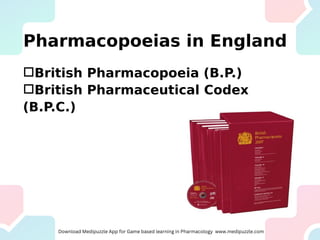
Pharmacopoeias in England
British Pharmacopoeia (B.P.)
British Pharmaceutical Codex
(B.P.C.)
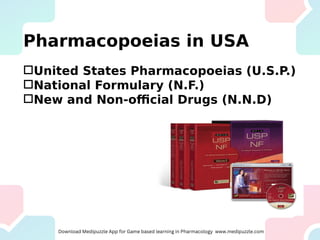
Pharmacopoeias in USA
United States Pharmacopoeias (U.S.P.)
National Formulary (N.F.)
New and Non-official Drugs (N.N.D)
Continued
Orphan drugs:
Drugs for diagnosis, prevention
or treatment of rare diseases,
e.g. anti-cancer drugs, anti-viral
drugs, etc.
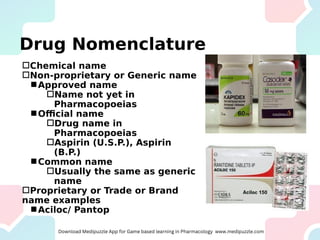
Drug Nomenclature
Chemical name
Non-proprietary or Generic name
Approved name
Name not yet in
Pharmacopoeias
Official name
Drug name in
Pharmacopoeias
Aspirin (U.S.P.), Aspirin
(B.P.)
Common name
Usually the same as generic
name
Proprietary or Trade or Brand
name examples
Aciloc/ Pantop
Chemical name
Describes the drug chemically:
l Aspirin: Acetyl Salicylic Acid
Disadvantages: cumbersome and
not suitable for use in prescribing
Non-proprietary name
Accepted by USAN (United states
adopted name) council
Approved name (in pharmacopoeia) or
official name (post official publication)
Generic name (common), e.g. Penicillin,
heparin, nifedipine, etc.
Most preferable & important, uniform,
convenience and better comprehension
Propriety Name
The name of drugs are assigned by
the manufacture company & is his
property or trade mark.
Designed to be catchy, short, easy to
remember and often suggestive, e.g.
Niko, Fam-20,Amclox,Brufen etc.
Most clinicians prefer and prescribe by
branded names. (Common trend in
Nepal.)
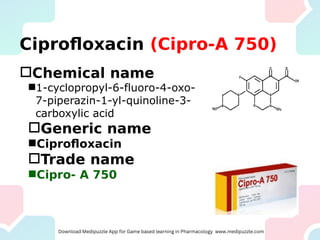
Ciprofloxacin (Cipro-A 750)
Chemical name
1-cyclopropyl-6-fluoro-4-oxo-
7-piperazin-1-yl-quinoline-3-
carboxylic acid
Generic name
Ciprofloxacin
Trade name
Cipro- A 750
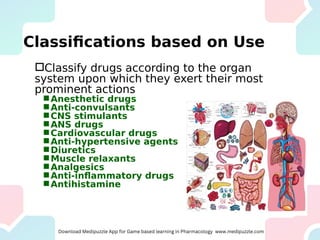
Classifications based on Use
Classify drugs according to the organ
system upon which they exert their most
prominent actions
Anesthetic drugs
Anti-convulsants
CNS stimulants
ANS drugs
Cardiovascular drugs
Anti-hypertensive agents
Diuretics
Muscle relaxants
Analgesics
Anti-inflammatory drugs
Antihistamine
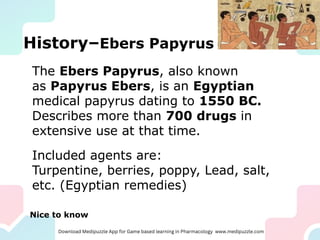
History–Ebers Papyrus
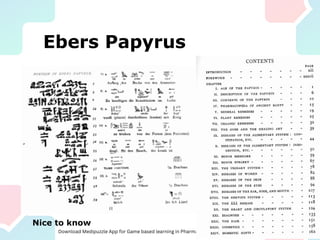
The Ebers Papyrus, also known
as Papyrus Ebers, is an Egyptian
medical papyrus dating to 1550 BC.
Describes more than 700 drugs in
extensive use at that time.
Included agents are:
Turpentine, berries, poppy, Lead, salt,
etc. (Egyptian remedies)
Nice to know
Ebers Papyrus
Nice to know
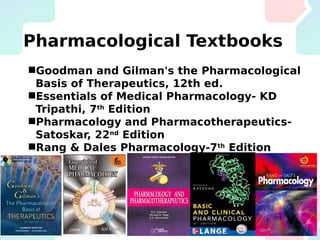
Pharmacological Textbooks
Goodman and Gilman's the Pharmacological
Basis of Therapeutics, 12th ed.
Essentials of Medical Pharmacology- KD
Tripathi, 7th
Edition
Pharmacology and Pharmacotherapeutics-
Satoskar, 22nd
Edition
Rang & Dales Pharmacology-7th
Edition
Basic and Clinical Pharmacology- Katzung –
10th
Edition
www.medipuzzle.com
Trusted by
10K + Students
That’s All
ENJOY
30
GP-_Introduction_of_Pharmacology.pdf

GP-_Introduction_of_Pharmacology.pdf

  • 1.
    Sanjaya Mani Dixit AssistantProf of Pharmacology Introduction to Pharmacology
  • 2.
    Topic Contents History Terms andDefinitions Pharmacology Textbooks
  • 3.
    What is pharmacology? Greekwords pharmakon - drug or poison Logos - study The science that deals with the fate of drugs in the body and  (pharmacokinetics) their actions on the body  (pharmacodynamics)
  • 5.
  • 6.
    Ostwald Schmiedeberg German Father ofModern Pharmacology Introduced Urethane as hypnotic Obtained his doctrate degree with a thesis on measurement of Chloroform in blood. Nice to know
  • 7.
    Drugs Any substance usedfor the purpose of diagnosis, prevention, relief or cure of a disease. WHO definition (1966): “Drug is any substance or product that is used or is intended to be used to modify or explore physiological systems or pathological states for benefit of the recipient.”
  • 8.
    Pharmacokinetics Greek word: kinesis-movement Pharmacokinetics is the quantitative movement of drug in, through and out of the body. Pharmacokinetics comprises of absorption, distribution, metabolism, and excretion.
  • 9.
    Pharmacokinetics Pharmacokinetic considerations, therefore, determine ◦the route(s) of administration, ◦ dose, ◦ latency of onset, ◦ time of peak action, ◦ duration of action, and ◦ frequency of administration of drug.
  • 10.
  • 11.
    Pharmacodynamics Greek word: dynamics-power It refers to the action of the drug at the cellular level. It consists of the binding of a drug to its receptor or site of binding, relationship of dose and therapeutic level to physiologic response, and relationship of drug action and efficacy to dosage interval.
  • 12.
    Clinical pharmacology It isscientific study of drugs in humans. Includes P.K and P.D investigation in healthy volunteers and in patients, evaluation of efficacy and safety of drugs and comparative trails with other forms of treatment, surveillance of patterns of drugs use, adverse effects etc.
  • 13.
    Toxicology The study ofundesirable effects of chemical agents (industrial pollutants, natural organic and non-organic chemicals) on living systems. Adverse effects of therapeutic agent given in large doses. Measurement and detection of poisons as well as treatment of poisoning
  • 14.
    Other Terms Pharmacognosy: Itis the science that deals with natural drugs and their constituents Pharmacotherapeutics: The application of pharmacological information together with knowledge of the disease for its prevention, mitigation or cure.
  • 15.
    Continued Pharmacy: the scienceof identification, selection, preservation, standardization, compounding, proper utilization and dispensing of medicinal substances Chemotherapy: The effect of drugs on parasites i.e. microorganisms, living & multiplying in living organisms etc. it also includes drug treatment of malignancy
  • 16.
    Continued Pharmacopoeia: defines the standardsthat the drugs and medicinal preparations must meet and their average adult dose. -Examples: BP; USP; IP; NP etc
  • 17.
    Pharmacopoeias in England BritishPharmacopoeia (B.P.) British Pharmaceutical Codex (B.P.C.)
  • 18.
    Pharmacopoeias in USA UnitedStates Pharmacopoeias (U.S.P.) National Formulary (N.F.) New and Non-official Drugs (N.N.D)
  • 19.
    Continued Orphan drugs: Drugs fordiagnosis, prevention or treatment of rare diseases, e.g. anti-cancer drugs, anti-viral drugs, etc.
  • 20.
    Drug Nomenclature Chemical name Non-proprietaryor Generic name Approved name Name not yet in Pharmacopoeias Official name Drug name in Pharmacopoeias Aspirin (U.S.P.), Aspirin (B.P.) Common name Usually the same as generic name Proprietary or Trade or Brand name examples Aciloc/ Pantop
  • 21.
    Chemical name Describes thedrug chemically: l Aspirin: Acetyl Salicylic Acid Disadvantages: cumbersome and not suitable for use in prescribing
  • 22.
    Non-proprietary name Accepted byUSAN (United states adopted name) council Approved name (in pharmacopoeia) or official name (post official publication) Generic name (common), e.g. Penicillin, heparin, nifedipine, etc. Most preferable & important, uniform, convenience and better comprehension
  • 23.
    Propriety Name The nameof drugs are assigned by the manufacture company & is his property or trade mark. Designed to be catchy, short, easy to remember and often suggestive, e.g. Niko, Fam-20,Amclox,Brufen etc. Most clinicians prefer and prescribe by branded names. (Common trend in Nepal.)
  • 24.
    Ciprofloxacin (Cipro-A 750) Chemicalname 1-cyclopropyl-6-fluoro-4-oxo- 7-piperazin-1-yl-quinoline-3- carboxylic acid Generic name Ciprofloxacin Trade name Cipro- A 750
  • 25.
    Classifications based onUse Classify drugs according to the organ system upon which they exert their most prominent actions Anesthetic drugs Anti-convulsants CNS stimulants ANS drugs Cardiovascular drugs Anti-hypertensive agents Diuretics Muscle relaxants Analgesics Anti-inflammatory drugs Antihistamine
  • 26.
    History–Ebers Papyrus The EbersPapyrus, also known as Papyrus Ebers, is an Egyptian medical papyrus dating to 1550 BC. Describes more than 700 drugs in extensive use at that time. Included agents are: Turpentine, berries, poppy, Lead, salt, etc. (Egyptian remedies) Nice to know
  • 27.
  • 28.
    Pharmacological Textbooks Goodman andGilman's the Pharmacological Basis of Therapeutics, 12th ed. Essentials of Medical Pharmacology- KD Tripathi, 7th Edition Pharmacology and Pharmacotherapeutics- Satoskar, 22nd Edition Rang & Dales Pharmacology-7th Edition Basic and Clinical Pharmacology- Katzung – 10th Edition
  • 29.
  • 30.