Governance, transparency and Accountability~ MeTA objectives,  approaches and role of CSOs  Daniel Kojo Arhinful Research Fellow, NMIMR Senior Technical Advisor, MeTA Ghana MeTA~Ghana CSO/Media Orientation International Press Centre, Accra 16th April  2009
Outline Context of ATM problem Governance, Transparency and accountability Policy context Challenges MeTA objectives and strategies Rationale and role of Media and CSO
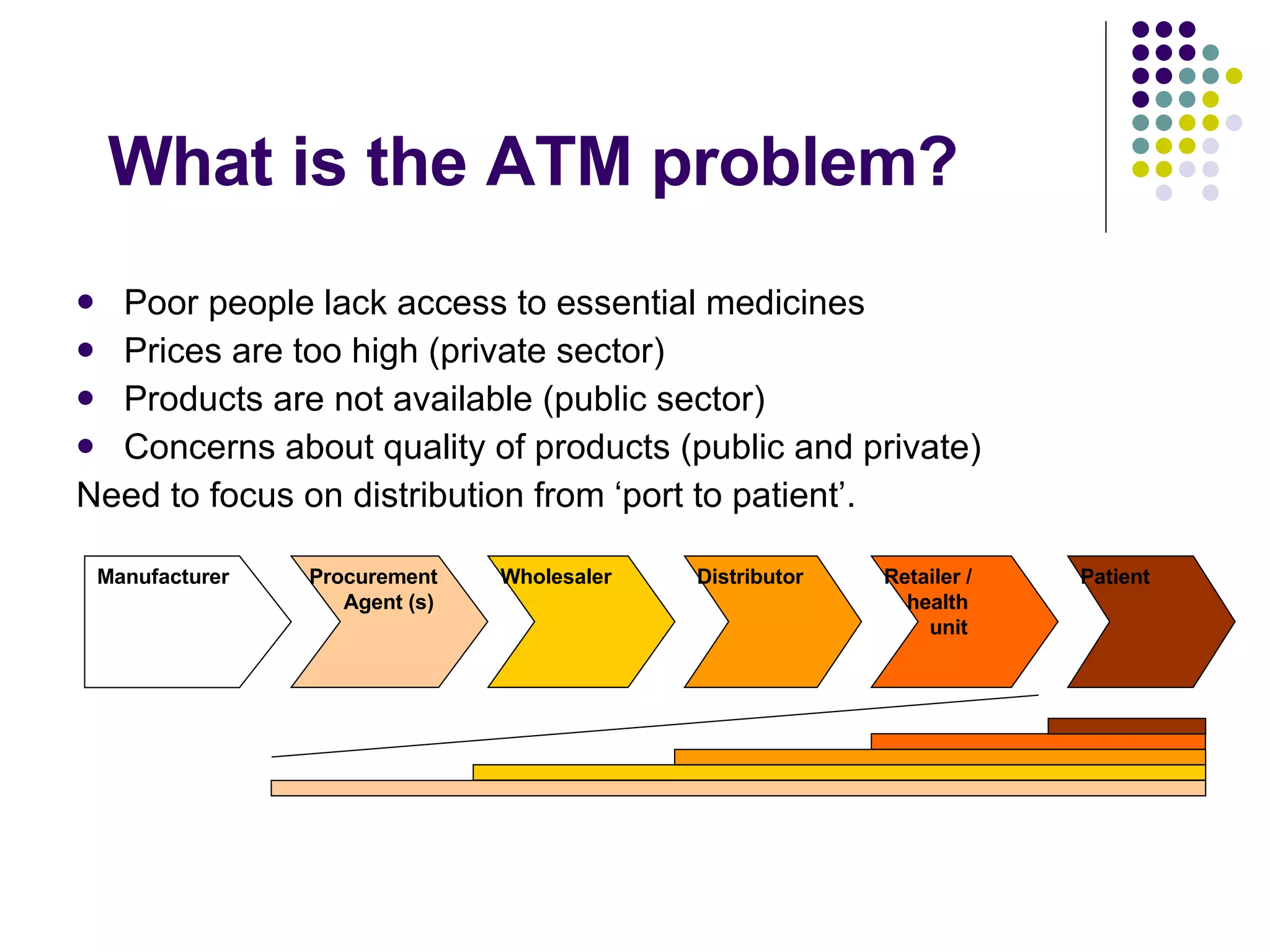
What is the ATM problem? Poor people lack access to essential medicines Prices are too high (private sector) Products are not available (public sector) Concerns about quality of products (public and private) Need to focus on distribution from ‘port to patient’. Manufacturer Procurement Agent (s) Wholesaler Distributor Retailer / health unit Patient
Governance, Transparency and accountability environment in Ghana Government and Presidential commitment to good governance; Public Procurement Act 2003 & MOH Guidelines for health sector procurement;  Right to Information Bill??;  History of civil society collaboration with government, e.g. ATM- MOH/WHO/HAI  Data collection and reporting bodies on aspects of pharmaceutical supply chain and use – FDB, CMS, MOH-PU, GHS, CHAG, GNDP, NDRIC; National Health Insurance Scheme significant opportunities to improve transparency, accountability, pricing, quality.
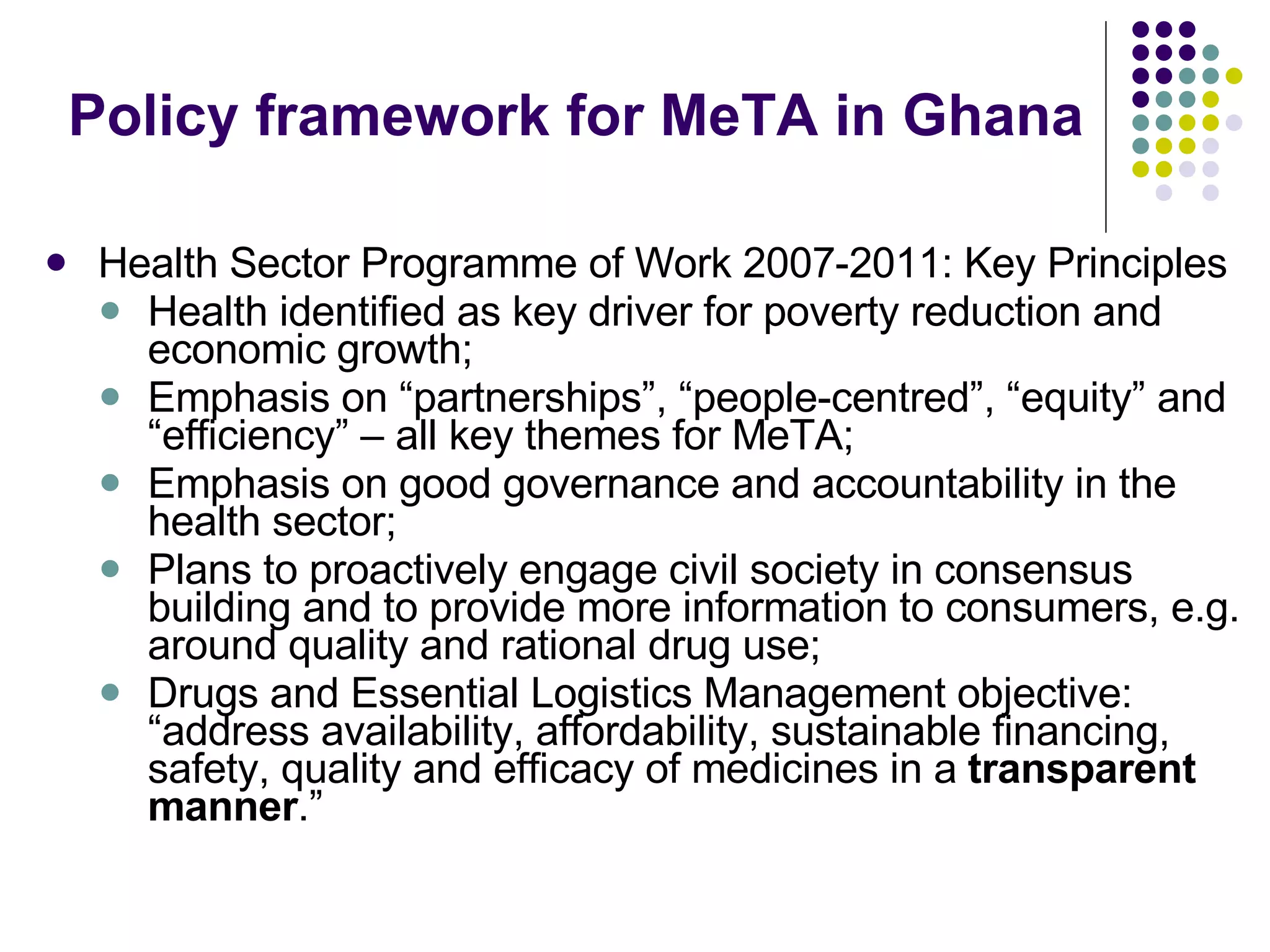
Policy framework for MeTA in Ghana Health Sector Programme of Work 2007-2011: Key Principles Health identified as key driver for poverty reduction and economic growth;  Emphasis on “partnerships”, “people-centred”, “equity” and “efficiency” – all key themes for MeTA; Emphasis on good governance and accountability in the health sector; Plans to proactively engage civil society in consensus building and to provide more information to consumers, e.g. around quality and rational drug use; Drugs and Essential Logistics Management objective: “address availability, affordability, sustainable financing, safety, quality and efficacy of medicines in a  transparent manner .”
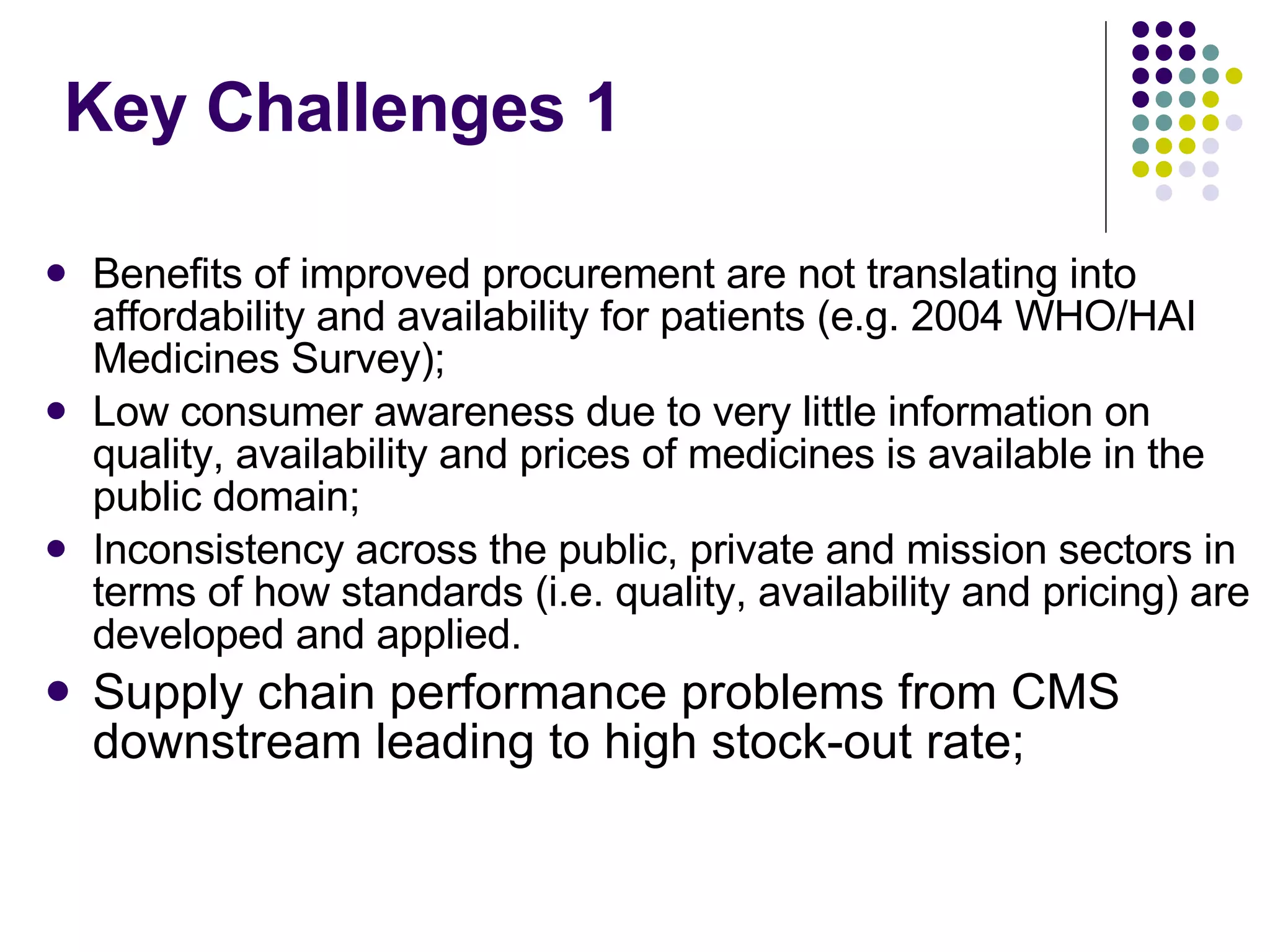
Key Challenges 1 Benefits of improved procurement are not translating into affordability and availability for patients (e.g. 2004 WHO/HAI Medicines Survey); Low consumer awareness due to very little information on quality, availability and prices of medicines is available in the public domain; Inconsistency across the public, private and mission sectors in terms of how standards (i.e. quality, availability and pricing) are developed and applied. Supply chain performance problems from CMS downstream leading to high stock-out rate;
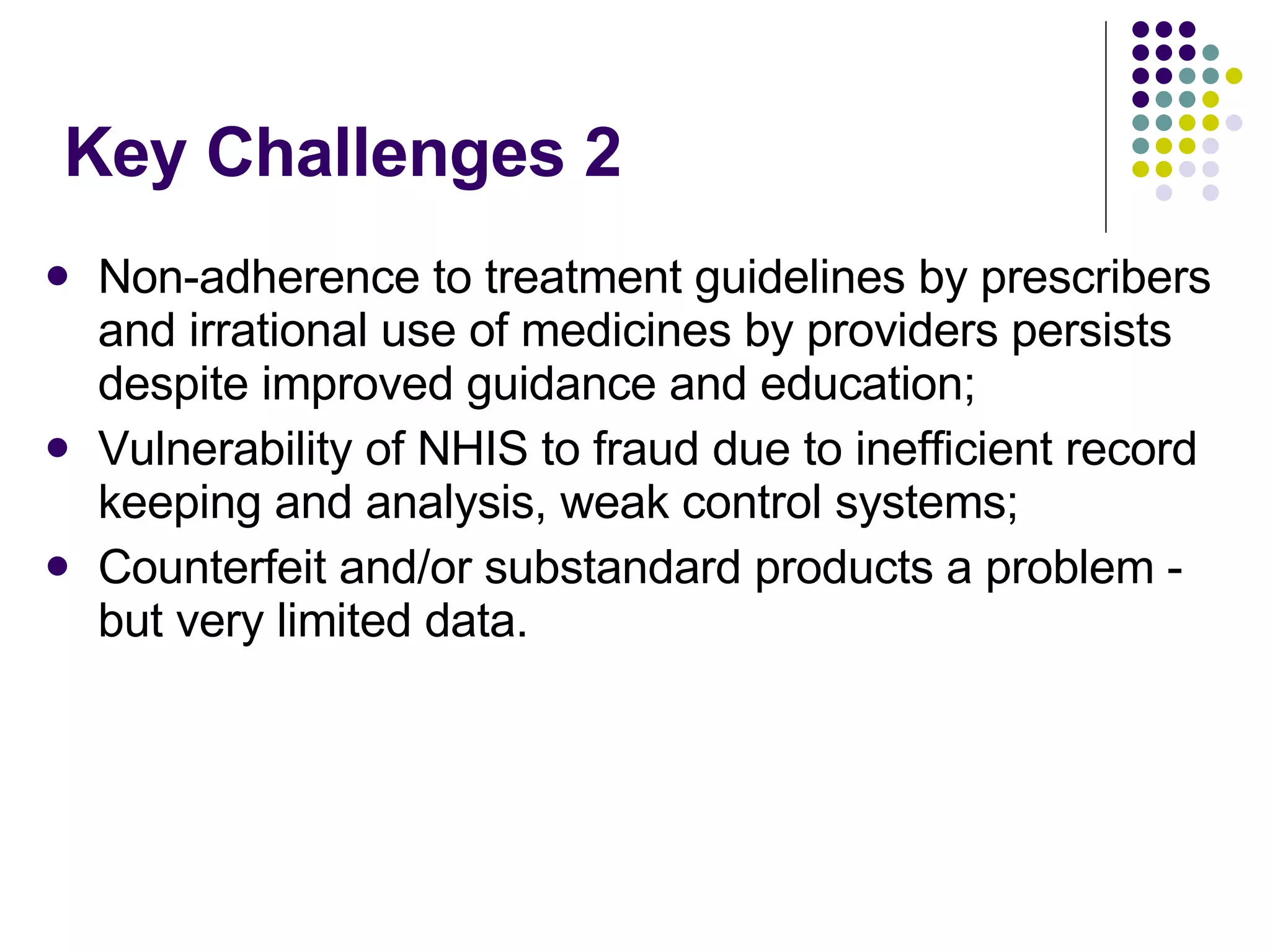
Key Challenges 2 Non-adherence to treatment guidelines by prescribers and irrational use of medicines by providers persists despite improved guidance and education; Vulnerability of NHIS to fraud due to inefficient record keeping and analysis, weak control systems; Counterfeit and/or substandard products a problem - but very limited data.
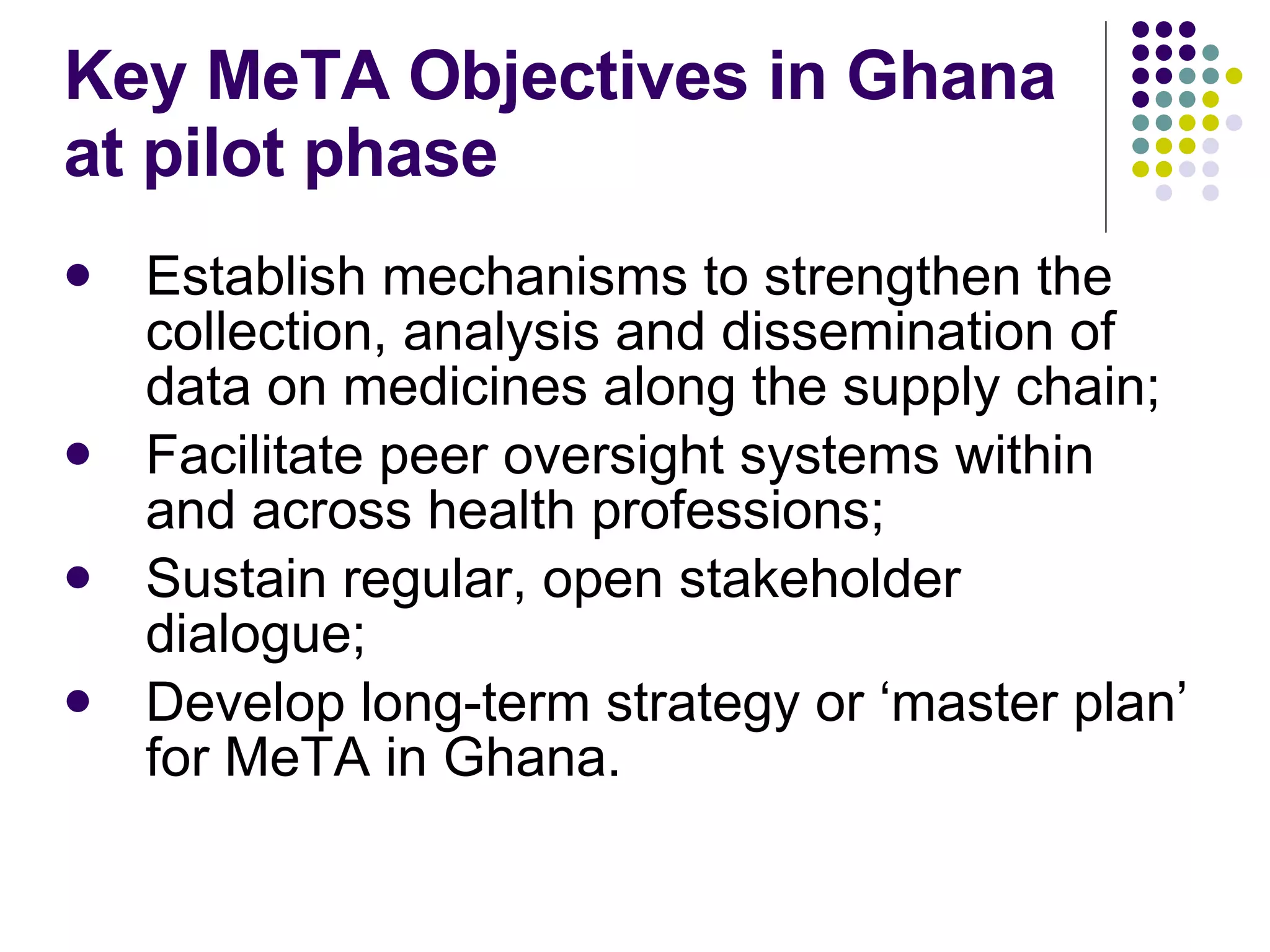
Key MeTA Objectives in Ghana at pilot phase Establish mechanisms to strengthen the collection, analysis and dissemination of data on medicines along the supply chain; Facilitate peer oversight systems within and across health professions; Sustain regular, open stakeholder dialogue; Develop long-term strategy or ‘master plan’ for MeTA in Ghana.
Proposed Strategies Undertake studies to assess the level of transparency and good governance in medicines regulation, procurement, distribution and use. Regularly monitor medicine prices and availability as well as their rational use using WHO standard indicators. Regularly monitor medicines quality through sentinel testing using GPHF ‘minilabs’.  Publicize widely data on prices paid at various points along the supply chain, including those agreed at public tender.  Correlate procurement data to stock volumes and the availability of medicines to the consumer. Undertake periodic annual studies to understand and/or explain provider and consumer behaviour.
Potential Benefits of MeTA to Ghana Provide Ghanaian leadership on medicines transparency and accountability across the West Africa region as  model for both effective governance and market efficiency. Share good practices with other MeTA pilot countries Provides opportunity for pricing and quality monitoring mechanism to inform the NHIS  Reduce and/or eliminate the risk of counterfeit and substandard medication in the supply chain.
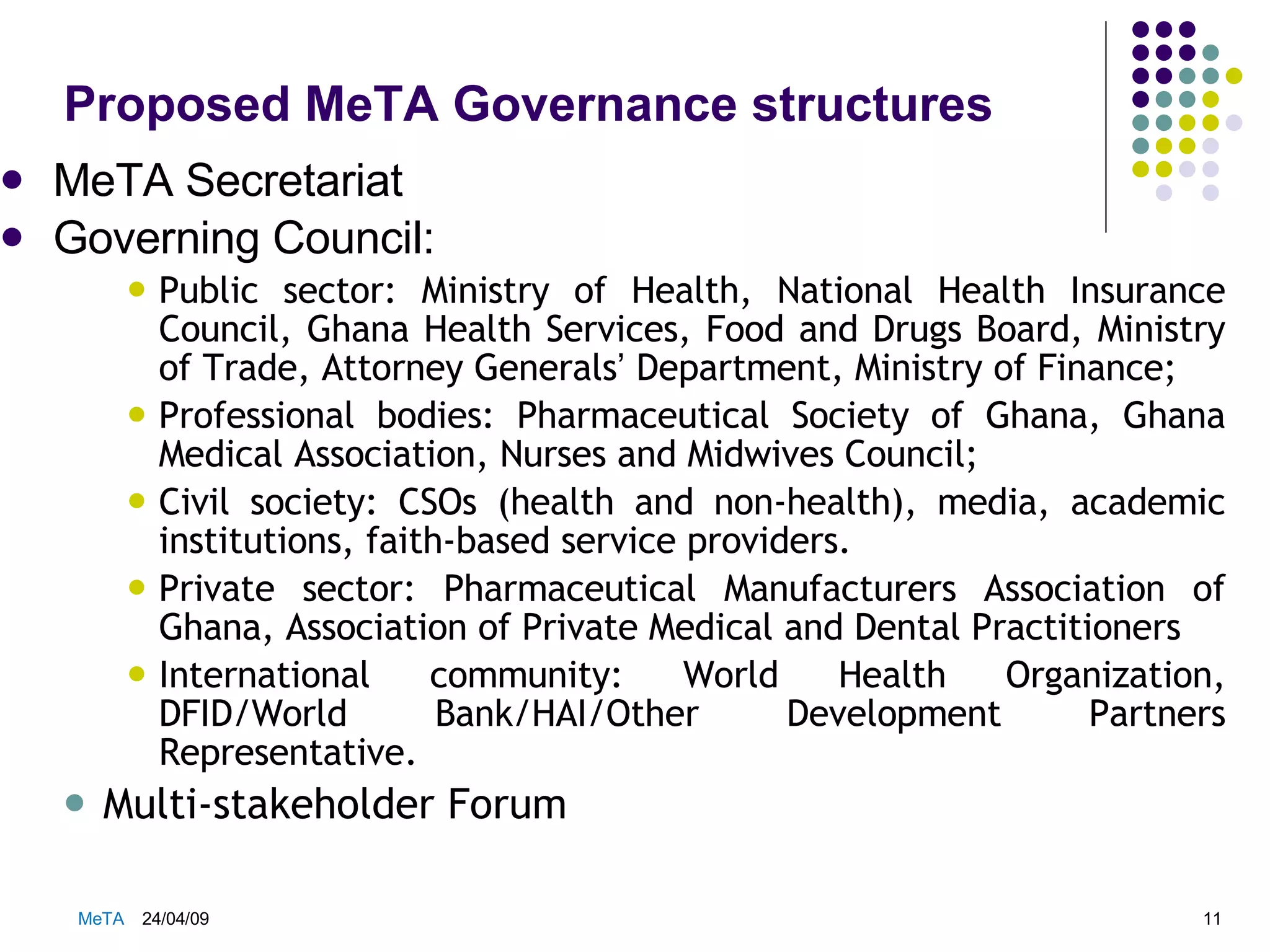
Proposed MeTA Governance structures  MeTA Secretariat Governing Council: Public sector: Ministry of Health, National Health Insurance Council, Ghana Health Services, Food and Drugs Board, Ministry of Trade, Attorney Generals ’  Department, Ministry of Finance; Professional bodies: Pharmaceutical Society of Ghana, Ghana Medical Association, Nurses and Midwives Council; Civil society: CSOs (health and non-health), media, academic institutions, faith-based service providers. Private sector: Pharmaceutical Manufacturers Association of Ghana, Association of Private Medical and Dental Practitioners International community: World Health Organization, DFID/World Bank/HAI/Other Development Partners Representative. Multi-stakeholder Forum 09/06/09 MeTA
Rationale for Media/CS collaboration Synergy of expertise & know-how for greater impact Learn from different approaches; enhance  commonalities Enhance broad stakeholder participation in policy development and implementation Empower Media/CSO & build capacity in the medicines field Forge dialogue and links between consumers, government and other providers Improve coordination and efficient use of resources
What is the role for Media/CSOs? Media/CSOs should understand and influence the redistribution of social and economic resources for equity oriented interventions such as MeTA. Media/CSOs should also understand and inform the power and ability of people (and social groups) to make choices over health inputs and their capacity to use these choices towards health. CSO/Media should use collective power positively to  engage policy makers and programme managers
Appreciation STAY TRANSPARENT & BLESSED

Governance transparency and accountability

  • 1.
    Governance, transparency andAccountability~ MeTA objectives, approaches and role of CSOs Daniel Kojo Arhinful Research Fellow, NMIMR Senior Technical Advisor, MeTA Ghana MeTA~Ghana CSO/Media Orientation International Press Centre, Accra 16th April 2009
  • 2.
    Outline Context ofATM problem Governance, Transparency and accountability Policy context Challenges MeTA objectives and strategies Rationale and role of Media and CSO
  • 3.
    What is theATM problem? Poor people lack access to essential medicines Prices are too high (private sector) Products are not available (public sector) Concerns about quality of products (public and private) Need to focus on distribution from ‘port to patient’. Manufacturer Procurement Agent (s) Wholesaler Distributor Retailer / health unit Patient
  • 4.
    Governance, Transparency andaccountability environment in Ghana Government and Presidential commitment to good governance; Public Procurement Act 2003 & MOH Guidelines for health sector procurement; Right to Information Bill??; History of civil society collaboration with government, e.g. ATM- MOH/WHO/HAI Data collection and reporting bodies on aspects of pharmaceutical supply chain and use – FDB, CMS, MOH-PU, GHS, CHAG, GNDP, NDRIC; National Health Insurance Scheme significant opportunities to improve transparency, accountability, pricing, quality.
  • 5.
    Policy framework forMeTA in Ghana Health Sector Programme of Work 2007-2011: Key Principles Health identified as key driver for poverty reduction and economic growth; Emphasis on “partnerships”, “people-centred”, “equity” and “efficiency” – all key themes for MeTA; Emphasis on good governance and accountability in the health sector; Plans to proactively engage civil society in consensus building and to provide more information to consumers, e.g. around quality and rational drug use; Drugs and Essential Logistics Management objective: “address availability, affordability, sustainable financing, safety, quality and efficacy of medicines in a transparent manner .”
  • 6.
    Key Challenges 1Benefits of improved procurement are not translating into affordability and availability for patients (e.g. 2004 WHO/HAI Medicines Survey); Low consumer awareness due to very little information on quality, availability and prices of medicines is available in the public domain; Inconsistency across the public, private and mission sectors in terms of how standards (i.e. quality, availability and pricing) are developed and applied. Supply chain performance problems from CMS downstream leading to high stock-out rate;
  • 7.
    Key Challenges 2Non-adherence to treatment guidelines by prescribers and irrational use of medicines by providers persists despite improved guidance and education; Vulnerability of NHIS to fraud due to inefficient record keeping and analysis, weak control systems; Counterfeit and/or substandard products a problem - but very limited data.
  • 8.
    Key MeTA Objectivesin Ghana at pilot phase Establish mechanisms to strengthen the collection, analysis and dissemination of data on medicines along the supply chain; Facilitate peer oversight systems within and across health professions; Sustain regular, open stakeholder dialogue; Develop long-term strategy or ‘master plan’ for MeTA in Ghana.
  • 9.
    Proposed Strategies Undertakestudies to assess the level of transparency and good governance in medicines regulation, procurement, distribution and use. Regularly monitor medicine prices and availability as well as their rational use using WHO standard indicators. Regularly monitor medicines quality through sentinel testing using GPHF ‘minilabs’. Publicize widely data on prices paid at various points along the supply chain, including those agreed at public tender. Correlate procurement data to stock volumes and the availability of medicines to the consumer. Undertake periodic annual studies to understand and/or explain provider and consumer behaviour.
  • 10.
    Potential Benefits ofMeTA to Ghana Provide Ghanaian leadership on medicines transparency and accountability across the West Africa region as model for both effective governance and market efficiency. Share good practices with other MeTA pilot countries Provides opportunity for pricing and quality monitoring mechanism to inform the NHIS Reduce and/or eliminate the risk of counterfeit and substandard medication in the supply chain.
  • 11.
    Proposed MeTA Governancestructures MeTA Secretariat Governing Council: Public sector: Ministry of Health, National Health Insurance Council, Ghana Health Services, Food and Drugs Board, Ministry of Trade, Attorney Generals ’ Department, Ministry of Finance; Professional bodies: Pharmaceutical Society of Ghana, Ghana Medical Association, Nurses and Midwives Council; Civil society: CSOs (health and non-health), media, academic institutions, faith-based service providers. Private sector: Pharmaceutical Manufacturers Association of Ghana, Association of Private Medical and Dental Practitioners International community: World Health Organization, DFID/World Bank/HAI/Other Development Partners Representative. Multi-stakeholder Forum 09/06/09 MeTA
  • 12.
    Rationale for Media/CScollaboration Synergy of expertise & know-how for greater impact Learn from different approaches; enhance commonalities Enhance broad stakeholder participation in policy development and implementation Empower Media/CSO & build capacity in the medicines field Forge dialogue and links between consumers, government and other providers Improve coordination and efficient use of resources
  • 13.
    What is therole for Media/CSOs? Media/CSOs should understand and influence the redistribution of social and economic resources for equity oriented interventions such as MeTA. Media/CSOs should also understand and inform the power and ability of people (and social groups) to make choices over health inputs and their capacity to use these choices towards health. CSO/Media should use collective power positively to engage policy makers and programme managers
  • 14.