STEPHANIE GARCIA-GOODMAN


    The Female
Reproductive System
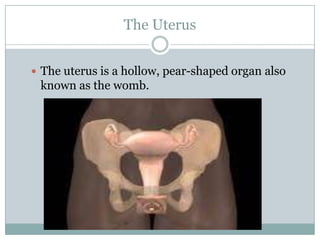
The Uterus


 The uterus is a hollow, pear-shaped organ also
 known as the womb.
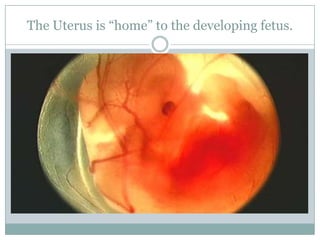
The Uterus is “home” to the developing fetus.
The Uterus


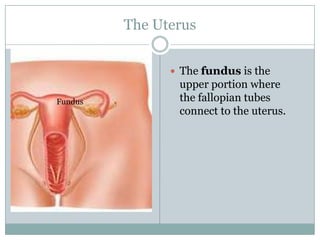
                The fundus is the
                upper portion where
Fundus          the fallopian tubes
                connect to the uterus.
The Uterus

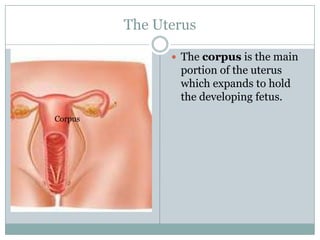
                The corpus is the main
                portion of the uterus
                which expands to hold
                the developing fetus.
Corpus
The Uterus

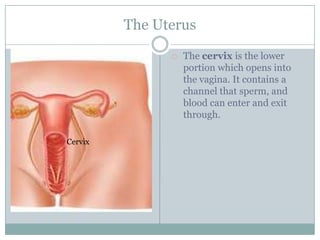
                  The cervix is the lower
                   portion which opens into
                   the vagina. It contains a
                   channel that sperm, and
                   blood can enter and exit
                   through.

Cervix
Gestation

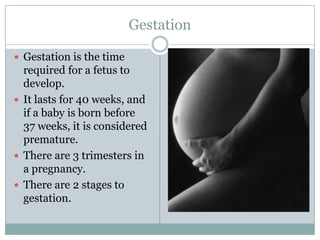
 Gestation is the time
  required for a fetus to
  develop.
 It lasts for 40 weeks, and
  if a baby is born before
  37 weeks, it is considered
  premature.
 There are 3 trimesters in
  a pregnancy.
 There are 2 stages to
  gestation.
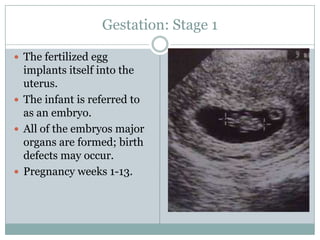
Gestation: Stage 1

 The fertilized egg
  implants itself into the
  uterus.
 The infant is referred to
  as an embryo.
 All of the embryos major
  organs are formed; birth
  defects may occur.
 Pregnancy weeks 1-13.
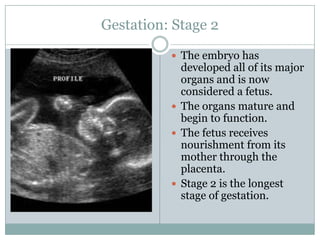
Gestation: Stage 2

           The embryo has
            developed all of its major
            organs and is now
            considered a fetus.
           The organs mature and
            begin to function.
           The fetus receives
            nourishment from its
            mother through the
            placenta.
           Stage 2 is the longest
            stage of gestation.
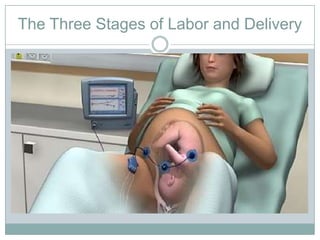
The Three Stages of Labor and Delivery
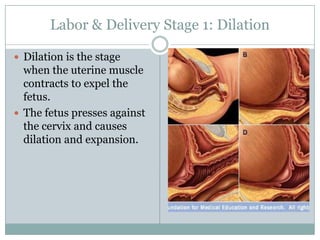
Labor & Delivery Stage 1: Dilation

 Dilation is the stage
  when the uterine muscle
  contracts to expel the
  fetus.
 The fetus presses against
  the cervix and causes
  dilation and expansion.
Labor & Delivery Stage 2:
       Expulsion

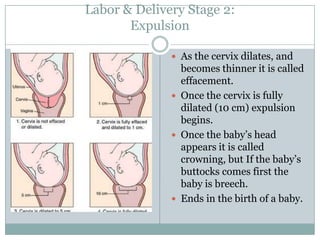
               As the cervix dilates, and
                becomes thinner it is called
                effacement.
               Once the cervix is fully
                dilated (10 cm) expulsion
                begins.
               Once the baby’s head
                appears it is called
                crowning, but If the baby’s
                buttocks comes first the
                baby is breech.
               Ends in the birth of a baby.
Labor & delivery Stage 3:
                       Placental

 This is the final stage of
  labor.
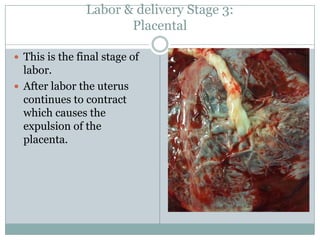
 After labor the uterus
  continues to contract
  which causes the
  expulsion of the
  placenta.
Goodman s.chapter10a presentation

  • 1.
    STEPHANIE GARCIA-GOODMAN The Female Reproductive System
  • 2.
    The Uterus  Theuterus is a hollow, pear-shaped organ also known as the womb.
  • 3.
    The Uterus is“home” to the developing fetus.
  • 4.
    The Uterus  The fundus is the upper portion where Fundus the fallopian tubes connect to the uterus.
  • 5.
    The Uterus  The corpus is the main portion of the uterus which expands to hold the developing fetus. Corpus
  • 6.
    The Uterus  The cervix is the lower portion which opens into the vagina. It contains a channel that sperm, and blood can enter and exit through. Cervix
  • 7.
    Gestation  Gestation isthe time required for a fetus to develop.  It lasts for 40 weeks, and if a baby is born before 37 weeks, it is considered premature.  There are 3 trimesters in a pregnancy.  There are 2 stages to gestation.
  • 8.
    Gestation: Stage 1 The fertilized egg implants itself into the uterus.  The infant is referred to as an embryo.  All of the embryos major organs are formed; birth defects may occur.  Pregnancy weeks 1-13.
  • 9.
    Gestation: Stage 2  The embryo has developed all of its major organs and is now considered a fetus.  The organs mature and begin to function.  The fetus receives nourishment from its mother through the placenta.  Stage 2 is the longest stage of gestation.
  • 10.
    The Three Stagesof Labor and Delivery
  • 11.
    Labor & DeliveryStage 1: Dilation  Dilation is the stage when the uterine muscle contracts to expel the fetus.  The fetus presses against the cervix and causes dilation and expansion.
  • 12.
    Labor & DeliveryStage 2: Expulsion  As the cervix dilates, and becomes thinner it is called effacement.  Once the cervix is fully dilated (10 cm) expulsion begins.  Once the baby’s head appears it is called crowning, but If the baby’s buttocks comes first the baby is breech.  Ends in the birth of a baby.
  • 13.
    Labor & deliveryStage 3: Placental  This is the final stage of labor.  After labor the uterus continues to contract which causes the expulsion of the placenta.
Editor's Notes

  • #14 To the right is a picture of a freshly delivered placenta.