Chapter 10 Presentation
        Michaelia Fosses
         Summer 2012
The female sex cell is an ovum.
• The ovary is stimulated
  to release one ovum
  per month during the
  process of ovulation
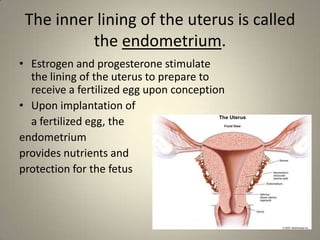
The inner lining of the uterus is called
          the endometrium.
• Estrogen and progesterone stimulate
  the lining of the uterus to prepare to
  receive a fertilized egg upon conception
• Upon implantation of
  a fertilized egg, the
endometrium
provides nutrients and
protection for the fetus
The organ in which the developing
    fetus resides is called the uterus.
• The uterus is a hollow organ
  with a thick muscular wall
  called the myometrium
• There are three parts to the
  uterus: the upper fundus,
  where the fallopian tubes
  connect to the uterus, the
  corpus or body of the
  uterus, and the cervix,
  which opens to the vagina
The time required for the
      development of a fetus is called
                pregnancy.


• Normal gestation is 40 weeks, although a fetus is
  considered full term at 37 weeks
• During pregnancy, the fetus is nourished through the
  placenta, which is attached to the fetus by the umbilical
  cord
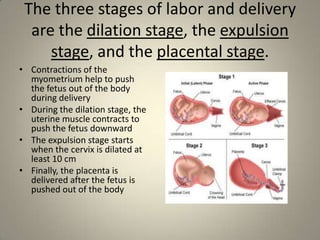
The three stages of labor and delivery
  are the dilation stage, the expulsion
     stage, and the placental stage.
• Contractions of the
  myometrium help to push
  the fetus out of the body
  during delivery
• During the dilation stage, the
  uterine muscle contracts to
  push the fetus downward
• The expulsion stage starts
  when the cervix is dilated at
  least 10 cm
• Finally, the placenta is
  delivered after the fetus is
  pushed out of the body
References
• Photos courtesy: www.webmd.com,
  www.meditrina.com;
  www.medicalcenter.osu.edu;
  www.babycenter.com
• Medical Terminology: A Living Language.
  Fregman, Bonnie F. and Suzanne S. Frucht.
  Pearson, Upper Saddle River, New Jersey.
  2009.

Chapter 10 presentation

  • 1.
    Chapter 10 Presentation Michaelia Fosses Summer 2012
  • 2.
    The female sexcell is an ovum. • The ovary is stimulated to release one ovum per month during the process of ovulation
  • 3.
    The inner liningof the uterus is called the endometrium. • Estrogen and progesterone stimulate the lining of the uterus to prepare to receive a fertilized egg upon conception • Upon implantation of a fertilized egg, the endometrium provides nutrients and protection for the fetus
  • 4.
    The organ inwhich the developing fetus resides is called the uterus. • The uterus is a hollow organ with a thick muscular wall called the myometrium • There are three parts to the uterus: the upper fundus, where the fallopian tubes connect to the uterus, the corpus or body of the uterus, and the cervix, which opens to the vagina
  • 5.
    The time requiredfor the development of a fetus is called pregnancy. • Normal gestation is 40 weeks, although a fetus is considered full term at 37 weeks • During pregnancy, the fetus is nourished through the placenta, which is attached to the fetus by the umbilical cord
  • 6.
    The three stagesof labor and delivery are the dilation stage, the expulsion stage, and the placental stage. • Contractions of the myometrium help to push the fetus out of the body during delivery • During the dilation stage, the uterine muscle contracts to push the fetus downward • The expulsion stage starts when the cervix is dilated at least 10 cm • Finally, the placenta is delivered after the fetus is pushed out of the body
  • 7.
    References • Photos courtesy:www.webmd.com, www.meditrina.com; www.medicalcenter.osu.edu; www.babycenter.com • Medical Terminology: A Living Language. Fregman, Bonnie F. and Suzanne S. Frucht. Pearson, Upper Saddle River, New Jersey. 2009.