Presented By:
Muzammil Ahmad
(FA15-BCV-080)
Topic:
Golden Gate Bridge
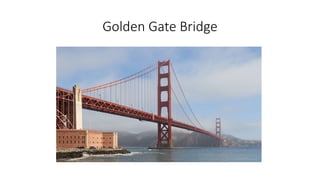
Golden Gate Bridge
Location
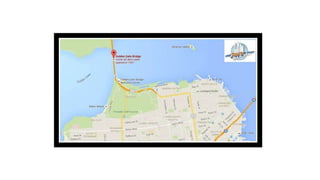
The Golden Gate Bridge is a suspension bridge. It is one mile wide
(1.6 km) strait connecting San Francisco Bay and the Pacific Ocean.
 The structure links the American city of San Francisco to Marin
County (administrative or political subdivision).
It has been declared one of the Wonders of the Modern World by the
American Society of Civil Engineers.
Purpose of Construction
The main purpose is to connect San Francisco to Marin county.
Before the bridge opened in 1937, the only practical route between
them was by ferry across San Francisco Bay. At the time, San Francisco
was the largest U.S. city reached primarily by ferry.
General Information of the bridge
• Chief engineer (Joseph Strauss)
• Architecture (Irving Foster Morrow)
• Beginning of Project (5 January 1933)
• Completion (28 May 1937)
• Cost ($ 35 million)
• Status (in use)
Project Type
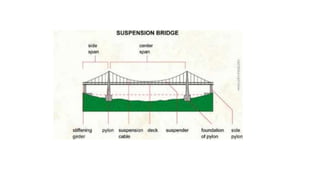
Structure
Suspension bridge
It opened in 1937 and was, until 1964, the longest
suspension bridge in the world.
Function
Motorway Bridge
Material
Steel Bridge
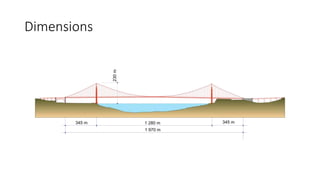
Dimensions
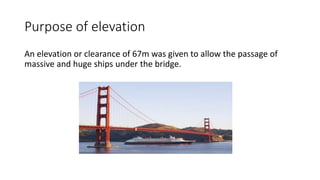
Purpose of elevation
An elevation or clearance of 67m was given to allow the passage of
massive and huge ships under the bridge.
Material used in construction
Cables:
Cables are entirely made up of steel.
Deck truss:
Made up of steel using rivets.
Pylons:
Made up of steels and sections are joined together by using
rivets.
Color:
International orange
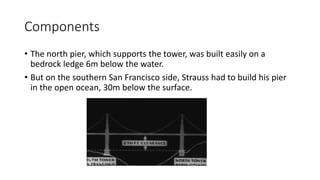
Components
• The north pier, which supports the tower, was built easily on a
bedrock ledge 6m below the water.
• But on the southern San Francisco side, Strauss had to build his pier
in the open ocean, 30m below the surface.
• Steel frame and steel cables.
• Pier:
The pier, made up of 147,600 tons of concrete, was built in 37m
of open water. This was achieved by the concrete fender that in itself is
a marvel of construction.
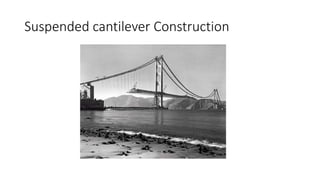
• Suspended cantilever construction.
Suspended cantilever Construction
Construction challenges
The bridge in this location should withstand brutal winds, tide, and
fog.
It is also located less than 13km from the epicenter of the most
catastrophic earthquake in history.
There was high speed moving water at spot where south tower had
to be constructed. The construction of south side pier started from
30m below hard rock bed.
Loading on bridge
The most important types of loadings considered on the bridge construction
are:
• Dead load
• Super-imposed dead load
• Live Traffic
• Wind
• Temperature
This bridge is designed constructed in a way that it can bear:
• 90 mph of wind.
• 8.0 intensity earthquake.
About Workers
• Wage of workers:
Every worker earned $4 to $11 per day.
• Workers died during construction:
11 workers died during construction.
• Safety:
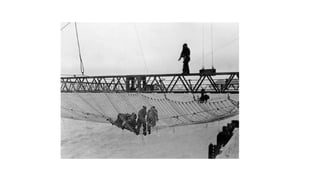
A safety net was tied below elevations to avoid any loss of life.
19 lives were saved by this net.
Visiting the bridge
The bridge is popular with pedestrians and bicyclists, and was built
with walkways on either side of the six vehicle traffic lanes.
Initially, they were separated from the traffic lanes by only a metal
curb, but railings between the walkways and the traffic lanes were
added in 2003, primarily as a measure to prevent bicyclists from falling
into the roadway.
Suicides
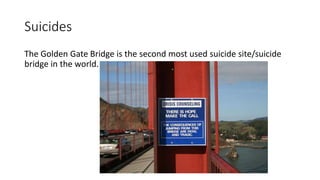
The Golden Gate Bridge is the second most used suicide site/suicide
bridge in the world.
Golden gate bridge
Golden gate bridge

Golden gate bridge

  • 2.
  • 3.
  • 4.
    Location The Golden GateBridge is a suspension bridge. It is one mile wide (1.6 km) strait connecting San Francisco Bay and the Pacific Ocean.  The structure links the American city of San Francisco to Marin County (administrative or political subdivision). It has been declared one of the Wonders of the Modern World by the American Society of Civil Engineers.
  • 6.
    Purpose of Construction Themain purpose is to connect San Francisco to Marin county. Before the bridge opened in 1937, the only practical route between them was by ferry across San Francisco Bay. At the time, San Francisco was the largest U.S. city reached primarily by ferry.
  • 7.
    General Information ofthe bridge • Chief engineer (Joseph Strauss) • Architecture (Irving Foster Morrow) • Beginning of Project (5 January 1933) • Completion (28 May 1937) • Cost ($ 35 million) • Status (in use)
  • 8.
    Project Type Structure Suspension bridge Itopened in 1937 and was, until 1964, the longest suspension bridge in the world. Function Motorway Bridge Material Steel Bridge
  • 9.
  • 10.
    Purpose of elevation Anelevation or clearance of 67m was given to allow the passage of massive and huge ships under the bridge.
  • 11.
    Material used inconstruction Cables: Cables are entirely made up of steel. Deck truss: Made up of steel using rivets. Pylons: Made up of steels and sections are joined together by using rivets. Color: International orange
  • 13.
    Components • The northpier, which supports the tower, was built easily on a bedrock ledge 6m below the water. • But on the southern San Francisco side, Strauss had to build his pier in the open ocean, 30m below the surface.
  • 14.
    • Steel frameand steel cables. • Pier: The pier, made up of 147,600 tons of concrete, was built in 37m of open water. This was achieved by the concrete fender that in itself is a marvel of construction. • Suspended cantilever construction.
  • 15.
  • 16.
    Construction challenges The bridgein this location should withstand brutal winds, tide, and fog. It is also located less than 13km from the epicenter of the most catastrophic earthquake in history. There was high speed moving water at spot where south tower had to be constructed. The construction of south side pier started from 30m below hard rock bed.
  • 18.
    Loading on bridge Themost important types of loadings considered on the bridge construction are: • Dead load • Super-imposed dead load • Live Traffic • Wind • Temperature This bridge is designed constructed in a way that it can bear: • 90 mph of wind. • 8.0 intensity earthquake.
  • 19.
    About Workers • Wageof workers: Every worker earned $4 to $11 per day. • Workers died during construction: 11 workers died during construction. • Safety: A safety net was tied below elevations to avoid any loss of life. 19 lives were saved by this net.
  • 21.
    Visiting the bridge Thebridge is popular with pedestrians and bicyclists, and was built with walkways on either side of the six vehicle traffic lanes. Initially, they were separated from the traffic lanes by only a metal curb, but railings between the walkways and the traffic lanes were added in 2003, primarily as a measure to prevent bicyclists from falling into the roadway.
  • 23.
    Suicides The Golden GateBridge is the second most used suicide site/suicide bridge in the world.