GLYCOLYSIS
Presented By,
Mrs. Lincy J
Asst. Prof
Nursing College of Nursing Kishtwar
Glycolysis = breakdown of sugars; glycogen, glucose, fructose
Where in body?
Where in cell?
What are the inputs?
What are the outcomes?
Oxygen required?
1
1
2
3
10
9
8
7
6
5
4
endergonic rxns
exergonic rxns
coupled reactions
oxidation/reduction rxns
transfer reactions
When do we use glycolysis?
What are the advantages of using glycolysis for energy supply?
What are the disadvantages?
How is glycolysis regulated?
Phosphofructokinase (PFK)
(-)
(+)
Hexokinase inhibited by glucose –6-phosphate; also there are
several isoforms; lowest Km in liver
Pyruvate kinase inhibited by ATP and acetylCoA;
activated by fructose 1,6 bisphosphate
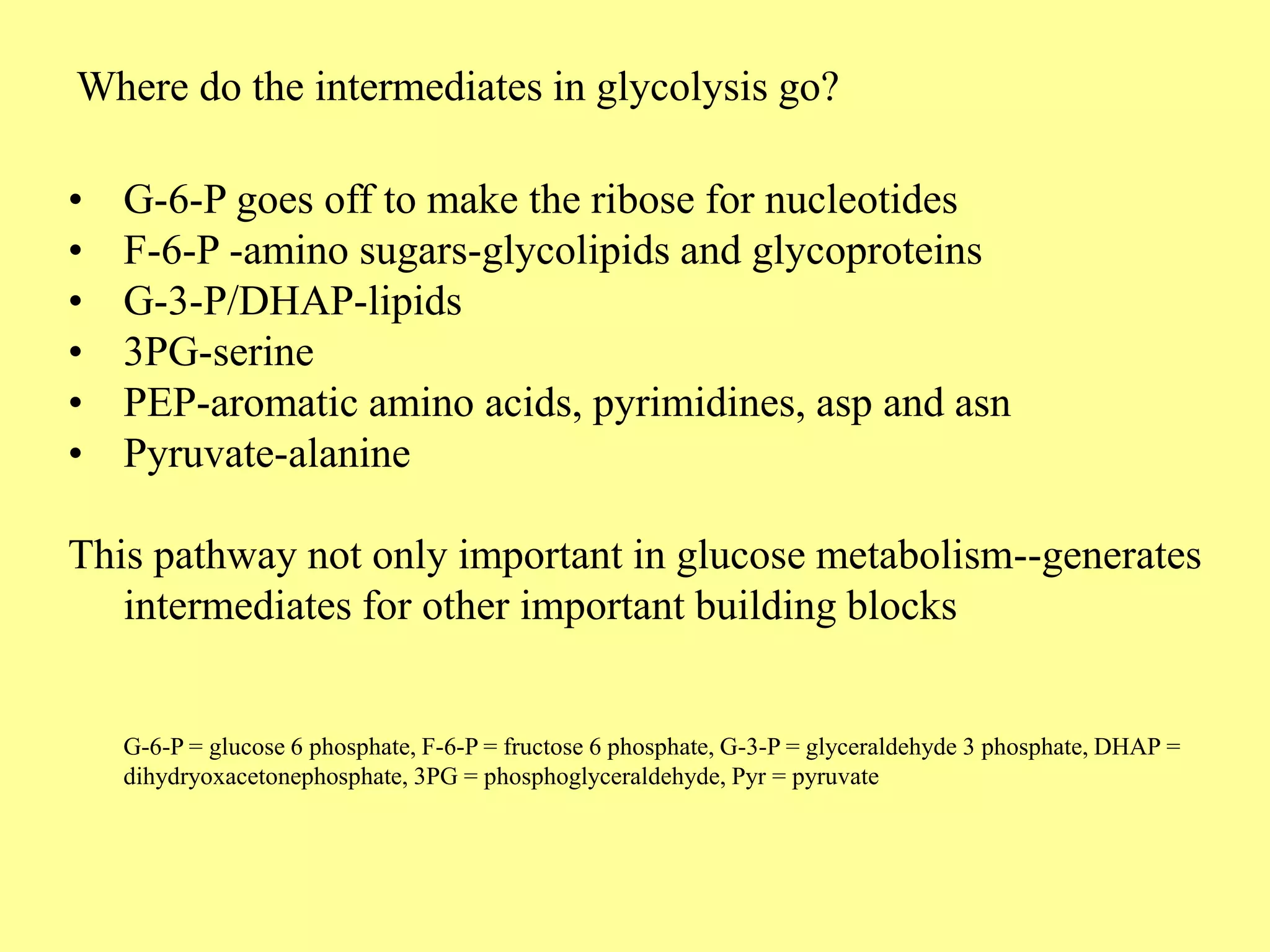
Where do the intermediates in glycolysis go?
• G-6-P goes off to make the ribose for nucleotides
• F-6-P -amino sugars-glycolipids and glycoproteins
• G-3-P/DHAP-lipids
• 3PG-serine
• PEP-aromatic amino acids, pyrimidines, asp and asn
• Pyruvate-alanine
This pathway not only important in glucose metabolism--generates
intermediates for other important building blocks
G-6-P = glucose 6 phosphate, F-6-P = fructose 6 phosphate, G-3-P = glyceraldehyde 3 phosphate, DHAP =
dihydryoxacetonephosphate, 3PG = phosphoglyceraldehyde, Pyr = pyruvate
What are the possible fates of pyruvate?
•Ethanol (fermentation)
•Acetyl coA (mammals and others)
•TCA/Krebs cycle
•Oxaloacetate - gluconeogenesis
•Lactate (mammals and others)
•End product of anaerobic glycolysis
•Gluconeogenesis in liver via the Cori cycle
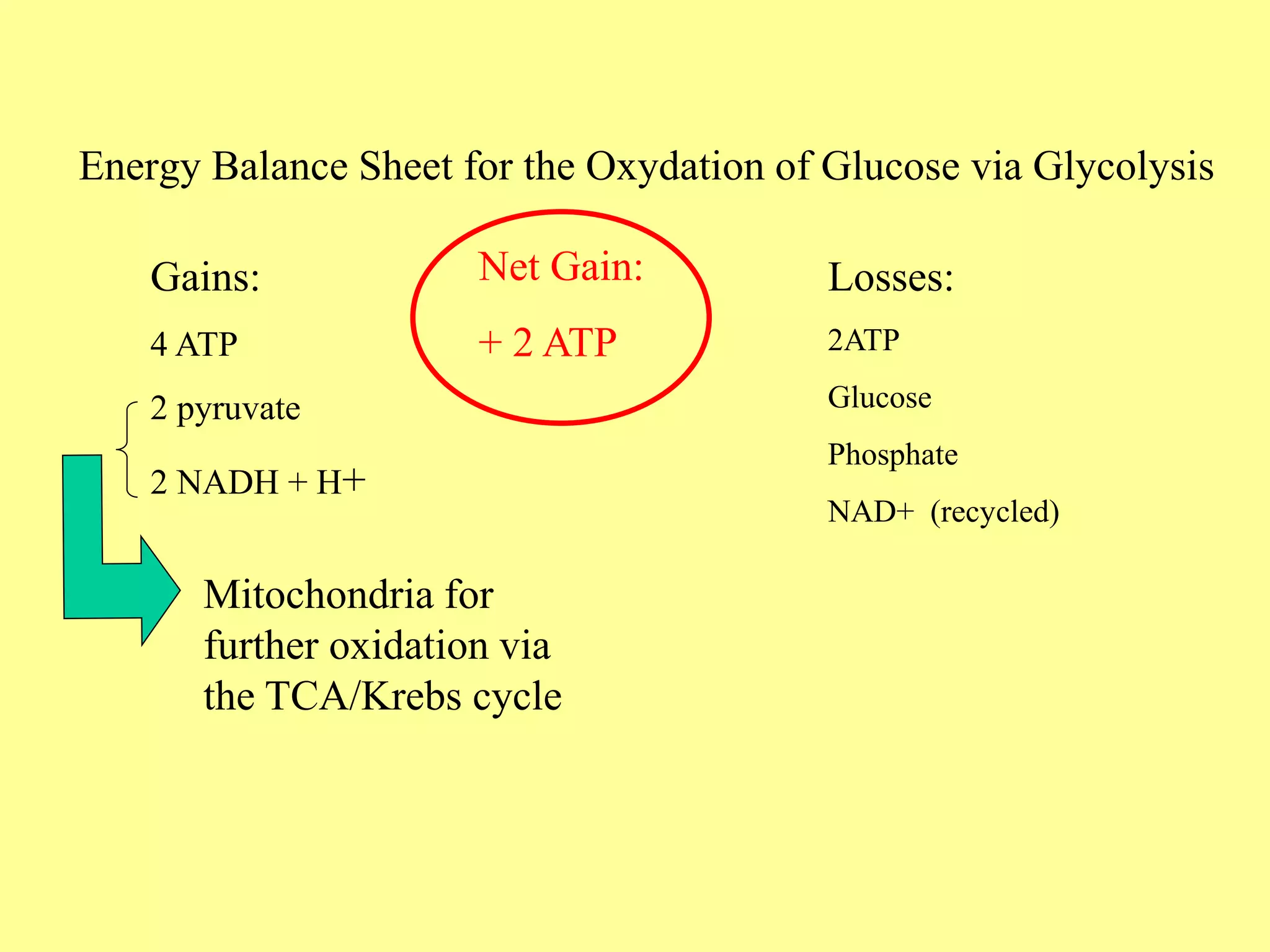
Energy Balance Sheet for the Oxydation of Glucose via Glycolysis
Gains:
4 ATP
2 pyruvate
2 NADH + H+
Losses:
2ATP
Glucose
Phosphate
NAD+ (recycled)
Mitochondria for
further oxidation via
the TCA/Krebs cycle
Net Gain:
+ 2 ATP

Glycolysis.ppt

  • 1.
    GLYCOLYSIS Presented By, Mrs. LincyJ Asst. Prof Nursing College of Nursing Kishtwar
  • 2.
    Glycolysis = breakdownof sugars; glycogen, glucose, fructose Where in body? Where in cell? What are the inputs? What are the outcomes? Oxygen required?
  • 3.
    1 1 2 3 10 9 8 7 6 5 4 endergonic rxns exergonic rxns coupledreactions oxidation/reduction rxns transfer reactions
  • 4.
    When do weuse glycolysis? What are the advantages of using glycolysis for energy supply? What are the disadvantages? How is glycolysis regulated?
  • 5.
    Phosphofructokinase (PFK) (-) (+) Hexokinase inhibitedby glucose –6-phosphate; also there are several isoforms; lowest Km in liver Pyruvate kinase inhibited by ATP and acetylCoA; activated by fructose 1,6 bisphosphate
  • 6.
    Where do theintermediates in glycolysis go? • G-6-P goes off to make the ribose for nucleotides • F-6-P -amino sugars-glycolipids and glycoproteins • G-3-P/DHAP-lipids • 3PG-serine • PEP-aromatic amino acids, pyrimidines, asp and asn • Pyruvate-alanine This pathway not only important in glucose metabolism--generates intermediates for other important building blocks G-6-P = glucose 6 phosphate, F-6-P = fructose 6 phosphate, G-3-P = glyceraldehyde 3 phosphate, DHAP = dihydryoxacetonephosphate, 3PG = phosphoglyceraldehyde, Pyr = pyruvate
  • 7.
    What are thepossible fates of pyruvate? •Ethanol (fermentation) •Acetyl coA (mammals and others) •TCA/Krebs cycle •Oxaloacetate - gluconeogenesis •Lactate (mammals and others) •End product of anaerobic glycolysis •Gluconeogenesis in liver via the Cori cycle
  • 8.
    Energy Balance Sheetfor the Oxydation of Glucose via Glycolysis Gains: 4 ATP 2 pyruvate 2 NADH + H+ Losses: 2ATP Glucose Phosphate NAD+ (recycled) Mitochondria for further oxidation via the TCA/Krebs cycle Net Gain: + 2 ATP