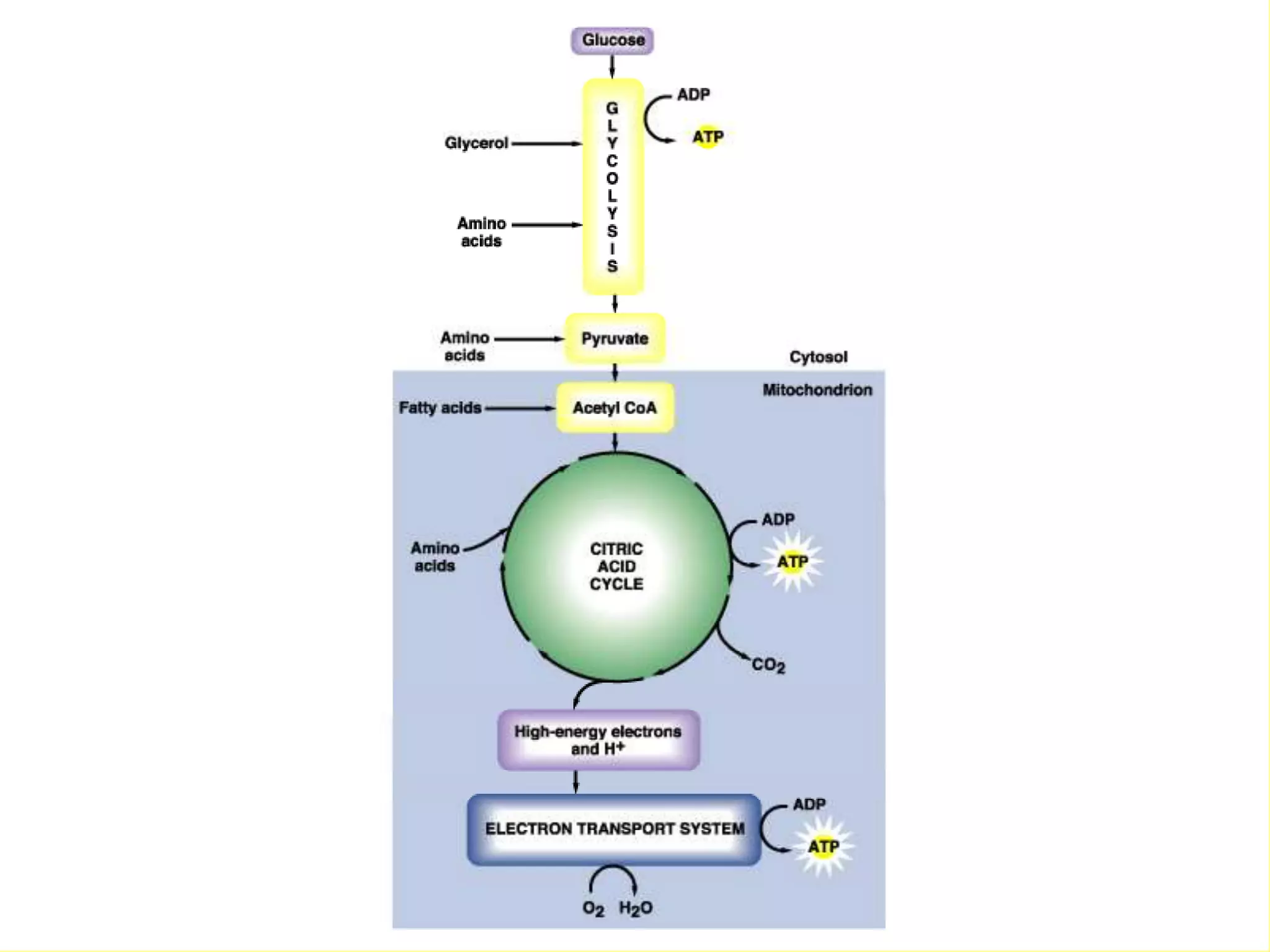
Glycolysis = breakdown of sugars; glycogen, glucose, fructose
Where in body?
Where in cell?
What are the inputs?
What are the outcomes?
Oxygen required?
Gibbs Free Energy Changes
Rxn# Enzyme DG°'(kJ/mol) DG(kJ/mol)
1 Hexokinase -16.7 -33.5
2 Phosphogluco-isomerase +1.7 -2.5
3 Phosphofructokinase -14.2 -22.2
4 Aldolase +23.9 -1.3
5 Triose phos. Isomerase +7.6 +2.5
6 G-3-PDH +12.6 -3.4
7 Phosphoglycerate kinase -37.6 +2.6
8 Phosphoglycerate mutas +8.8 +1.6
9 Enolase +3.4 -6.6
10 Pyruvate kinase -62.8 -33.4
1
1
2
3
10
9
8
7
6
5
4
Identify:
endergonic rxns
exergonic rxns
coupled reactions
oxidation/reduction rxns
transfer reactions
When do we use glycolysis?
What are the advantages of using glycolysis for energy supply?
What are the disadvantages?
How is glycolysis regulated?
Phosphofructokinase (PFK)
(-)
(+)
Hexokinase inhibited by glucose –6-phosphate; also there are
several isoforms; lowest Km in liver
Pyruvate kinase inhibited by ATP and acetylCoA;
activated by fructose 1,6 bisphosphate
Where do the intermediates in glycolysis go?
• G-6-P goes off to make the ribose for nucleotides
• F-6-P -amino sugars-glycolipids and glycoproteins
• G-3-P/DHAP-lipids
• 3PG-serine
• PEP-aromatic amino acids, pyrimidines, asp and asn
• Pyruvate-alanine
This pathway not only important in glucose metabolism--generates
intermediates for other important building blocks
G-6-P = glucose 6 phosphate, F-6-P = fructose 6 phosphate, G-3-P = glyceraldehyde 3 phosphate, DHAP =
dihydryoxacetonephosphate, 3PG = phosphoglyceraldehyde, Pyr = pyruvate
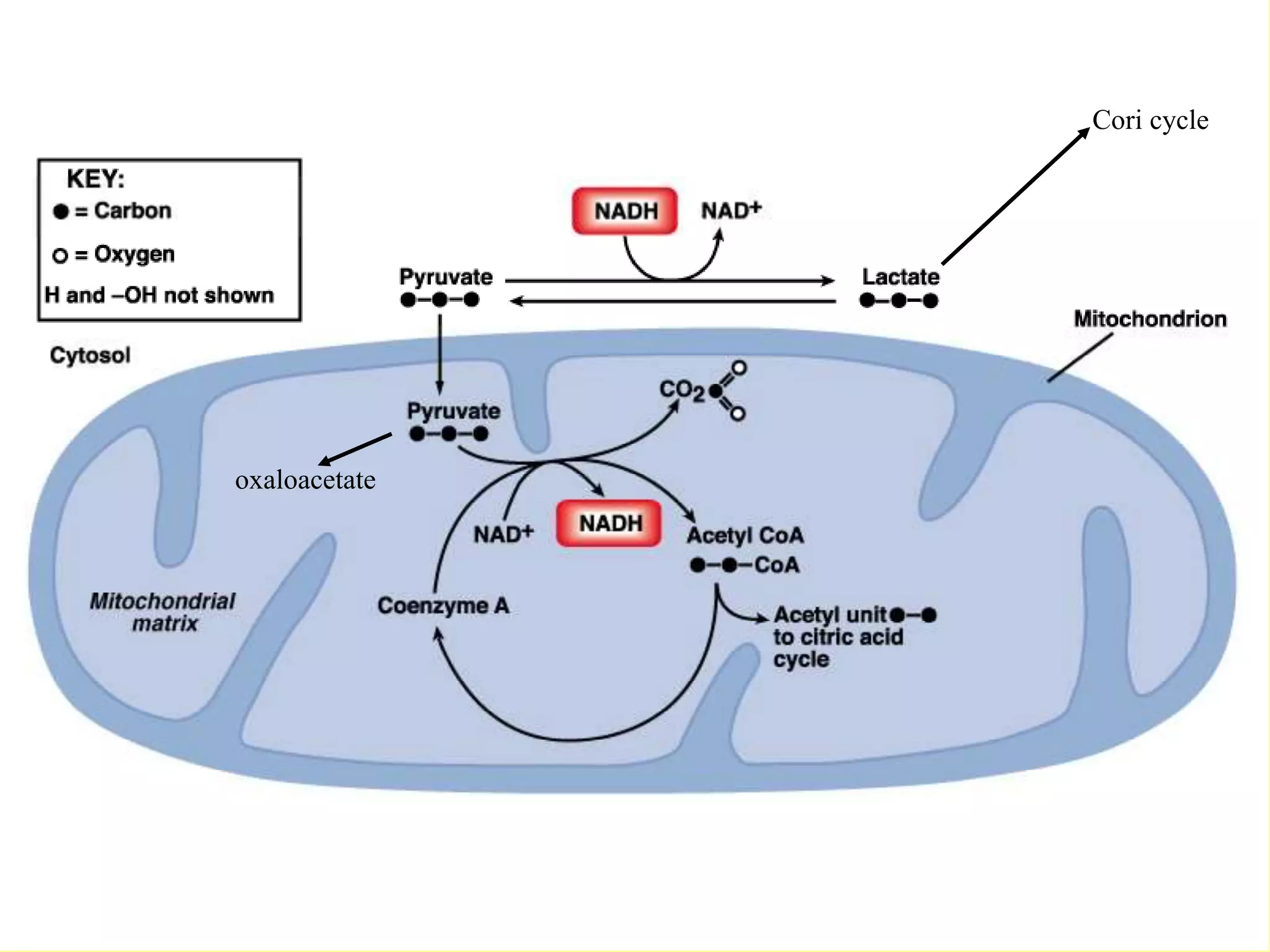
What are the possible fates of pyruvate?
•Ethanol (fermentation)
•Acetyl coA (mammals and others)
•TCA/Krebs cycle
•Oxaloacetate - gluconeogenesis
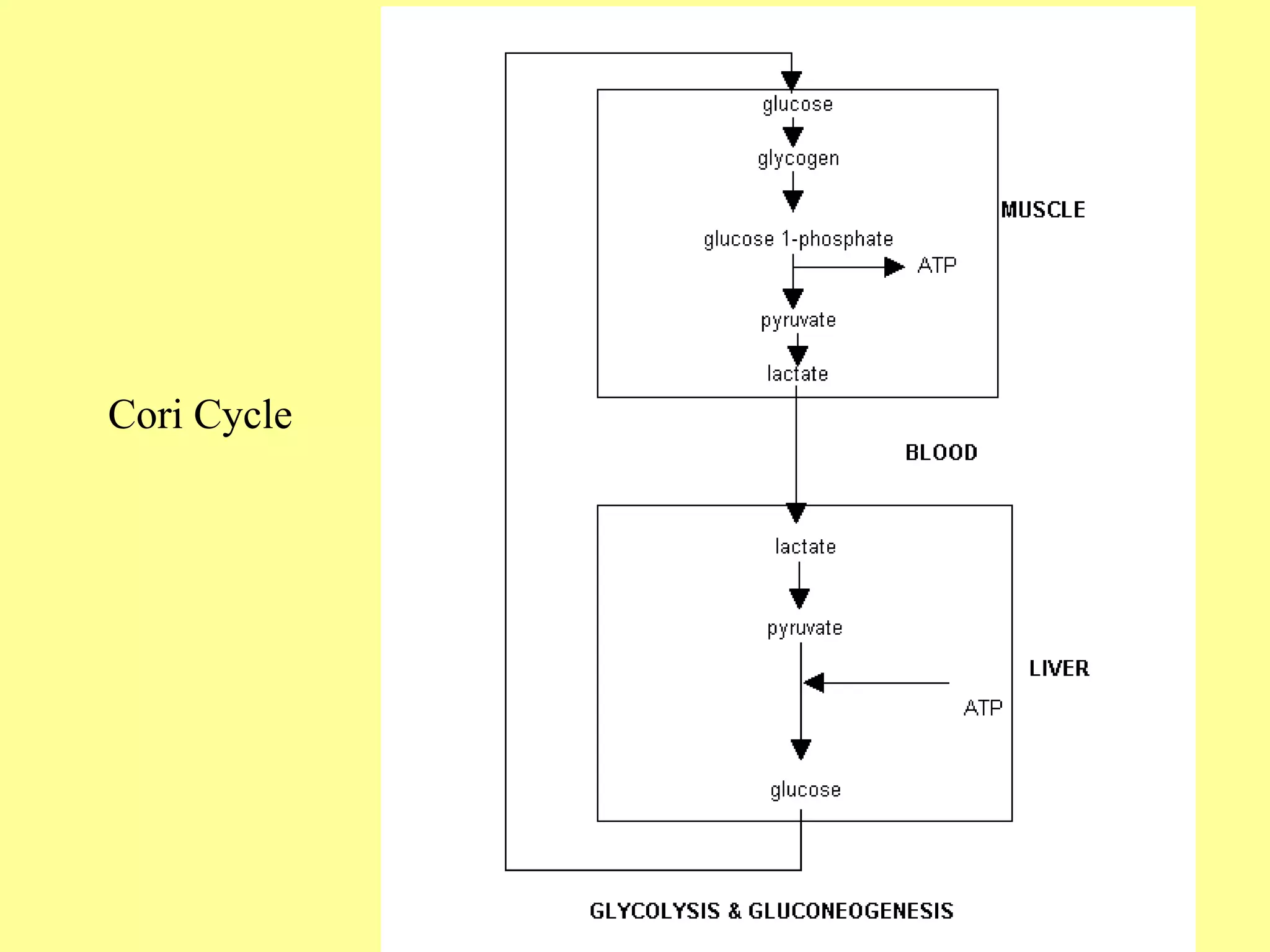
•Lactate (mammals and others)
•End product of anaerobic glycolysis
•Gluconeogenesis in liver via the Cori cycle
oxaloacetate
Cori cycle
Cori Cycle
Energy Balance Sheet for the Oxydation of Glucose via Glycolysis
Gains:
4 ATP
2 pyruvate
2 NADH + H+
Losses:
2ATP
Glucose
Phosphate
NAD+ (recycled)
Mitochondria for
further oxidation via
the TCA/Krebs cycle
Net Gain:
+ 2 ATP
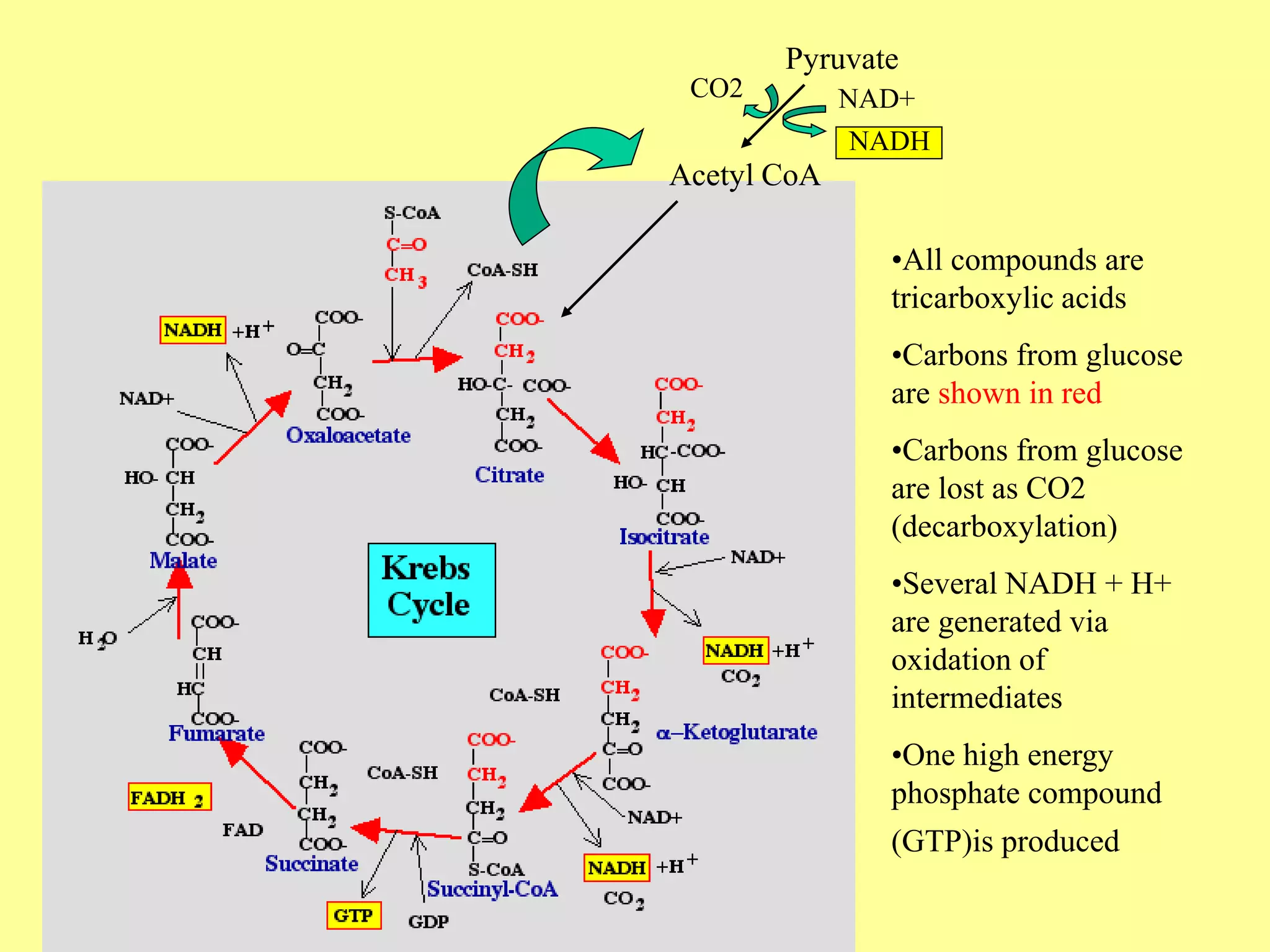
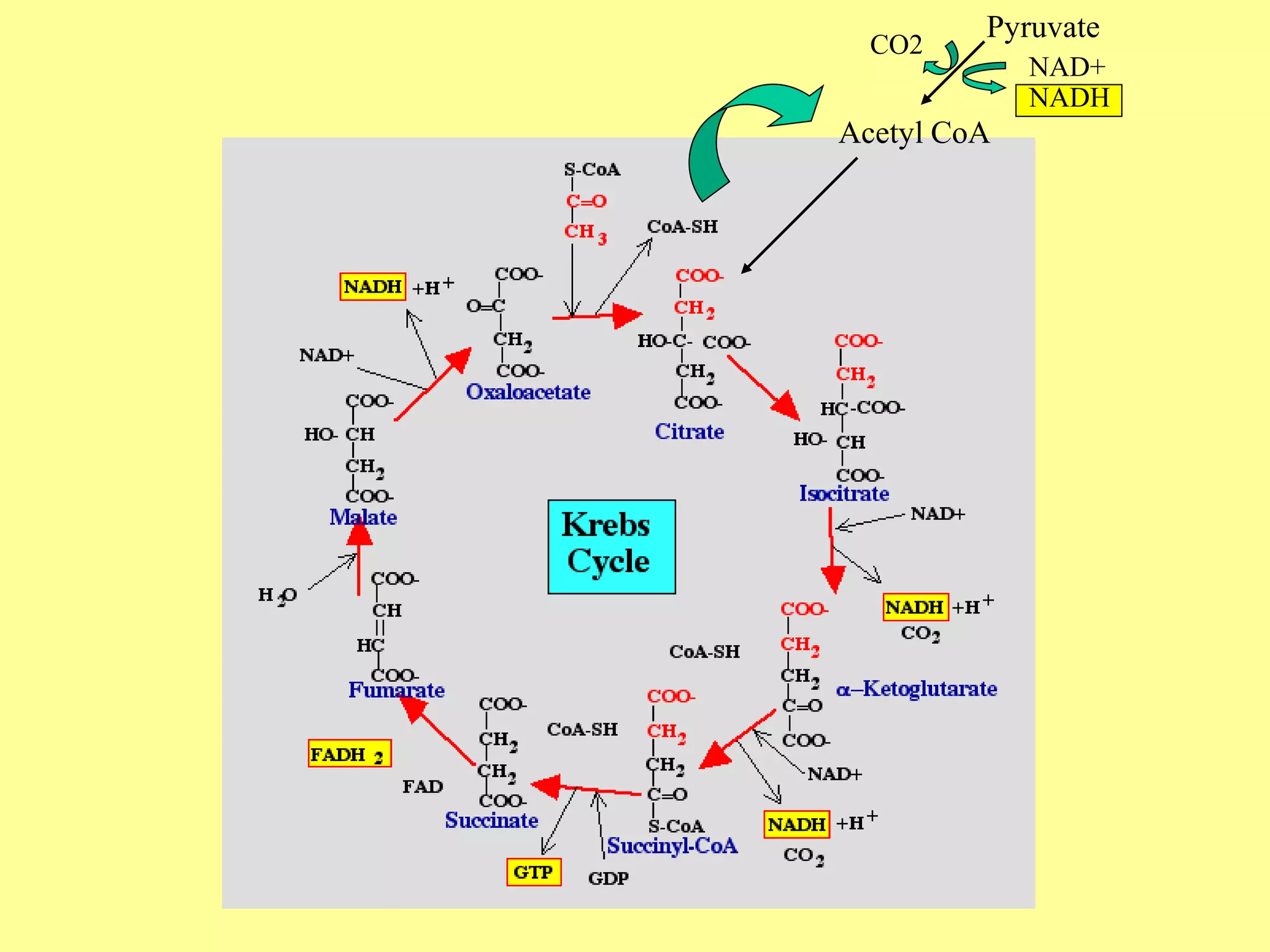
Oxidation of pyruvate via the TCA/Krebs/Citric Acid Cycle
Pyruvate
Acetyl CoA
CO2 NAD+
NADH
•All compounds are
tricarboxylic acids
•Carbons from glucose
are shown in red
•Carbons from glucose
are lost as CO2
(decarboxylation)
•Several NADH + H+
are generated via
oxidation of
intermediates
•One high energy
phosphate compound
(GTP)is produced
When do we oxidize pyruvate via the Krebs cycle?
What do we need to accomplish the oxidation of pyruvate?
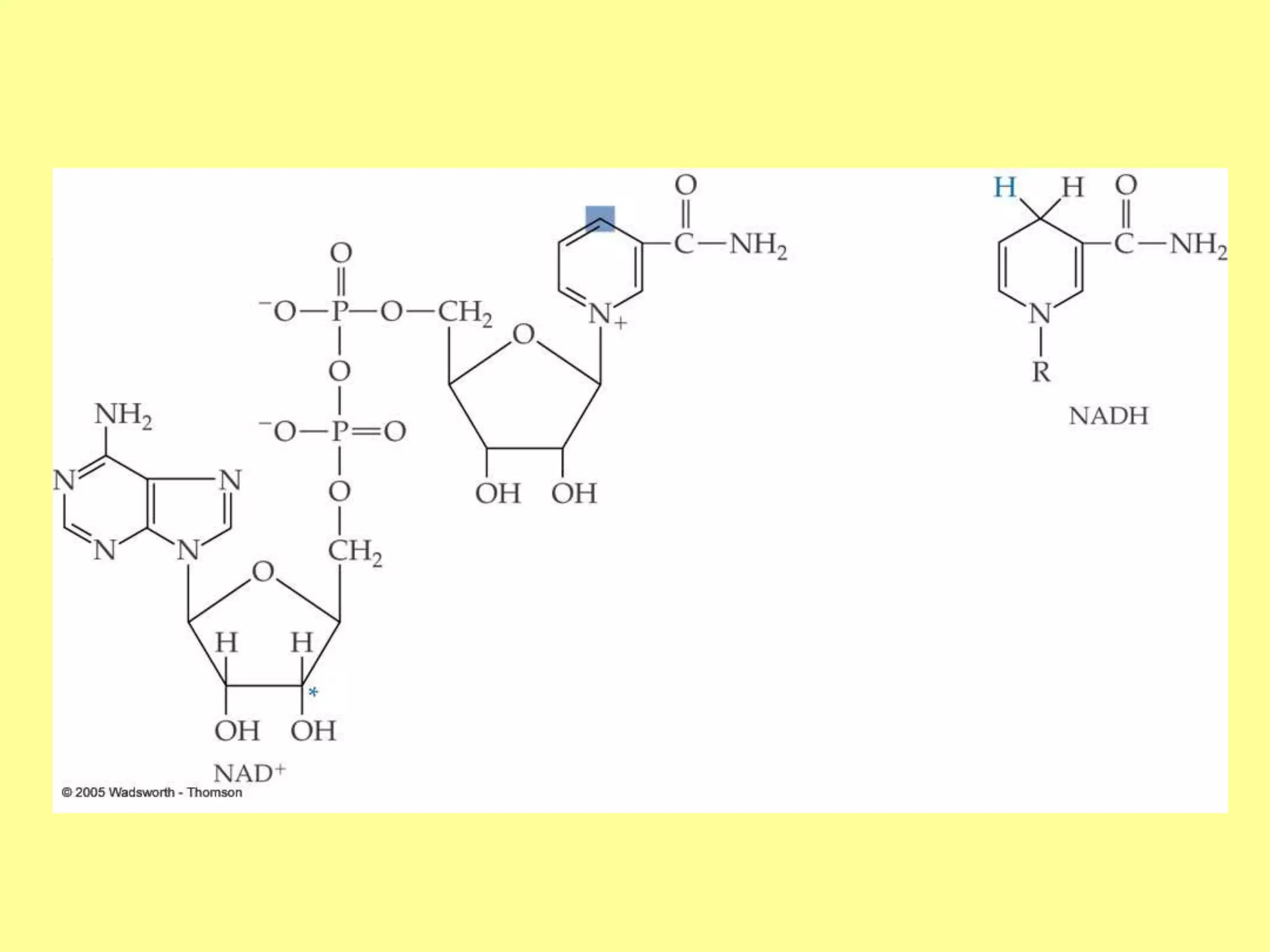
• NAD+ and FAD+; each can carry 2 e-
• oxygen; needs 2 e- to fill outer valence shell of electrons
• glucose
Where are the Krebs cycle enzymes and electron
transport proteins located?
• Krebs cycle enzymes are located in the mitochondrial
matrix
• Electron transport proteins in the inner mitochondrial
membrane
Complex I = NADH ubiquinone
oxidoreductase
Complex II = succinate-
ubiquinone oxidoreductase
Complex III = cytochrome c
oxidoreductase
Cytochrome c
Coenzyme Q (ubiquinone)
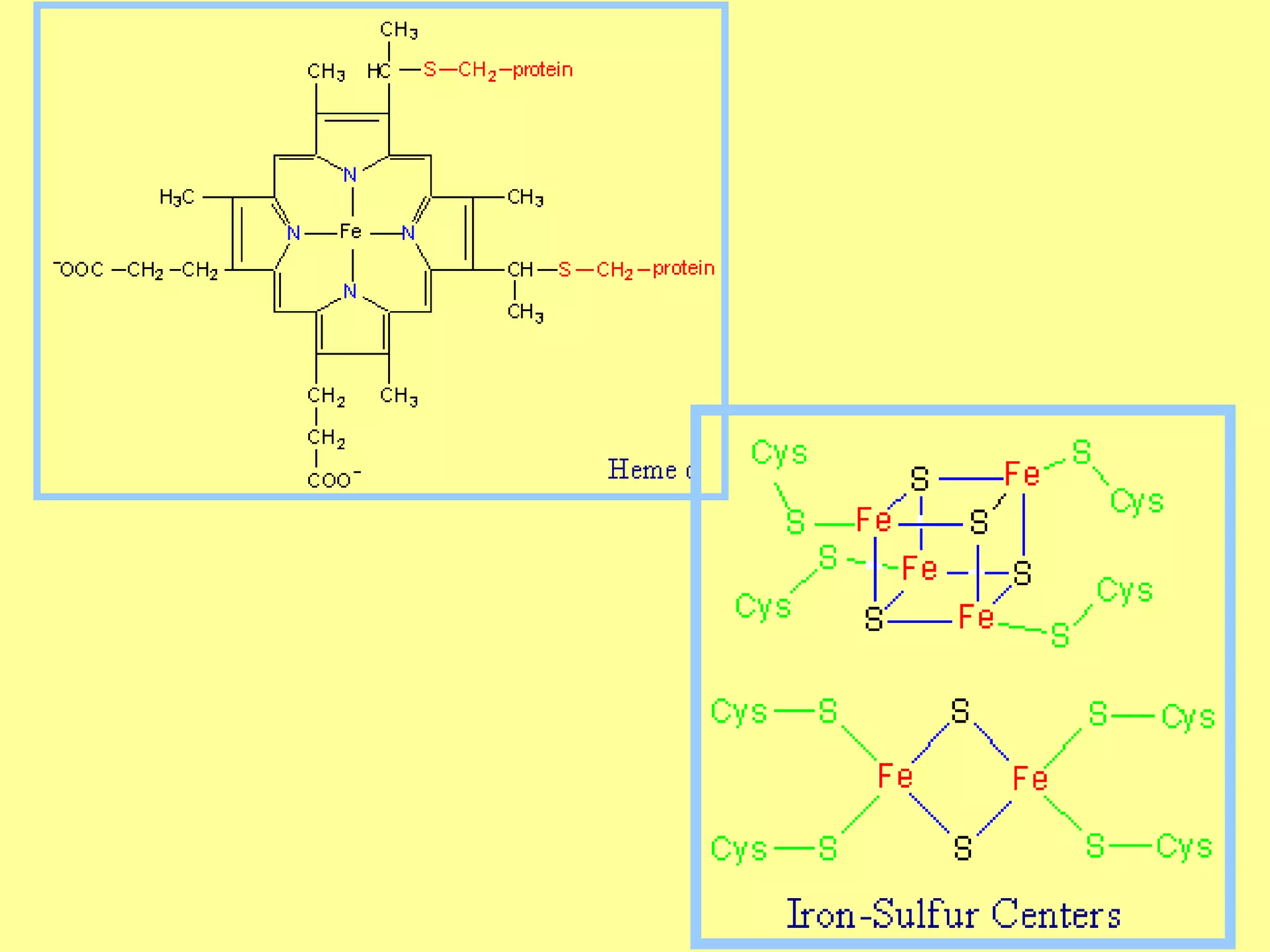
Prosthetic groups = Fe, Flavin, Fe-S, Cu
Electron transport proteins
each can accept or give up two electrons
one protein in each complex also acts as a hydrogen pump
electron entry point is determined by the energy state of the
electrons
Pyruvate
Acetyl CoA
CO2
NAD+
NADH
Entry point for
electrons carried by
NADH+ H+
Entry point for electrons
carried by FADH2
Net Energy Yield from the Oxidation of Pyruvate via the TCA cycle
From Glycolysis:
+2NADH +2ATP
From TCA:
+2FADH +8NADH +2GTP
ETC:
3ATP/NADH
2ATP/FADH
+4ATP +30ATP
+38ATP TOTAL
Do you know why?
+ +
glycolysis.ppt

glycolysis.ppt

  • 1.
    Glycolysis = breakdownof sugars; glycogen, glucose, fructose Where in body? Where in cell? What are the inputs? What are the outcomes? Oxygen required?
  • 2.
    Gibbs Free EnergyChanges Rxn# Enzyme DG°'(kJ/mol) DG(kJ/mol) 1 Hexokinase -16.7 -33.5 2 Phosphogluco-isomerase +1.7 -2.5 3 Phosphofructokinase -14.2 -22.2 4 Aldolase +23.9 -1.3 5 Triose phos. Isomerase +7.6 +2.5 6 G-3-PDH +12.6 -3.4 7 Phosphoglycerate kinase -37.6 +2.6 8 Phosphoglycerate mutas +8.8 +1.6 9 Enolase +3.4 -6.6 10 Pyruvate kinase -62.8 -33.4 1 1 2 3 10 9 8 7 6 5 4 Identify: endergonic rxns exergonic rxns coupled reactions oxidation/reduction rxns transfer reactions
  • 3.
    When do weuse glycolysis? What are the advantages of using glycolysis for energy supply? What are the disadvantages? How is glycolysis regulated?
  • 4.
    Phosphofructokinase (PFK) (-) (+) Hexokinase inhibitedby glucose –6-phosphate; also there are several isoforms; lowest Km in liver Pyruvate kinase inhibited by ATP and acetylCoA; activated by fructose 1,6 bisphosphate
  • 5.
    Where do theintermediates in glycolysis go? • G-6-P goes off to make the ribose for nucleotides • F-6-P -amino sugars-glycolipids and glycoproteins • G-3-P/DHAP-lipids • 3PG-serine • PEP-aromatic amino acids, pyrimidines, asp and asn • Pyruvate-alanine This pathway not only important in glucose metabolism--generates intermediates for other important building blocks G-6-P = glucose 6 phosphate, F-6-P = fructose 6 phosphate, G-3-P = glyceraldehyde 3 phosphate, DHAP = dihydryoxacetonephosphate, 3PG = phosphoglyceraldehyde, Pyr = pyruvate
  • 6.
    What are thepossible fates of pyruvate? •Ethanol (fermentation) •Acetyl coA (mammals and others) •TCA/Krebs cycle •Oxaloacetate - gluconeogenesis •Lactate (mammals and others) •End product of anaerobic glycolysis •Gluconeogenesis in liver via the Cori cycle
  • 7.
  • 8.
  • 9.
    Energy Balance Sheetfor the Oxydation of Glucose via Glycolysis Gains: 4 ATP 2 pyruvate 2 NADH + H+ Losses: 2ATP Glucose Phosphate NAD+ (recycled) Mitochondria for further oxidation via the TCA/Krebs cycle Net Gain: + 2 ATP
  • 10.
    Oxidation of pyruvatevia the TCA/Krebs/Citric Acid Cycle
  • 11.
    Pyruvate Acetyl CoA CO2 NAD+ NADH •Allcompounds are tricarboxylic acids •Carbons from glucose are shown in red •Carbons from glucose are lost as CO2 (decarboxylation) •Several NADH + H+ are generated via oxidation of intermediates •One high energy phosphate compound (GTP)is produced
  • 12.
    When do weoxidize pyruvate via the Krebs cycle? What do we need to accomplish the oxidation of pyruvate? • NAD+ and FAD+; each can carry 2 e- • oxygen; needs 2 e- to fill outer valence shell of electrons • glucose Where are the Krebs cycle enzymes and electron transport proteins located? • Krebs cycle enzymes are located in the mitochondrial matrix • Electron transport proteins in the inner mitochondrial membrane
  • 15.
    Complex I =NADH ubiquinone oxidoreductase Complex II = succinate- ubiquinone oxidoreductase Complex III = cytochrome c oxidoreductase Cytochrome c Coenzyme Q (ubiquinone) Prosthetic groups = Fe, Flavin, Fe-S, Cu
  • 17.
    Electron transport proteins eachcan accept or give up two electrons one protein in each complex also acts as a hydrogen pump electron entry point is determined by the energy state of the electrons
  • 18.
  • 19.
    Entry point for electronscarried by NADH+ H+ Entry point for electrons carried by FADH2
  • 20.
    Net Energy Yieldfrom the Oxidation of Pyruvate via the TCA cycle From Glycolysis: +2NADH +2ATP From TCA: +2FADH +8NADH +2GTP ETC: 3ATP/NADH 2ATP/FADH +4ATP +30ATP +38ATP TOTAL Do you know why? + +