
Global Warming
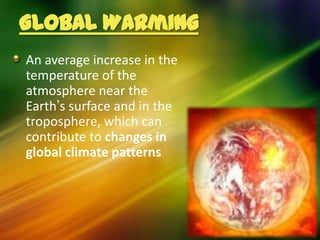
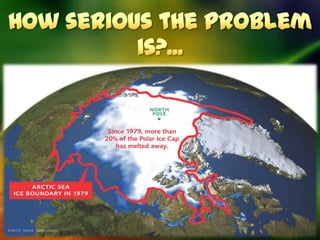
An average increase in the
temperature of the
atmosphere near the
Earth’s surface and in the
troposphere, which can
contribute to changes in
global climate patterns
Causes
Burning of fossil fuels (Coal/Crude oil)
   Power plants generate electricity

   Transportation-----fuels for transports (E.g. LPG,
  kerosene, fuel oil)

   Industrial processes (E.g. manufacture of
  cement, steel, alluminium)
Causes

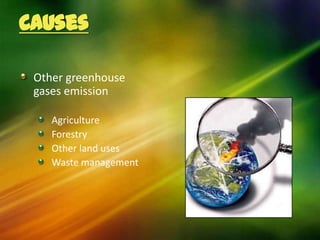
 Other greenhouse
 gases emission

    Agriculture
    Forestry
    Other land uses
    Waste management
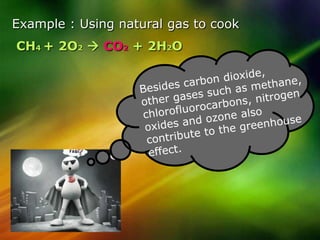
Example : Using natural gas to cook
CH4 + 2O2  CO2 + 2H2O
SERIOUS GREENHOUSE
          EFFECT


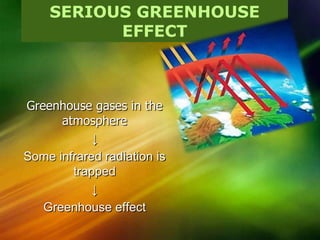
Greenhouse gases in the
      atmosphere
            ↓
Some infrared radiation is
        trapped
            ↓
   Greenhouse effect
increased about 0.6°C since the late19th
century
increased to 2°C over the past 25 years
Regions that have temperatures (1-3°C)
warmer than the average:
   United States
   Most of the Europe
Regions that have temperatures (1-3°C)
cooler than the average:
   Australia
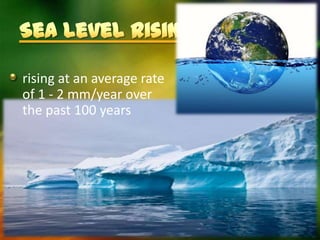
rising at an average rate
of 1 - 2 mm/year over
the past 100 years
Increase in average temperature

More extreme heat waves during the summer;
  Less extreme cold spells during the winter

Harmful to those with heart problems, asthma,
  the elderly, the very young and the homeless
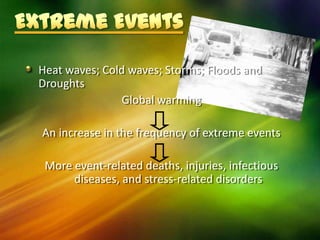
Heat waves; Cold waves; Storms; Floods and
Droughts
               Global warming

An increase in the frequency of extreme events

 More event-related deaths, injuries, infectious
      diseases, and stress-related disorders
An increase in the concentration of
         ground-level ozone


       Damage lung tissue


Harmful for those with asthma and
    other chronic lung diseases
Rising temperatures and variable precipitation

 Decrease the production of staple foods in
        many of the poorest regions

       Increasing risks of malnutrition
Rising sea levels

     Increase the risk of coastal flooding

   (Necessitate population displacement)

More than half of the world's population now lives within
60km of the sea.
Most vulnerable regions: Nile delta in Egypt, the Ganges-
Brahmaputra delta in Bangladesh, many small islands, such as
the Maldives, the Marshall Islands and Tuvalu.
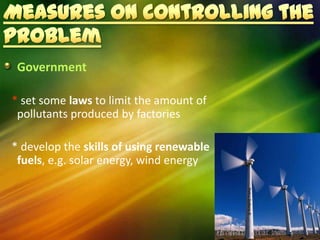
Government

* set some laws to limit the amount of
 pollutants produced by factories

* develop the skills of using renewable
 fuels, e.g. solar energy, wind energy
* encourage the factories to replace fossil fuels by
  renewable fuels, which would not cause
  environmental pollution

* carry out energy saving scheme → reduce the
  pollution produced by burning fossil fuels

* build more plants → reduce the pollutants e.g. CO2
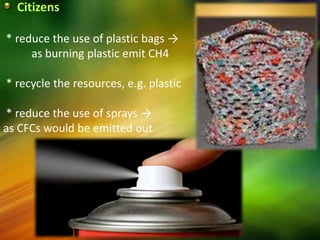
Citizens

* reduce the use of plastic bags →
     as burning plastic emit CH4

* recycle the resources, e.g. plastic

* reduce the use of sprays →
as CFCs would be emitted out
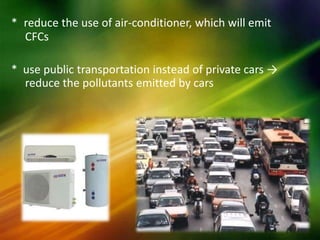
* reduce the use of air-conditioner, which will emit
  CFCs

* use public transportation instead of private cars →
  reduce the pollutants emitted by cars
Global warming

Global warming

  • 2.
    Global Warming An averageincrease in the temperature of the atmosphere near the Earth’s surface and in the troposphere, which can contribute to changes in global climate patterns
  • 3.
    Causes Burning of fossilfuels (Coal/Crude oil) Power plants generate electricity Transportation-----fuels for transports (E.g. LPG, kerosene, fuel oil) Industrial processes (E.g. manufacture of cement, steel, alluminium)
  • 4.
    Causes Other greenhouse gases emission Agriculture Forestry Other land uses Waste management
  • 5.
    Example : Usingnatural gas to cook CH4 + 2O2  CO2 + 2H2O
  • 6.
    SERIOUS GREENHOUSE EFFECT Greenhouse gases in the atmosphere ↓ Some infrared radiation is trapped ↓ Greenhouse effect
  • 8.
    increased about 0.6°Csince the late19th century increased to 2°C over the past 25 years
  • 9.
    Regions that havetemperatures (1-3°C) warmer than the average: United States Most of the Europe Regions that have temperatures (1-3°C) cooler than the average: Australia
  • 10.
    rising at anaverage rate of 1 - 2 mm/year over the past 100 years
  • 12.
    Increase in averagetemperature More extreme heat waves during the summer; Less extreme cold spells during the winter Harmful to those with heart problems, asthma, the elderly, the very young and the homeless
  • 13.
    Heat waves; Coldwaves; Storms; Floods and Droughts Global warming An increase in the frequency of extreme events More event-related deaths, injuries, infectious diseases, and stress-related disorders
  • 14.
    An increase inthe concentration of ground-level ozone Damage lung tissue Harmful for those with asthma and other chronic lung diseases
  • 15.
    Rising temperatures andvariable precipitation Decrease the production of staple foods in many of the poorest regions Increasing risks of malnutrition
  • 16.
    Rising sea levels Increase the risk of coastal flooding (Necessitate population displacement) More than half of the world's population now lives within 60km of the sea. Most vulnerable regions: Nile delta in Egypt, the Ganges- Brahmaputra delta in Bangladesh, many small islands, such as the Maldives, the Marshall Islands and Tuvalu.
  • 17.
    Government * set somelaws to limit the amount of pollutants produced by factories * develop the skills of using renewable fuels, e.g. solar energy, wind energy
  • 18.
    * encourage thefactories to replace fossil fuels by renewable fuels, which would not cause environmental pollution * carry out energy saving scheme → reduce the pollution produced by burning fossil fuels * build more plants → reduce the pollutants e.g. CO2
  • 19.
    Citizens * reduce theuse of plastic bags → as burning plastic emit CH4 * recycle the resources, e.g. plastic * reduce the use of sprays → as CFCs would be emitted out
  • 20.
    * reduce theuse of air-conditioner, which will emit CFCs * use public transportation instead of private cars → reduce the pollutants emitted by cars