

HIGHLIGHT THE CAUSES AND
EFFECTS OF GREENHOUSE GASES .

UNDERSTAND WHAT ALL IS GLOBAL
WARMING AND WAYS O REDUCE IT.

FURTHER STEPS TO BE TAKEN UP BY THE
COMMON PEOPLE TO PREVENT ALL THIS IN
FUTURE.
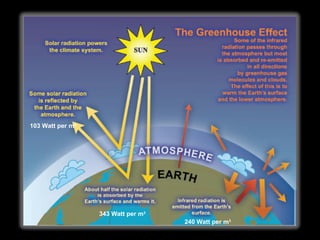
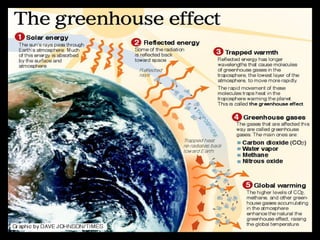
Greenhouse effect


103 Watt per m3


                   343 Watt per m3
                                        240 Watt per m3

Source: Intergovernmental Panel on Climate Change
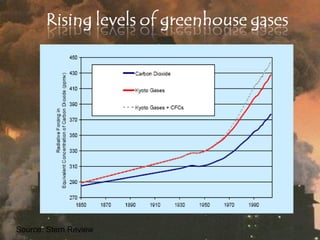
Source: Stern Review
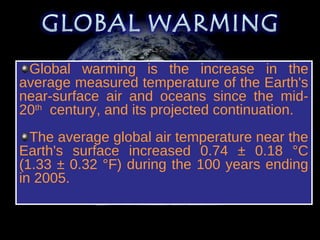
Global warming is the increase in the
average measured temperature of the Earth's
near-surface air and oceans since the mid-
20th century, and its projected continuation.
  The average global air temperature near the
Earth's surface increased 0.74 ± 0.18 °C
(1.33 ± 0.32 °F) during the 100 years ending
in 2005.

 Source: Intergovernmental Panel on Climate Change
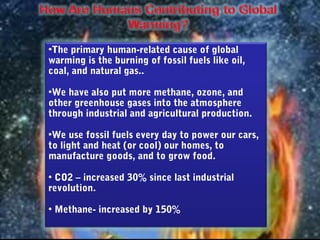
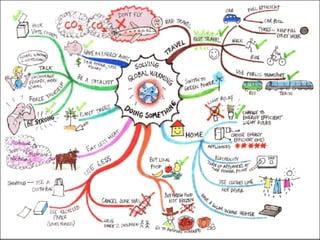
•The primary human-related cause of global
warming is the burning of fossil fuels like oil,
coal, and natural gas..

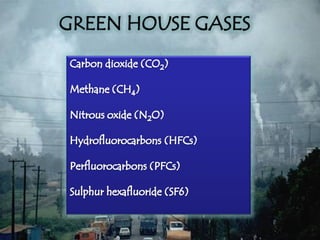
•We have also put more methane, ozone, and
other greenhouse gases into the atmosphere
through industrial and agricultural production.

•We use fossil fuels every day to power our cars,
to light and heat (or cool) our homes, to
manufacture goods, and to grow food.

• CO2 – increased 30% since last industrial
revolution.

• Methane- increased by 150%
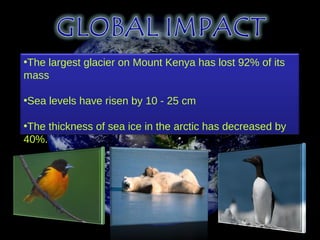
•The largest glacier on Mount Kenya has lost 92% of its
mass

•Sea levels have risen by 10 - 25 cm

•The thickness of sea ice in the arctic has decreased by
40%.
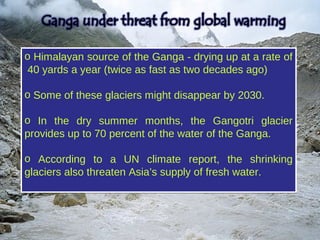
o Himalayan source of the Ganga - drying up at a rate of
 40 yards a year (twice as fast as two decades ago)

o Some of these glaciers might disappear by 2030.

o In the dry summer months, the Gangotri glacier
provides up to 70 percent of the water of the Ganga.

o According to a UN climate report, the shrinking
glaciers also threaten Asia’s supply of fresh water.
THANK YOU
Global warming

Global warming

  • 2.
    HIGHLIGHT THE CAUSESAND EFFECTS OF GREENHOUSE GASES . UNDERSTAND WHAT ALL IS GLOBAL WARMING AND WAYS O REDUCE IT. FURTHER STEPS TO BE TAKEN UP BY THE COMMON PEOPLE TO PREVENT ALL THIS IN FUTURE.
  • 3.
    Greenhouse effect 103 Wattper m3 343 Watt per m3 240 Watt per m3 Source: Intergovernmental Panel on Climate Change
  • 5.
  • 7.
    Global warming isthe increase in the average measured temperature of the Earth's near-surface air and oceans since the mid- 20th century, and its projected continuation. The average global air temperature near the Earth's surface increased 0.74 ± 0.18 °C (1.33 ± 0.32 °F) during the 100 years ending in 2005. Source: Intergovernmental Panel on Climate Change
  • 8.
    •The primary human-relatedcause of global warming is the burning of fossil fuels like oil, coal, and natural gas.. •We have also put more methane, ozone, and other greenhouse gases into the atmosphere through industrial and agricultural production. •We use fossil fuels every day to power our cars, to light and heat (or cool) our homes, to manufacture goods, and to grow food. • CO2 – increased 30% since last industrial revolution. • Methane- increased by 150%
  • 9.
    •The largest glacieron Mount Kenya has lost 92% of its mass •Sea levels have risen by 10 - 25 cm •The thickness of sea ice in the arctic has decreased by 40%.
  • 10.
    o Himalayan sourceof the Ganga - drying up at a rate of 40 yards a year (twice as fast as two decades ago) o Some of these glaciers might disappear by 2030. o In the dry summer months, the Gangotri glacier provides up to 70 percent of the water of the Ganga. o According to a UN climate report, the shrinking glaciers also threaten Asia’s supply of fresh water.
  • 13.