Giant Pandas By Sarah Poole
Introduction I chose Giant Pandas as my chosen topic for my project because they are my favourite animal.  Giant Pandas are native to  central-Western and South Western China   They are an endangered species from causes like poaching and deforestation  Habitat and food source are destroyed and they are poached for their fur coat Pandas live on a diet that consists of 99% Bamboo. They have also been known to eat:  Other grasses Wild Tubers  Or even meat in the form of Birds, Rodents or Carrion
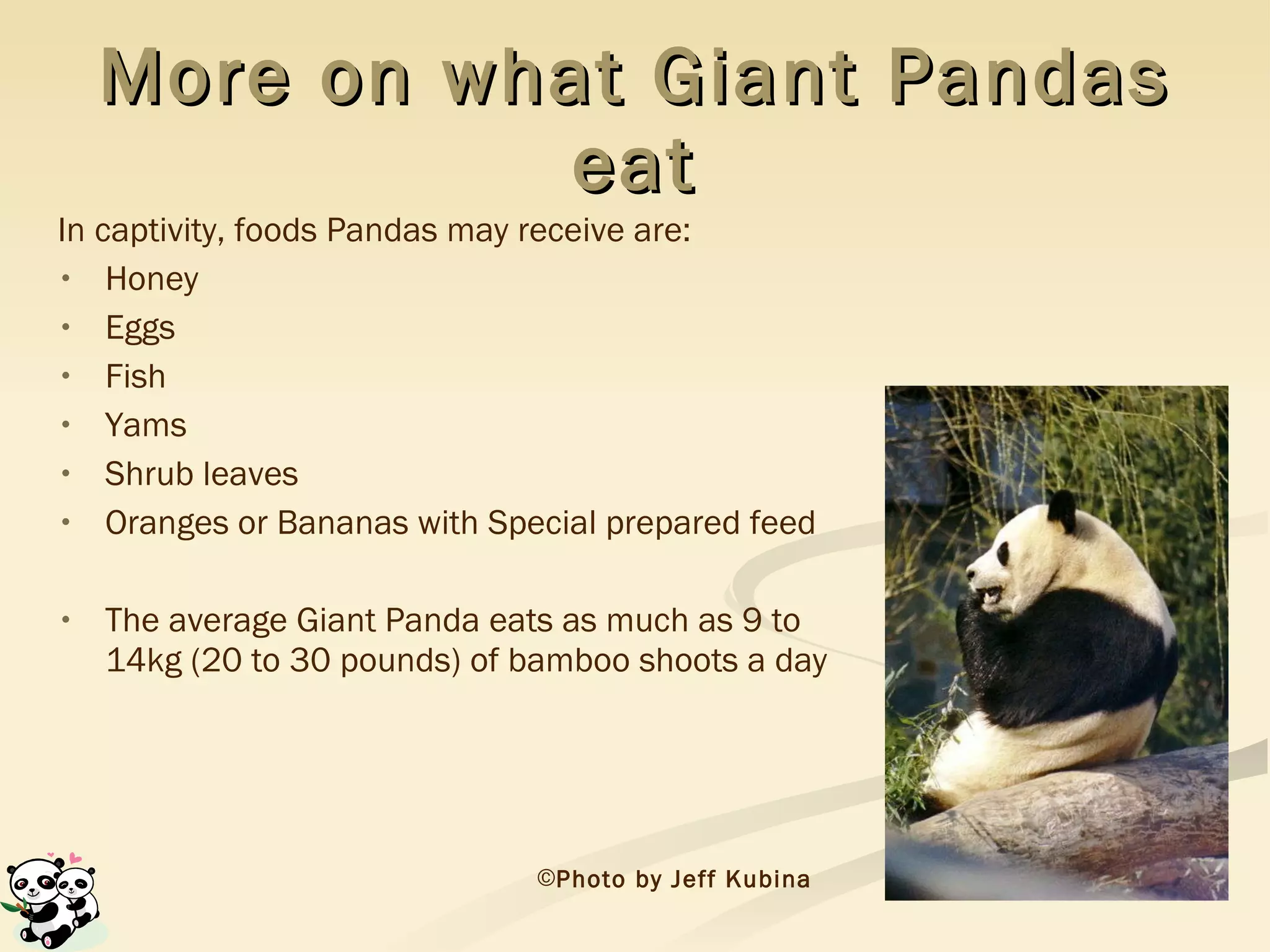
In captivity, foods Pandas may receive are: Honey Eggs Fish Yams Shrub leaves Oranges or Bananas with Special prepared feed The average Giant Panda eats as much as 9 to 14kg (20 to 30 pounds) of bamboo shoots a day More on what Giant Pandas eat Photo by Jeff Kubina
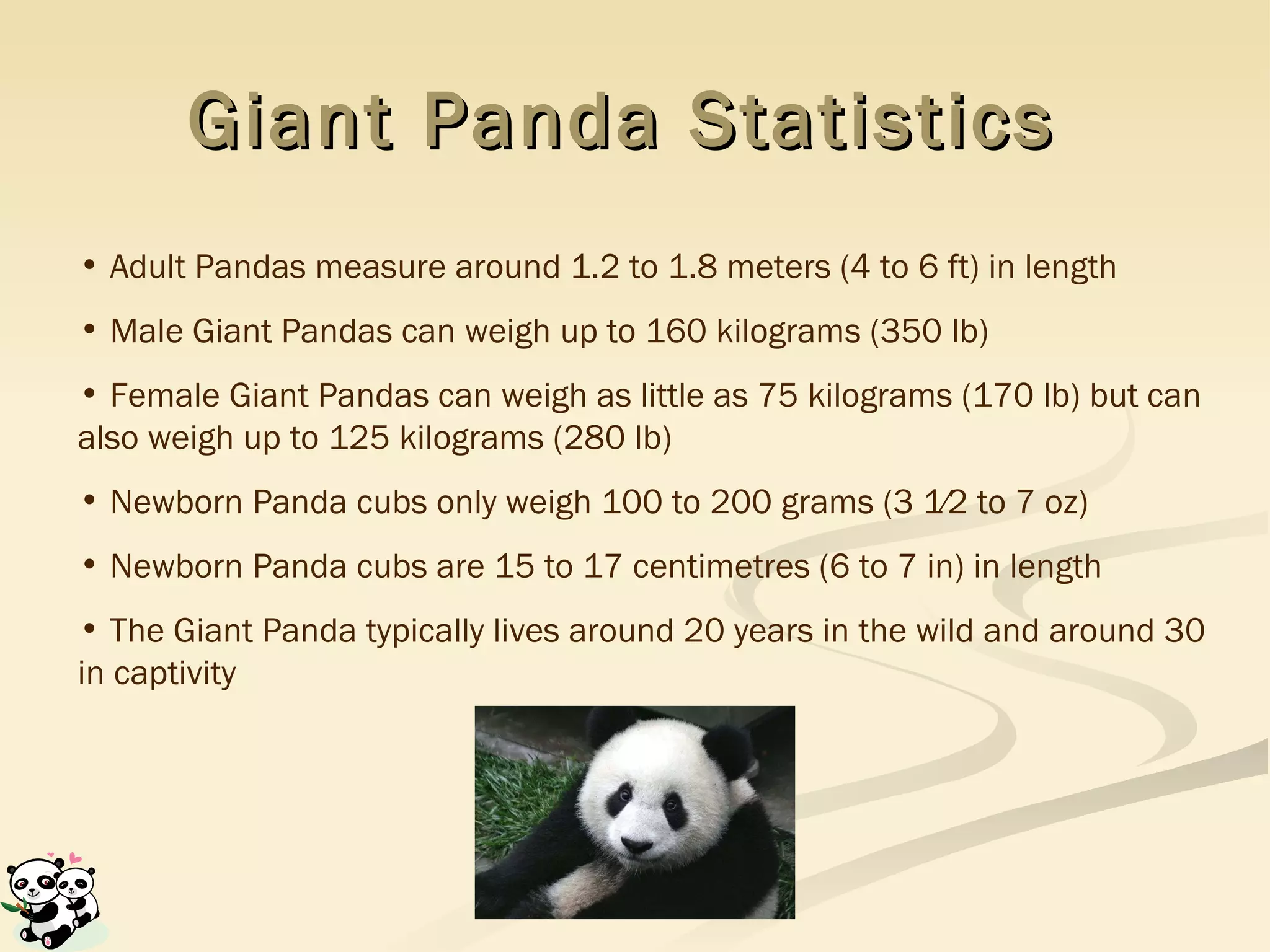
Giant Panda Statistics  Adult Pandas measure around 1.2 to 1.8 meters (4 to 6 ft) in length Male Giant Pandas can weigh up to 160 kilograms (350 lb) Female Giant Pandas can weigh as little as 75 kilograms (170 lb) but can also weigh up to 125 kilograms (280 lb)  Newborn Panda cubs only weigh  100 to 200 grams (3 1⁄2 to 7 oz)  Newborn Panda cubs are  15 to 17 centimetres (6 to 7 in) in length  The Giant Panda typically lives around 20 years in the wild and around 30 in captivity
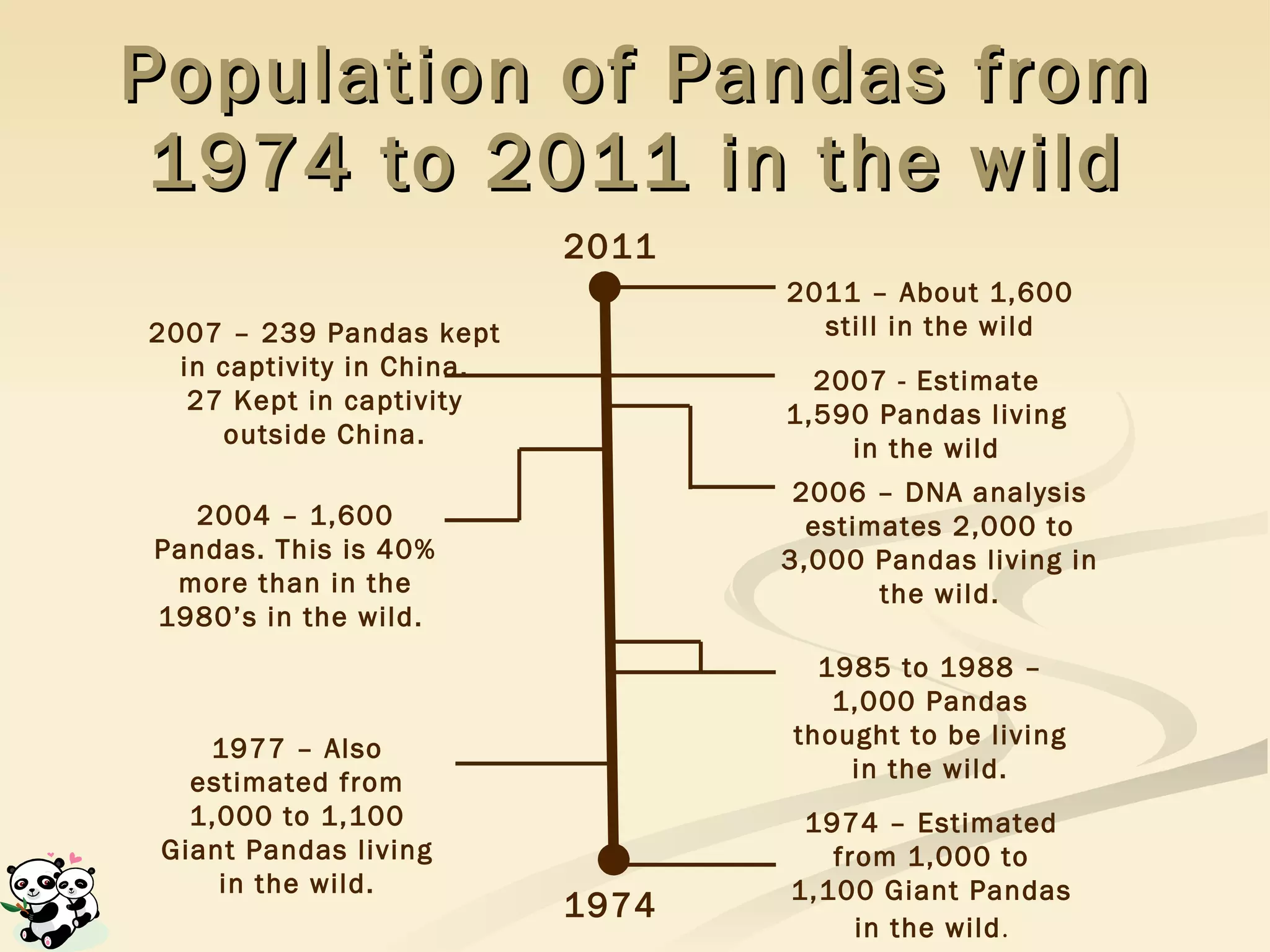
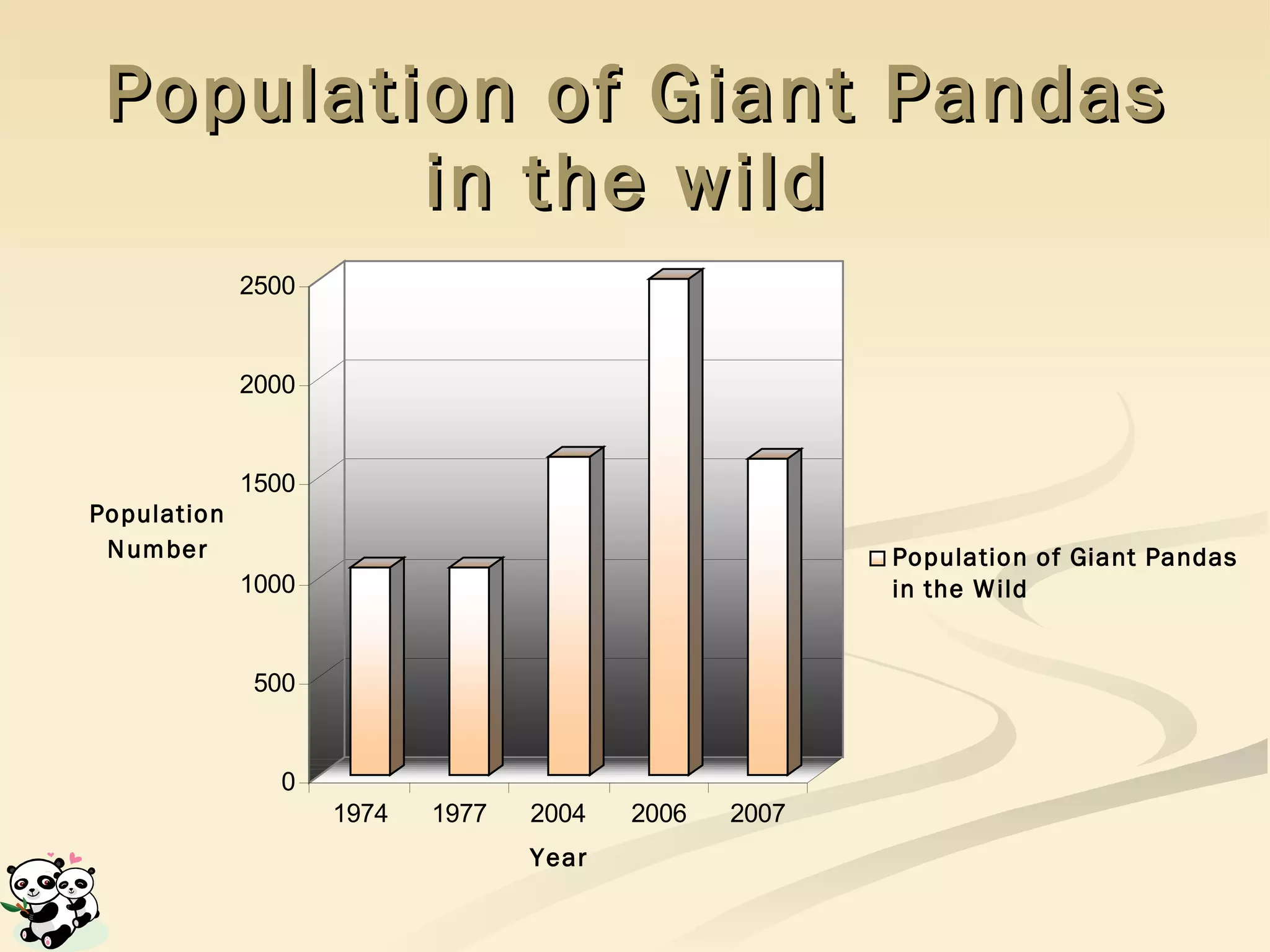
Population of Pandas from 1974 to 2011 in the wild 1974 – Estimated from 1,000 to 1,100 Giant Pandas in the wild . 1974 2006 – DNA analysis estimates 2,000 to 3,000 Pandas living in the wild. 2007 – 239 Pandas kept in captivity in China. 27 Kept in captivity outside China. 2007 - Estimate 1,590 Pandas living in the wild 2004 – 1,600 Pandas. This is 40% more than in the 1980’s in the wild.  2011 1977 – Also estimated from 1,000 to 1,100 Giant Pandas living in the wild. 2011 – About 1,600 still in the wild 1985 to 1988 – 1,000 Pandas thought to be living in the wild.
Population of Giant Pandas in the wild
WWF and Pandas The WWF’s (World Wide Fund for Nature) goal is to stop the degradation of the planets natural environment.  In Qinling, WWF’s vision for 2012 is: That the Panda population will increase by at least 10%  Its protected habitats will increase by at least 80% WWF have set the following targets for within the next 10 to 20 years in Minshan: 5% increase in forest cover 30% expansion of the Panda habitat Reconnection of all Giant Panda habitats in region No further decline of the Giant Panda population
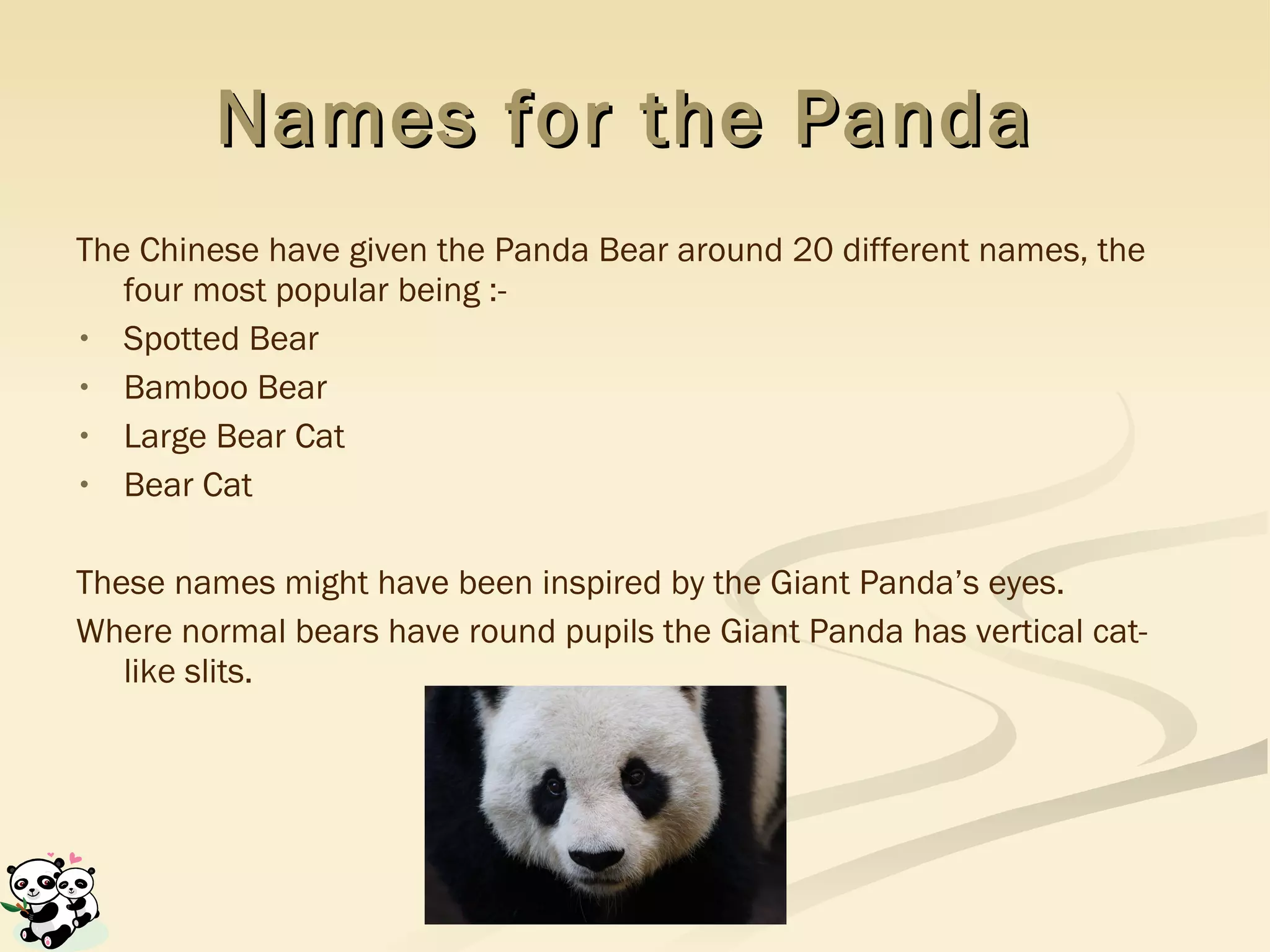
Names for the Panda   The Chinese have given the Panda Bear around 20 different names, the four most popular being :- Spotted Bear Bamboo Bear Large Bear Cat Bear Cat These names might have been inspired by the Giant Panda’s eyes.  Where normal bears have round pupils the Giant Panda has vertical cat-like slits.
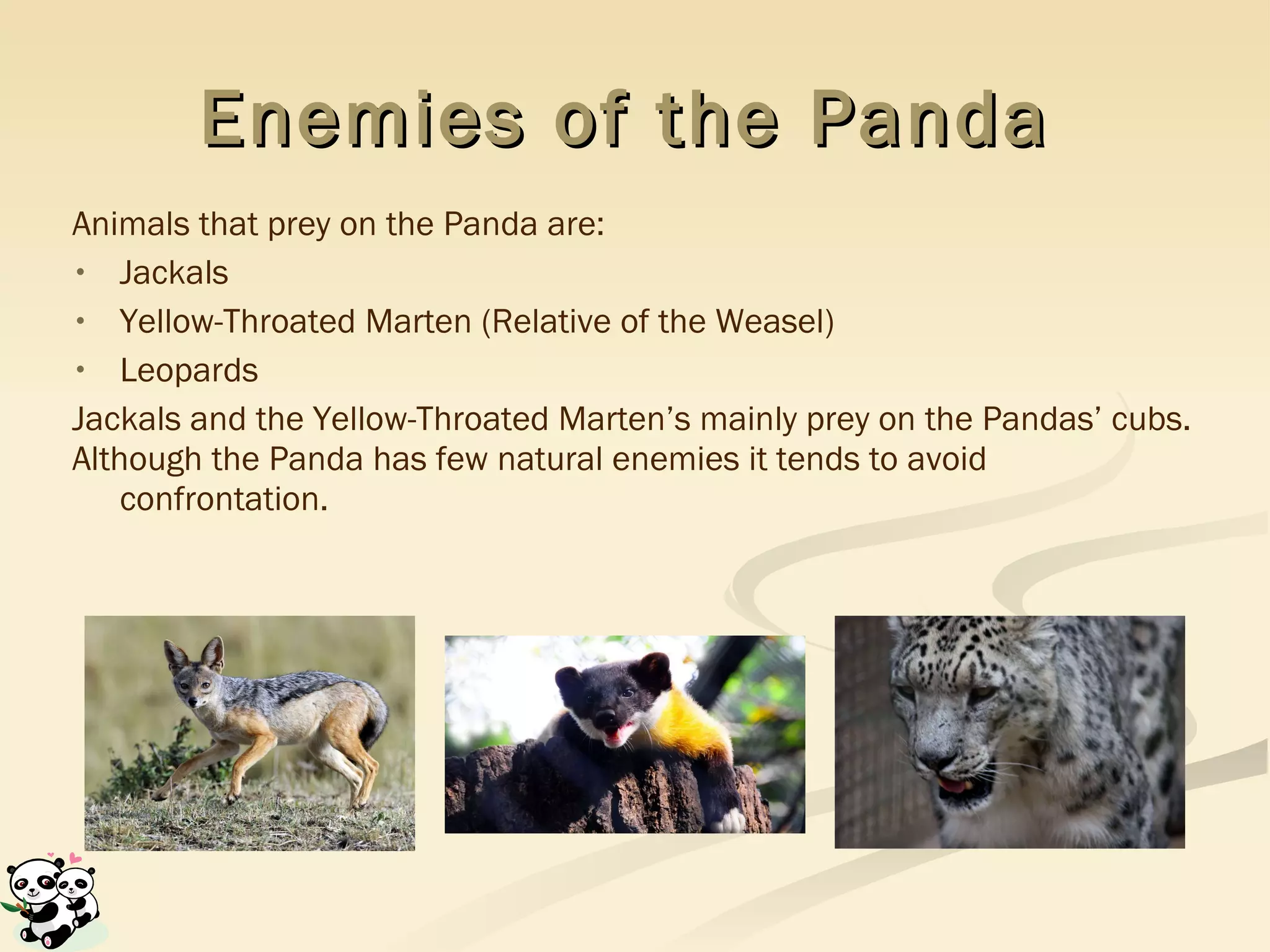
Enemies of the Panda   Animals that prey on the Panda are: Jackals Yellow-Throated Marten (Relative of the Weasel)  Leopards Jackals and the Yellow-Throated Marten’s mainly prey on the Pandas’ cubs. Although the Panda has few natural enemies it tends to avoid confrontation.
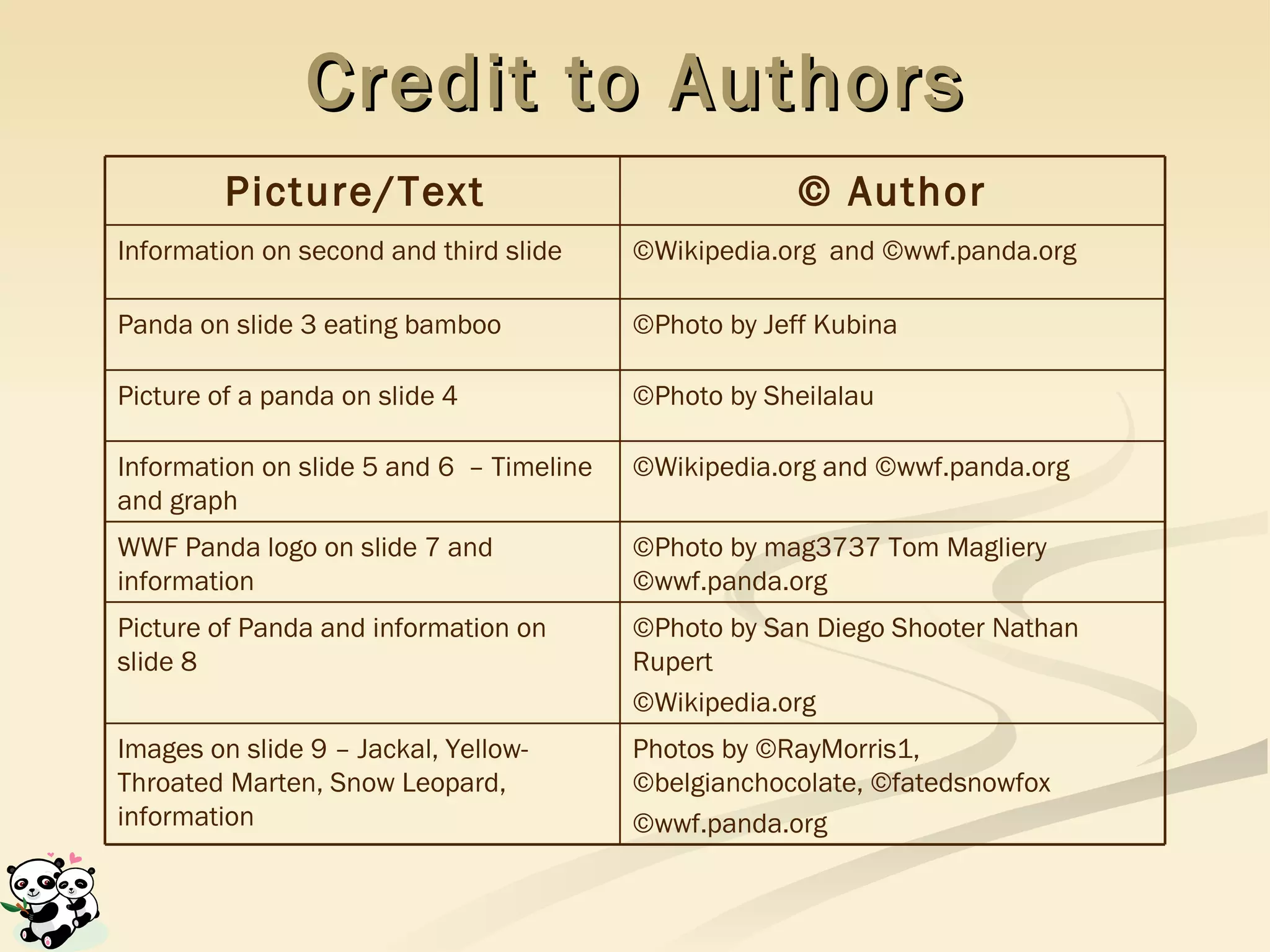
Credit to Authors © Wikipedia.org and  © wwf.panda.org Information on slide 5 and 6  – Timeline and graph Photos by  ©RayMorris1 ,  ©belgianchocolate, © fatedsnowfox ©wwf.panda.org Images on slide 9 – Jackal, Yellow-Throated Marten, Snow Leopard, information ©Photo by San Diego Shooter Nathan Rupert ©Wikipedia.org  Picture of Panda and information on slide 8 ©Photo by mag3737 Tom Magliery ©wwf.panda.org WWF Panda logo on slide 7 and information  © Photo by Sheilalau  Picture of a panda on slide 4 ©Photo by Jeff Kubina Panda on slide 3 eating bamboo © Wikipedia.org  and  © wwf.panda.org  Information on second and third slide  ©  Author Picture/Text

Giant Pandas

  • 1.
    Giant Pandas BySarah Poole
  • 2.
    Introduction I choseGiant Pandas as my chosen topic for my project because they are my favourite animal. Giant Pandas are native to central-Western and South Western China They are an endangered species from causes like poaching and deforestation Habitat and food source are destroyed and they are poached for their fur coat Pandas live on a diet that consists of 99% Bamboo. They have also been known to eat: Other grasses Wild Tubers Or even meat in the form of Birds, Rodents or Carrion
  • 3.
    In captivity, foodsPandas may receive are: Honey Eggs Fish Yams Shrub leaves Oranges or Bananas with Special prepared feed The average Giant Panda eats as much as 9 to 14kg (20 to 30 pounds) of bamboo shoots a day More on what Giant Pandas eat Photo by Jeff Kubina
  • 4.
    Giant Panda Statistics Adult Pandas measure around 1.2 to 1.8 meters (4 to 6 ft) in length Male Giant Pandas can weigh up to 160 kilograms (350 lb) Female Giant Pandas can weigh as little as 75 kilograms (170 lb) but can also weigh up to 125 kilograms (280 lb) Newborn Panda cubs only weigh 100 to 200 grams (3 1⁄2 to 7 oz) Newborn Panda cubs are 15 to 17 centimetres (6 to 7 in) in length The Giant Panda typically lives around 20 years in the wild and around 30 in captivity
  • 5.
    Population of Pandasfrom 1974 to 2011 in the wild 1974 – Estimated from 1,000 to 1,100 Giant Pandas in the wild . 1974 2006 – DNA analysis estimates 2,000 to 3,000 Pandas living in the wild. 2007 – 239 Pandas kept in captivity in China. 27 Kept in captivity outside China. 2007 - Estimate 1,590 Pandas living in the wild 2004 – 1,600 Pandas. This is 40% more than in the 1980’s in the wild. 2011 1977 – Also estimated from 1,000 to 1,100 Giant Pandas living in the wild. 2011 – About 1,600 still in the wild 1985 to 1988 – 1,000 Pandas thought to be living in the wild.
  • 6.
    Population of GiantPandas in the wild
  • 7.
    WWF and PandasThe WWF’s (World Wide Fund for Nature) goal is to stop the degradation of the planets natural environment. In Qinling, WWF’s vision for 2012 is: That the Panda population will increase by at least 10% Its protected habitats will increase by at least 80% WWF have set the following targets for within the next 10 to 20 years in Minshan: 5% increase in forest cover 30% expansion of the Panda habitat Reconnection of all Giant Panda habitats in region No further decline of the Giant Panda population
  • 8.
    Names for thePanda The Chinese have given the Panda Bear around 20 different names, the four most popular being :- Spotted Bear Bamboo Bear Large Bear Cat Bear Cat These names might have been inspired by the Giant Panda’s eyes. Where normal bears have round pupils the Giant Panda has vertical cat-like slits.
  • 9.
    Enemies of thePanda Animals that prey on the Panda are: Jackals Yellow-Throated Marten (Relative of the Weasel) Leopards Jackals and the Yellow-Throated Marten’s mainly prey on the Pandas’ cubs. Although the Panda has few natural enemies it tends to avoid confrontation.
  • 10.
    Credit to Authors© Wikipedia.org and © wwf.panda.org Information on slide 5 and 6 – Timeline and graph Photos by ©RayMorris1 , ©belgianchocolate, © fatedsnowfox ©wwf.panda.org Images on slide 9 – Jackal, Yellow-Throated Marten, Snow Leopard, information ©Photo by San Diego Shooter Nathan Rupert ©Wikipedia.org Picture of Panda and information on slide 8 ©Photo by mag3737 Tom Magliery ©wwf.panda.org WWF Panda logo on slide 7 and information © Photo by Sheilalau Picture of a panda on slide 4 ©Photo by Jeff Kubina Panda on slide 3 eating bamboo © Wikipedia.org and © wwf.panda.org Information on second and third slide © Author Picture/Text