Energy-    sources, availability, demand, affordability,
delivery

       Sustainability and Water
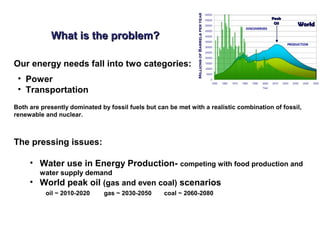
Millions of Barrels per year
                                                                                              Peak
                                                                                               Oil   World

            What is the problem?

Our energy needs fall into two categories:
 • Power
 • Transportation
Both are presently dominated by fossil fuels but can be met with a realistic combination of fossil,
renewable and nuclear.


The pressing issues:

     • Water use in Energy Production- competing with food production and
        water supply demand
     • World peak oil (gas and even coal) scenarios
          oil ~ 2010-2020      gas ~ 2030-2050     coal ~ 2060-2080
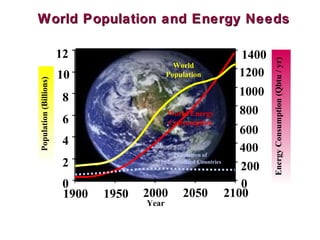
World Population and Energy Needs

                        12                                      1400


                                                                         Energy Consumption (Qbtu / yr)
                                                World
                        10                    Population        1200
Population (Billions)


                         8                                      1000
                                              World Energy      800
                         6                    Consumption
                                                                   600
                         4
                                              Population of
                                                                   400
                         2                Industrialized Countries
                                                                   200
                         0                                         0
                         1900   1950   2000 2050 2100
                                       Year
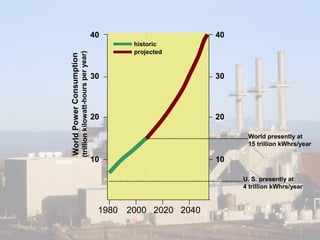
40                       40
                                                                    historic
                                                                    projected


                      (trillion kilowatt-hours per year)
World Power Consumption                                    30                       30


                                                           20                       20

                                                                                          World presently at
                                                                                          15 trillion kWhrs/year

                                                           10                       10

                                                                                         U. S. presently at
                                                                                         4 trillion kWhrs/year


                                                            1980   2000 2020 2040
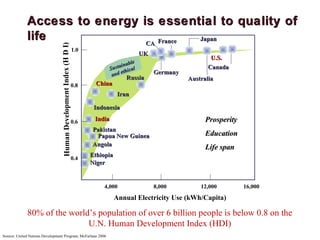
Access to energy is essential to quality of
             life              CA France
                                         Japan


                                Human Development Index (H D I)
                                                                  1.0
                                                                                               UK
                                                                                                                      U.S.
                                                                                        able
                                                                                   stain cal
                                                                                 Su thi                              Canada
                                                                                  and
                                                                                      e             Germany
                                                                                        Russia                Australia
                                                              0.8         China
                                                                                    Iran

                                                                         Indonesia

                                                              0.6        India                                      Prosperity
                                                                        Pakistan
                                                                         Papua New Guinea                           Education
                                                                        Angola
                                                                                                                    Life span
                                                                        Ethiopia
                                                              0.4
                                                                        Niger


                                                                            4,000                   8,000         12,000         16,000
                                                                                   Annual Electricity Use (kWh/Capita)

             80% of the world’s population of over 6 billion people is below 0.8 on the
                             U.N. Human Development Index (HDI)
Source: United Nations Development Program; McFarlane 2006
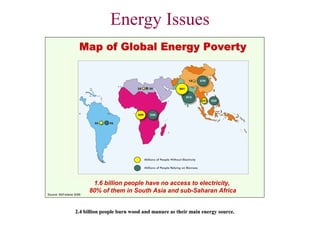
Energy Issues
                     Map of Global Energy Poverty


                          1.6 billion people have no access to electricity,
Source: McFarlane 2006
                         80% of them in South Asia and sub-Saharan Africa


                  2.4 billion people burn wood and manure as their main energy source.
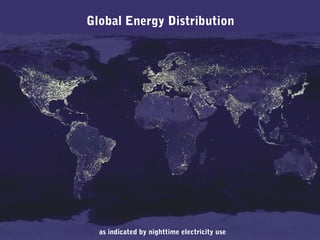
Global Energy Distribution


  as indicated by nighttime electricity use
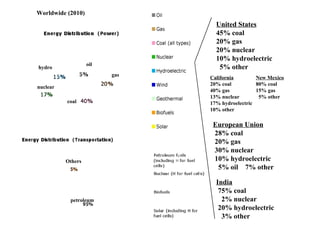
Worldwide (2010)
                                 United States
                                 45% coal
                                 20% gas
                                 20% nuclear
                                 10% hydroelectric
                   oil
hydro                             5% other
                         gas
                               California        New Mexico
                               20% coal          80% coal
nuclear
                               40% gas           15% gas
                               13% nuclear        5% other
          coal                 17% hydroelectric
                               10% other

                                European Union
                                28% coal
                                20% gas
                                30% nuclear
          Others                10% hydroelectric
                                 5% oil 7% other

                                 India
                                  75% coal
           petroleum               2% nuclear
                                  20% hydroelectric
                                   3% other
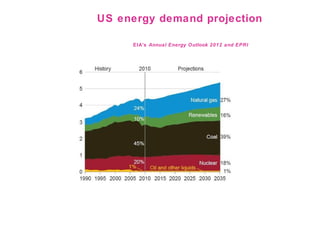
US energy demand projection

                      EIA's Annual Energy Outlook 2012 and EPRI


Electricity generation by fuel, 1990-2035 (TWh per year) (Image: EIA)
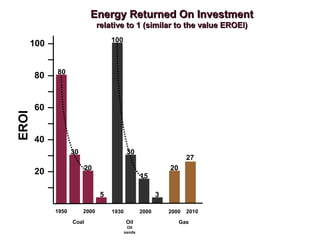
Energy Returned On Investment
                               relative to 1 (similar to the value EROEI)
                                   100
   100


            80
       80


       60
EROI


       40
                   30                      30
                                                                    27
                        20                                   20
       20                                         15

                               5                         3

            1950        2000       1930           2000       2000   2010
                   Coal                   Oil                     Gas
                                           Oil
                                          sands
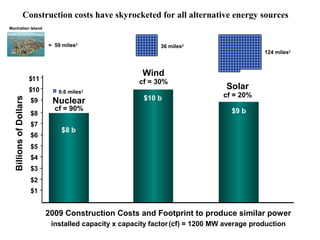
Construction costs have skyrocketed for all alternative energy sources
Manhattan Island


                              = 59 miles2                      36 miles2
                                                                                              124 miles2


                                                          Wind
                        $11                              cf = 30%
                        $10                                                        Solar
                                 0.6 miles2
                                                          $10 b                   cf = 20%
  Billions of Dollars


                        $9     Nuclear
                                cf = 90%                                            $9 b
                        $8
                        $7
                                  $8 b
                        $6
                        $5
                        $4
                        $3
                        $2
                        $1


                              2009 Construction Costs and Footprint to produce similar power
                               installed capacity x capacity factor (cf) = 1200 MW average production
Smart Grid = Technology, Policy…


                            Source: ISO New England
Thank you!
Questions?

2012 Reenergize the Americas Keynote: Abbas Ghassemi

  • 1.
    Energy- sources, availability, demand, affordability, delivery Sustainability and Water
  • 2.
    Millions of Barrelsper year Peak Oil World What is the problem? Our energy needs fall into two categories: • Power • Transportation Both are presently dominated by fossil fuels but can be met with a realistic combination of fossil, renewable and nuclear. The pressing issues: • Water use in Energy Production- competing with food production and water supply demand • World peak oil (gas and even coal) scenarios oil ~ 2010-2020 gas ~ 2030-2050 coal ~ 2060-2080
  • 3.
    World Population andEnergy Needs 12 1400 Energy Consumption (Qbtu / yr) World 10 Population 1200 Population (Billions) 8 1000 World Energy 800 6 Consumption 600 4 Population of 400 2 Industrialized Countries 200 0 0 1900 1950 2000 2050 2100 Year
  • 4.
    40 40 historic projected (trillion kilowatt-hours per year) World Power Consumption 30 30 20 20 World presently at 15 trillion kWhrs/year 10 10 U. S. presently at 4 trillion kWhrs/year 1980 2000 2020 2040
  • 5.
    Access to energyis essential to quality of life CA France Japan Human Development Index (H D I) 1.0 UK U.S. able stain cal Su thi Canada and e Germany Russia Australia 0.8 China Iran Indonesia 0.6 India Prosperity Pakistan Papua New Guinea Education Angola Life span Ethiopia 0.4 Niger 4,000 8,000 12,000 16,000 Annual Electricity Use (kWh/Capita) 80% of the world’s population of over 6 billion people is below 0.8 on the U.N. Human Development Index (HDI) Source: United Nations Development Program; McFarlane 2006
  • 6.
    Energy Issues Map of Global Energy Poverty 1.6 billion people have no access to electricity, Source: McFarlane 2006 80% of them in South Asia and sub-Saharan Africa 2.4 billion people burn wood and manure as their main energy source.
  • 7.
    Global Energy Distribution as indicated by nighttime electricity use
  • 8.
    Worldwide (2010) United States 45% coal 20% gas 20% nuclear 10% hydroelectric oil hydro 5% other gas California New Mexico 20% coal 80% coal nuclear 40% gas 15% gas 13% nuclear 5% other coal 17% hydroelectric 10% other European Union 28% coal 20% gas 30% nuclear Others 10% hydroelectric 5% oil 7% other India 75% coal petroleum 2% nuclear 20% hydroelectric 3% other
  • 9.
    US energy demandprojection EIA's Annual Energy Outlook 2012 and EPRI Electricity generation by fuel, 1990-2035 (TWh per year) (Image: EIA)
  • 10.
    Energy Returned OnInvestment relative to 1 (similar to the value EROEI) 100 100 80 80 60 EROI 40 30 30 27 20 20 20 15 5 3 1950 2000 1930 2000 2000 2010 Coal Oil Gas Oil sands
  • 11.
    Construction costs haveskyrocketed for all alternative energy sources Manhattan Island = 59 miles2 36 miles2 124 miles2 Wind $11 cf = 30% $10 Solar 0.6 miles2 $10 b cf = 20% Billions of Dollars $9 Nuclear cf = 90% $9 b $8 $7 $8 b $6 $5 $4 $3 $2 $1 2009 Construction Costs and Footprint to produce similar power installed capacity x capacity factor (cf) = 1200 MW average production
  • 12.
    Smart Grid =Technology, Policy… Source: ISO New England
  • 13.

Editor's Notes

  • #5 This is the world energy consumption curve, and will determine the more important aspects of our economic, environmental and political future. The green line is the historic use up to the present and the red is the projected use based upon United Nations population estimates and Deutch and Moniz (2006) assumptions for per capita increases in both developed and developing countries . Global electricity use recently passed 15 trillion kilowatt-hours per year and is projected to double by 2040.
  • #6 If you look at the United Nations Human Development Index, which is an excellent indication of the quality of life that most humans aspire to, you can see most western countries are in the energy fat region, and we can certainly afford to conserve, buy compact fluorescence, hybrid cars, etc., so that we could drop back to where the British are which is pretty efficient overall. But there is not even a billion people in this energy fat zone. The other 5 billion are in the lower zone and they desire, and will get to, this zone, one way or another. And it will be primarily by using fossil fuel. That is what we have to change if we have any chance of reaching our goal of sustainability
  • #9 . The present world energy distribution falls into two categories - power and transportation - and looks like this. It is very dependent upon where you live. Transportation is almost completely petroleum-based. For power, the U.S. is basically 70% fossil fuel, 20% nuclear and a little bit of everything else. New Mexico, where we live, is almost all coal. New Jersey has the highest percentage of nuclear in the U.S., and California is the most diversified, but it also has the highest cost for electricity in the U.S. Europe is a little better - more nuclear (because of France) less coal and more hydroelectric.
  • #11 Another way to look at costs is the Energy Return on Energy Invested, or the traditional ratio of Energy Return on Investment, shown here. It is the ratio of energy invested to energy returned from that source and the larger the number the better the value, the closer to one the more it is of no use. It is no wonder that when fossil fuel came on the scene in the early 20th century the return was enormous, and our entire economy became fueled by fossil fuel, and our standard of living increased proportionately. Of course, this was the most easily recoverable deposits. [click] As time went on, it became more difficult to recover the material, took more energy and effort and the return was less. Developing the unconventional sources such as oil sands, coal liquification, and others drops the return even more. Ethanol production is the least effective of all and barely manages to exceed one. [click] Biodiesel is slightly more effective, and if oil-rich sources such as algae are used, or bio-engineering for cellulosics is successful, the return increases significantly, but never to the level of conventional fossil fuel. [click] Nuclear increases significantly after 1990 because of increases in efficiency and capacity, standardizing of designs, and increased design life. [click]