Stories of Change:
Ghana
April 2020
Prepared by:
Richmond Aryeetey (University of Ghana), Afua Atuobi-Yeboah (University of Ghana), Mara van den Bold
(International Food Policy Research Institute), Nick Nisbett (Institute of Development Studies
Overview
1. Background & Objectives
2. Methodology
3. Results
4. Conclusions
5. Recommendations
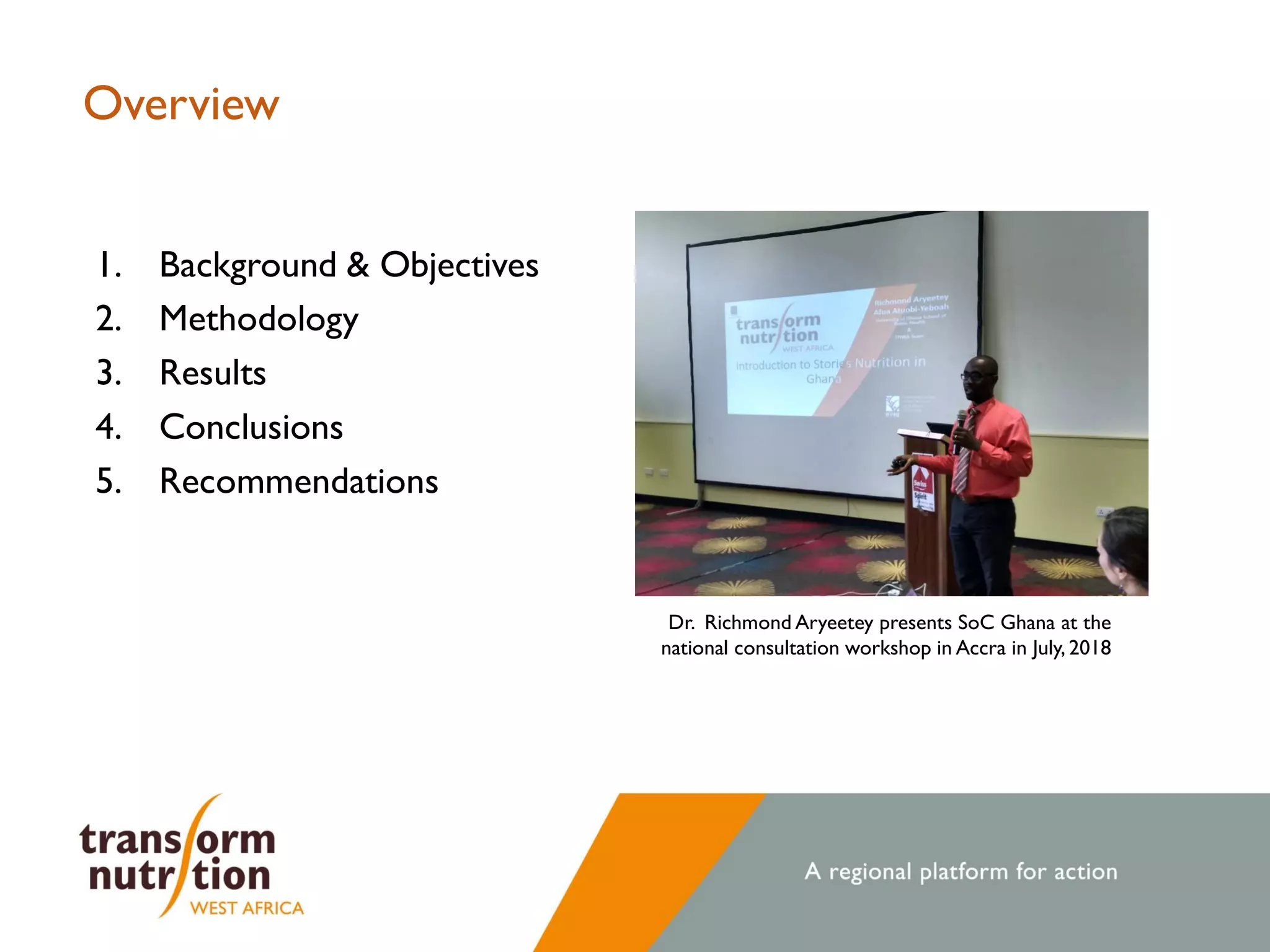
Dr. Richmond Aryeetey presents SoC Ghana at the
national consultation workshop in Accra in July, 2018
1. Background and Objectives
Background & Objectives
Stories of Change
• A mixed-methods study that examines changes in outcomes and drivers of nutrition, changes in nutrition-
relevant policy and practice over time, as well as perspectives of those involved in nutrition-relevant policy
and programming, in order to capture (experiential) learning on how to address malnutrition challenges in
different contexts.
• SoC’s objective is to improve agenda setting, conceptualization and implementation of nutrition-
relevant policies and program planning at national/subnational levels in selected countries.
Transform Nutrition West Africa (TNWA)
• TNWA is a regional platform that aims to enable effective policy and programmatic action on nutrition,
funded by the Bill & Melinda Gates Foundation (2017-2021), and led by the International Food Policy
Research Institute in collaboration with several partners.
• TNWA’s objective is to improve and support policy and program decisions and actions to
accelerate reductions in maternal and child undernutrition in the region, through an inclusive
process of
• i) knowledge generation on approaches to improve maternal and child nutrition
• ii) knowledge mobilization to strengthen enabling environments, and inform and improve nutrition-
relevant policy and programming
• iii) stakeholder engagement and leadership capacity strengthening
TNWA SoC countries and teams
SoC Ghana
• University of Ghana: Richmond
Aryeetey, Afua Atuobi-Yeboah
• IFPRI: Lucy Billings, Mariama Touré
SoC Nigeria
• IFPRI: Namukolo Covic, Mariama Touré
• University of Ibadan: Olutayo Adeyemi
SoC Burkina Faso
• IFPRI: Elodie Becquey, Zuzanna Turowska, Mariama Touré, Ampa Diatta, Loty
Diop, Emilie Buttarelli
• Institut Supérieur des Sciences de la Population (ISSP): Issa Sombié
• Research partners in-country: SNV; 4 national CSOs within the Voice for
Change Partnership (V4CP)
Overall coordination/support
Nick Nisbett (IDS)
Mara van den Bold (IFPRI)
• TNWA supports Stories of Change
studies in Burkina Faso, Ghana, and
Nigeria (2018–2020).
• This work builds upon similar Stories
of Change studies carried out in
2015-2017 in Senegal, Zambia,
Ethiopia, Bangladesh, Nepal, and
Odisha, India as part of the Transform
Nutrition Research consortium, as
well as several other SoC studies in
Malawi,Tanzania, Rwanda,Vietnam,
and India (Gujarat,Tamil Nadu,
Chattisgarh, Maharashtra).
Stories of Change – Ghana “relatively strong consensus exists on what
needs to be done, but much less is known
about how to operationalize the right mix of
actions in different contexts, how to do so at a
scale that matches the size of the problem, in
an equitable manner – and how to do so in
ways that link nutrition-specific and nutrition-
sensitive interventions” (Gillespie et al. 2015).
2. Capture anticipated future nutrition-relevant changes and challenges in Ghana (to 2025)
with a focus on political commitment to nutrition, policy and program coherence, and
implementation.
3. Frame a constructive discussion in mobilizing future actions and commitments.
4. Use stories and storytelling to cut through complexity and engage audiences.
Objectives:
1. Demonstrate how nutrition has changed in Ghana since 2008,
by assessing nutrition-relevant data, programs and policies,
and by capturing experiential learning from those doing
nutrition-relevant work in the country.
• Specifically,better understand the drivers for the
observed changes in child stunting and anaemia,to
understand how and why change occurred.
Context
• Ghana is a Democratic Republic on Southern Coast of
West Africa
• Population is about 30 million and 3.5 persons/household
• Stunting prevalence for children under five years of age in
Ghana declined from 28% in 2008 to 18% in 2017,a
remarkable reduction.
• On the contrary, child anaemia prevalence only declined
from 76% to 66% over the same period.
• These changes occurred within a socioeconomic context
presumably favorable to nutrition outcomes – GDP
growth, improvements in infrastructure (roads, electricity)
as well as improvements in key social services such as
access to water and sanitation,health care, and education
services, and overall reductions in poverty, maternal and
child mortality, disease burden,hunger and undernutrition.
• The study aimed to better understand why and how these
changes occurred.
2. Methodology
Conceptual framework
SoC Ghana uses the conceptual
framework on enabling
environments set forth in
Gillespie et al. (2013) to
structure data collection and
analysis.
Gillespie et al. (2013) The politics of reducing malnutrition: Building commitment and
accelerating progress. Lancet 382: 552-69.
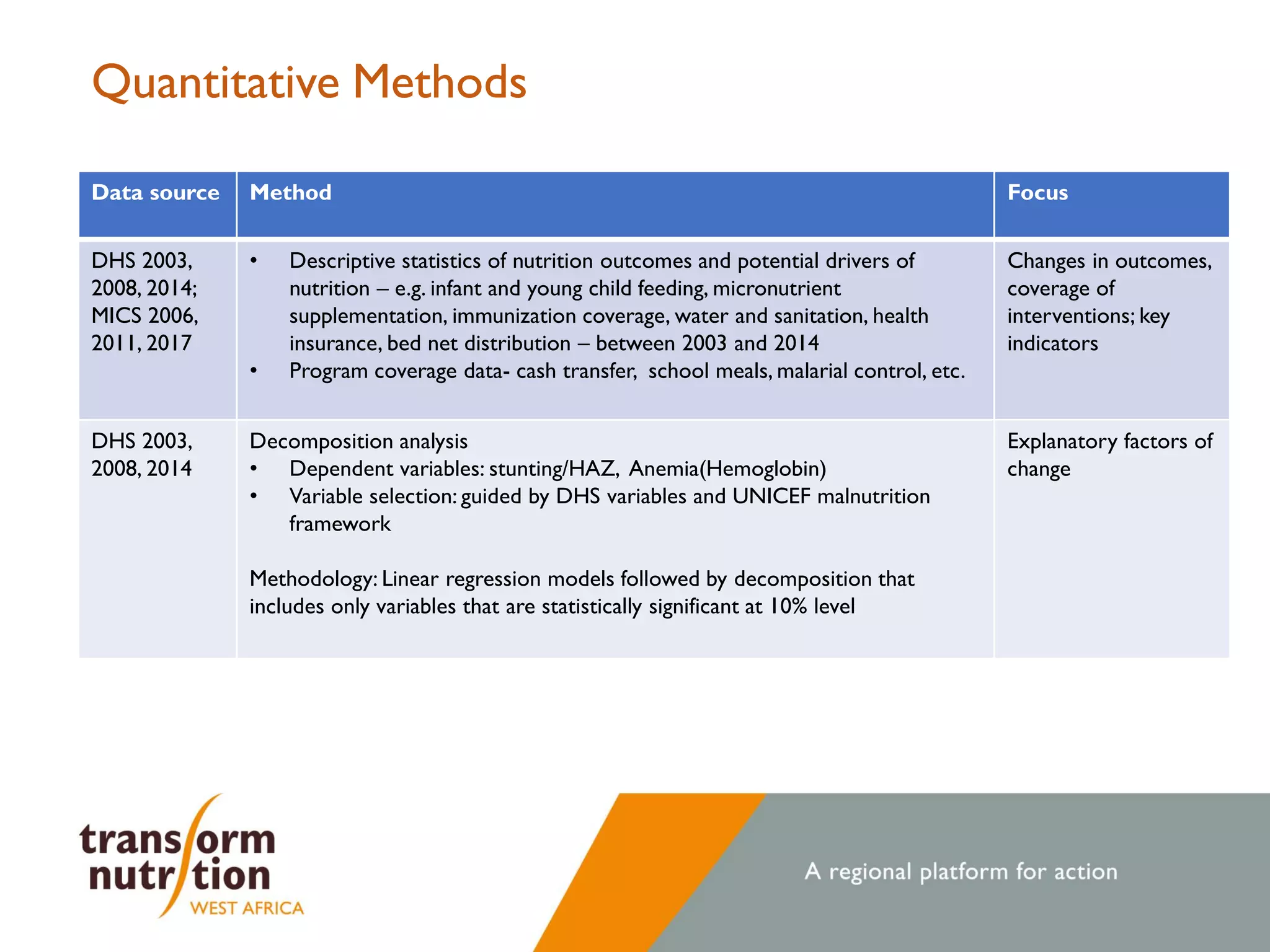
Quantitative Methods
Data source Method Focus
DHS 2003,
2008, 2014;
MICS 2006,
2011, 2017
• Descriptive statistics of nutrition outcomes and potential drivers of
nutrition – e.g. infant and young child feeding, micronutrient
supplementation, immunization coverage, water and sanitation, health
insurance, bed net distribution – between 2003 and 2014
• Program coverage data- cash transfer, school meals, malarial control, etc.
Changes in outcomes,
coverage of
interventions; key
indicators
DHS 2003,
2008, 2014
Decomposition analysis
• Dependent variables: stunting/HAZ, Anemia(Hemoglobin)
• Variable selection: guided by DHS variables and UNICEF malnutrition
framework
Methodology: Linear regression models followed by decomposition that
includes only variables that are statistically significant at 10% level
Explanatory factors of
change
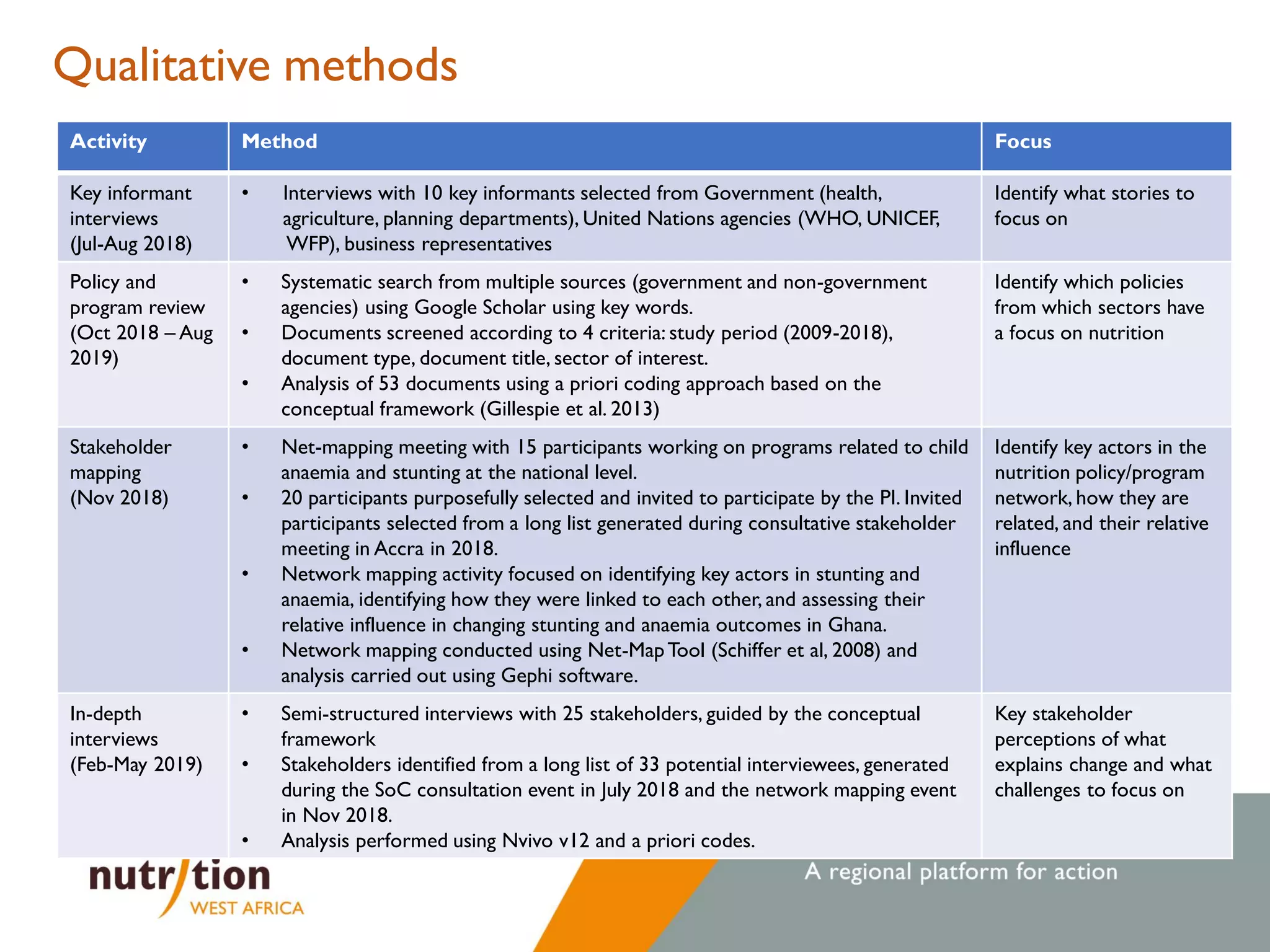
Activity Method Focus
Key informant
interviews
(Jul-Aug 2018)
• Interviews with 10 key informants selected from Government (health,
agriculture, planning departments), United Nations agencies (WHO, UNICEF,
WFP), business representatives
Identify what stories to
focus on
Policy and
program review
(Oct 2018 – Aug
2019)
• Systematic search from multiple sources (government and non-government
agencies) using Google Scholar using key words.
• Documents screened according to 4 criteria: study period (2009-2018),
document type, document title, sector of interest.
• Analysis of 53 documents using a priori coding approach based on the
conceptual framework (Gillespie et al. 2013)
Identify which policies
from which sectors have
a focus on nutrition
Stakeholder
mapping
(Nov 2018)
• Net-mapping meeting with 15 participants working on programs related to child
anaemia and stunting at the national level.
• 20 participants purposefully selected and invited to participate by the PI. Invited
participants selected from a long list generated during consultative stakeholder
meeting in Accra in 2018.
• Network mapping activity focused on identifying key actors in stunting and
anaemia, identifying how they were linked to each other, and assessing their
relative influence in changing stunting and anaemia outcomes in Ghana.
• Network mapping conducted using Net-MapTool (Schiffer et al, 2008) and
analysis carried out using Gephi software.
Identify key actors in the
nutrition policy/program
network, how they are
related, and their relative
influence
In-depth
interviews
(Feb-May 2019)
• Semi-structured interviews with 25 stakeholders, guided by the conceptual
framework
• Stakeholders identified from a long list of 33 potential interviewees, generated
during the SoC consultation event in July 2018 and the network mapping event
in Nov 2018.
• Analysis performed using Nvivo v12 and a priori codes.
Key stakeholder
perceptions of what
explains change and what
challenges to focus on
Qualitative methods
3. Results
Trend and decomposition analyses
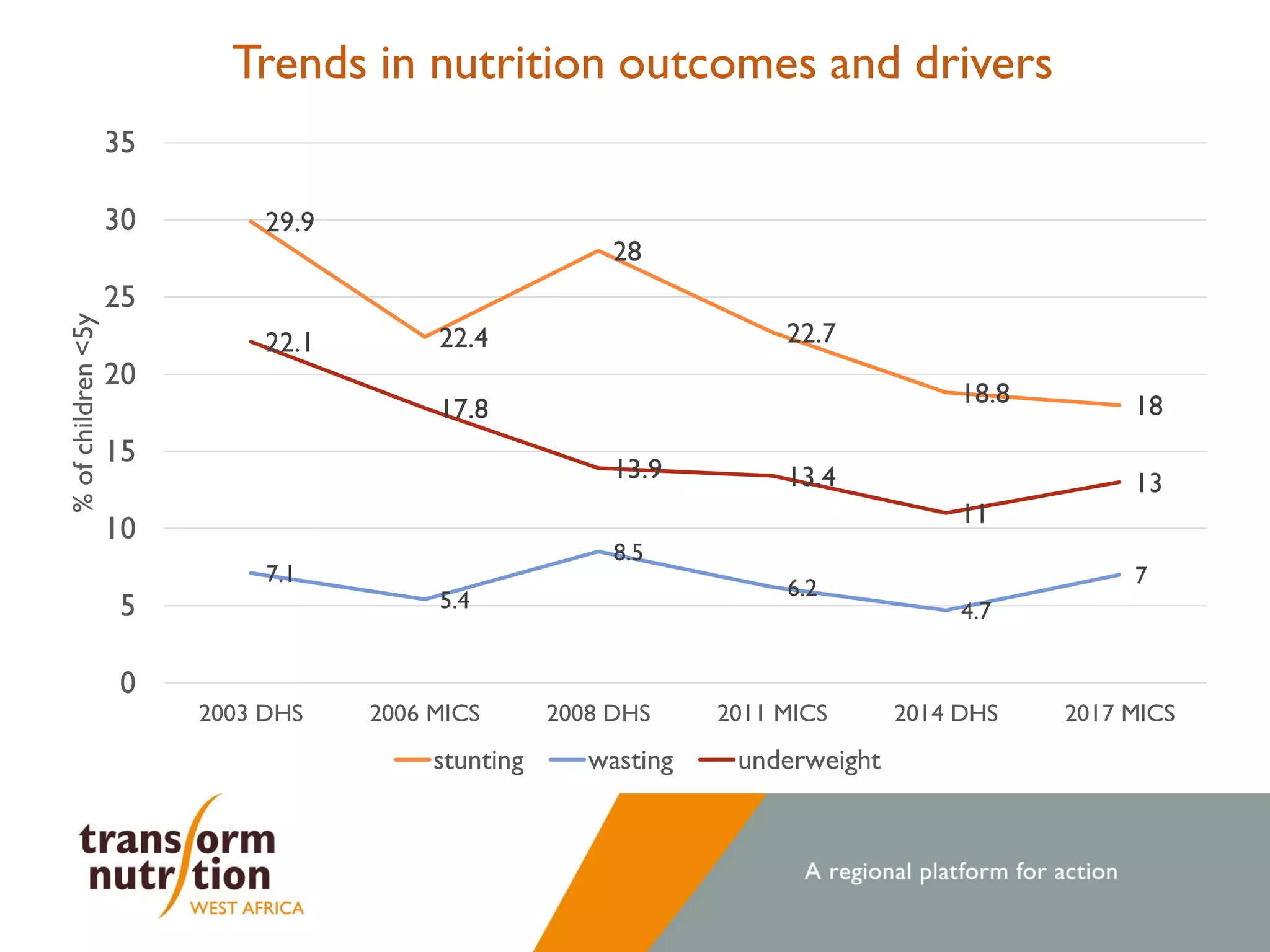
Trends in nutrition outcomes and drivers
29.9
22.4
28
22.7
18.8 18
7.1
5.4
8.5
6.2
4.7
7
22.1
17.8
13.9 13.4
11
13
0
5
10
15
20
25
30
35
2003 DHS 2006 MICS 2008 DHS 2011 MICS 2014 DHS 2017 MICS
%ofchildren<5y
stunting wasting underweight
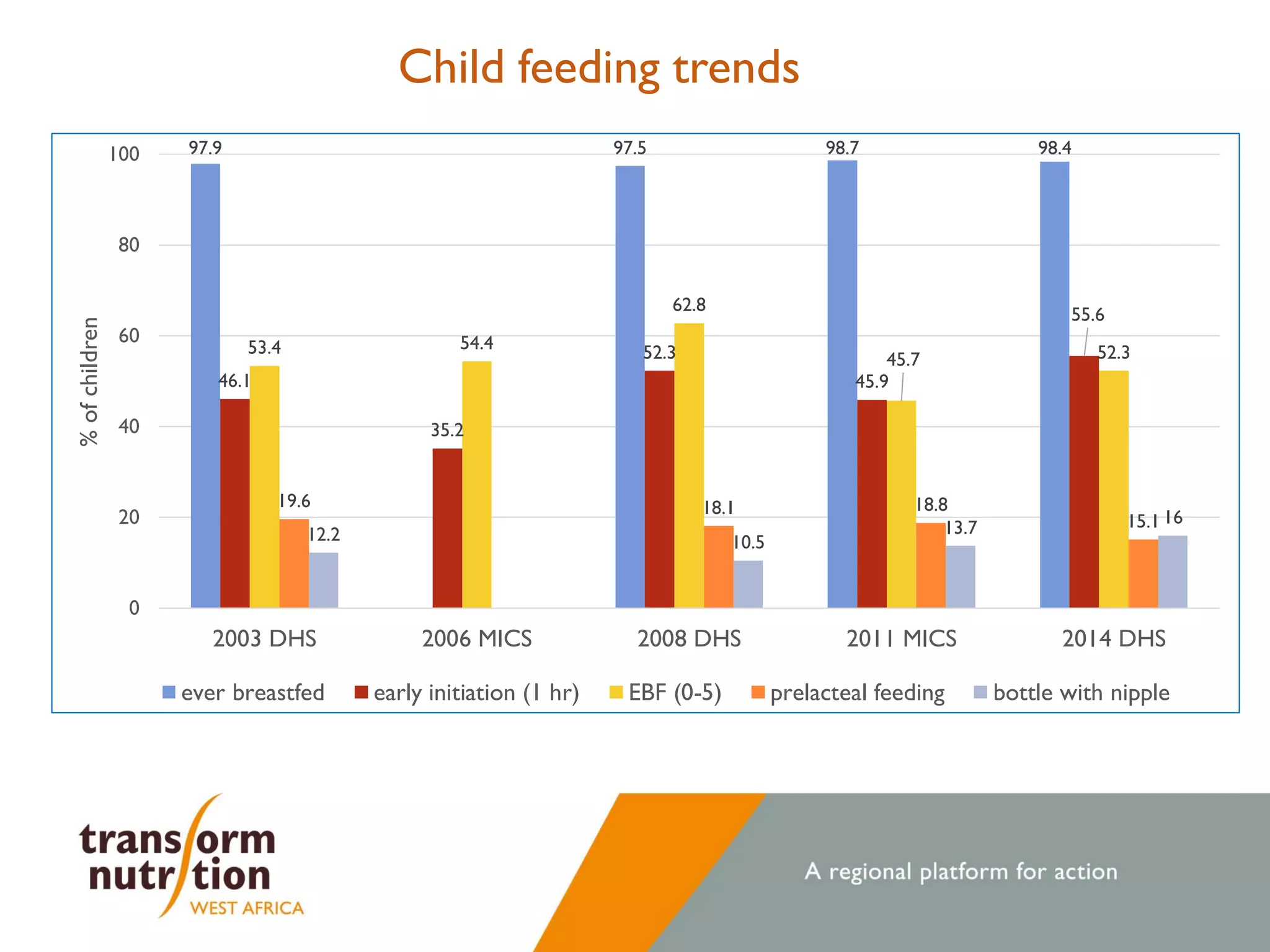
97.9 97.5 98.7 98.4
46.1
35.2
52.3
45.9
55.6
53.4 54.4
62.8
45.7 52.3
19.6 18.1 18.8
15.1
12.2 10.5
13.7
16
0
20
40
60
80
100
2003 DHS 2006 MICS 2008 DHS 2011 MICS 2014 DHS
%ofchildren
ever breastfed early initiation (1 hr) EBF (0-5) prelacteal feeding bottle with nipple
Child feeding trends
43
54.5
60.4
68
78.4
60.2
55.8
73.3
65.2
39.7 41.5
59.4
27.5
24.4
0
20
40
60
80
100
2003 DHS 2006 MICS 2008 DHS 2011 MICS 2014 DHS
%ofchildren6-59mo
maternal postpartum vit A Child Vitamin A
maternal Fe during preg for 90d+ child Iron (last week)
Micronutrient supplementation coverage among young
children
Decomposition analysis (stunting)
Characteristic 2003 2008 2014
Change
(2003-2014)
% of Change
Asset Index, 1-10 2.61 3.15 4.13 1.52 58
Maternal education (years) 4.18 4.53 5.02 0.85 20
Paternal education (years) 6.47 6.86 6.98 0.51 8
4 prenatal visits or more (%) 70 79 87 17 24
Born in medical facility (%) 41 54 69 28 67
Open defecation (%) 32 29 26 -6 -17
Improved water source (%) 40 76 79 39 96
Number of children 4.57 4.31 4.25 -0.32 -7
Birth interval (years) 3.76 3.84 3.98 0.22 6
Maternal height (cm) 158.92 158.78 158.91 -0.01 0
Presence of bednet in household (%) 25 73 81 57 231
Decomposition analysis (Anemia)
Characteristic
2003 2008 2014
Change
(2003-2014)
% of
Change
Asset Index, 1-10 2.7 3.3 4.3 1.6 59
Maternal education (years) 4.5 5.0 5.7 1.2 27
4 prenatal visits or more (%) 71 79 87 16 23
Improved Toilet (%) 69 71 75 6 8.7
Maternal underweight (%) 8.8 7.2 4.6 -4.2 -48
Percentage of households with bed
net (%)
25 73 81 56 224
Prevalence of diarrhea (%) 17 22 13 -4 -24
Fully immunized (%) 33 49 53 20 61
Decomposition analysis (summary)
• Using stunting (Height for age z-score <-2) as outcome,the total change explained is 42.6%.
• Using Height for age z-score as outcome,the total change explained is 65%.
• Using Hemoglobin concentration as outcome,the total change explained is 71%.
• Using anemia (Hemoglobin<11.0g/dL) as outcome,the total change explained is 51.3%.
0%
20%
40%
60%
80%
100%
Stunting Height-for-Age Anemia Hemoglobin
%ofvariabilityexplained
presence of Bednet Asset index 4+ ANC visits birth Interval
Maternal height born in medical facility Maternal Education Number of Children
Diarrhea Prevalence Full Immunization improved toilet unexplaineed
39.2
22.5
22.5
3.3
2.6
4
5.9
presence of Bednet
Asset index
4+ ANC visits
birth Interval
Maternal height
Maternal Education
Number of Children
Using stunting (Height for Age Z-score <-2) as the outcome variable,the total change explained is 42.6%.
Decomposition analysis (stunting)
39
32.1
13.7
2.5
2.4
10.6
presence of Bednet
Asset index
4+ ANC visits
birth Interval
Maternal height
born in medical facility
Using Height for Age Z-score (HAZ) as the outcome variable,the total change explained is 65%.
Decomposition analysis (HAZ)
19.4
42.7
16.9
9.7
1.8
6.9
2.5
presence of Bednet
Asset index
4+ ANC visits
Maternal Education
Diarrhea Prevalence
Full Immunization
improved toilet
Using Hemoglobin as the outcome variable,the total change explained is 71.0%.
Decomposition analysis (Hemoglobin)
47
21.4
18.9
2.5
10.1
Asset index
4+ ANC visits
Maternal Education
Diarrhea Prevalence
Full Immunization
Using anaemia (Hb <11.0 g/dL) as the outcome variable,the total change explained is 51.3%.
Decomposition analysis (Anaemia)
3. Results
Policy and program analysis, stakeholder
mapping, and stakeholder interviews
Policy and program analysis
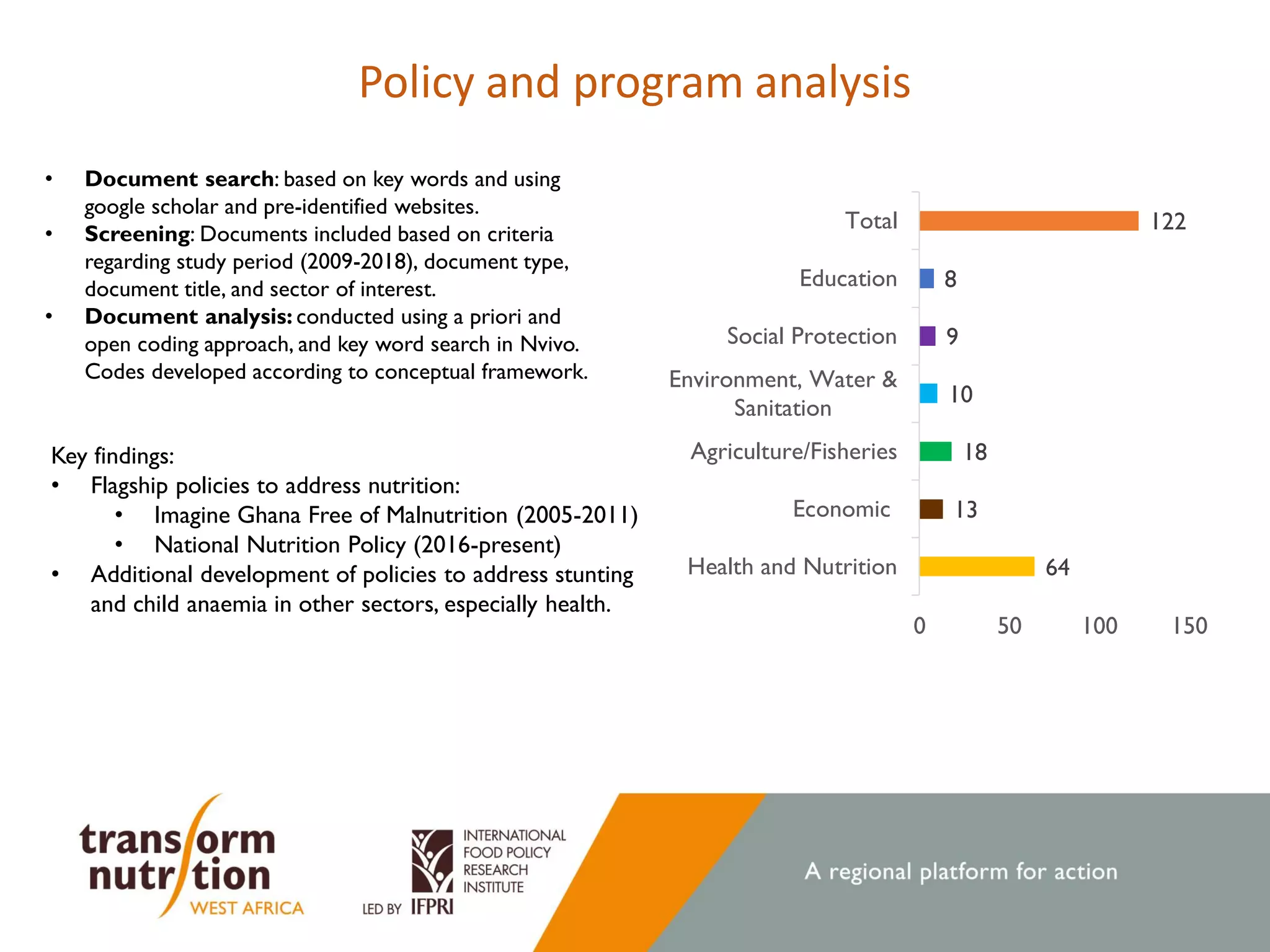
64
13
18
10
9
8
122
0 50 100 150
Health and Nutrition
Economic
Agriculture/Fisheries
Environment, Water &
Sanitation
Social Protection
Education
Total
• Document search: based on key words and using
google scholar and pre-identified websites.
• Screening: Documents included based on criteria
regarding study period (2009-2018), document type,
document title, and sector of interest.
• Document analysis: conducted using a priori and
open coding approach, and key word search in Nvivo.
Codes developed according to conceptual framework.
Key findings:
• Flagship policies to address nutrition:
• Imagine Ghana Free of Malnutrition (2005-2011)
• National Nutrition Policy (2016-present)
• Additional development of policies to address stunting
and child anaemia in other sectors, especially health.
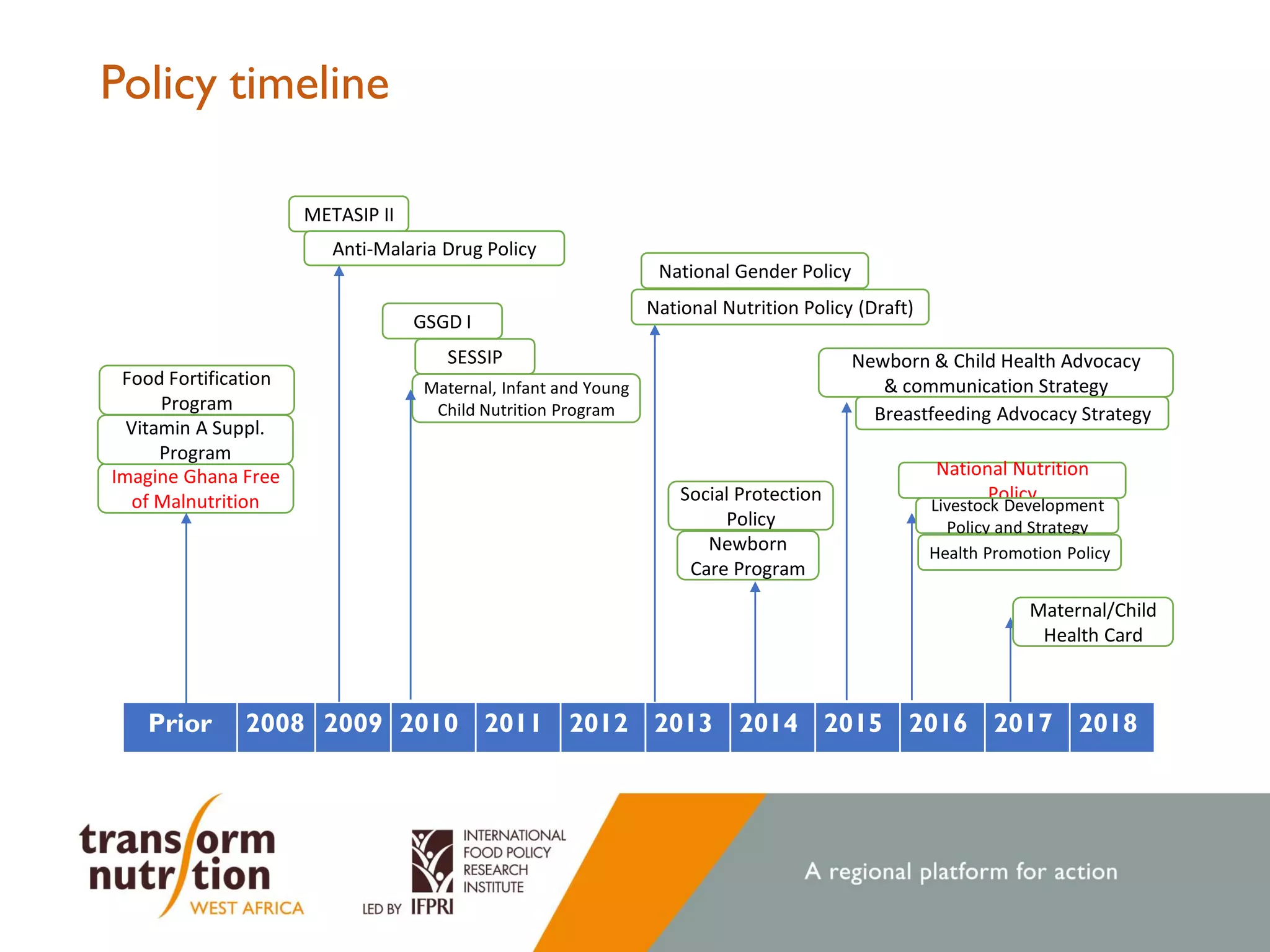
Prior 2008 2009 2010 2011 2012 2013 2014 2015 2016 2017 2018
METASIP II
GSGD I
SESSIP
Maternal, Infant and Young
Child Nutrition Program
Anti-Malaria Drug Policy
Imagine Ghana Free
of Malnutrition
Vitamin A Suppl.
Program
Food Fortification
Program
National Nutrition
Policy
Livestock Development
Policy and Strategy
Newborn & Child Health Advocacy
& communication Strategy
Breastfeeding Advocacy Strategy
Health Promotion Policy
Maternal/Child
Health Card
National Nutrition Policy (Draft)
National Gender Policy
Newborn
Care Program
Social Protection
Policy
Policy timeline
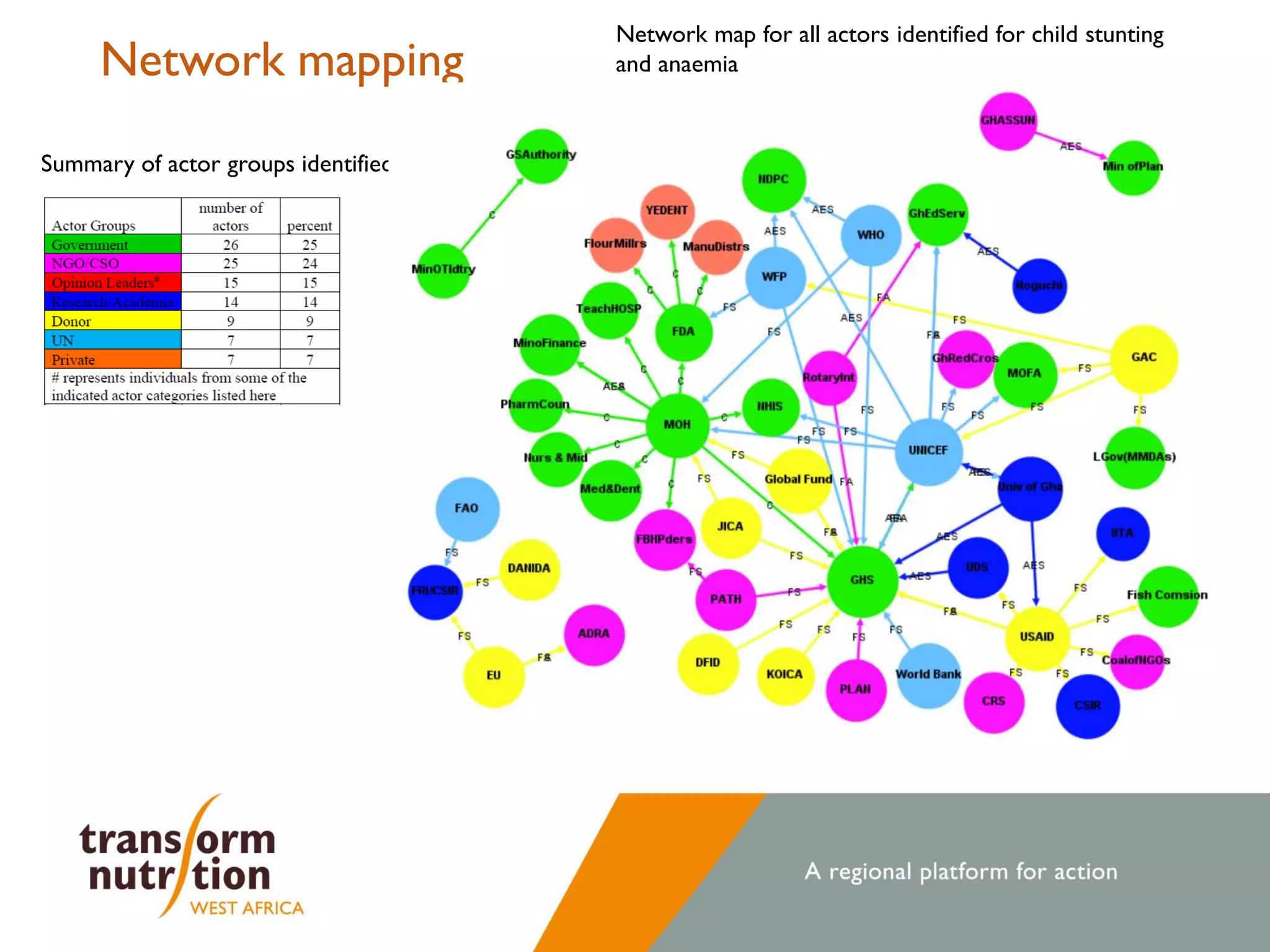
Network mapping
Summary of actor groups identified (n=103)
Network map for all actors identified for child stunting
and anaemia
Government
NGO/CSO
Research/Academia
Donor
UN
Private
Network of child stunting
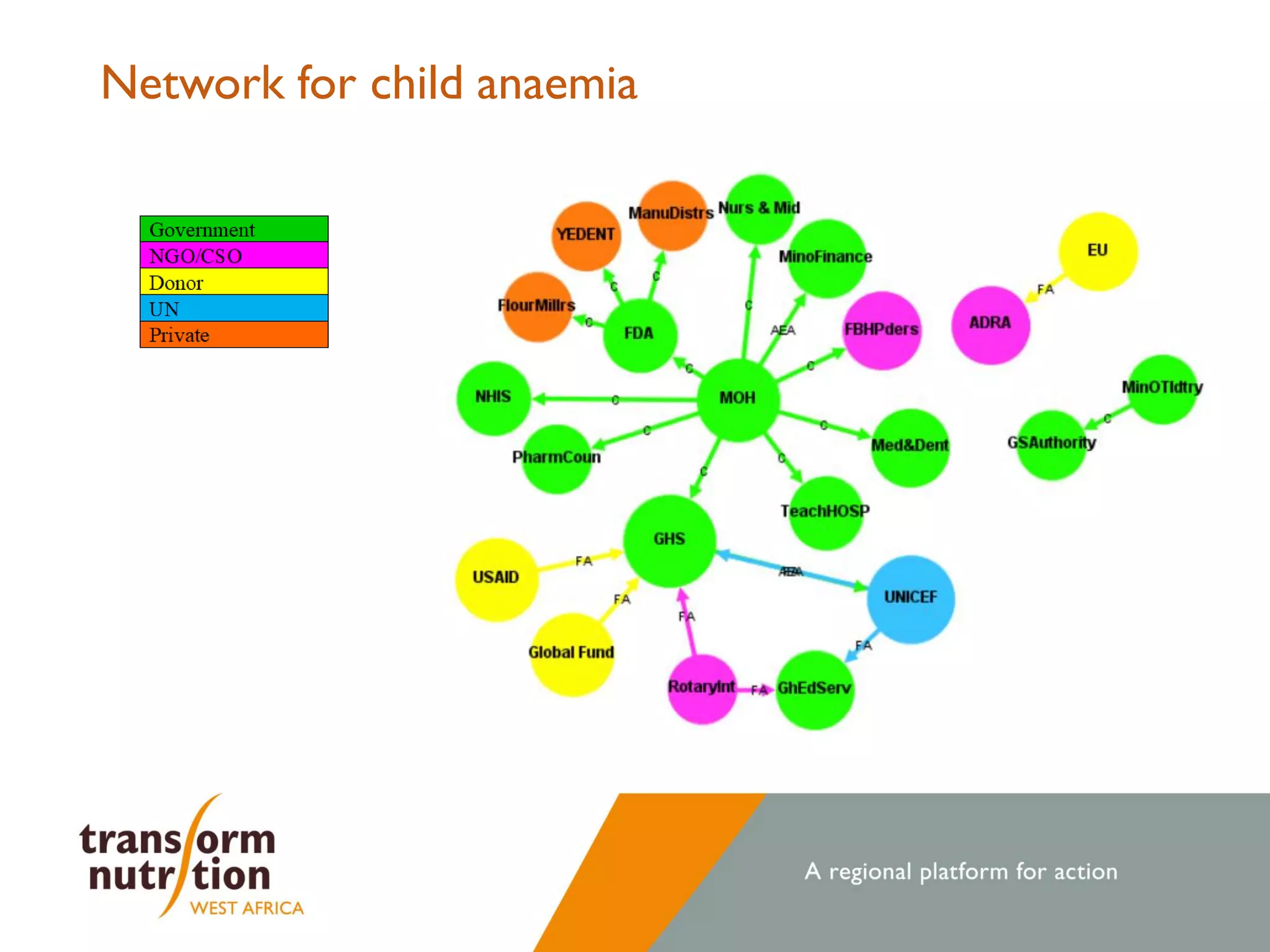
Network for child anaemia
Network mapping (summary)
• Broad spectrum of actors identified across sectors relevant for addressing child
anaemia and stunting (total n=103).
• A majority of institutions identified (25%) were located within the Government
of Ghana with the Ghana Health Service being the main implementing agency
• Less than half of actors (n=48) had any type of link to other actors; the
remaining actors (n=55) had no connections and were not considered
influential in the network.
• There were more links between actors for stunting than for anaemia.
• Ghana Health Service had the highest relative influence for stunting and
anaemia and associated with the majority of all link types (funding/technical
assistance; advocacy/evidence-based information).
• Ghana Health Service also had the highest overall in-degree centrality (i.e.
receives most input for addressing child stunting and anaemia) for all link types,
apart from formal command.
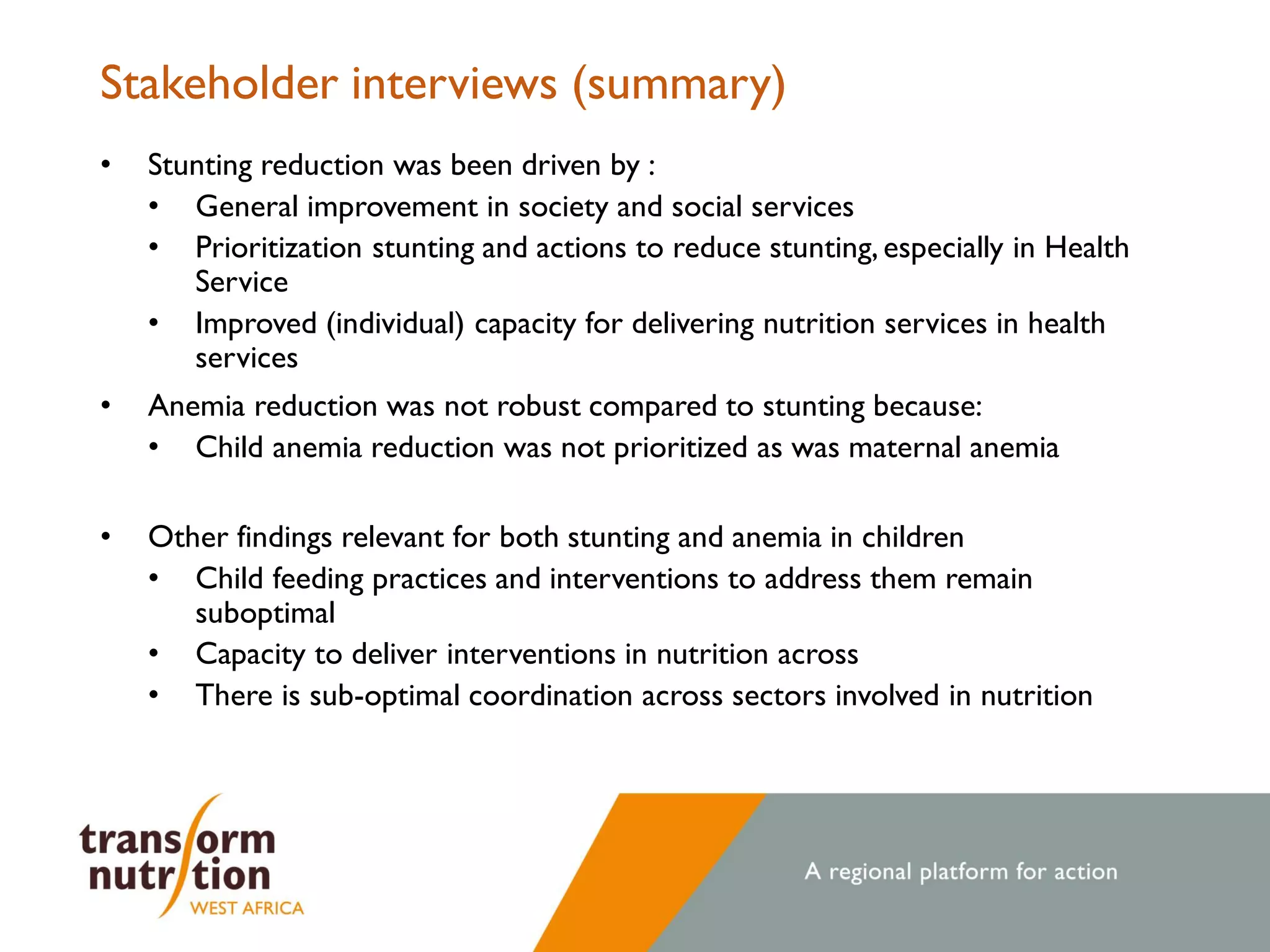
Stakeholder interviews (summary)
• Stunting reduction was been driven by :
• General improvement in society and social services
• Prioritization stunting and actions to reduce stunting, especially in Health
Service
• Improved (individual) capacity for delivering nutrition services in health
services
• Anemia reduction was not robust compared to stunting because:
• Child anemia reduction was not prioritized as was maternal anemia
• Other findings relevant for both stunting and anemia in children
• Child feeding practices and interventions to address them remain
suboptimal
• Capacity to deliver interventions in nutrition across
• There is sub-optimal coordination across sectors involved in nutrition
Stakeholder perspectives
‘’I think another thing that perhaps for advocacy purposes-wise,
this whole idea Ghana did the profile sometime back which tried
to translate the cost of low action into monitoring terms and this
was used for advocacy. I remember some of these events
supported this whole idea of priority setting” [UN agency]
Role of economic analysis in stunting Advocacy
“In terms of 0 to 10, I will say stunting is rated very high
nationally and I will give 8 but anemia there hasn’t been a lot of
priority given to child anemia. But for anemia in pregnancy it has
high priority and you can see that there is more on prevention of
anemia in pregnancy. But with childhood anemia we haven’t
placed a lot of priority to that’’ [GHS, Regional]
“And we have core indicators that the health sector tracks, and
stunting is one of the indicators that they are tracking’’ [GHS,
National]
Prioritization of stunting
“yes we work with education and recently a program on GIFT thus
Girls Iron FolicTablets implementation closely with Education
sector and also deworming exercise were done in the schools and
we worked with the teachers’’ [GHS, Regional]
Role of Nutrition-specific interventions
‘’One other key activity or event that I think would
have also affected things in Ghana has to do with the
writing of the first ever national nutrition policy which
also took place during these period’’ [University
researcher]
Policy focus on stunting
‘’The first lady who has been active…the queen
mother of Mankessim and when we were developing
our strategic document for breastfeeding and we
thought of engaging traditional leaders, she was one
whom we called on. [GHS, National]
Role of Champions
‘’And DFID in the last four years also match the
money that we took the loan and they provided the
equipment, weighing scales, infantometers and they
also gave money to develop guidelines and other tools
and actually paid for training of health providers in a
number of regions And that has improved the
nutrition logistics and equipment. But also building
staff competencies’’ [GHS, National]
Enhanced capacity
Perceived drivers of improvement in stunting among young
children in Ghana
Perceived barriers and gaps to reducing anemia and stunting
among children in Ghana
Conclusions
• Significant decline in stunting at national level; wide disparities at regional level
• Marginal decline in anemia among children at national level; high in all regions
above threshold of severe public health problem
• Health-related interventions (diet, maternity services, infection control, and
WASH) key drivers of change in stunting and anemia
• Change occurred in environment of improved SES, awareness creation, and
enhanced individual capacity
• Gaps in program implementation including limited funding, sub-optimal
institutional and individual capacity, poorly coordinated action across sectors
• Anemia was not prioritized compared to stunting
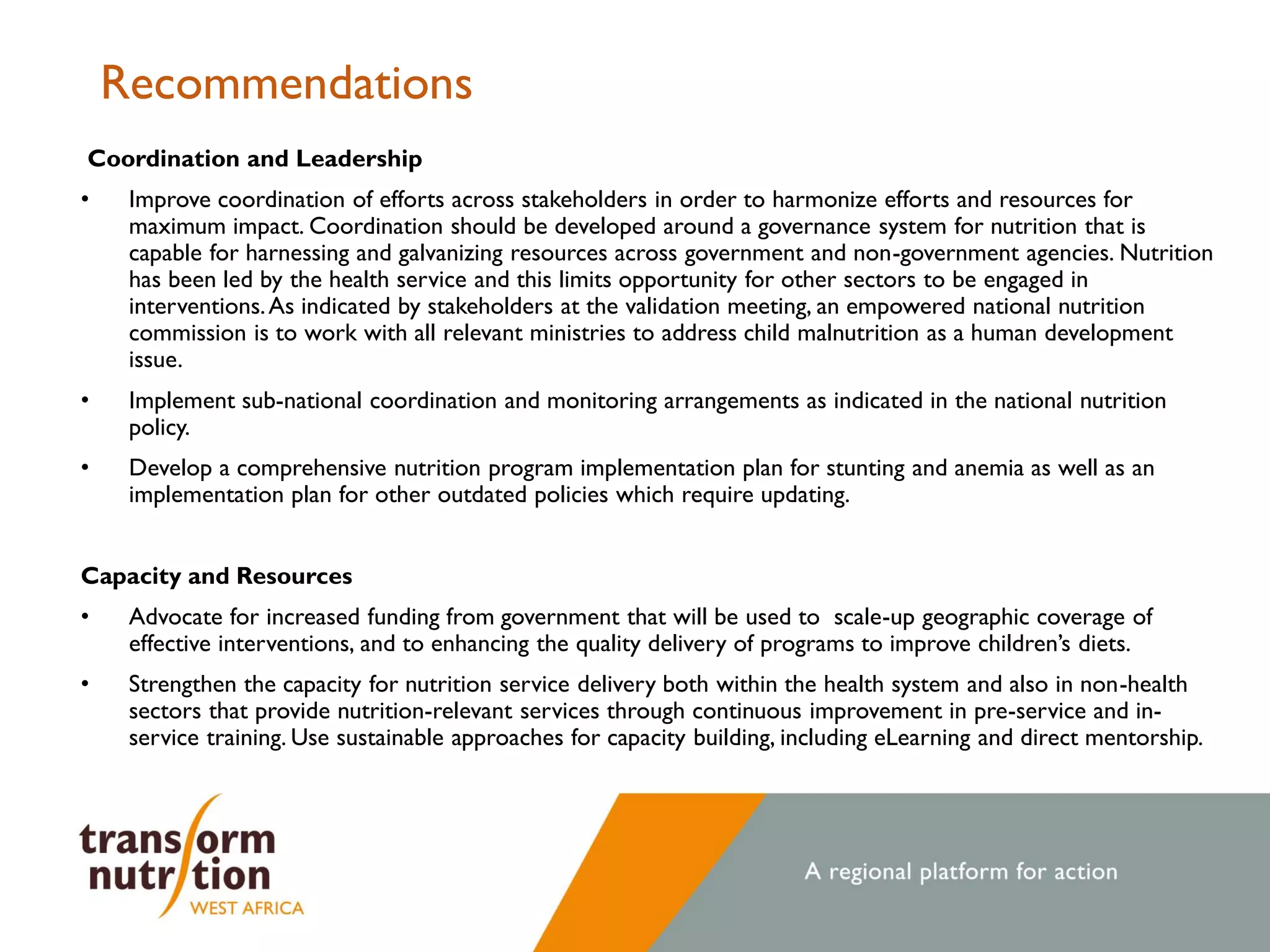
Recommendations
Coordination and Leadership
• Improve coordination of efforts across stakeholders in order to harmonize efforts and resources for
maximum impact. Coordination should be developed around a governance system for nutrition that is
capable for harnessing and galvanizing resources across government and non-government agencies. Nutrition
has been led by the health service and this limits opportunity for other sectors to be engaged in
interventions.As indicated by stakeholders at the validation meeting, an empowered national nutrition
commission is to work with all relevant ministries to address child malnutrition as a human development
issue.
• Implement sub-national coordination and monitoring arrangements as indicated in the national nutrition
policy.
• Develop a comprehensive nutrition program implementation plan for stunting and anemia as well as an
implementation plan for other outdated policies which require updating.
Capacity and Resources
• Advocate for increased funding from government that will be used to scale-up geographic coverage of
effective interventions, and to enhancing the quality delivery of programs to improve children’s diets.
• Strengthen the capacity for nutrition service delivery both within the health system and also in non-health
sectors that provide nutrition-relevant services through continuous improvement in pre-service and in-
service training. Use sustainable approaches for capacity building, including eLearning and direct mentorship.
Thank you
Core team:
• Richmond Aryeetey (lead),Associate Professor, University of Ghana,
raryeetey@ug.edu.gh
• Afua Atuobi-Yeboah, PhD student, University of Ghana
Support:
• Noora-Lisa Aberman,Associate Research Fellow, IFPRI (net-mapping support)
• MariamaToure, Research Analyst, IFPRI (decomposition analysis support)
• Nick Nisbett, Senior Research Fellow, IDS (overall guidance), Mara van den
Bold (IFPRI)
References
• Gillespie et al 2013. Lancet 382(9891):552-569
• Schiffer et al, 2013.Tracing Power and Influence in Networks: Net-Map as a Tool for
Research and Strategic Network Planning.Washington DC: IFPRI
• Ghartey et al, 2010.Nutrition Policy and Programs in Ghana. World Bank
• Ghana Statistical Service et al, 2015.Ghana Demographic and Health Survey 2014. GSS
• Ghana Statistical Service et al, 2009.Ghana Demographic and Health Survey 2008. GSS
• Ghana Statistical Service et al, 2004.Ghana Demographic and Health Survey 2003. GSS
• Ghana Statistical Service et al, 2018.Ghana Multiple Indicator Cluster Survey 2017. GSS
• Ghana Statistical Service et al, 2012.Ghana Multiple Indicator Cluster Survey 2011. GSS
• Ghana Statistical Service et al, 2007.Ghana Multiple Indicator Cluster Survey 2006. GSS

Stories of Change: Ghana

  • 1.
    Stories of Change: Ghana April2020 Prepared by: Richmond Aryeetey (University of Ghana), Afua Atuobi-Yeboah (University of Ghana), Mara van den Bold (International Food Policy Research Institute), Nick Nisbett (Institute of Development Studies
  • 2.
    Overview 1. Background &Objectives 2. Methodology 3. Results 4. Conclusions 5. Recommendations Dr. Richmond Aryeetey presents SoC Ghana at the national consultation workshop in Accra in July, 2018
  • 3.
  • 4.
    Background & Objectives Storiesof Change • A mixed-methods study that examines changes in outcomes and drivers of nutrition, changes in nutrition- relevant policy and practice over time, as well as perspectives of those involved in nutrition-relevant policy and programming, in order to capture (experiential) learning on how to address malnutrition challenges in different contexts. • SoC’s objective is to improve agenda setting, conceptualization and implementation of nutrition- relevant policies and program planning at national/subnational levels in selected countries. Transform Nutrition West Africa (TNWA) • TNWA is a regional platform that aims to enable effective policy and programmatic action on nutrition, funded by the Bill & Melinda Gates Foundation (2017-2021), and led by the International Food Policy Research Institute in collaboration with several partners. • TNWA’s objective is to improve and support policy and program decisions and actions to accelerate reductions in maternal and child undernutrition in the region, through an inclusive process of • i) knowledge generation on approaches to improve maternal and child nutrition • ii) knowledge mobilization to strengthen enabling environments, and inform and improve nutrition- relevant policy and programming • iii) stakeholder engagement and leadership capacity strengthening
  • 5.
    TNWA SoC countriesand teams SoC Ghana • University of Ghana: Richmond Aryeetey, Afua Atuobi-Yeboah • IFPRI: Lucy Billings, Mariama Touré SoC Nigeria • IFPRI: Namukolo Covic, Mariama Touré • University of Ibadan: Olutayo Adeyemi SoC Burkina Faso • IFPRI: Elodie Becquey, Zuzanna Turowska, Mariama Touré, Ampa Diatta, Loty Diop, Emilie Buttarelli • Institut Supérieur des Sciences de la Population (ISSP): Issa Sombié • Research partners in-country: SNV; 4 national CSOs within the Voice for Change Partnership (V4CP) Overall coordination/support Nick Nisbett (IDS) Mara van den Bold (IFPRI) • TNWA supports Stories of Change studies in Burkina Faso, Ghana, and Nigeria (2018–2020). • This work builds upon similar Stories of Change studies carried out in 2015-2017 in Senegal, Zambia, Ethiopia, Bangladesh, Nepal, and Odisha, India as part of the Transform Nutrition Research consortium, as well as several other SoC studies in Malawi,Tanzania, Rwanda,Vietnam, and India (Gujarat,Tamil Nadu, Chattisgarh, Maharashtra).
  • 6.
    Stories of Change– Ghana “relatively strong consensus exists on what needs to be done, but much less is known about how to operationalize the right mix of actions in different contexts, how to do so at a scale that matches the size of the problem, in an equitable manner – and how to do so in ways that link nutrition-specific and nutrition- sensitive interventions” (Gillespie et al. 2015). 2. Capture anticipated future nutrition-relevant changes and challenges in Ghana (to 2025) with a focus on political commitment to nutrition, policy and program coherence, and implementation. 3. Frame a constructive discussion in mobilizing future actions and commitments. 4. Use stories and storytelling to cut through complexity and engage audiences. Objectives: 1. Demonstrate how nutrition has changed in Ghana since 2008, by assessing nutrition-relevant data, programs and policies, and by capturing experiential learning from those doing nutrition-relevant work in the country. • Specifically,better understand the drivers for the observed changes in child stunting and anaemia,to understand how and why change occurred.
  • 7.
    Context • Ghana isa Democratic Republic on Southern Coast of West Africa • Population is about 30 million and 3.5 persons/household • Stunting prevalence for children under five years of age in Ghana declined from 28% in 2008 to 18% in 2017,a remarkable reduction. • On the contrary, child anaemia prevalence only declined from 76% to 66% over the same period. • These changes occurred within a socioeconomic context presumably favorable to nutrition outcomes – GDP growth, improvements in infrastructure (roads, electricity) as well as improvements in key social services such as access to water and sanitation,health care, and education services, and overall reductions in poverty, maternal and child mortality, disease burden,hunger and undernutrition. • The study aimed to better understand why and how these changes occurred.
  • 8.
  • 9.
    Conceptual framework SoC Ghanauses the conceptual framework on enabling environments set forth in Gillespie et al. (2013) to structure data collection and analysis. Gillespie et al. (2013) The politics of reducing malnutrition: Building commitment and accelerating progress. Lancet 382: 552-69.
  • 10.
    Quantitative Methods Data sourceMethod Focus DHS 2003, 2008, 2014; MICS 2006, 2011, 2017 • Descriptive statistics of nutrition outcomes and potential drivers of nutrition – e.g. infant and young child feeding, micronutrient supplementation, immunization coverage, water and sanitation, health insurance, bed net distribution – between 2003 and 2014 • Program coverage data- cash transfer, school meals, malarial control, etc. Changes in outcomes, coverage of interventions; key indicators DHS 2003, 2008, 2014 Decomposition analysis • Dependent variables: stunting/HAZ, Anemia(Hemoglobin) • Variable selection: guided by DHS variables and UNICEF malnutrition framework Methodology: Linear regression models followed by decomposition that includes only variables that are statistically significant at 10% level Explanatory factors of change
  • 11.
    Activity Method Focus Keyinformant interviews (Jul-Aug 2018) • Interviews with 10 key informants selected from Government (health, agriculture, planning departments), United Nations agencies (WHO, UNICEF, WFP), business representatives Identify what stories to focus on Policy and program review (Oct 2018 – Aug 2019) • Systematic search from multiple sources (government and non-government agencies) using Google Scholar using key words. • Documents screened according to 4 criteria: study period (2009-2018), document type, document title, sector of interest. • Analysis of 53 documents using a priori coding approach based on the conceptual framework (Gillespie et al. 2013) Identify which policies from which sectors have a focus on nutrition Stakeholder mapping (Nov 2018) • Net-mapping meeting with 15 participants working on programs related to child anaemia and stunting at the national level. • 20 participants purposefully selected and invited to participate by the PI. Invited participants selected from a long list generated during consultative stakeholder meeting in Accra in 2018. • Network mapping activity focused on identifying key actors in stunting and anaemia, identifying how they were linked to each other, and assessing their relative influence in changing stunting and anaemia outcomes in Ghana. • Network mapping conducted using Net-MapTool (Schiffer et al, 2008) and analysis carried out using Gephi software. Identify key actors in the nutrition policy/program network, how they are related, and their relative influence In-depth interviews (Feb-May 2019) • Semi-structured interviews with 25 stakeholders, guided by the conceptual framework • Stakeholders identified from a long list of 33 potential interviewees, generated during the SoC consultation event in July 2018 and the network mapping event in Nov 2018. • Analysis performed using Nvivo v12 and a priori codes. Key stakeholder perceptions of what explains change and what challenges to focus on Qualitative methods
  • 12.
    3. Results Trend anddecomposition analyses
  • 13.
    Trends in nutritionoutcomes and drivers 29.9 22.4 28 22.7 18.8 18 7.1 5.4 8.5 6.2 4.7 7 22.1 17.8 13.9 13.4 11 13 0 5 10 15 20 25 30 35 2003 DHS 2006 MICS 2008 DHS 2011 MICS 2014 DHS 2017 MICS %ofchildren<5y stunting wasting underweight
  • 14.
    97.9 97.5 98.798.4 46.1 35.2 52.3 45.9 55.6 53.4 54.4 62.8 45.7 52.3 19.6 18.1 18.8 15.1 12.2 10.5 13.7 16 0 20 40 60 80 100 2003 DHS 2006 MICS 2008 DHS 2011 MICS 2014 DHS %ofchildren ever breastfed early initiation (1 hr) EBF (0-5) prelacteal feeding bottle with nipple Child feeding trends
  • 15.
    43 54.5 60.4 68 78.4 60.2 55.8 73.3 65.2 39.7 41.5 59.4 27.5 24.4 0 20 40 60 80 100 2003 DHS2006 MICS 2008 DHS 2011 MICS 2014 DHS %ofchildren6-59mo maternal postpartum vit A Child Vitamin A maternal Fe during preg for 90d+ child Iron (last week) Micronutrient supplementation coverage among young children
  • 16.
    Decomposition analysis (stunting) Characteristic2003 2008 2014 Change (2003-2014) % of Change Asset Index, 1-10 2.61 3.15 4.13 1.52 58 Maternal education (years) 4.18 4.53 5.02 0.85 20 Paternal education (years) 6.47 6.86 6.98 0.51 8 4 prenatal visits or more (%) 70 79 87 17 24 Born in medical facility (%) 41 54 69 28 67 Open defecation (%) 32 29 26 -6 -17 Improved water source (%) 40 76 79 39 96 Number of children 4.57 4.31 4.25 -0.32 -7 Birth interval (years) 3.76 3.84 3.98 0.22 6 Maternal height (cm) 158.92 158.78 158.91 -0.01 0 Presence of bednet in household (%) 25 73 81 57 231
  • 17.
    Decomposition analysis (Anemia) Characteristic 20032008 2014 Change (2003-2014) % of Change Asset Index, 1-10 2.7 3.3 4.3 1.6 59 Maternal education (years) 4.5 5.0 5.7 1.2 27 4 prenatal visits or more (%) 71 79 87 16 23 Improved Toilet (%) 69 71 75 6 8.7 Maternal underweight (%) 8.8 7.2 4.6 -4.2 -48 Percentage of households with bed net (%) 25 73 81 56 224 Prevalence of diarrhea (%) 17 22 13 -4 -24 Fully immunized (%) 33 49 53 20 61
  • 18.
    Decomposition analysis (summary) •Using stunting (Height for age z-score <-2) as outcome,the total change explained is 42.6%. • Using Height for age z-score as outcome,the total change explained is 65%. • Using Hemoglobin concentration as outcome,the total change explained is 71%. • Using anemia (Hemoglobin<11.0g/dL) as outcome,the total change explained is 51.3%. 0% 20% 40% 60% 80% 100% Stunting Height-for-Age Anemia Hemoglobin %ofvariabilityexplained presence of Bednet Asset index 4+ ANC visits birth Interval Maternal height born in medical facility Maternal Education Number of Children Diarrhea Prevalence Full Immunization improved toilet unexplaineed
  • 19.
    39.2 22.5 22.5 3.3 2.6 4 5.9 presence of Bednet Assetindex 4+ ANC visits birth Interval Maternal height Maternal Education Number of Children Using stunting (Height for Age Z-score <-2) as the outcome variable,the total change explained is 42.6%. Decomposition analysis (stunting)
  • 20.
    39 32.1 13.7 2.5 2.4 10.6 presence of Bednet Assetindex 4+ ANC visits birth Interval Maternal height born in medical facility Using Height for Age Z-score (HAZ) as the outcome variable,the total change explained is 65%. Decomposition analysis (HAZ)
  • 21.
    19.4 42.7 16.9 9.7 1.8 6.9 2.5 presence of Bednet Assetindex 4+ ANC visits Maternal Education Diarrhea Prevalence Full Immunization improved toilet Using Hemoglobin as the outcome variable,the total change explained is 71.0%. Decomposition analysis (Hemoglobin)
  • 22.
    47 21.4 18.9 2.5 10.1 Asset index 4+ ANCvisits Maternal Education Diarrhea Prevalence Full Immunization Using anaemia (Hb <11.0 g/dL) as the outcome variable,the total change explained is 51.3%. Decomposition analysis (Anaemia)
  • 23.
    3. Results Policy andprogram analysis, stakeholder mapping, and stakeholder interviews
  • 24.
    Policy and programanalysis 64 13 18 10 9 8 122 0 50 100 150 Health and Nutrition Economic Agriculture/Fisheries Environment, Water & Sanitation Social Protection Education Total • Document search: based on key words and using google scholar and pre-identified websites. • Screening: Documents included based on criteria regarding study period (2009-2018), document type, document title, and sector of interest. • Document analysis: conducted using a priori and open coding approach, and key word search in Nvivo. Codes developed according to conceptual framework. Key findings: • Flagship policies to address nutrition: • Imagine Ghana Free of Malnutrition (2005-2011) • National Nutrition Policy (2016-present) • Additional development of policies to address stunting and child anaemia in other sectors, especially health.
  • 25.
    Prior 2008 20092010 2011 2012 2013 2014 2015 2016 2017 2018 METASIP II GSGD I SESSIP Maternal, Infant and Young Child Nutrition Program Anti-Malaria Drug Policy Imagine Ghana Free of Malnutrition Vitamin A Suppl. Program Food Fortification Program National Nutrition Policy Livestock Development Policy and Strategy Newborn & Child Health Advocacy & communication Strategy Breastfeeding Advocacy Strategy Health Promotion Policy Maternal/Child Health Card National Nutrition Policy (Draft) National Gender Policy Newborn Care Program Social Protection Policy Policy timeline
  • 26.
    Network mapping Summary ofactor groups identified (n=103) Network map for all actors identified for child stunting and anaemia
  • 27.
  • 28.
  • 29.
    Network mapping (summary) •Broad spectrum of actors identified across sectors relevant for addressing child anaemia and stunting (total n=103). • A majority of institutions identified (25%) were located within the Government of Ghana with the Ghana Health Service being the main implementing agency • Less than half of actors (n=48) had any type of link to other actors; the remaining actors (n=55) had no connections and were not considered influential in the network. • There were more links between actors for stunting than for anaemia. • Ghana Health Service had the highest relative influence for stunting and anaemia and associated with the majority of all link types (funding/technical assistance; advocacy/evidence-based information). • Ghana Health Service also had the highest overall in-degree centrality (i.e. receives most input for addressing child stunting and anaemia) for all link types, apart from formal command.
  • 30.
    Stakeholder interviews (summary) •Stunting reduction was been driven by : • General improvement in society and social services • Prioritization stunting and actions to reduce stunting, especially in Health Service • Improved (individual) capacity for delivering nutrition services in health services • Anemia reduction was not robust compared to stunting because: • Child anemia reduction was not prioritized as was maternal anemia • Other findings relevant for both stunting and anemia in children • Child feeding practices and interventions to address them remain suboptimal • Capacity to deliver interventions in nutrition across • There is sub-optimal coordination across sectors involved in nutrition
  • 31.
    Stakeholder perspectives ‘’I thinkanother thing that perhaps for advocacy purposes-wise, this whole idea Ghana did the profile sometime back which tried to translate the cost of low action into monitoring terms and this was used for advocacy. I remember some of these events supported this whole idea of priority setting” [UN agency] Role of economic analysis in stunting Advocacy “In terms of 0 to 10, I will say stunting is rated very high nationally and I will give 8 but anemia there hasn’t been a lot of priority given to child anemia. But for anemia in pregnancy it has high priority and you can see that there is more on prevention of anemia in pregnancy. But with childhood anemia we haven’t placed a lot of priority to that’’ [GHS, Regional] “And we have core indicators that the health sector tracks, and stunting is one of the indicators that they are tracking’’ [GHS, National] Prioritization of stunting “yes we work with education and recently a program on GIFT thus Girls Iron FolicTablets implementation closely with Education sector and also deworming exercise were done in the schools and we worked with the teachers’’ [GHS, Regional] Role of Nutrition-specific interventions ‘’One other key activity or event that I think would have also affected things in Ghana has to do with the writing of the first ever national nutrition policy which also took place during these period’’ [University researcher] Policy focus on stunting ‘’The first lady who has been active…the queen mother of Mankessim and when we were developing our strategic document for breastfeeding and we thought of engaging traditional leaders, she was one whom we called on. [GHS, National] Role of Champions ‘’And DFID in the last four years also match the money that we took the loan and they provided the equipment, weighing scales, infantometers and they also gave money to develop guidelines and other tools and actually paid for training of health providers in a number of regions And that has improved the nutrition logistics and equipment. But also building staff competencies’’ [GHS, National] Enhanced capacity
  • 32.
    Perceived drivers ofimprovement in stunting among young children in Ghana
  • 33.
    Perceived barriers andgaps to reducing anemia and stunting among children in Ghana
  • 34.
    Conclusions • Significant declinein stunting at national level; wide disparities at regional level • Marginal decline in anemia among children at national level; high in all regions above threshold of severe public health problem • Health-related interventions (diet, maternity services, infection control, and WASH) key drivers of change in stunting and anemia • Change occurred in environment of improved SES, awareness creation, and enhanced individual capacity • Gaps in program implementation including limited funding, sub-optimal institutional and individual capacity, poorly coordinated action across sectors • Anemia was not prioritized compared to stunting
  • 35.
    Recommendations Coordination and Leadership •Improve coordination of efforts across stakeholders in order to harmonize efforts and resources for maximum impact. Coordination should be developed around a governance system for nutrition that is capable for harnessing and galvanizing resources across government and non-government agencies. Nutrition has been led by the health service and this limits opportunity for other sectors to be engaged in interventions.As indicated by stakeholders at the validation meeting, an empowered national nutrition commission is to work with all relevant ministries to address child malnutrition as a human development issue. • Implement sub-national coordination and monitoring arrangements as indicated in the national nutrition policy. • Develop a comprehensive nutrition program implementation plan for stunting and anemia as well as an implementation plan for other outdated policies which require updating. Capacity and Resources • Advocate for increased funding from government that will be used to scale-up geographic coverage of effective interventions, and to enhancing the quality delivery of programs to improve children’s diets. • Strengthen the capacity for nutrition service delivery both within the health system and also in non-health sectors that provide nutrition-relevant services through continuous improvement in pre-service and in- service training. Use sustainable approaches for capacity building, including eLearning and direct mentorship.
  • 36.
    Thank you Core team: •Richmond Aryeetey (lead),Associate Professor, University of Ghana, raryeetey@ug.edu.gh • Afua Atuobi-Yeboah, PhD student, University of Ghana Support: • Noora-Lisa Aberman,Associate Research Fellow, IFPRI (net-mapping support) • MariamaToure, Research Analyst, IFPRI (decomposition analysis support) • Nick Nisbett, Senior Research Fellow, IDS (overall guidance), Mara van den Bold (IFPRI)
  • 37.
    References • Gillespie etal 2013. Lancet 382(9891):552-569 • Schiffer et al, 2013.Tracing Power and Influence in Networks: Net-Map as a Tool for Research and Strategic Network Planning.Washington DC: IFPRI • Ghartey et al, 2010.Nutrition Policy and Programs in Ghana. World Bank • Ghana Statistical Service et al, 2015.Ghana Demographic and Health Survey 2014. GSS • Ghana Statistical Service et al, 2009.Ghana Demographic and Health Survey 2008. GSS • Ghana Statistical Service et al, 2004.Ghana Demographic and Health Survey 2003. GSS • Ghana Statistical Service et al, 2018.Ghana Multiple Indicator Cluster Survey 2017. GSS • Ghana Statistical Service et al, 2012.Ghana Multiple Indicator Cluster Survey 2011. GSS • Ghana Statistical Service et al, 2007.Ghana Multiple Indicator Cluster Survey 2006. GSS