GETTING A
GREEN LIGHT
Challenges and Solutions
for Your Ambitious Projects
Howard Tiersky, CEO
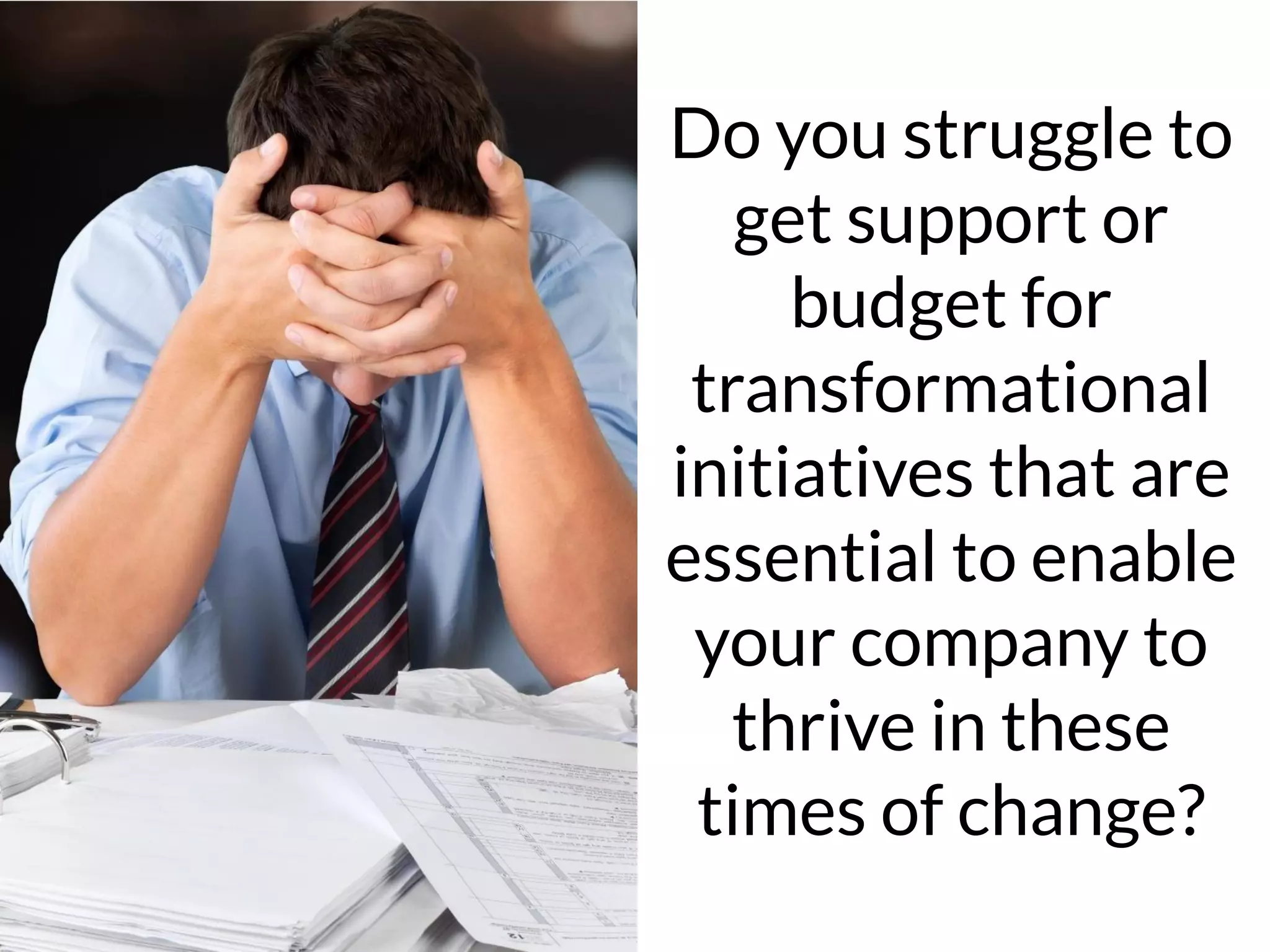
Do you struggle to
get support or
budget for
transformational
initiatives that are
essential to enable
your company to
thrive in these
times of change?
You are
not
alone!
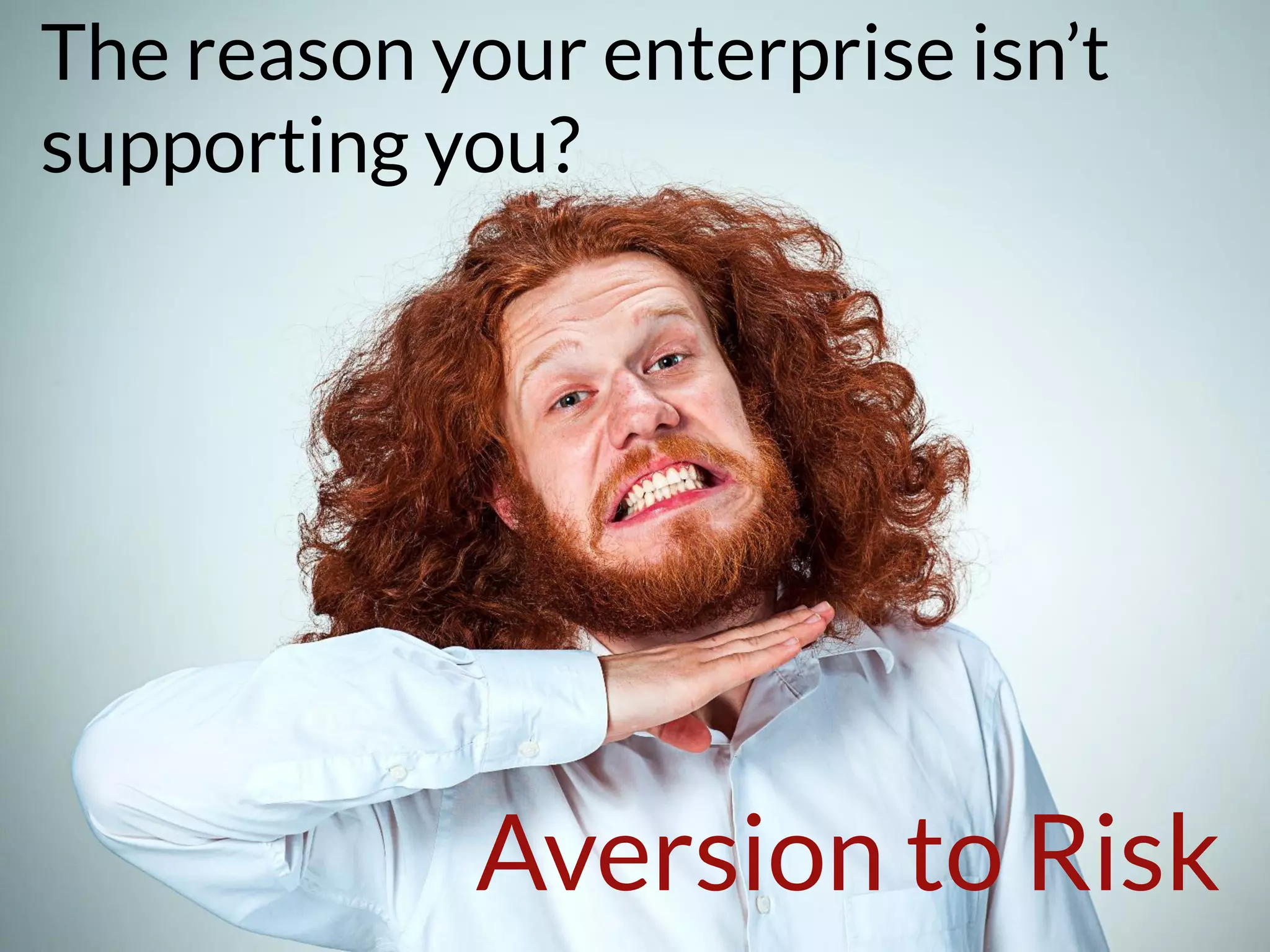
The reason your enterprise isn’t
supporting you?
Aversion to Risk
For them, it
seems better to
stay where
they’re
comfortable,
rather than
venturing out into
the unknown.
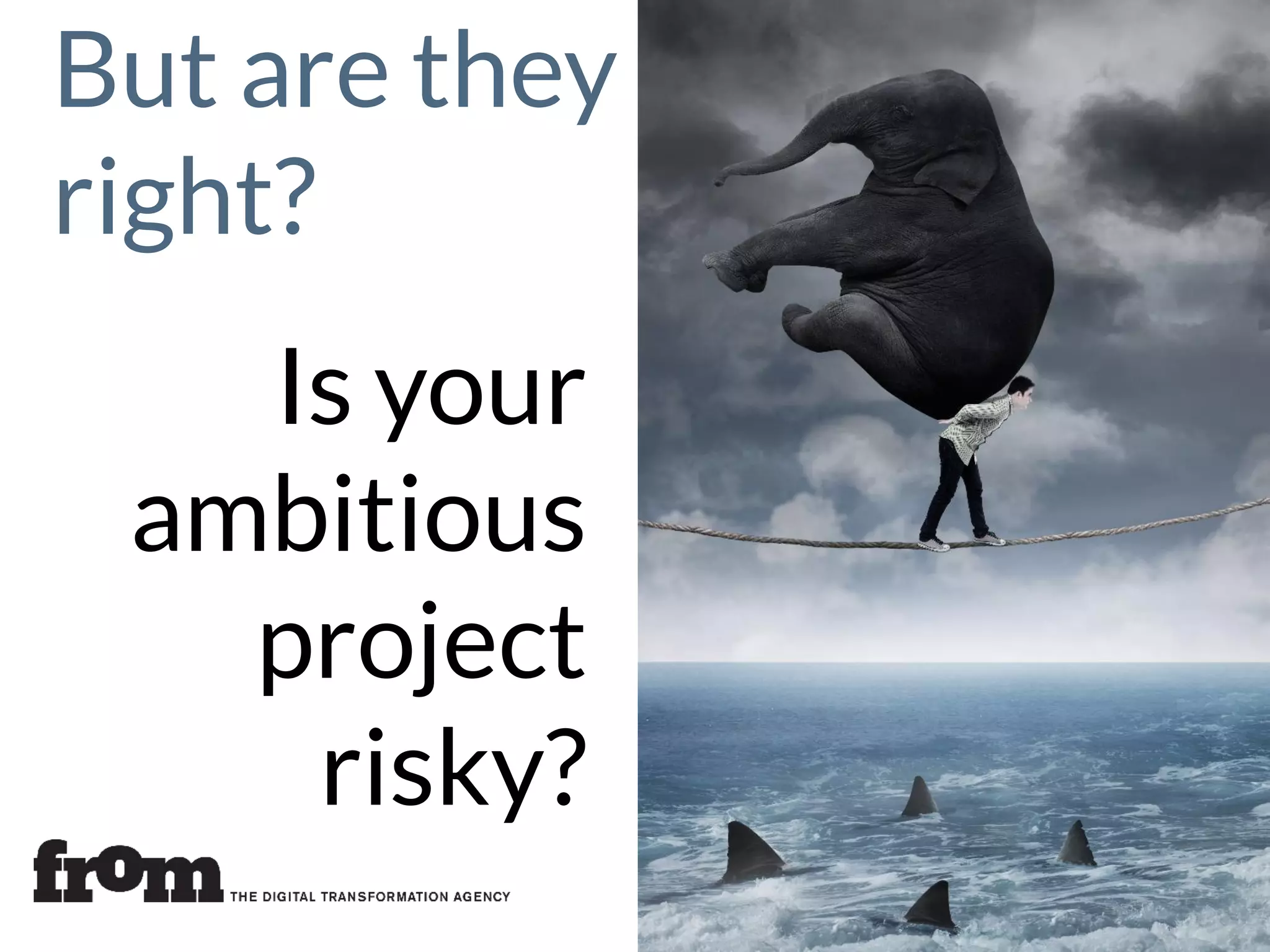
But are they
right?
Is your
ambitious
project
risky?
The answer is probably…
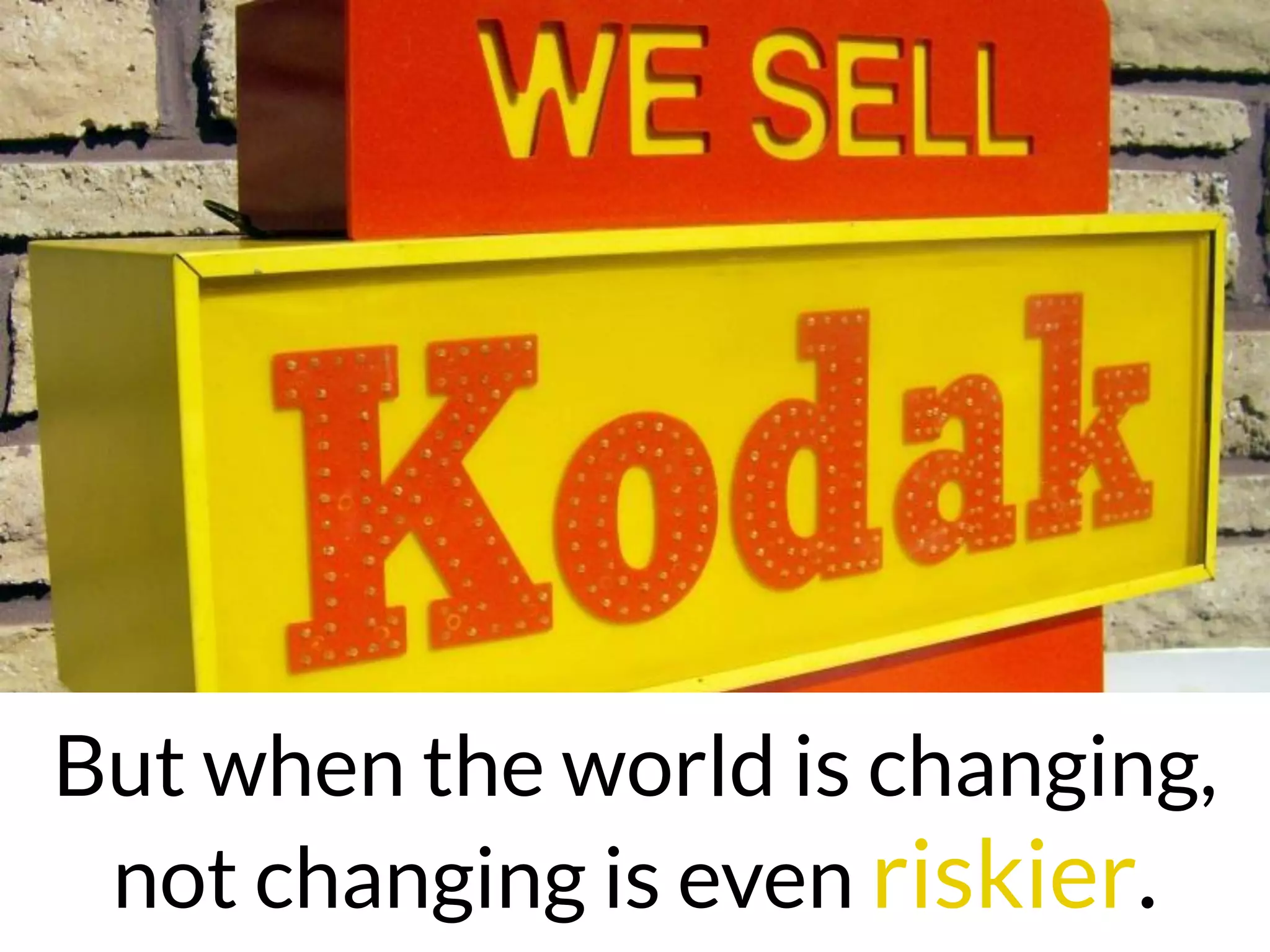
But when the world is changing,
not changing is even riskier.
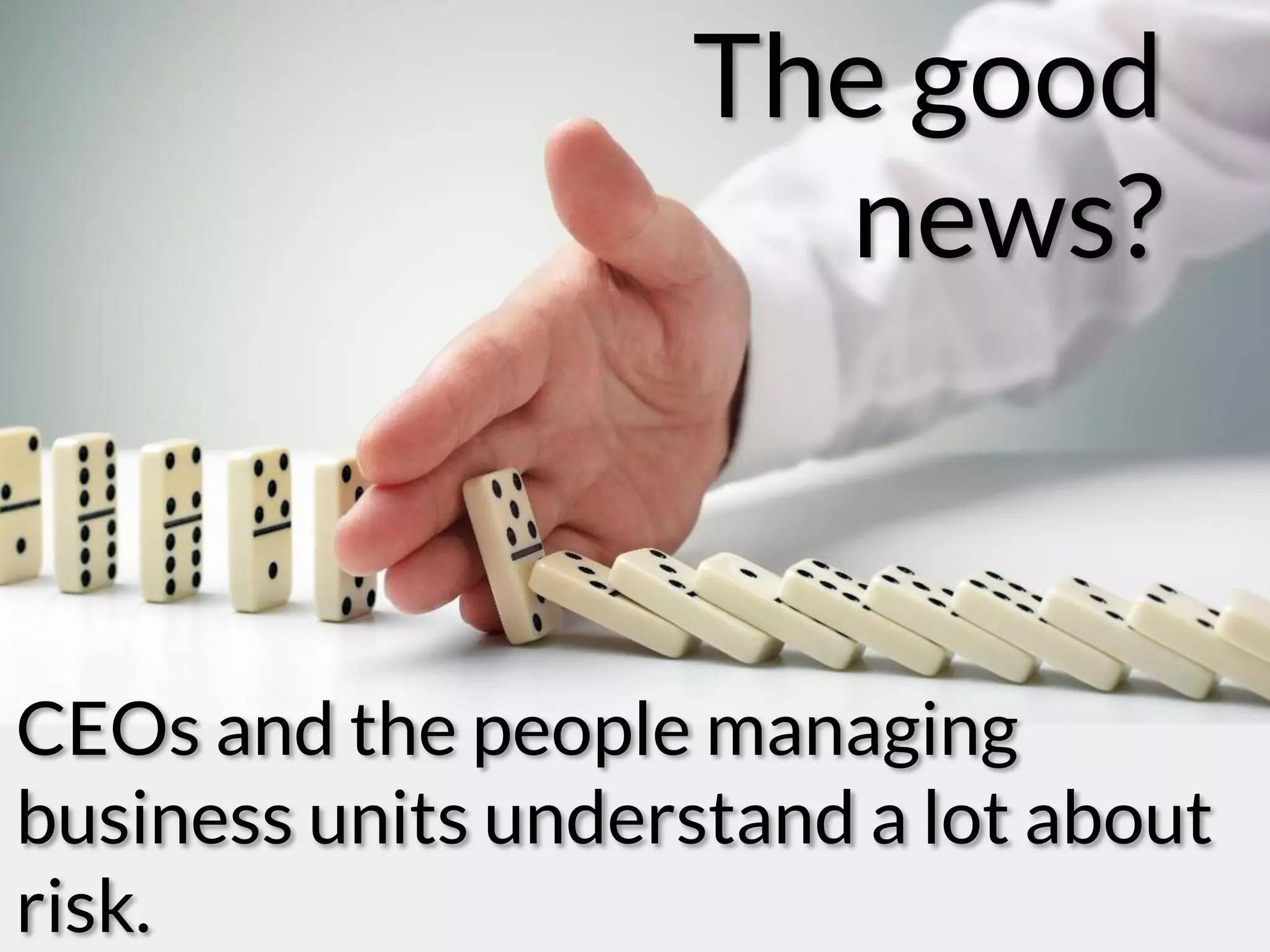
The good
news?
CEOs and the people managing
business units understand a lot about
risk.
You just have to draw the
right connections for them.
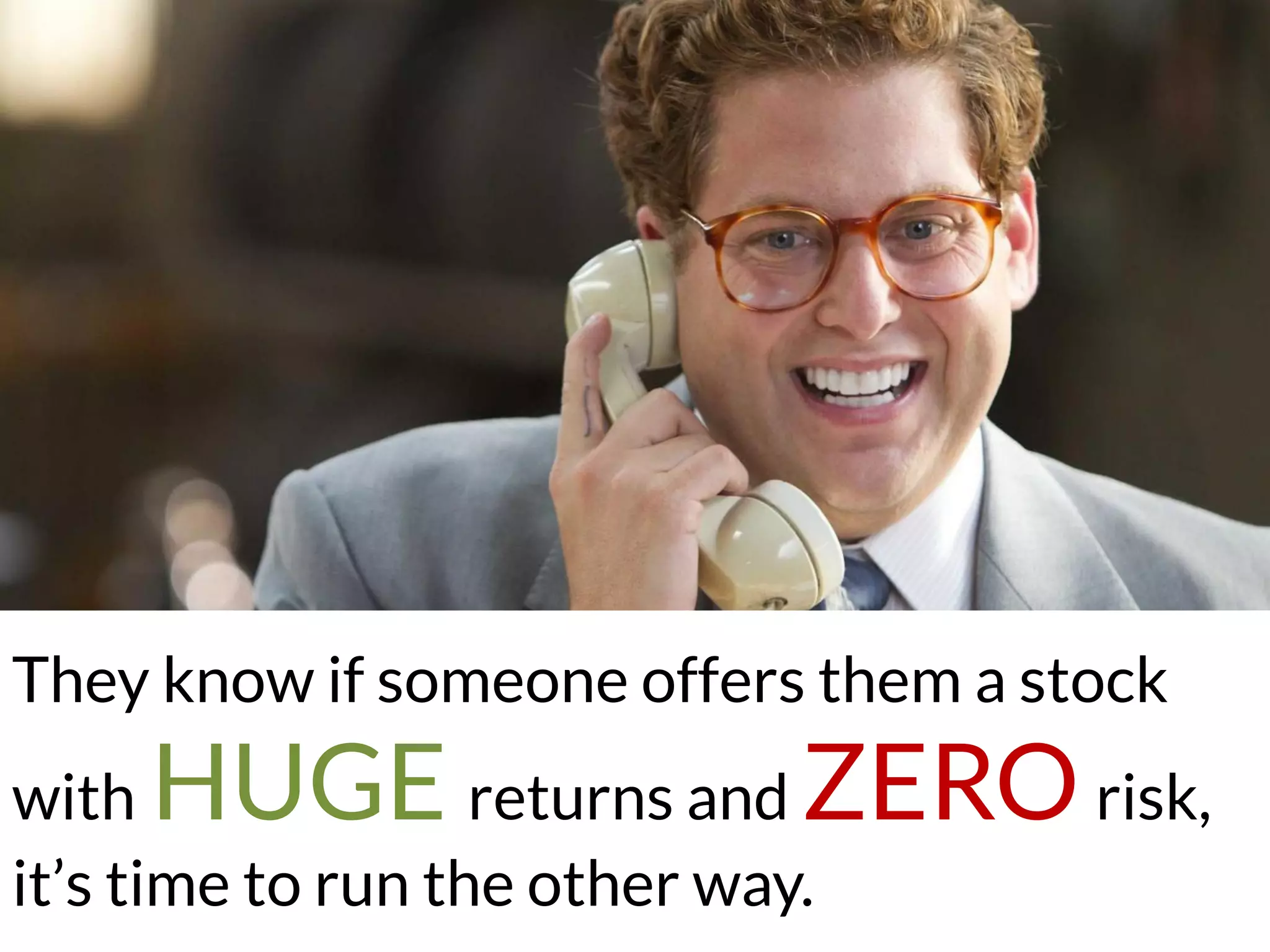
They know if someone offers them a stock
with HUGE returns and ZERO risk,
it’s time to run the other way.
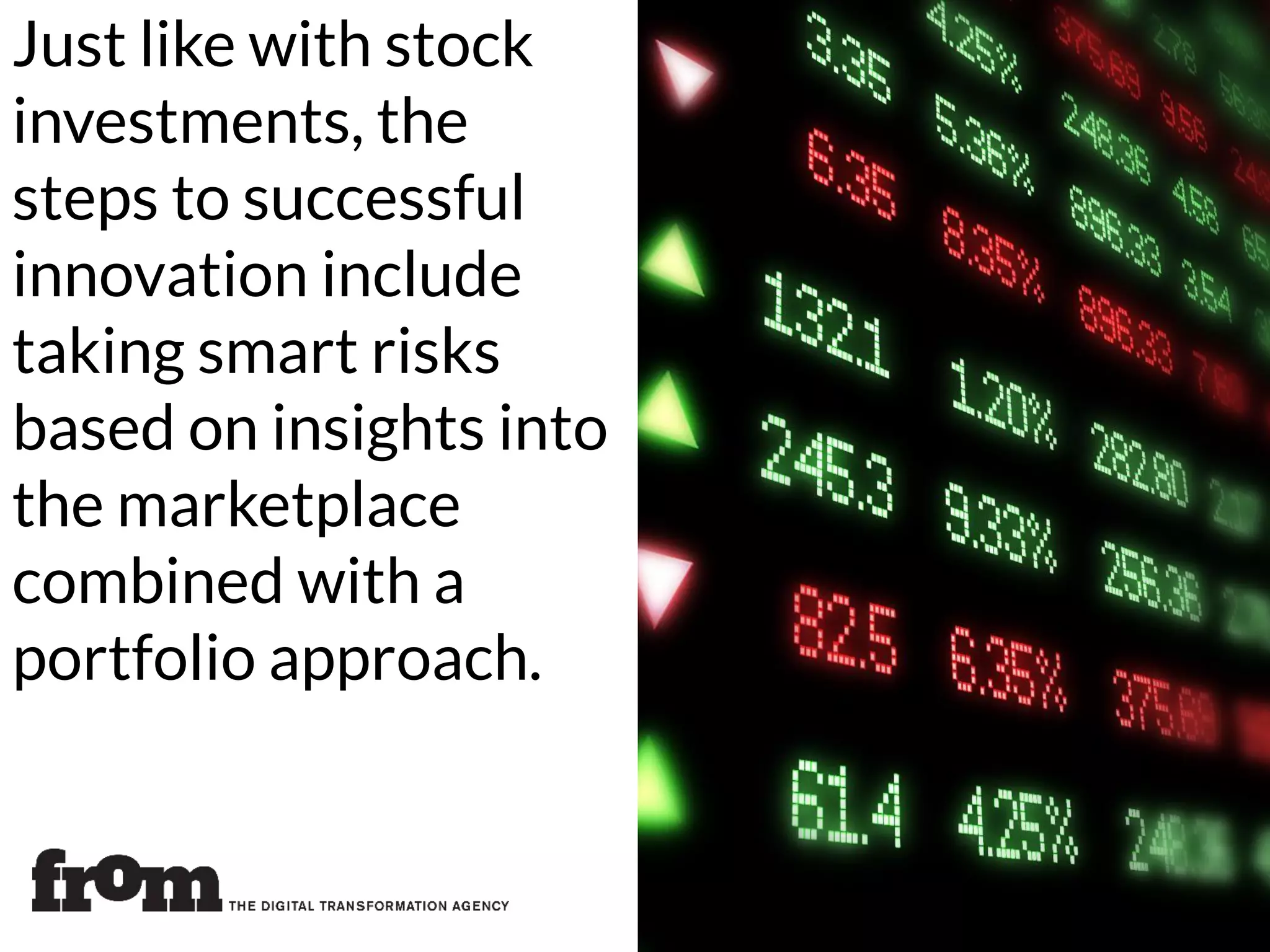
Just like with stock
investments, the
steps to successful
innovation include
taking smart risks
based on insights into
the marketplace
combined with a
portfolio approach.
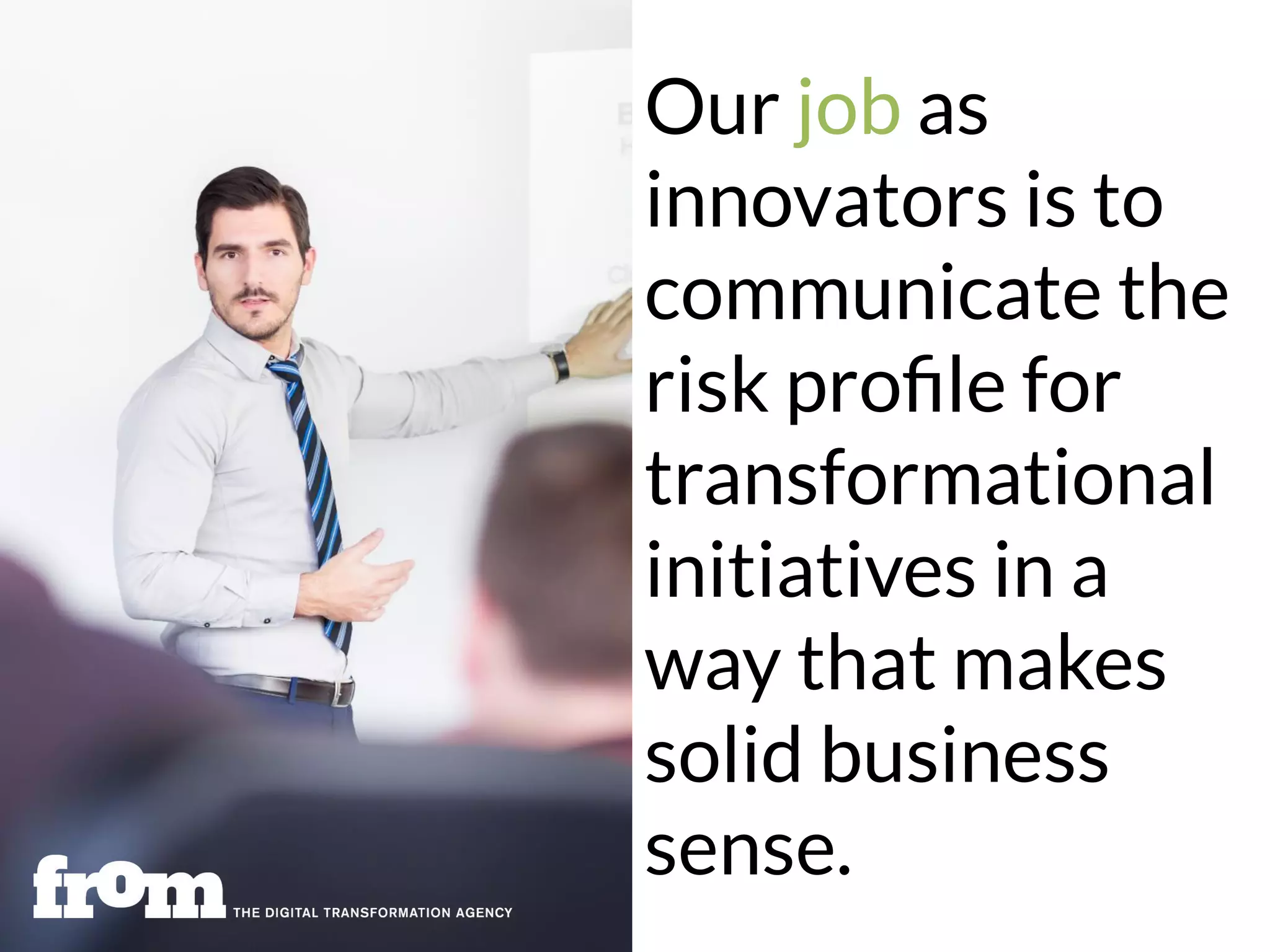
Our job as
innovators is to
communicate the
risk profile for
transformational
initiatives in a
way that makes
solid business
sense.
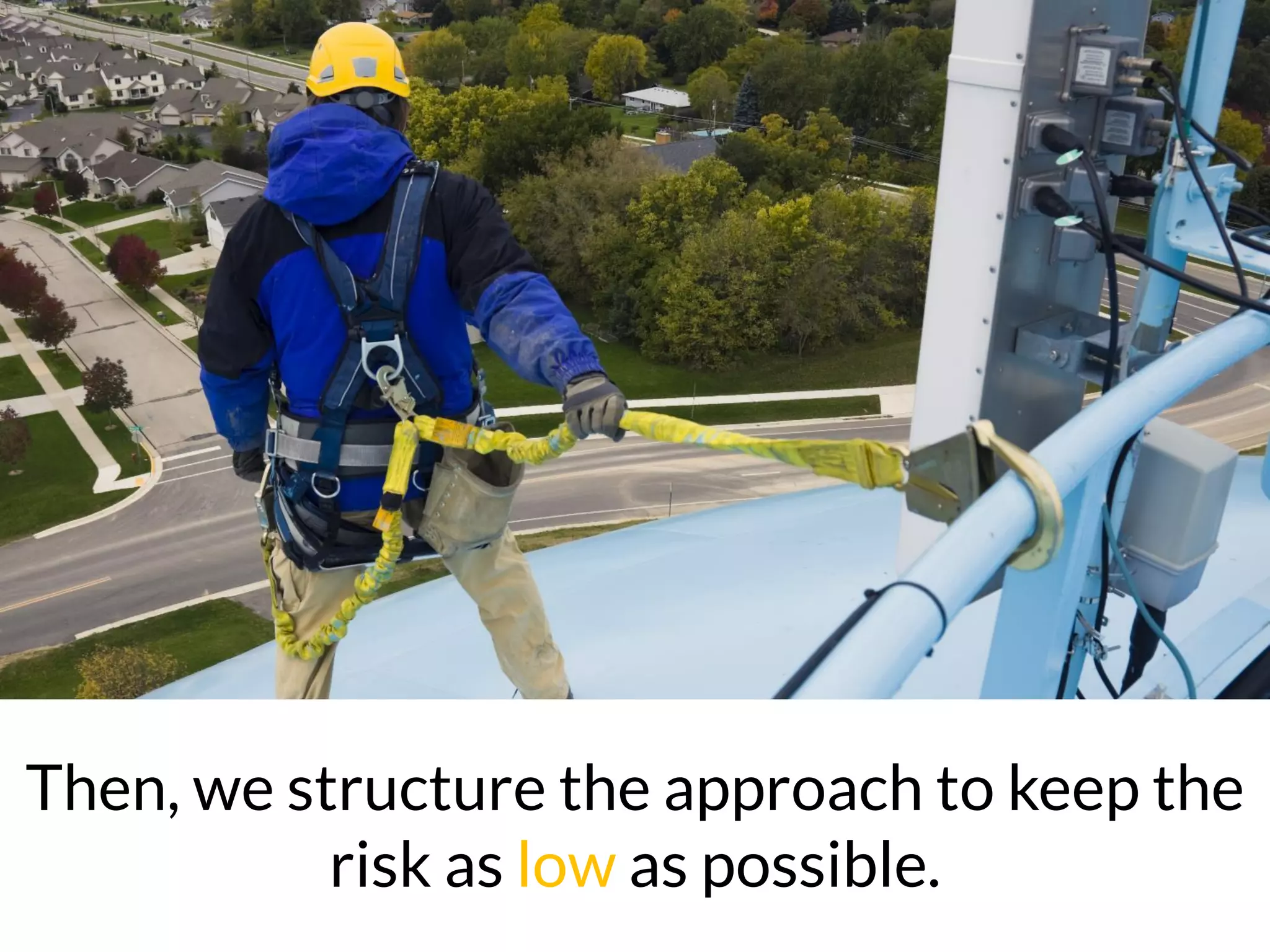
Then, we structure the approach to keep the
risk as low as possible.
Once you have alignment on the
idea that some level of real risk is
necessary and appropriate…
5
…you can gain the
confidence of
enterprise leaders
by demonstrating
you have strategies
to address the
different types of
risk your efforts
may face.
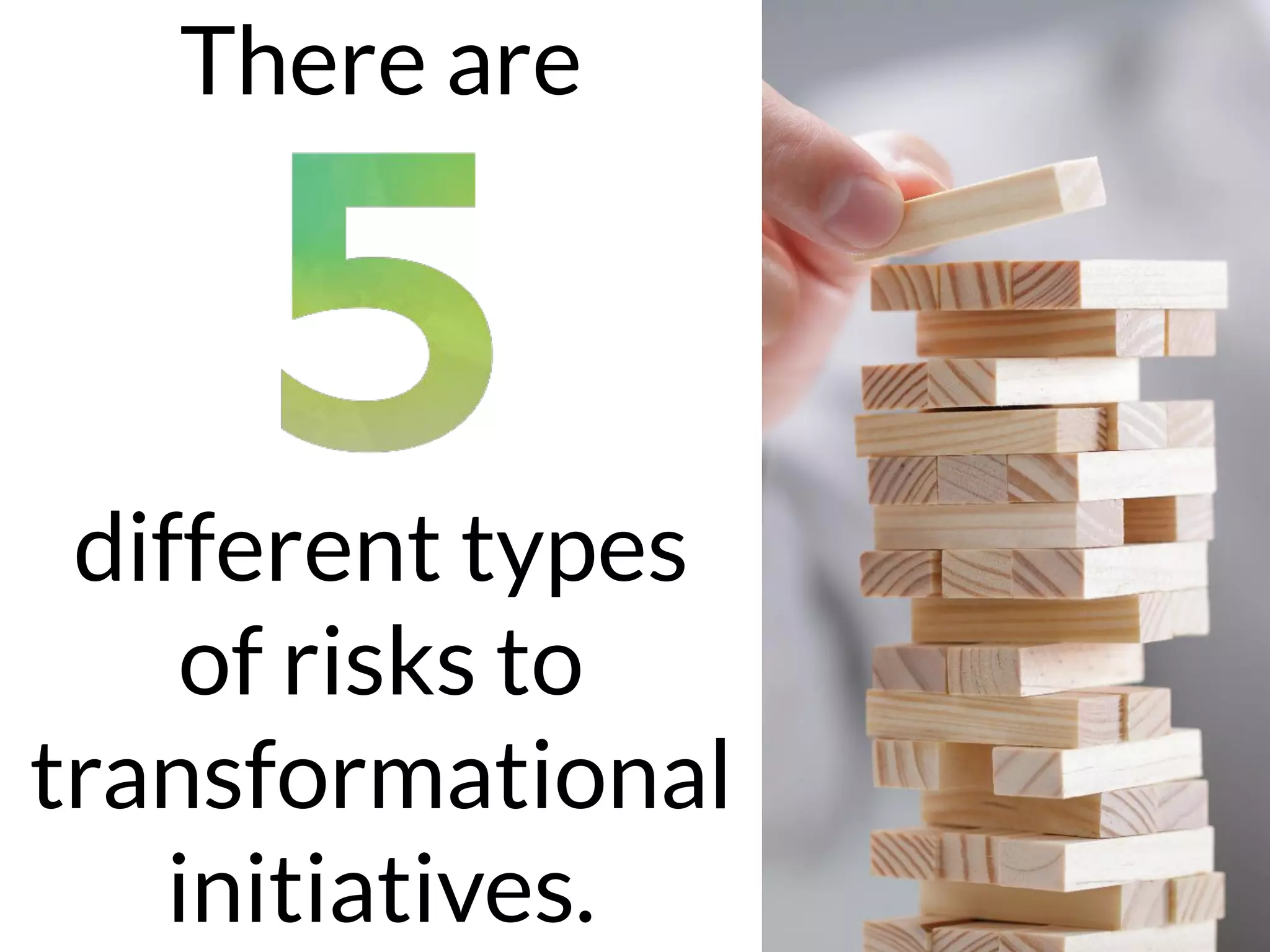
There are
different types
of risks to
transformational
initiatives.
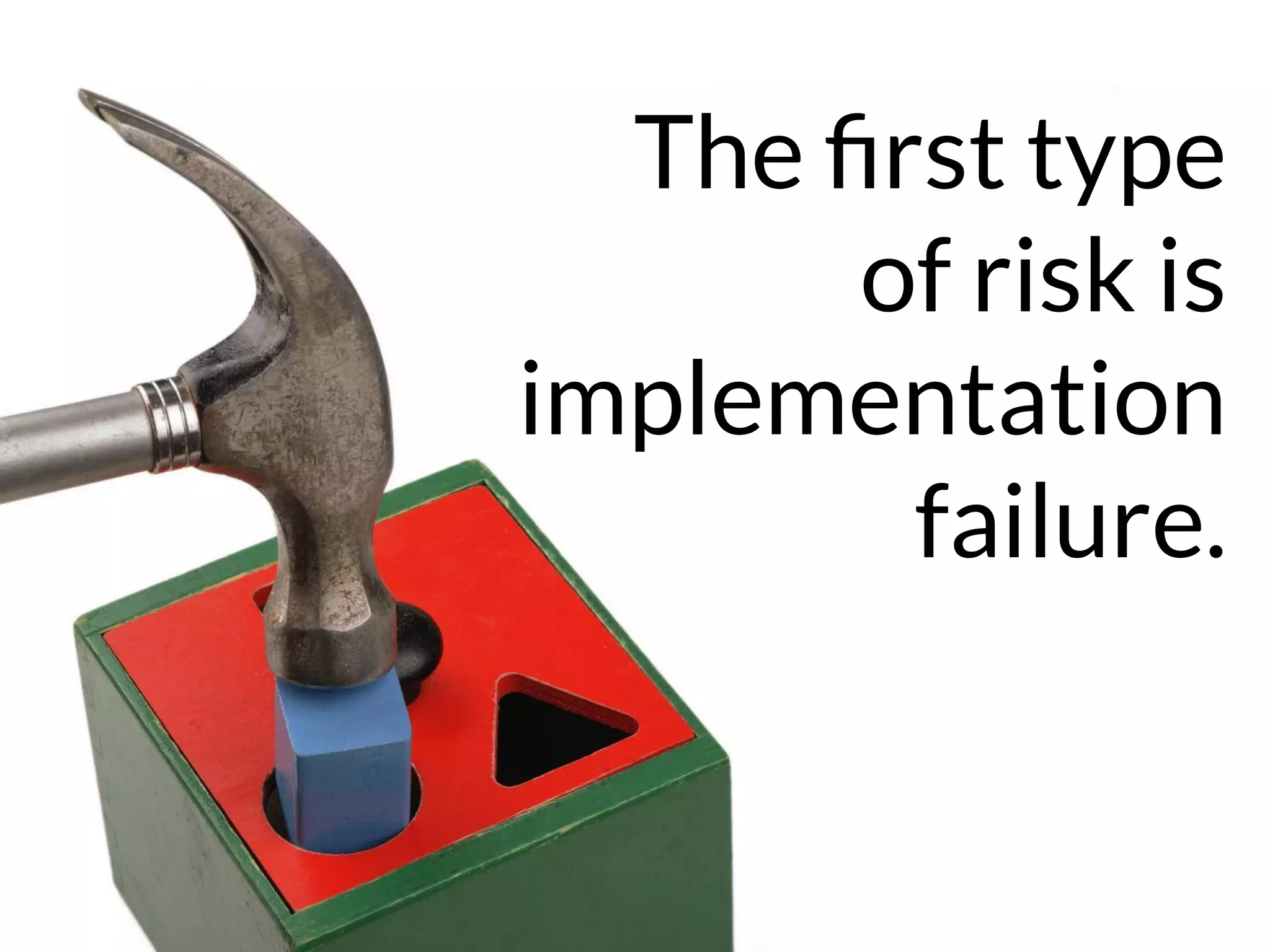
The first type
of risk is
implementation
failure.
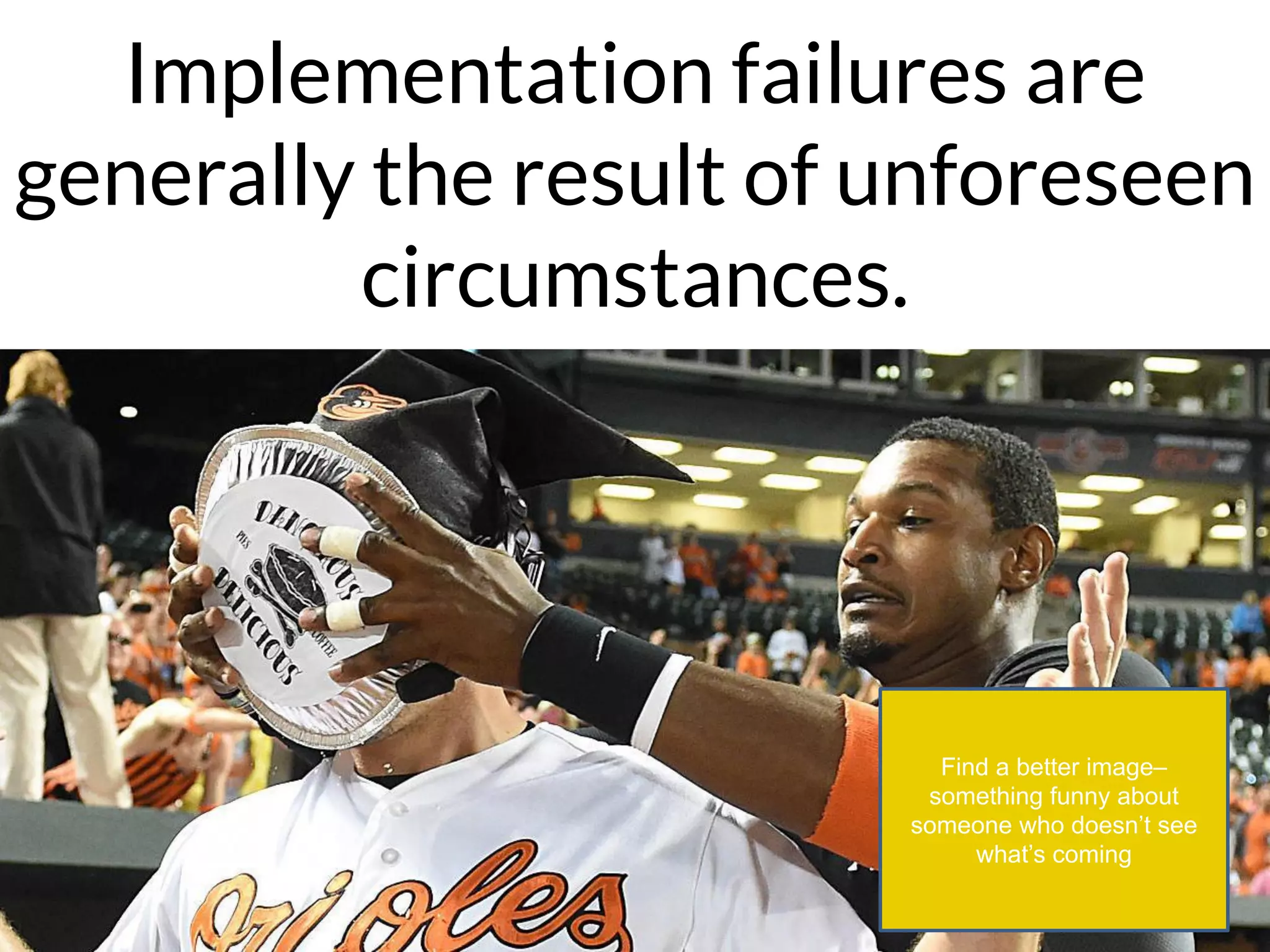
Implementation failures are
generally the result of unforeseen
circumstances.
Find a better image–
something funny about
someone who doesn’t see
what’s coming
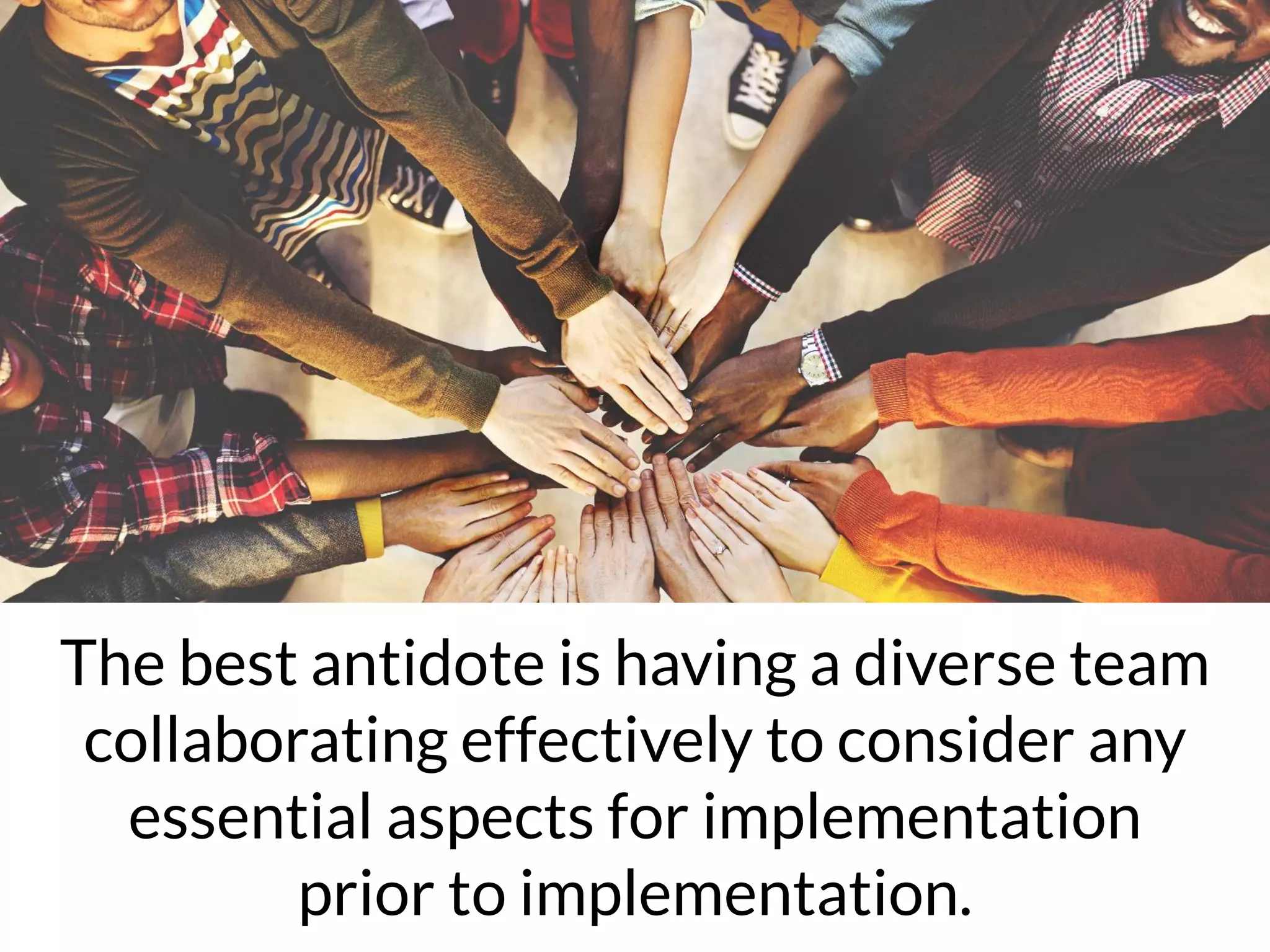
The best antidote is having a diverse team
collaborating effectively to consider any
essential aspects for implementation
prior to implementation.
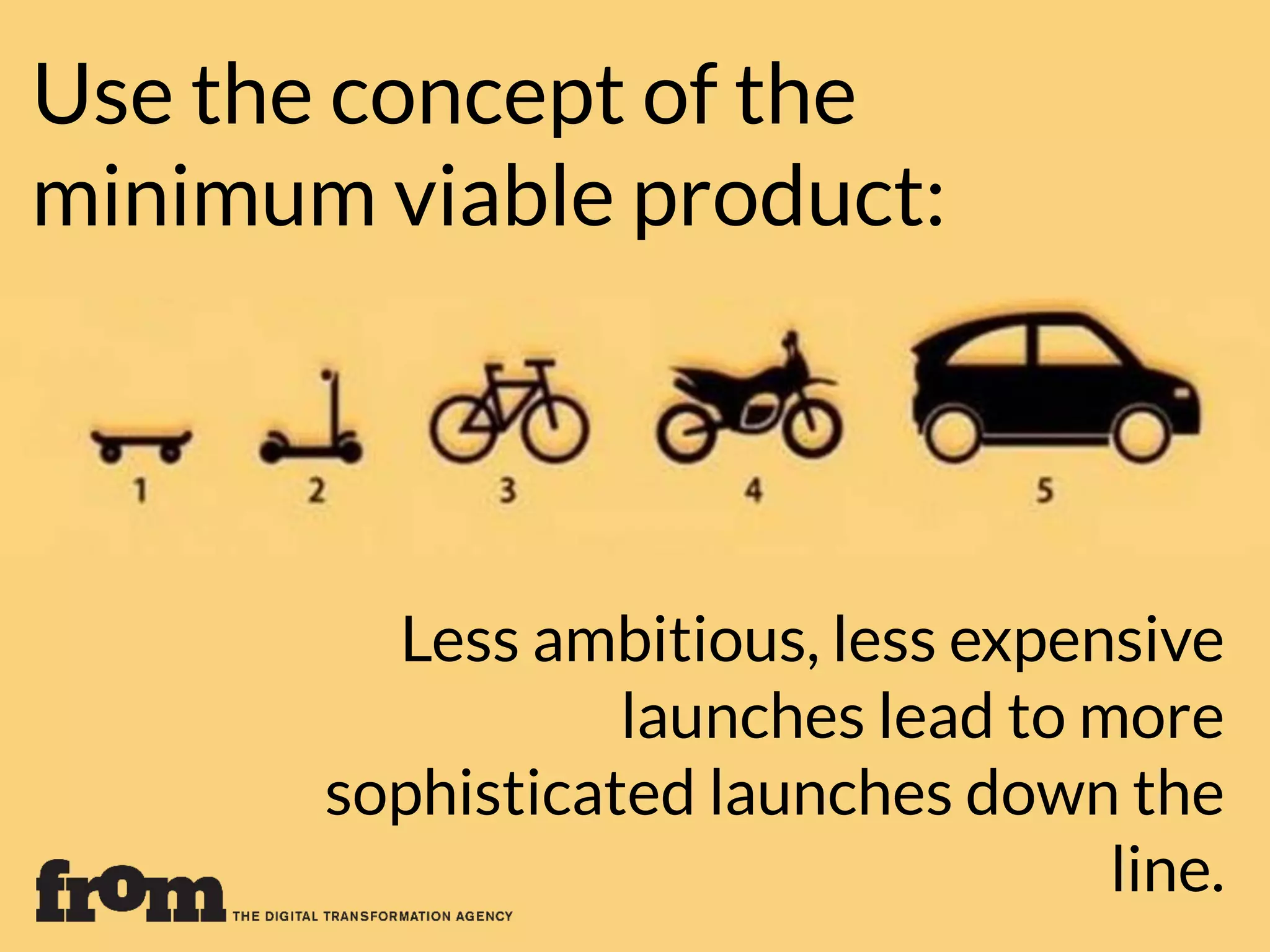
Less ambitious, less expensive
launches lead to more
sophisticated launches down the
line.
Use the concept of the
minimum viable product:
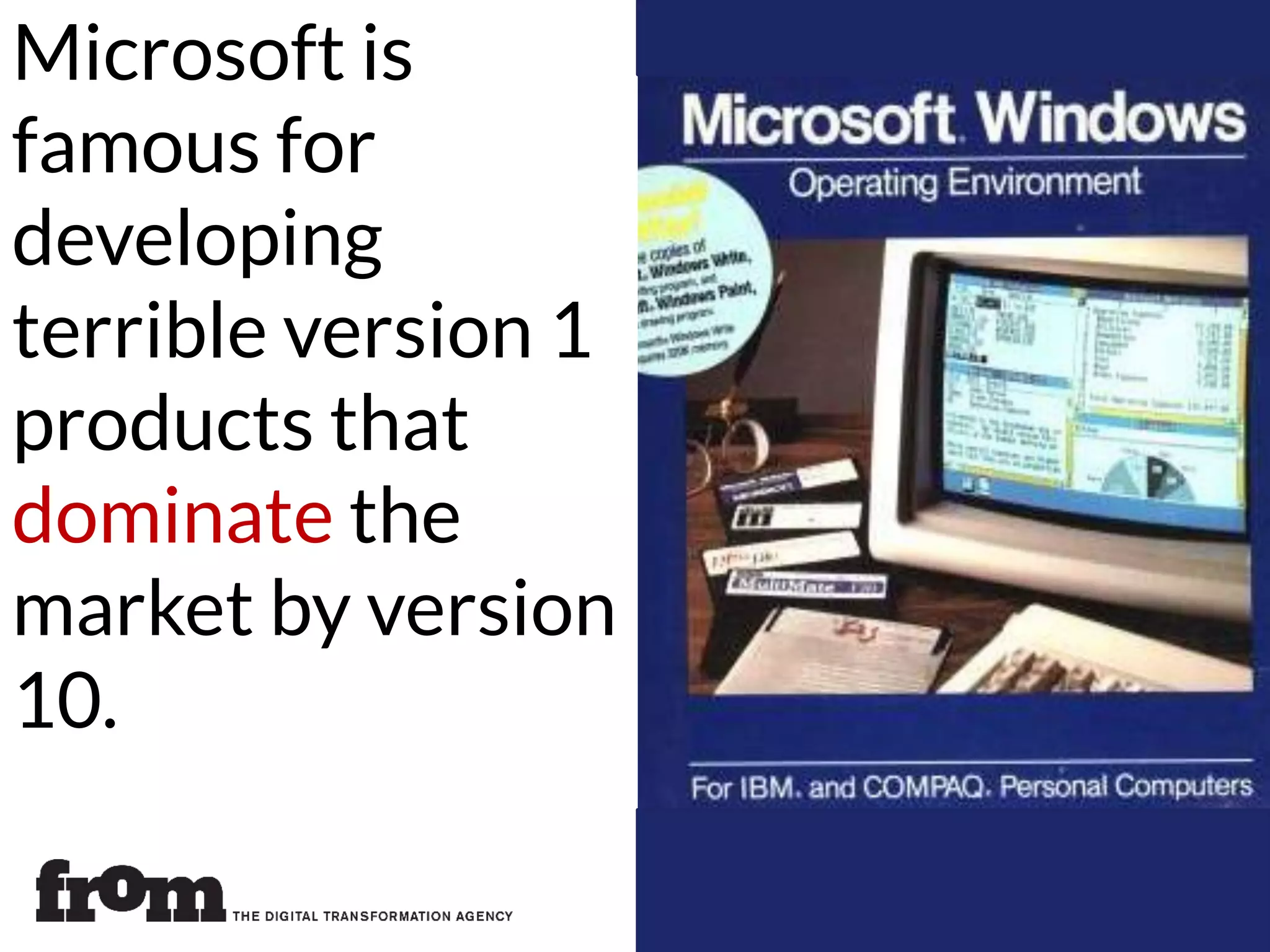
Microsoft is
famous for
developing
terrible version 1
products that
dominate the
market by version
10.
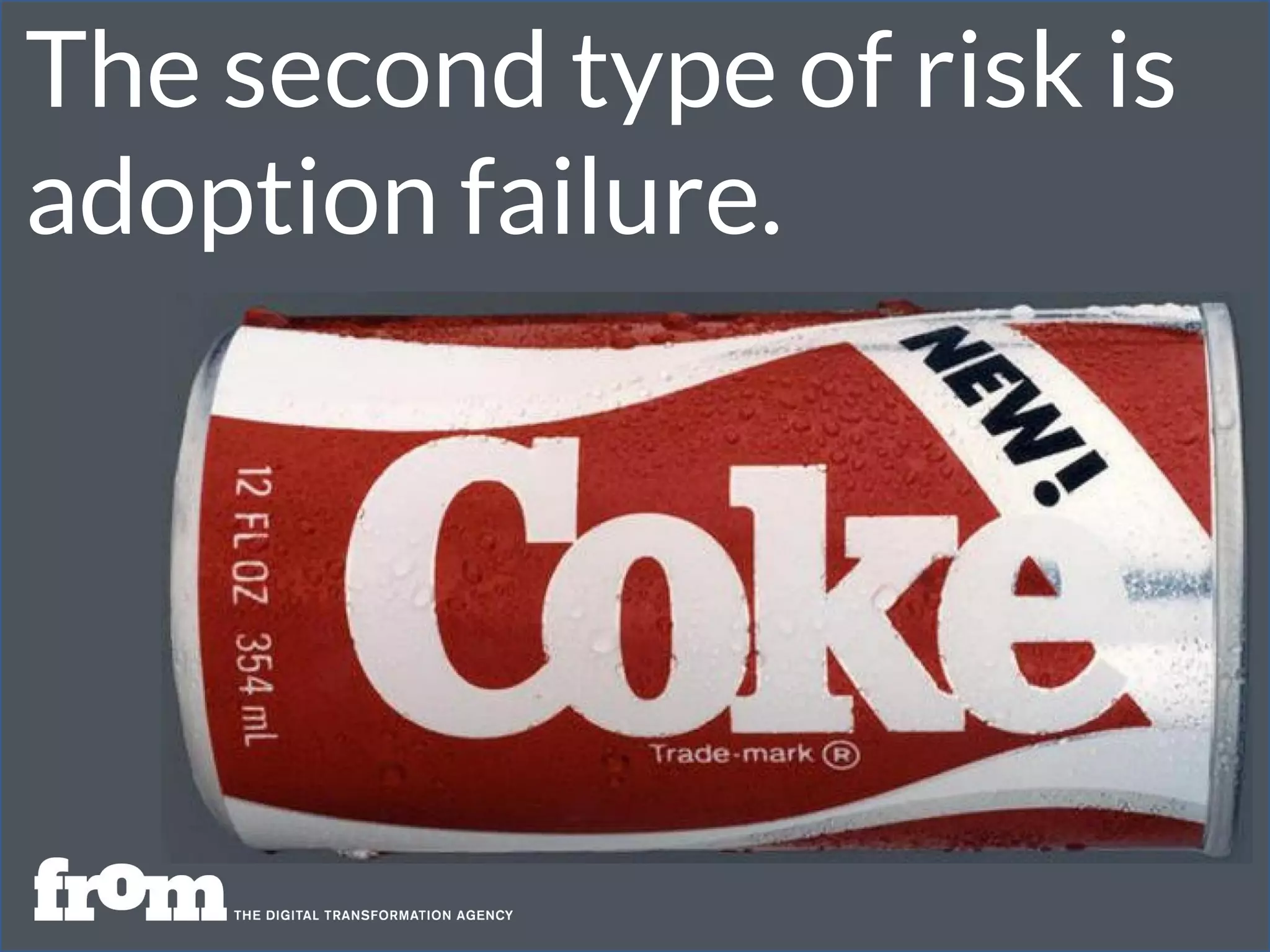
The second type of risk is
adoption failure.
Even if your product is executed
perfectly, there’s always a risk
that people won’t like it.
The best way to manage risk of adoption
failure is by leveraging an iterative,
user-centered development process.
You can use
customer
research to
understand
customer demand
and reduce the
risk of adoption
failure.
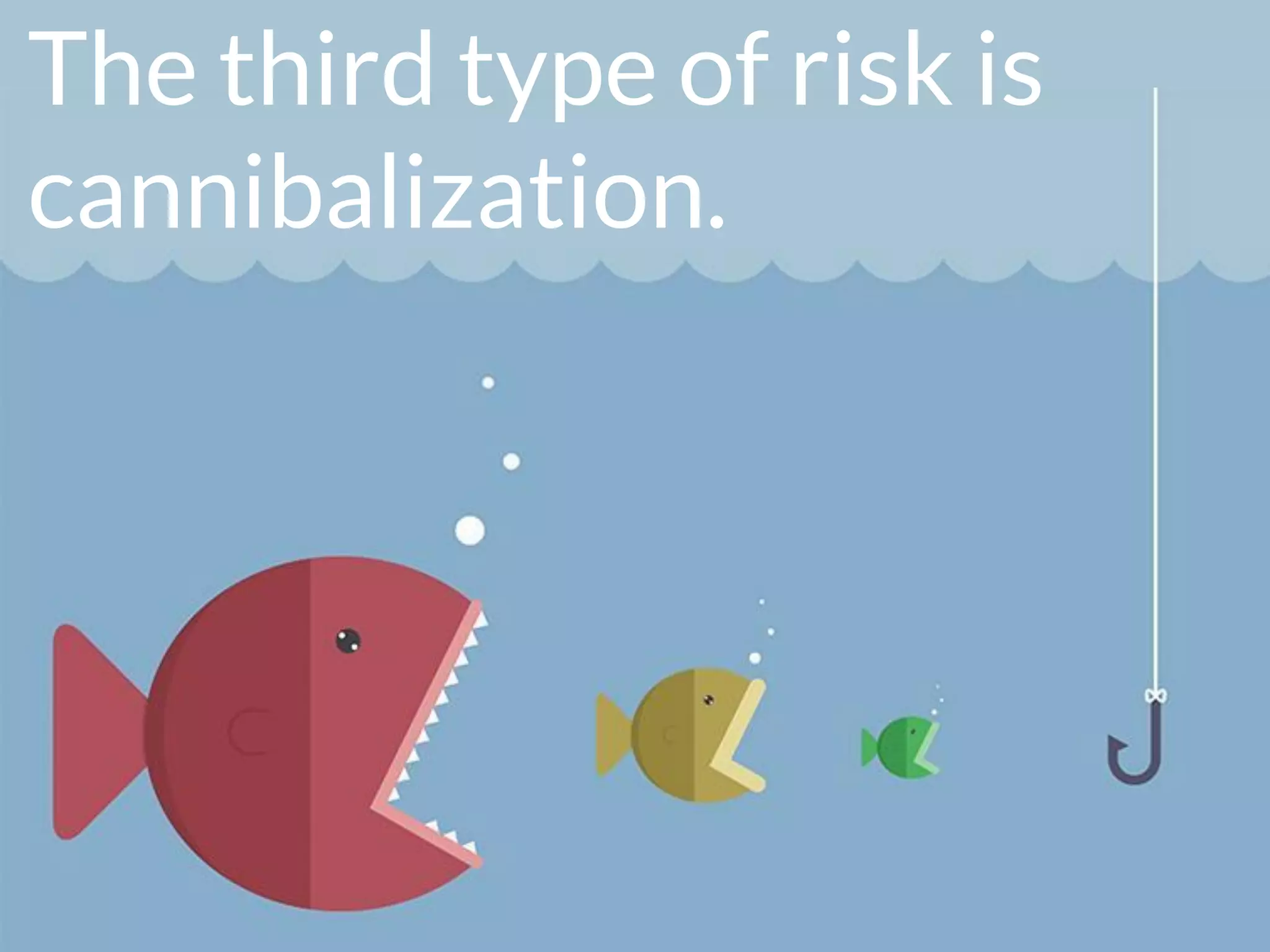
The third type of risk is
cannibalization.
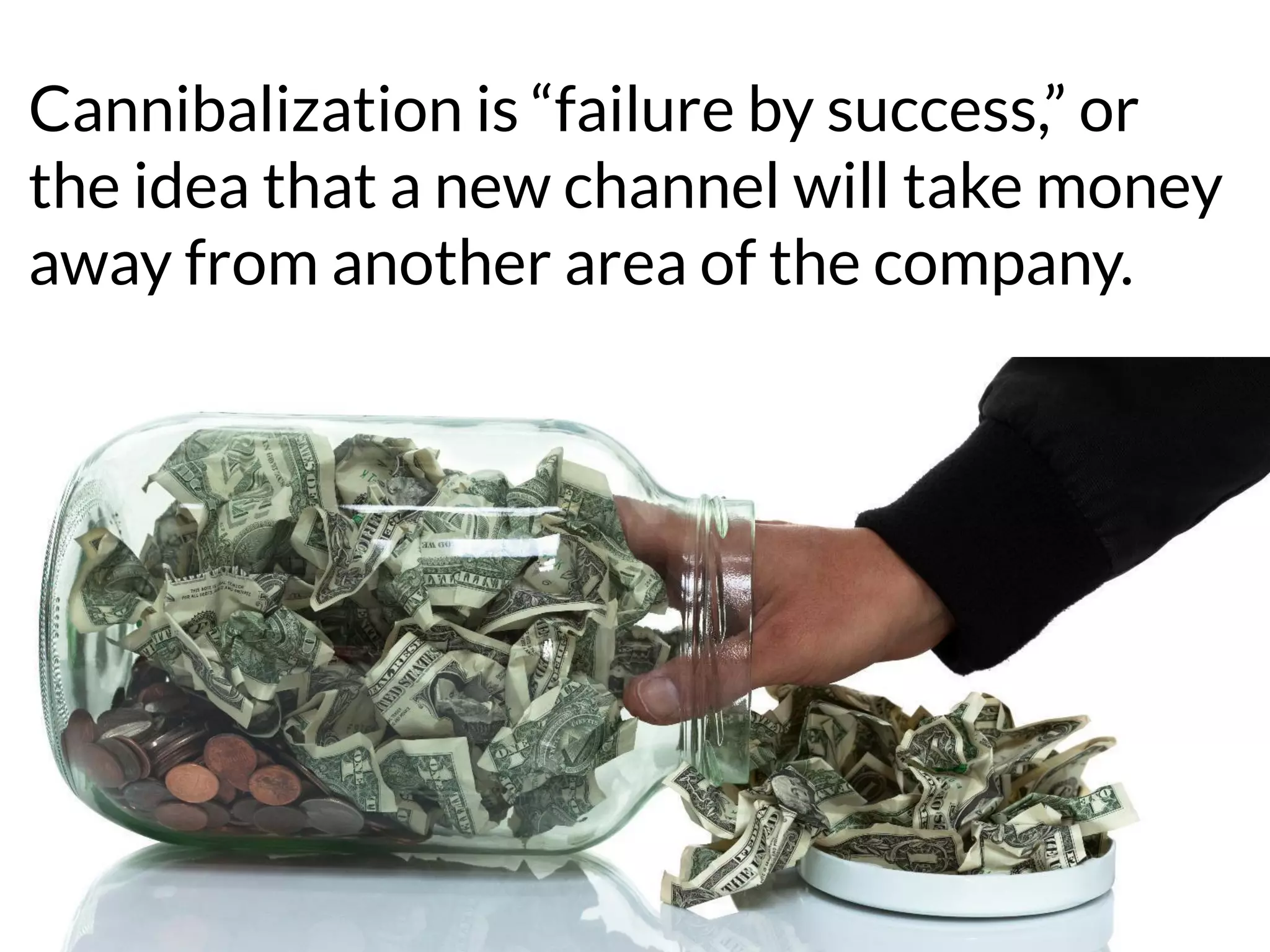
Cannibalization is “failure by success,” or
the idea that a new channel will take money
away from another area of the company.
But if you don’t do it, someone else
will.
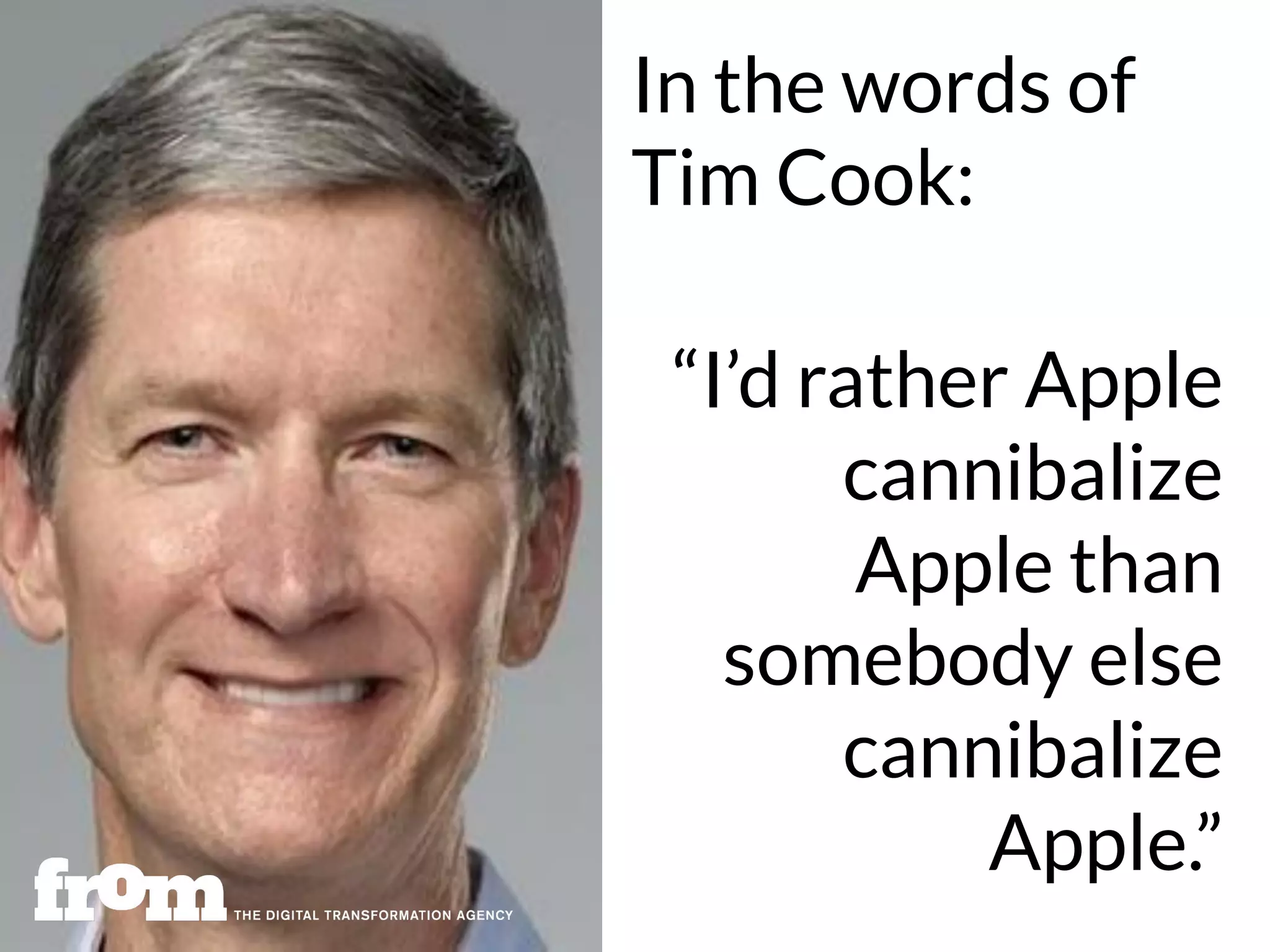
“I’d rather Apple
cannibalize
Apple than
somebody else
cannibalize
Apple.”
In the words of
Tim Cook:
LEGAL/REGULATO
RY
The fourth
type of risk
is legal risk.
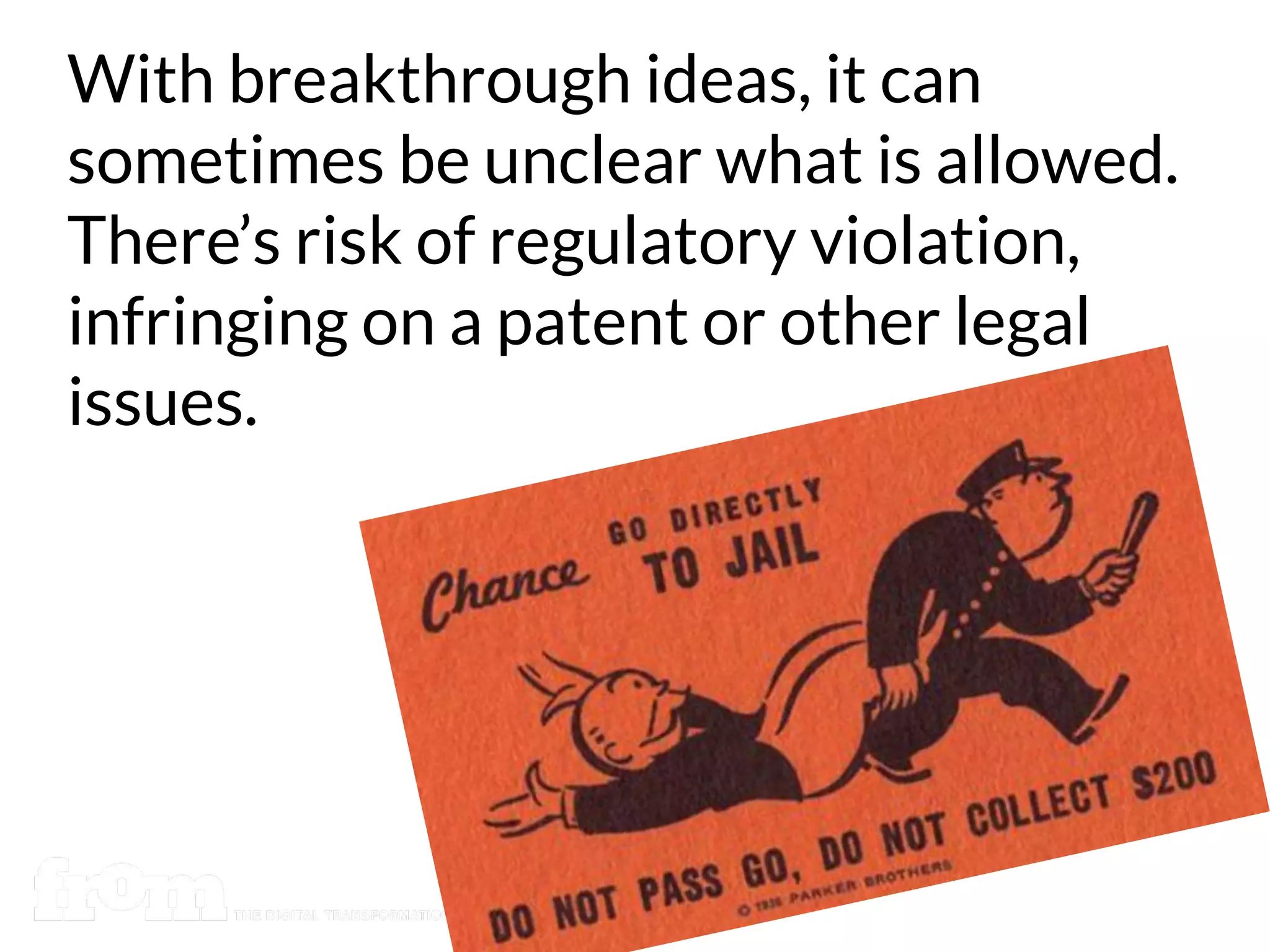
With breakthrough ideas, it can
sometimes be unclear what is allowed.
There’s risk of regulatory violation,
infringing on a patent or other legal
issues.
While their valuation climbs to tens of
billions of dollars, Airbnb and Uber are
constantly fighting legal battles.
And what a great
problem to have!
When Google launched, they faced legal
challenges as to whether or not they could
index other sites.
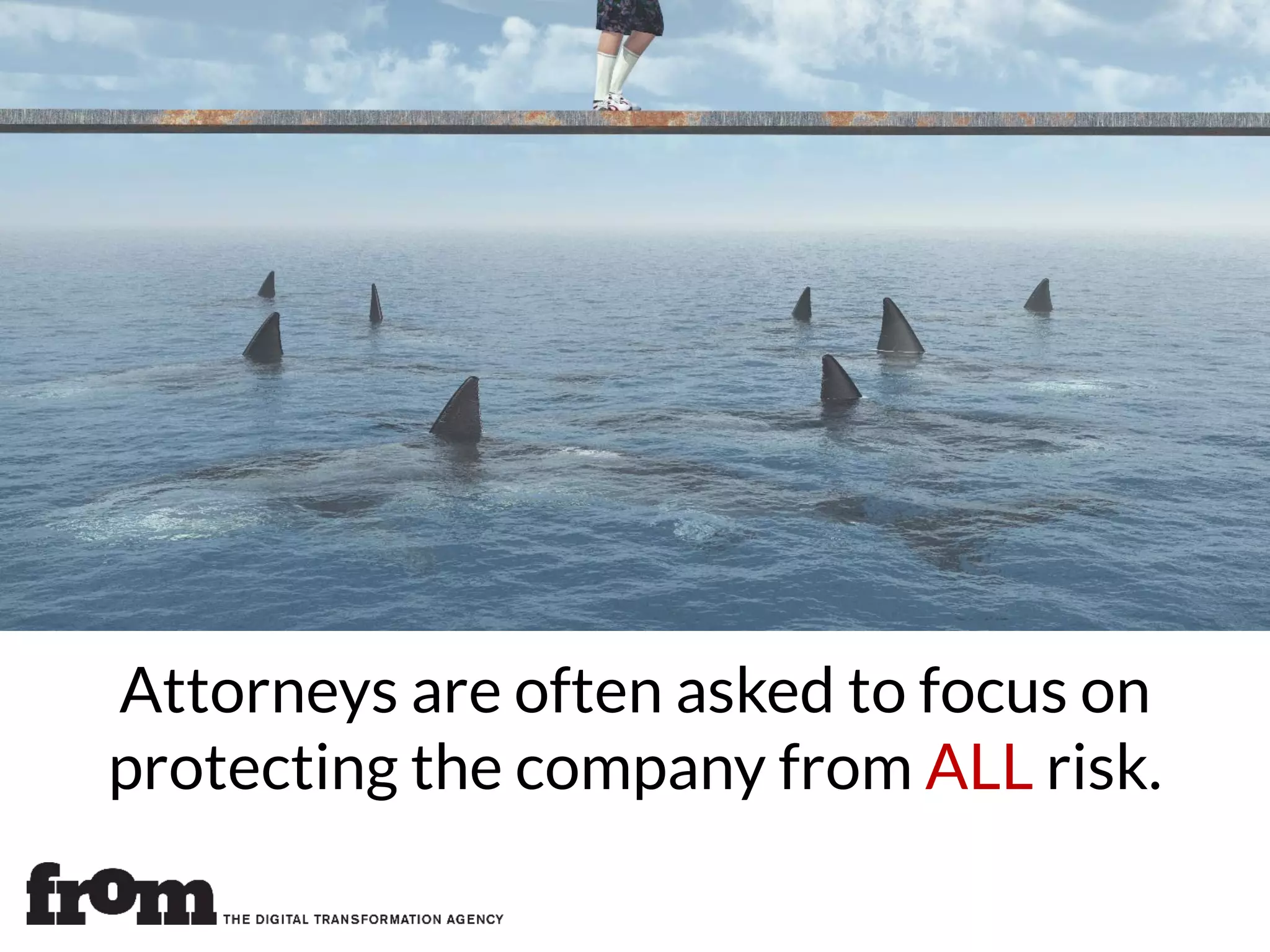
Attorneys are often asked to focus on
protecting the company from ALL risk.
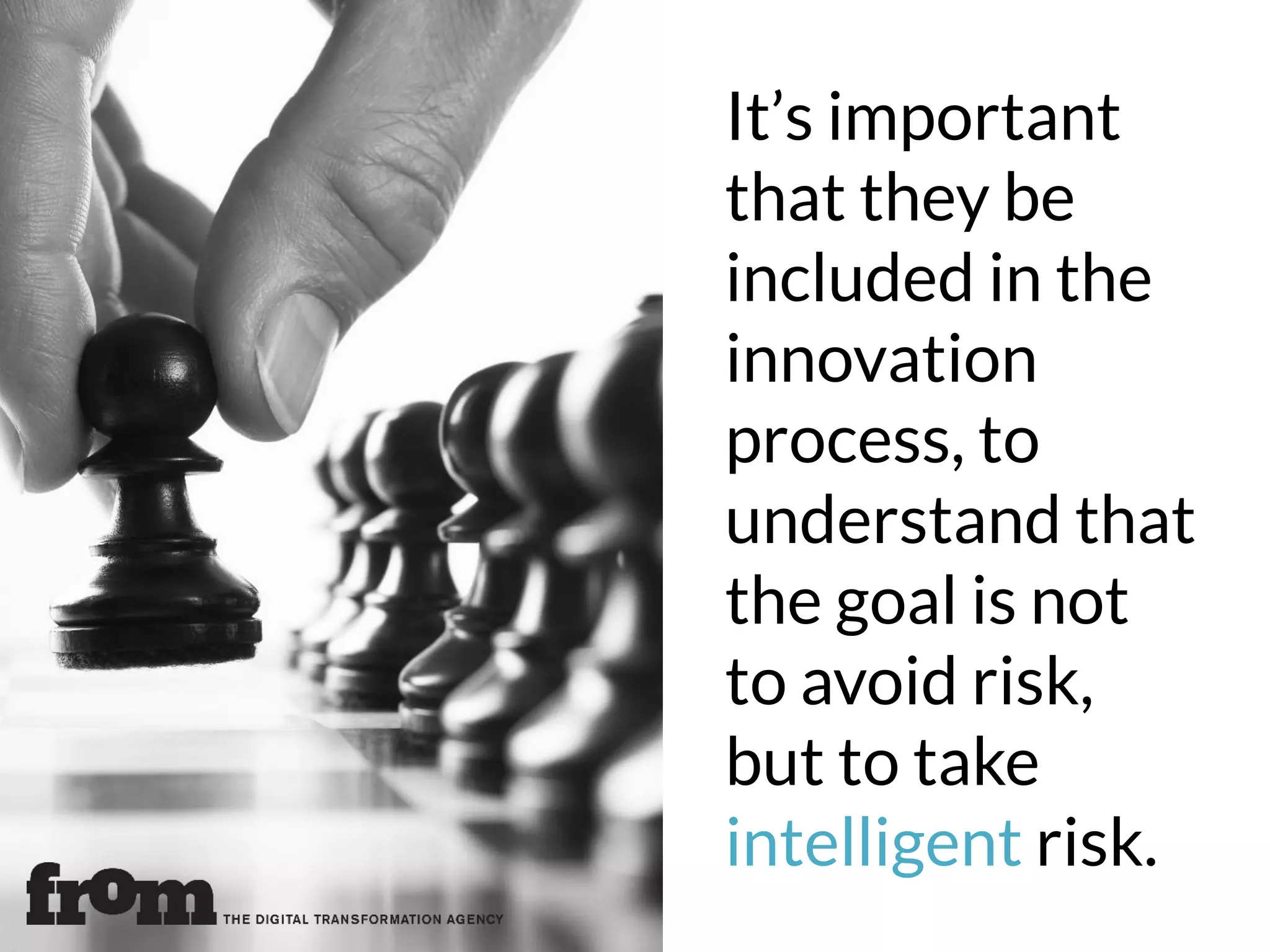
It’s important
that they be
included in the
innovation
process, to
understand that
the goal is not
to avoid risk,
but to take
intelligent risk.
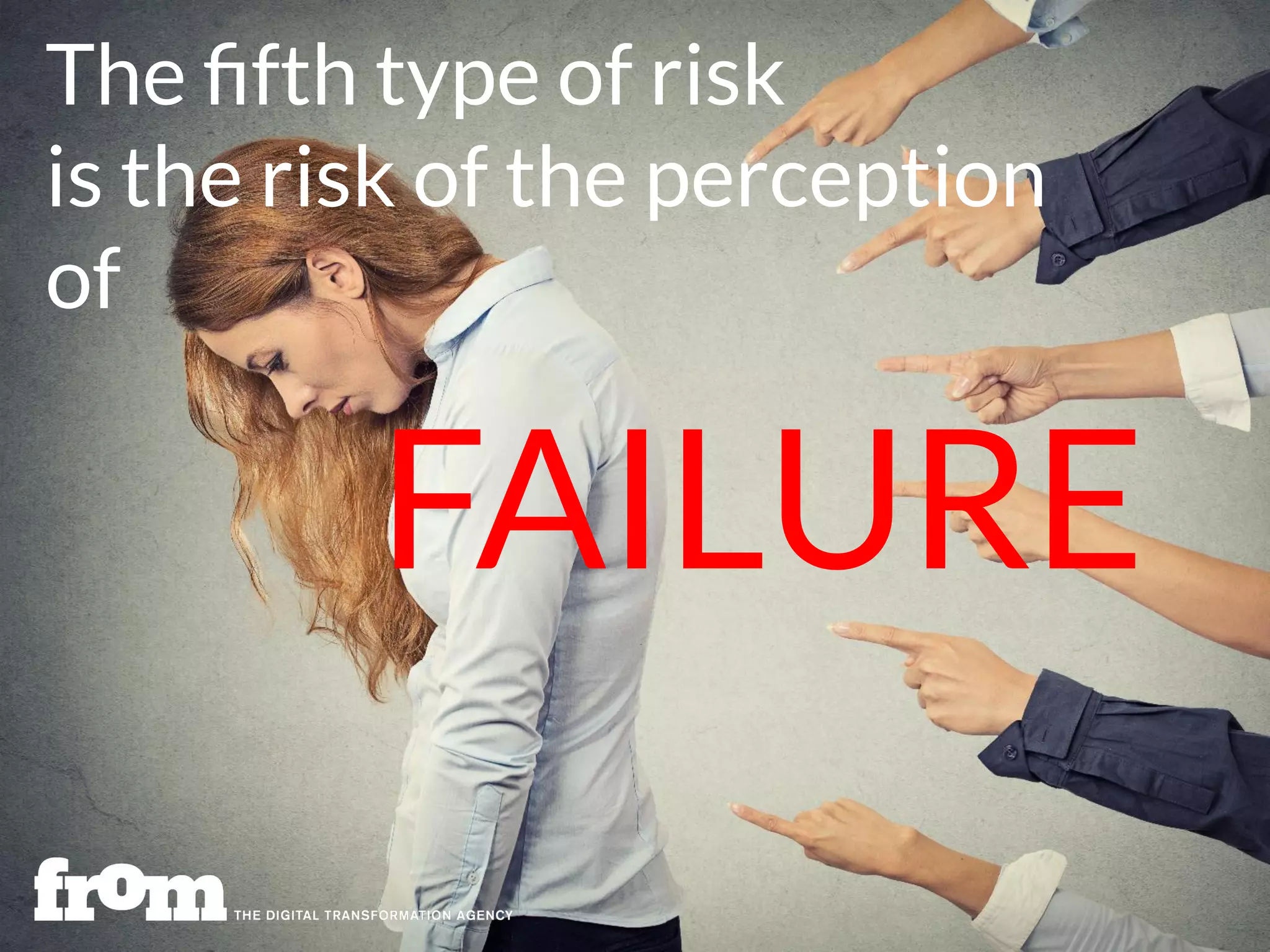
The fifth type of risk
is the risk of the perception
of
FAILURE
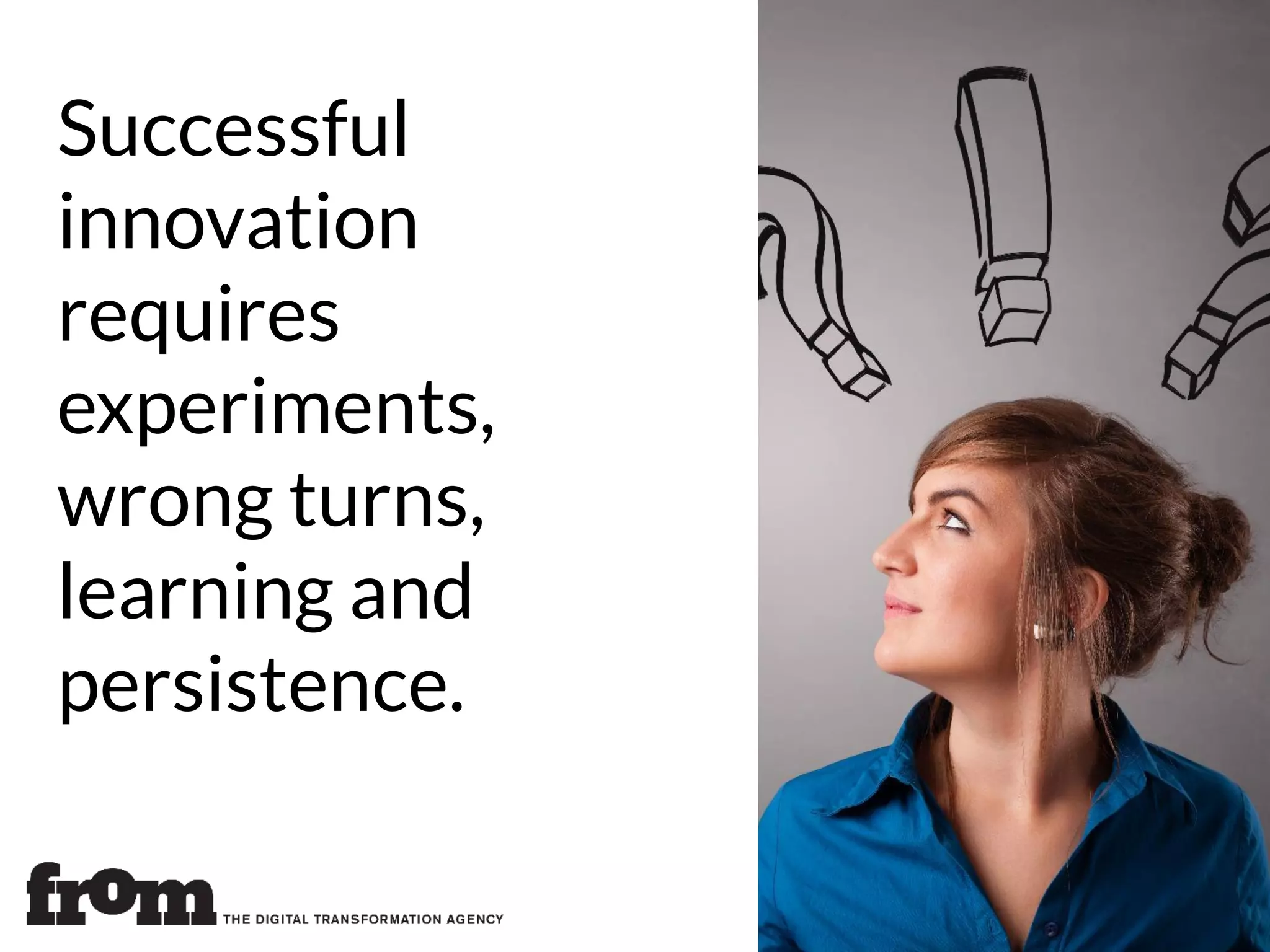
Successful
innovation
requires
experiments,
wrong turns,
learning and
persistence.
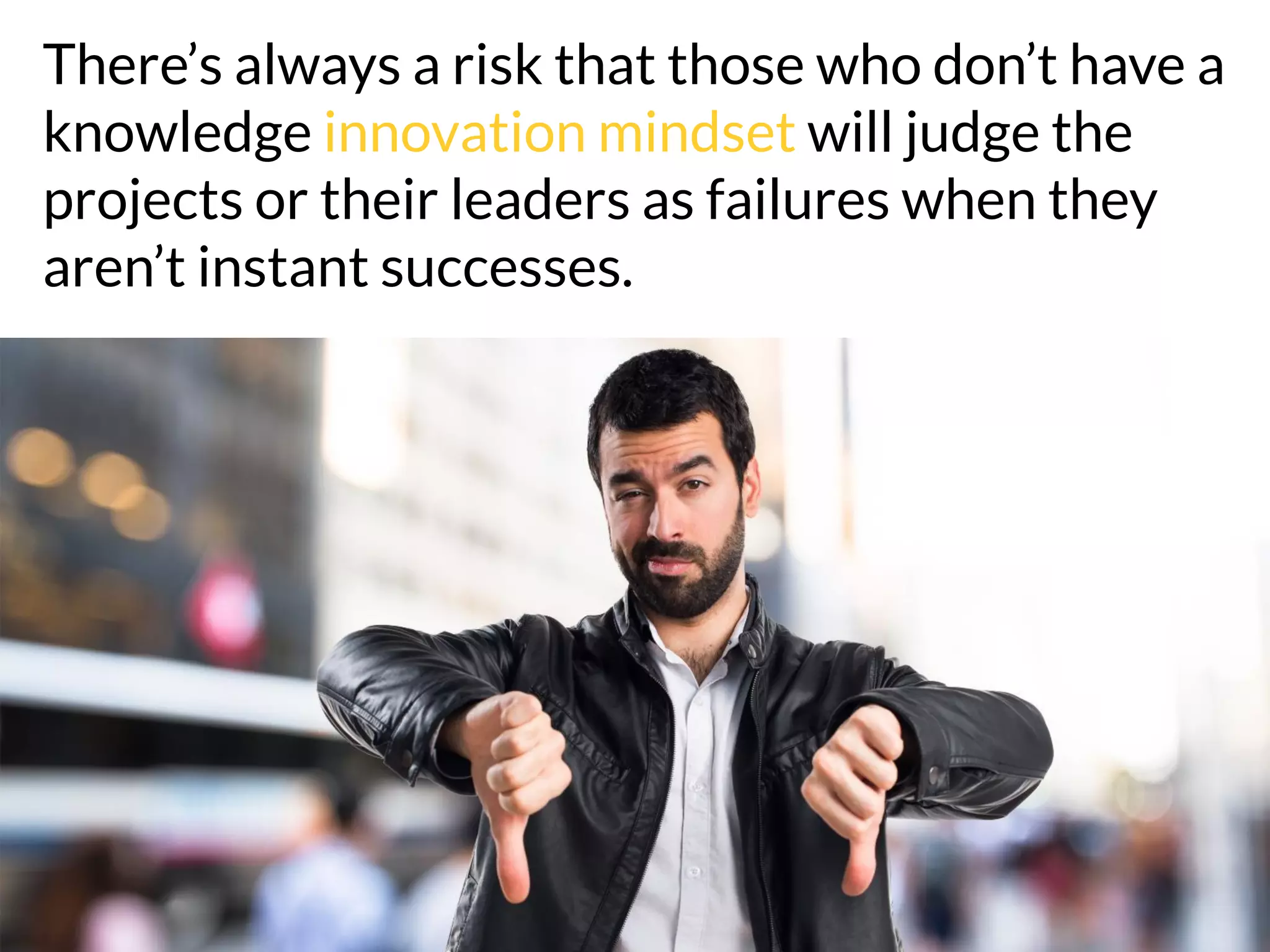
There’s always a risk that those who don’t have a
knowledge innovation mindset will judge the
projects or their leaders as failures when they
aren’t instant successes.
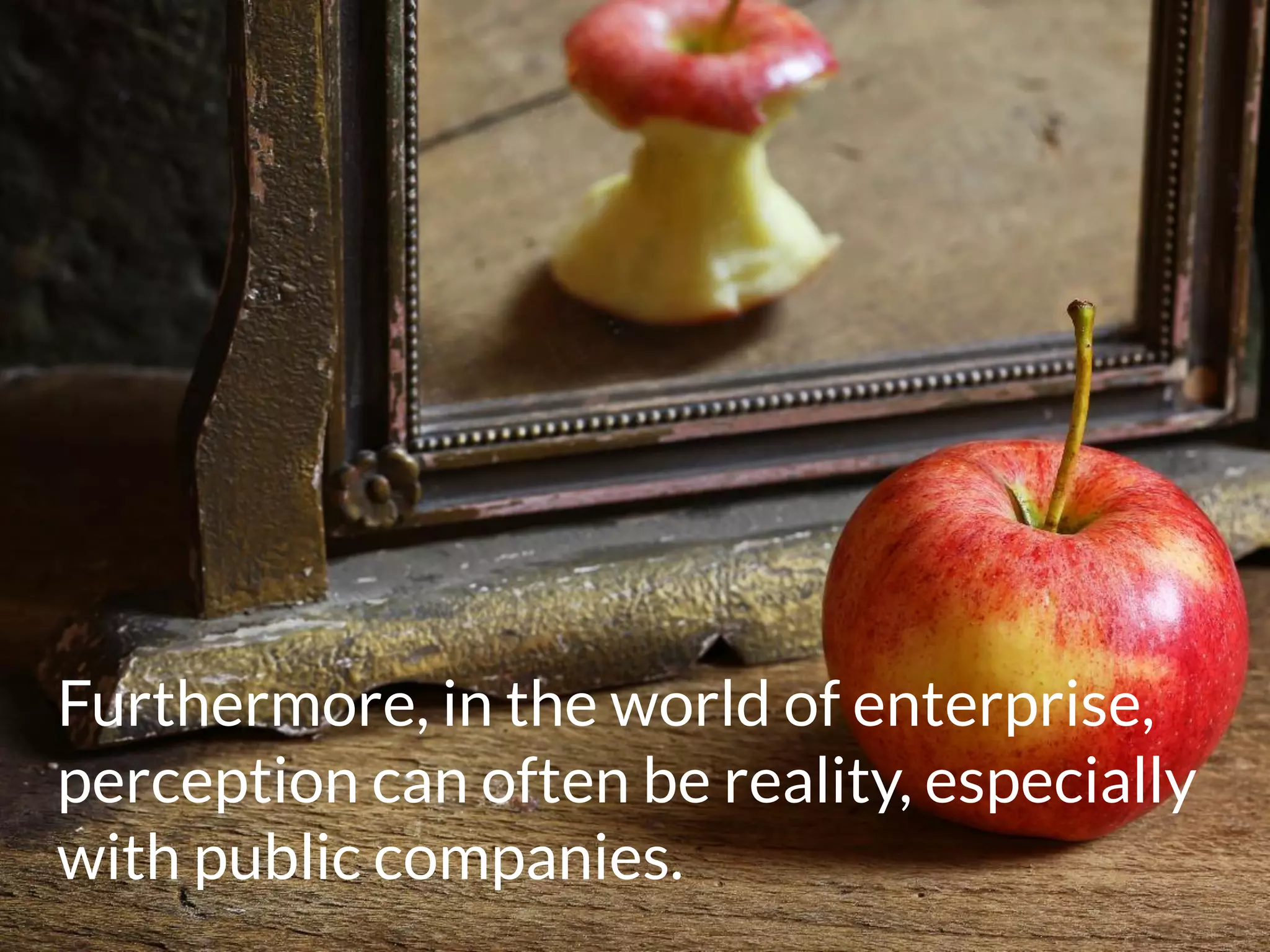
Furthermore, in the world of enterprise,
perception can often be reality, especially
with public companies.
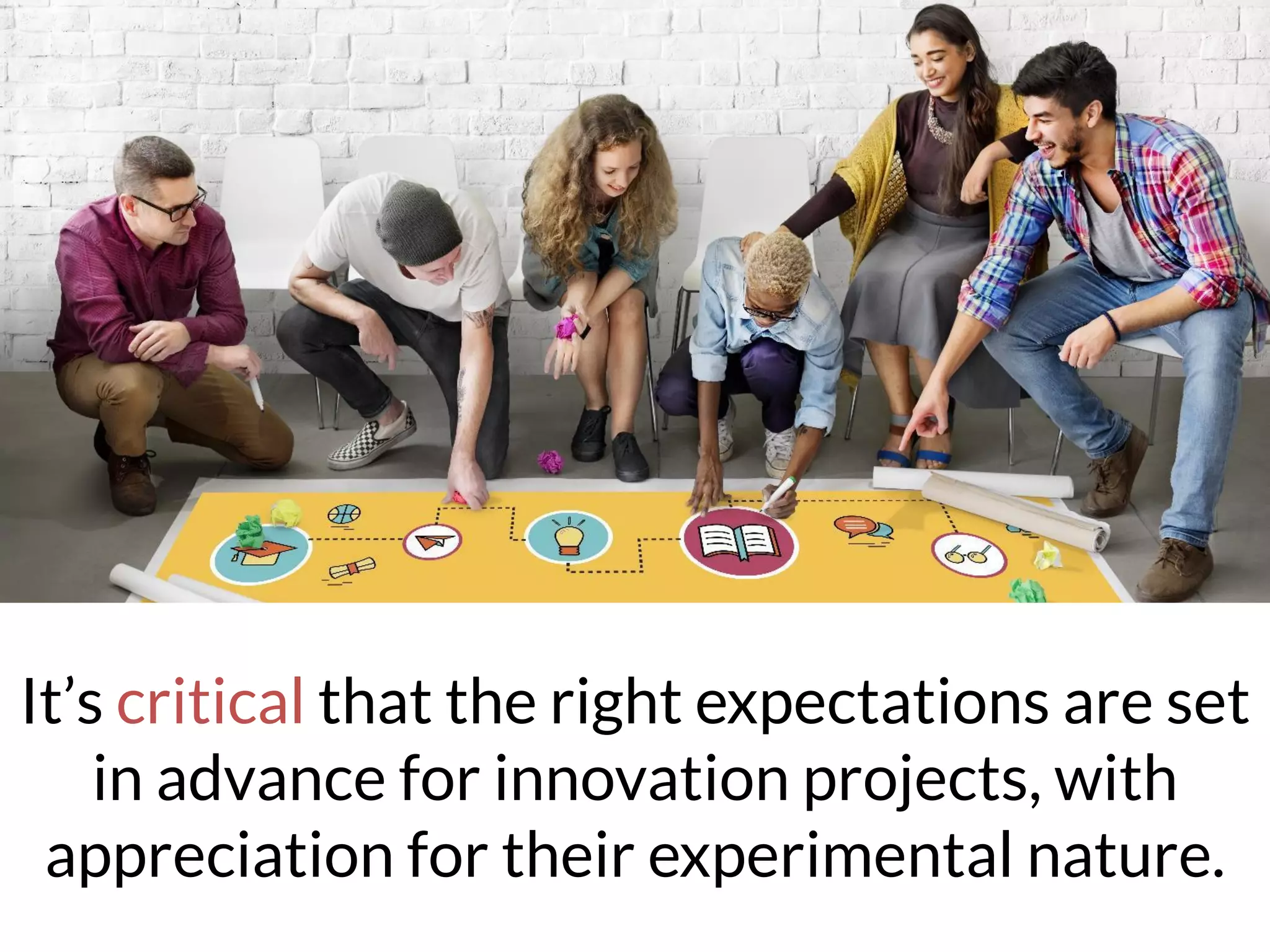
It’s critical that the right expectations are set
in advance for innovation projects, with
appreciation for their experimental nature.
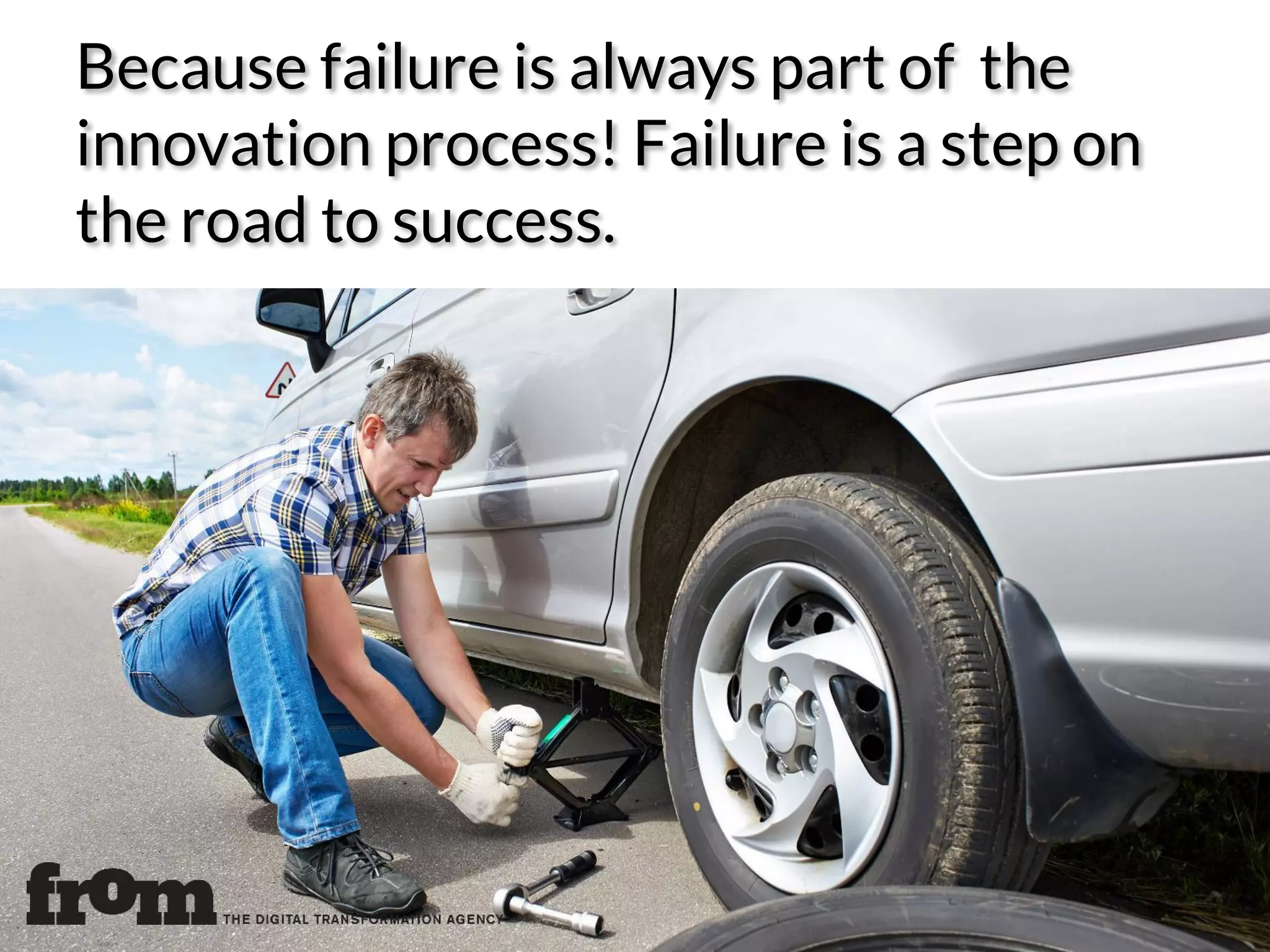
Because failure is always part of the
innovation process! Failure is a step on
the road to success.
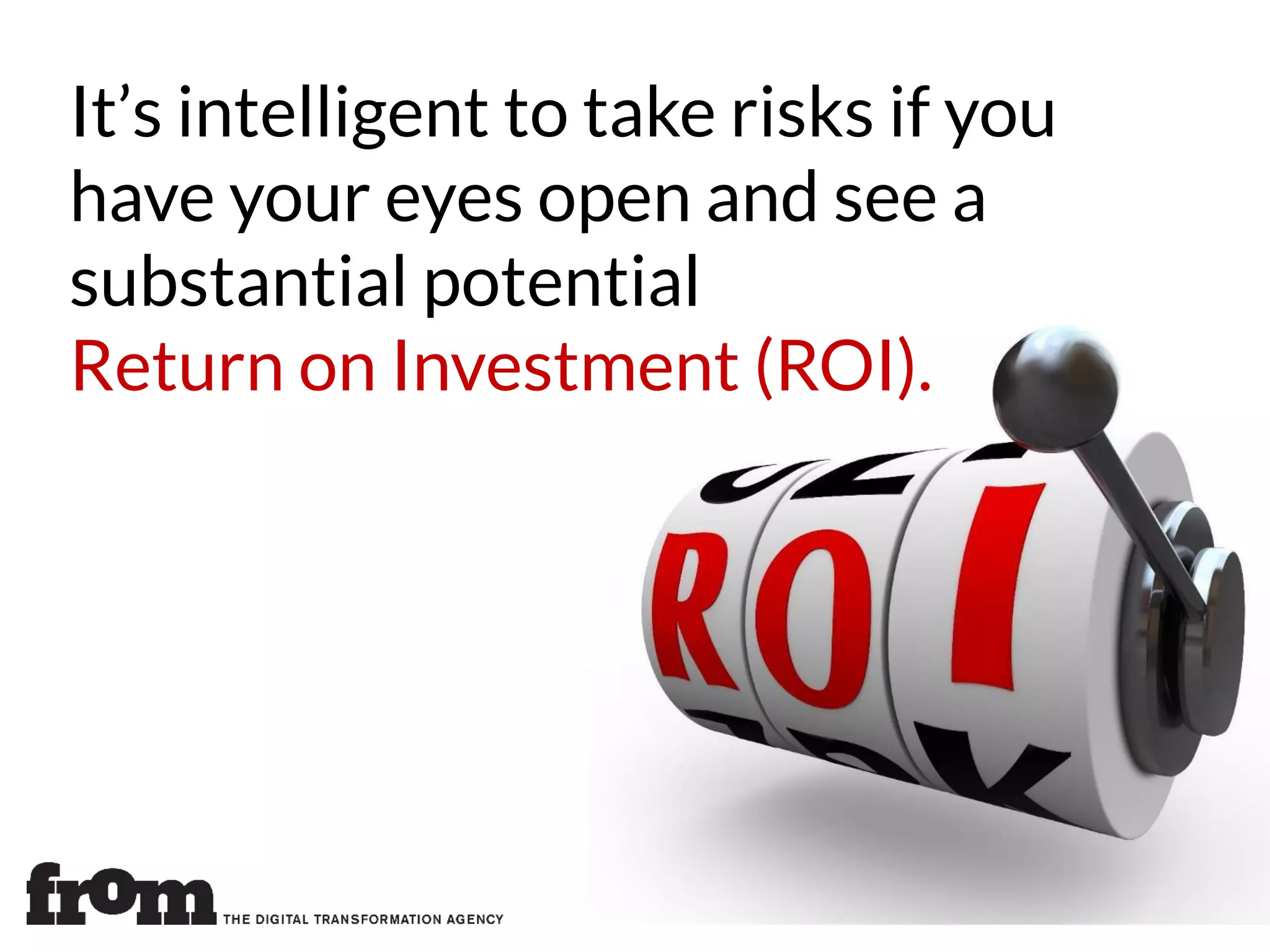
It’s intelligent to take risks if you
have your eyes open and see a
substantial potential
Return on Investment (ROI).
There’s always a risk that ROI won’t be
achieved, and the timeframe for ROI from
transformational projects is difficult to
forecast.
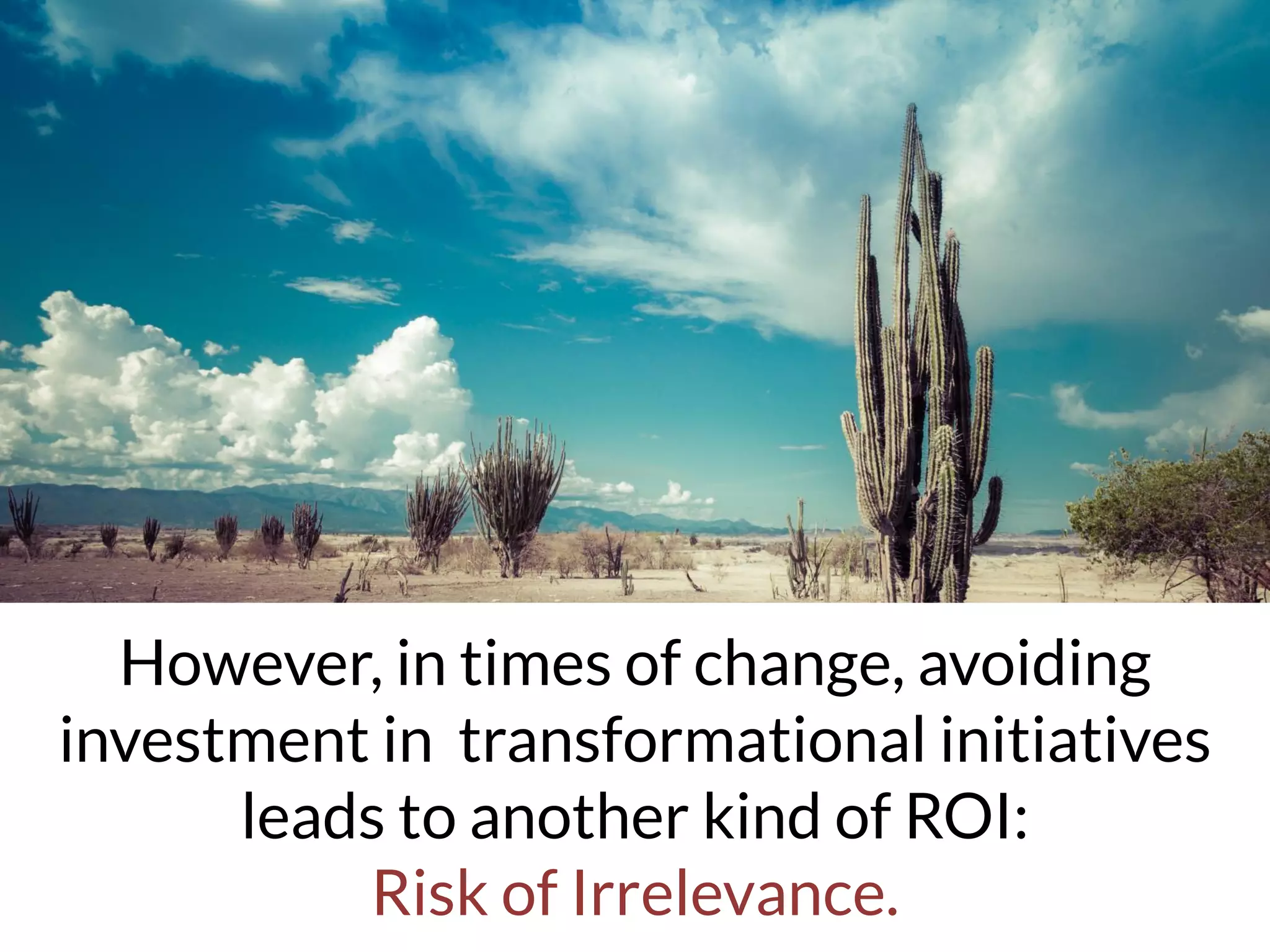
However, in times of change, avoiding
investment in transformational initiatives
leads to another kind of ROI:
Risk of Irrelevance.
“Far better is it
to dare mighty
things, to win
glorious
triumphs…”
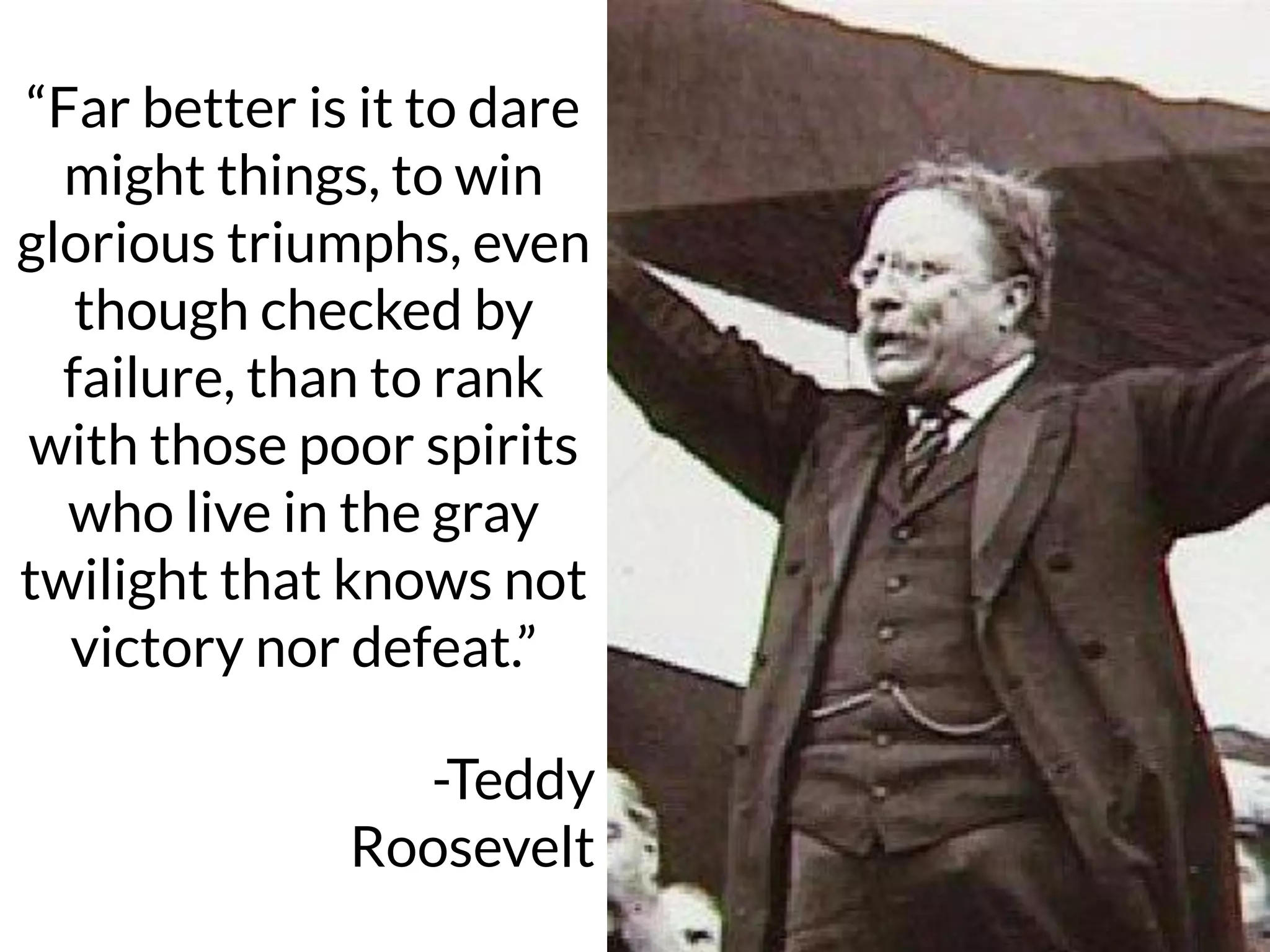
“Far better is it to dare
might things, to win
glorious triumphs, even
though checked by
failure, than to rank
with those poor spirits
who live in the gray
twilight that knows not
victory nor defeat.”
-Teddy
Roosevelt
Please share this
with your colleagues!
GETTING THE GREENLIGHT
Howard Tiersky, CEO
Contact us to learn more about how to
overcome aversion to risk .
sales@from.digit
al
@tierskylinkedin.com/in/tiersky
from helps clients develop and optimize
digital experiences for shopping,
banking, travel and entertainment –
online, on location, and everywhere you
find the digital consumer.
More at FROM.DIGITAL.
50
51
52

Getting A Green Light

  • 1.
    GETTING A GREEN LIGHT Challengesand Solutions for Your Ambitious Projects Howard Tiersky, CEO
  • 2.
    Do you struggleto get support or budget for transformational initiatives that are essential to enable your company to thrive in these times of change?
  • 3.
  • 4.
    The reason yourenterprise isn’t supporting you? Aversion to Risk
  • 5.
    For them, it seemsbetter to stay where they’re comfortable, rather than venturing out into the unknown.
  • 6.
    But are they right? Isyour ambitious project risky?
  • 7.
    The answer isprobably…
  • 8.
    But when theworld is changing, not changing is even riskier.
  • 9.
    The good news? CEOs andthe people managing business units understand a lot about risk.
  • 10.
    You just haveto draw the right connections for them.
  • 11.
    They know ifsomeone offers them a stock with HUGE returns and ZERO risk, it’s time to run the other way.
  • 12.
    Just like withstock investments, the steps to successful innovation include taking smart risks based on insights into the marketplace combined with a portfolio approach.
  • 13.
    Our job as innovatorsis to communicate the risk profile for transformational initiatives in a way that makes solid business sense.
  • 14.
    Then, we structurethe approach to keep the risk as low as possible.
  • 15.
    Once you havealignment on the idea that some level of real risk is necessary and appropriate…
  • 16.
    5 …you can gainthe confidence of enterprise leaders by demonstrating you have strategies to address the different types of risk your efforts may face.
  • 17.
    There are different types ofrisks to transformational initiatives.
  • 18.
    The first type ofrisk is implementation failure.
  • 19.
    Implementation failures are generallythe result of unforeseen circumstances. Find a better image– something funny about someone who doesn’t see what’s coming
  • 20.
    The best antidoteis having a diverse team collaborating effectively to consider any essential aspects for implementation prior to implementation.
  • 21.
    Less ambitious, lessexpensive launches lead to more sophisticated launches down the line. Use the concept of the minimum viable product:
  • 22.
    Microsoft is famous for developing terribleversion 1 products that dominate the market by version 10.
  • 23.
    The second typeof risk is adoption failure.
  • 24.
    Even if yourproduct is executed perfectly, there’s always a risk that people won’t like it.
  • 25.
    The best wayto manage risk of adoption failure is by leveraging an iterative, user-centered development process.
  • 26.
    You can use customer researchto understand customer demand and reduce the risk of adoption failure.
  • 27.
    The third typeof risk is cannibalization.
  • 28.
    Cannibalization is “failureby success,” or the idea that a new channel will take money away from another area of the company.
  • 29.
    But if youdon’t do it, someone else will.
  • 30.
    “I’d rather Apple cannibalize Applethan somebody else cannibalize Apple.” In the words of Tim Cook:
  • 31.
  • 32.
    With breakthrough ideas,it can sometimes be unclear what is allowed. There’s risk of regulatory violation, infringing on a patent or other legal issues.
  • 33.
    While their valuationclimbs to tens of billions of dollars, Airbnb and Uber are constantly fighting legal battles. And what a great problem to have!
  • 34.
    When Google launched,they faced legal challenges as to whether or not they could index other sites.
  • 35.
    Attorneys are oftenasked to focus on protecting the company from ALL risk.
  • 36.
    It’s important that theybe included in the innovation process, to understand that the goal is not to avoid risk, but to take intelligent risk.
  • 37.
    The fifth typeof risk is the risk of the perception of FAILURE
  • 38.
  • 39.
    There’s always arisk that those who don’t have a knowledge innovation mindset will judge the projects or their leaders as failures when they aren’t instant successes.
  • 40.
    Furthermore, in theworld of enterprise, perception can often be reality, especially with public companies.
  • 41.
    It’s critical thatthe right expectations are set in advance for innovation projects, with appreciation for their experimental nature.
  • 42.
    Because failure isalways part of the innovation process! Failure is a step on the road to success.
  • 43.
    It’s intelligent totake risks if you have your eyes open and see a substantial potential Return on Investment (ROI).
  • 44.
    There’s always arisk that ROI won’t be achieved, and the timeframe for ROI from transformational projects is difficult to forecast.
  • 45.
    However, in timesof change, avoiding investment in transformational initiatives leads to another kind of ROI: Risk of Irrelevance.
  • 46.
    “Far better isit to dare mighty things, to win glorious triumphs…” “Far better is it to dare might things, to win glorious triumphs, even though checked by failure, than to rank with those poor spirits who live in the gray twilight that knows not victory nor defeat.” -Teddy Roosevelt
  • 47.
    Please share this withyour colleagues!
  • 48.
    GETTING THE GREENLIGHT HowardTiersky, CEO Contact us to learn more about how to overcome aversion to risk . sales@from.digit al @tierskylinkedin.com/in/tiersky
  • 49.
    from helps clientsdevelop and optimize digital experiences for shopping, banking, travel and entertainment – online, on location, and everywhere you find the digital consumer. More at FROM.DIGITAL.
  • 50.
  • 51.
  • 52.