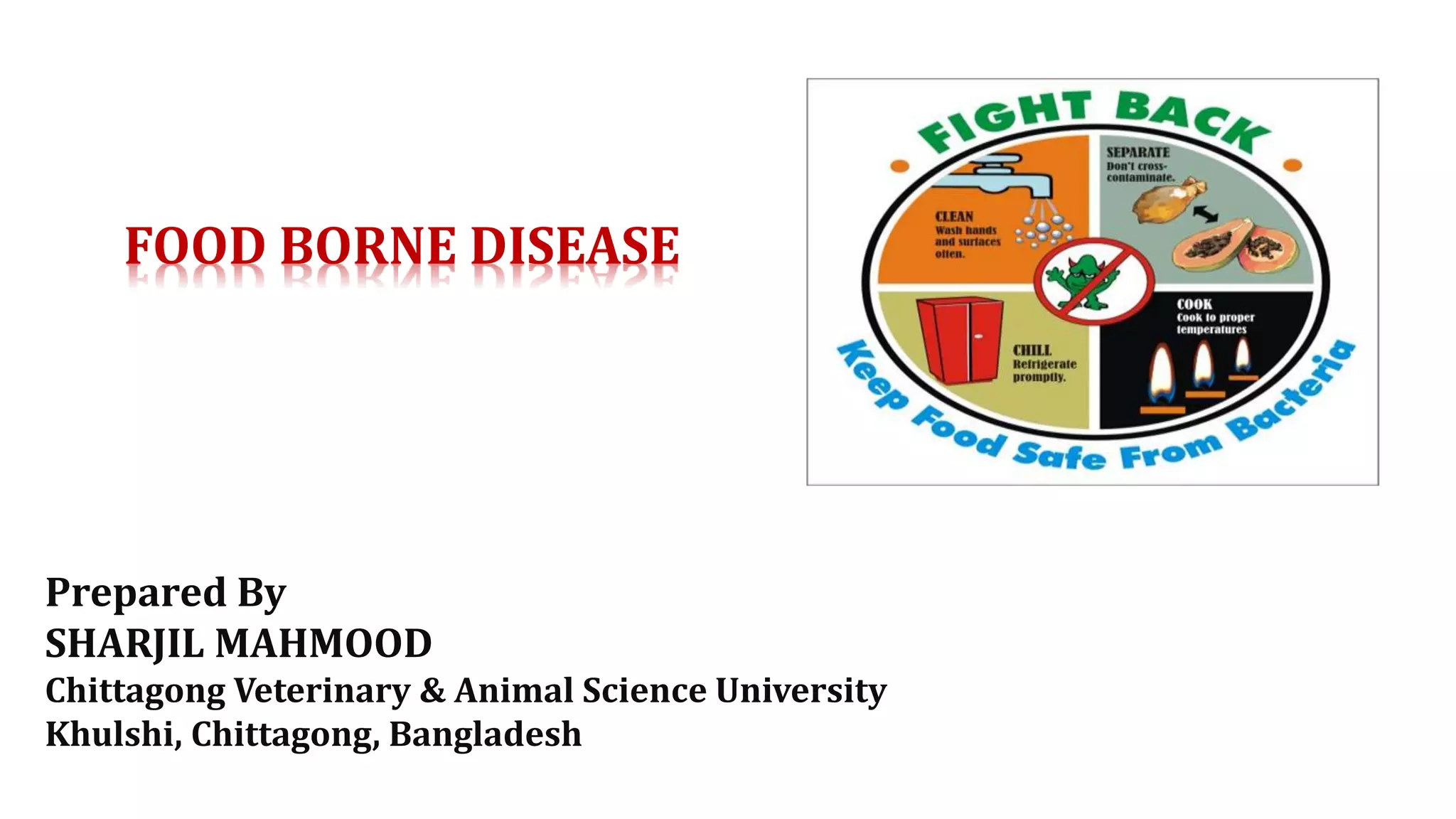
FOOD BORNE DISEASE
Prepared By
SHARJIL MAHMOOD
Chittagong Veterinary & Animal Science University
Khulshi, Chittagong, Bangladesh
REPRESENTED BY:
 NABILA AKTER
 NUSRAT JAHAN
 KAFIL UDDIN
 NURUN NAHAR
 S M F JINNAH
 SHARJIL MAHMOOD
CONTENTS:
 Objectives
 What is food borne diseases
 Classification of food borne disease
 Causes of food borne disease
 Contaminants & their consequence
 Epidemiology & transmission
 People at risk
 Prevention & control
Objectives
Be able to:
Explain what food borne illness is
Classify food borne illness
Explain the dangers of food borne illness
Explain why young children are at risk for food borne illnesses
Identify some of the most important causes of food borne illness
Identify key practices for preventing food hazards from contaminating food
FOOD BORNE DISEASES:
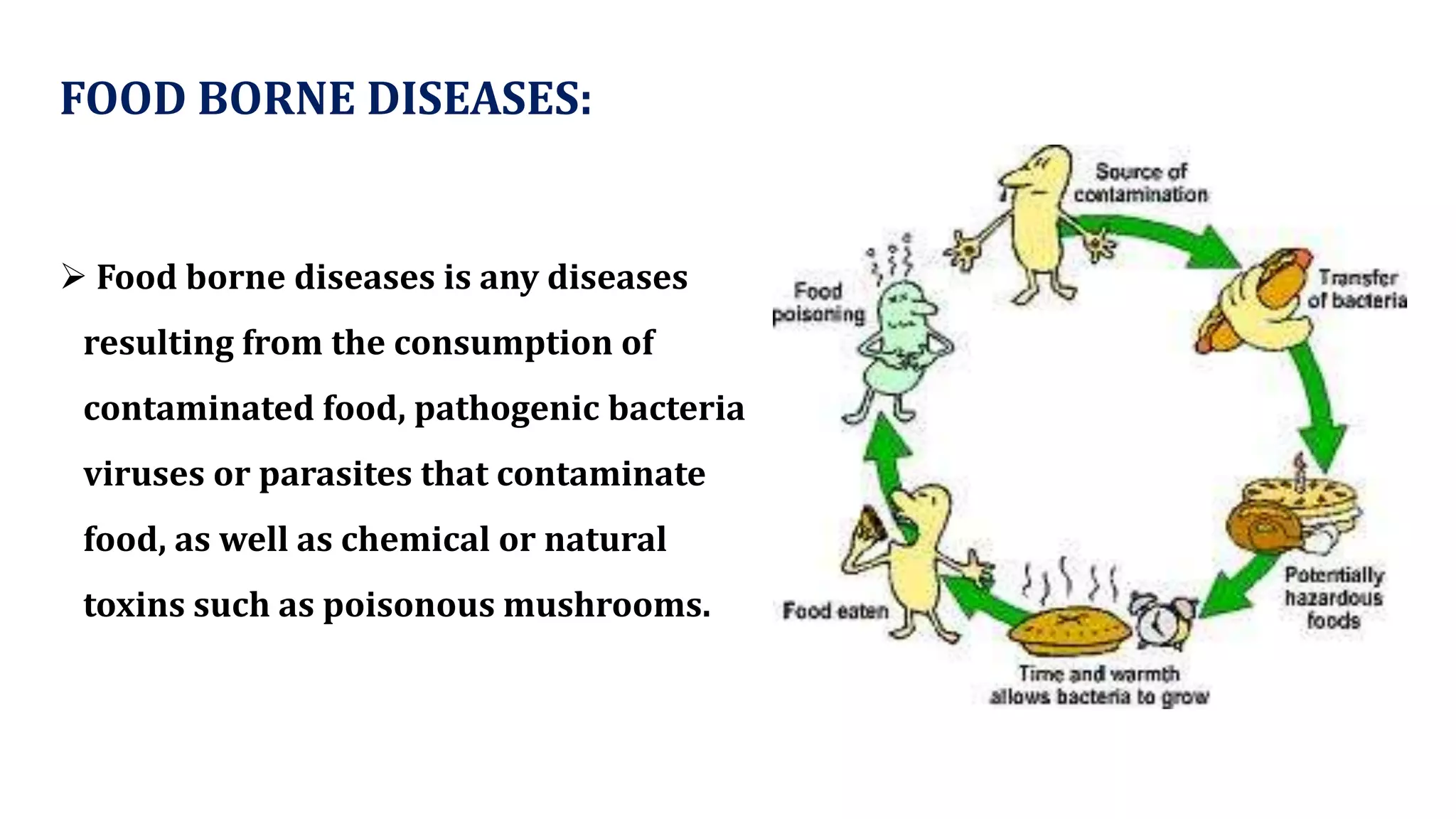
 Food borne diseases is any diseases
resulting from the consumption of
contaminated food, pathogenic bacteria
viruses or parasites that contaminate
food, as well as chemical or natural
toxins such as poisonous mushrooms.
THE ETIOLOGY OF FOOD-BORNE DISEASES:
 Food-borne diseases are those diseases that are the result of exposure to
pathogenic microorganisms, such as bacteria, viruses and parasites, which tend
to have acute effects on human health.
 However chronic, and in some cases acute, food-borne illness may also be
caused by the presence of various chemical substances including residues of
pesticides and veterinary drugs, unlawful food additives, mycotoxins, bio toxins
and radionuclides that enter the food intentionally or unintentionally.
The problems :Due to consumption of contaminated food and its detrimental
effect on human health .
OBSERVATIONS OF FBD
WHO estimates that one in three people worldwide suffer from a food-borne
disease every year,
1.8 million die from severe food and waterborne diarrhea ,related illness
 Most of these illnesses are due to microorganisms and chemical contaminants,
which may occur naturally or be introduced at some point along the food chain.
 Campylobacter and Salmonella species account for over 90% of all reported
cases of bacteria related to food poisoning worldwide.
As most cases of food borne disease are not reported, the true dimension of the
problem is unknown.
Today food safety is one of WHO’s top eleven priorities
Dangers of food borne disease
Individual :
 Loss of family income
 Medical expenses
 Cost of special dietary needs
 Death or funeral expense
Establishment :
 Loss of customers and sales
 Increase insurance premiums
 Lowered employee morale
 Increase employee turn over
FOOD SAFETY AND SECURITY
 The World Food Summit, organized by FAO in 1996, recognized that access to safe
food is in itself an element of food security,
 The World Health Assembly Resolution on Food safety from May 2000 stated that :
1. Everyone should have the right to an adequate supply of safe, nutritious food ,
2. Encourages WHO member states ‘‘to implement and keep national and, when
appropriate, regional mechanisms for food borne disease surveillance’’
3. Governments should take the necessary steps to ensure the availability of safe food
for all in order to sustain the health and economic development of their people.
CLASSIFICATION OF FOOD BORNE DISEASE
1. Food borne infection: caused due to the-
Entrance of pathogenic microorganisms contaminating food into the body.
Body reacts by raising temperature e.g.- fever
Longer incubation period.
2. Food borne intoxications: Caused by consumption of food containing
bio-toxicants, metabolic products, poisonous substance
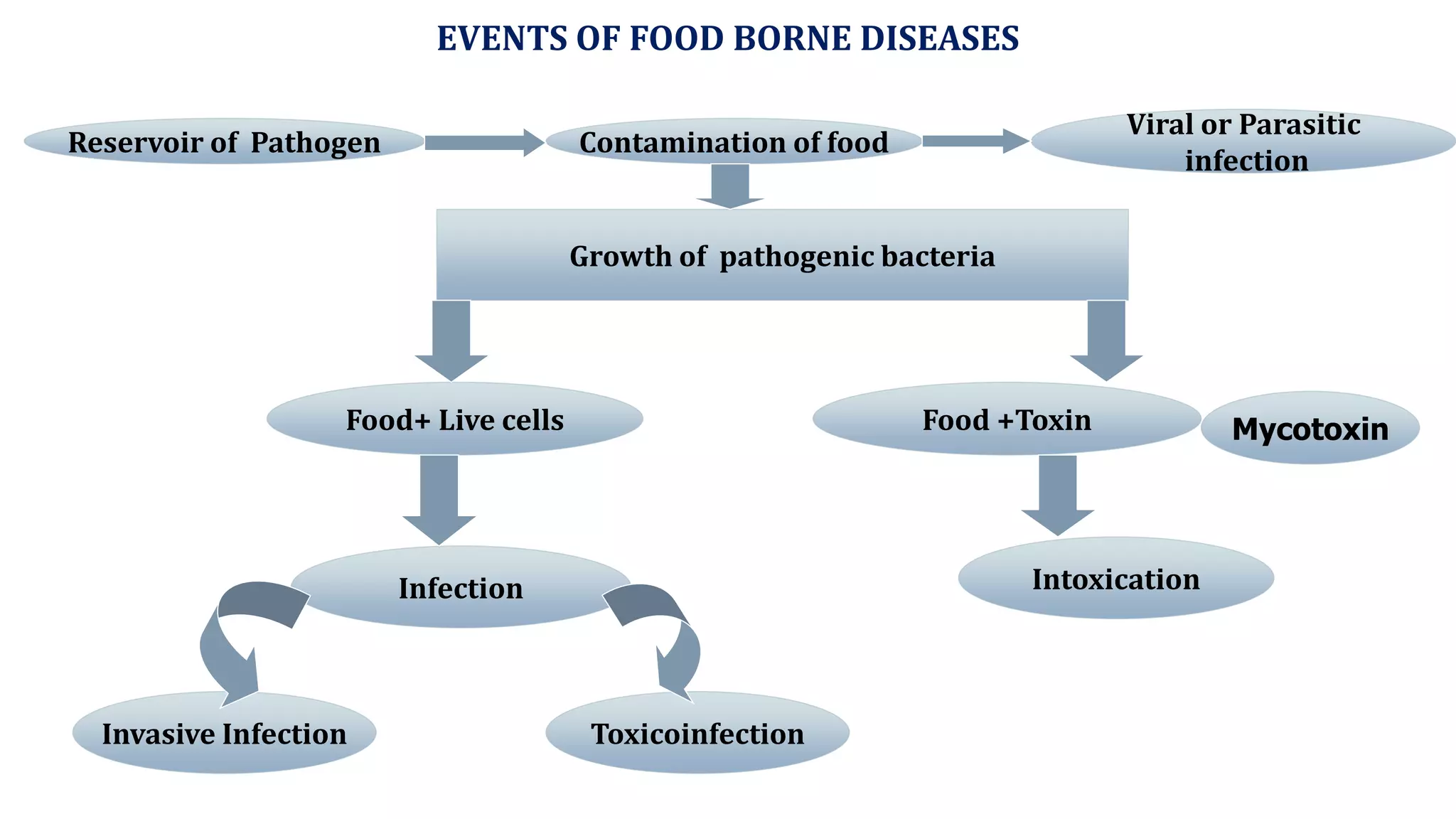
Reservoir of Pathogen Contamination of food
Viral or Parasitic
infection
Growth of pathogenic bacteria
Infection Intoxication
Toxicoinfection
Food+ Live cells Food +Toxin
Invasive Infection
EVENTS OF FOOD BORNE DISEASES
Mycotoxin
Main causes of food borne disease
 Cross Contamination - occurs when microorganisms are transferred
from one surface or food to another.
 Time temperature abuse– Happens when the food is exposed to
Temperature Danger Zone (41⁰F - 140⁰F) for more than 4 hrs.
 Poor personnel hygiene– Food handlers are carriers of disease causing
bacteria. Food service personnel can contaminate food
Types of Food Contaminants
Biological Contaminants: A microbial contaminant that may cause a
food borne illness (bacteria, viruses, fungi, parasites, biological toxins)
Examples: Sea food toxins ,Mushroom toxins
Chemical Contaminant :A chemical substance that can cause food
borne illness. Substances normally found in restaurant
Examples: Toxic metals, Pesticides
Physical Contaminants: Any foreign object that accidentally
find its way into food
Examples: Hair, Staple wire, Dust
BIOLOGICAL CONTAMINANTS
Bacterial Viral Fungal Parasitic
•Botulism
•E-coli infection
•Salmonellosis
•Shigellosis
•Listeriosis
•Staphylococcal Illness
•Hepatitis-A
•Norwalk virus
•Rota virus
•Yeast
•Mold
•Giardiasis
•Cyclosporiasis
•Trichonosis
DISEASES CAUSED BY BACTERIA
Botulism (*spore forming)
Bacteria : Clostridium Botulinum
 Anaerobic bacteria
 Organism produce a neurotoxin,
 Type of illness: Bacterial intoxication
 Onset time : 12-36 hrs.
 Symptoms : Dizziness , double vision,
difficulty in breathing and swallowing
 Food Sources : Improperly canned foods, vacuum packed, Refrigerated foods
E- Coli Infection
Bacteria : Escherichia coli
 Produce Shiga Toxin , a poisonous substance
 Facultative anaerobic bacteria
 Type of Illness : Bacterial Infection
Onset time : 3-8 days
Symptoms : Bloody diarrhea followed by kidney failure
Food Sources : undercooked ground beef, unpasteurized apple juice
undercooked fruits and vegetables, raw milk, dairy products
Listeriosis
Bacteria : Listeria Monocytogenes
 Facultative anaerobic bacteria
 Ability to survive in high salt foods, and can grow at refrigerated temperature.
 Type of Illness : Bacterial Infection
 Onset time : 3- 70 days
 Symptoms : headache, stiff neck, confusion, loss of balance, dangerous for pregnant
 Food Sources: Raw milk, meat, refrigerated ready to eat foods ,soft cheeses
Salmonellosis
Bacteria : Salmonella bacteria
 Facultative anaerobic bacteria
 Fecal contamination
Type of Illness : Bacterial infection
Symptoms : stomach cramps, diarrhea, head ache, nausea, fever, vomiting
Food Sources: soil, insects, raw meat, fish, eggs, raw salad dressing, sliced fruits & vegetables
Shigellosis
Bacteria : Shigella bacteria
 Facultative anaerobic bacteria
 Comes from human intestines, polluted water, spread by flies and food handlers
 Type of Illness : Bacterial infection
 Symptoms : Diarrhea, fever, abdominal cramps, dehydration
 Food Sources : foods that are prepared by human contacts, salads,
ready to eat meats pasta salads, lettuce etc.
Staphylococcal illness
Bacteria : Staphylococcus aureus
 Facultative anaerobic bacteria. Can grow in cooked or safe foods that are re-contaminated
 Commonly found in human skin, hands, hair, nose and throat.
 Can grow in high salt or high sugar, and lower water activity
 Type of Illness : Bacterial intoxication
 Symptoms : nausea, vomiting, abdominal cramps, headaches
 Food Sources: Foods that are prepared by human contacts Left over, meat,
eggs, egg products, potato salad, salad dressings
DISEASES CAUSED BY VIRUS
Hepatitis A
Virus : Hepto Virus or a Hepatitis A virus
 Found in human intestinal and urinary tract and contaminated water
 Symptoms : Fever, fatigue, headache, nausea, stomach pain, vomiting, “jaundice”
 Incubation time: 2-10 months after contaminated food and water is consumed
 Food sources : Oyster, raw vegetables
Norwalk Virus
Virus : Norwalk virus
Symptoms : Nausea, vomiting, diarrhea, abdominal pain, headache, low grade fever
Food Sources : Contaminated water, shellfish from contaminated water, contaminated
fruits and vegetables
Rota Virus
Virus : Cause diseases like rota virus gastroenteritis
 It is the leading cause of severe diarrhea among
infants and children.
 Symptoms : vomiting, low grade fever,
watery diarrhea
 Transmission : person to person spread
through contaminated hands
DISEASE CAUSED BY FUNGI
Molds
 Individual mold cells are microscopic, they grew quickly and they become visible
Molds spoil foods, causing discoloration, and unpleasant smell
Mold produce toxins, some of which relate to cancer and cause allergies
Aflatoxin can cause liver disease
Although the cells and spores can be killed by heating to 140°F for 10 minutes, the toxins are heat
stable and are not destroyed
Yeast
• Like molds, yeast can cause food spoilage
• Foods such as jellies, honey, syrup, fruit juices are most likely loved by yeast
• Evidence of bubbles, and alcoholic smell or taste are the sign where foods have the
presence of yeast
• Discard any foods that has the evidence of yeast
DISEASE CAUSED BY PARRASITES
Cyclosporiasis
Parasite : Cyclospora cayetanisis
Symptoms : infections that infect the small intestines, Watery diarrhea, Loss of appetite ,
Bloating, Stomach cramps , Nausea , Vomiting , Low grade fever
Food Sources : Berries, lettuce, fresh herbs
Giardiasis
Parasite: Giardia doudenalis
 A single cell microorganism called “protozoa”
Symptoms: diarrhea, stomach cramps, nausea
Food Sources: undercooked pork
Trichonosis
Parasite : Trichiniella spiralis
 This parasite looks like a small, hairy round worm
Symptoms :Nausea, vomiting, abdominal pain, later stage are fever, swelling of tissues
around the eyes, muscle stiffness, death
Food Sources: Undercooked pork and sausages, Ground meats contaminated
through meat grinders
DISEASE CAUSED BY TOXIN
Depending on origin
Bacterial toxins Mycotoxins Zootoxins Phytotoxins
Definition :
Toxin are toxicants or poisonous substance or produced by living organism and
generally not well defined chemically
SOME ORGANISMS & THEIR TOXINS
Organism Toxin
Bacteria Botulinum toxin, Staphylococcus toxin
Fungi Afalatoxin, Mycotoxin, Ochratoxin, Patulin
Toxic algae Okadaic acid
Natural toxins Histamine, Glycoalcoloids
Toxin can not be destroyed by cooking
TOXIN CHARACTERISTICS
 Non replicative (Most are proteinaceous)
 Non transmittable (human to human)
 Nonvolatile
 Colorless
 Odorless
 Tasteless
 Most are stable at standard conditions
 Agent: Aspergillus flavus
 Afalatoxin B1, B2, G1, G2 (B1 is the most common)
Toxicity: 0.5-10 mg/kg
 Diseases: Liver cancer, chronic hepatitis, jaundice, cirrhosis
Cause acute toxicity, and potentially death
Food sources: Peanuts and peanut butter, tree nuts such as pecans corn,
wheat oil seeds such as cottonseed
Aflatoxin
 Agent: Aspergillus ochraceus
 Tolerable weekly intake 120ng/kg (EFSA)
 Has genotoxic and teratogenic effects
Toxicity: No documented acute toxicity in humans
Food sources: Soy beans, coffee beans, grapes, peanuts, cereals
Ochratoxin
 Agent: Aspergillus clavatus, Penicillium expansum
 Provisional maximum tolerable daily intake 0.4μg/kg
 Relatively heat stable and not destroyed by pasteurization
Toxicity: No documented acute toxicity
Food sources : Apple and apple juice, Pears, grapes, bilberries may affect, Sweet cider
Patulin
PHYSICAL CONTAMINANT
Definition: A physical contaminant is any extraneous object or foreign matter in a food item
which may cause illness or injury to a person consuming the product.
 Example: Glass, metal, wood, stone, plastic, bone, bullet, jewelry, string, wire clip, hair,
insects, gums, rodent dropping
 Symptoms: Nausea and vomiting, Diarrhea, Headache, fever and dizziness, Chest pain
 Sources : Raw materials, processing equipment, employee practice
CHEMICAL CONTAMINANTS
Definition: Toxic substances and any other compounds that may render a food
unsafe for consumption.
Types: Three types
1. Naturally occurring: Pyrrolizidine Alkaloids, Phytohemagglutinin, polychlorinated biphenyl
2. Intentionally added: Preservatives (nitrite, sulfating agent), color additives
3. Unintentionally added:
• Secondary direct and indirect
E.g. lubricants, sanitizers, paint
• Agricultural chemicals
E.g., pesticides, fungicides, fertilizers,
• Toxic elements and compounds
E.g. lead, zinc, mercury*, cyanide
EPIDEMIOLOGY & TRANSMISSION
EPIDEMIOLOGY
Many foodborne illnesses are not recognized or go unreported for a variety of reasons:
First, routine surveillance may not detect a mild foodborne illness.
second, some of the same pathogens that cause foodborne illness can also be transmitted in
water or from person to person.
Lastly, some pathogens are emerging and are not yet identifiable or able to be diagnosed.
Considering these factors, the above listed number of illnesses, hospitalizations and
death may be obsolete.
TRANSMISSION
Transmission of foodborne pathogens occurs via the oral route.
How those pathogens contaminate food can vary based on the organism, its reservoir,
food handling/processing, and cross-contamination prior to serving.
Some organisms rely on a human reservoir, such as Norwalk-like virus, Shigella,
Campylobacter.
Others have an animal reservoir such as Campylobacter, Salmonella, E. coli , Listeria, and
Toxoplasma.
TRANSMISSION
Contamination can occur at several points along the food chain
 On the farm or in the field
 At the slaughter plant
 During processing
 At the point of sale
 At home
Figure 1: Significant ingredients
associated with bacterial agents
implicated in FBD outbreak
Figure 2: Significant ingredients
associated with chemical agents
implicated in FBD outbreak
Figure 3: Significant ingredients
associated with viral & parasitic
agents implicated in FBD outbreak
Figure 4: Significant ingredients
associated with unknown agents
implicated in FBD outbreak
1. Infants 02. Pregnant women
People with a higher risk for
food borne illness include...
03.Young children 04.Older adult
05. Immuno-compromised individuals are
usually at the greatest risk for these illnesses.
Morbidity and Mortality Due to Food Borne Disease
 In the United States there are as many as 33
million cases of food borne illness
which are responsible for an estimated 9
thousand deaths annually.
 In 2012, the Food Net program identified
19,500 infections, including 4,500
hospitalizations and 68 deaths
Continue…
It frequently occurs in children or young people than adults.
 Diarrheal disease is one of the major
public health problems in Bangladesh.
 Around 70 percent of cases are
considered either food borne or water
borne.
“KEY RECOMMENDATIONS”
FOR FOOD SAFETY
The 2005 USDA Dietary
Guidelines give five
“Key Recommendations”
for food safety.
Clean hands,
food-contact surfaces,
fruits and vegetables.
RECOMMENDATION 1: CLEAN
Wash your hands!
Hand washing is the most effective way
to stop the spread of illness.
HOW TO WASH HANDS
1. Wet hands with warm water.
2. Soap and scrub for 20 seconds.
3. Rinse under clean, running water.
4. Dry completely using a clean cloth
or paper towel.
Wash hands after …
Using bathroom or
changing diapers
Sneezing, blowing
nose & coughing
Touching a cut or
open sore Handling food
Handling pets
AND before ...
CLEAN DURING FOOD PREPARATION
Wash cutting boards,
knives, utensils and counter
tops in hot soapy water
after preparing each food
and before going on to the
next.
AVOID SPREADING BACTERIA
Use paper towels or clean cloths
to wipe up kitchen surfaces
or spills.
Wash cloths often in the hot cycle
of your washing machine and dry
in a hot dryer.
RECOMMENDATION 2: SEPARATE
Separate raw, cooked, and
ready-to-eat foods while shopping,
preparing or storing foods.
USE DIFFERENT CUTTING BOARDS
Use one cutting board
for fresh produce and a separate
one for raw meat, poultry and
seafood.
USE CLEAN PLATES
NEVER serve foods on a plate that
previously held raw meat, poultry or
seafood unless the plate has first
been washed in hot, soapy water.
RECOMMENDATION 3: COOK
Cook foods to a safe temperature
to kill microorganisms.
Cook chicken and turkey
(whole birds, legs, thighs & wings) to 165° F.
Cook beef, lamb and veal steaks and roasts to 160°F for medium doneness
(145° for medium rare).
RECOMMENDATION 4: CHILL
Chill perishable foods promptly
and defrost foods properly.
THE TWO-HOUR RULE
Refrigerate perishable foods within two
hours at a refrigerator temperature of 40°F
or lower.
Foods include:
• Meat, poultry, fish, eggs, tofu
• Dairy products
• Pasta, rice, cooked vegetables
• Fresh, peeled/cut fruits and vegetables
DANGER ZONE
On a hot day (90°F or higher), food should not left out for more than one hour.
Bacteria multiply rapidly between 5-60°C
RECOMMENDED REFRIGERATOR & FREEZER TEMPERATURES
 Set refrigerator at 40° F or below.
 Set freezer at 0° F.
RECOMMENDATION 5: AVOID...
 Raw (unpasteurized) milk or milk
products
 Raw or partially cooked eggs and
foods containing raw eggs
 Raw and undercooked meat and
poultry
 Unpasteurized juices
 Raw sprouts
Overall case-fatality
ratio for Hep-A is
1.8% among adults
Salmonella causes
2-4 million illnesses
per year.
6.5-33 million FBI
cases each year.
E. coli causes about
21,000 cases each
year
Campylobacter
cause 1-6 million
cases per year
Aflatoxin causes
liver failure & death
up to 40% .
THANK YOU

FOOD BORNE DISEASES & IT'S PREVENTION

  • 1.
    FOOD BORNE DISEASE PreparedBy SHARJIL MAHMOOD Chittagong Veterinary & Animal Science University Khulshi, Chittagong, Bangladesh
  • 2.
    REPRESENTED BY:  NABILAAKTER  NUSRAT JAHAN  KAFIL UDDIN  NURUN NAHAR  S M F JINNAH  SHARJIL MAHMOOD
  • 3.
    CONTENTS:  Objectives  Whatis food borne diseases  Classification of food borne disease  Causes of food borne disease  Contaminants & their consequence  Epidemiology & transmission  People at risk  Prevention & control
  • 4.
    Objectives Be able to: Explainwhat food borne illness is Classify food borne illness Explain the dangers of food borne illness Explain why young children are at risk for food borne illnesses Identify some of the most important causes of food borne illness Identify key practices for preventing food hazards from contaminating food
  • 5.
    FOOD BORNE DISEASES: Food borne diseases is any diseases resulting from the consumption of contaminated food, pathogenic bacteria viruses or parasites that contaminate food, as well as chemical or natural toxins such as poisonous mushrooms.
  • 6.
    THE ETIOLOGY OFFOOD-BORNE DISEASES:  Food-borne diseases are those diseases that are the result of exposure to pathogenic microorganisms, such as bacteria, viruses and parasites, which tend to have acute effects on human health.  However chronic, and in some cases acute, food-borne illness may also be caused by the presence of various chemical substances including residues of pesticides and veterinary drugs, unlawful food additives, mycotoxins, bio toxins and radionuclides that enter the food intentionally or unintentionally. The problems :Due to consumption of contaminated food and its detrimental effect on human health .
  • 7.
    OBSERVATIONS OF FBD WHOestimates that one in three people worldwide suffer from a food-borne disease every year, 1.8 million die from severe food and waterborne diarrhea ,related illness  Most of these illnesses are due to microorganisms and chemical contaminants, which may occur naturally or be introduced at some point along the food chain.  Campylobacter and Salmonella species account for over 90% of all reported cases of bacteria related to food poisoning worldwide. As most cases of food borne disease are not reported, the true dimension of the problem is unknown. Today food safety is one of WHO’s top eleven priorities
  • 8.
    Dangers of foodborne disease Individual :  Loss of family income  Medical expenses  Cost of special dietary needs  Death or funeral expense Establishment :  Loss of customers and sales  Increase insurance premiums  Lowered employee morale  Increase employee turn over
  • 9.
    FOOD SAFETY ANDSECURITY  The World Food Summit, organized by FAO in 1996, recognized that access to safe food is in itself an element of food security,  The World Health Assembly Resolution on Food safety from May 2000 stated that : 1. Everyone should have the right to an adequate supply of safe, nutritious food , 2. Encourages WHO member states ‘‘to implement and keep national and, when appropriate, regional mechanisms for food borne disease surveillance’’ 3. Governments should take the necessary steps to ensure the availability of safe food for all in order to sustain the health and economic development of their people.
  • 10.
    CLASSIFICATION OF FOODBORNE DISEASE 1. Food borne infection: caused due to the- Entrance of pathogenic microorganisms contaminating food into the body. Body reacts by raising temperature e.g.- fever Longer incubation period. 2. Food borne intoxications: Caused by consumption of food containing bio-toxicants, metabolic products, poisonous substance
  • 11.
    Reservoir of PathogenContamination of food Viral or Parasitic infection Growth of pathogenic bacteria Infection Intoxication Toxicoinfection Food+ Live cells Food +Toxin Invasive Infection EVENTS OF FOOD BORNE DISEASES Mycotoxin
  • 12.
    Main causes offood borne disease  Cross Contamination - occurs when microorganisms are transferred from one surface or food to another.  Time temperature abuse– Happens when the food is exposed to Temperature Danger Zone (41⁰F - 140⁰F) for more than 4 hrs.  Poor personnel hygiene– Food handlers are carriers of disease causing bacteria. Food service personnel can contaminate food
  • 13.
    Types of FoodContaminants Biological Contaminants: A microbial contaminant that may cause a food borne illness (bacteria, viruses, fungi, parasites, biological toxins) Examples: Sea food toxins ,Mushroom toxins Chemical Contaminant :A chemical substance that can cause food borne illness. Substances normally found in restaurant Examples: Toxic metals, Pesticides Physical Contaminants: Any foreign object that accidentally find its way into food Examples: Hair, Staple wire, Dust
  • 14.
    BIOLOGICAL CONTAMINANTS Bacterial ViralFungal Parasitic •Botulism •E-coli infection •Salmonellosis •Shigellosis •Listeriosis •Staphylococcal Illness •Hepatitis-A •Norwalk virus •Rota virus •Yeast •Mold •Giardiasis •Cyclosporiasis •Trichonosis
  • 15.
  • 16.
    Botulism (*spore forming) Bacteria: Clostridium Botulinum  Anaerobic bacteria  Organism produce a neurotoxin,  Type of illness: Bacterial intoxication  Onset time : 12-36 hrs.  Symptoms : Dizziness , double vision, difficulty in breathing and swallowing  Food Sources : Improperly canned foods, vacuum packed, Refrigerated foods
  • 17.
    E- Coli Infection Bacteria: Escherichia coli  Produce Shiga Toxin , a poisonous substance  Facultative anaerobic bacteria  Type of Illness : Bacterial Infection Onset time : 3-8 days Symptoms : Bloody diarrhea followed by kidney failure Food Sources : undercooked ground beef, unpasteurized apple juice undercooked fruits and vegetables, raw milk, dairy products
  • 18.
    Listeriosis Bacteria : ListeriaMonocytogenes  Facultative anaerobic bacteria  Ability to survive in high salt foods, and can grow at refrigerated temperature.  Type of Illness : Bacterial Infection  Onset time : 3- 70 days  Symptoms : headache, stiff neck, confusion, loss of balance, dangerous for pregnant  Food Sources: Raw milk, meat, refrigerated ready to eat foods ,soft cheeses
  • 19.
    Salmonellosis Bacteria : Salmonellabacteria  Facultative anaerobic bacteria  Fecal contamination Type of Illness : Bacterial infection Symptoms : stomach cramps, diarrhea, head ache, nausea, fever, vomiting Food Sources: soil, insects, raw meat, fish, eggs, raw salad dressing, sliced fruits & vegetables
  • 20.
    Shigellosis Bacteria : Shigellabacteria  Facultative anaerobic bacteria  Comes from human intestines, polluted water, spread by flies and food handlers  Type of Illness : Bacterial infection  Symptoms : Diarrhea, fever, abdominal cramps, dehydration  Food Sources : foods that are prepared by human contacts, salads, ready to eat meats pasta salads, lettuce etc.
  • 21.
    Staphylococcal illness Bacteria :Staphylococcus aureus  Facultative anaerobic bacteria. Can grow in cooked or safe foods that are re-contaminated  Commonly found in human skin, hands, hair, nose and throat.  Can grow in high salt or high sugar, and lower water activity  Type of Illness : Bacterial intoxication  Symptoms : nausea, vomiting, abdominal cramps, headaches  Food Sources: Foods that are prepared by human contacts Left over, meat, eggs, egg products, potato salad, salad dressings
  • 22.
  • 23.
    Hepatitis A Virus :Hepto Virus or a Hepatitis A virus  Found in human intestinal and urinary tract and contaminated water  Symptoms : Fever, fatigue, headache, nausea, stomach pain, vomiting, “jaundice”  Incubation time: 2-10 months after contaminated food and water is consumed  Food sources : Oyster, raw vegetables
  • 24.
    Norwalk Virus Virus :Norwalk virus Symptoms : Nausea, vomiting, diarrhea, abdominal pain, headache, low grade fever Food Sources : Contaminated water, shellfish from contaminated water, contaminated fruits and vegetables
  • 25.
    Rota Virus Virus :Cause diseases like rota virus gastroenteritis  It is the leading cause of severe diarrhea among infants and children.  Symptoms : vomiting, low grade fever, watery diarrhea  Transmission : person to person spread through contaminated hands
  • 26.
  • 27.
    Molds  Individual moldcells are microscopic, they grew quickly and they become visible Molds spoil foods, causing discoloration, and unpleasant smell Mold produce toxins, some of which relate to cancer and cause allergies Aflatoxin can cause liver disease Although the cells and spores can be killed by heating to 140°F for 10 minutes, the toxins are heat stable and are not destroyed
  • 28.
    Yeast • Like molds,yeast can cause food spoilage • Foods such as jellies, honey, syrup, fruit juices are most likely loved by yeast • Evidence of bubbles, and alcoholic smell or taste are the sign where foods have the presence of yeast • Discard any foods that has the evidence of yeast
  • 29.
  • 30.
    Cyclosporiasis Parasite : Cyclosporacayetanisis Symptoms : infections that infect the small intestines, Watery diarrhea, Loss of appetite , Bloating, Stomach cramps , Nausea , Vomiting , Low grade fever Food Sources : Berries, lettuce, fresh herbs
  • 31.
    Giardiasis Parasite: Giardia doudenalis A single cell microorganism called “protozoa” Symptoms: diarrhea, stomach cramps, nausea Food Sources: undercooked pork
  • 32.
    Trichonosis Parasite : Trichiniellaspiralis  This parasite looks like a small, hairy round worm Symptoms :Nausea, vomiting, abdominal pain, later stage are fever, swelling of tissues around the eyes, muscle stiffness, death Food Sources: Undercooked pork and sausages, Ground meats contaminated through meat grinders
  • 33.
  • 34.
    Depending on origin Bacterialtoxins Mycotoxins Zootoxins Phytotoxins Definition : Toxin are toxicants or poisonous substance or produced by living organism and generally not well defined chemically
  • 35.
    SOME ORGANISMS &THEIR TOXINS Organism Toxin Bacteria Botulinum toxin, Staphylococcus toxin Fungi Afalatoxin, Mycotoxin, Ochratoxin, Patulin Toxic algae Okadaic acid Natural toxins Histamine, Glycoalcoloids Toxin can not be destroyed by cooking
  • 36.
    TOXIN CHARACTERISTICS  Nonreplicative (Most are proteinaceous)  Non transmittable (human to human)  Nonvolatile  Colorless  Odorless  Tasteless  Most are stable at standard conditions
  • 37.
     Agent: Aspergillusflavus  Afalatoxin B1, B2, G1, G2 (B1 is the most common) Toxicity: 0.5-10 mg/kg  Diseases: Liver cancer, chronic hepatitis, jaundice, cirrhosis Cause acute toxicity, and potentially death Food sources: Peanuts and peanut butter, tree nuts such as pecans corn, wheat oil seeds such as cottonseed Aflatoxin
  • 38.
     Agent: Aspergillusochraceus  Tolerable weekly intake 120ng/kg (EFSA)  Has genotoxic and teratogenic effects Toxicity: No documented acute toxicity in humans Food sources: Soy beans, coffee beans, grapes, peanuts, cereals Ochratoxin
  • 39.
     Agent: Aspergillusclavatus, Penicillium expansum  Provisional maximum tolerable daily intake 0.4μg/kg  Relatively heat stable and not destroyed by pasteurization Toxicity: No documented acute toxicity Food sources : Apple and apple juice, Pears, grapes, bilberries may affect, Sweet cider Patulin
  • 40.
    PHYSICAL CONTAMINANT Definition: Aphysical contaminant is any extraneous object or foreign matter in a food item which may cause illness or injury to a person consuming the product.  Example: Glass, metal, wood, stone, plastic, bone, bullet, jewelry, string, wire clip, hair, insects, gums, rodent dropping  Symptoms: Nausea and vomiting, Diarrhea, Headache, fever and dizziness, Chest pain  Sources : Raw materials, processing equipment, employee practice
  • 41.
    CHEMICAL CONTAMINANTS Definition: Toxicsubstances and any other compounds that may render a food unsafe for consumption. Types: Three types 1. Naturally occurring: Pyrrolizidine Alkaloids, Phytohemagglutinin, polychlorinated biphenyl 2. Intentionally added: Preservatives (nitrite, sulfating agent), color additives 3. Unintentionally added: • Secondary direct and indirect E.g. lubricants, sanitizers, paint • Agricultural chemicals E.g., pesticides, fungicides, fertilizers, • Toxic elements and compounds E.g. lead, zinc, mercury*, cyanide
  • 42.
  • 43.
    EPIDEMIOLOGY Many foodborne illnessesare not recognized or go unreported for a variety of reasons: First, routine surveillance may not detect a mild foodborne illness. second, some of the same pathogens that cause foodborne illness can also be transmitted in water or from person to person. Lastly, some pathogens are emerging and are not yet identifiable or able to be diagnosed. Considering these factors, the above listed number of illnesses, hospitalizations and death may be obsolete.
  • 44.
    TRANSMISSION Transmission of foodbornepathogens occurs via the oral route. How those pathogens contaminate food can vary based on the organism, its reservoir, food handling/processing, and cross-contamination prior to serving. Some organisms rely on a human reservoir, such as Norwalk-like virus, Shigella, Campylobacter. Others have an animal reservoir such as Campylobacter, Salmonella, E. coli , Listeria, and Toxoplasma.
  • 45.
    TRANSMISSION Contamination can occurat several points along the food chain  On the farm or in the field  At the slaughter plant  During processing  At the point of sale  At home
  • 46.
    Figure 1: Significantingredients associated with bacterial agents implicated in FBD outbreak Figure 2: Significant ingredients associated with chemical agents implicated in FBD outbreak
  • 47.
    Figure 3: Significantingredients associated with viral & parasitic agents implicated in FBD outbreak Figure 4: Significant ingredients associated with unknown agents implicated in FBD outbreak
  • 48.
    1. Infants 02.Pregnant women People with a higher risk for food borne illness include...
  • 49.
  • 50.
    05. Immuno-compromised individualsare usually at the greatest risk for these illnesses.
  • 51.
    Morbidity and MortalityDue to Food Borne Disease  In the United States there are as many as 33 million cases of food borne illness which are responsible for an estimated 9 thousand deaths annually.  In 2012, the Food Net program identified 19,500 infections, including 4,500 hospitalizations and 68 deaths
  • 52.
    Continue… It frequently occursin children or young people than adults.  Diarrheal disease is one of the major public health problems in Bangladesh.  Around 70 percent of cases are considered either food borne or water borne.
  • 53.
    “KEY RECOMMENDATIONS” FOR FOODSAFETY The 2005 USDA Dietary Guidelines give five “Key Recommendations” for food safety.
  • 54.
    Clean hands, food-contact surfaces, fruitsand vegetables. RECOMMENDATION 1: CLEAN
  • 55.
    Wash your hands! Handwashing is the most effective way to stop the spread of illness.
  • 56.
    HOW TO WASHHANDS 1. Wet hands with warm water. 2. Soap and scrub for 20 seconds. 3. Rinse under clean, running water. 4. Dry completely using a clean cloth or paper towel.
  • 57.
    Wash hands after… Using bathroom or changing diapers Sneezing, blowing nose & coughing Touching a cut or open sore Handling food Handling pets AND before ...
  • 58.
    CLEAN DURING FOODPREPARATION Wash cutting boards, knives, utensils and counter tops in hot soapy water after preparing each food and before going on to the next.
  • 59.
    AVOID SPREADING BACTERIA Usepaper towels or clean cloths to wipe up kitchen surfaces or spills. Wash cloths often in the hot cycle of your washing machine and dry in a hot dryer.
  • 60.
    RECOMMENDATION 2: SEPARATE Separateraw, cooked, and ready-to-eat foods while shopping, preparing or storing foods.
  • 61.
    USE DIFFERENT CUTTINGBOARDS Use one cutting board for fresh produce and a separate one for raw meat, poultry and seafood.
  • 62.
    USE CLEAN PLATES NEVERserve foods on a plate that previously held raw meat, poultry or seafood unless the plate has first been washed in hot, soapy water.
  • 63.
    RECOMMENDATION 3: COOK Cookfoods to a safe temperature to kill microorganisms.
  • 64.
    Cook chicken andturkey (whole birds, legs, thighs & wings) to 165° F.
  • 65.
    Cook beef, lamband veal steaks and roasts to 160°F for medium doneness (145° for medium rare).
  • 66.
    RECOMMENDATION 4: CHILL Chillperishable foods promptly and defrost foods properly.
  • 67.
    THE TWO-HOUR RULE Refrigerateperishable foods within two hours at a refrigerator temperature of 40°F or lower. Foods include: • Meat, poultry, fish, eggs, tofu • Dairy products • Pasta, rice, cooked vegetables • Fresh, peeled/cut fruits and vegetables
  • 68.
    DANGER ZONE On ahot day (90°F or higher), food should not left out for more than one hour. Bacteria multiply rapidly between 5-60°C
  • 69.
    RECOMMENDED REFRIGERATOR &FREEZER TEMPERATURES  Set refrigerator at 40° F or below.  Set freezer at 0° F.
  • 70.
    RECOMMENDATION 5: AVOID... Raw (unpasteurized) milk or milk products  Raw or partially cooked eggs and foods containing raw eggs  Raw and undercooked meat and poultry  Unpasteurized juices  Raw sprouts
  • 71.
    Overall case-fatality ratio forHep-A is 1.8% among adults Salmonella causes 2-4 million illnesses per year. 6.5-33 million FBI cases each year. E. coli causes about 21,000 cases each year Campylobacter cause 1-6 million cases per year Aflatoxin causes liver failure & death up to 40% .
  • 72.