Ahad Lodhi, M.D.
   PGY-2 Internal Medicine
      Dept of Geriatrics
Crozer-Chester Medical Center
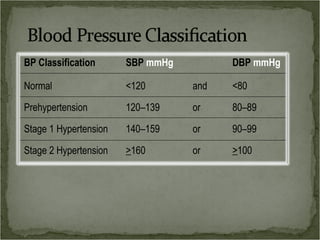
BP Classification      SBP mmHg         DBP mmHg

Normal                 <120       and   <80

Prehypertension        120–139    or    80–89

Stage 1 Hypertension   140–159    or    90–99

Stage 2 Hypertension   >160       or    >100
The HYpertension
      in the
 Very Elderly Trial
         N. Beckett, R. Peters, A. Fletcher, C. Bulpitt
          on behalf of the HYVET committees and
                         investigators
      N Engl J Med
 Volume 358(18):1887-1898
       May 1, 2008
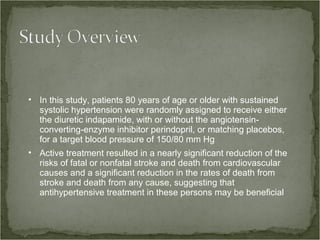
• In this study, patients 80 years of age or older with sustained
  systolic hypertension were randomly assigned to receive either
  the diuretic indapamide, with or without the angiotensin-
  converting-enzyme inhibitor perindopril, or matching placebos,
  for a target blood pressure of 150/80 mm Hg
• Active treatment resulted in a nearly significant reduction of the
  risks of fatal or nonfatal stroke and death from cardiovascular
  causes and a significant reduction in the rates of death from
  stroke and death from any cause, suggesting that
  antihypertensive treatment in these persons may be beneficial
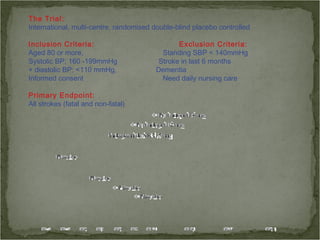
The Trial:
International, multi-centre, randomised double-blind placebo controlled

Inclusion Criteria:                            Exclusion Criteria:
Aged 80 or more,                          Standing SBP < 140mmHg
Systolic BP; 160 -199mmHg                Stroke in last 6 months
+ diastolic BP; <110 mmHg,              Dementia
Informed consent                          Need daily nursing care

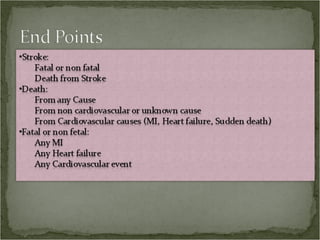
Primary Endpoint:
All strokes (fatal and non-fatal)
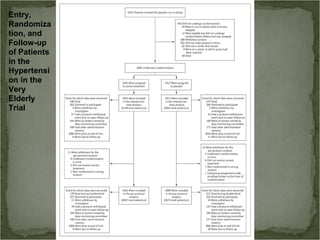
Entry,
Randomiza
tion, and
Follow-up
of Patients
in the
Hypertensi
on in the
Very
Elderly
Trial
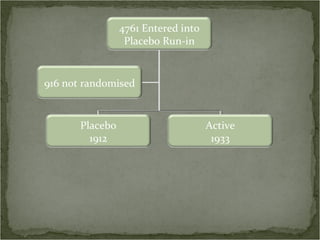
4761 Entered into
                  Placebo Run-in


916 not randomised


       Placebo                       Active
         1912                         1933
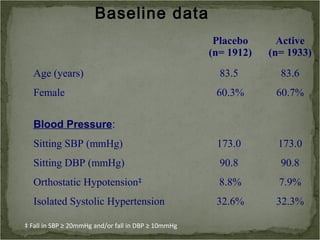
Baseline data
                                                      Placebo      Active
                                                     (n= 1912)   (n= 1933)
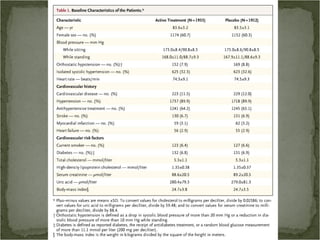
  Age (years)                                          83.5        83.6
  Female                                              60.3%       60.7%

  Blood Pressure:
  Sitting SBP (mmHg)                                  173.0       173.0
  Sitting DBP (mmHg)                                   90.8        90.8
  Orthostatic Hypotension‡                             8.8%        7.9%
  Isolated Systolic Hypertension                      32.6%       32.3%

‡ Fall in SBP ≥ 20mmHg and/or fall in DBP ≥ 10mmHg
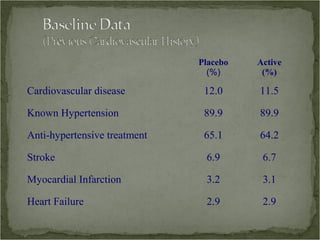
Placebo   Active
                                (%)      (%)

Cardiovascular disease         12.0     11.5

Known Hypertension             89.9     89.9

Anti-hypertensive treatment    65.1     64.2

Stroke                         6.9       6.7

Myocardial Infarction          3.2       3.1

Heart Failure                  2.9       2.9
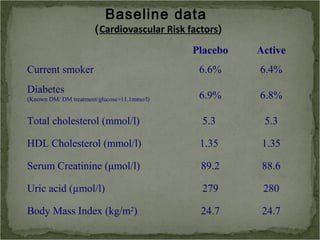
Baseline data
                       (Cardiovascular Risk factors)
                                             Placebo   Active
Current smoker                                6.6%     6.4%
Diabetes
(Known DM/ DM treatment/glucose>11.1mmo/l)    6.9%     6.8%

Total cholesterol (mmol/l)                     5.3      5.3

HDL Cholesterol (mmol/l)                      1.35      1.35

Serum Creatinine (μmol/l)                      89.2     88.6

Uric acid (µmol/l)                             279      280

Body Mass Index (kg/m2)                        24.7     24.7
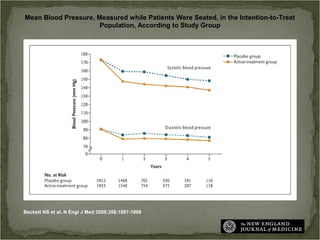
Mean Blood Pressure, Measured while Patients Were Seated, in the Intention-to-Treat
                      Population, According to Study Group


Beckett NS et al. N Engl J Med 2008;358:1887-1898
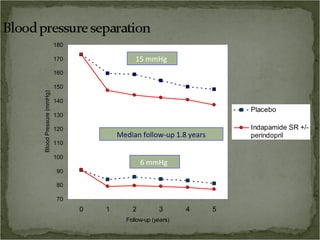
180

                        170                15 mmHg
                        160

                        150
Blood Pressure (mmHg)


                        140
                                                                       Placebo
                        130

                        120                                            Indapamide SR +/-
                                      Median follow-up 1.8 years
                                                  I                    perindopril
                        110

                        100
                                              6 mmHg
                        90

                        80

                        70
                              0   1       2         3       4      5
                                        Follow-up (years)
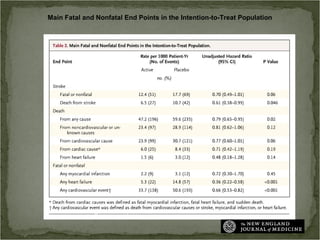
Main Fatal and Nonfatal End Points in the Intention-to-Treat Population


Beckett NS et al. N Engl J Med 2008;358:1887-1898
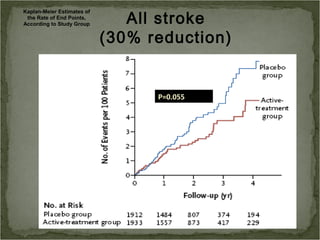
All stroke
Kaplan-Meier Estimates of
 the Rate of End Points,
According to Study Group


                            (30% reduction)


                                  P=0.055
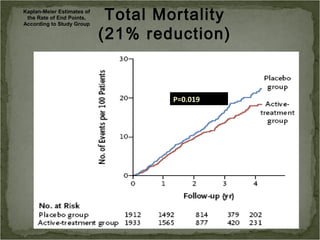
Kaplan-Meier Estimates of
 the Rate of End Points,
According to Study Group
                             Total Mortality
                            (21% reduction)


                                     P=0.019
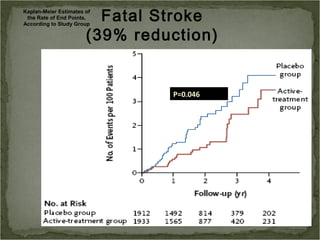
Kaplan-Meier Estimates of
 the Rate of End Points,
According to Study Group
                         Fatal Stroke
                       (39% reduction)


                                P=0.046
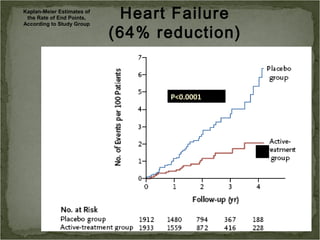
Kaplan-Meier Estimates of
 the Rate of End Points,     Heart Failure
                            (64% reduction)
According to Study Group


                                   P<0.0001
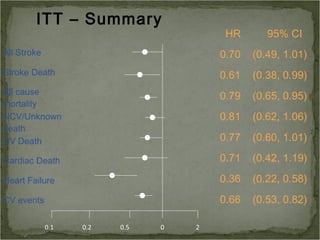
ITT – Summary
                                        HR       95% CI
All Stroke                             0.70   (0.49, 1.01)
Stroke Death                           0.61   (0.38, 0.99)
All cause
                                       0.79   (0.65, 0.95)
mortality
NCV/Unknown                            0.81   (0.62, 1.06)
death
CV Death                               0.77   (0.60, 1.01)

Cardiac Death                          0.71   (0.42, 1.19)

Heart Failure                          0.36   (0.22, 0.58)
CV events                              0.66   (0.53, 0.82)

             0.1   0.2   0.5   0   2
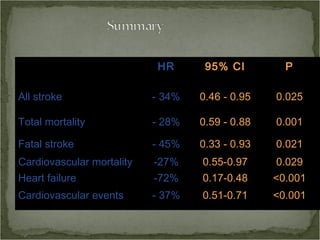
HR       95% CI         P

All stroke                 - 34%   0.46 - 0.95   0.025

Total mortality            - 28%   0.59 - 0.88   0.001

Fatal stroke               - 45%   0.33 - 0.93   0.021
Cardiovascular mortality   -27%    0.55-0.97     0.029
Heart failure              -72%    0.17-0.48     <0.001
Cardiovascular events      - 37%   0.51-0.71     <0.001
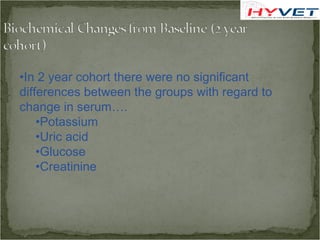
•In 2 year cohort there were no significant
differences between the groups with regard to
change in serum….
    •Potassium
    •Uric acid
    •Glucose
    •Creatinine
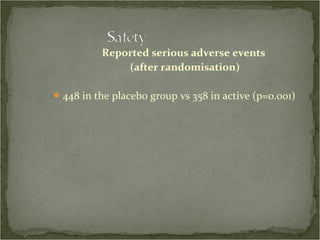
Reported serious adverse events
              (after randomisation)

 448 in the placebo group vs 358 in active (p=0.001)
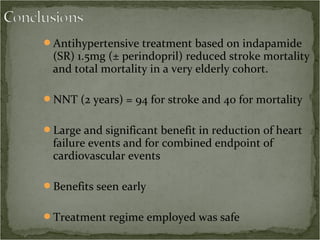
Antihypertensive treatment based on indapamide
 (SR) 1.5mg (± perindopril) reduced stroke mortality
 and total mortality in a very elderly cohort.

NNT (2 years) = 94 for stroke and 40 for mortality


Large and significant benefit in reduction of heart
 failure events and for combined endpoint of
 cardiovascular events

Benefits seen early


Treatment regime employed was safe
Major Outcomes in High-Risk Hypertensive Patients
 Randomized to Angiotensin-Converting Enzyme
 Inhibitoror Calcium Channel Blocker vs Diuretic

The Antihypertensive and Lipid-Lowering Treatment to Prevent Heart
                      Attack Trial (ALLHAT)
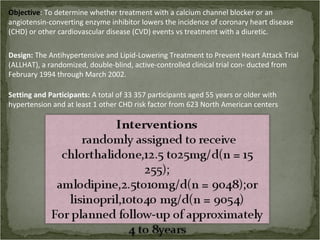
Objective: To determine whether treatment with a calcium channel blocker or an
angiotensin-converting enzyme inhibitor lowers the incidence of coronary heart disease
(CHD) or other cardiovascular disease (CVD) events vs treatment with a diuretic.

Design: The Antihypertensive and Lipid-Lowering Treatment to Prevent Heart Attack Trial
(ALLHAT), a randomized, double-blind, active-controlled clinical trial con- ducted from
February 1994 through March 2002.

Setting and Participants: A total of 33 357 participants aged 55 years or older with
hypertension and at least 1 other CHD risk factor from 623 North American centers
Primary outcome:
                        Combined fatal CHD or non-
                        fatal myocardial infarction,
                        analyzed by intent-to-treat


Secondary outcomes:
 ll- cause mortality,
 troke,
 ombined CHD (primary outcome, coronary revascularization, or angina with hospitalization)
 ombined CVD (combined CHD, stroke, treated angina without hospitalization,
heart failure [HF],
peripheral arterial disease
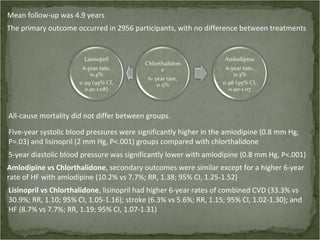
Mean follow-up was 4.9 years
The primary outcome occurred in 2956 participants, with no difference between treatments


All-cause mortality did not differ between groups.

Five-year systolic blood pressures were significantly higher in the amlodipine (0.8 mm Hg,
P=.03) and lisinopril (2 mm Hg, P<.001) groups compared with chlorthalidone
5-year diastolic blood pressure was significantly lower with amlodipine (0.8 mm Hg, P<.001)
Amlodipine vs Chlorthalidone, secondary outcomes were similar except for a higher 6-year
rate of HF with amlodipine (10.2% vs 7.7%; RR, 1.38; 95% CI, 1.25-1.52)
Lisinopril vs Chlorthalidone, lisinopril had higher 6-year rates of combined CVD (33.3% vs
30.9%; RR, 1.10; 95% CI, 1.05-1.16); stroke (6.3% vs 5.6%; RR, 1.15; 95% CI, 1.02-1.30); and
HF (8.7% vs 7.7%; RR, 1.19; 95% CI, 1.07-1.31)
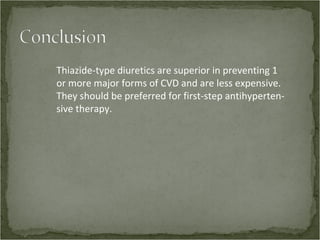
Thiazide-type diuretics are superior in preventing 1
or more major forms of CVD and are less expensive.
They should be preferred for first-step antihyperten-
sive therapy.
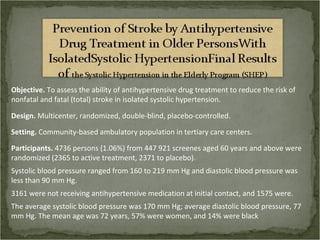
Objective. To assess the ability of antihypertensive drug treatment to reduce the risk of
nonfatal and fatal (total) stroke in isolated systolic hypertension.

Design. Multicenter, randomized, double-blind, placebo-controlled.

Setting. Community-based ambulatory population in tertiary care centers.

Participants. 4736 persons (1.06%) from 447 921 screenes aged 60 years and above were
randomized (2365 to active treatment, 2371 to placebo).
Systolic blood pressure ranged from 160 to 219 mm Hg and diastolic blood pressure was
less than 90 mm Hg.
3161 were not receiving antihypertensive medication at initial contact, and 1575 were.
The average systolic blood pressure was 170 mm Hg; average diastolic blood pressure, 77
mm Hg. The mean age was 72 years, 57% were women, and 14% were black
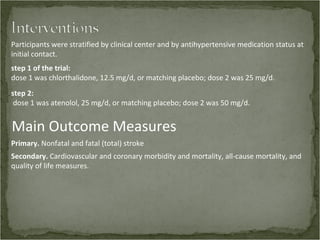
Participants were stratified by clinical center and by antihypertensive medication status at
initial contact.
step 1 of the trial:
dose 1 was chlorthalidone, 12.5 mg/d, or matching placebo; dose 2 was 25 mg/d.
step 2:
 dose 1 was atenolol, 25 mg/d, or matching placebo; dose 2 was 50 mg/d.


Main Outcome Measures
Primary. Nonfatal and fatal (total) stroke
Secondary. Cardiovascular and coronary morbidity and mortality, all-cause mortality, and
quality of life measures.
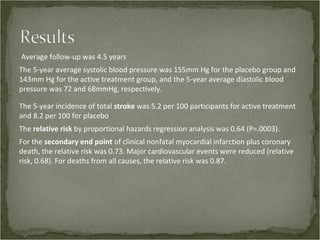
Average follow-up was 4.5 years
The 5-year average systolic blood pressure was 155mm Hg for the placebo group and
143mm Hg for the active treatment group, and the 5-year average diastolic blood
pressure was 72 and 68mmHg, respectively.

The 5-year incidence of total stroke was 5.2 per 100 participants for active treatment
and 8.2 per 100 for placebo
The relative risk by proportional hazards regression analysis was 0.64 (P=.0003).
For the secondary end point of clinical nonfatal myocardial infarction plus coronary
death, the relative risk was 0.73. Major cardiovascular events were reduced (relative
risk, 0.68). For deaths from all causes, the relative risk was 0.87.
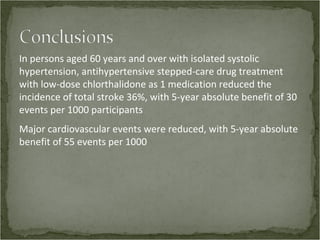
In persons aged 60 years and over with isolated systolic
hypertension, antihypertensive stepped-care drug treatment
with low-dose chlorthalidone as 1 medication reduced the
incidence of total stroke 36%, with 5-year absolute benefit of 30
events per 1000 participants
Major cardiovascular events were reduced, with 5-year absolute
benefit of 55 events per 1000

Geri pres

  • 1.
    Ahad Lodhi, M.D. PGY-2 Internal Medicine Dept of Geriatrics Crozer-Chester Medical Center
  • 5.
    BP Classification SBP mmHg DBP mmHg Normal <120 and <80 Prehypertension 120–139 or 80–89 Stage 1 Hypertension 140–159 or 90–99 Stage 2 Hypertension >160 or >100
  • 6.
    The HYpertension in the Very Elderly Trial N. Beckett, R. Peters, A. Fletcher, C. Bulpitt on behalf of the HYVET committees and investigators N Engl J Med Volume 358(18):1887-1898 May 1, 2008
  • 7.
    • In thisstudy, patients 80 years of age or older with sustained systolic hypertension were randomly assigned to receive either the diuretic indapamide, with or without the angiotensin- converting-enzyme inhibitor perindopril, or matching placebos, for a target blood pressure of 150/80 mm Hg • Active treatment resulted in a nearly significant reduction of the risks of fatal or nonfatal stroke and death from cardiovascular causes and a significant reduction in the rates of death from stroke and death from any cause, suggesting that antihypertensive treatment in these persons may be beneficial
  • 8.
    The Trial: International, multi-centre,randomised double-blind placebo controlled Inclusion Criteria: Exclusion Criteria: Aged 80 or more, Standing SBP < 140mmHg Systolic BP; 160 -199mmHg Stroke in last 6 months + diastolic BP; <110 mmHg, Dementia Informed consent Need daily nursing care Primary Endpoint: All strokes (fatal and non-fatal)
  • 10.
    Entry, Randomiza tion, and Follow-up of Patients inthe Hypertensi on in the Very Elderly Trial
  • 11.
    4761 Entered into Placebo Run-in 916 not randomised Placebo Active 1912 1933
  • 13.
    Baseline data Placebo Active (n= 1912) (n= 1933) Age (years) 83.5 83.6 Female 60.3% 60.7% Blood Pressure: Sitting SBP (mmHg) 173.0 173.0 Sitting DBP (mmHg) 90.8 90.8 Orthostatic Hypotension‡ 8.8% 7.9% Isolated Systolic Hypertension 32.6% 32.3% ‡ Fall in SBP ≥ 20mmHg and/or fall in DBP ≥ 10mmHg
  • 14.
    Placebo Active (%) (%) Cardiovascular disease 12.0 11.5 Known Hypertension 89.9 89.9 Anti-hypertensive treatment 65.1 64.2 Stroke 6.9 6.7 Myocardial Infarction 3.2 3.1 Heart Failure 2.9 2.9
  • 15.
    Baseline data (Cardiovascular Risk factors) Placebo Active Current smoker 6.6% 6.4% Diabetes (Known DM/ DM treatment/glucose>11.1mmo/l) 6.9% 6.8% Total cholesterol (mmol/l) 5.3 5.3 HDL Cholesterol (mmol/l) 1.35 1.35 Serum Creatinine (μmol/l) 89.2 88.6 Uric acid (µmol/l) 279 280 Body Mass Index (kg/m2) 24.7 24.7
  • 16.
    Mean Blood Pressure,Measured while Patients Were Seated, in the Intention-to-Treat Population, According to Study Group Beckett NS et al. N Engl J Med 2008;358:1887-1898
  • 17.
    180 170 15 mmHg 160 150 Blood Pressure (mmHg) 140 Placebo 130 120 Indapamide SR +/- Median follow-up 1.8 years I perindopril 110 100 6 mmHg 90 80 70 0 1 2 3 4 5 Follow-up (years)
  • 18.
    Main Fatal andNonfatal End Points in the Intention-to-Treat Population Beckett NS et al. N Engl J Med 2008;358:1887-1898
  • 19.
    All stroke Kaplan-Meier Estimatesof the Rate of End Points, According to Study Group (30% reduction) P=0.055
  • 20.
    Kaplan-Meier Estimates of the Rate of End Points, According to Study Group Total Mortality (21% reduction) P=0.019
  • 21.
    Kaplan-Meier Estimates of the Rate of End Points, According to Study Group Fatal Stroke (39% reduction) P=0.046
  • 22.
    Kaplan-Meier Estimates of the Rate of End Points, Heart Failure (64% reduction) According to Study Group P<0.0001
  • 23.
    ITT – Summary HR 95% CI All Stroke 0.70 (0.49, 1.01) Stroke Death 0.61 (0.38, 0.99) All cause 0.79 (0.65, 0.95) mortality NCV/Unknown 0.81 (0.62, 1.06) death CV Death 0.77 (0.60, 1.01) Cardiac Death 0.71 (0.42, 1.19) Heart Failure 0.36 (0.22, 0.58) CV events 0.66 (0.53, 0.82) 0.1 0.2 0.5 0 2
  • 24.
    HR 95% CI P All stroke - 34% 0.46 - 0.95 0.025 Total mortality - 28% 0.59 - 0.88 0.001 Fatal stroke - 45% 0.33 - 0.93 0.021 Cardiovascular mortality -27% 0.55-0.97 0.029 Heart failure -72% 0.17-0.48 <0.001 Cardiovascular events - 37% 0.51-0.71 <0.001
  • 25.
    •In 2 yearcohort there were no significant differences between the groups with regard to change in serum…. •Potassium •Uric acid •Glucose •Creatinine
  • 26.
    Reported serious adverseevents (after randomisation)  448 in the placebo group vs 358 in active (p=0.001)
  • 27.
    Antihypertensive treatment basedon indapamide (SR) 1.5mg (± perindopril) reduced stroke mortality and total mortality in a very elderly cohort. NNT (2 years) = 94 for stroke and 40 for mortality Large and significant benefit in reduction of heart failure events and for combined endpoint of cardiovascular events Benefits seen early Treatment regime employed was safe
  • 28.
    Major Outcomes inHigh-Risk Hypertensive Patients Randomized to Angiotensin-Converting Enzyme Inhibitoror Calcium Channel Blocker vs Diuretic The Antihypertensive and Lipid-Lowering Treatment to Prevent Heart Attack Trial (ALLHAT)
  • 29.
    Objective: To determinewhether treatment with a calcium channel blocker or an angiotensin-converting enzyme inhibitor lowers the incidence of coronary heart disease (CHD) or other cardiovascular disease (CVD) events vs treatment with a diuretic. Design: The Antihypertensive and Lipid-Lowering Treatment to Prevent Heart Attack Trial (ALLHAT), a randomized, double-blind, active-controlled clinical trial con- ducted from February 1994 through March 2002. Setting and Participants: A total of 33 357 participants aged 55 years or older with hypertension and at least 1 other CHD risk factor from 623 North American centers
  • 30.
    Primary outcome: Combined fatal CHD or non- fatal myocardial infarction, analyzed by intent-to-treat Secondary outcomes: ll- cause mortality, troke, ombined CHD (primary outcome, coronary revascularization, or angina with hospitalization) ombined CVD (combined CHD, stroke, treated angina without hospitalization, heart failure [HF], peripheral arterial disease
  • 31.
    Mean follow-up was4.9 years The primary outcome occurred in 2956 participants, with no difference between treatments All-cause mortality did not differ between groups. Five-year systolic blood pressures were significantly higher in the amlodipine (0.8 mm Hg, P=.03) and lisinopril (2 mm Hg, P<.001) groups compared with chlorthalidone 5-year diastolic blood pressure was significantly lower with amlodipine (0.8 mm Hg, P<.001) Amlodipine vs Chlorthalidone, secondary outcomes were similar except for a higher 6-year rate of HF with amlodipine (10.2% vs 7.7%; RR, 1.38; 95% CI, 1.25-1.52) Lisinopril vs Chlorthalidone, lisinopril had higher 6-year rates of combined CVD (33.3% vs 30.9%; RR, 1.10; 95% CI, 1.05-1.16); stroke (6.3% vs 5.6%; RR, 1.15; 95% CI, 1.02-1.30); and HF (8.7% vs 7.7%; RR, 1.19; 95% CI, 1.07-1.31)
  • 32.
    Thiazide-type diuretics aresuperior in preventing 1 or more major forms of CVD and are less expensive. They should be preferred for first-step antihyperten- sive therapy.
  • 33.
    Objective. To assessthe ability of antihypertensive drug treatment to reduce the risk of nonfatal and fatal (total) stroke in isolated systolic hypertension. Design. Multicenter, randomized, double-blind, placebo-controlled. Setting. Community-based ambulatory population in tertiary care centers. Participants. 4736 persons (1.06%) from 447 921 screenes aged 60 years and above were randomized (2365 to active treatment, 2371 to placebo). Systolic blood pressure ranged from 160 to 219 mm Hg and diastolic blood pressure was less than 90 mm Hg. 3161 were not receiving antihypertensive medication at initial contact, and 1575 were. The average systolic blood pressure was 170 mm Hg; average diastolic blood pressure, 77 mm Hg. The mean age was 72 years, 57% were women, and 14% were black
  • 34.
    Participants were stratifiedby clinical center and by antihypertensive medication status at initial contact. step 1 of the trial: dose 1 was chlorthalidone, 12.5 mg/d, or matching placebo; dose 2 was 25 mg/d. step 2: dose 1 was atenolol, 25 mg/d, or matching placebo; dose 2 was 50 mg/d. Main Outcome Measures Primary. Nonfatal and fatal (total) stroke Secondary. Cardiovascular and coronary morbidity and mortality, all-cause mortality, and quality of life measures.
  • 35.
    Average follow-up was4.5 years The 5-year average systolic blood pressure was 155mm Hg for the placebo group and 143mm Hg for the active treatment group, and the 5-year average diastolic blood pressure was 72 and 68mmHg, respectively. The 5-year incidence of total stroke was 5.2 per 100 participants for active treatment and 8.2 per 100 for placebo The relative risk by proportional hazards regression analysis was 0.64 (P=.0003). For the secondary end point of clinical nonfatal myocardial infarction plus coronary death, the relative risk was 0.73. Major cardiovascular events were reduced (relative risk, 0.68). For deaths from all causes, the relative risk was 0.87.
  • 36.
    In persons aged60 years and over with isolated systolic hypertension, antihypertensive stepped-care drug treatment with low-dose chlorthalidone as 1 medication reduced the incidence of total stroke 36%, with 5-year absolute benefit of 30 events per 1000 participants Major cardiovascular events were reduced, with 5-year absolute benefit of 55 events per 1000

Editor's Notes

  • #5 Lowest rates of BP control
  • #17 Figure 2. Mean Blood Pressure, Measured while Patients Were Seated, in the Intention-to-Treat Population, According to Study Group.
  • #19 Table 2. Main Fatal and Nonfatal End Points in the Intention-to-Treat Population.