HFrEF: Pharmacotherapy
Management Options in HFrEF:
 Pharmacotherapy
 Devices
 Surgical management
 Cardiac transplant
 Stem cell/ Gene therapy
Goals of treatment
 to reduce symptoms
 prolong survival
 improve the quality of life
 prevent disease progression
Pharmacological Management
PROGNOSIS
ACE inhibitors
ARBs
Beta Blockers
MRAs
Hydralazine+nitrate*
SYMPTOMS
Diuretics
Digoxin
Ivabradine*
Stages of heart failure
Benefit from Beta
Blocker use in CCF is
well established….
The mortality reduction achieved in
RCTs with Beta blockers in HF on
top of ACEIs is to the tune of 34%
BBs Benefit in mild to moderate HF
– Carvedilol
– Bisoprolol
– Metoprolol Succinate
U.S. Carvedilol Heart Failure Study Group.
N Engl J Med 1996;334: 1349–55.
CIBIS II : a randomised trial.
Lancet 1999;353:9–13.
MERIT-HF.
Lancet
1999;353:2001–7
BBs benefit in Severe but Stable HF
COPERNICUS trial
(Carvedilol)
Packer M, Coats AJS, Fowler MB, et
al, for the Carvedilol Prospective
Randomized Cumulative Survival
Study Group (COPERNICUS).
Effect ofcarvedilol on survival in
severe chronic heart failure.
N Engl J Med 2001;344:1651–8.
BBs benefit Post MI LV Dysfunction
CAPRICORN
(Carvedilol)
The CAPRICORN Investigators.
Effect of carvedilol on outcome
after myocardial infarction in
patients with left ventricular
dysfunction: the CAPRICORN
randomised trial.
Lancet 2001;357:
1385–90.
Beta Blockers often started late,not at all
or only in low doses after ACEIs
 Euro Heart Failure
Survey(EHFS II)
– 43% receiving BB at
admission
– 61% receiving BB at
discharge
EHJ 2006:27:2725
 MAHLER Survey-
adherence to guidelines
– N=1410
– 58% were taking Beta
blockers
– Adherence to guidelines is a
strong predictor of outcomes
EHJ 2005:26:1653
However … trial evidence favor early
beta-blocker therapy in HF ?
 COPERNICUS
– Striking mortality
reduction in first 2
months in the highest
risk group
JAMA 2003 :289:712
 OTIMIZE HF registry
– CCF receiving Carvedilol
at discharge
– Less likely to die within 3
months
AHJ 2007:153:82
Doses of Beta Blockers recommended in the
Guidelines on the basis of RCTs
 Metroprolol Succinate : 100-200mg/day
(MERIT HF)
 Carvedilol : 25 mg BID
(US CarvedilolStudy)
 Bisoprolol: 10 mg/day
(CIBIS
III)
Trials of Beta-blockers in Heart Failure
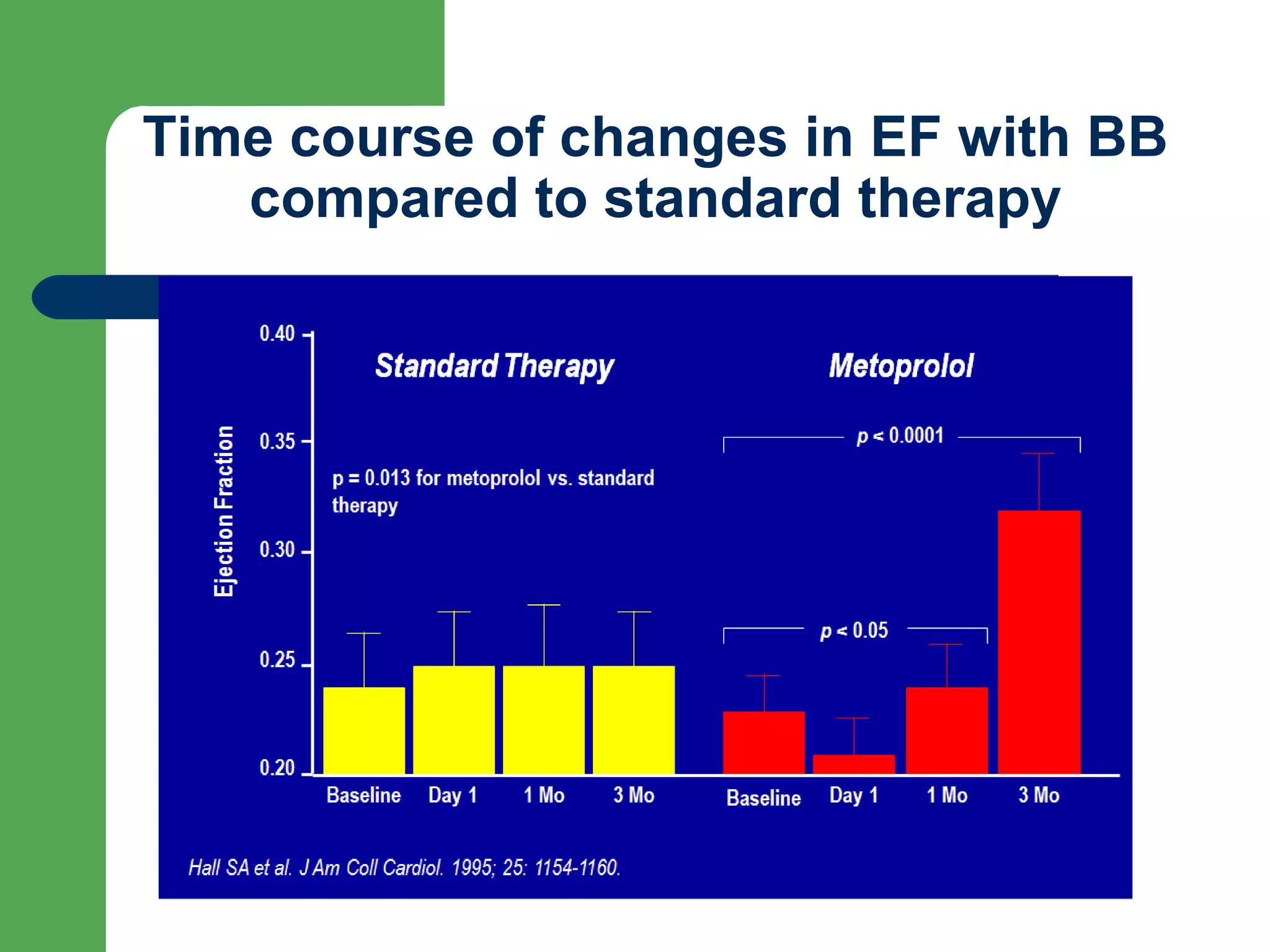
Time course of changes in EF with BB
compared to standard therapy
Under utilization of β-Blockers in Patients
Undergoing Implantable Cardioverter-
Defibrillator and Cardiac
Resynchronization Procedures
Circulation. 2010;3:204-211
No patient should undergo device therapy without
optimal trial of Beta Blockers as per current guidelines.
Trials of ACE inhibitors in HF
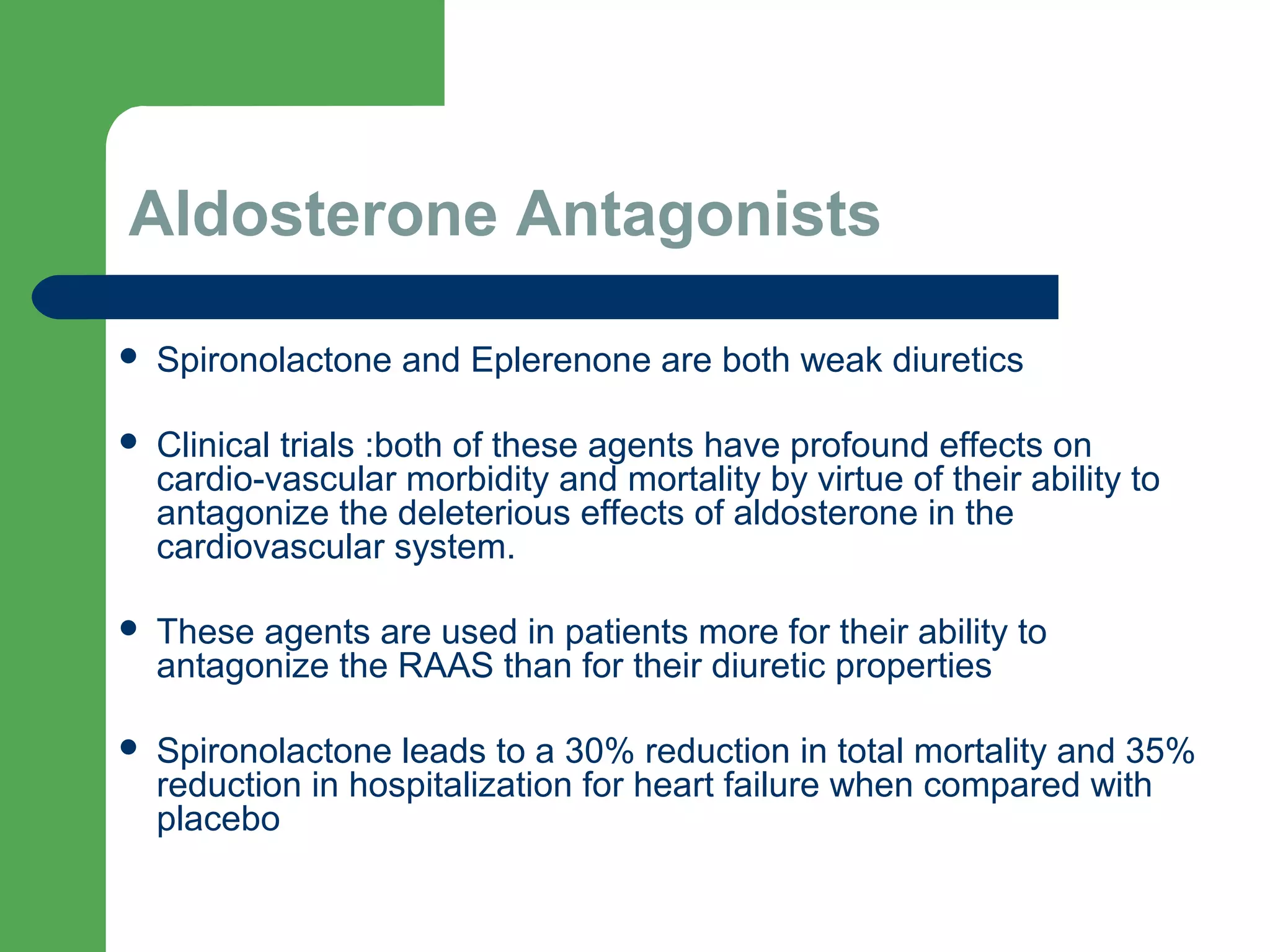
Aldosterone Antagonists
 Spironolactone and Eplerenone are both weak diuretics
 Clinical trials :both of these agents have profound effects on
cardio-vascular morbidity and mortality by virtue of their ability to
antagonize the deleterious effects of aldosterone in the
cardiovascular system.
 These agents are used in patients more for their ability to
antagonize the RAAS than for their diuretic properties
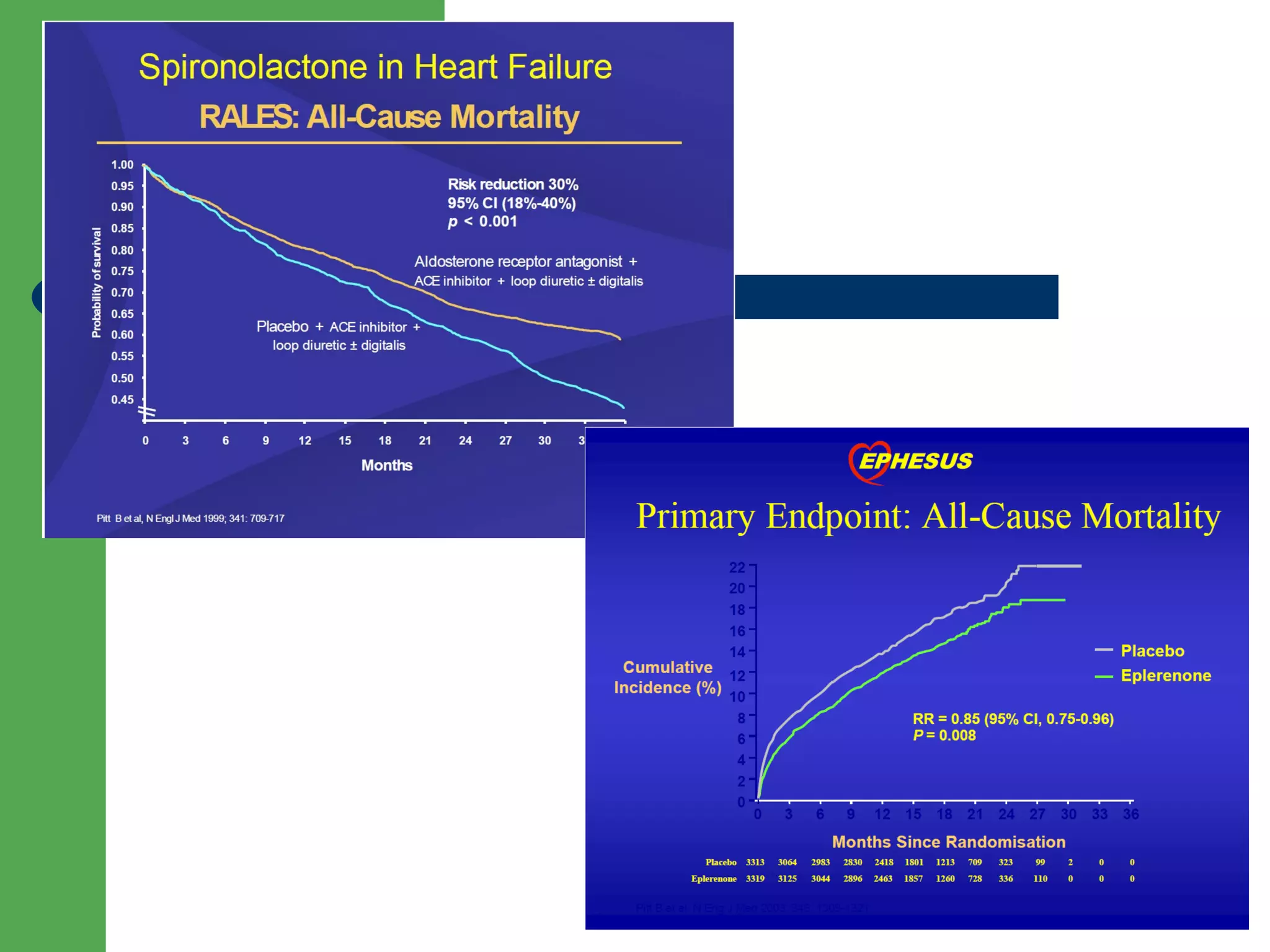
 Spironolactone leads to a 30% reduction in total mortality and 35%
reduction in hospitalization for heart failure when compared with
placebo
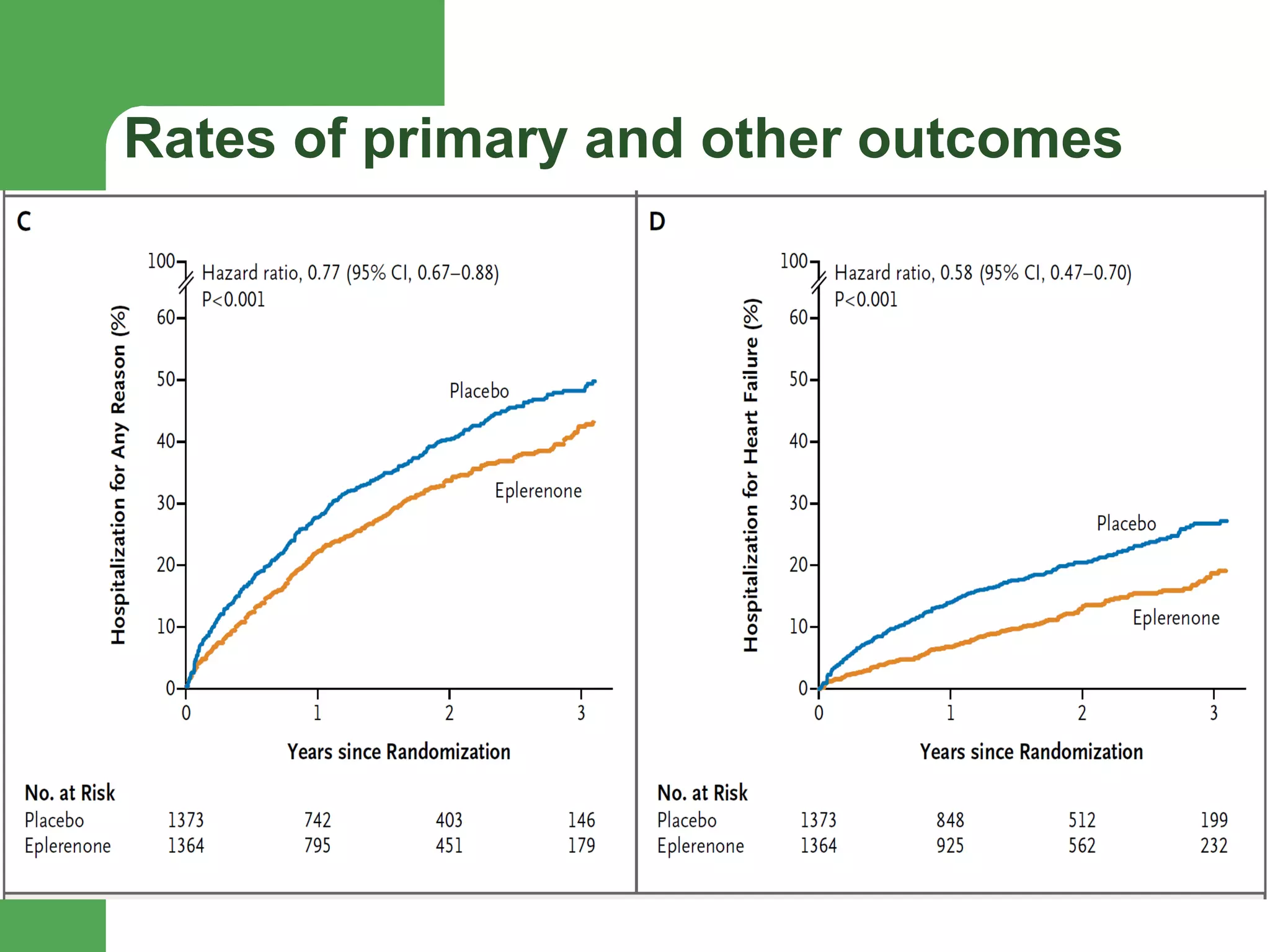
EMPHASIS-HF
Methods
Randomized double blind trial, 2737 patients
NYHA class-II HF , EF≤35%
Eplerenone 50 mg daily or placebo in addition to recommended therapy
Primary outcome- composite of death from CV causes or hospitalization for HF
Rates of primary and other outcomes
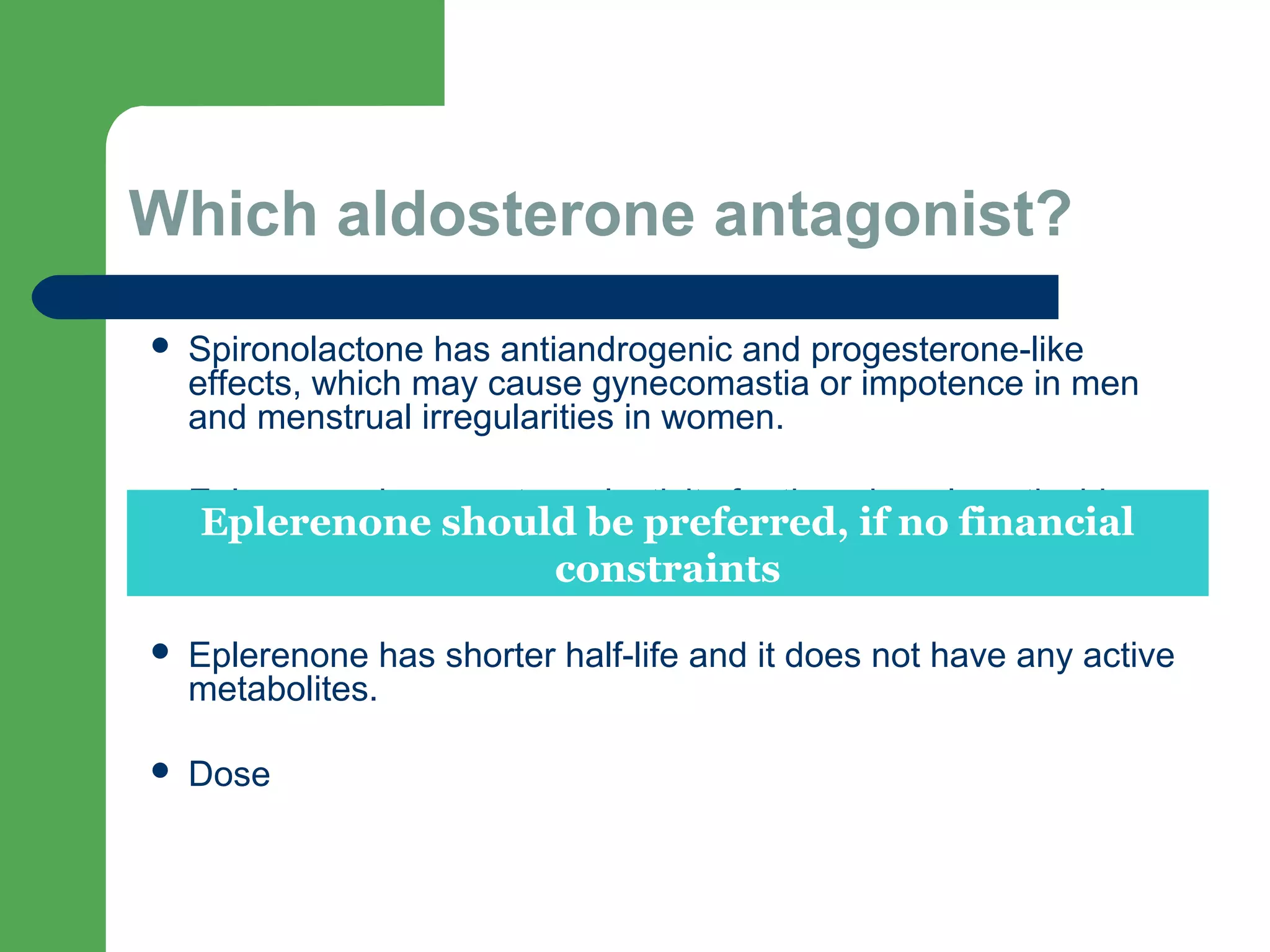
Which aldosterone antagonist?
 Spironolactone has antiandrogenic and progesterone-like
effects, which may cause gynecomastia or impotence in men
and menstrual irregularities in women.
 Eplerenone has greater selectivity for the mineralocorticoid
receptor than for steroid receptors, and has less sex hormone
side effects than spironolactone.
 Eplerenone has shorter half-life and it does not have any active
metabolites.
 Dose
Eplerenone should be preferred, if no financial
constraints
SSystolicystolic HHeart failure treatment witheart failure treatment with
thethe IIff inhibitor Ivabradineinhibitor Ivabradine TTrialrial
SSystolicystolic HHeart failure treatment witheart failure treatment with
thethe IIff inhibitor Ivabradineinhibitor Ivabradine TTrialrial
The study
Study design
HR and tolerability
Ivabradine 5 mg bid
Matching placebo, bid
Every 4 monthsD0 D14 D28 M4
Ivabradine 7.5/5/2.5 mg bid according to
3.5 years
Screening
7 to 30 days
Swedberg K, et al. Lancet. 2010;online August 29.
0 6 12 18 24 30
40
30
20
10
0
Ivabradine significantly reduces the
Primary composite endpoint
(CV death or hospital admission for worsening HF)
18%
Cumulative frequency (%)Cumulative frequency (%)
P < 0.0001
Swedberg K, et al. Lancet. 2010;online August 29.
MonthsMonths
Optimal treatment
Optimal treatment
+ Ivabradine
0 6 12 18 24 30
30
20
10
0
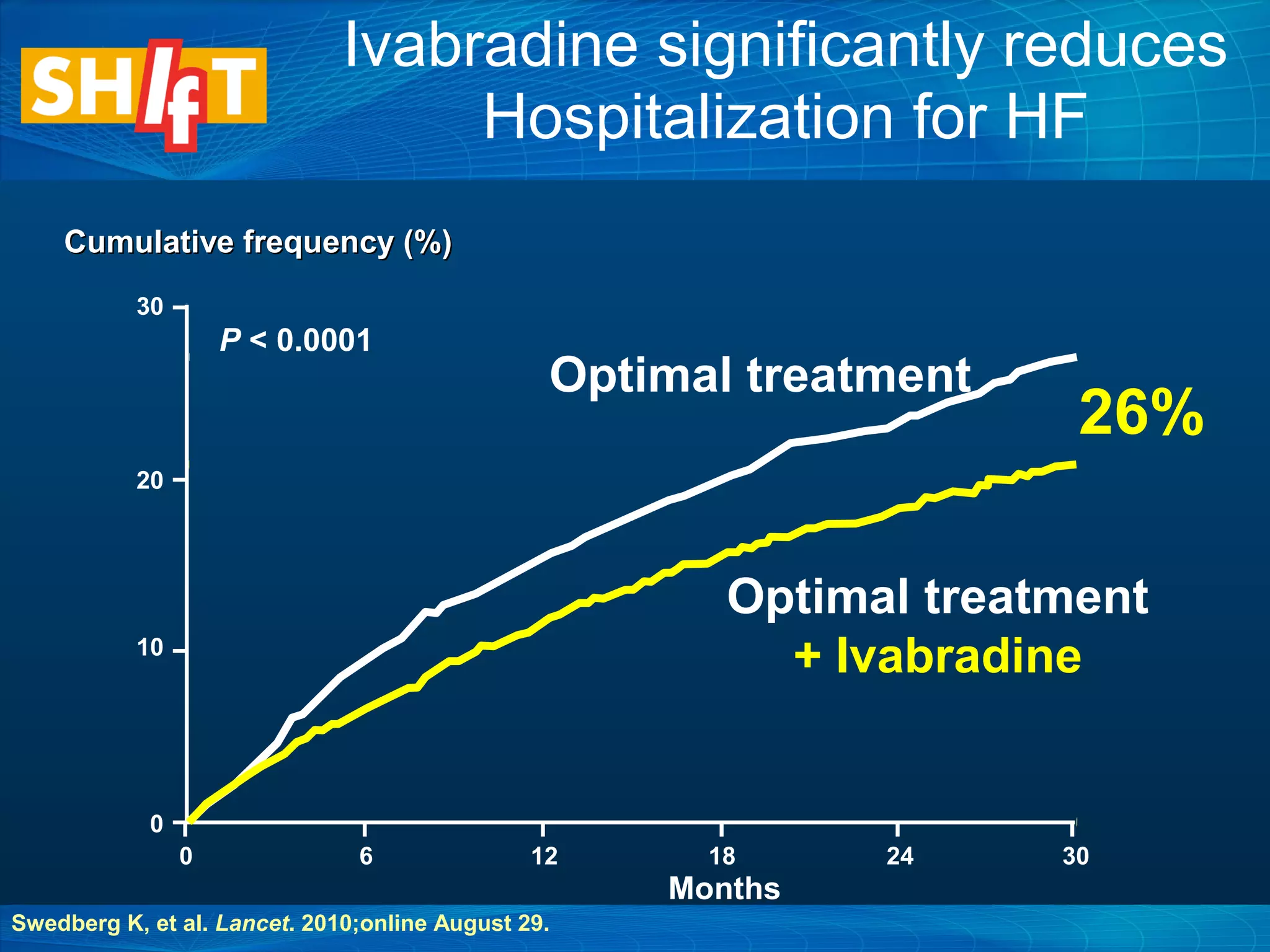
Ivabradine significantly reduces
Hospitalization for HF
26%
P < 0.0001
Swedberg K, et al. Lancet. 2010;online August 29.
Months
Cumulative frequency (%)Cumulative frequency (%)
Optimal treatment
Optimal treatment
+ Ivabradine
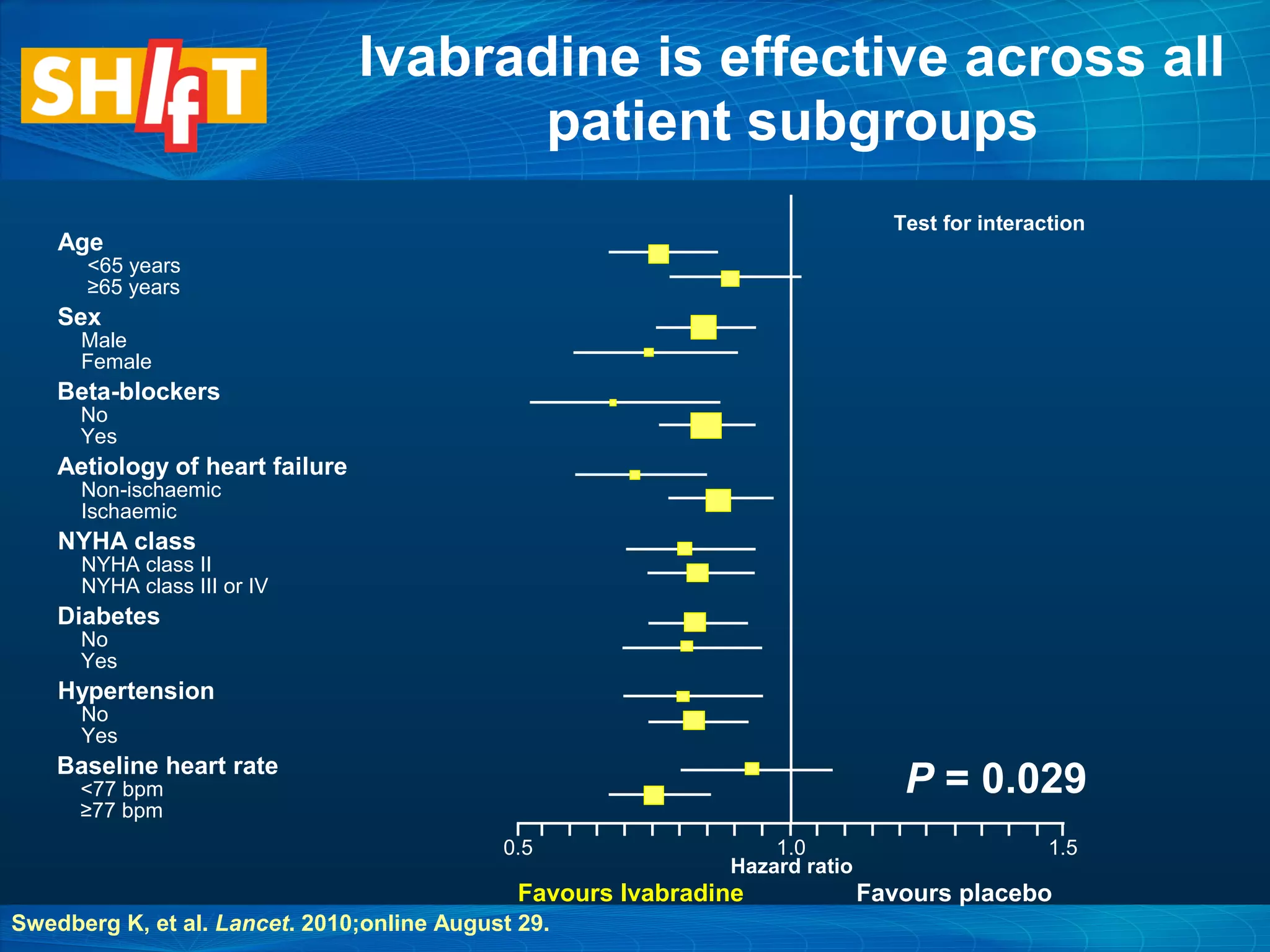
Age
<65 years
≥65 years
Sex
Male
Female
Beta-blockers
No
Yes
Aetiology of heart failure
Non-ischaemic
Ischaemic
NYHA class
NYHA class II
NYHA class III or IV
Diabetes
No
Yes
Hypertension
No
Yes
Baseline heart rate
<77 bpm
≥77 bpm
Test for interaction
P = 0.029
1.51.00.5
Hazard ratio
Favours Ivabradine Favours placebo
Ivabradine is effective across all
patient subgroups
Swedberg K, et al. Lancet. 2010;online August 29.
Main Results after 8 months of treatment
in the Reil JACC 2013 Heart Failure
study
ParametersParameters IvabradineIvabradine ControlControl
Heart rate*(HR)Heart rate*(HR) - 11 bpm, p < 0.0001- 11 bpm, p < 0.0001 -2 bpm, p=0.015-2 bpm, p=0.015
Stroke Volume*Stroke Volume* + 9 mL, p < 0.0001+ 9 mL, p < 0.0001
- 1 mL,1 mL,
NS, No effectNS, No effect
Cardiac OutputCardiac Output
NSNS
No effectNo effect
- 0.3 mL/min, p<0.01- 0.3 mL/min, p<0.01
Ejection FractionEjection Fraction##
+4%, p < 0.0001+4%, p < 0.0001
NSNS
No effectNo effect
Reil J C et.al. J Am Coll Cardiol 2013;62:1977–85
* The difference between Ivabradine vs. Control was significant p < 0.0001
# The difference between Ivabradine vs. Control was significant p < 0.004
Magnitude of Benefit Demonstrated in
RCTs
GDMT
RR Reduction
in Mortality
NNT for Mortality
Reduction
(Standardized to 36 mo)
RR Reduction
in HF
Hospitalizations
ACE inhibitor or
ARB
17% 26 31%
Beta blocker 34% 9 41%
Aldosterone
antagonist
30% 6 35%
13
0
10
20
30
40
50
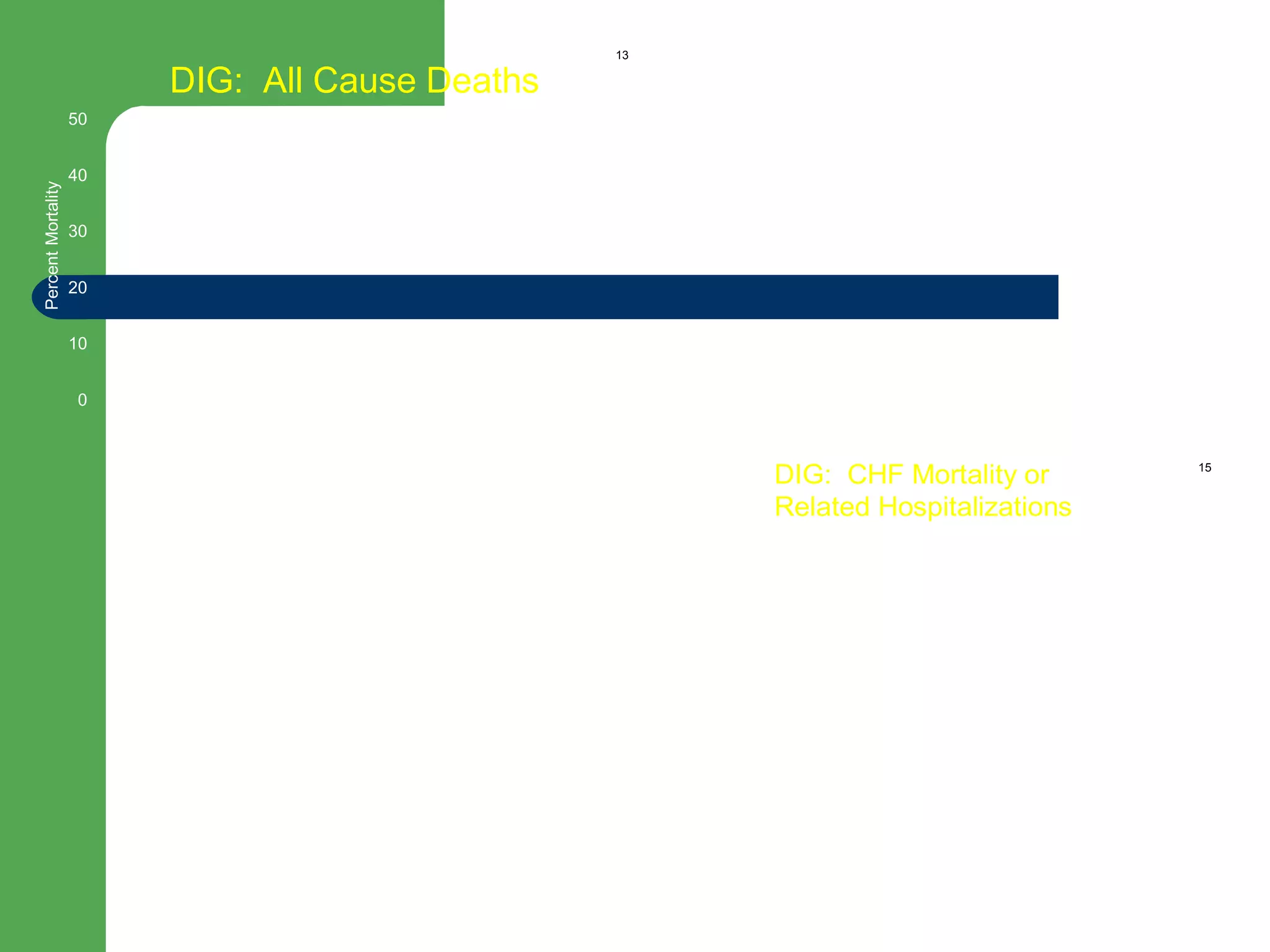
DIG: All Cause Deaths
PercentMortality
15
0
10
40
30
50
20
DIG: CHF Mortality or
Related Hospitalizations
PercentEvent
Risk of death and Serum Digoxin
ISDN-Hy in African Americans
Taylor AL et al. N Engl J Med. 2004; 351: 2049-2057.
Pharmacological Treatment for
Stage C HFrEF
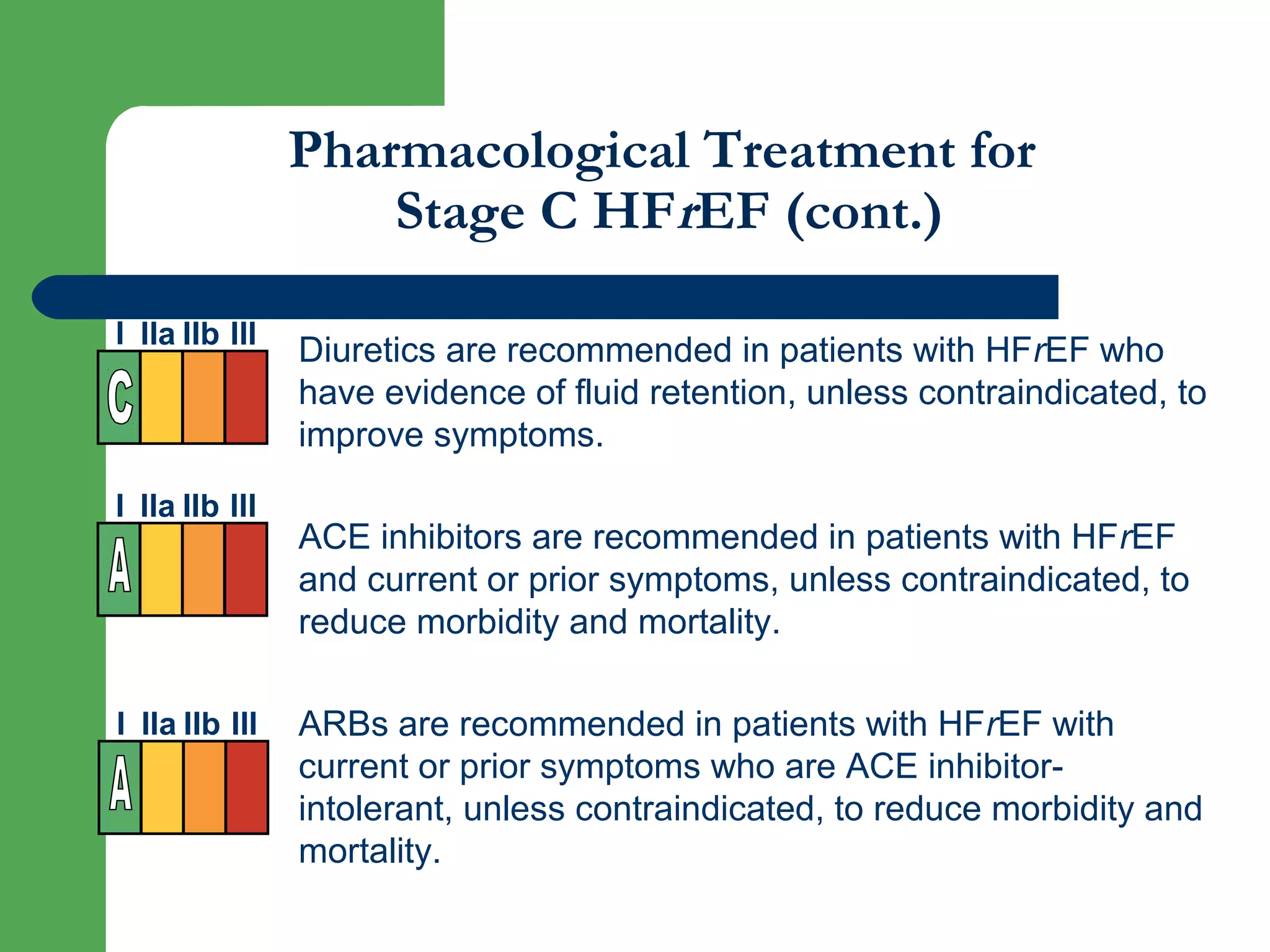
Diuretics are recommended in patients with HFrEF who
have evidence of fluid retention, unless contraindicated, to
improve symptoms.
ACE inhibitors are recommended in patients with HFrEF
and current or prior symptoms, unless contraindicated, to
reduce morbidity and mortality.
ARBs are recommended in patients with HFrEF with
current or prior symptoms who are ACE inhibitor-
intolerant, unless contraindicated, to reduce morbidity and
mortality.
I IIa IIb III
I IIa IIb III
I IIa IIb III
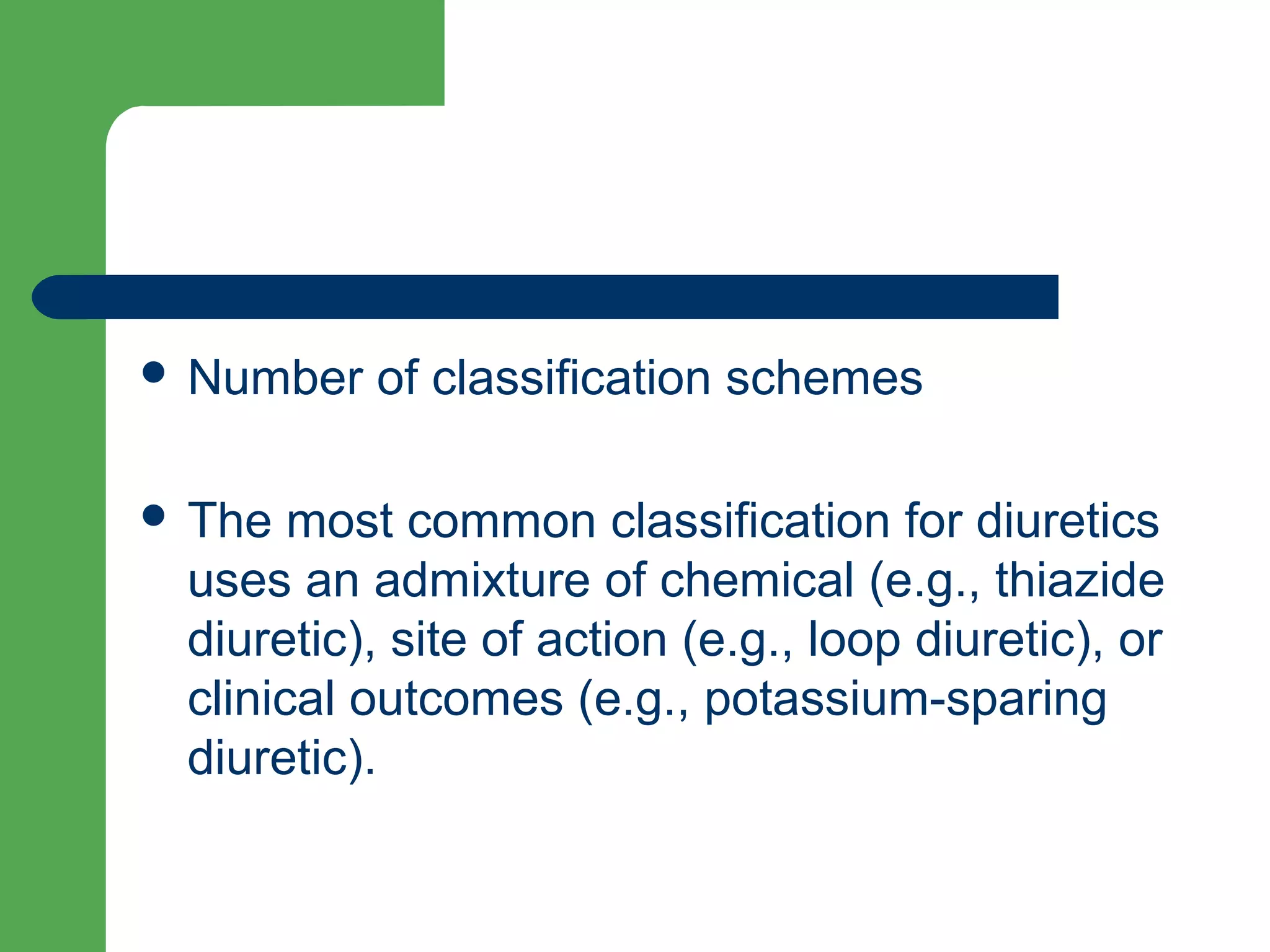
Drugs Commonly Used for HFrEF
(Stage C HF)
Drug Initial Daily Dose(s) Maximum Doses(s)
Mean Doses Achieved in
Clinical Trials
ACE Inhibitors
Captopril 6.25 mg 3 times 50 mg 3 times 122.7 mg/d (421)
Enalapril 2.5 mg twice 10 to 20 mg twice 16.6 mg/d(412)
Fosinopril 5 to 10 mg once 40 mg once ---------
Lisinopril 2.5 to 5 mg once 20 to 40 mg once 32.5 to 35.0 mg/d (444)
Perindopril 2 mg once 8 to 16 mg once ---------
Quinapril 5 mg twice 20 mg twice ---------
Ramipril 1.25 to 2.5 mg once 10 mg once ---------
Trandolapril 1 mg once 4 mg once ---------
ARBs
Candesartan 4 to 8 mg once 32 mg once 24 mg/d (419)
Losartan 25 to 50 mg once 50 to 150 mg once 129 mg/d (420)
Valsartan 20 to 40 mg twice 160 mg twice 254 mg/d (109)
Aldosterone Antagonists
Spironolactone 12.5 to 25 mg once 25 mg once or twice 26 mg/d (424)
Eplerenone 25 mg once 50 mg once 42.6 mg/d (445)
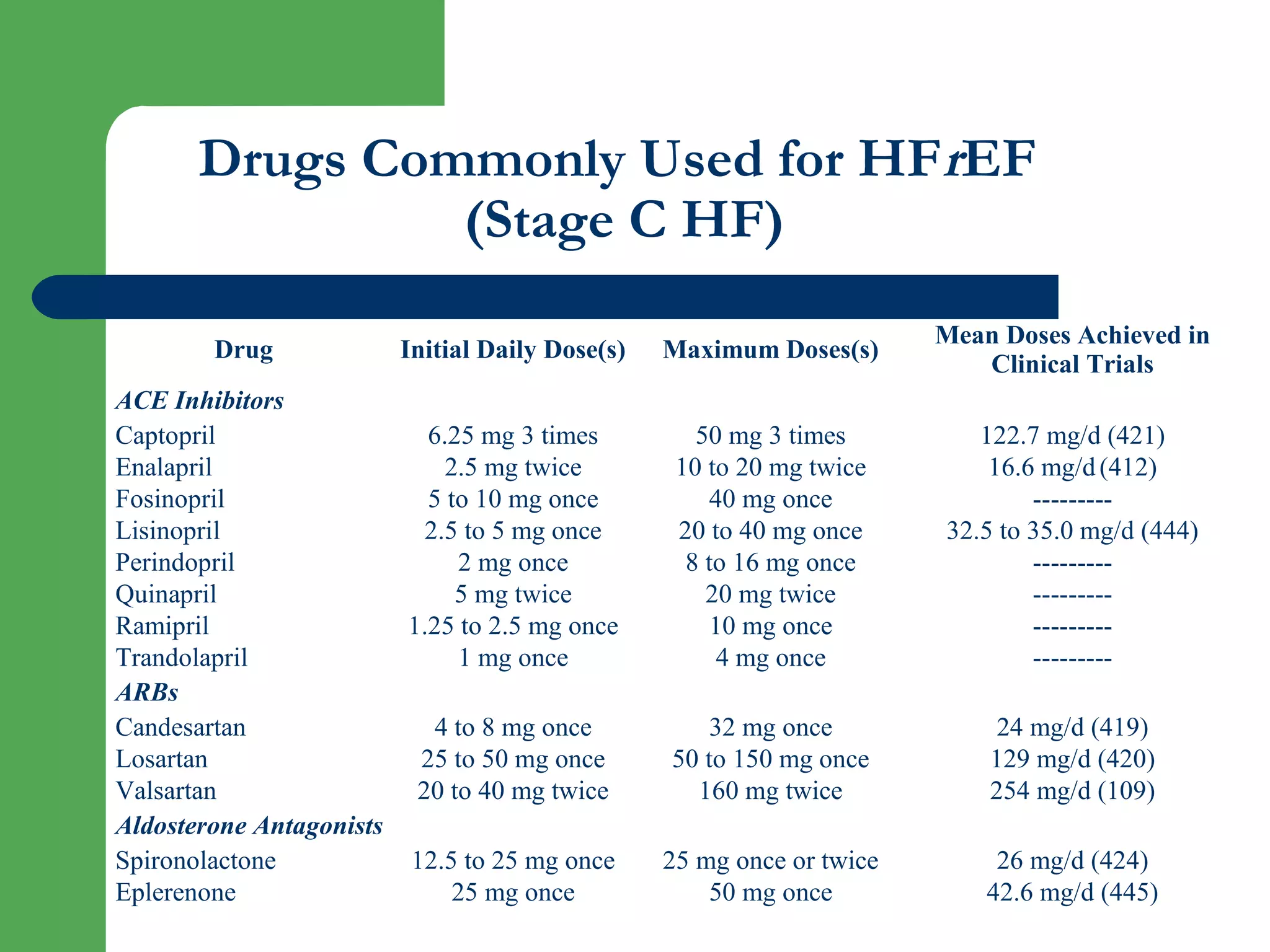
Drugs Commonly Used for HFrEF
(Stage C HF) (cont.)
Drug Initial Daily Dose(s) Maximum Doses(s)
Mean Doses Achieved in
Clinical Trials
Beta Blockers
Bisoprolol 1.25 mg once 10 mg once 8.6 mg/d (118)
Carvedilol 3.125 mg twice 50 mg twice 37 mg/d (446)
Carvedilol CR 10 mg once 80 mg once ---------
Metoprolol succinate
extended release
(metoprolol CR/XL)
12.5 to 25 mg once 200 mg once 159 mg/d (447)
Hydralazine & Isosorbide Dinitrate
Fixed dose combination
(423)
37.5 mg hydralazine/
20 mg isosorbide
dinitrate 3 times daily
75 mg hydralazine/
40 mg isosorbide
dinitrate 3 times daily
~175 mg hydralazine/90 mg
isosorbide dinitrate daily
Hydralazine and
isosorbide dinitrate (448)
Hydralazine: 25 to 50
mg, 3 or 4 times daily
and isorsorbide
dinitrate:
20 to 30 mg
3 or 4 times daily
Hydralazine: 300 mg
daily in divided doses
and isosorbide
dinitrate 120 mg daily
in divided doses
---------
Pharmacologic Treatment for Stage C HFrEF
ACC, AHA HF guidelines- 2013
Pharmacological Treatment for
Stage C HFrEF (cont.)
Diuretics are recommended in patients with HFrEF who
have evidence of fluid retention, unless contraindicated, to
improve symptoms.
ACE inhibitors are recommended in patients with HFrEF
and current or prior symptoms, unless contraindicated, to
reduce morbidity and mortality.
ARBs are recommended in patients with HFrEF with
current or prior symptoms who are ACE inhibitor-
intolerant, unless contraindicated, to reduce morbidity and
mortality.
I IIa IIb III
I IIa IIb III
I IIa IIb III
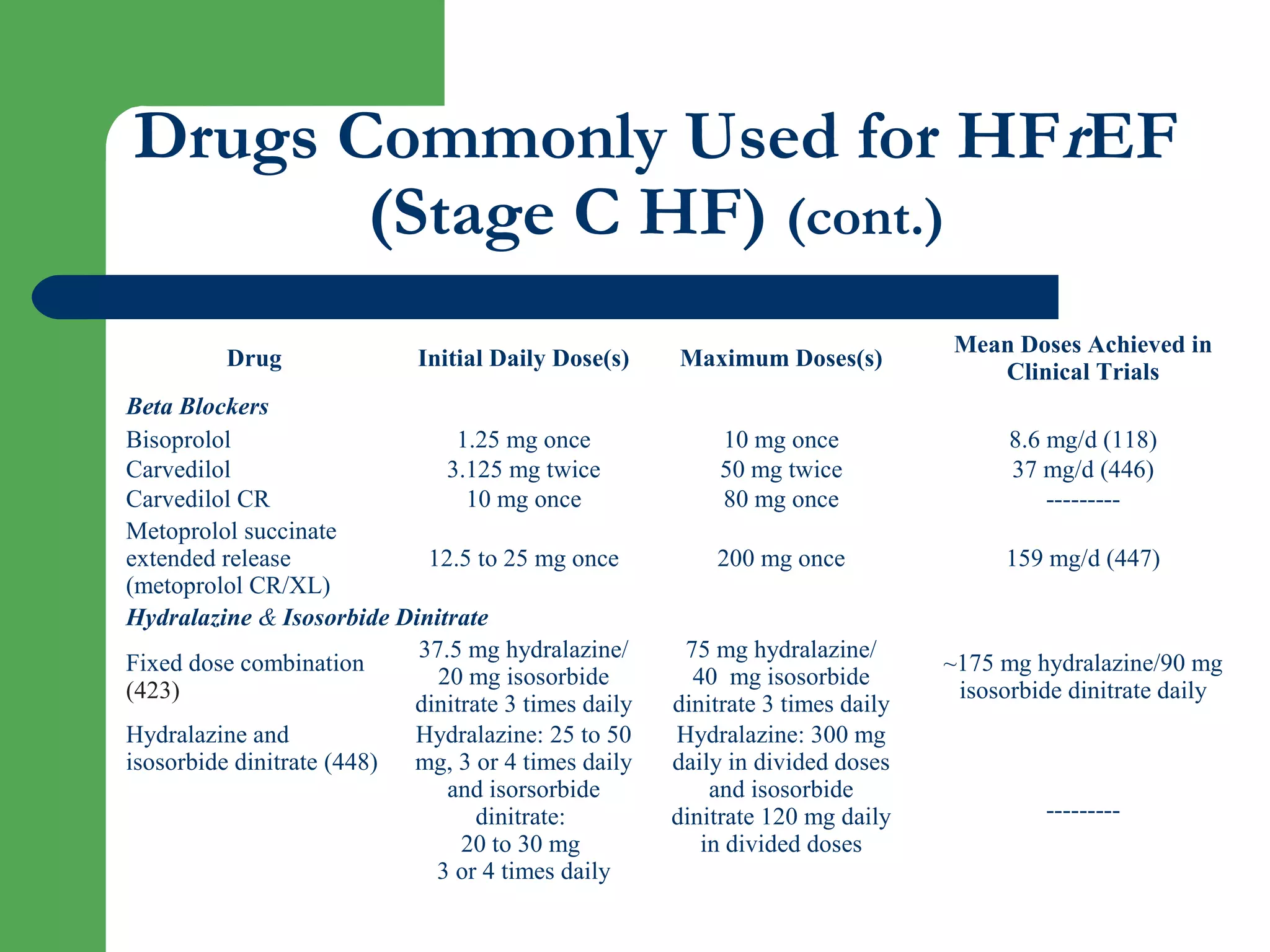
ARBs are reasonable to reduce morbidity and mortality as
alternatives to ACE inhibitors as first-line therapy for
patients with HFrEF, especially for patients already taking
ARBs for other indications, unless contraindicated.
Addition of an ARB may be considered in persistently
symptomatic patients with HFrEF who are already being
treated with an ACE inhibitor and a beta blocker in whom
an aldosterone antagonist is not indicated or tolerated.
I IIa IIb III
I IIa IIb III
Routine combined use of an ACE inhibitor, ARB, and
aldosterone antagonist is potentially harmful for patients
with HFrEF.
Use of 1 of the 3 beta blockers proven to reduce mortality
(i.e., bisoprolol, carvedilol, and sustained-release
metoprolol succinate) is recommended for all patients with
current or prior symptoms of HFrEF, unless
contraindicated, to reduce morbidity and mortality.
I IIa IIb III
I IIa IIb III
Aldosterone receptor antagonists [or mineralocorticoid
receptor antagonists (MRA)] are recommended in patients
with NYHA class II-IV and who have LVEF of 35% or less,
unless contraindicated, to reduce morbidity and mortality.
Patients with NYHA class II should have a history of prior
cardiovascular hospitalization or elevated plasma natriuretic
peptide levels to be considered for aldosterone receptor
antagonists. Creatinine should be 2.5 mg/dL or less in men or
2.0 mg/dL or less in women (or estimated glomerular filtration
rate >30 mL/min/1.73m2) and potassium should be less than
5.0 mEq/L. Careful monitoring of potassium, renal function,
and diuretic dosing should be performed at initiation and
closely followed thereafter to minimize risk of hyperkalemia
and renal insufficiency.
I IIa IIb III
The combination of hydralazine and isosorbide dinitrate is
recommended to reduce morbidity and mortality for
patients self-described as African Americans with NYHA
class III–IV HFrEF receiving optimal therapy with ACE
inhibitors and beta blockers, unless contraindicated.
A combination of hydralazine and isosorbide dinitrate can
be useful to reduce morbidity or mortality in patients with
current or prior symptomatic HFrEF who cannot be given
an ACE inhibitor or ARB because of drug intolerance,
hypotension, or renal insufficiency, unless contraindicated.
I IIa IIb III
I IIa IIb III
Digoxin can be beneficial in patients with HFrEF, unless
contraindicated, to decrease hospitalizations for HF.
Patients with chronic HF with permanent/persistent/
paroxysmal AF and an additional risk factor for
cardioembolic stroke (history of hypertension, diabetes
mellitus, previous stroke or transient ischemic attack, or
≥75 years of age) should receive chronic anticoagulant
therapy (in the absence of contraindications to
anticoagulation).
I IIa IIb III
I IIa IIb III
The selection of an anticoagulant agent (warfarin,
dabigatran, apixaban, or rivaroxaban) for
permanent/persistent/paroxysmal AF should be
individualized on the basis of risk factors, cost, tolerability,
patient preference, potential for drug interactions, and
other clinical characteristics, including time in the
international normalized rate therapeutic ration if the
patient has been taking warfarin.
Chronic anticoagulation is reasonable for patients with
chronic HF who have permanent/persistent/paroxysmal
AF but are without an additional risk factor for
cardioembolic stroke (in the absence of contraindications
to anticoagulation).
I IIa IIb III
I IIa IIb III
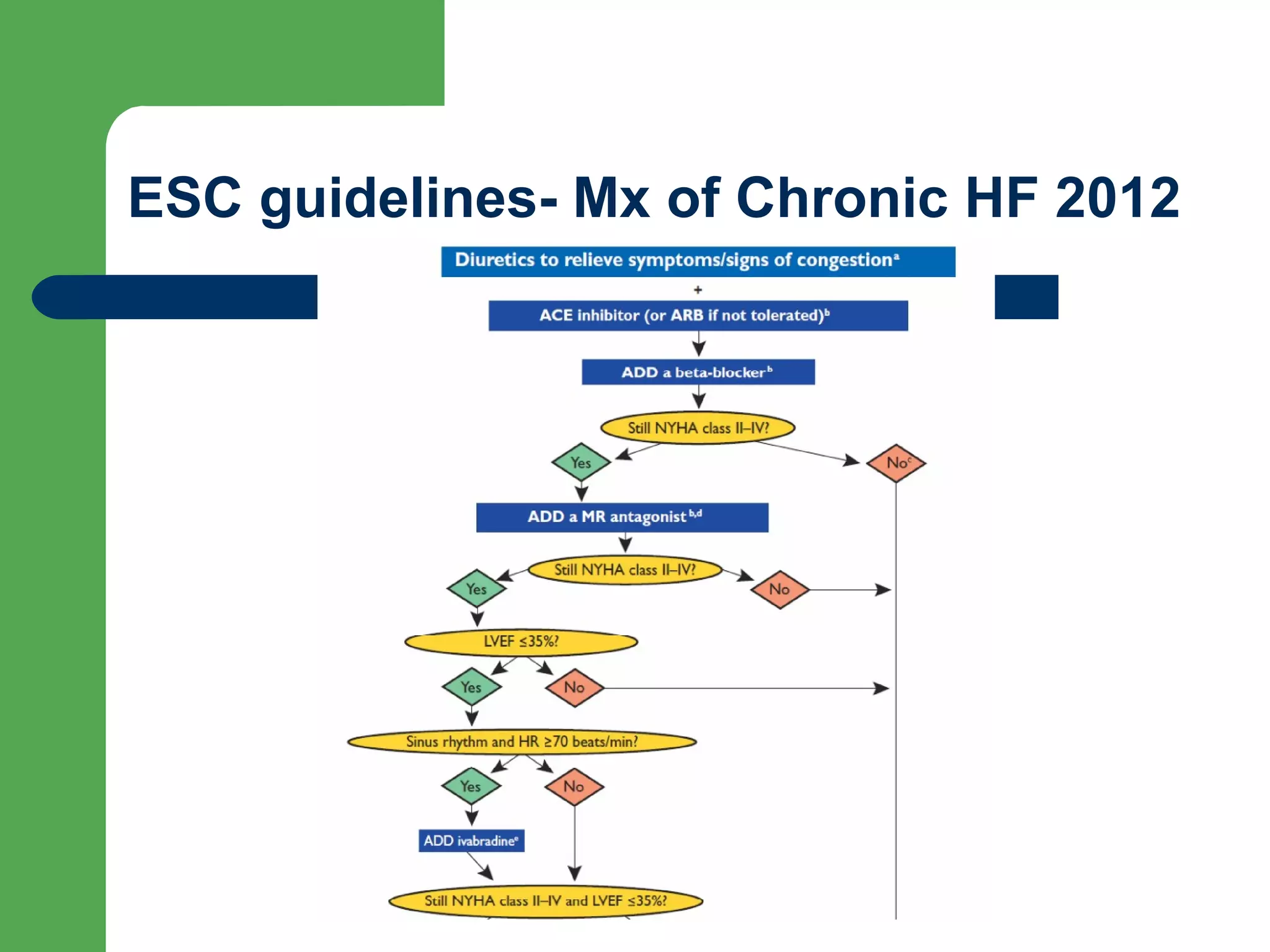
ESC guidelines- Mx of Chronic HF 2012
Medical Therapy for Stage C HFrEF:
Magnitude of Benefit Demonstrated in RCTs
GDMT
RR Reduction
in Mortality
NNT for Mortality
Reduction
(Standardized to 36 mo)
RR Reduction
in HF
Hospitalizations
ACE inhibitor or
ARB
17% 26 31%
Beta blocker 34% 9 41%
Aldosterone
antagonist
30% 6 35%
Hydralazine/nitrate 43% 7 33%
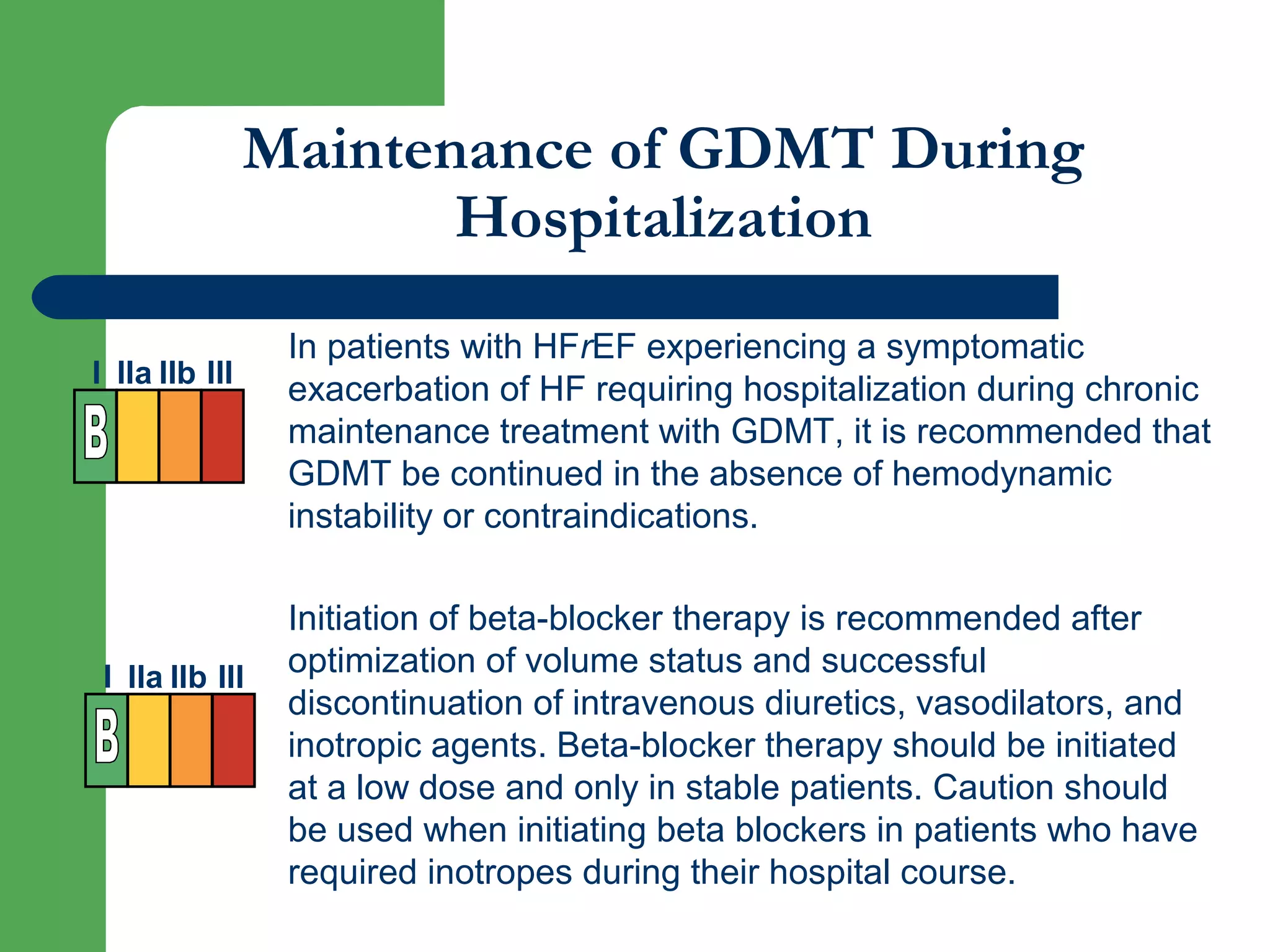
Maintenance of GDMT During
Hospitalization
In patients with HFrEF experiencing a symptomatic
exacerbation of HF requiring hospitalization during chronic
maintenance treatment with GDMT, it is recommended that
GDMT be continued in the absence of hemodynamic
instability or contraindications.
Initiation of beta-blocker therapy is recommended after
optimization of volume status and successful
discontinuation of intravenous diuretics, vasodilators, and
inotropic agents. Beta-blocker therapy should be initiated
at a low dose and only in stable patients. Caution should
be used when initiating beta blockers in patients who have
required inotropes during their hospital course.
I IIa IIb III
I IIa IIb III
Hospitalized HF patient
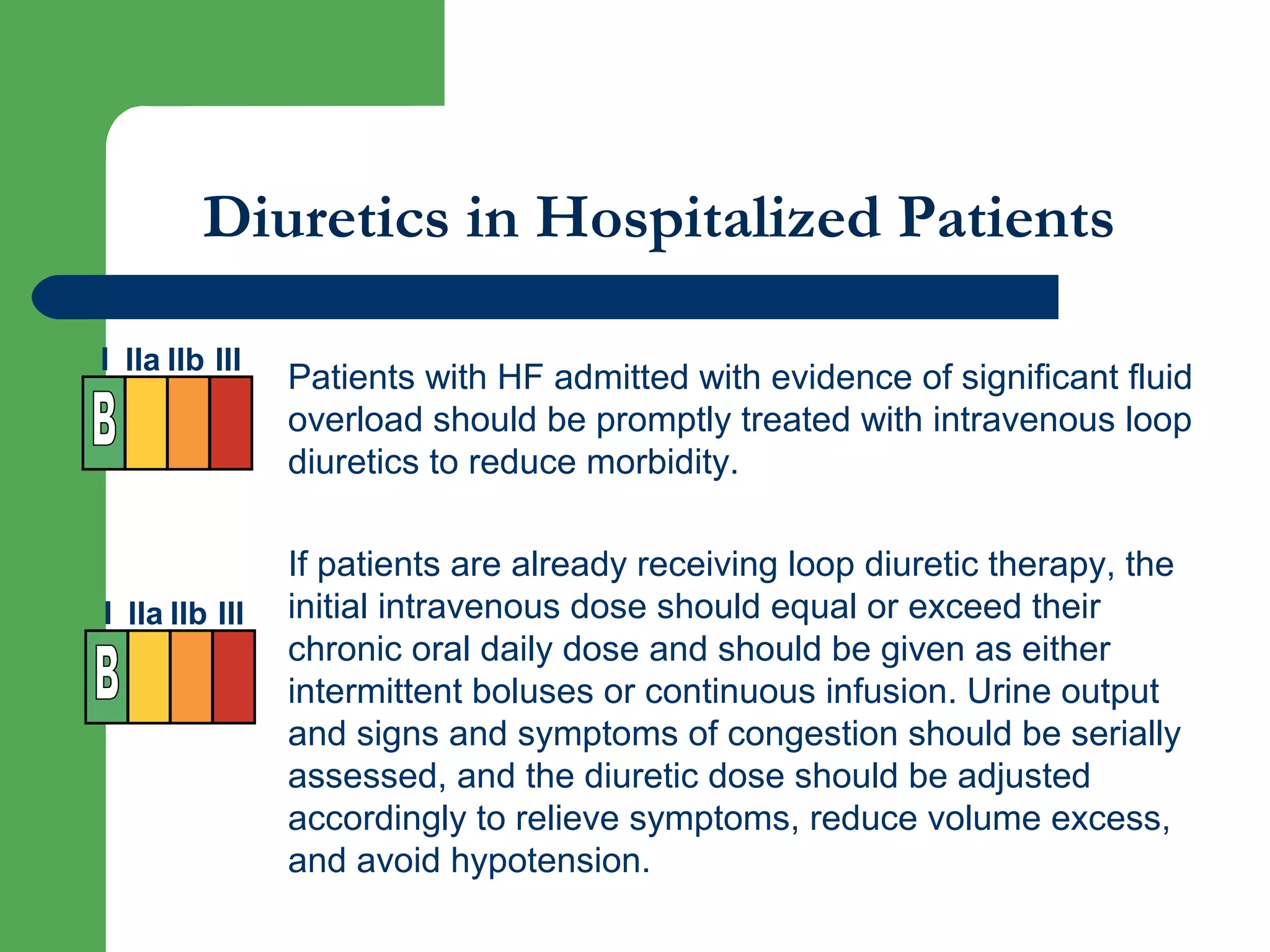
Diuretics in Hospitalized Patients
Patients with HF admitted with evidence of significant fluid
overload should be promptly treated with intravenous loop
diuretics to reduce morbidity.
If patients are already receiving loop diuretic therapy, the
initial intravenous dose should equal or exceed their
chronic oral daily dose and should be given as either
intermittent boluses or continuous infusion. Urine output
and signs and symptoms of congestion should be serially
assessed, and the diuretic dose should be adjusted
accordingly to relieve symptoms, reduce volume excess,
and avoid hypotension.
I IIa IIb III
I IIa IIb III
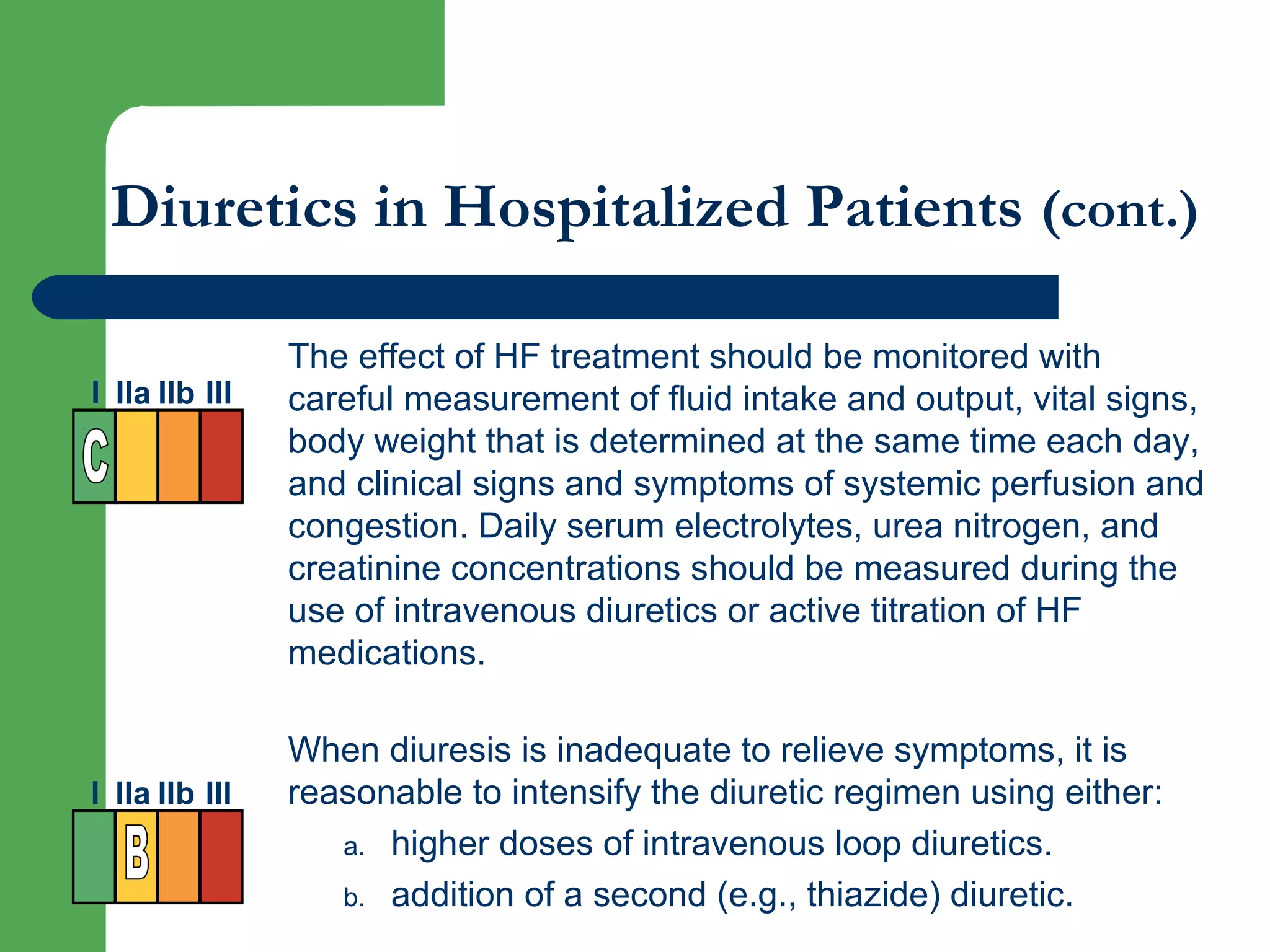
Diuretics in Hospitalized Patients (cont.)
The effect of HF treatment should be monitored with
careful measurement of fluid intake and output, vital signs,
body weight that is determined at the same time each day,
and clinical signs and symptoms of systemic perfusion and
congestion. Daily serum electrolytes, urea nitrogen, and
creatinine concentrations should be measured during the
use of intravenous diuretics or active titration of HF
medications.
When diuresis is inadequate to relieve symptoms, it is
reasonable to intensify the diuretic regimen using either:
a. higher doses of intravenous loop diuretics.
b. addition of a second (e.g., thiazide) diuretic.
I IIa IIb III
I IIa IIb III
Renal Replacement Therapy
Ultrafiltration may be considered for patients with
obvious volume overload to alleviate congestive
symptoms and fluid weight.
Ultrafiltration may be considered for patients with
refractory congestion not responding to medical
therapy.
I IIa IIb III
I IIa IIb III
Parenteral Therapy in Hospitalized HF
If symptomatic hypotension is absent,
intravenous nitroglycerin, nitroprusside or
nesiritide may be considered an adjuvant to
diuretic therapy for relief of dyspnea in patients
admitted with acutely decompensated HF.
I IIa IIb III
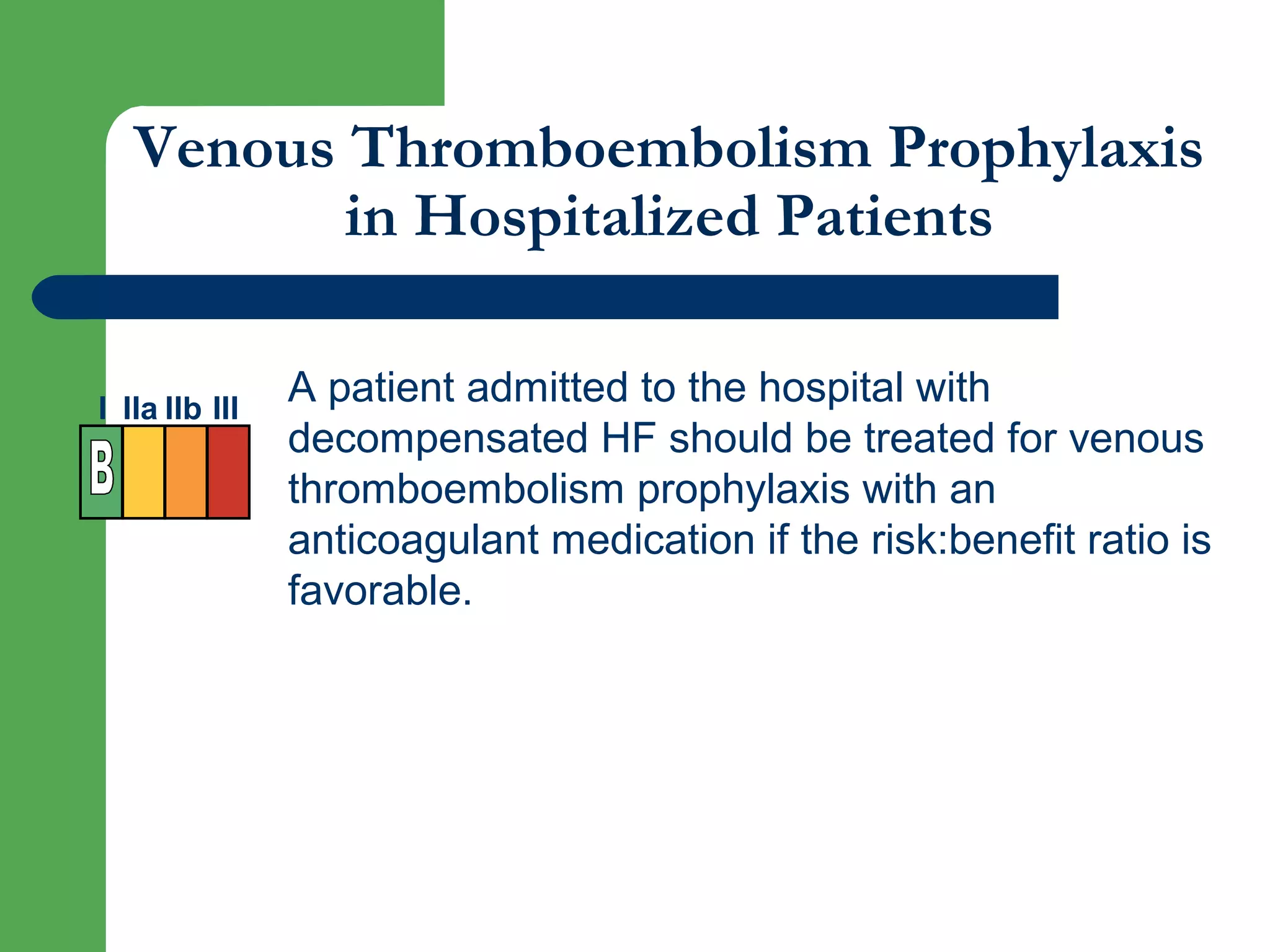
Venous Thromboembolism Prophylaxis
in Hospitalized Patients
A patient admitted to the hospital with
decompensated HF should be treated for venous
thromboembolism prophylaxis with an
anticoagulant medication if the risk:benefit ratio is
favorable.
I IIa IIb III
Arginine Vasopressin Antagonists
In patients hospitalized with volume overload,
including HF, who have persistent severe
hyponatremia and are at risk for or having active
cognitive symptoms despite water restriction and
maximization of GDMT, vasopressin antagonists
may be considered in the short term to improve
serum sodium concentration in hypervolemic,
hyponatremic states with either a V2 receptor
selective or a nonselective vasopressin
antagonist.
I IIa IIb III
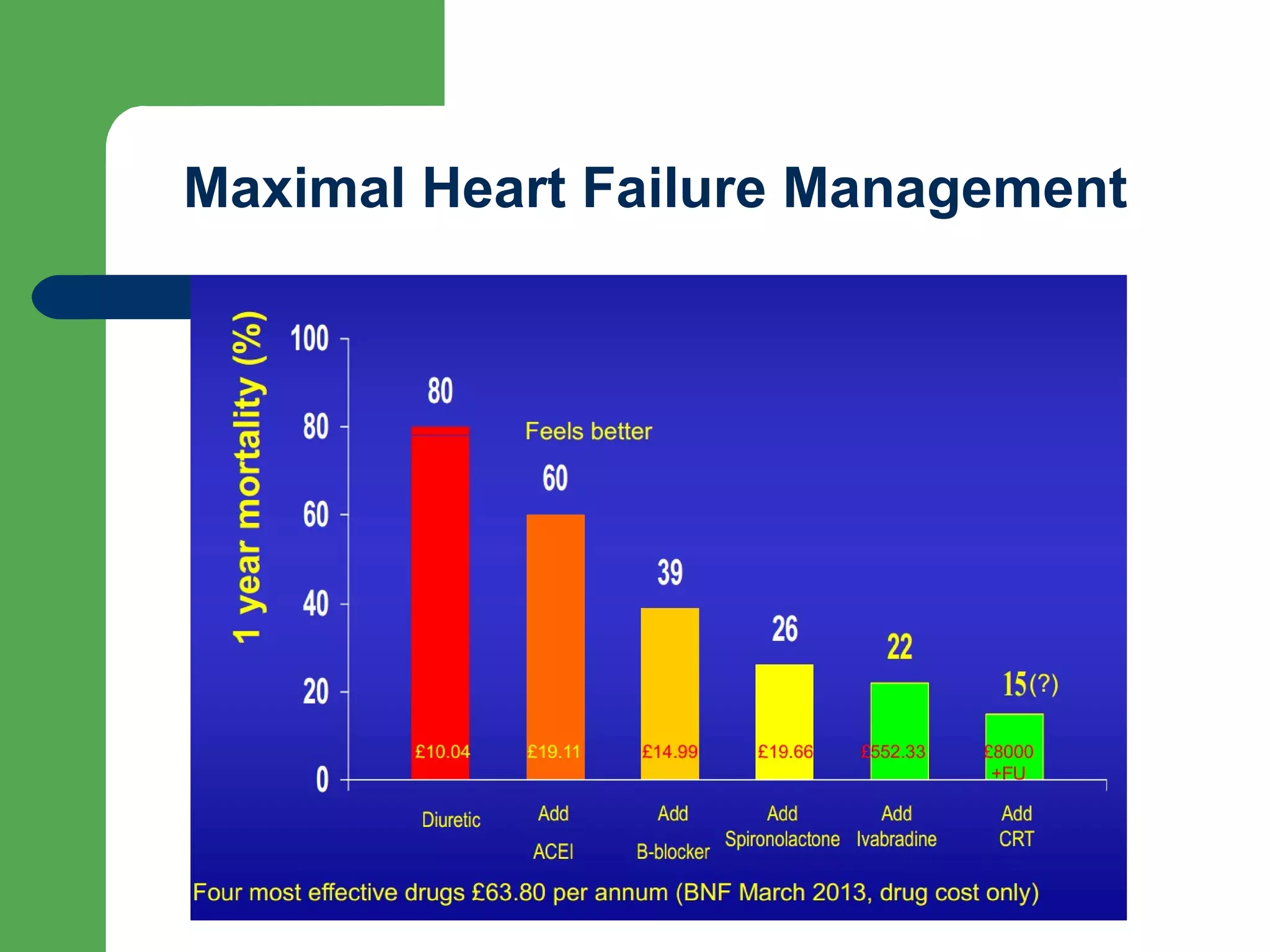
Maximal Heart Failure Management
Heart Failure Audit 2012
Regional Cardiac Centre,
Swensea (Wales)
Thanks
Management of Fluid Status
 Many clinical manifestations result from excessive salt and
water retention that leads to an inappropriate volume
expansion.
 Short-term clinical trials: diuretic therapy lead to a reduction
in JVP, pulmonary congestion, peripheral edema, and body
weight, all within days.
 Intermediate-term studies: diuretics have been shown to
improve cardiac function, symptoms, and exercise tolerance
in HF patients.
 Their effects on mortality are not clearly known.
 Number of classification schemes
 The most common classification for diuretics
uses an admixture of chemical (e.g., thiazide
diuretic), site of action (e.g., loop diuretic), or
clinical outcomes (e.g., potassium-sparing
diuretic).

Pharmacotherapy in HFrEF

  • 1.
  • 2.
    Management Options inHFrEF:  Pharmacotherapy  Devices  Surgical management  Cardiac transplant  Stem cell/ Gene therapy
  • 3.
    Goals of treatment to reduce symptoms  prolong survival  improve the quality of life  prevent disease progression
  • 4.
    Pharmacological Management PROGNOSIS ACE inhibitors ARBs BetaBlockers MRAs Hydralazine+nitrate* SYMPTOMS Diuretics Digoxin Ivabradine*
  • 5.
  • 6.
    Benefit from Beta Blockeruse in CCF is well established…. The mortality reduction achieved in RCTs with Beta blockers in HF on top of ACEIs is to the tune of 34%
  • 7.
    BBs Benefit inmild to moderate HF – Carvedilol – Bisoprolol – Metoprolol Succinate U.S. Carvedilol Heart Failure Study Group. N Engl J Med 1996;334: 1349–55. CIBIS II : a randomised trial. Lancet 1999;353:9–13. MERIT-HF. Lancet 1999;353:2001–7
  • 8.
    BBs benefit inSevere but Stable HF COPERNICUS trial (Carvedilol) Packer M, Coats AJS, Fowler MB, et al, for the Carvedilol Prospective Randomized Cumulative Survival Study Group (COPERNICUS). Effect ofcarvedilol on survival in severe chronic heart failure. N Engl J Med 2001;344:1651–8.
  • 9.
    BBs benefit PostMI LV Dysfunction CAPRICORN (Carvedilol) The CAPRICORN Investigators. Effect of carvedilol on outcome after myocardial infarction in patients with left ventricular dysfunction: the CAPRICORN randomised trial. Lancet 2001;357: 1385–90.
  • 10.
    Beta Blockers oftenstarted late,not at all or only in low doses after ACEIs  Euro Heart Failure Survey(EHFS II) – 43% receiving BB at admission – 61% receiving BB at discharge EHJ 2006:27:2725  MAHLER Survey- adherence to guidelines – N=1410 – 58% were taking Beta blockers – Adherence to guidelines is a strong predictor of outcomes EHJ 2005:26:1653
  • 11.
    However … trialevidence favor early beta-blocker therapy in HF ?  COPERNICUS – Striking mortality reduction in first 2 months in the highest risk group JAMA 2003 :289:712  OTIMIZE HF registry – CCF receiving Carvedilol at discharge – Less likely to die within 3 months AHJ 2007:153:82
  • 12.
    Doses of BetaBlockers recommended in the Guidelines on the basis of RCTs  Metroprolol Succinate : 100-200mg/day (MERIT HF)  Carvedilol : 25 mg BID (US CarvedilolStudy)  Bisoprolol: 10 mg/day (CIBIS III)
  • 13.
    Trials of Beta-blockersin Heart Failure
  • 15.
    Time course ofchanges in EF with BB compared to standard therapy
  • 16.
    Under utilization ofβ-Blockers in Patients Undergoing Implantable Cardioverter- Defibrillator and Cardiac Resynchronization Procedures Circulation. 2010;3:204-211 No patient should undergo device therapy without optimal trial of Beta Blockers as per current guidelines.
  • 17.
    Trials of ACEinhibitors in HF
  • 18.
    Aldosterone Antagonists  Spironolactoneand Eplerenone are both weak diuretics  Clinical trials :both of these agents have profound effects on cardio-vascular morbidity and mortality by virtue of their ability to antagonize the deleterious effects of aldosterone in the cardiovascular system.  These agents are used in patients more for their ability to antagonize the RAAS than for their diuretic properties  Spironolactone leads to a 30% reduction in total mortality and 35% reduction in hospitalization for heart failure when compared with placebo
  • 20.
    EMPHASIS-HF Methods Randomized double blindtrial, 2737 patients NYHA class-II HF , EF≤35% Eplerenone 50 mg daily or placebo in addition to recommended therapy Primary outcome- composite of death from CV causes or hospitalization for HF
  • 21.
    Rates of primaryand other outcomes
  • 22.
    Rates of primaryand other outcomes
  • 23.
    Which aldosterone antagonist? Spironolactone has antiandrogenic and progesterone-like effects, which may cause gynecomastia or impotence in men and menstrual irregularities in women.  Eplerenone has greater selectivity for the mineralocorticoid receptor than for steroid receptors, and has less sex hormone side effects than spironolactone.  Eplerenone has shorter half-life and it does not have any active metabolites.  Dose Eplerenone should be preferred, if no financial constraints
  • 24.
    SSystolicystolic HHeart failuretreatment witheart failure treatment with thethe IIff inhibitor Ivabradineinhibitor Ivabradine TTrialrial SSystolicystolic HHeart failure treatment witheart failure treatment with thethe IIff inhibitor Ivabradineinhibitor Ivabradine TTrialrial The study
  • 25.
    Study design HR andtolerability Ivabradine 5 mg bid Matching placebo, bid Every 4 monthsD0 D14 D28 M4 Ivabradine 7.5/5/2.5 mg bid according to 3.5 years Screening 7 to 30 days Swedberg K, et al. Lancet. 2010;online August 29.
  • 26.
    0 6 1218 24 30 40 30 20 10 0 Ivabradine significantly reduces the Primary composite endpoint (CV death or hospital admission for worsening HF) 18% Cumulative frequency (%)Cumulative frequency (%) P < 0.0001 Swedberg K, et al. Lancet. 2010;online August 29. MonthsMonths Optimal treatment Optimal treatment + Ivabradine
  • 27.
    0 6 1218 24 30 30 20 10 0 Ivabradine significantly reduces Hospitalization for HF 26% P < 0.0001 Swedberg K, et al. Lancet. 2010;online August 29. Months Cumulative frequency (%)Cumulative frequency (%) Optimal treatment Optimal treatment + Ivabradine
  • 28.
    Age <65 years ≥65 years Sex Male Female Beta-blockers No Yes Aetiologyof heart failure Non-ischaemic Ischaemic NYHA class NYHA class II NYHA class III or IV Diabetes No Yes Hypertension No Yes Baseline heart rate <77 bpm ≥77 bpm Test for interaction P = 0.029 1.51.00.5 Hazard ratio Favours Ivabradine Favours placebo Ivabradine is effective across all patient subgroups Swedberg K, et al. Lancet. 2010;online August 29.
  • 29.
    Main Results after8 months of treatment in the Reil JACC 2013 Heart Failure study ParametersParameters IvabradineIvabradine ControlControl Heart rate*(HR)Heart rate*(HR) - 11 bpm, p < 0.0001- 11 bpm, p < 0.0001 -2 bpm, p=0.015-2 bpm, p=0.015 Stroke Volume*Stroke Volume* + 9 mL, p < 0.0001+ 9 mL, p < 0.0001 - 1 mL,1 mL, NS, No effectNS, No effect Cardiac OutputCardiac Output NSNS No effectNo effect - 0.3 mL/min, p<0.01- 0.3 mL/min, p<0.01 Ejection FractionEjection Fraction## +4%, p < 0.0001+4%, p < 0.0001 NSNS No effectNo effect Reil J C et.al. J Am Coll Cardiol 2013;62:1977–85 * The difference between Ivabradine vs. Control was significant p < 0.0001 # The difference between Ivabradine vs. Control was significant p < 0.004
  • 30.
    Magnitude of BenefitDemonstrated in RCTs GDMT RR Reduction in Mortality NNT for Mortality Reduction (Standardized to 36 mo) RR Reduction in HF Hospitalizations ACE inhibitor or ARB 17% 26 31% Beta blocker 34% 9 41% Aldosterone antagonist 30% 6 35%
  • 31.
    13 0 10 20 30 40 50 DIG: All CauseDeaths PercentMortality 15 0 10 40 30 50 20 DIG: CHF Mortality or Related Hospitalizations PercentEvent
  • 32.
    Risk of deathand Serum Digoxin
  • 33.
    ISDN-Hy in AfricanAmericans Taylor AL et al. N Engl J Med. 2004; 351: 2049-2057.
  • 34.
    Pharmacological Treatment for StageC HFrEF Diuretics are recommended in patients with HFrEF who have evidence of fluid retention, unless contraindicated, to improve symptoms. ACE inhibitors are recommended in patients with HFrEF and current or prior symptoms, unless contraindicated, to reduce morbidity and mortality. ARBs are recommended in patients with HFrEF with current or prior symptoms who are ACE inhibitor- intolerant, unless contraindicated, to reduce morbidity and mortality. I IIa IIb III I IIa IIb III I IIa IIb III
  • 35.
    Drugs Commonly Usedfor HFrEF (Stage C HF) Drug Initial Daily Dose(s) Maximum Doses(s) Mean Doses Achieved in Clinical Trials ACE Inhibitors Captopril 6.25 mg 3 times 50 mg 3 times 122.7 mg/d (421) Enalapril 2.5 mg twice 10 to 20 mg twice 16.6 mg/d(412) Fosinopril 5 to 10 mg once 40 mg once --------- Lisinopril 2.5 to 5 mg once 20 to 40 mg once 32.5 to 35.0 mg/d (444) Perindopril 2 mg once 8 to 16 mg once --------- Quinapril 5 mg twice 20 mg twice --------- Ramipril 1.25 to 2.5 mg once 10 mg once --------- Trandolapril 1 mg once 4 mg once --------- ARBs Candesartan 4 to 8 mg once 32 mg once 24 mg/d (419) Losartan 25 to 50 mg once 50 to 150 mg once 129 mg/d (420) Valsartan 20 to 40 mg twice 160 mg twice 254 mg/d (109) Aldosterone Antagonists Spironolactone 12.5 to 25 mg once 25 mg once or twice 26 mg/d (424) Eplerenone 25 mg once 50 mg once 42.6 mg/d (445)
  • 36.
    Drugs Commonly Usedfor HFrEF (Stage C HF) (cont.) Drug Initial Daily Dose(s) Maximum Doses(s) Mean Doses Achieved in Clinical Trials Beta Blockers Bisoprolol 1.25 mg once 10 mg once 8.6 mg/d (118) Carvedilol 3.125 mg twice 50 mg twice 37 mg/d (446) Carvedilol CR 10 mg once 80 mg once --------- Metoprolol succinate extended release (metoprolol CR/XL) 12.5 to 25 mg once 200 mg once 159 mg/d (447) Hydralazine & Isosorbide Dinitrate Fixed dose combination (423) 37.5 mg hydralazine/ 20 mg isosorbide dinitrate 3 times daily 75 mg hydralazine/ 40 mg isosorbide dinitrate 3 times daily ~175 mg hydralazine/90 mg isosorbide dinitrate daily Hydralazine and isosorbide dinitrate (448) Hydralazine: 25 to 50 mg, 3 or 4 times daily and isorsorbide dinitrate: 20 to 30 mg 3 or 4 times daily Hydralazine: 300 mg daily in divided doses and isosorbide dinitrate 120 mg daily in divided doses ---------
  • 37.
    Pharmacologic Treatment forStage C HFrEF ACC, AHA HF guidelines- 2013
  • 38.
    Pharmacological Treatment for StageC HFrEF (cont.) Diuretics are recommended in patients with HFrEF who have evidence of fluid retention, unless contraindicated, to improve symptoms. ACE inhibitors are recommended in patients with HFrEF and current or prior symptoms, unless contraindicated, to reduce morbidity and mortality. ARBs are recommended in patients with HFrEF with current or prior symptoms who are ACE inhibitor- intolerant, unless contraindicated, to reduce morbidity and mortality. I IIa IIb III I IIa IIb III I IIa IIb III
  • 39.
    ARBs are reasonableto reduce morbidity and mortality as alternatives to ACE inhibitors as first-line therapy for patients with HFrEF, especially for patients already taking ARBs for other indications, unless contraindicated. Addition of an ARB may be considered in persistently symptomatic patients with HFrEF who are already being treated with an ACE inhibitor and a beta blocker in whom an aldosterone antagonist is not indicated or tolerated. I IIa IIb III I IIa IIb III
  • 40.
    Routine combined useof an ACE inhibitor, ARB, and aldosterone antagonist is potentially harmful for patients with HFrEF. Use of 1 of the 3 beta blockers proven to reduce mortality (i.e., bisoprolol, carvedilol, and sustained-release metoprolol succinate) is recommended for all patients with current or prior symptoms of HFrEF, unless contraindicated, to reduce morbidity and mortality. I IIa IIb III I IIa IIb III
  • 41.
    Aldosterone receptor antagonists[or mineralocorticoid receptor antagonists (MRA)] are recommended in patients with NYHA class II-IV and who have LVEF of 35% or less, unless contraindicated, to reduce morbidity and mortality. Patients with NYHA class II should have a history of prior cardiovascular hospitalization or elevated plasma natriuretic peptide levels to be considered for aldosterone receptor antagonists. Creatinine should be 2.5 mg/dL or less in men or 2.0 mg/dL or less in women (or estimated glomerular filtration rate >30 mL/min/1.73m2) and potassium should be less than 5.0 mEq/L. Careful monitoring of potassium, renal function, and diuretic dosing should be performed at initiation and closely followed thereafter to minimize risk of hyperkalemia and renal insufficiency. I IIa IIb III
  • 42.
    The combination ofhydralazine and isosorbide dinitrate is recommended to reduce morbidity and mortality for patients self-described as African Americans with NYHA class III–IV HFrEF receiving optimal therapy with ACE inhibitors and beta blockers, unless contraindicated. A combination of hydralazine and isosorbide dinitrate can be useful to reduce morbidity or mortality in patients with current or prior symptomatic HFrEF who cannot be given an ACE inhibitor or ARB because of drug intolerance, hypotension, or renal insufficiency, unless contraindicated. I IIa IIb III I IIa IIb III
  • 43.
    Digoxin can bebeneficial in patients with HFrEF, unless contraindicated, to decrease hospitalizations for HF. Patients with chronic HF with permanent/persistent/ paroxysmal AF and an additional risk factor for cardioembolic stroke (history of hypertension, diabetes mellitus, previous stroke or transient ischemic attack, or ≥75 years of age) should receive chronic anticoagulant therapy (in the absence of contraindications to anticoagulation). I IIa IIb III I IIa IIb III
  • 44.
    The selection ofan anticoagulant agent (warfarin, dabigatran, apixaban, or rivaroxaban) for permanent/persistent/paroxysmal AF should be individualized on the basis of risk factors, cost, tolerability, patient preference, potential for drug interactions, and other clinical characteristics, including time in the international normalized rate therapeutic ration if the patient has been taking warfarin. Chronic anticoagulation is reasonable for patients with chronic HF who have permanent/persistent/paroxysmal AF but are without an additional risk factor for cardioembolic stroke (in the absence of contraindications to anticoagulation). I IIa IIb III I IIa IIb III
  • 45.
    ESC guidelines- Mxof Chronic HF 2012
  • 46.
    Medical Therapy forStage C HFrEF: Magnitude of Benefit Demonstrated in RCTs GDMT RR Reduction in Mortality NNT for Mortality Reduction (Standardized to 36 mo) RR Reduction in HF Hospitalizations ACE inhibitor or ARB 17% 26 31% Beta blocker 34% 9 41% Aldosterone antagonist 30% 6 35% Hydralazine/nitrate 43% 7 33%
  • 47.
    Maintenance of GDMTDuring Hospitalization In patients with HFrEF experiencing a symptomatic exacerbation of HF requiring hospitalization during chronic maintenance treatment with GDMT, it is recommended that GDMT be continued in the absence of hemodynamic instability or contraindications. Initiation of beta-blocker therapy is recommended after optimization of volume status and successful discontinuation of intravenous diuretics, vasodilators, and inotropic agents. Beta-blocker therapy should be initiated at a low dose and only in stable patients. Caution should be used when initiating beta blockers in patients who have required inotropes during their hospital course. I IIa IIb III I IIa IIb III
  • 48.
  • 49.
    Diuretics in HospitalizedPatients Patients with HF admitted with evidence of significant fluid overload should be promptly treated with intravenous loop diuretics to reduce morbidity. If patients are already receiving loop diuretic therapy, the initial intravenous dose should equal or exceed their chronic oral daily dose and should be given as either intermittent boluses or continuous infusion. Urine output and signs and symptoms of congestion should be serially assessed, and the diuretic dose should be adjusted accordingly to relieve symptoms, reduce volume excess, and avoid hypotension. I IIa IIb III I IIa IIb III
  • 50.
    Diuretics in HospitalizedPatients (cont.) The effect of HF treatment should be monitored with careful measurement of fluid intake and output, vital signs, body weight that is determined at the same time each day, and clinical signs and symptoms of systemic perfusion and congestion. Daily serum electrolytes, urea nitrogen, and creatinine concentrations should be measured during the use of intravenous diuretics or active titration of HF medications. When diuresis is inadequate to relieve symptoms, it is reasonable to intensify the diuretic regimen using either: a. higher doses of intravenous loop diuretics. b. addition of a second (e.g., thiazide) diuretic. I IIa IIb III I IIa IIb III
  • 51.
    Renal Replacement Therapy Ultrafiltrationmay be considered for patients with obvious volume overload to alleviate congestive symptoms and fluid weight. Ultrafiltration may be considered for patients with refractory congestion not responding to medical therapy. I IIa IIb III I IIa IIb III
  • 52.
    Parenteral Therapy inHospitalized HF If symptomatic hypotension is absent, intravenous nitroglycerin, nitroprusside or nesiritide may be considered an adjuvant to diuretic therapy for relief of dyspnea in patients admitted with acutely decompensated HF. I IIa IIb III
  • 53.
    Venous Thromboembolism Prophylaxis inHospitalized Patients A patient admitted to the hospital with decompensated HF should be treated for venous thromboembolism prophylaxis with an anticoagulant medication if the risk:benefit ratio is favorable. I IIa IIb III
  • 54.
    Arginine Vasopressin Antagonists Inpatients hospitalized with volume overload, including HF, who have persistent severe hyponatremia and are at risk for or having active cognitive symptoms despite water restriction and maximization of GDMT, vasopressin antagonists may be considered in the short term to improve serum sodium concentration in hypervolemic, hyponatremic states with either a V2 receptor selective or a nonselective vasopressin antagonist. I IIa IIb III
  • 55.
  • 56.
    Heart Failure Audit2012 Regional Cardiac Centre, Swensea (Wales)
  • 57.
  • 58.
    Management of FluidStatus  Many clinical manifestations result from excessive salt and water retention that leads to an inappropriate volume expansion.  Short-term clinical trials: diuretic therapy lead to a reduction in JVP, pulmonary congestion, peripheral edema, and body weight, all within days.  Intermediate-term studies: diuretics have been shown to improve cardiac function, symptoms, and exercise tolerance in HF patients.  Their effects on mortality are not clearly known.
  • 59.
     Number ofclassification schemes  The most common classification for diuretics uses an admixture of chemical (e.g., thiazide diuretic), site of action (e.g., loop diuretic), or clinical outcomes (e.g., potassium-sparing diuretic).

Editor's Notes

  • #25 SHIFT stands for Systolic Heart Failure treatment with If inhibitor Ivabradine trial. Click to the next slide.
  • #26 .… to receive either Ivabradine or matching placebo. The dosage of Ivabradine was adjusted as follows: The starting dose of study drug on day 0 was 5 mg twice daily of Ivabradine or matching placebo. After a 14-daytitration period, the Ivabradine dose was increased to 7.5 mg twice daily (or corresponding placebo), unless the resting heart rate was 60 bpm or lower. If heart rate was between 50 bpm and 60 bpm, the dose was maintained at 5 mg twice daily. If the resting heart rate was lower than 50 bpm or the patient had signs or symptoms related to bradycardia, the dose was reduced to 2.5 mg twice daily. Starting at day 28, visits took place every 4 months until study closure. Click to the next slide.
  • #27 With regards to the primary end-point (PEP), Ivabradine achieved the PEP with a significant and impressive 18% reduction in the composite of cardiovascular (CV) death or hospitalization for worsening heart failure. All the experts at the ESC agreed that after a long time, do we have a major HF study with a positive result instead of a neutral negative result. Click to the next slide.
  • #28 The effect on PEP was driven mainly by hospital admissions for worsening heart failure, which occurred in 672 (21%) of patients on optimal treatment group and 514 (16%) of those taking optimal treatment + Ivabradine. This means addition of Ivabradine significantly reduced the hospitalizations for worsening heart failure significantly by 26% . Click to the next slide.
  • #29 The morbi-mortality benefits of Ivabradine were seen in all patients, whatever the patient profile – irrespective of their age, gender, usage of beta-blockers, etiology of heart failure or presence of co-morbid conditions. It is not surprising to expect that a specific heart rate reducing agent like Ivabradine will be more effective in patients with higher heart rate ( ≥ 77 bpm). Therefore, the evidence on this slide confirms that Ivabradine is effective life saving agent across all patient subgroups of heart failure. Moving forward, from morbi-mortality benefits to improvement in symptoms… click to the next slide…
  • #38 380624 slide 37