Journal Club
  Ahad Lodhi, M.D.
    07/31/2010
Meta-analysis: Erythropoiesis-Stimulating Agents in
      Patients With Chronic Kidney Disease        Annals of Internal Med : July 6, 2010
                                                          vol. 153 no. 1 23-33


Suetonia C. Palmer, MBChB; Sankar D. Navaneethan, MD, MPH; Jonathan C. Craig, MBChB, DCH, MM, PhD; David W. Johnson,
   MBChB(Hons), PhD; Marcello Tonelli, MD, SM; Amit X. Garg, MD, PhD; Fabio Pellegrini, MSc; Pietro Ravani, MD, MSc, PhD; Meg Jardine,
   MBBS, PhD; Vlado Perkovic, MBBS, PhD; Giusi Graziano, PhD;Richard McGee, BMedSci, MBBCh, MM; Antonio Nicolucci, MD; Gianni
   Tognoni, MD; and Giovanni F.M. Strippoli, MD, PhD, MPH, MM
•   Context :To summarize the effects of ESA treatment on clinical outcomes in
    patients with anemia and CKD

•   Recent studies suggest that treating anemia of chronic kidney disease can
    sometimes cause harm.

•   This review compiles 27 randomized trials of erythropoiesis-stimulating agents
    (ESAs) in patients with anemia and chronic kidney disease. Treatment with ESAs
    that resulted in higher hemoglobin levels increased risks for stroke, worsening
    hypertension, and vascular access thrombosis more than strategies that resulted
    in lower hemoglobin levels (placebo, no treatment, or lower ESA dose).

•   Effects on all-cause mortality, cardiovascular events, and quality of life were
    unclear.
Background
Anemia frequently complicates chronic kidney disease (CKD), in part because of
deficient renal erythropoietin release

Phase 1 and 2 clinical trials first evaluated recombinant human erythropoietin
replacement therapy in 1986 and 1987 in patients receiving hemodialysis. These
trials demonstrated dose-dependent increases in hemoglobin levels and
avoidance of red blood cell transfusions, but they also reported incidence of
hypertension and vascular thrombosis

An earlier meta-analysis of 9 randomized trials involving 5143 patients with CKD
concluded that targeting a higher hemoglobin concentration (typically 12 to 15
g/dL) versus a lower concentration (95 to 115 g/L) was associated with an
increased risk for all-cause mortality, arteriovenous access thrombosis, and
hypertension

TREAT : The use of darbepoetin alfa in patients with diabetes, chronic kidney
disease, and moderate anemia who were not undergoing dialysis did not reduce
the risk of either of the two primary composite outcomes (either death or a
cardiovascular event or death or a renal event) and was associated with an
increased risk of stroke
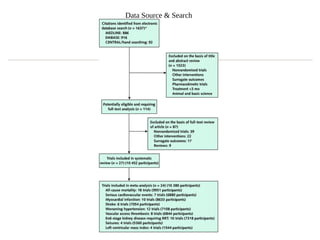
Data Source & Search
Study Selection


Randomized, controlled trials of at least 3 months' duration that allocated
patients to ESA versus placebo, no treatment, or different ESA doses to
achieve a higher hemoglobin target versus a lower hemoglobin target.

Trials of erythropoietin-alfa or -beta, darbepoetin, or a continuous erythropoietin
receptor activator at any dose and route of administration were eligible

It was assumed that placebo-controlled trials were comparing 2 treatment
targets for hemoglobin, although explicit targets were not always described.

Trials of populations with any stage of CKD were included.
Data Synthesis & Statistical Analysis


Two authors independently extracted data on characteristics of the participants,
interventions, and clinical outcomes.

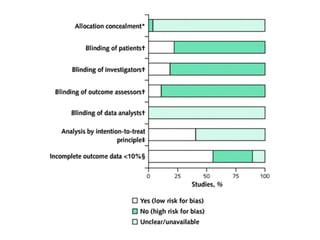
 Both reviewers also assessed the risks for bias in trials according to standard
criteria (allocation concealment, blinding of patients, investigators and outcome
assessors, completeness to follow-up, and use of intention-to-treat analysis)

Any discrepancies in data extraction by discussion with an arbitrator.
Outline of participant population

Most studies enrolled participants between 50 and 60 years of age on average. In the 3
largest trials of more than 1000 patients each, patients were generally older than 60 years.
Two small studies were conducted in children

We identified 3 trials (1413 patients) that included only patients with established
cardiovascular disease

2 trials (4210 patients) that included only patients with diabetes mellitus and CKD

Average Male % was 52

Estimated GFR was not calculated in studies with patients on Dialysis

14 out of 27 Studies also included patients not on Dialysis

Doses of ESA used in the trials were not available in one third of the study reports

Baseline Hb and Target Hb levels were variable across 27 trials.
Trial Methodology quality

Suboptimal , according to current standards

Many trials were not reported according to the CONSORT (Consolidated
Standards of Reporting Trials) statement

None of the 27 trials reported the details of allocation concealment (the method
by which the person responsible for treatment allocation is made unaware of a
participant's treatment assignment)

Twelve of 16 trials published before 2004 did not conduct analysis by the
intention-to-treat principle, whereas all but 1 of 11 trials from 2004 onward
analyzed data according to randomized treatment allocation

Larger trials that explored major patient-level outcomes (all-cause mortality or
major adverse cardiovascular events) were generally of better methodological
quality
Meta-Analysis
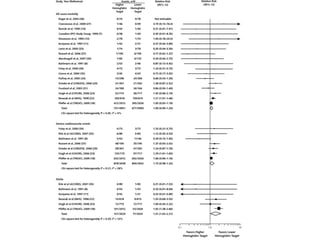
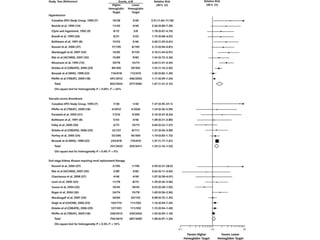
Risks for fatal and nonfatal stroke, vascular access thrombosis, and worsening hypertension
were increased with a higher hemoglobin target than with a lower hemoglobin target

Patients randomly assigned to a higher hemoglobin target were less likely to require a blood
transfusion (8 trials; 6482 patients) (RR, 0.61 [95% CI, 0.49 to 0.77]) but were more likely to
receive intravenous iron therapy (6 trials; 2283 patients) (RR, 1.57 [CI, 1.13 to 2.20])

No statistically significant difference in the risk for all-cause mortality, serious cardiovascular
events, or fatal and nonfatal myocardial infarction between a higher hemoglobin target and a
lower target

In the 10 studies conducted in people with CKD who were not dialysis-dependent, the risk for
end-stage kidney disease requiring renal replacement therapy did not statistically significantly
differ when hemoglobin target groups were compared

No statistically significant differences between treatment groups in left ventricular mass at the
end of treatment (4 trials; 1544 patients; mean difference, 0.14 g/m2 [CI, −4.60 to 4.88 g/m2])
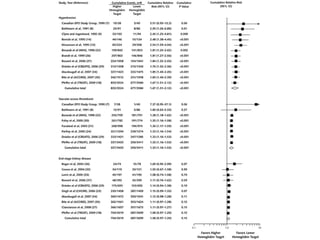
Cumulative Meta-Analysis


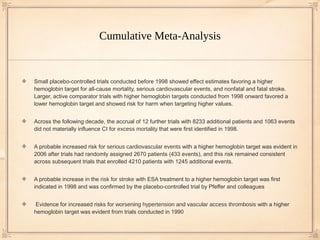
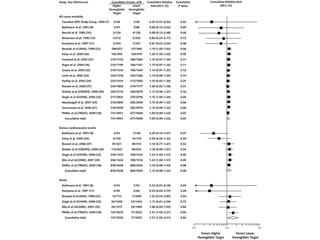
Small placebo-controlled trials conducted before 1998 showed effect estimates favoring a higher
hemoglobin target for all-cause mortality, serious cardiovascular events, and nonfatal and fatal stroke.
Larger, active comparator trials with higher hemoglobin targets conducted from 1998 onward favored a
lower hemoglobin target and showed risk for harm when targeting higher values.


Across the following decade, the accrual of 12 further trials with 8233 additional patients and 1063 events
did not materially influence CI for excess mortality that were first identified in 1998.


A probable increased risk for serious cardiovascular events with a higher hemoglobin target was evident in
2006 after trials had randomly assigned 2670 patients (433 events), and this risk remained consistent
across subsequent trials that enrolled 4210 patients with 1245 additional events.


A probable increase in the risk for stroke with ESA treatment to a higher hemoglobin target was first
indicated in 1998 and was confirmed by the placebo-controlled trial by Pfeffer and colleagues


 Evidence for increased risks for worsening hypertension and vascular access thrombosis with a higher
hemoglobin target was evident from trials conducted in 1990
Results
Treatment with either erythropoietin or darbepoetin to higher target hemoglobin levels
in patients with CKD (any stage) increased the risk for stroke, worsening hypertension,
and vascular access thrombosis, compared with treatment to a lower hemoglobin
target

No statistically significant differences between higher and lower hemoglobin targets for
the risk for all-cause mortality, serious cardiovascular events, or end-stage kidney
disease

Point estimates for all outcomes favored a lower hemoglobin target and effectively
excluded the likelihood of any clinically relevant benefit for a higher hemoglobin target

Targeting a higher hemoglobin level was linked to a reduction in need for red blood cell
transfusions but greater prescription of intravenous iron therapy

Study identified no clinically important effects of ESA therapy on quality of life
Results


Cumulative meta-analysis demonstrated that evidence for harm associated
with ESA therapy to achieve higher hemoglobin targets has remained stable
since it became apparent in 1998.

findings are also consistent with those of a previous meta-analysis of 8 trials
evaluating target hemoglobin levels in CKD that showed an increase in the risk
for all-cause mortality with higher hemoglobin levels
Limitations


The evidence for ESA therapy to improve quality of life is based largely on
selective reporting of outcomes and is generally of low quality

The available trial data do not identify the mechanisms by which ESA therapy
may be harmful

Trials reported insufficient information to allow analysis of the independent
effects of ESA dose on outcomes
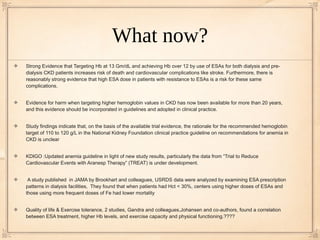
What now?
Strong Evidence that Targeting Hb at 13 Gm/dL and achieving Hb over 12 by use of ESAs for both dialysis and pre-
dialysis CKD patients increases risk of death and cardiovascular complications like stroke. Furthermore, there is
reasonably strong evidence that high ESA dose in patients with resistance to ESAs is a risk for these same
complications.


Evidence for harm when targeting higher hemoglobin values in CKD has now been available for more than 20 years,
and this evidence should be incorporated in guidelines and adopted in clinical practice.


Study findings indicate that, on the basis of the available trial evidence, the rationale for the recommended hemoglobin
target of 110 to 120 g/L in the National Kidney Foundation clinical practice guideline on recommendations for anemia in
CKD is unclear


KDIGO :Updated anemia guideline in light of new study results, particularly the data from “Trial to Reduce
Cardiovascular Events with Aranesp Therapy” (TREAT) is under development.


 A study published in JAMA by Brookhart and colleagues, USRDS data were analyzed by examining ESA prescription
patterns in dialysis facilities, They found that when patients had Hct < 30%, centers using higher doses of ESAs and
those using more frequent doses of Fe had lower mortality


Quality of life & Exercise tolerance, 2 studies, Gandra and colleagues,Johansen and co-authors, found a correlation
between ESA treatment, higher Hb levels, and exercise capacity and physical functioning.????
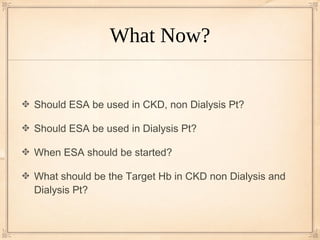
What Now?


Should ESA be used in CKD, non Dialysis Pt?

Should ESA be used in Dialysis Pt?

When ESA should be started?

What should be the Target Hb in CKD non Dialysis and
Dialysis Pt?

Journal club 72010

  • 1.
    Journal Club Ahad Lodhi, M.D. 07/31/2010
  • 2.
    Meta-analysis: Erythropoiesis-Stimulating Agentsin Patients With Chronic Kidney Disease Annals of Internal Med : July 6, 2010 vol. 153 no. 1 23-33 Suetonia C. Palmer, MBChB; Sankar D. Navaneethan, MD, MPH; Jonathan C. Craig, MBChB, DCH, MM, PhD; David W. Johnson, MBChB(Hons), PhD; Marcello Tonelli, MD, SM; Amit X. Garg, MD, PhD; Fabio Pellegrini, MSc; Pietro Ravani, MD, MSc, PhD; Meg Jardine, MBBS, PhD; Vlado Perkovic, MBBS, PhD; Giusi Graziano, PhD;Richard McGee, BMedSci, MBBCh, MM; Antonio Nicolucci, MD; Gianni Tognoni, MD; and Giovanni F.M. Strippoli, MD, PhD, MPH, MM
  • 3.
    Context :To summarize the effects of ESA treatment on clinical outcomes in patients with anemia and CKD • Recent studies suggest that treating anemia of chronic kidney disease can sometimes cause harm. • This review compiles 27 randomized trials of erythropoiesis-stimulating agents (ESAs) in patients with anemia and chronic kidney disease. Treatment with ESAs that resulted in higher hemoglobin levels increased risks for stroke, worsening hypertension, and vascular access thrombosis more than strategies that resulted in lower hemoglobin levels (placebo, no treatment, or lower ESA dose). • Effects on all-cause mortality, cardiovascular events, and quality of life were unclear.
  • 4.
    Background Anemia frequently complicateschronic kidney disease (CKD), in part because of deficient renal erythropoietin release Phase 1 and 2 clinical trials first evaluated recombinant human erythropoietin replacement therapy in 1986 and 1987 in patients receiving hemodialysis. These trials demonstrated dose-dependent increases in hemoglobin levels and avoidance of red blood cell transfusions, but they also reported incidence of hypertension and vascular thrombosis An earlier meta-analysis of 9 randomized trials involving 5143 patients with CKD concluded that targeting a higher hemoglobin concentration (typically 12 to 15 g/dL) versus a lower concentration (95 to 115 g/L) was associated with an increased risk for all-cause mortality, arteriovenous access thrombosis, and hypertension TREAT : The use of darbepoetin alfa in patients with diabetes, chronic kidney disease, and moderate anemia who were not undergoing dialysis did not reduce the risk of either of the two primary composite outcomes (either death or a cardiovascular event or death or a renal event) and was associated with an increased risk of stroke
  • 5.
  • 6.
    Study Selection Randomized, controlledtrials of at least 3 months' duration that allocated patients to ESA versus placebo, no treatment, or different ESA doses to achieve a higher hemoglobin target versus a lower hemoglobin target. Trials of erythropoietin-alfa or -beta, darbepoetin, or a continuous erythropoietin receptor activator at any dose and route of administration were eligible It was assumed that placebo-controlled trials were comparing 2 treatment targets for hemoglobin, although explicit targets were not always described. Trials of populations with any stage of CKD were included.
  • 7.
    Data Synthesis &Statistical Analysis Two authors independently extracted data on characteristics of the participants, interventions, and clinical outcomes. Both reviewers also assessed the risks for bias in trials according to standard criteria (allocation concealment, blinding of patients, investigators and outcome assessors, completeness to follow-up, and use of intention-to-treat analysis) Any discrepancies in data extraction by discussion with an arbitrator.
  • 8.
    Outline of participantpopulation Most studies enrolled participants between 50 and 60 years of age on average. In the 3 largest trials of more than 1000 patients each, patients were generally older than 60 years. Two small studies were conducted in children We identified 3 trials (1413 patients) that included only patients with established cardiovascular disease 2 trials (4210 patients) that included only patients with diabetes mellitus and CKD Average Male % was 52 Estimated GFR was not calculated in studies with patients on Dialysis 14 out of 27 Studies also included patients not on Dialysis Doses of ESA used in the trials were not available in one third of the study reports Baseline Hb and Target Hb levels were variable across 27 trials.
  • 9.
    Trial Methodology quality Suboptimal, according to current standards Many trials were not reported according to the CONSORT (Consolidated Standards of Reporting Trials) statement None of the 27 trials reported the details of allocation concealment (the method by which the person responsible for treatment allocation is made unaware of a participant's treatment assignment) Twelve of 16 trials published before 2004 did not conduct analysis by the intention-to-treat principle, whereas all but 1 of 11 trials from 2004 onward analyzed data according to randomized treatment allocation Larger trials that explored major patient-level outcomes (all-cause mortality or major adverse cardiovascular events) were generally of better methodological quality
  • 11.
    Meta-Analysis Risks for fataland nonfatal stroke, vascular access thrombosis, and worsening hypertension were increased with a higher hemoglobin target than with a lower hemoglobin target Patients randomly assigned to a higher hemoglobin target were less likely to require a blood transfusion (8 trials; 6482 patients) (RR, 0.61 [95% CI, 0.49 to 0.77]) but were more likely to receive intravenous iron therapy (6 trials; 2283 patients) (RR, 1.57 [CI, 1.13 to 2.20]) No statistically significant difference in the risk for all-cause mortality, serious cardiovascular events, or fatal and nonfatal myocardial infarction between a higher hemoglobin target and a lower target In the 10 studies conducted in people with CKD who were not dialysis-dependent, the risk for end-stage kidney disease requiring renal replacement therapy did not statistically significantly differ when hemoglobin target groups were compared No statistically significant differences between treatment groups in left ventricular mass at the end of treatment (4 trials; 1544 patients; mean difference, 0.14 g/m2 [CI, −4.60 to 4.88 g/m2])
  • 14.
    Cumulative Meta-Analysis Small placebo-controlledtrials conducted before 1998 showed effect estimates favoring a higher hemoglobin target for all-cause mortality, serious cardiovascular events, and nonfatal and fatal stroke. Larger, active comparator trials with higher hemoglobin targets conducted from 1998 onward favored a lower hemoglobin target and showed risk for harm when targeting higher values. Across the following decade, the accrual of 12 further trials with 8233 additional patients and 1063 events did not materially influence CI for excess mortality that were first identified in 1998. A probable increased risk for serious cardiovascular events with a higher hemoglobin target was evident in 2006 after trials had randomly assigned 2670 patients (433 events), and this risk remained consistent across subsequent trials that enrolled 4210 patients with 1245 additional events. A probable increase in the risk for stroke with ESA treatment to a higher hemoglobin target was first indicated in 1998 and was confirmed by the placebo-controlled trial by Pfeffer and colleagues Evidence for increased risks for worsening hypertension and vascular access thrombosis with a higher hemoglobin target was evident from trials conducted in 1990
  • 17.
    Results Treatment with eithererythropoietin or darbepoetin to higher target hemoglobin levels in patients with CKD (any stage) increased the risk for stroke, worsening hypertension, and vascular access thrombosis, compared with treatment to a lower hemoglobin target No statistically significant differences between higher and lower hemoglobin targets for the risk for all-cause mortality, serious cardiovascular events, or end-stage kidney disease Point estimates for all outcomes favored a lower hemoglobin target and effectively excluded the likelihood of any clinically relevant benefit for a higher hemoglobin target Targeting a higher hemoglobin level was linked to a reduction in need for red blood cell transfusions but greater prescription of intravenous iron therapy Study identified no clinically important effects of ESA therapy on quality of life
  • 18.
    Results Cumulative meta-analysis demonstratedthat evidence for harm associated with ESA therapy to achieve higher hemoglobin targets has remained stable since it became apparent in 1998. findings are also consistent with those of a previous meta-analysis of 8 trials evaluating target hemoglobin levels in CKD that showed an increase in the risk for all-cause mortality with higher hemoglobin levels
  • 19.
    Limitations The evidence forESA therapy to improve quality of life is based largely on selective reporting of outcomes and is generally of low quality The available trial data do not identify the mechanisms by which ESA therapy may be harmful Trials reported insufficient information to allow analysis of the independent effects of ESA dose on outcomes
  • 20.
    What now? Strong Evidencethat Targeting Hb at 13 Gm/dL and achieving Hb over 12 by use of ESAs for both dialysis and pre- dialysis CKD patients increases risk of death and cardiovascular complications like stroke. Furthermore, there is reasonably strong evidence that high ESA dose in patients with resistance to ESAs is a risk for these same complications. Evidence for harm when targeting higher hemoglobin values in CKD has now been available for more than 20 years, and this evidence should be incorporated in guidelines and adopted in clinical practice. Study findings indicate that, on the basis of the available trial evidence, the rationale for the recommended hemoglobin target of 110 to 120 g/L in the National Kidney Foundation clinical practice guideline on recommendations for anemia in CKD is unclear KDIGO :Updated anemia guideline in light of new study results, particularly the data from “Trial to Reduce Cardiovascular Events with Aranesp Therapy” (TREAT) is under development. A study published in JAMA by Brookhart and colleagues, USRDS data were analyzed by examining ESA prescription patterns in dialysis facilities, They found that when patients had Hct < 30%, centers using higher doses of ESAs and those using more frequent doses of Fe had lower mortality Quality of life & Exercise tolerance, 2 studies, Gandra and colleagues,Johansen and co-authors, found a correlation between ESA treatment, higher Hb levels, and exercise capacity and physical functioning.????
  • 21.
    What Now? Should ESAbe used in CKD, non Dialysis Pt? Should ESA be used in Dialysis Pt? When ESA should be started? What should be the Target Hb in CKD non Dialysis and Dialysis Pt?