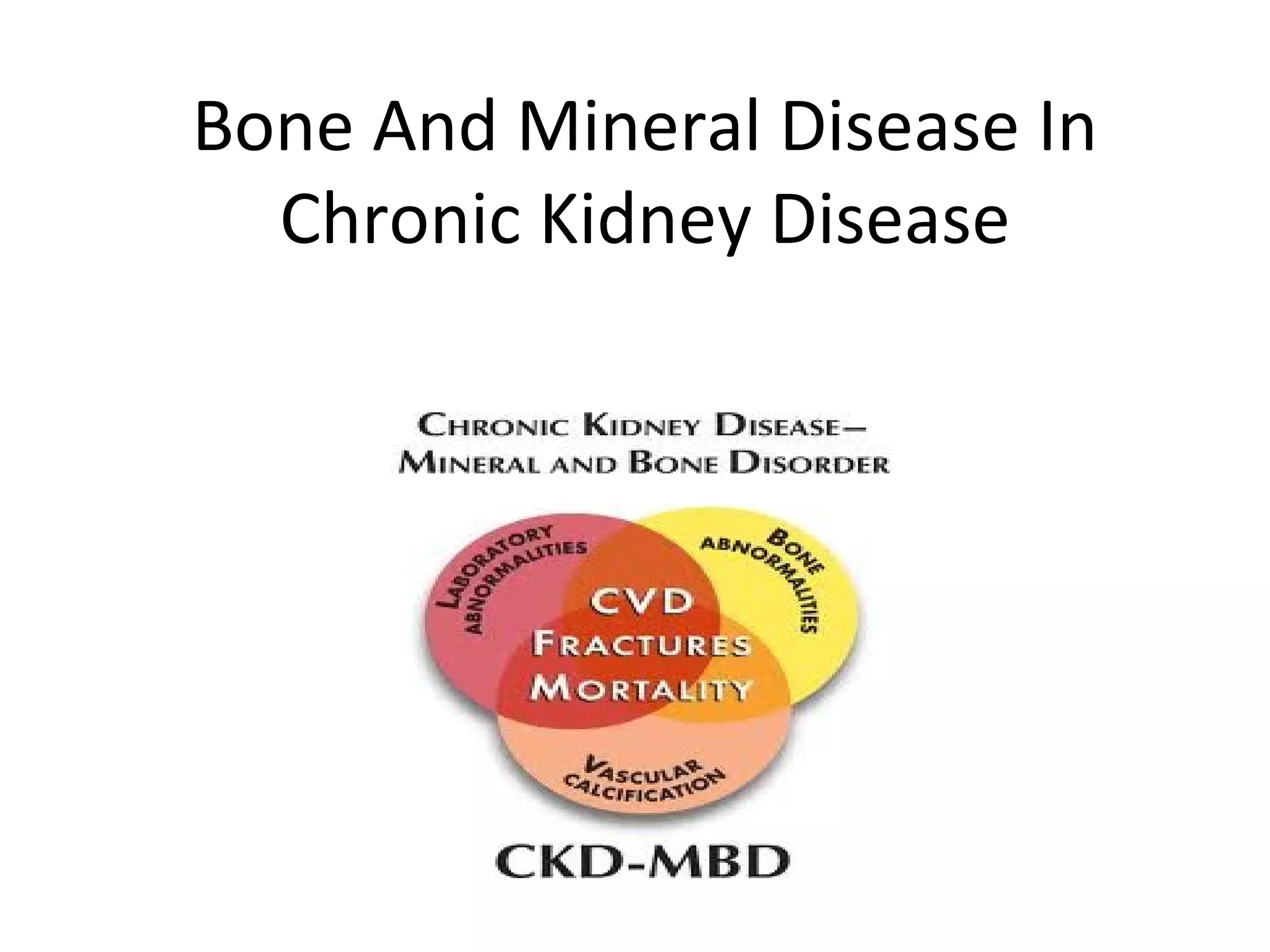

Bone And Mineral Disease In
  Chronic Kidney Disease
Case presentation
• 26 year old male with PMH of ESRD on HD
  presents with pain in left thigh with
  movement x 2 weeks, worse since 2 days.

•
• No history of trauma, no fever/ chills, no
  swelling/ redness.
•   All: NKDA
•   PMH:
•   ESRD on HD
•   S/p failed renal transplant 1995 and 2005
•   S/p peritonitis in past after peritoneal dialysis
•   “Rickets” as a child
•   Tertiary hyperparathyroidism
•   Kidney disease secondary to “blocked kidneys”

• PSH:
• Orthopedic surgery to knee
• Left arm graft
• Medications:
• Renvela, Sensipar, Clonidine

• Social Hx: denies smoking, drugs, alcohol.

• Pertinent labs:
• Ca: 7.5, Phos 5.6, PTH (i): 1360
• Course of illness:
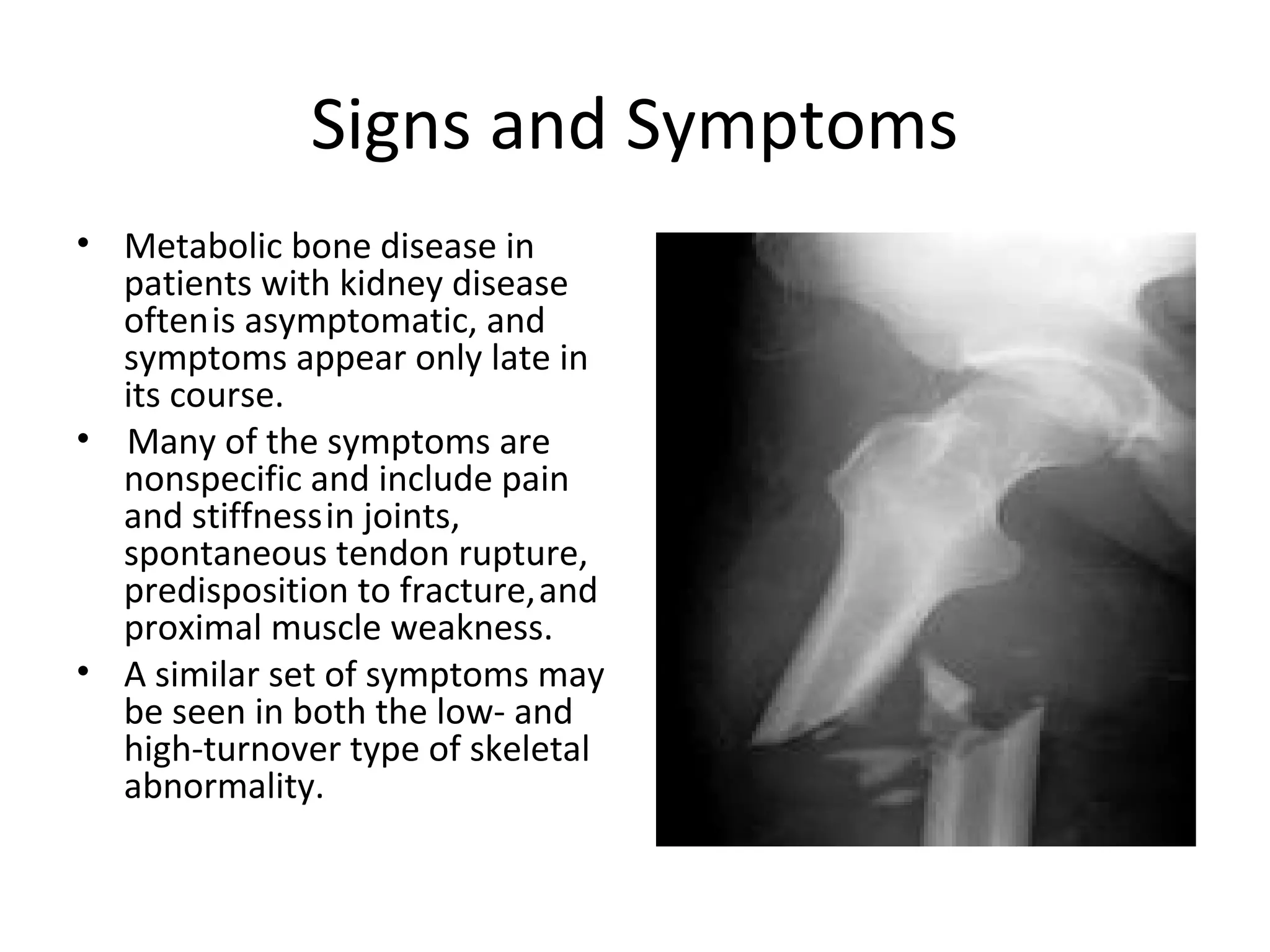
• He was found to have a fracture of his left
  femur, likely spontaneous.
• Contributing factor: tertiary
  parahyperparathyroidism.
• Pt was referred to surgery for
  parathyroidectomy, which he has refused in
  the past.
• Metabolic bone disease is a common
  complication of chronic kidney disease (CKD).

• It is part of a broad spectrum of disorders of
  mineral metabolism that result in both skeletal
  and extraskeletal consequences, including in
  the vasculature.

• Recent emphasis is on the need to begin
  therapy early in the course of CKD.
• .
• Broad spectrum of diseases which may
  include:
• 1) abnormalities of calcium, phosphorus,
  parathyroid hormone (PTH), and vitamin D
  metabolism.
• (2) abnormalities of bone turnover,
  mineralization, volume, linear growth, and
  strength.
• (3) vascular or soft tissue calcification.
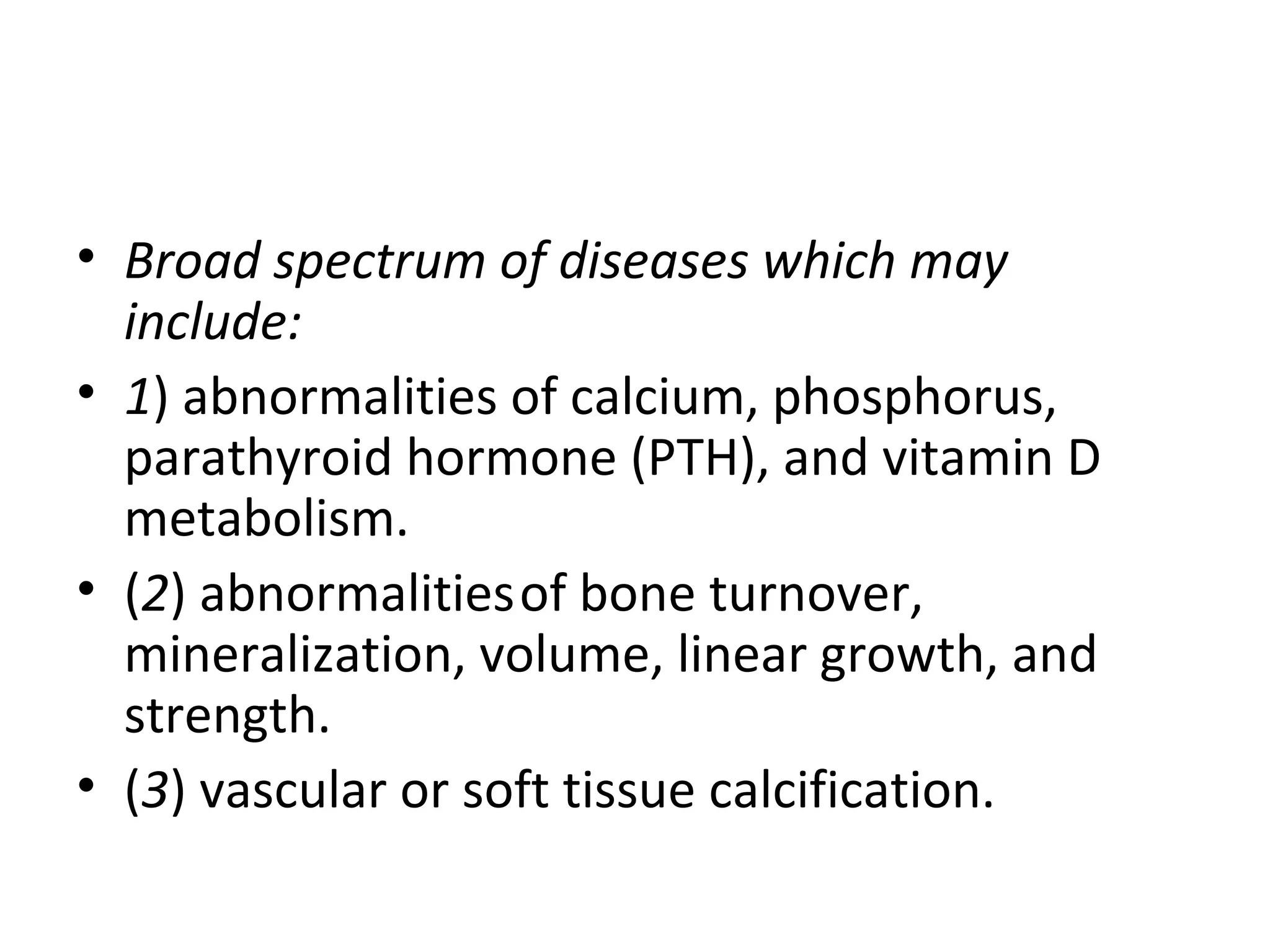
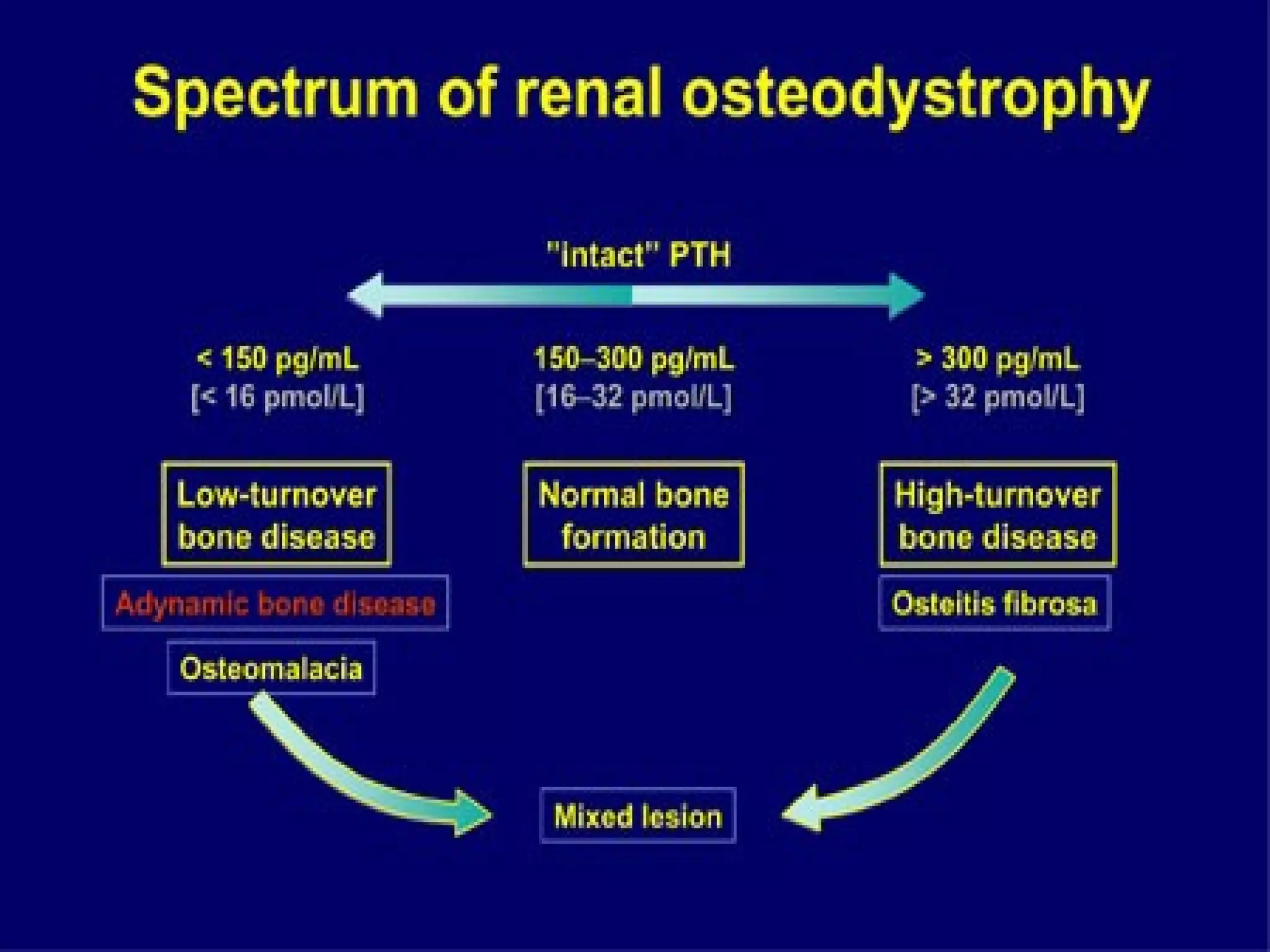
The abnormalities in bone in the setting of CKD
   include:

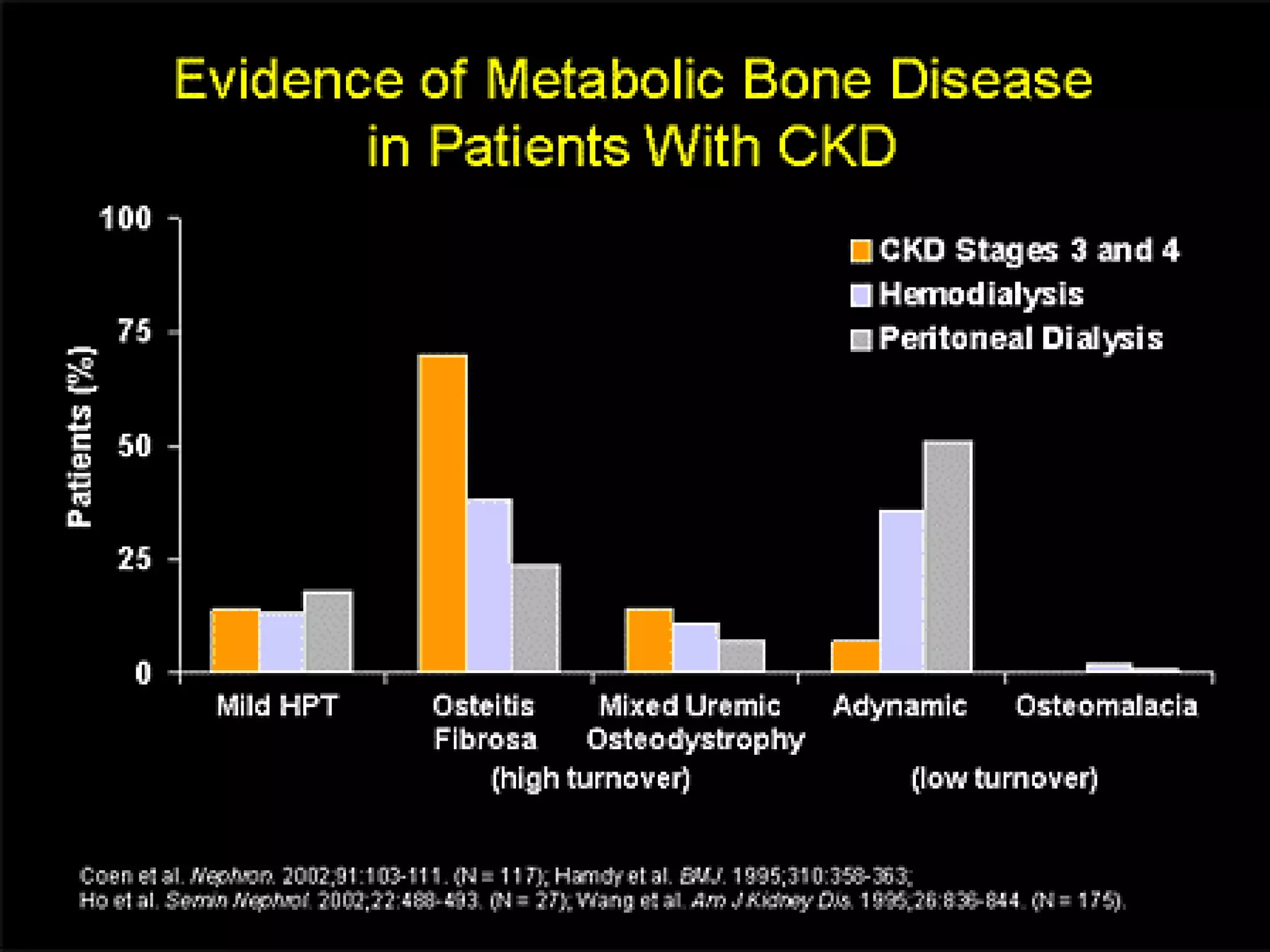
The effects of high levels of PTH on bone, which
  results in the high-turnover bone disease
  osteitis fibrosa.

Adynamic bone, which is characterized by an
  extremely low bone turnover, may occur.

Some cases may demonstrate mineralization
  defects and show frank osteomalacia.

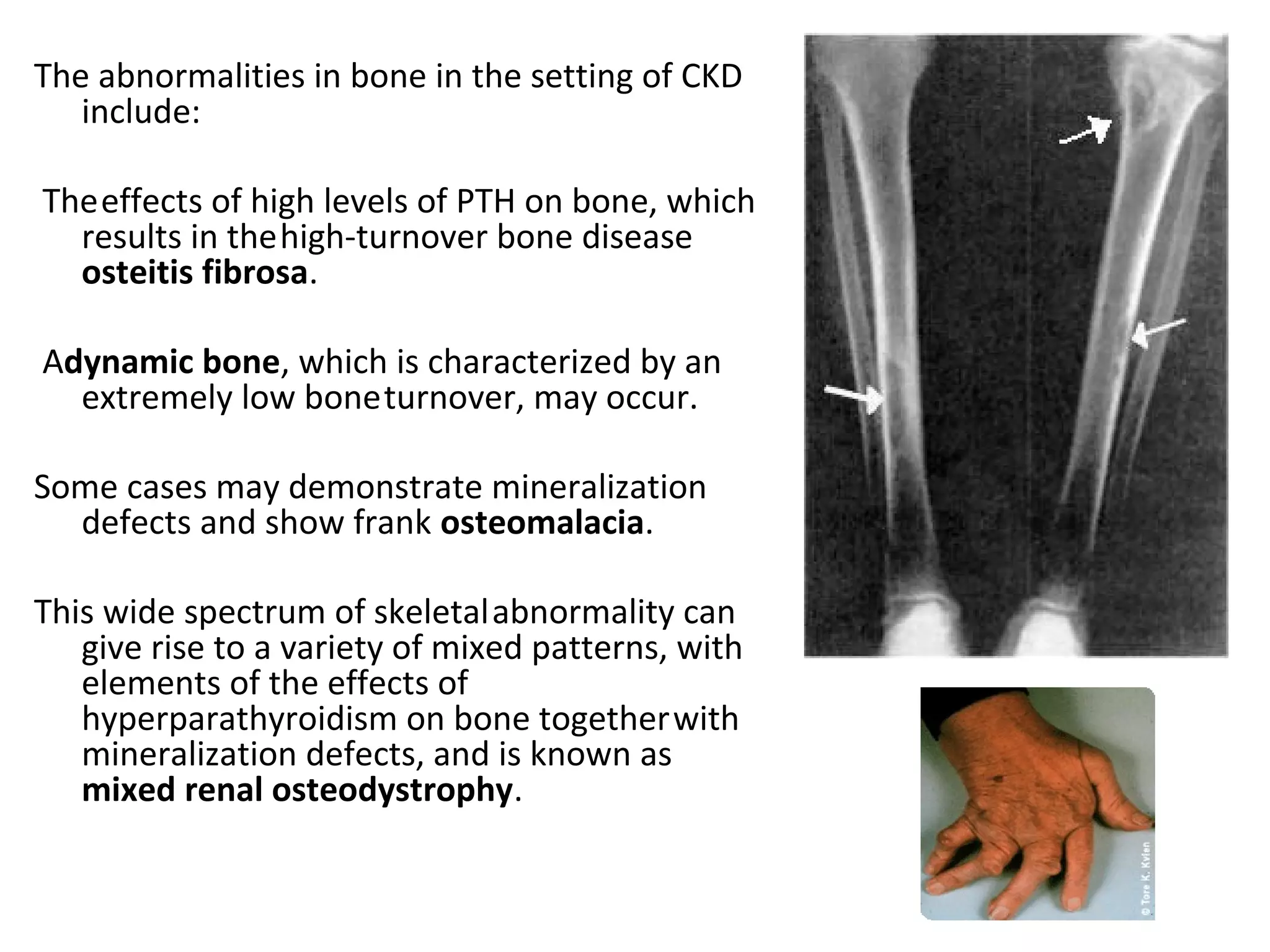
This wide spectrum of skeletal abnormality can
   give rise to a variety of mixed patterns, with
   elements of the effects of
   hyperparathyroidism on bone together with
   mineralization defects, and is known as
   mixed renal osteodystrophy.
Pathogenesis of Metabolic Bone
             Disease in CKD
• High-turnover metabolic bone disease in CKD.
•
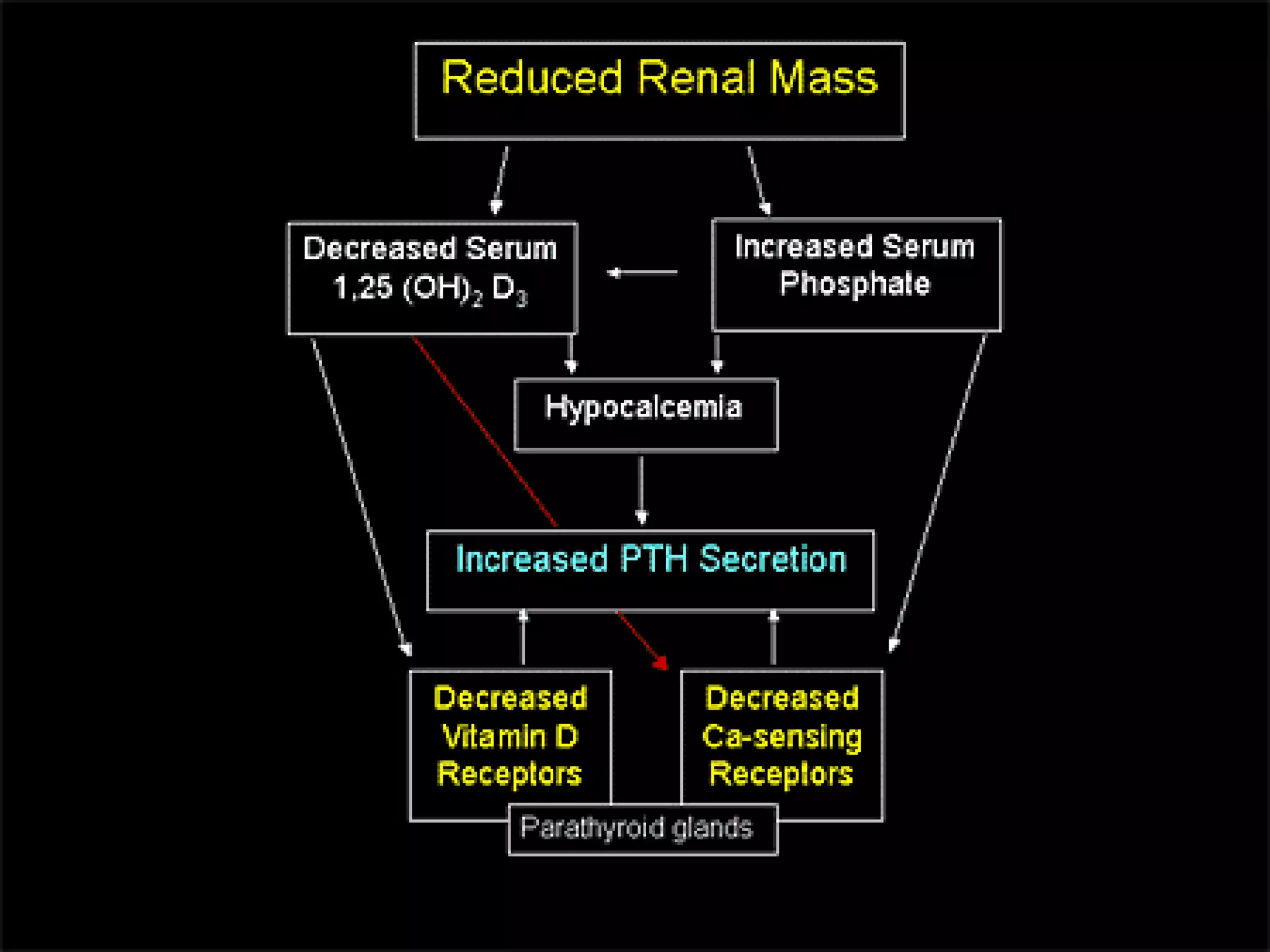
  High-turnover bone disease is the result of the development of
  secondary hyperparathyroidism.
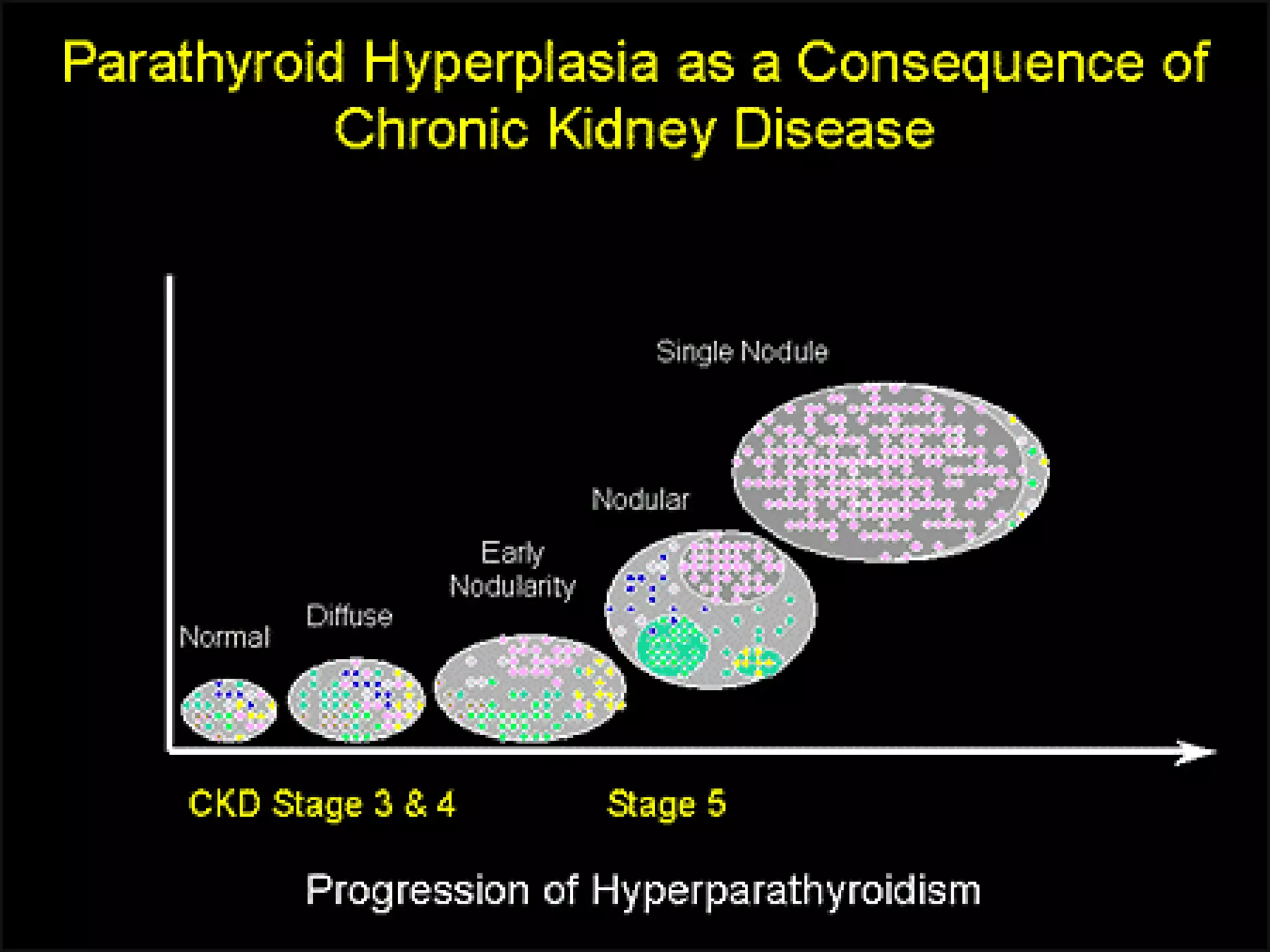
• Hyperplasia of the parathyroid glands and high levels of PTH in
  blood occur early in the course of CKD.
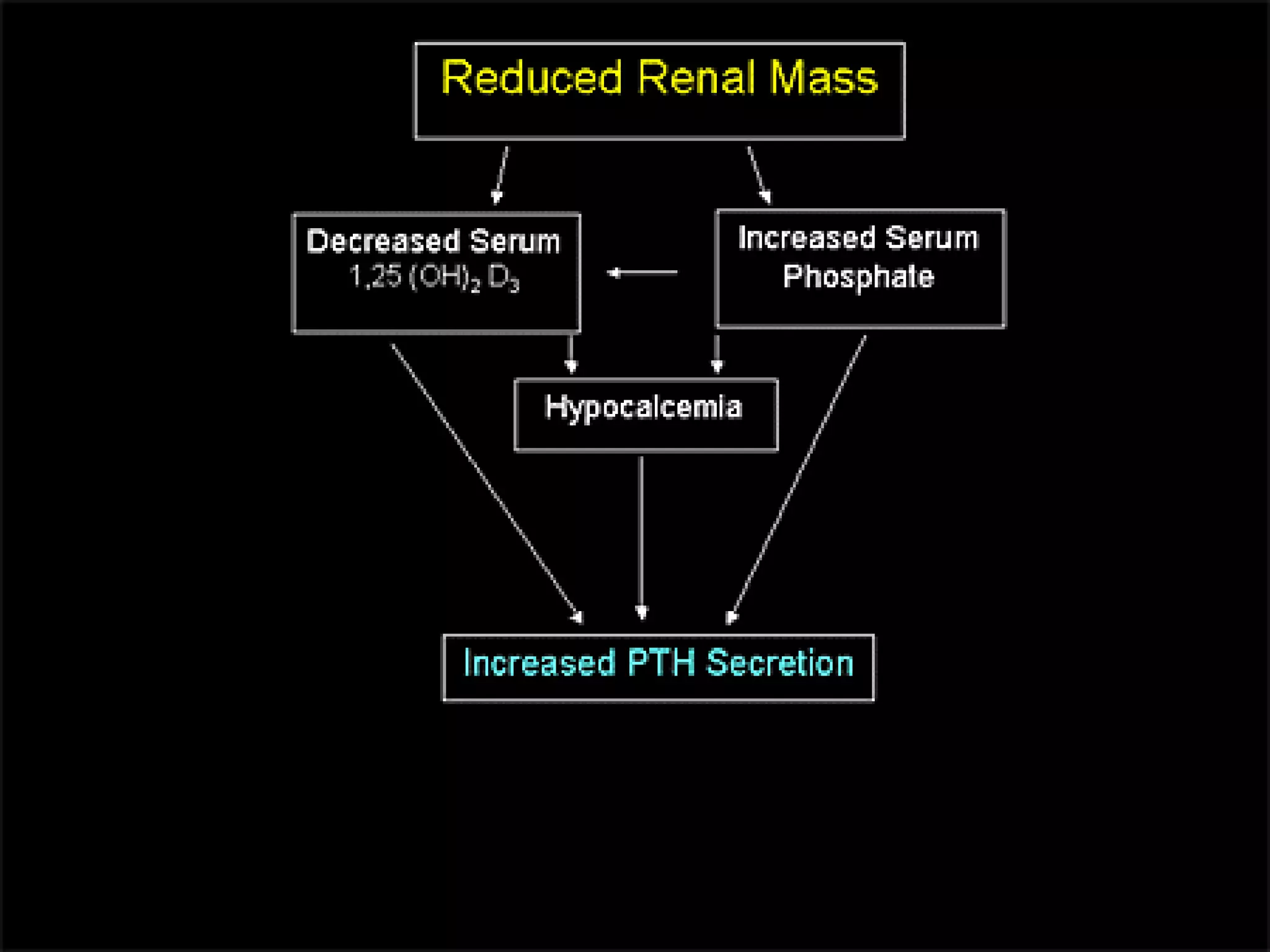
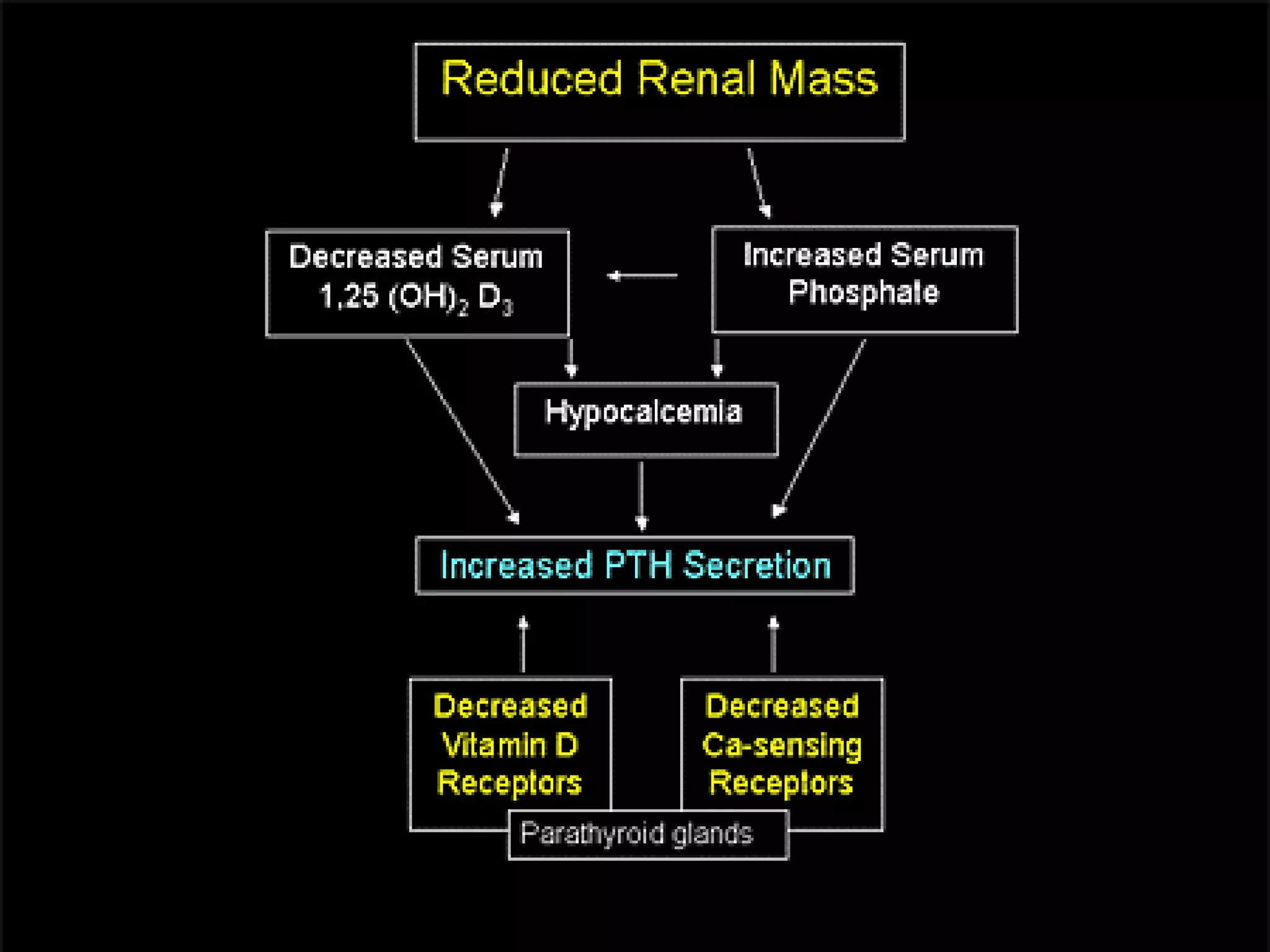
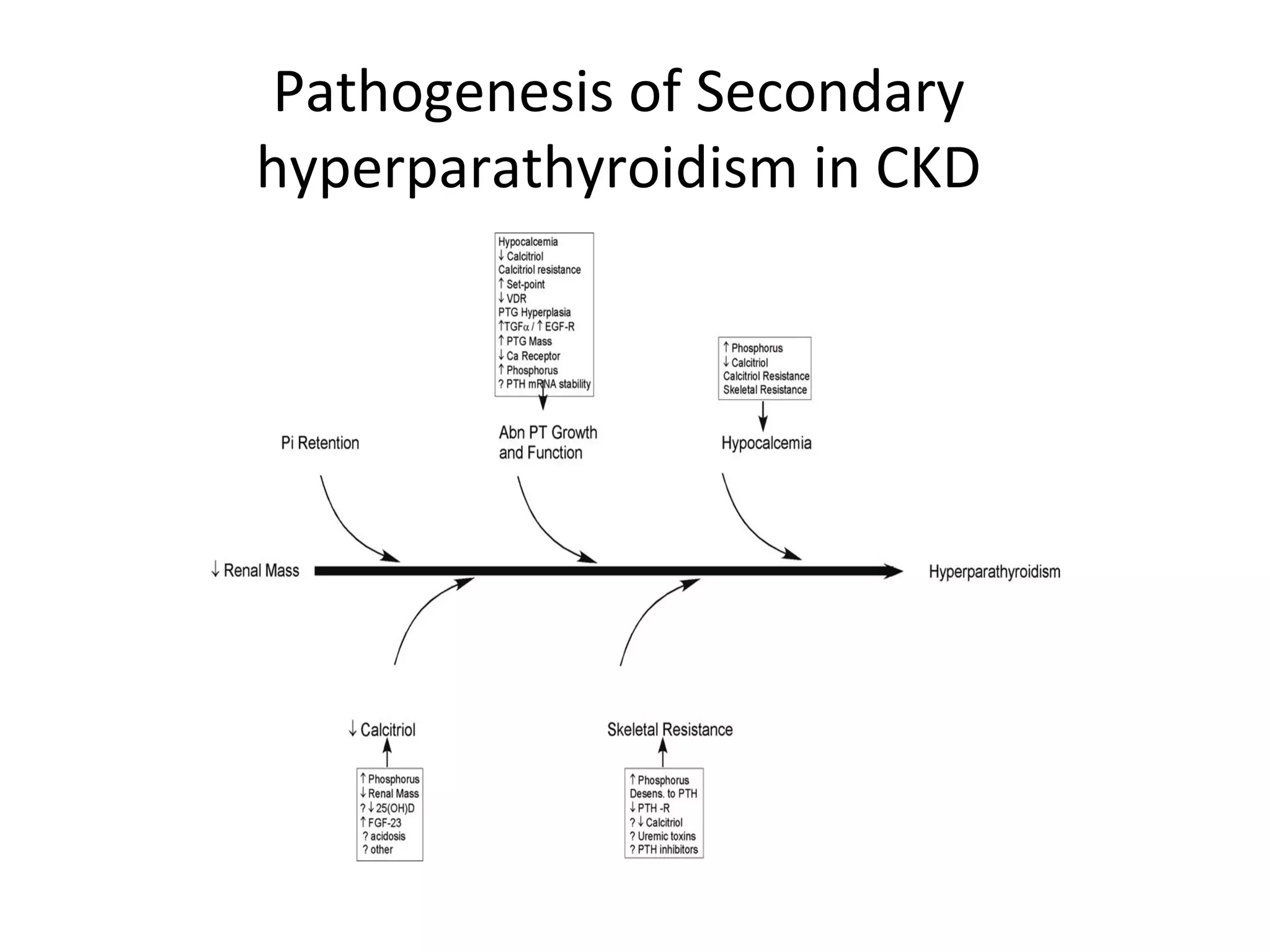
• Numerous factors that lead to the overactivity of parathyroid
  glands:
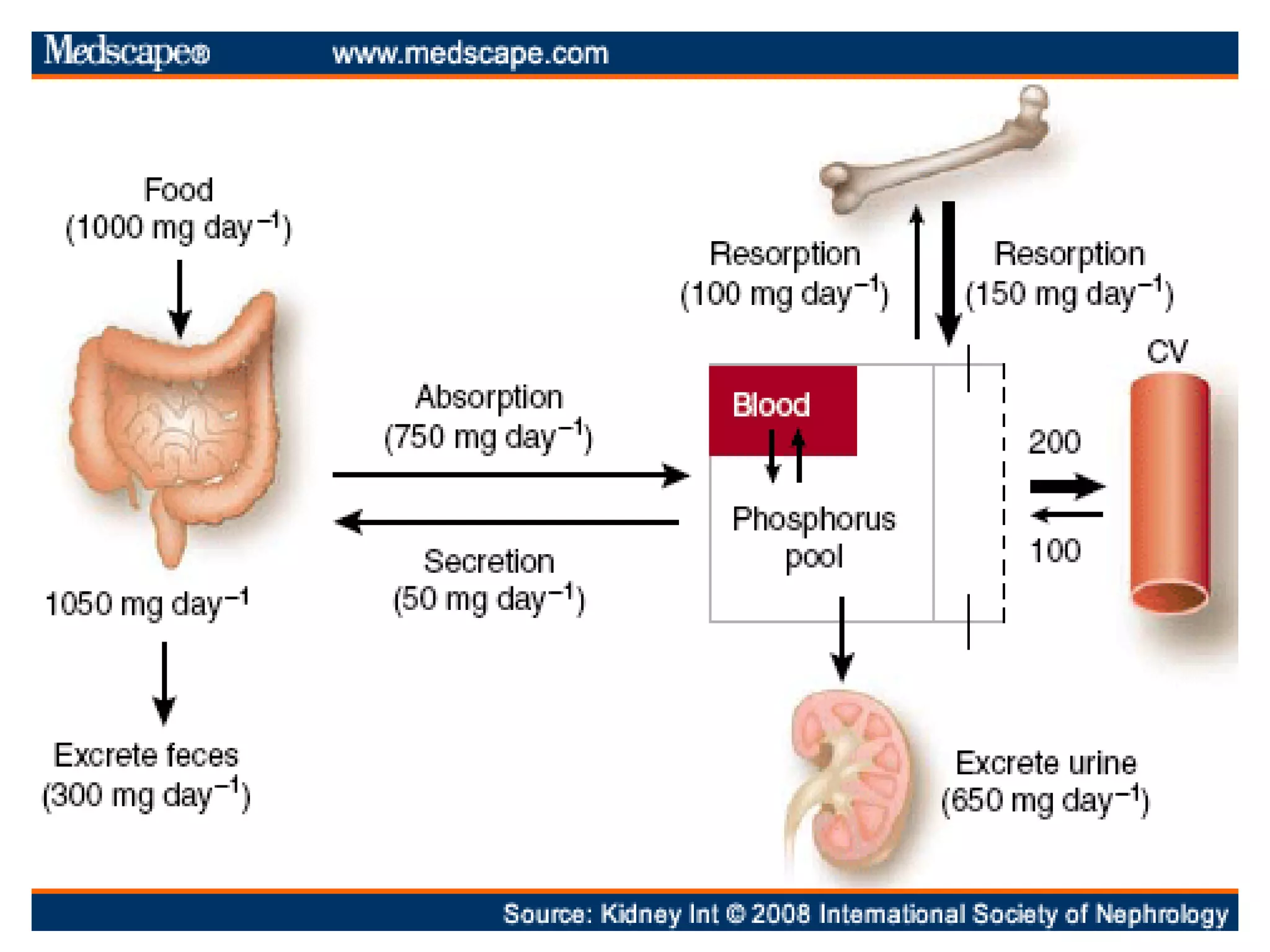
• Retention of phosphorus,
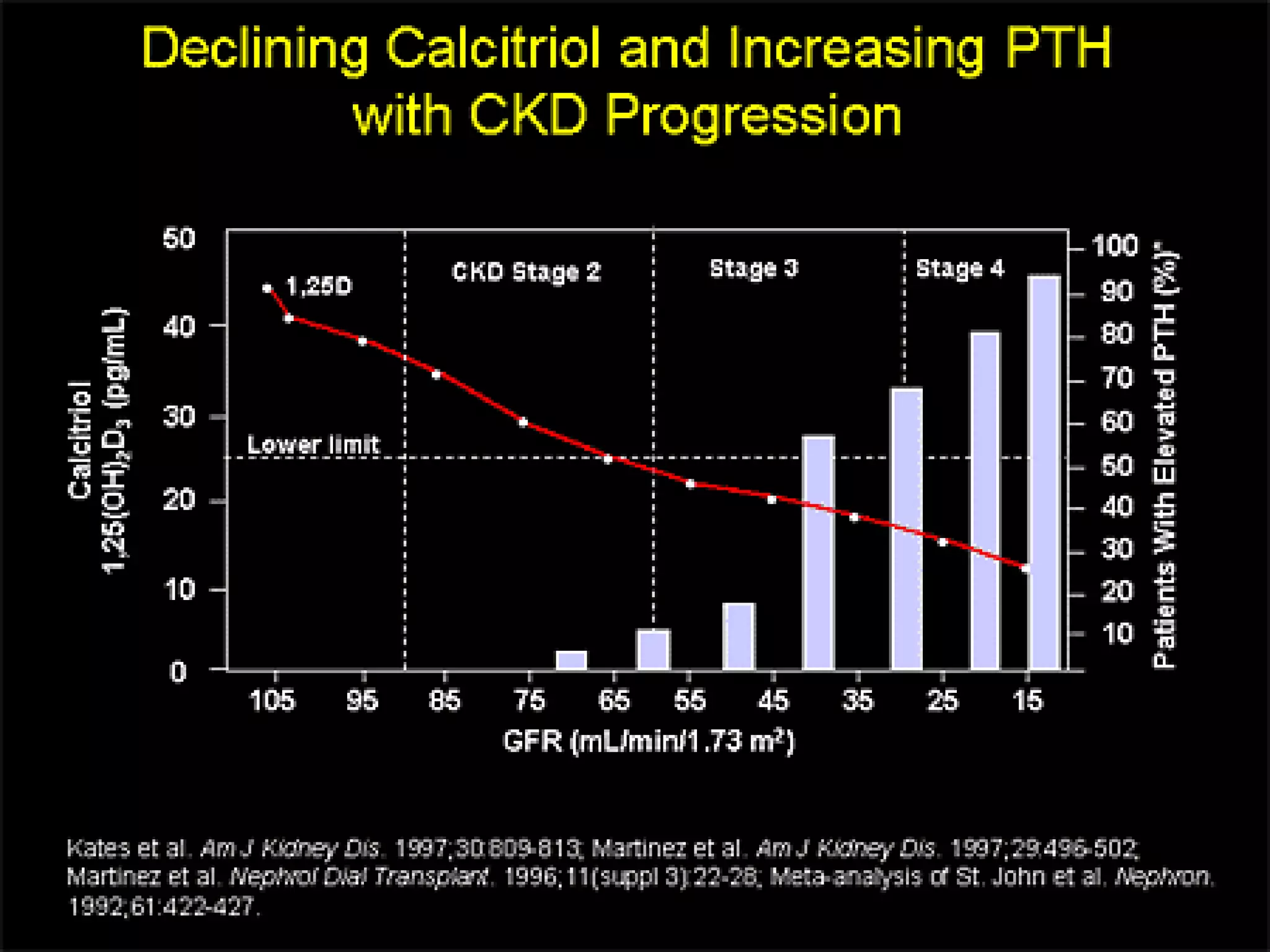
• Decreases in the levels of calcitriol,
• Intrinsic alterations within the parathyroid gland that give rise to
  increased PTH secretion as well as increased parathyroid growth.
• Skeletal resistance to the actions of PTH.
• Hypocalcemia.
Pathogenesis of Secondary
hyperparathyroidism in CKD
Role Of High Phosphate
• Phosphorus also seems to have major effects on parathyroid
  growth.
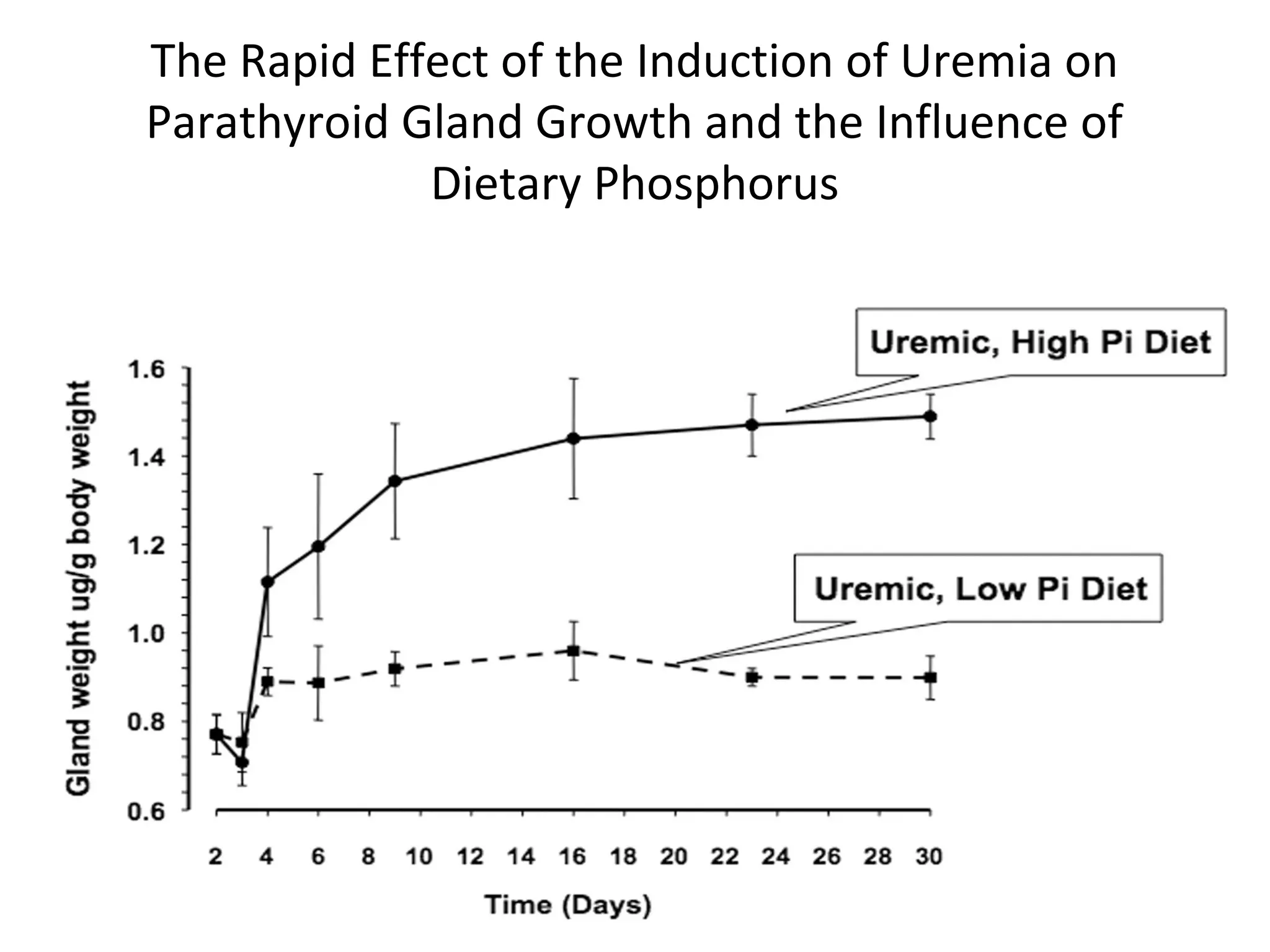
• In animals that are on a high-phosphorus diet, there is an
  acceleration of parathyroid growth, whereas a low-
  phosphorus diet prevents parathyroid hyperplasia.
• Studies in experimental animals have shown that this effect
  of dietary phosphorus on parathyroid growth occurs
  extremely rapidly, within days after the induction of kidney
  failure.
• This observation may have important implications for
  therapy.
The Rapid Effect of the Induction of Uremia on
Parathyroid Gland Growth and the Influence of
             Dietary Phosphorus
Role Of Decreased Synthesis Of
                Calcitriol
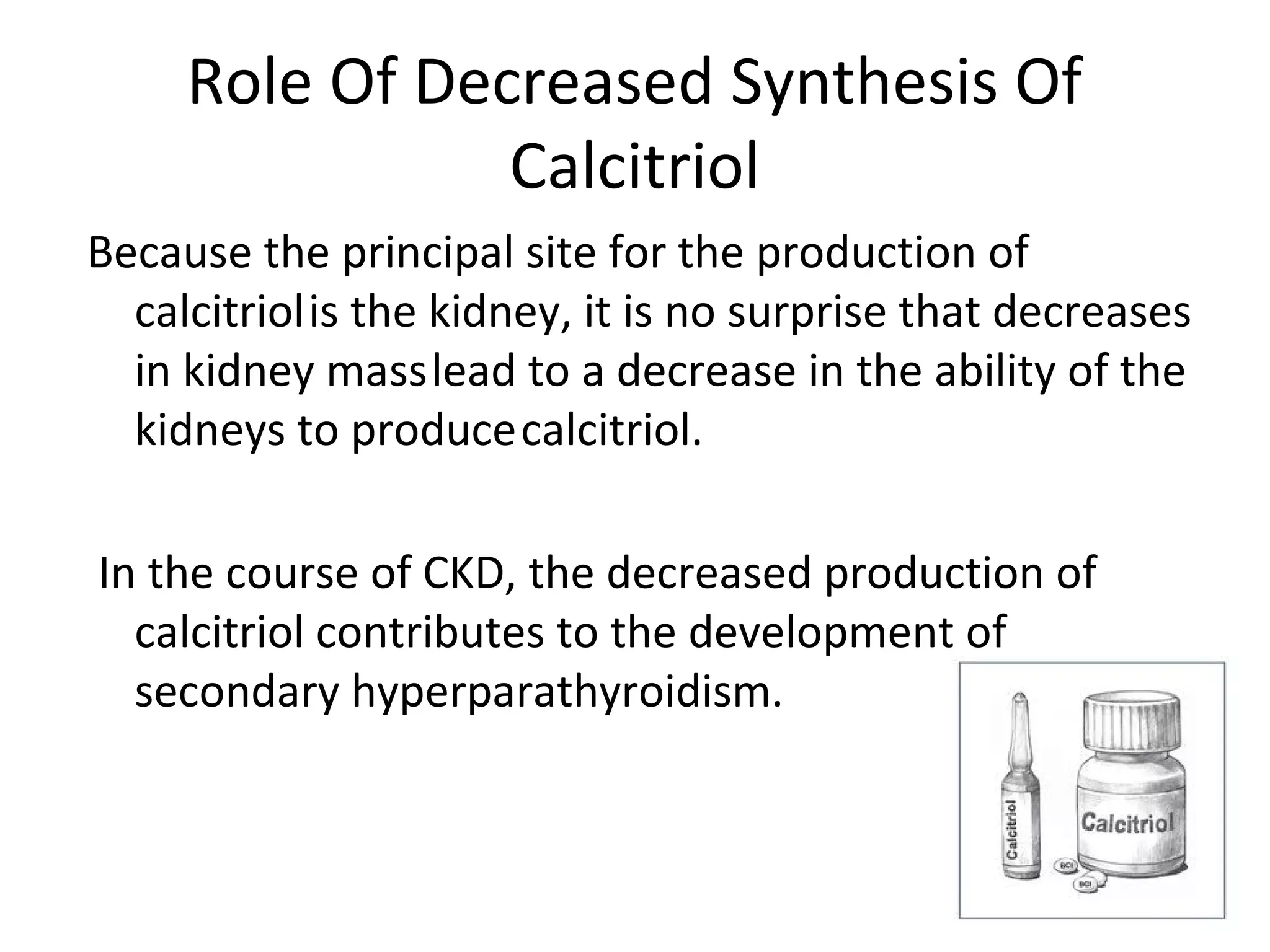
Because the principal site for the production of
  calcitriol is the kidney, it is no surprise that decreases
  in kidney mass lead to a decrease in the ability of the
  kidneys to produce calcitriol.

In the course of CKD, the decreased production of
  calcitriol contributes to the development of
  secondary hyperparathyroidism.
Role of Intrinsic Alterations in the
            Parathyroid Gland.
• Hypocalcemia is a powerful stimulus for PTH secretion and for
  parathyroid growth.
• The effects of calcium seem to be mediated by the calcium-
  sensing receptor
• Several studies have demonstrated that there is decreased
  expression of the calcium-sensing receptor in the hyperplastic
  glands that are seen in kidney failure.
• Decreased levels of calcitriol also may contribute to
  parathyroid abnormalities.
• Calcitriol is major regulator of PTH secretion, and the vitamin
  D receptor is expressed in the parathyroid glands.
• Calcitriol decreases PTH secretion in vivo and in vitro as a
  result of an effect at the level of transcription of the PTH
  gene .
Skeletal Resistance to the Actions of
                  PTH.
• A reduced calcemic response to the administration of PTH has
  been known for many years.
• It also has been recognized that there is delayed recovery
  from induced hypocalcemia in patients with kidney disease.
• This phenomenon, known as skeletal resistance to the
  calcemic actions of PTH, may contribute to the development
  of hyperparathyroidism.
• Many factors likely are involved in this skeletal resistance,
  including phosphorus retention, possibly decreased levels of
  calcitriol , and downregulation of the PTH receptor .
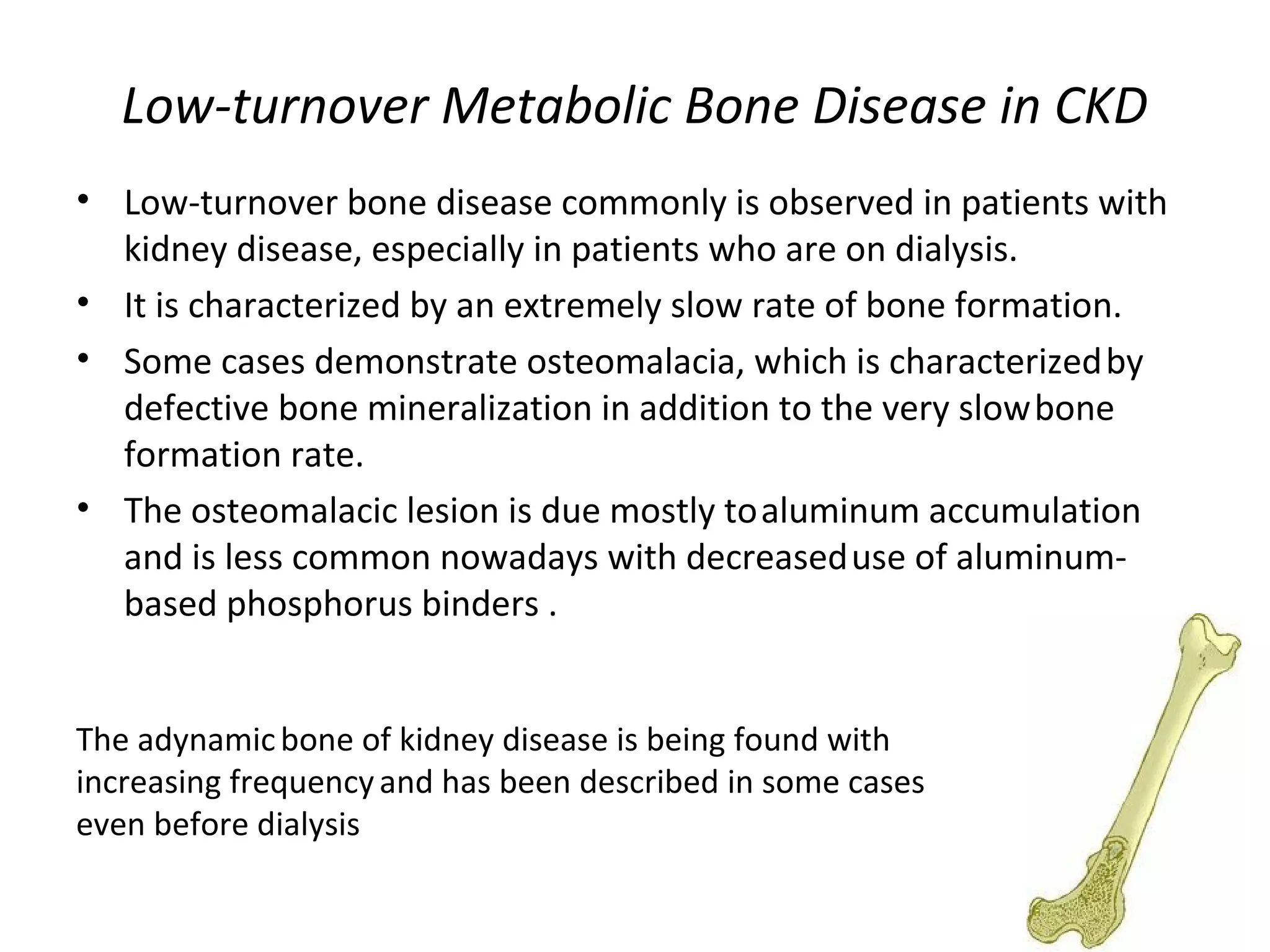
Low-turnover Metabolic Bone Disease in CKD
• Low-turnover bone disease commonly is observed in patients with
  kidney disease, especially in patients who are on dialysis.
• It is characterized by an extremely slow rate of bone formation.
• Some cases demonstrate osteomalacia, which is characterized by
  defective bone mineralization in addition to the very slow bone
  formation rate.
• The osteomalacic lesion is due mostly to aluminum accumulation
  and is less common nowadays with decreased use of aluminum-
  based phosphorus binders .


The adynamic bone of kidney disease is being found with
increasing frequency and has been described in some cases
even before dialysis
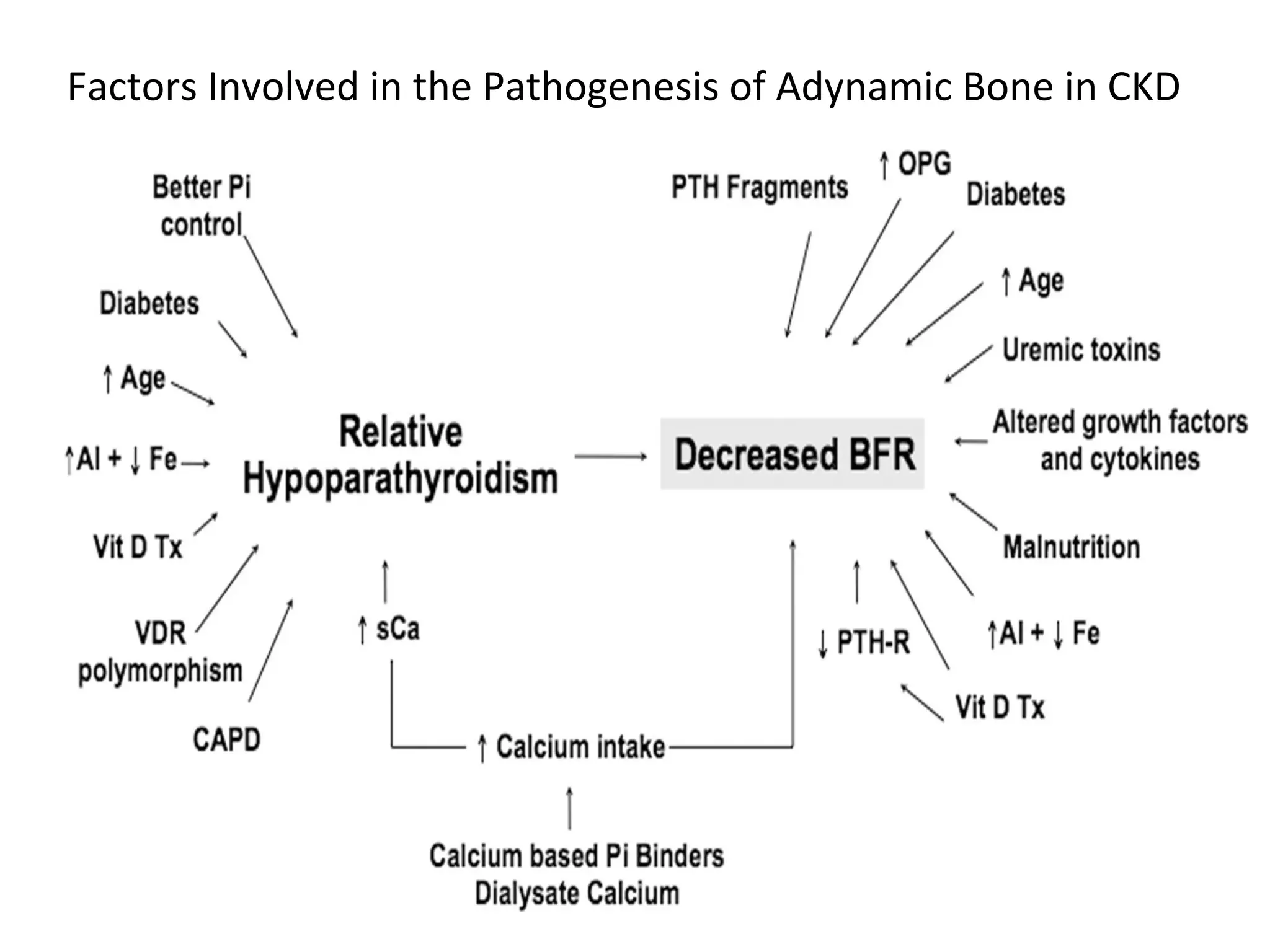
Factors Involved in the Pathogenesis of Adynamic Bone in CKD
Signs and Symptoms
• Metabolic bone disease in
  patients with kidney disease
  often is asymptomatic, and
  symptoms appear only late in
  its course.
• Many of the symptoms are
  nonspecific and include pain
  and stiffness in joints,
  spontaneous tendon rupture,
  predisposition to fracture, and
  proximal muscle weakness.
• A similar set of symptoms may
  be seen in both the low- and
  high-turnover type of skeletal
  abnormality.
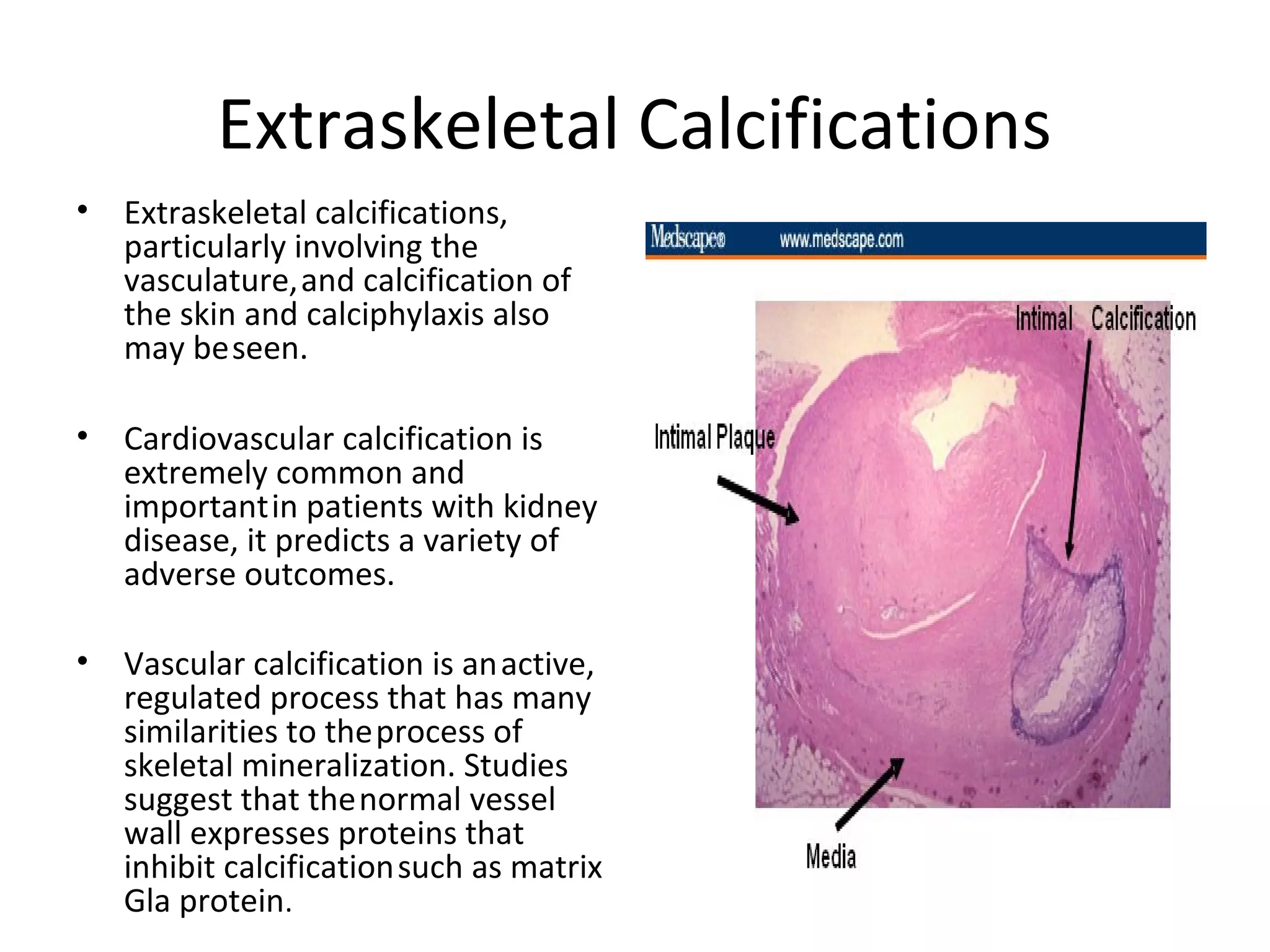
Extraskeletal Calcifications
•   Extraskeletal calcifications,
    particularly involving the
    vasculature, and calcification of
    the skin and calciphylaxis also
    may be seen.

•   Cardiovascular calcification is
    extremely common and
    important in patients with kidney
    disease, it predicts a variety of
    adverse outcomes.

•   Vascular calcification is an active,
    regulated process that has many
    similarities to the process of
    skeletal mineralization. Studies
    suggest that the normal vessel
    wall expresses proteins that
    inhibit calcification such as matrix
    Gla protein.
Extraskeletal Calcification

• In addition, circulating proteins such as fetuin-a are produced
  at remote sites and act to inhibit soft tissue calcification
  systemically.
• However, alterations of these proteins may lead to a seeming
  transformation of vascular smooth muscle cells into
  osteo/chondrocytic-like cells that then facilitate calcification.
• Both clinical and basic research findings indicate an inverse
  relationship between bone mineralization and vascular
  calcification.
• Although histologic examination of un-decalcified sections of
  bone remains the gold standard for the precise diagnosis of
  renal bone disease: invasive.
• Biochemical assessment : mainstay of the diagnosis and
  treatment.
• Calcium, phosphorus, PTH, alkaline phosphatase.
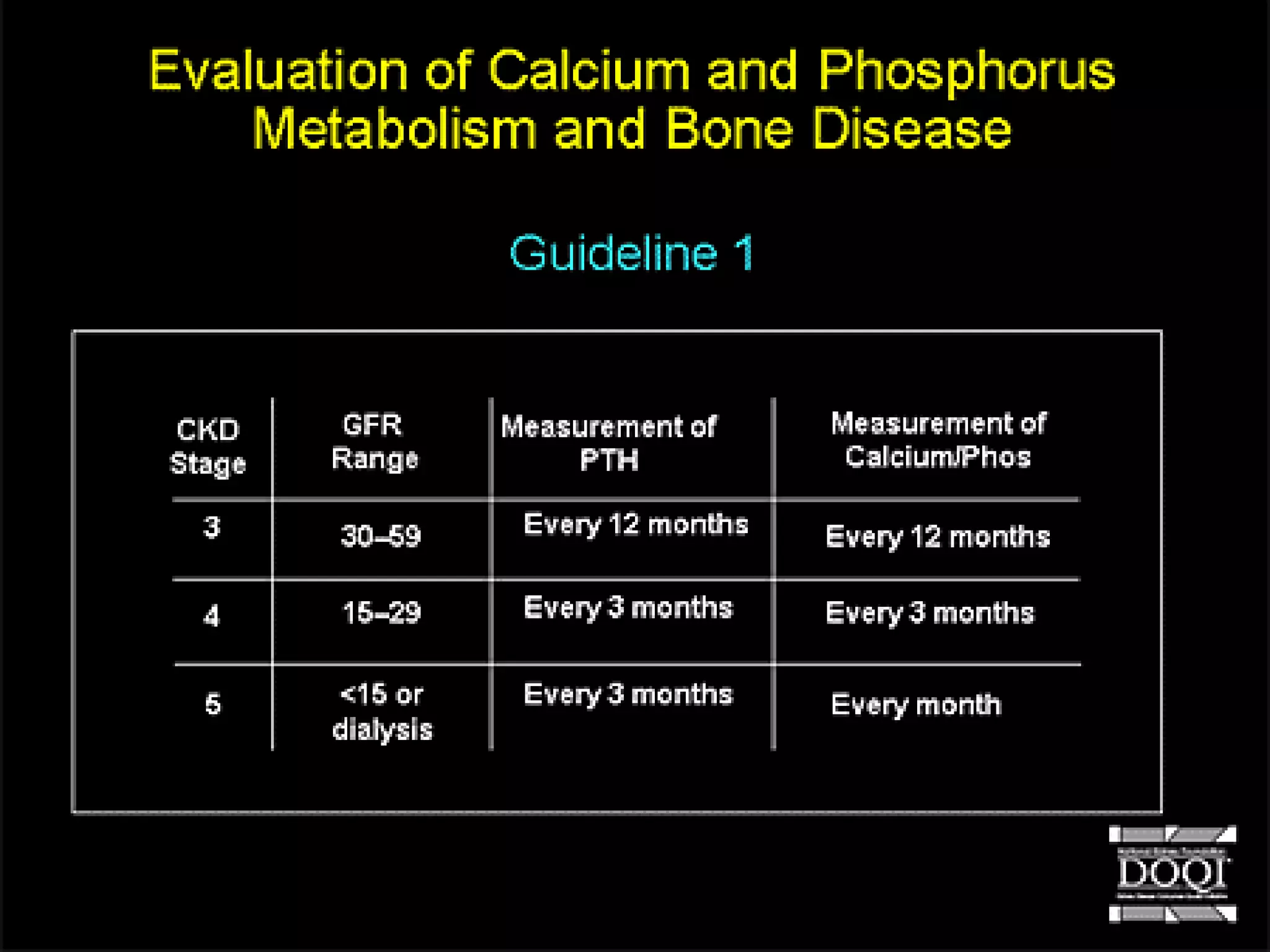
• Measurements of calcium and phosphorus need to be
  obtained frequently, and therapy needs to be adjusted
  according to widely accepted clinical practice guidelines to
  maintain the calcium and phosphorus concentrations within
  defined ranges . accurate assessment of PTH assays remains
  problematic.
Prevention and Management of Metabolic Bone
               Disease in CKD
• Objectives :
• Maintain the blood levels of calcium and phosphorus as close
  to normal as possible.
• Prevent the development or to begin the treatment of
  established hyperparathyroidism and to prevent the
  development of parathyroid hyperplasia.
• Prevent extraskeletal calcifications.
• Avoid oversuppression of bone turnover to the extent that
  adynamic bone might be induced.
• Avoid the accumulation of substances that may be toxic to
  bone, such as aluminum.
O
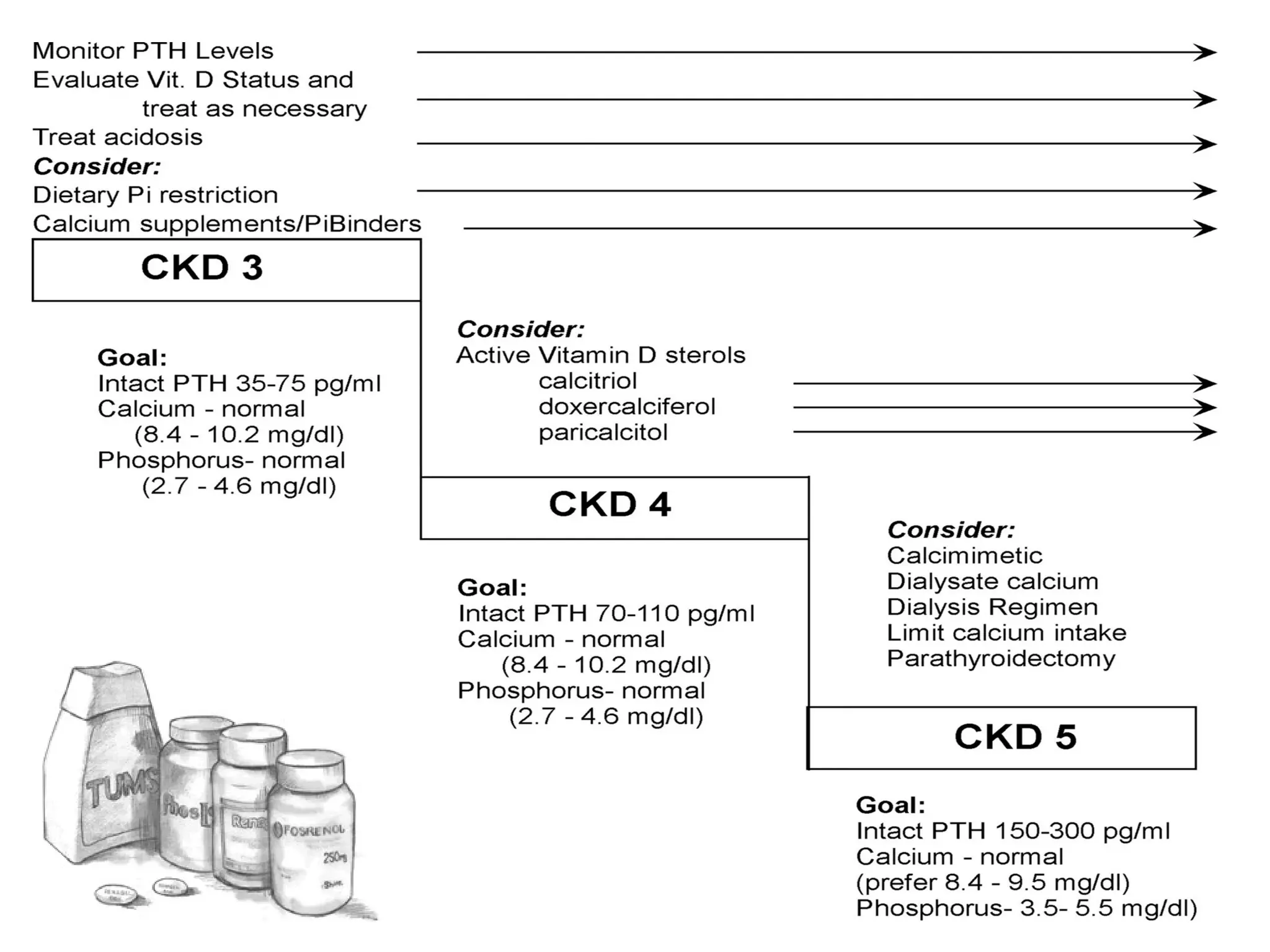
• A "stepped-care" approach to the prevention
  and treatment of secondary
  hyperparathyroidism in CKD
References


• Metabolic bone disease in chronic kidney disease;Kevin J.
  Martin and Esther A. González ;J am soc Nephrol ;18: 875-885,
  2007
• Vitamin D deficiency and the pathogenesis of secondary
  Hyperparathyroidism , presented by Dennis L. Andress, MD,
  Medscape
THANK YOU

Ckmbd

  • 1.
    Bone And MineralDisease In Chronic Kidney Disease
  • 2.
    Case presentation • 26year old male with PMH of ESRD on HD presents with pain in left thigh with movement x 2 weeks, worse since 2 days. • • No history of trauma, no fever/ chills, no swelling/ redness.
  • 3.
    All: NKDA • PMH: • ESRD on HD • S/p failed renal transplant 1995 and 2005 • S/p peritonitis in past after peritoneal dialysis • “Rickets” as a child • Tertiary hyperparathyroidism • Kidney disease secondary to “blocked kidneys” • PSH: • Orthopedic surgery to knee • Left arm graft
  • 4.
    • Medications: • Renvela,Sensipar, Clonidine • Social Hx: denies smoking, drugs, alcohol. • Pertinent labs: • Ca: 7.5, Phos 5.6, PTH (i): 1360
  • 5.
    • Course ofillness: • He was found to have a fracture of his left femur, likely spontaneous. • Contributing factor: tertiary parahyperparathyroidism. • Pt was referred to surgery for parathyroidectomy, which he has refused in the past.
  • 6.
    • Metabolic bonedisease is a common complication of chronic kidney disease (CKD). • It is part of a broad spectrum of disorders of mineral metabolism that result in both skeletal and extraskeletal consequences, including in the vasculature. • Recent emphasis is on the need to begin therapy early in the course of CKD. • .
  • 7.
    • Broad spectrumof diseases which may include: • 1) abnormalities of calcium, phosphorus, parathyroid hormone (PTH), and vitamin D metabolism. • (2) abnormalities of bone turnover, mineralization, volume, linear growth, and strength. • (3) vascular or soft tissue calcification.
  • 8.
    The abnormalities inbone in the setting of CKD include: The effects of high levels of PTH on bone, which results in the high-turnover bone disease osteitis fibrosa. Adynamic bone, which is characterized by an extremely low bone turnover, may occur. Some cases may demonstrate mineralization defects and show frank osteomalacia. This wide spectrum of skeletal abnormality can give rise to a variety of mixed patterns, with elements of the effects of hyperparathyroidism on bone together with mineralization defects, and is known as mixed renal osteodystrophy.
  • 10.
    Pathogenesis of MetabolicBone Disease in CKD • High-turnover metabolic bone disease in CKD. • High-turnover bone disease is the result of the development of secondary hyperparathyroidism. • Hyperplasia of the parathyroid glands and high levels of PTH in blood occur early in the course of CKD. • Numerous factors that lead to the overactivity of parathyroid glands: • Retention of phosphorus, • Decreases in the levels of calcitriol, • Intrinsic alterations within the parathyroid gland that give rise to increased PTH secretion as well as increased parathyroid growth. • Skeletal resistance to the actions of PTH. • Hypocalcemia.
  • 16.
  • 17.
    Role Of HighPhosphate • Phosphorus also seems to have major effects on parathyroid growth. • In animals that are on a high-phosphorus diet, there is an acceleration of parathyroid growth, whereas a low- phosphorus diet prevents parathyroid hyperplasia. • Studies in experimental animals have shown that this effect of dietary phosphorus on parathyroid growth occurs extremely rapidly, within days after the induction of kidney failure. • This observation may have important implications for therapy.
  • 19.
    The Rapid Effectof the Induction of Uremia on Parathyroid Gland Growth and the Influence of Dietary Phosphorus
  • 20.
    Role Of DecreasedSynthesis Of Calcitriol Because the principal site for the production of calcitriol is the kidney, it is no surprise that decreases in kidney mass lead to a decrease in the ability of the kidneys to produce calcitriol. In the course of CKD, the decreased production of calcitriol contributes to the development of secondary hyperparathyroidism.
  • 22.
    Role of IntrinsicAlterations in the Parathyroid Gland. • Hypocalcemia is a powerful stimulus for PTH secretion and for parathyroid growth. • The effects of calcium seem to be mediated by the calcium- sensing receptor • Several studies have demonstrated that there is decreased expression of the calcium-sensing receptor in the hyperplastic glands that are seen in kidney failure. • Decreased levels of calcitriol also may contribute to parathyroid abnormalities. • Calcitriol is major regulator of PTH secretion, and the vitamin D receptor is expressed in the parathyroid glands. • Calcitriol decreases PTH secretion in vivo and in vitro as a result of an effect at the level of transcription of the PTH gene .
  • 23.
    Skeletal Resistance tothe Actions of PTH. • A reduced calcemic response to the administration of PTH has been known for many years. • It also has been recognized that there is delayed recovery from induced hypocalcemia in patients with kidney disease. • This phenomenon, known as skeletal resistance to the calcemic actions of PTH, may contribute to the development of hyperparathyroidism. • Many factors likely are involved in this skeletal resistance, including phosphorus retention, possibly decreased levels of calcitriol , and downregulation of the PTH receptor .
  • 24.
    Low-turnover Metabolic BoneDisease in CKD • Low-turnover bone disease commonly is observed in patients with kidney disease, especially in patients who are on dialysis. • It is characterized by an extremely slow rate of bone formation. • Some cases demonstrate osteomalacia, which is characterized by defective bone mineralization in addition to the very slow bone formation rate. • The osteomalacic lesion is due mostly to aluminum accumulation and is less common nowadays with decreased use of aluminum- based phosphorus binders . The adynamic bone of kidney disease is being found with increasing frequency and has been described in some cases even before dialysis
  • 25.
    Factors Involved inthe Pathogenesis of Adynamic Bone in CKD
  • 26.
    Signs and Symptoms •Metabolic bone disease in patients with kidney disease often is asymptomatic, and symptoms appear only late in its course. • Many of the symptoms are nonspecific and include pain and stiffness in joints, spontaneous tendon rupture, predisposition to fracture, and proximal muscle weakness. • A similar set of symptoms may be seen in both the low- and high-turnover type of skeletal abnormality.
  • 27.
    Extraskeletal Calcifications • Extraskeletal calcifications, particularly involving the vasculature, and calcification of the skin and calciphylaxis also may be seen. • Cardiovascular calcification is extremely common and important in patients with kidney disease, it predicts a variety of adverse outcomes. • Vascular calcification is an active, regulated process that has many similarities to the process of skeletal mineralization. Studies suggest that the normal vessel wall expresses proteins that inhibit calcification such as matrix Gla protein.
  • 28.
    Extraskeletal Calcification • Inaddition, circulating proteins such as fetuin-a are produced at remote sites and act to inhibit soft tissue calcification systemically. • However, alterations of these proteins may lead to a seeming transformation of vascular smooth muscle cells into osteo/chondrocytic-like cells that then facilitate calcification. • Both clinical and basic research findings indicate an inverse relationship between bone mineralization and vascular calcification.
  • 29.
    • Although histologicexamination of un-decalcified sections of bone remains the gold standard for the precise diagnosis of renal bone disease: invasive. • Biochemical assessment : mainstay of the diagnosis and treatment. • Calcium, phosphorus, PTH, alkaline phosphatase. • Measurements of calcium and phosphorus need to be obtained frequently, and therapy needs to be adjusted according to widely accepted clinical practice guidelines to maintain the calcium and phosphorus concentrations within defined ranges . accurate assessment of PTH assays remains problematic.
  • 30.
    Prevention and Managementof Metabolic Bone Disease in CKD • Objectives : • Maintain the blood levels of calcium and phosphorus as close to normal as possible. • Prevent the development or to begin the treatment of established hyperparathyroidism and to prevent the development of parathyroid hyperplasia. • Prevent extraskeletal calcifications. • Avoid oversuppression of bone turnover to the extent that adynamic bone might be induced. • Avoid the accumulation of substances that may be toxic to bone, such as aluminum.
  • 31.
  • 32.
    • A "stepped-care"approach to the prevention and treatment of secondary hyperparathyroidism in CKD
  • 34.
    References • Metabolic bonedisease in chronic kidney disease;Kevin J. Martin and Esther A. González ;J am soc Nephrol ;18: 875-885, 2007 • Vitamin D deficiency and the pathogenesis of secondary Hyperparathyroidism , presented by Dennis L. Andress, MD, Medscape
  • 35.