GEOMETRICAL ISOMERISM
Dr Akhil Nagar
RCP-IPER
Shirpur
The compounds having similar molecular formulae but different
arrangement of atoms or groups in space around the double bond are
called geometrical isomers and the phenomenon is known as
geometrical isomerism.
The geometrical isomerism arises due to restricted rotation about a
carbon–carbon double bond. A complete rotation around carbon–
carbon double bond causes the breaking of π bond.
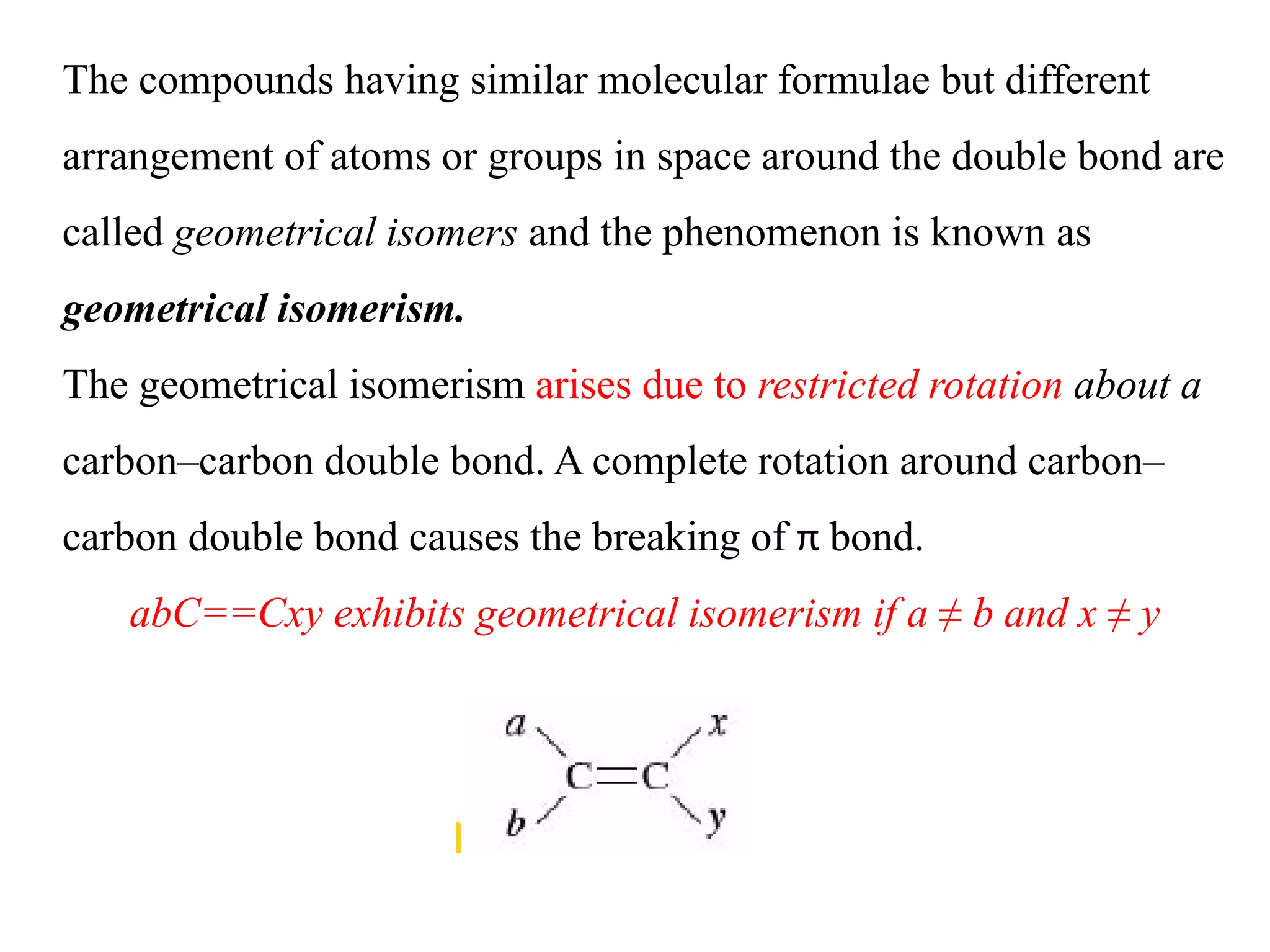
abC==Cxy exhibits geometrical isomerism if a ≠ b and x ≠ y
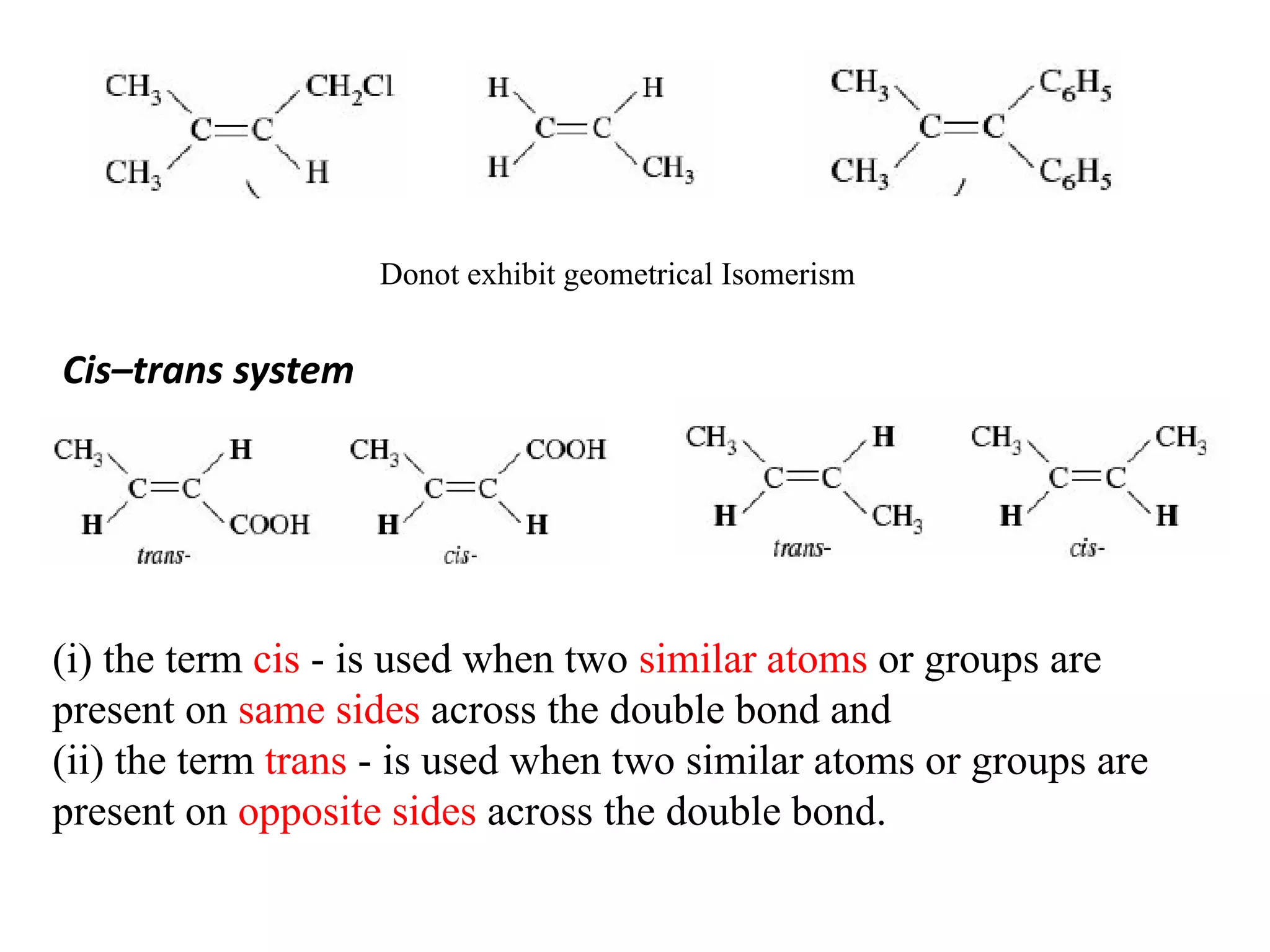
Donot exhibit geometrical Isomerism
Cis–trans system
(i) the term cis - is used when two similar atoms or groups are
present on same sides across the double bond and
(ii) the term trans - is used when two similar atoms or groups are
present on opposite sides across the double bond.
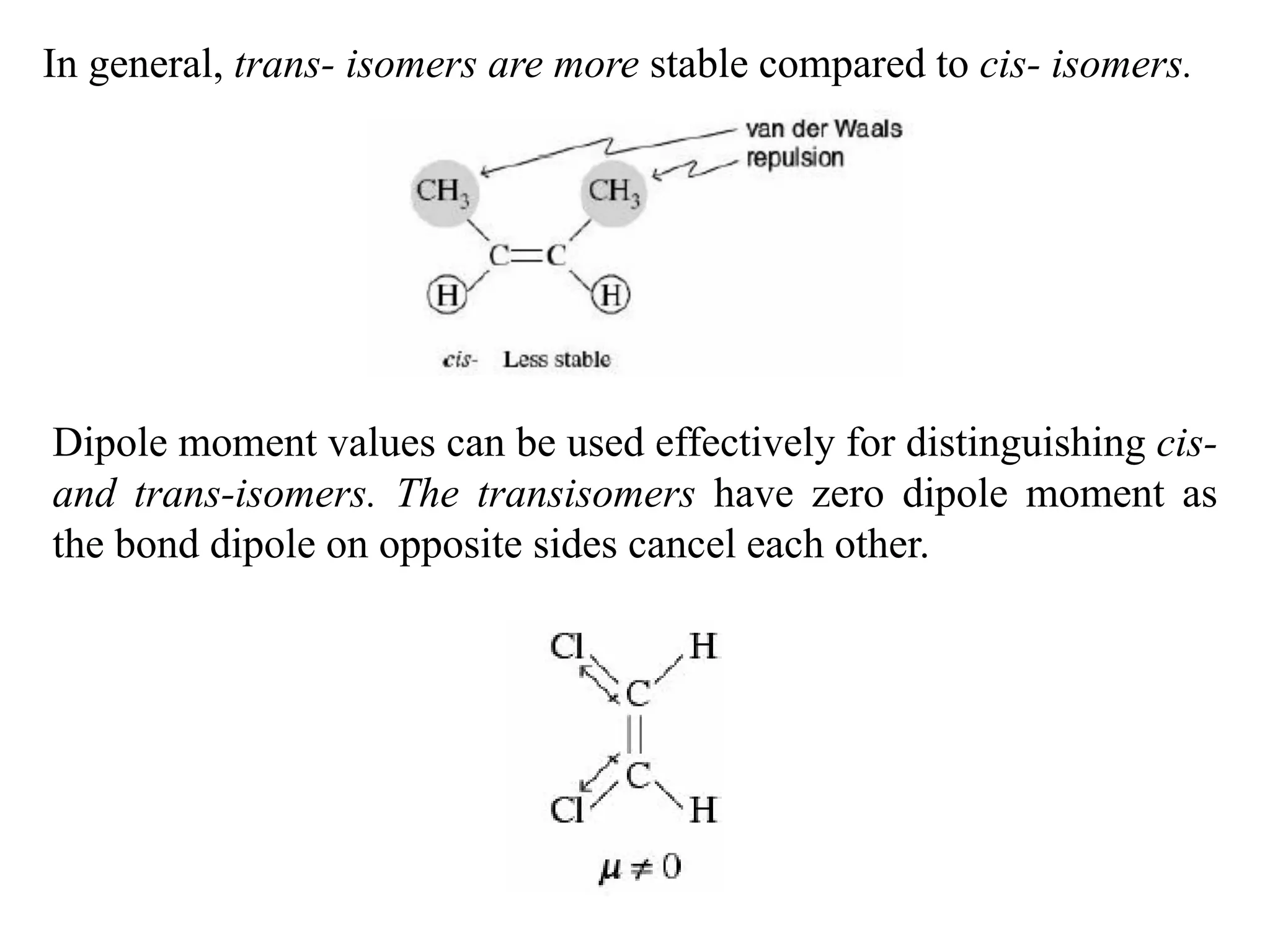
In general, trans- isomers are more stable compared to cis- isomers.
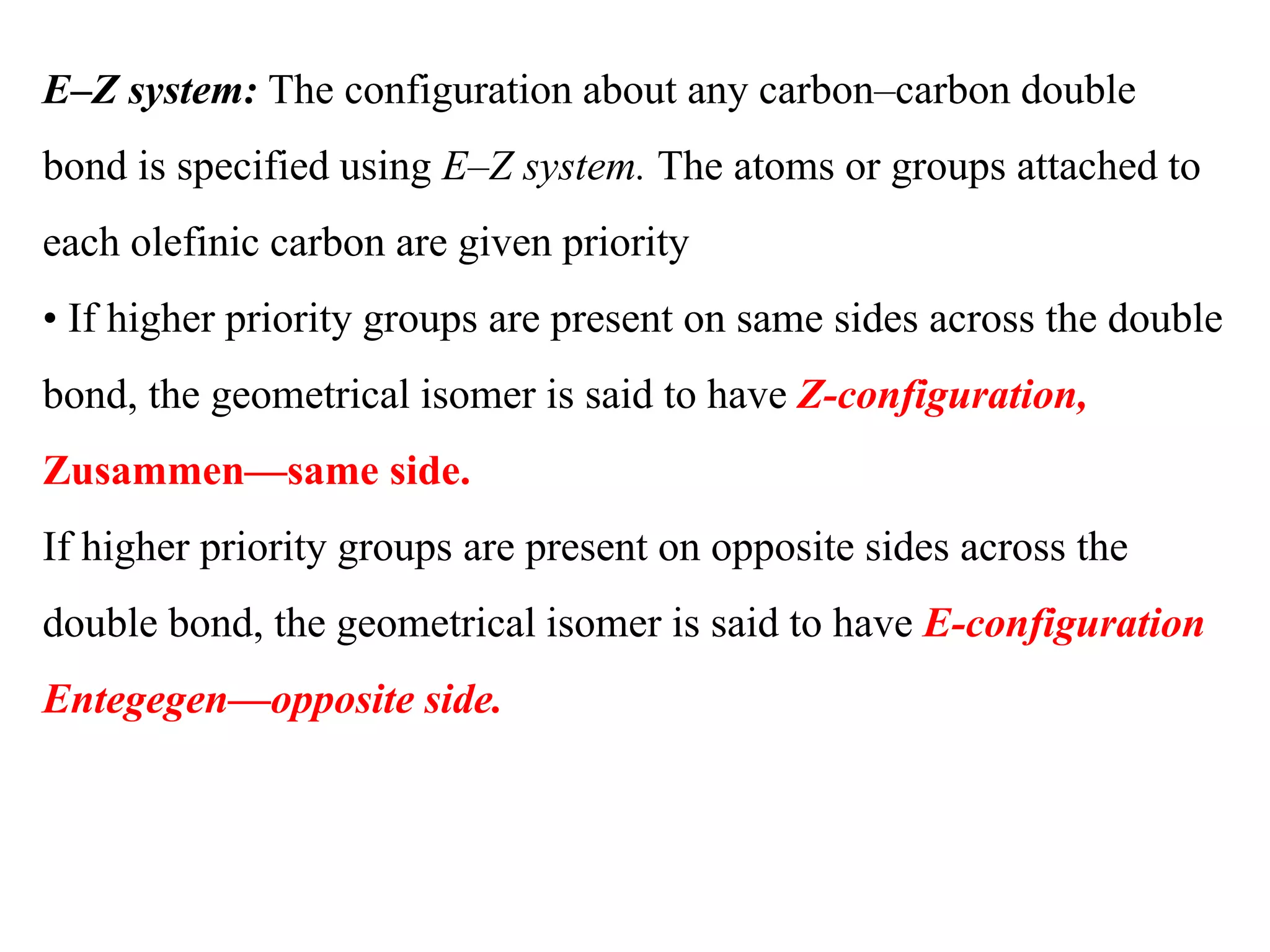
Dipole moment values can be used effectively for distinguishing cis-
and trans-isomers. The transisomers have zero dipole moment as
the bond dipole on opposite sides cancel each other.
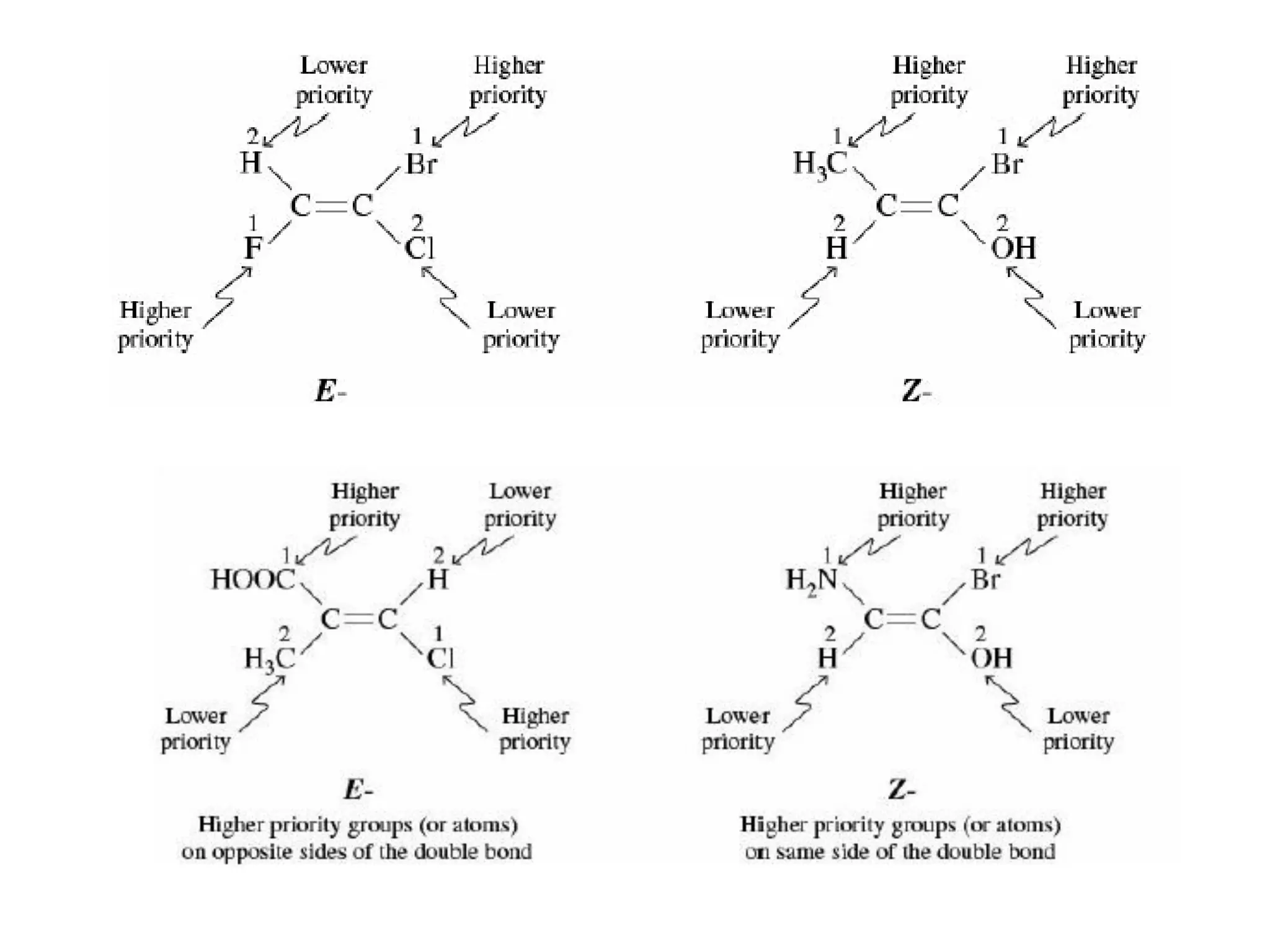
E–Z system: The configuration about any carbon–carbon double
bond is specified using E–Z system. The atoms or groups attached to
each olefinic carbon are given priority
• If higher priority groups are present on same sides across the double
bond, the geometrical isomer is said to have Z-configuration,
Zusammen—same side.
If higher priority groups are present on opposite sides across the
double bond, the geometrical isomer is said to have E-configuration
Entegegen—opposite side.
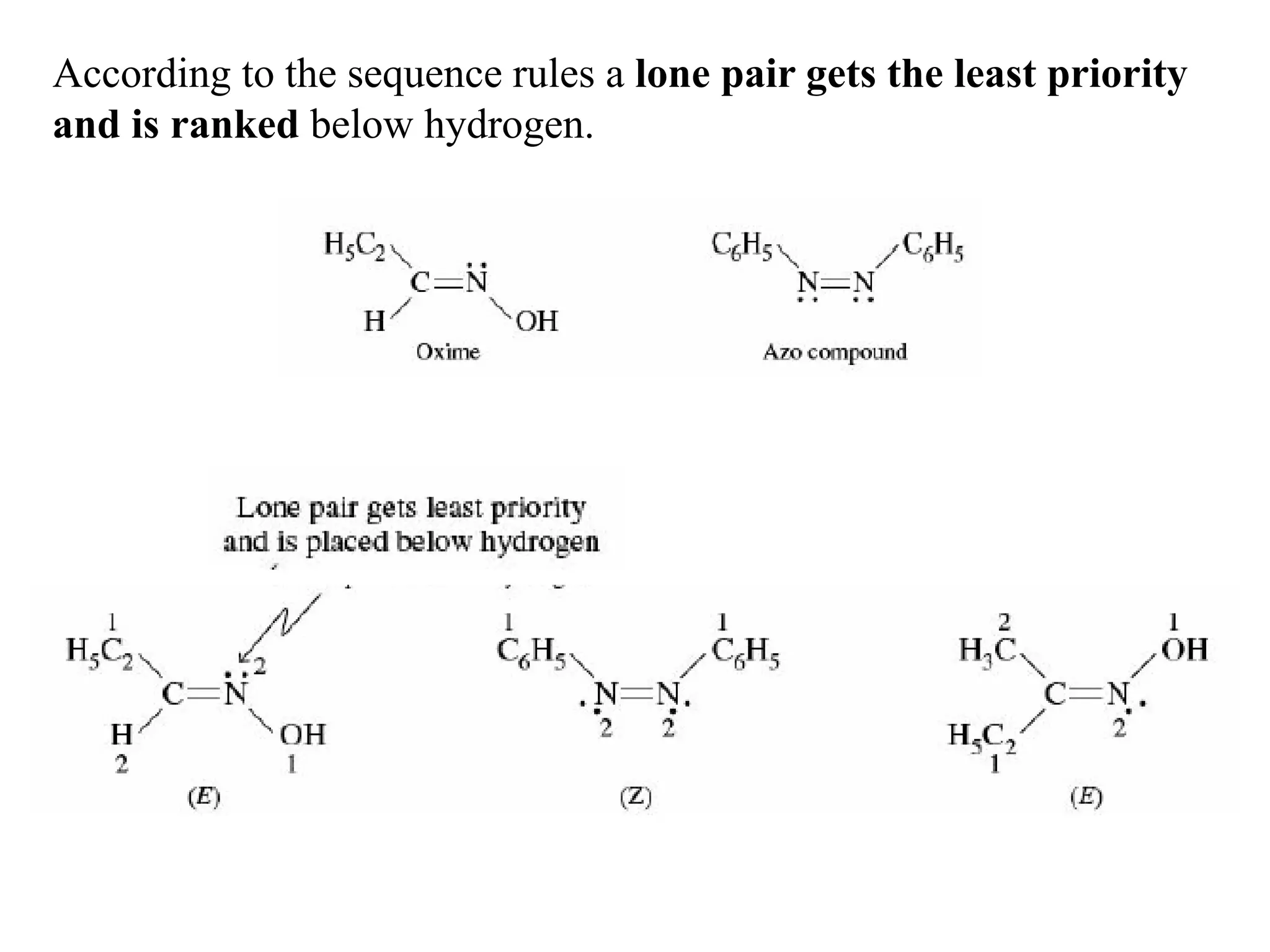
Geometrical isomerism is not restricted to carbon–carbon double
bond [C=C ] but is also exhibited by compounds having a carbon–
nitrogen double bond [C=N–] as in oximes, or nitrogen–nitrogen
double bond [–N=N–] as in azo.
According to the sequence rules a lone pair gets the least priority
and is ranked below hydrogen.

Geometrical isomerism

  • 1.
    GEOMETRICAL ISOMERISM Dr AkhilNagar RCP-IPER Shirpur
  • 2.
    The compounds havingsimilar molecular formulae but different arrangement of atoms or groups in space around the double bond are called geometrical isomers and the phenomenon is known as geometrical isomerism. The geometrical isomerism arises due to restricted rotation about a carbon–carbon double bond. A complete rotation around carbon– carbon double bond causes the breaking of π bond. abC==Cxy exhibits geometrical isomerism if a ≠ b and x ≠ y
  • 3.
    Donot exhibit geometricalIsomerism Cis–trans system (i) the term cis - is used when two similar atoms or groups are present on same sides across the double bond and (ii) the term trans - is used when two similar atoms or groups are present on opposite sides across the double bond.
  • 4.
    In general, trans-isomers are more stable compared to cis- isomers. Dipole moment values can be used effectively for distinguishing cis- and trans-isomers. The transisomers have zero dipole moment as the bond dipole on opposite sides cancel each other.
  • 5.
    E–Z system: Theconfiguration about any carbon–carbon double bond is specified using E–Z system. The atoms or groups attached to each olefinic carbon are given priority • If higher priority groups are present on same sides across the double bond, the geometrical isomer is said to have Z-configuration, Zusammen—same side. If higher priority groups are present on opposite sides across the double bond, the geometrical isomer is said to have E-configuration Entegegen—opposite side.
  • 7.
    Geometrical isomerism isnot restricted to carbon–carbon double bond [C=C ] but is also exhibited by compounds having a carbon– nitrogen double bond [C=N–] as in oximes, or nitrogen–nitrogen double bond [–N=N–] as in azo.
  • 8.
    According to thesequence rules a lone pair gets the least priority and is ranked below hydrogen.