Download to read offline


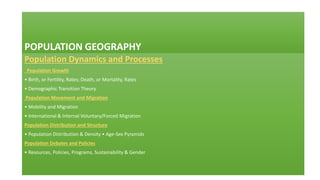
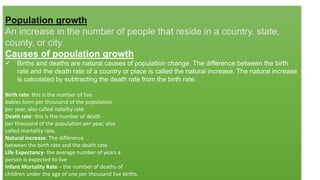


Population geography is the study of human populations, their composition, growth, distribution, and migratory movements, with an emphasis on distribution and migration. It examines demographic processes and their impact on the environment. Key aspects of population geography include population dynamics and processes, population growth and movement through birth rates, death rates, and migration. Population distribution and structure are also studied, looking at characteristics like population density, age, and sex. Population debates and policies regarding resources, sustainability, and other issues are additional areas of focus. Population growth is influenced by factors like birth rates, death rates, life expectancy, fertility rates, and international migration. Countries with high fertility rates have on average 5 or more children per woman, while low fertility countries now


