Delivery technologies for genome editing
1
Effective therapies for many genetic diseases
are still needed
 >3,000 human genes associated with mendelian diseases .
 ~4,000–7,000 additional disease-associated genes will be
uncovered in the next decade.
 <5% of rare diseases have an effective treatment
 It is difficult to use small-molecule, BMT or surgical approaches
to treat most genetic diseases
2
Protein therapeutics for treating certain
genetic disorders
1. Protein replacement/augmentation therapies
2. Antibodies
 To treat disorders for which a deficient protein functions at least
partially in the extracellular milieu
3
Most of these pr therapeutics target a limited
number of biomolecules that are involved in a
small proportion of genetic diseases
Therapeutic protein Condition
Recombinant acid α-glucosidase Pompe
Recombinant factors VIII Haemophilia A
Recombinant factors IX Haemophilia B
Humanized vascular endothelial growth
factor A (VEGFA)-specific antibody
Age-related macular degeneration
4
AAV-mediated delivery of a functional gene
tiparvovec (AAV1-LPLS447X) for LPLD
 The first gene therapy to receive marketing authorization in
Europe
 In 2012 became the first gene therapy product based on viral
gene-transfer technology received marketing approval in Europe.
 $1 million per treatment
5
RNA modification therapies: RNAi & ASOs
Product Condition Status
ASO-based
product
Homozygous familial
hypercholesterolaemia
FDA approved
Alicaforsen Pouchitis Advanced stages
Other RNA
modification
therapies
Transthyretin-mediated
amyloidosis
Phase III
6
Limitations of ASO & RNAi and AAV gene
transfer
 Delivery barriers in a subset of organs and tissue types
 Incomplete suppression of disease proteins
 Off-target effects
 Safety concerns (gene transfer):
 Genomic integration
 Mutagenesis
 Oncogenesis
7
AAVs facilitate gene transfer and episomal
expression in non-dividing cells, but:
 Expression decrease over time (cell turnover)
 Loss of episomal genomes in growing tissues of paediatric patients
 Lack of precise control of therapeutic genes
 Unusable for gain-of-function genetic diseases
 Limited size of encapsulated transgenes
 Pre-existing immunity
 CD8+ T cell-mediated adaptive response against the AAV capsid
8
Genome editing in contrast to gene-transfer
approaches, uses programmable DNA nucleases
 Precisely modification of genome
 Potential to treat and even cure a range of important diseases via:
 Deletion of disease-prone sequences
 Correction of mutations
 Site-specific insertion of therapeutic genes
9
10
11
12
Specificity & potential for off-target effects
 Off-target can lead to
 Unwanted mutations
 Oncogenes
 Tumor suppressors
 DNA repair genes
 Potential toxicity
 Specificity may also be affected by
 Dosage
 Expression pattern of tools
 Number, type and stage of edited cells 13
Genome editing for genetic diseases
 Treatment of monogenic diseases vs multigenic diseases
 Each monogenic disease may require various efficiencies of
editing:
 Restoration of 3–7% F9 to reverse symptoms of haemophilia B
 α1-antitrypsin deficiency may require >30% gene correction in the liver
14
Factors affect on treatment
 Indel formation vs HDR repair
 The nature of the cellular target:
 HSC vs mature cells
 Effective delivery
 Immune response to the corrected genes
 ~30% of patients with haemophilia A who received protein therapy
developed inhibitory antibodies
15
All the tools can create DSBs
Two cellular endogenous DNA repair pathways:
 HDR (with template (donor) DNA)
 NHEJ
16
NHEJ can disrupt disease-causing genes or restore
the reading frame of a dysfunctional gene
 Efficient but error-prone
 Small “indels” at the desired genomic locus
 Shifting the reading frame
 Production of nonfunctional proteins
17
Many diseases requiring gene correction or
addition (by HDR) rather than gene inactivation
 Nature of the cell (HDR is largely restricted to cells at S/G2 phases )
 Optimization of the conditions of delivery may facilitate enhanced HDR
 Timing of providing the donor template
 Format and dose of the donor
 Synchronization of the cell cycle
 Suppressing NHEJ
18
The average mutation rate of TALEN and CRISPR
is substantially higher than that of meganucleases
and ZFNs
 Meganucleases and ZFNs: low efficiencies in inducing site-
specific DNA breaks
 TALENs and CRISPR: ~80–90% success rates in mammalian
cells to induce >1% mutation frequencies
19
20
Multiplex gene editing
 ZFNs & TALENs:
Mismatched dimers can form off-target
 CRISPR
 High efficiency
 Without substantially increasing the required dose
21
The most substantial challenge is the safe and efficient
delivery of genome-editing biomacromolecules
 Delivery of genome editing vs ASO, RNAi & “classic gene transfer”
 One or a limited number of doses could be sufficient
 Classical gene replacement therapy: long-term transgene expression
 RNAi therapy: repeated dosing
 Multiple components must be delivered to the nucleus
22
23
For HDR-mediated gene editing, it is also necessary to provide a donor ssDNA or
dsDNA template
Nucleases CRISPR–Cas system
 In the format of DNA, mRNA or
protein
• Meganucleases: ~1 kb
• ZFNs: two molecules ~1 kb each
• TALENs: two molecules ~3 kb each
 Cas in the format of DNA, mRNA
or protein
 Guide RNA, in the format of DNA
or RNA
• ~3.5–4.5 kb
Genome editing tools: size & components
24
Classifications
 Ex vivo or in vivo
 Viral or non-viral
25
Genome-editing systems can be delivered ex
vivo or in vivo
Ex vivo
 Some nanomaterial and integrating
lentiviral vectors, may not be
suitable (low efficiency or safety
concerns)
 Use of physical methods that are
not suitable for systemic
application:
In vivo : Additional hurdles
 Viral:
 Broad tropism
 Long-term transgene expression
 Lipid-based and polymer-based
nanoparticles and conjugate technologies
for RNA
26
Delivery of biomacromolecules: viral or non-viral
Viral vector to encapsulate a
gene, in RNA or DNA form
 Lentiviruses
 Adenoviruses
 AAVs
Non-viral delivery
 Physical methods
 Electroporation
 Microfluidic-based technologies
 Nanomaterial-based methods
 Cationic lipids
 Cell-penetrating peptides (CPPs)
 Self-assembled nanoparticles
27
Viral vectors
28
Viral vectors with ssDNA may generate higher HDR rates than
dsDNA or plasmid DNA
29
As opposed to lentiviruses, adenoviral DNA does not integrate
into the genome and is not replicated during cell division
 IDLVs
 Low risk of insertional mutagenesis
 Delivery to various human cell types
 Free-ended, ds genome: insertion at off-target sites or spontaneous DSBs
 Adeno:
 Several infections
 Neutralizing antibodies
 Adenoviruses that infect different species
30
AAVs: random integration with a negligible
frequency
 Stable integration at a specific site (AAVS1in chromosome 19)
 Gene is inserted between the ITRs that aid in concatemer
 Episomal nonreplicative concatemers
31
32
IDLVs have been used to deliver both ZFNs
and donor templates in vitro
 Mostly episomal
 Gradually diminishes by dilution in dividing cell
 Short-lived expression of ZFNs
 In HEK293T and Epstein–Barr virus-transformed B lymphocytes: High
efficiency
 In CD34+ HSPCs:
 Without hotspot: Low (~0.1% of total cells)
Viral ---- In vitro and ex vivo
33
Adenoviral and AAV vectors
 Adenoviral vector more efficiently expressed ZFNs in primary T cells than an IDLV
 Delivering ZFNs in HSCs from most to least efficacious:
 mRNA electroporation > plasmid electroporation > adenoviral vector > IDLV
 20–40% gene addition in HSPCs by:
 Electroporation of ZFN mRNA
 AAV6-mediated delivery of the donor template
Viral ---- In vitro and ex vivo
34
 8–60% rates of HDR in primary human T cells by:
 mRNA of megaTAL
 Donor in AAV
Viral ---- In vitro and ex vivo
35
Applications of ex vivo gene editing
 Gene-edited HSCs could be used to treat a range of genetic
blood disorders
 Modified primary T cells are promising tools for cancer
immunotherapies
 Insertion of CARs
 Deletion of PD1
 Universal T cells
Ex vivo applications
36
Genome-editing tools for inserting CARs
 Integrating viral vectors to insert CARs into the genome
 Semi-random integration
 Safety concerns
 Alternative: genome-editing tools to insert CARs specifically at a
designated site
Ex vivo applications
37
Genome-editing tools to make universal T cells
 Personalized process is expensive
 Difficulty of generating high numbers of healthy T cells
 Reducing immune rejection by knocking out genes involved in
immune surveillance (eg. HLA).
 Increased consistency
 Increased availability
 Increased potency
 Increased safety
Ex vivo applications
38
Effective levels of HDR in human primary T cells by:
Electroporation of ZFN mRNA
AAVs delivery of donor template
39
In vivo approaches
40
AAV delivery of ZFN for treatment of hemophilia
 Small size of ZFNs facilitates their packing into AAVs
 AAV-8 delivery of ZFNs and donor
 Gene targeting in the liver
 To correct factor IX.
 Integration of gene into Albumin locus
 Long-term expression of FVIII and FIX
 Useful for the treatment of lysosomal enzyme deficiencies
Viral ---- In vivo, ZFN
41
Dual-vector system for in vivo targeting of
single & multiple genes in mouse brain
 SpCas9 and sgRNA expression cassettes into two
separate AAVs
 Packaging of SpCas9 with:
 Minimal polyadenylation signal
 Truncated version of the neuron-specific promoter
Viral ---- In vivo CRISPR
42
A single AAV-8 vector for packaging of sgRNA &
SaCas9
 Thyroxine-binding globulin promoter/SaCas9
 sgRNA (targeting PCSK9) expression cassette
 >40% indel formation at the Pcsk9 locus in liver
 Significant decrease in serum PCSK9 and total cholesterol
Viral ---- In vivo CRISPR
43
Adenovirus-mediated delivery or dual AAV vectors
for treatment of DMD model
 The mutated exon 23 of DMD was deleted
 Partially restoring DMD expression in skeletal muscle
 Enhancing skeletal muscle function
Viral ---- In vivo CRISPR
44
Reversing the mutations of the ornithine
transcarbamylase in newborn mice
 Two AAVs
 One expressing SaCas9
 The other carrying a sgRNA & donor
Viral ---- In vivo CRISPR
45
46
Nonviral
47
Non-viral methods advantages
 Can avoide the transcription process
 Low immunogenicity
 Precise control of the duration
 Transient expression
 Decrease the risk of off-target effects & tumorigenesis
 Nucleotide chemical modifications,
 Viral nanoparticles engineered based on native viral structure
 Repeated administration
 Improved efficacy
 Potential to transfer large genetic payloads
48
The most widely investigated physical transfection
method is electroporation
 Electroporation of Cas9 and two different sgRNA-encoding plasmids
 significant gene deletion in HSPCs and in primary T cells
 Electroporation of [Cas9 + in vitro transcribed sgRNA ] RNP
 Higher efficiency genome editing
 Decreased off-target effects
 Less cellular toxicity
Non-Viral ---- In vitro & ex vivo
49
Electroporation of Cas9 mRNA and sgRNA
resulted in modest gene editing
)instability of unmodified sgRNA(
Non-Viral ---- In vitro & ex vivo
50
Mechanical deformation method by constricting
channels: ‘squeeze’ delivery
 Microfluidic devices with dimension smaller than the diameter of
specific cells
 Diffusion of target materials to through transient membrane pores
Non-Viral ---- In vitro & ex vivo
51
Mechanical deformation of cells for
CRISPR-mediated efficient gene editing
 ssDNA, siRNAs, and large-sized plasmids into different cell types:
 Adherent and non-adherent cells (HEK293T, MCF7, SUM159, SU-DHL-1)
 Hard-to-transfect lymphoma
 Embryonic stem cells
 “Squeeze” delivery of RNPs to HSPCs:
 Significantly higher than electroporation
 Less toxicity
Non-Viral ---- In vitro & ex vivo
52
iTOP for Direct intracellular pr delivery:
hypertonicity-induced micropinocytosis+ propanebetaine
 iTOP-mediated delivery of
recombinant Cas9 pr & sgRNA
 High levels of indel formation in cells
Non-Viral ---- In vitro & ex vivo
53
Nanoparticle-mediated delivery: synthetic
lipid-based or polymer-based delivery vectors
 The efficiency is often dependent on the type and status of the cell
 Commercially available transfection reagents for use in cell culture
 Cationic liposomes to deliver Cas9 and sgRNA-coding plasmids
 Cationic lipids + RNPs or engineered negatively charged TALE: higher
gene-editing efficiency than with nucleic acid complexes
Non-Viral ---- In vitro & ex vivo
54
Conjugating Cas9 proteins and sgRNAs to CPPs
may facilitate intracellular delivery
• Embryonic stem cells
• Dermal fibroblasts
• HEK293T cells
• HeLa cells
• Embryonic carcinoma cells
• Efficient gene disruptions
• Reduced off-target mutations
relative to plasmid transfections 55
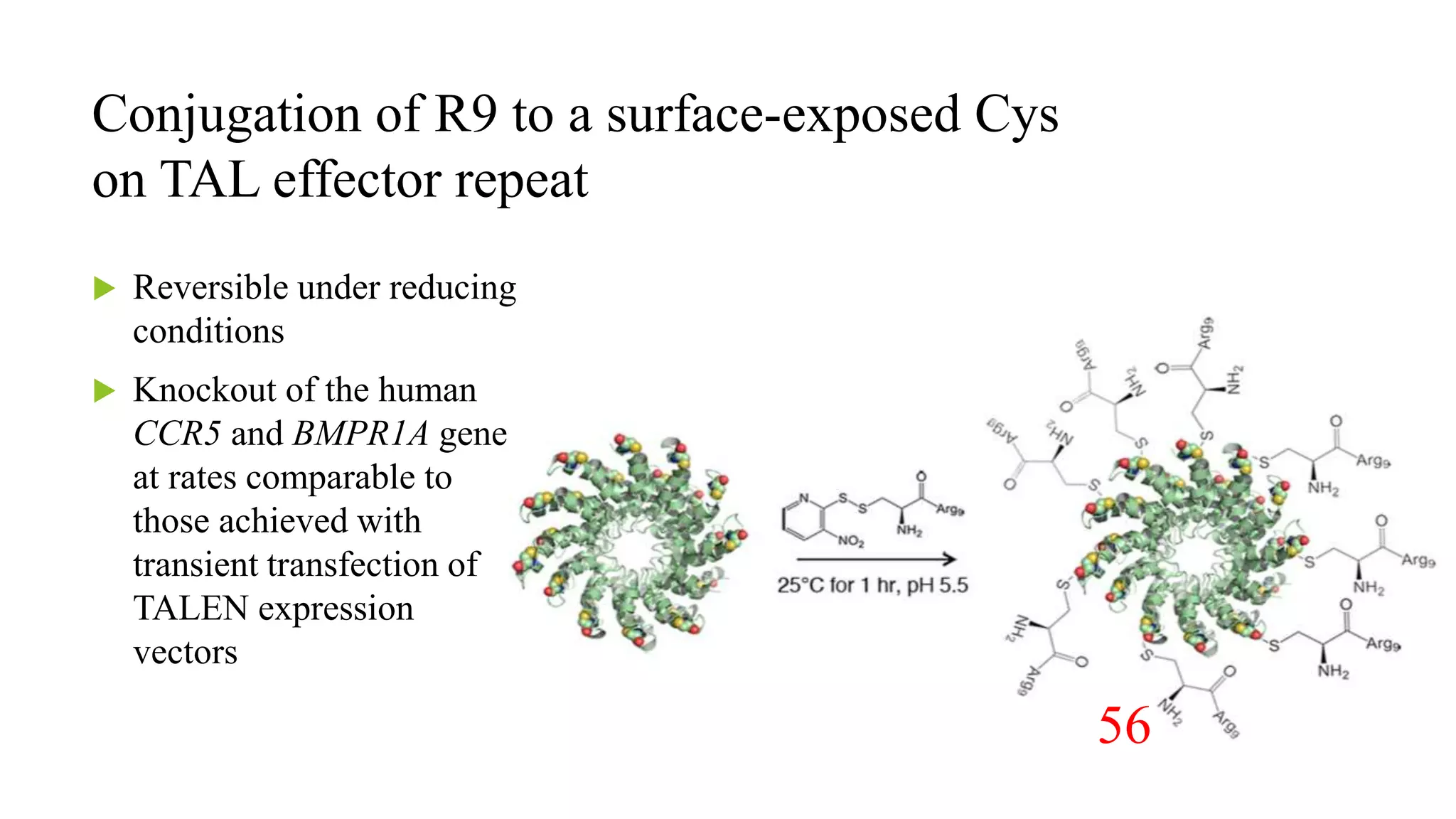
Conjugation of R9 to a surface-exposed Cys
on TAL effector repeat
 Reversible under reducing
conditions
 Knockout of the human
CCR5 and BMPR1A genes
at rates comparable to
those achieved with
transient transfection of
TALEN expression
vectors
56
Delivery of ZFNs without any delivery vectors was
reported to disrupt endogenous genes
 In several cell lines and in primary CD4+ T cells
 Intrinsic cell-penetrating capabilities
 Effective concentration is at micromolar levels
Non-Viral ---- In vitro & ex vivo
57
Hydrodynamic injection
the first in vivo use of CRISPR: for treatment of
tyrosinaemia
 Transient tissue damage
 Limited use in clinical trials
 Approximately 0.4% of hepatocytes were corrected
 Sufficient to rescue
 Because the repaired hepatocytes have a growth advantage
Non-Viral ---- In vivo
58
Physical methods
 Electroporation of Cas9 & sgRNA plasmid into skeletal muscles
 Restored function of local tissue in a mouse model DMD
Non-Viral ---- In vivo
59
Lipid nanoparticle-mediated delivery of Cas9 mRNA
+ AAV encoding an sgRNA & donor template
 HDR-mediated correction occurred in >6% of liver cells

 Off-target nuclease activity was below the limit of detection using
an unbiased genome-wide analysis
Non-Viral ---- In vivo
60
Nanoparticles
 Intratracheally delivered chitosan-coated poly(lactic-co-glycolic)
acid (PLGA) nanoparticles encapsulating ZFN mRNA
 AAV encoding a constitutive CAG promoter to target the site
where the SP-B cDNA was under the control of an inducible
promoter
Non-Viral ---- In vivo
61
Cas9–sgRNA complex was loaded into DNA-based self-
assembled NPs (DNA nanoclews) coated with PEI
Non-Viral ---- In vivo
62
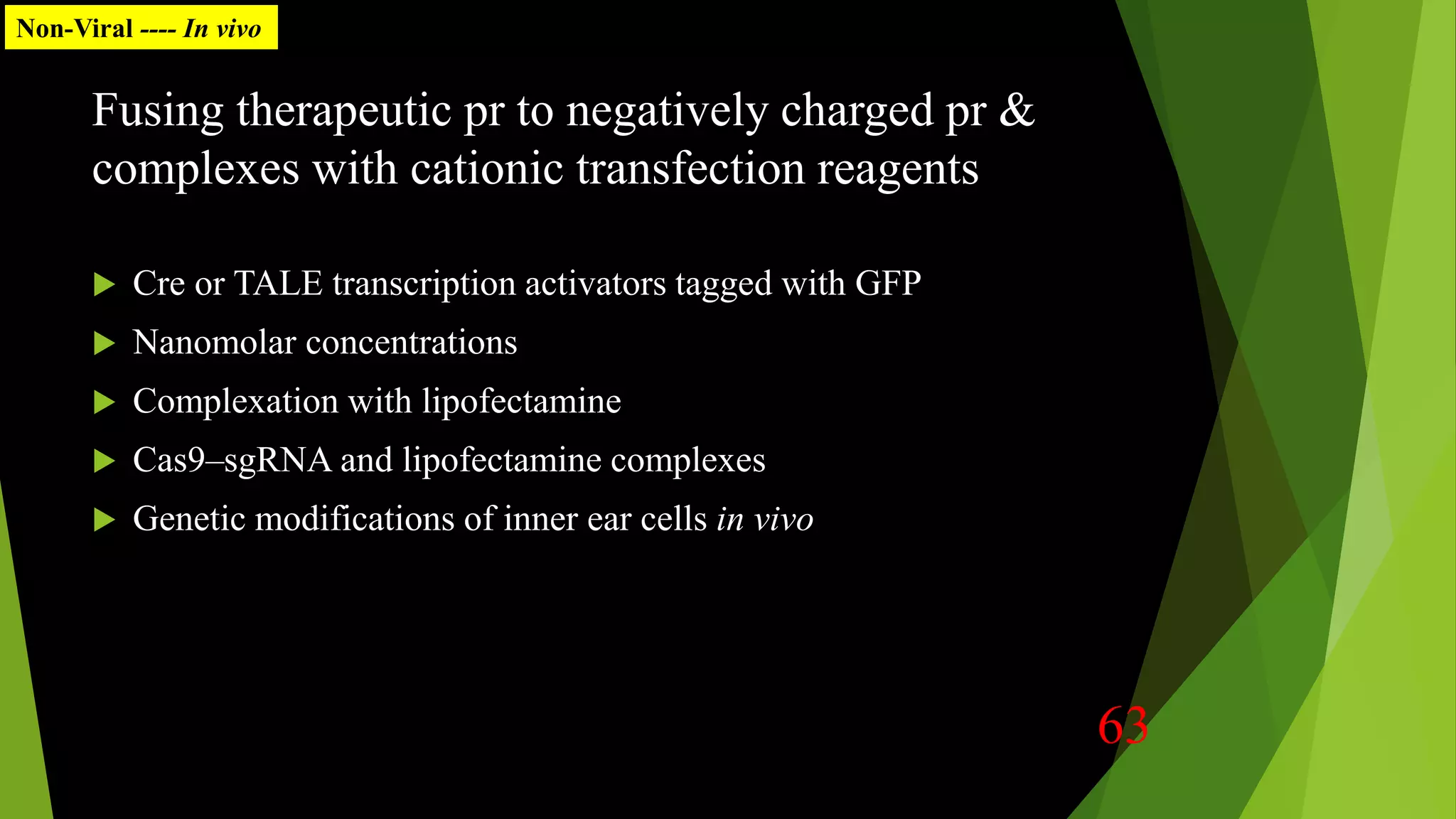
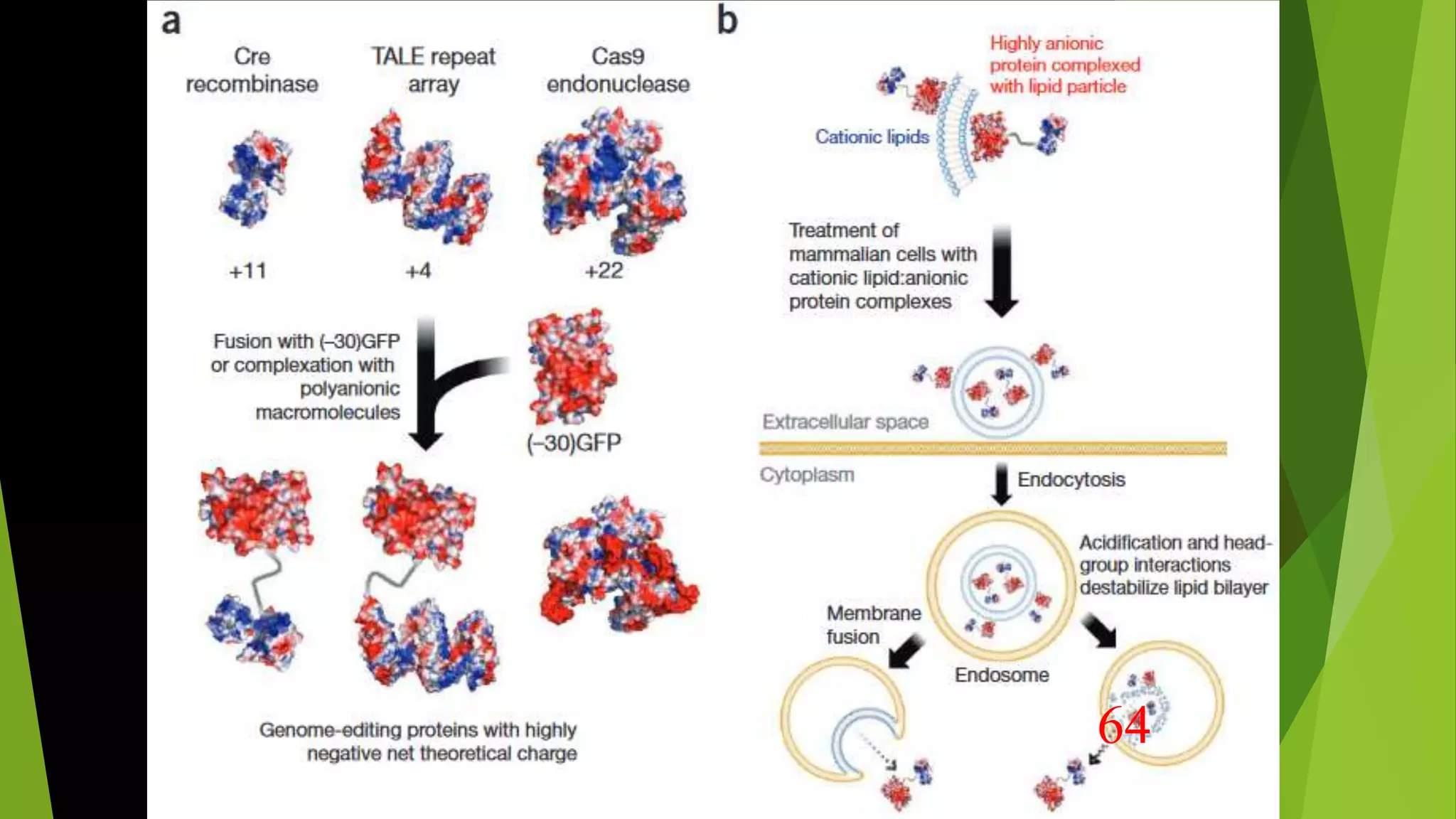
Fusing therapeutic pr to negatively charged pr &
complexes with cationic transfection reagents
 Cre or TALE transcription activators tagged with GFP
 Nanomolar concentrations
 Complexation with lipofectamine
 Cas9–sgRNA and lipofectamine complexes
 Genetic modifications of inner ear cells in vivo
Non-Viral ---- In vivo
63
64
Injection of genome-editing systems into
animal embryos and zygotes
 Co-injection of DNA donors with Cas9 mRNA and sgRNAs
65
Current status
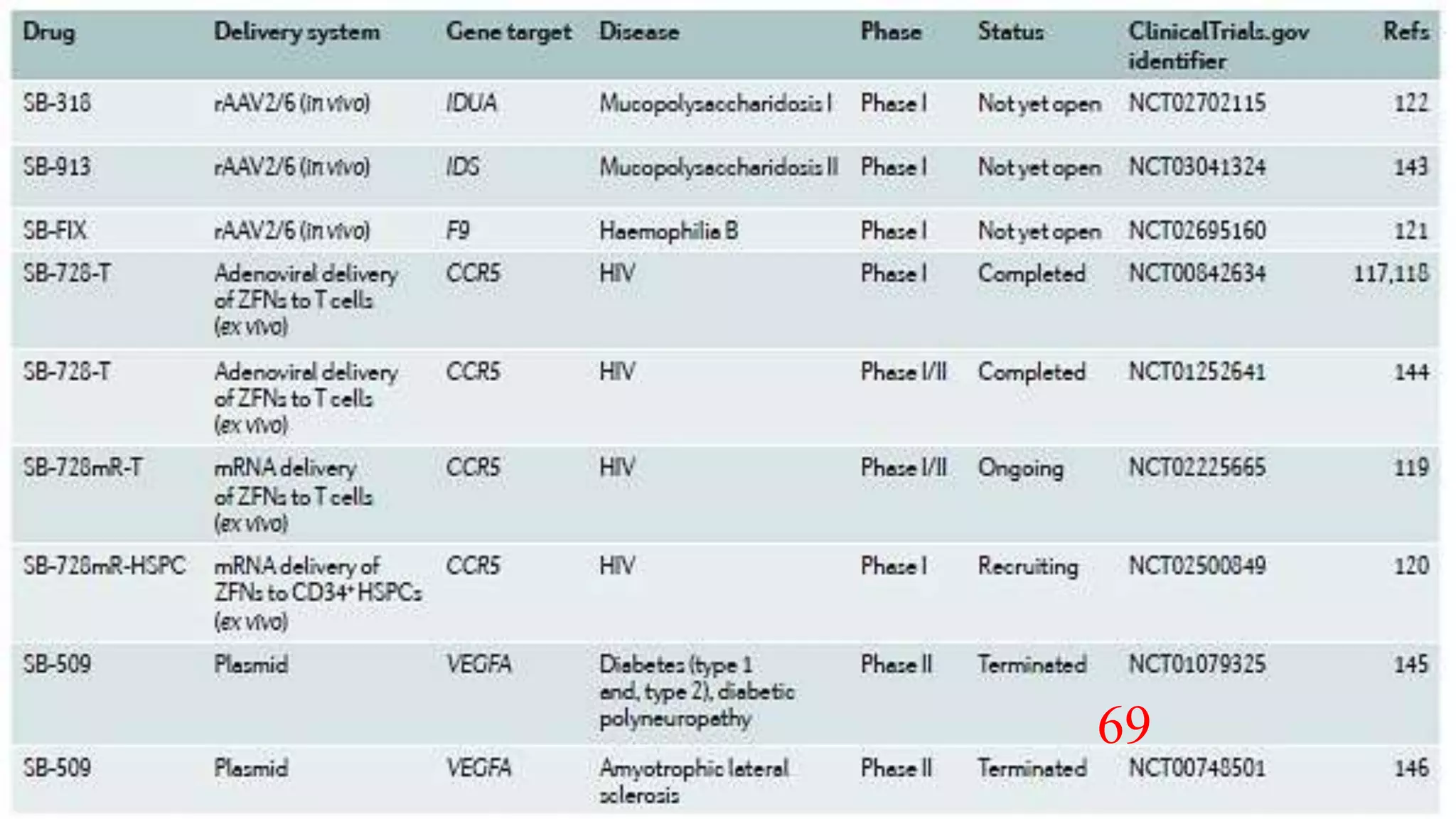
 HIV gene therapy:
CCR5 modification of CD4+ T cells & HSPCs by ZFN
 Gene therapy for haemophilia B
AAV delivery of ZFN & donor template of FIX
 Gene therapy for mucopolysaccharidosis I&II
AAV delivery of ZFN & donor template of IDUA & IDS
66
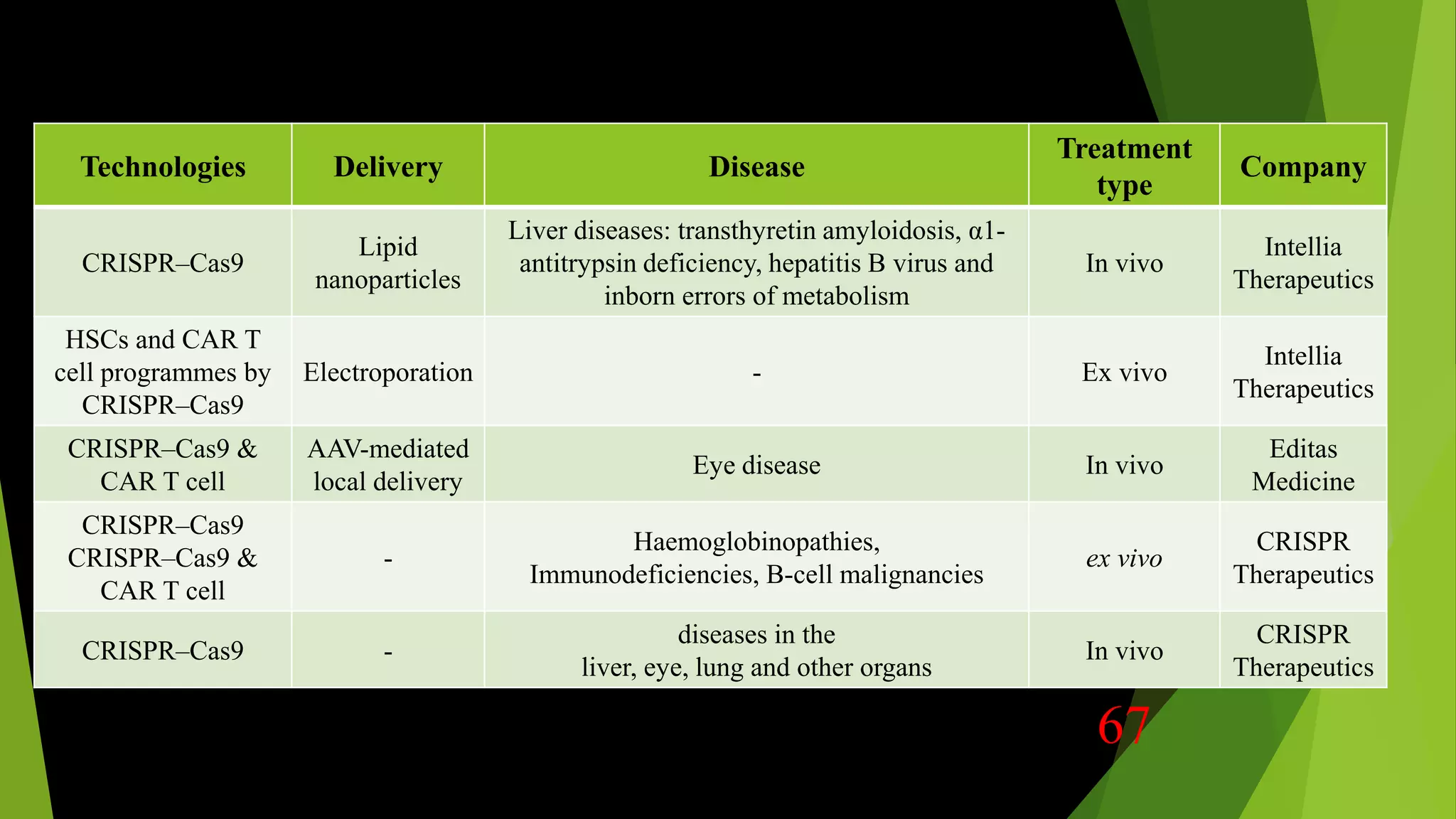
Technologies Delivery Disease
Treatment
type
Company
CRISPR–Cas9
Lipid
nanoparticles
Liver diseases: transthyretin amyloidosis, α1-
antitrypsin deficiency, hepatitis B virus and
inborn errors of metabolism
In vivo
Intellia
Therapeutics
HSCs and CAR T
cell programmes by
CRISPR–Cas9
Electroporation - Ex vivo
Intellia
Therapeutics
CRISPR–Cas9 &
CAR T cell
AAV-mediated
local delivery
Eye disease In vivo
Editas
Medicine
CRISPR–Cas9
CRISPR–Cas9 &
CAR T cell
-
Haemoglobinopathies,
Immunodeficiencies, B-cell malignancies
ex vivo
CRISPR
Therapeutics
CRISPR–Cas9 -
diseases in the
liver, eye, lung and other organs
In vivo
CRISPR
Therapeutics
67
CRISPR Therapeutics
http://www.crisprtx.com/programs/pipeline
Our lead program targeting the blood diseases β-thalassemia and
sickle cell disease has entered clinical testing, as has our first
allogeneic CAR-T program targeting B-cell malignancies. We are
also advancing additional blood stem cell, immuno-oncology,
regenerative medicine and in vivo programs towards the clinic.
68
69
70

Genome editing delivery systems

  • 1.
    Delivery technologies forgenome editing 1
  • 2.
    Effective therapies formany genetic diseases are still needed  >3,000 human genes associated with mendelian diseases .  ~4,000–7,000 additional disease-associated genes will be uncovered in the next decade.  <5% of rare diseases have an effective treatment  It is difficult to use small-molecule, BMT or surgical approaches to treat most genetic diseases 2
  • 3.
    Protein therapeutics fortreating certain genetic disorders 1. Protein replacement/augmentation therapies 2. Antibodies  To treat disorders for which a deficient protein functions at least partially in the extracellular milieu 3
  • 4.
    Most of thesepr therapeutics target a limited number of biomolecules that are involved in a small proportion of genetic diseases Therapeutic protein Condition Recombinant acid α-glucosidase Pompe Recombinant factors VIII Haemophilia A Recombinant factors IX Haemophilia B Humanized vascular endothelial growth factor A (VEGFA)-specific antibody Age-related macular degeneration 4
  • 5.
    AAV-mediated delivery ofa functional gene tiparvovec (AAV1-LPLS447X) for LPLD  The first gene therapy to receive marketing authorization in Europe  In 2012 became the first gene therapy product based on viral gene-transfer technology received marketing approval in Europe.  $1 million per treatment 5
  • 6.
    RNA modification therapies:RNAi & ASOs Product Condition Status ASO-based product Homozygous familial hypercholesterolaemia FDA approved Alicaforsen Pouchitis Advanced stages Other RNA modification therapies Transthyretin-mediated amyloidosis Phase III 6
  • 7.
    Limitations of ASO& RNAi and AAV gene transfer  Delivery barriers in a subset of organs and tissue types  Incomplete suppression of disease proteins  Off-target effects  Safety concerns (gene transfer):  Genomic integration  Mutagenesis  Oncogenesis 7
  • 8.
    AAVs facilitate genetransfer and episomal expression in non-dividing cells, but:  Expression decrease over time (cell turnover)  Loss of episomal genomes in growing tissues of paediatric patients  Lack of precise control of therapeutic genes  Unusable for gain-of-function genetic diseases  Limited size of encapsulated transgenes  Pre-existing immunity  CD8+ T cell-mediated adaptive response against the AAV capsid 8
  • 9.
    Genome editing incontrast to gene-transfer approaches, uses programmable DNA nucleases  Precisely modification of genome  Potential to treat and even cure a range of important diseases via:  Deletion of disease-prone sequences  Correction of mutations  Site-specific insertion of therapeutic genes 9
  • 10.
  • 11.
  • 12.
  • 13.
    Specificity & potentialfor off-target effects  Off-target can lead to  Unwanted mutations  Oncogenes  Tumor suppressors  DNA repair genes  Potential toxicity  Specificity may also be affected by  Dosage  Expression pattern of tools  Number, type and stage of edited cells 13
  • 14.
    Genome editing forgenetic diseases  Treatment of monogenic diseases vs multigenic diseases  Each monogenic disease may require various efficiencies of editing:  Restoration of 3–7% F9 to reverse symptoms of haemophilia B  α1-antitrypsin deficiency may require >30% gene correction in the liver 14
  • 15.
    Factors affect ontreatment  Indel formation vs HDR repair  The nature of the cellular target:  HSC vs mature cells  Effective delivery  Immune response to the corrected genes  ~30% of patients with haemophilia A who received protein therapy developed inhibitory antibodies 15
  • 16.
    All the toolscan create DSBs Two cellular endogenous DNA repair pathways:  HDR (with template (donor) DNA)  NHEJ 16
  • 17.
    NHEJ can disruptdisease-causing genes or restore the reading frame of a dysfunctional gene  Efficient but error-prone  Small “indels” at the desired genomic locus  Shifting the reading frame  Production of nonfunctional proteins 17
  • 18.
    Many diseases requiringgene correction or addition (by HDR) rather than gene inactivation  Nature of the cell (HDR is largely restricted to cells at S/G2 phases )  Optimization of the conditions of delivery may facilitate enhanced HDR  Timing of providing the donor template  Format and dose of the donor  Synchronization of the cell cycle  Suppressing NHEJ 18
  • 19.
    The average mutationrate of TALEN and CRISPR is substantially higher than that of meganucleases and ZFNs  Meganucleases and ZFNs: low efficiencies in inducing site- specific DNA breaks  TALENs and CRISPR: ~80–90% success rates in mammalian cells to induce >1% mutation frequencies 19
  • 20.
  • 21.
    Multiplex gene editing ZFNs & TALENs: Mismatched dimers can form off-target  CRISPR  High efficiency  Without substantially increasing the required dose 21
  • 22.
    The most substantialchallenge is the safe and efficient delivery of genome-editing biomacromolecules  Delivery of genome editing vs ASO, RNAi & “classic gene transfer”  One or a limited number of doses could be sufficient  Classical gene replacement therapy: long-term transgene expression  RNAi therapy: repeated dosing  Multiple components must be delivered to the nucleus 22
  • 23.
  • 24.
    For HDR-mediated geneediting, it is also necessary to provide a donor ssDNA or dsDNA template Nucleases CRISPR–Cas system  In the format of DNA, mRNA or protein • Meganucleases: ~1 kb • ZFNs: two molecules ~1 kb each • TALENs: two molecules ~3 kb each  Cas in the format of DNA, mRNA or protein  Guide RNA, in the format of DNA or RNA • ~3.5–4.5 kb Genome editing tools: size & components 24
  • 25.
    Classifications  Ex vivoor in vivo  Viral or non-viral 25
  • 26.
    Genome-editing systems canbe delivered ex vivo or in vivo Ex vivo  Some nanomaterial and integrating lentiviral vectors, may not be suitable (low efficiency or safety concerns)  Use of physical methods that are not suitable for systemic application: In vivo : Additional hurdles  Viral:  Broad tropism  Long-term transgene expression  Lipid-based and polymer-based nanoparticles and conjugate technologies for RNA 26
  • 27.
    Delivery of biomacromolecules:viral or non-viral Viral vector to encapsulate a gene, in RNA or DNA form  Lentiviruses  Adenoviruses  AAVs Non-viral delivery  Physical methods  Electroporation  Microfluidic-based technologies  Nanomaterial-based methods  Cationic lipids  Cell-penetrating peptides (CPPs)  Self-assembled nanoparticles 27
  • 28.
  • 29.
    Viral vectors withssDNA may generate higher HDR rates than dsDNA or plasmid DNA 29
  • 30.
    As opposed tolentiviruses, adenoviral DNA does not integrate into the genome and is not replicated during cell division  IDLVs  Low risk of insertional mutagenesis  Delivery to various human cell types  Free-ended, ds genome: insertion at off-target sites or spontaneous DSBs  Adeno:  Several infections  Neutralizing antibodies  Adenoviruses that infect different species 30
  • 31.
    AAVs: random integrationwith a negligible frequency  Stable integration at a specific site (AAVS1in chromosome 19)  Gene is inserted between the ITRs that aid in concatemer  Episomal nonreplicative concatemers 31
  • 32.
  • 33.
    IDLVs have beenused to deliver both ZFNs and donor templates in vitro  Mostly episomal  Gradually diminishes by dilution in dividing cell  Short-lived expression of ZFNs  In HEK293T and Epstein–Barr virus-transformed B lymphocytes: High efficiency  In CD34+ HSPCs:  Without hotspot: Low (~0.1% of total cells) Viral ---- In vitro and ex vivo 33
  • 34.
    Adenoviral and AAVvectors  Adenoviral vector more efficiently expressed ZFNs in primary T cells than an IDLV  Delivering ZFNs in HSCs from most to least efficacious:  mRNA electroporation > plasmid electroporation > adenoviral vector > IDLV  20–40% gene addition in HSPCs by:  Electroporation of ZFN mRNA  AAV6-mediated delivery of the donor template Viral ---- In vitro and ex vivo 34
  • 35.
     8–60% ratesof HDR in primary human T cells by:  mRNA of megaTAL  Donor in AAV Viral ---- In vitro and ex vivo 35
  • 36.
    Applications of exvivo gene editing  Gene-edited HSCs could be used to treat a range of genetic blood disorders  Modified primary T cells are promising tools for cancer immunotherapies  Insertion of CARs  Deletion of PD1  Universal T cells Ex vivo applications 36
  • 37.
    Genome-editing tools forinserting CARs  Integrating viral vectors to insert CARs into the genome  Semi-random integration  Safety concerns  Alternative: genome-editing tools to insert CARs specifically at a designated site Ex vivo applications 37
  • 38.
    Genome-editing tools tomake universal T cells  Personalized process is expensive  Difficulty of generating high numbers of healthy T cells  Reducing immune rejection by knocking out genes involved in immune surveillance (eg. HLA).  Increased consistency  Increased availability  Increased potency  Increased safety Ex vivo applications 38
  • 39.
    Effective levels ofHDR in human primary T cells by: Electroporation of ZFN mRNA AAVs delivery of donor template 39
  • 40.
  • 41.
    AAV delivery ofZFN for treatment of hemophilia  Small size of ZFNs facilitates their packing into AAVs  AAV-8 delivery of ZFNs and donor  Gene targeting in the liver  To correct factor IX.  Integration of gene into Albumin locus  Long-term expression of FVIII and FIX  Useful for the treatment of lysosomal enzyme deficiencies Viral ---- In vivo, ZFN 41
  • 42.
    Dual-vector system forin vivo targeting of single & multiple genes in mouse brain  SpCas9 and sgRNA expression cassettes into two separate AAVs  Packaging of SpCas9 with:  Minimal polyadenylation signal  Truncated version of the neuron-specific promoter Viral ---- In vivo CRISPR 42
  • 43.
    A single AAV-8vector for packaging of sgRNA & SaCas9  Thyroxine-binding globulin promoter/SaCas9  sgRNA (targeting PCSK9) expression cassette  >40% indel formation at the Pcsk9 locus in liver  Significant decrease in serum PCSK9 and total cholesterol Viral ---- In vivo CRISPR 43
  • 44.
    Adenovirus-mediated delivery ordual AAV vectors for treatment of DMD model  The mutated exon 23 of DMD was deleted  Partially restoring DMD expression in skeletal muscle  Enhancing skeletal muscle function Viral ---- In vivo CRISPR 44
  • 45.
    Reversing the mutationsof the ornithine transcarbamylase in newborn mice  Two AAVs  One expressing SaCas9  The other carrying a sgRNA & donor Viral ---- In vivo CRISPR 45
  • 46.
  • 47.
  • 48.
    Non-viral methods advantages Can avoide the transcription process  Low immunogenicity  Precise control of the duration  Transient expression  Decrease the risk of off-target effects & tumorigenesis  Nucleotide chemical modifications,  Viral nanoparticles engineered based on native viral structure  Repeated administration  Improved efficacy  Potential to transfer large genetic payloads 48
  • 49.
    The most widelyinvestigated physical transfection method is electroporation  Electroporation of Cas9 and two different sgRNA-encoding plasmids  significant gene deletion in HSPCs and in primary T cells  Electroporation of [Cas9 + in vitro transcribed sgRNA ] RNP  Higher efficiency genome editing  Decreased off-target effects  Less cellular toxicity Non-Viral ---- In vitro & ex vivo 49
  • 50.
    Electroporation of Cas9mRNA and sgRNA resulted in modest gene editing )instability of unmodified sgRNA( Non-Viral ---- In vitro & ex vivo 50
  • 51.
    Mechanical deformation methodby constricting channels: ‘squeeze’ delivery  Microfluidic devices with dimension smaller than the diameter of specific cells  Diffusion of target materials to through transient membrane pores Non-Viral ---- In vitro & ex vivo 51
  • 52.
    Mechanical deformation ofcells for CRISPR-mediated efficient gene editing  ssDNA, siRNAs, and large-sized plasmids into different cell types:  Adherent and non-adherent cells (HEK293T, MCF7, SUM159, SU-DHL-1)  Hard-to-transfect lymphoma  Embryonic stem cells  “Squeeze” delivery of RNPs to HSPCs:  Significantly higher than electroporation  Less toxicity Non-Viral ---- In vitro & ex vivo 52
  • 53.
    iTOP for Directintracellular pr delivery: hypertonicity-induced micropinocytosis+ propanebetaine  iTOP-mediated delivery of recombinant Cas9 pr & sgRNA  High levels of indel formation in cells Non-Viral ---- In vitro & ex vivo 53
  • 54.
    Nanoparticle-mediated delivery: synthetic lipid-basedor polymer-based delivery vectors  The efficiency is often dependent on the type and status of the cell  Commercially available transfection reagents for use in cell culture  Cationic liposomes to deliver Cas9 and sgRNA-coding plasmids  Cationic lipids + RNPs or engineered negatively charged TALE: higher gene-editing efficiency than with nucleic acid complexes Non-Viral ---- In vitro & ex vivo 54
  • 55.
    Conjugating Cas9 proteinsand sgRNAs to CPPs may facilitate intracellular delivery • Embryonic stem cells • Dermal fibroblasts • HEK293T cells • HeLa cells • Embryonic carcinoma cells • Efficient gene disruptions • Reduced off-target mutations relative to plasmid transfections 55
  • 56.
    Conjugation of R9to a surface-exposed Cys on TAL effector repeat  Reversible under reducing conditions  Knockout of the human CCR5 and BMPR1A genes at rates comparable to those achieved with transient transfection of TALEN expression vectors 56
  • 57.
    Delivery of ZFNswithout any delivery vectors was reported to disrupt endogenous genes  In several cell lines and in primary CD4+ T cells  Intrinsic cell-penetrating capabilities  Effective concentration is at micromolar levels Non-Viral ---- In vitro & ex vivo 57
  • 58.
    Hydrodynamic injection the firstin vivo use of CRISPR: for treatment of tyrosinaemia  Transient tissue damage  Limited use in clinical trials  Approximately 0.4% of hepatocytes were corrected  Sufficient to rescue  Because the repaired hepatocytes have a growth advantage Non-Viral ---- In vivo 58
  • 59.
    Physical methods  Electroporationof Cas9 & sgRNA plasmid into skeletal muscles  Restored function of local tissue in a mouse model DMD Non-Viral ---- In vivo 59
  • 60.
    Lipid nanoparticle-mediated deliveryof Cas9 mRNA + AAV encoding an sgRNA & donor template  HDR-mediated correction occurred in >6% of liver cells   Off-target nuclease activity was below the limit of detection using an unbiased genome-wide analysis Non-Viral ---- In vivo 60
  • 61.
    Nanoparticles  Intratracheally deliveredchitosan-coated poly(lactic-co-glycolic) acid (PLGA) nanoparticles encapsulating ZFN mRNA  AAV encoding a constitutive CAG promoter to target the site where the SP-B cDNA was under the control of an inducible promoter Non-Viral ---- In vivo 61
  • 62.
    Cas9–sgRNA complex wasloaded into DNA-based self- assembled NPs (DNA nanoclews) coated with PEI Non-Viral ---- In vivo 62
  • 63.
    Fusing therapeutic prto negatively charged pr & complexes with cationic transfection reagents  Cre or TALE transcription activators tagged with GFP  Nanomolar concentrations  Complexation with lipofectamine  Cas9–sgRNA and lipofectamine complexes  Genetic modifications of inner ear cells in vivo Non-Viral ---- In vivo 63
  • 64.
  • 65.
    Injection of genome-editingsystems into animal embryos and zygotes  Co-injection of DNA donors with Cas9 mRNA and sgRNAs 65
  • 66.
    Current status  HIVgene therapy: CCR5 modification of CD4+ T cells & HSPCs by ZFN  Gene therapy for haemophilia B AAV delivery of ZFN & donor template of FIX  Gene therapy for mucopolysaccharidosis I&II AAV delivery of ZFN & donor template of IDUA & IDS 66
  • 67.
    Technologies Delivery Disease Treatment type Company CRISPR–Cas9 Lipid nanoparticles Liverdiseases: transthyretin amyloidosis, α1- antitrypsin deficiency, hepatitis B virus and inborn errors of metabolism In vivo Intellia Therapeutics HSCs and CAR T cell programmes by CRISPR–Cas9 Electroporation - Ex vivo Intellia Therapeutics CRISPR–Cas9 & CAR T cell AAV-mediated local delivery Eye disease In vivo Editas Medicine CRISPR–Cas9 CRISPR–Cas9 & CAR T cell - Haemoglobinopathies, Immunodeficiencies, B-cell malignancies ex vivo CRISPR Therapeutics CRISPR–Cas9 - diseases in the liver, eye, lung and other organs In vivo CRISPR Therapeutics 67
  • 68.
    CRISPR Therapeutics http://www.crisprtx.com/programs/pipeline Our leadprogram targeting the blood diseases β-thalassemia and sickle cell disease has entered clinical testing, as has our first allogeneic CAR-T program targeting B-cell malignancies. We are also advancing additional blood stem cell, immuno-oncology, regenerative medicine and in vivo programs towards the clinic. 68
  • 69.
  • 70.

Editor's Notes

  • #30 Adenoviruses have a capacity of ~8.5 kilobases, high levels of protein expression, and transient gene expression.  The onset of expression can occur as early as 16-24 hours after infection.  The high immune response from the target cells are the main limitation of adenoviral systems.  Despite this, they are still widely used in research, due to their highly efficient transduction of most tissue. AAVs have a packaging capacity of ~4.5 kilobases, relatively low levels of protein expression, and the potential for long lasting gene expression.  The tropism of AAV can also be increased via different serotypes.  The primary disadvantage of AAV is its smaller packaging size for gene of interest, as well as a much later onset of expression (2-7 days for in vitro and 3-21 days for in vivo).  However, this delivery system triggers very low levels of immune response.
  • #33 These changes, as well as the toxic nature of the pentons, destroy the endosome, resulting in the movement of the virion into the cytoplasm. With the help of cellular microtubules, the virus is transported to the nuclear pore complex, whereby the adenovirus particle disassembles. Viral DNA is subsequently released, which can enter the nucleus via the nuclear pore
  • #35 Gene therapy with genetically modified human CD34+hematopoietic stem and progenitor cells (HSPCs) may be safer using targeted integration (TI) of transgenes into a genomic ‘safe harbor’ site rather than random viral integration. We demonstrate that temporally optimized delivery of zinc finger nuclease mRNA via electroporation and adeno-associated virus (AAV) 6 delivery of donor constructs in human HSPCs approaches clinically relevant levels of TI into the AAVS1 safe harbor locus. Up to 58% Venus+ HSPCs with 6–16% human cell marking were observed following engraftment into mice. In HSPCs from patients with X-linked chronic granulomatous disease (X-CGD), caused by mutations in the gp91phox subunit of the NADPH oxidase, TI of a gp91phox transgene into AAVS1 resulted in ~15% gp91phox expression and increased NADPH oxidase activity in ex vivo–derived neutrophils. In mice transplanted with corrected HSPCs, 4–11% of human cells in the bone marrow expressed gp91phox. This method for TI into AAVS1 may be broadly applicable to correction of other monogenic diseases
  • #44 proprotein convertase subtilisin/kexin type 9 Cas9 from Staphylococcus aureus (SaCas9) is ~1 kb shorter than SpCas9
  • #54 As shown, the small-molecule NDSB-201 is essential for the introduction of native protein into cells. NDSB-201 is part of a group of zwitterionic compounds used to reduce protein aggregation and facilitate