‫خدا‬ ‫نام‬ ‫به‬
Aref Farokhi-Fard
aarreeff@ymail.com
1
Peptide Nucleic Acids and Gene Editing:
Perspectives on Structure and Repair
Nicholas G. Economos
Stanley Oyaghire
Elias Quijano
Adele S. Ricciardi
W. Mark Saltzman
Peter M. Glazer
Yale University, School of Medicine, New Haven, USA.
2
2020
DNA structures: Critical roles in gene regulation,
telomere protection, and recombination
• B-DNA: Right-handed double helical structure
• Z-DNA: Left-handed double helical
• H-DNA: Triplex DNA
• G-quadruplex: Tetraplex DNA
• R-loops: DNA/RNA looping hybrids
3
PNA is a synthetic DNA analogues that feature
a polyamide backbone
• Neutrally charged polyamide backbone
• Minimum repulsive negative forces between backbones
• High-affinity base-paired with DNA
4
5
Pre-PNA
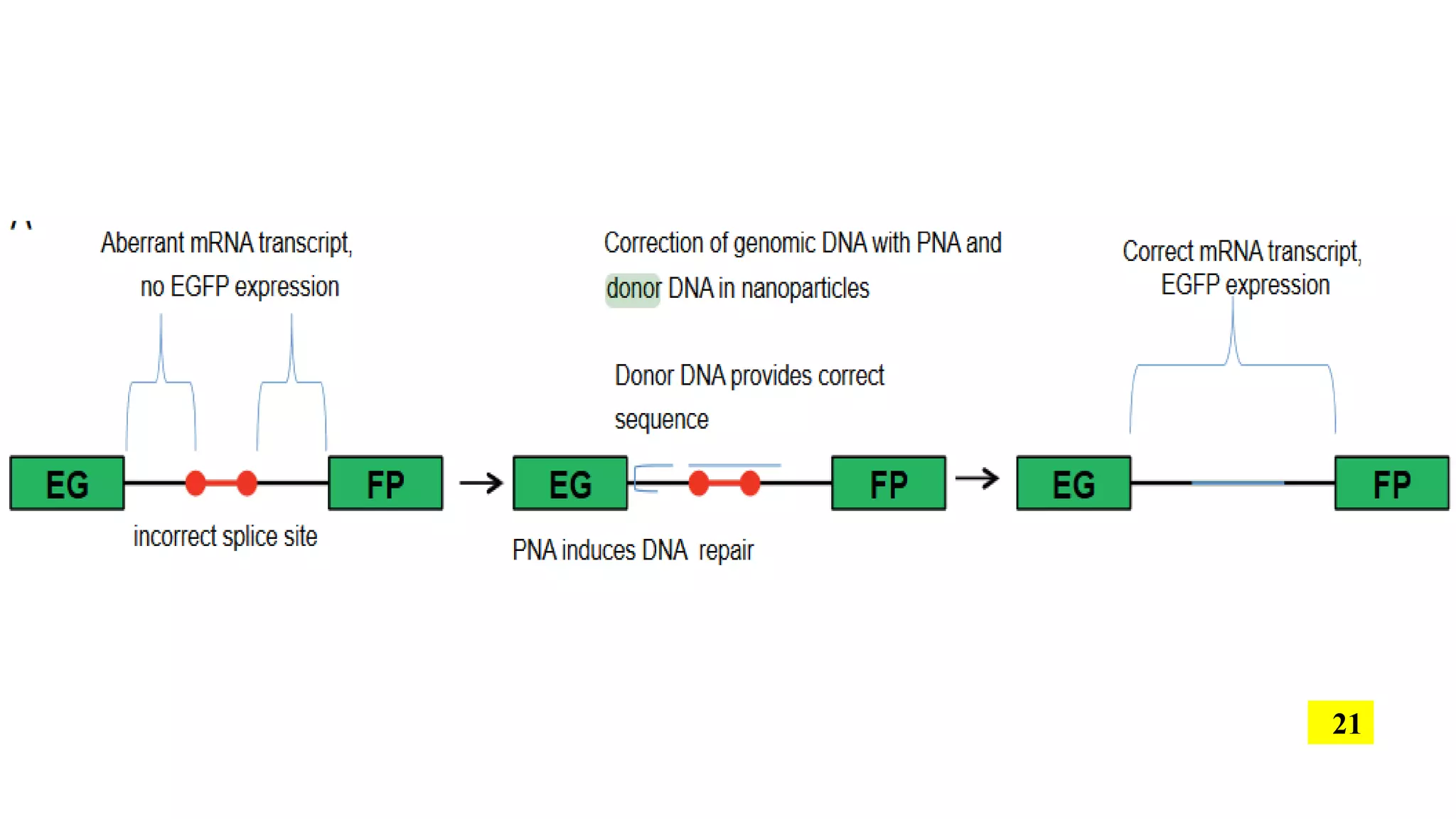
Triplex technologies to induce specified sequence
modifications
• Initial experiments (1993):
• Using TFOs to deliver conjugated mutagens, such as psoralen, to induce
gene knockout.
• Surprising finding from the other study (1993):
• Triplex-forming sequences were associated with recombination events in
an orientation and length-dependent manner 6
Pre-PNA
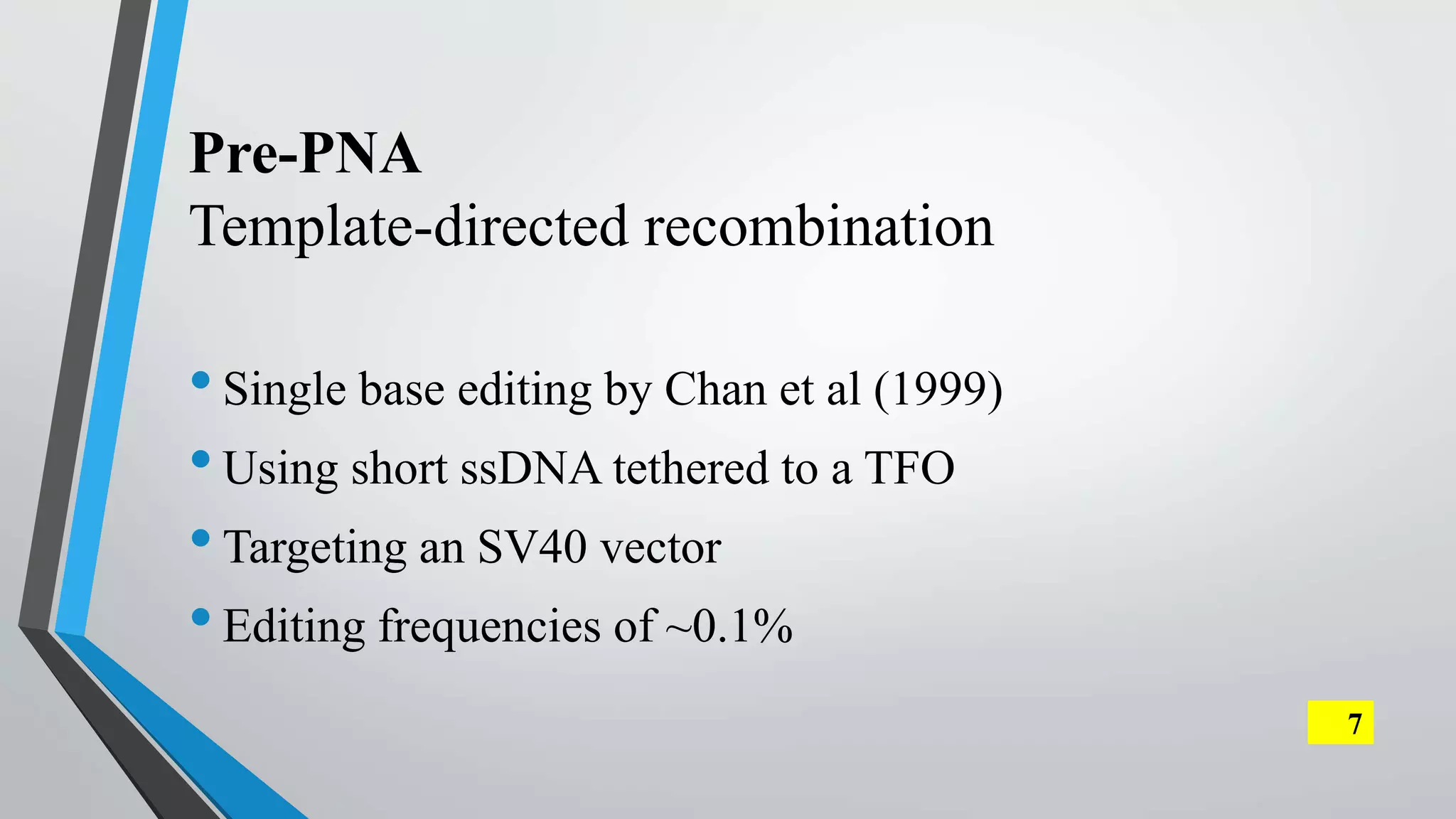
Template-directed recombination
•Single base editing by Chan et al (1999)
•Using short ssDNA tethered to a TFO
•Targeting an SV40 vector
•Editing frequencies of ~0.1%
7
Triplex-forming oligonucleotides (TFOs)
• ssDNA that associate with the major groove of a DNA helix at
polypurine stretches via Hoogsteen hydrogen bonding (H-
bonding).
8
Pre-PNA
A proof-of-principle for using TFOs to induce site-specific
recombination
• Datta et al. (2001, using cell-free extracts)
• The covalent linkage between donor and TFO is not a requirement
for editing!
Triplex formation is the key event!!!
• Strand breaks secondary to triplex repair could be responsible for
forming recombination.
9
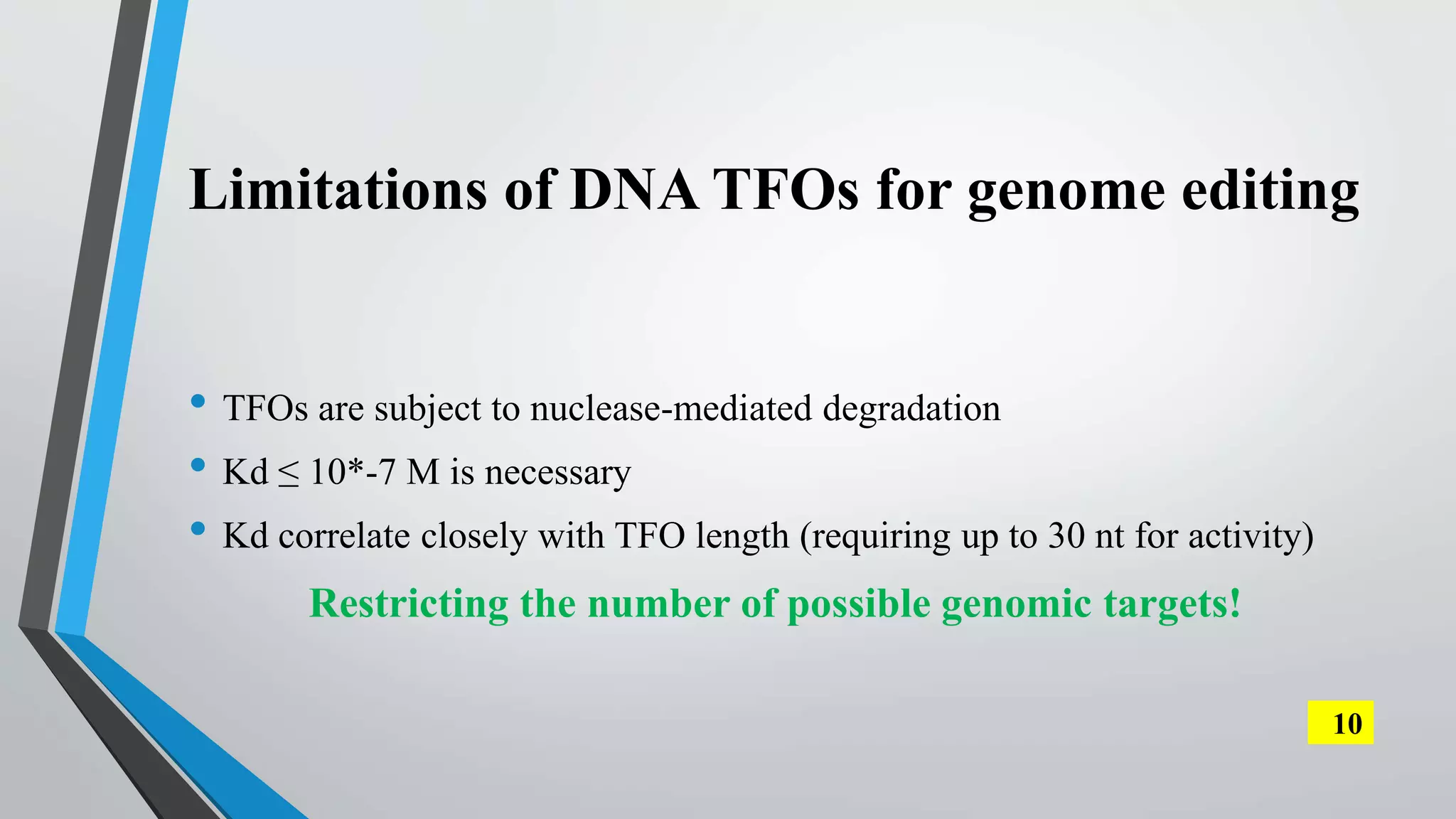
Limitations of DNA TFOs for genome editing
• TFOs are subject to nuclease-mediated degradation
• Kd ≤ 10*-7 M is necessary
• Kd correlate closely with TFO length (requiring up to 30 nt for activity)
Restricting the number of possible genomic targets!
10
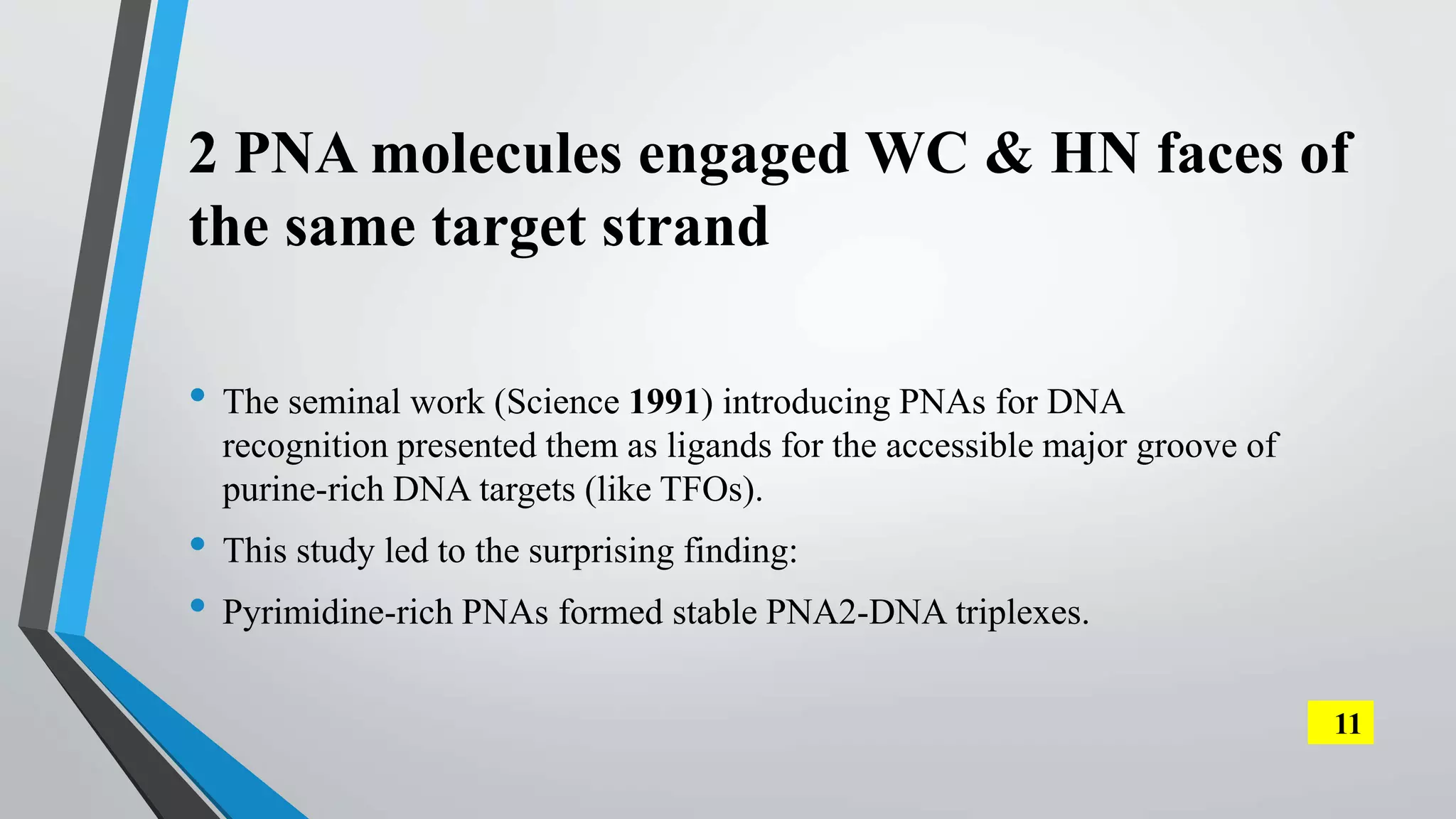
2 PNA molecules engaged WC & HN faces of
the same target strand
• The seminal work (Science 1991) introducing PNAs for DNA
recognition presented them as ligands for the accessible major groove of
purine-rich DNA targets (like TFOs).
• This study led to the surprising finding:
• Pyrimidine-rich PNAs formed stable PNA2-DNA triplexes.
11
PNA triplex formation in comparison to
DNA TFO
• TFOs bind along the exposed major groove
• PNA is capable of displacing the opposite strand and creating P-
loop
• Exceptionally stable heterotriplex (by 2 PNA strand) relative to
DNA:DNA:DNA homotriplexes
12
PNA Chemistry:
Higher affinity, stability & flexibility
• Short (10 mer) PNAs bind with Kd ~ 10*-9 to complementary targets
• Improve affinity (KD ~ 10*-12) With apposite modifications
• Resistance to nucleases/proteases degradation
• Ease of synthesis (similar to peptide syntheses)
• Flexibility in design and conformation to optimize DNA binding efficacy
13
Pseudoisocytosi instead of C
• HN pairing by PNA, shows a strict pH dependence
• pKa < pH for C under physiologic conditions (un-protonated)
• Acidic conditions requirement for strand invasion
• Pseudoisocytosi (J) mimics the protonated form of C
• (J) was introduced to facilitate pH-independent binding
• strand invasion at 3-fold lower concentrations of bisPNA
14
15
bisPNAs were the first PNAs successfully used
for gene editing applications
•Accelerated triplex formation relative to single
pyrimidine PNAs
•Highly stable triplex formation
•Optimized nucleobase isomers
•Improved binding kinetics
16
17
Works with bisPNA
Year Authors Reagents Delivery Target gene
Frequency of
edition
Cell
2002
Rogers
et al
bisPNAs tethered
to
short ssDNA
-
G to C in supFG1
plasmid
0.08%
4-fold than
donor DNA
alone
cell-free
extracts
2008
Chin et
al
bisPNAs & 60
mer ssDNA
Co-nucleofection
IVS2-1G > A placed
within a single
copy of the GFP gene
Restored GFP
expression in
0.2% of cells
CHO
2011
McNeer
et al.
bisPNAs &
ssDNA
PLGA NPs β-globin IVS2 intron 1% CD34+ cells
2013
Chin et
al
bisPNAs & 100
mer ssDNA
donors
Nucleofection
Promoter of the human -
globin gene (-117 G > A)
1.63% CD34+ cells18
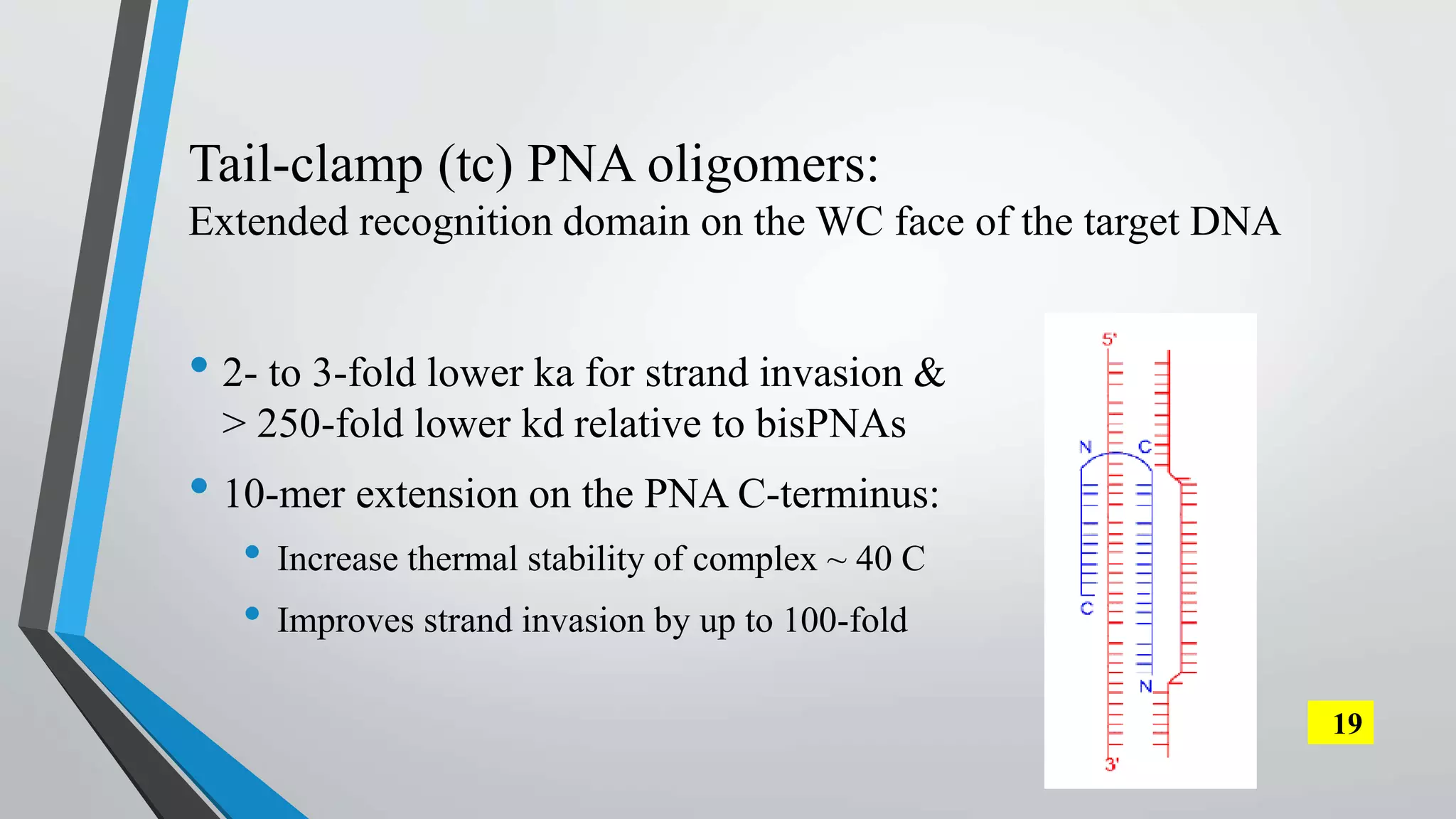
Tail-clamp (tc) PNA oligomers:
Extended recognition domain on the WC face of the target DNA
• 2- to 3-fold lower ka for strand invasion &
> 250-fold lower kd relative to bisPNAs
• 10-mer extension on the PNA C-terminus:
• Increase thermal stability of complex ~ 40 C
• Improves strand invasion by up to 100-fold
19
Works with tcPNAs
Year Authors Reagents Delivery Target gene Frequency of edition Cell
2011
Schleifm
an et al
tcPNAs & 2
ssDNA
Nucleofection
CCR5 (to introduce a
stop codon)
2.46% in comparison to
0.54% (bisPNAs)
THP-1 cell lines and CD34+
cells
2013
Schleifm
an et al
tcPNAs& 2
ssDNA
PLGA NPs
CCR5 (to introduce a
stop codon)
0.97% PBMCs
Human PBMC engrafted mice were challenged with HIV.
Higher overall CD4+ T-cell counts similar to uninfected mice with concordant viral RNA levels approaching undetected levels
2013
McNeer
et
al
tcPNAs and
ssDNA
systemic
injection of NPs
CCR5 and β-globin loci 0.43% total editing
Mice engrafted with human
CD34+ HSCs
The first in vivo application of PNA-mediated gene editing.
(>14%) in some isolated human progenitor-derived colonies.
2015
Fields et
al.
tcPNAand
ssDNA
intranasal
delivery of NPs
β-globin intron/GFP
reporter
0.6% in alveolar
macrophages and 0.3%
in
alveolar epithelial cells
In vivo
lungs of mice
2015
McNeer
et al.
tcPNA/DNA
donors
intranasal
delivery of NPs
F508del mutation of the
cystic fibrosis CFTR
gene
5.7% correction of
CFTR F508del mutation
in lung epithelium
In vivo
lungs of mice
20
21
Gamma PNA
22
γ-PNA
Modifications at gamma (γ)-carbon of the backbone
• Accelerated association and decelerates dissociation
•γ-PNA itself forms an α-helical structure there:
• Reducing the self-aggregation
• Improving the solubility
• Forming a more stable duplex with the target DNA
• Higher binding affinity to the target.
23
γ-PNA
Little or no need to HN interaction, expanded genomic
targeting range
• Does not require significant (or any) H-bonding on the HN face of
a polypurine DNA target
• Enhanced H-bonding on the WC face of even mixed targets
• Single, monomeric γ-PNA (15 mer) was effective for sequence-
specific strand invasion
24
Works with γ-PNA
Year Authors Reagents Delivery Target gene Frequency of edition Cell
2014
Bahal et
al.
γ-PNA and
ssDNA donors
NPs
β-thalassemia
intron IVS2/eGFP
reporter
~ 4-fold higher editing
frequencies over
unmodified tcPNAs
with identical sequences
Ex vivo & in vivo
mouse primary BM cells
2016
Bahal et
al.
γ-PNA and
ssDNA donors
Intravenous
Injection of NPs
IVS2 intron (position
654 – T > C).
Frequency of 5% with a
single treatment
Mice contain no alleles for
murine -globin and only a
single copy of human -
globin
This was a follow up study of 2014 research. The authors described impressive disease phenotype amelioration.
Treated animals demonstrated dramatic reductions in spleen size, reduced reticulocytosis, as well as a persistent, to at least 140 days,
elevations in hemoglobin to wild-type ranges.
2018
Ricciardi
et al
γ-tcPNA 60 bp
donor ssDNA
PLGA NPs
intraamniotic
and intravenous
via the vitelline
vein.
β-globin gene
IVS2-654 mutation
~6% in total BM and
~10% in hematopoietic
progenitor cells after a
single in utero NP
treatment.
In utero
• Repair pathways are highly expressed in fetal liver HSCs
• Population of fetal liver HSCs is rapidly expanding, adult BM HSCs that are 90–95% quiescent
• Treated mice had 100% survival 500 days after in utero NP treatment
25
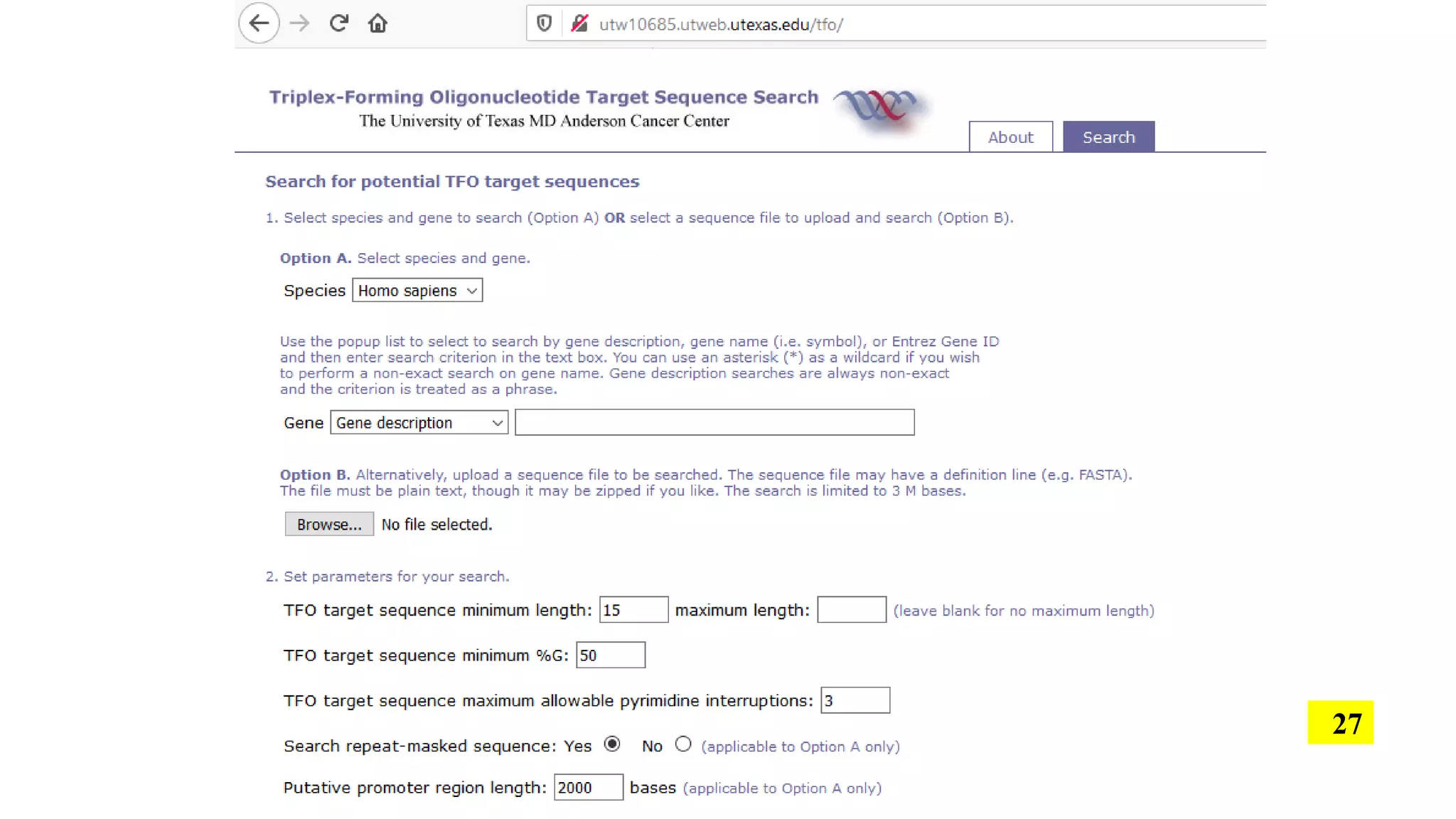
Web tool developed by the Vazquez group to identify
polypurine
•To easy identifications of PNA-triplex targeting
sites across human and mouse genomes
• http://utw10685.utweb.utexas.edu/tfo/
26
27
PNA delivery
• Biological application is limited by an inability to passively diffuse
across cellular membranes
• Peptide-Mediated Delivery
• Nanoparticles
28
Peptide-Mediated Delivery
• PNAs bearing R sidechains at α position
• Enhanced perinuclear cellular uptake
• R sidechains at γ position
• Uptake properties were retained
• Preorganizing the PNA into a right-handed helix
29
Peptide-Mediated Delivery of
• CPPs
• Penetratin
• TAT
• When coupled to a TAT peptide, the PNAs were completely inactive, unless accompanied by the
addition of chloroquine
• R9
• Antennapedia 16 aa
• pHLIP (pH (low) insertion peptide))
• As pH is reduced, pHLIP becomes protonated, resulting in a transmembrane -helix with its C-
terminus inserted across the cellular membrane 30
pHLIP (pH (low) insertion peptide))
•Cheng et al. (2015) delivered PNAs against
oncomiR-155, resulting in significant delays in
tumor growth in vivo
31
Limitations of peptide delivery
• Co-delivery of donor DNA may require additional conjugatios
• Need for excessively high and repeated dosing (10–50 mg/kg)
• CPP
• Endosomal entrapment
• Requiring the use of lysosomotropic agents
• pHLIP
• Is not suitable for delivery to non-acidic tissues
• Less effective for delivery of > 25 mer PNA 32
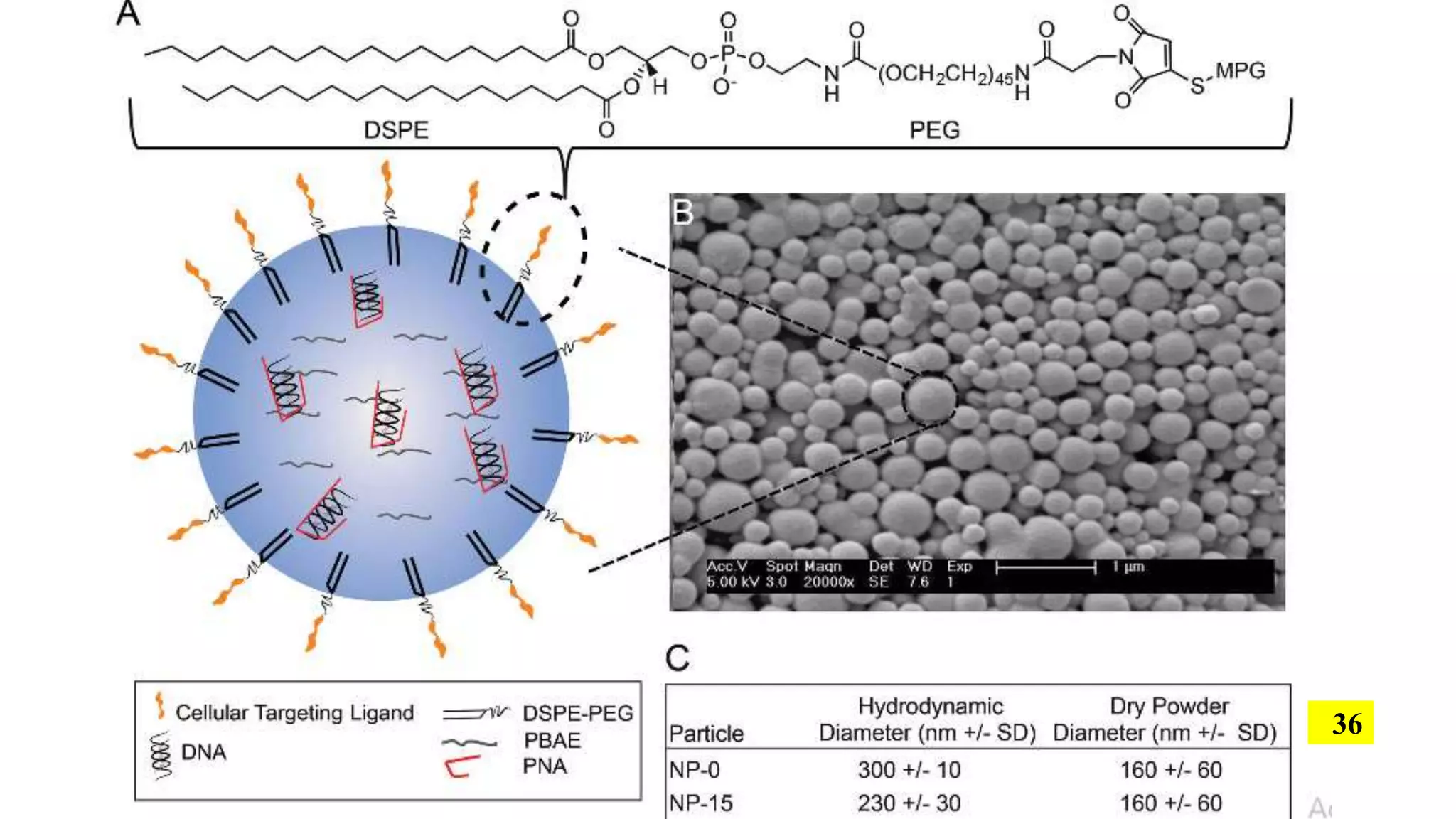
Recent work with PNAs has focused on the
development of polymeric nanoparticles (NPs)
In particular for in vivo delivery
33
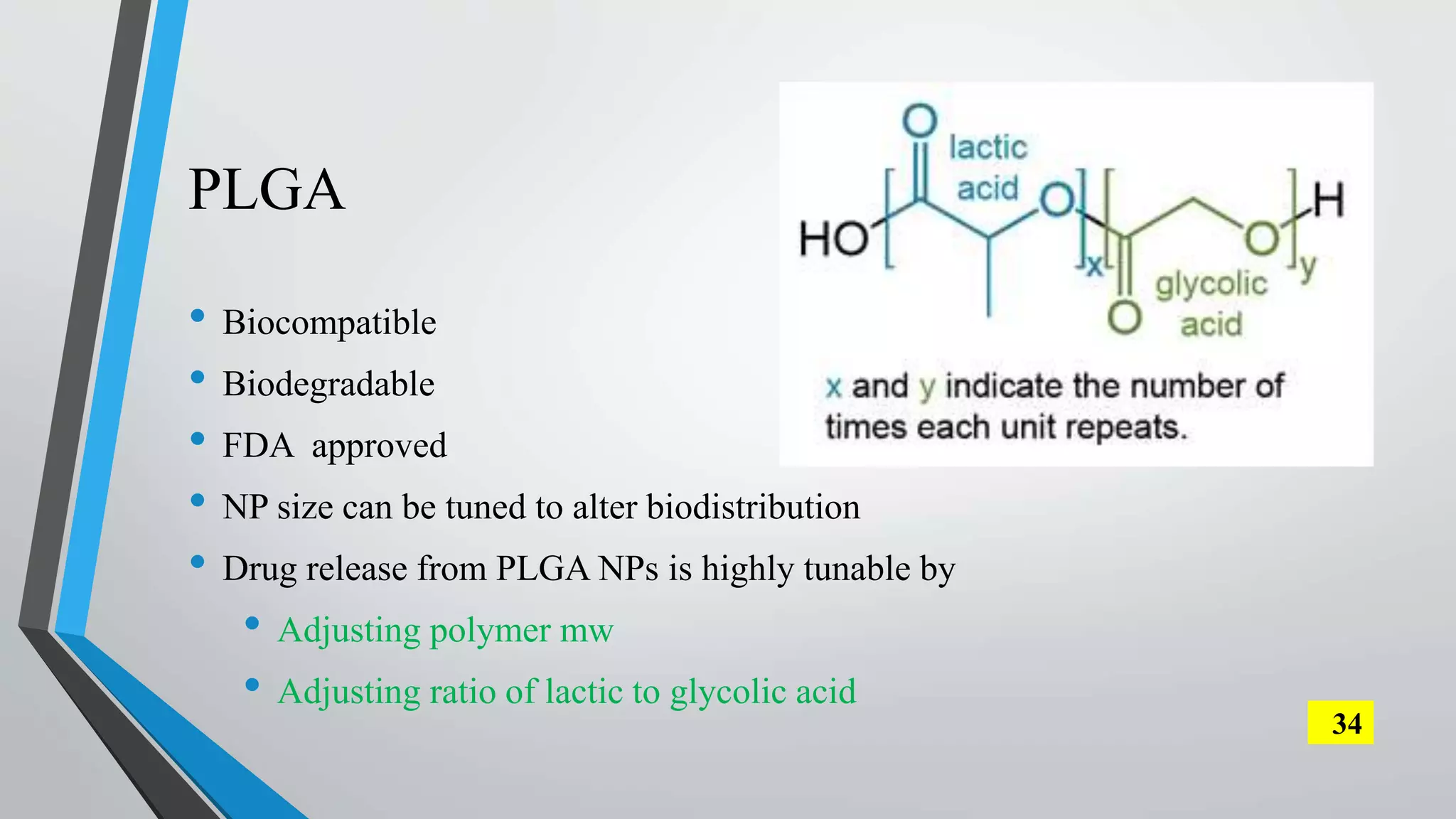
PLGA
• Biocompatible
• Biodegradable
• FDA approved
• NP size can be tuned to alter biodistribution
• Drug release from PLGA NPs is highly tunable by
• Adjusting polymer mw
• Adjusting ratio of lactic to glycolic acid
34
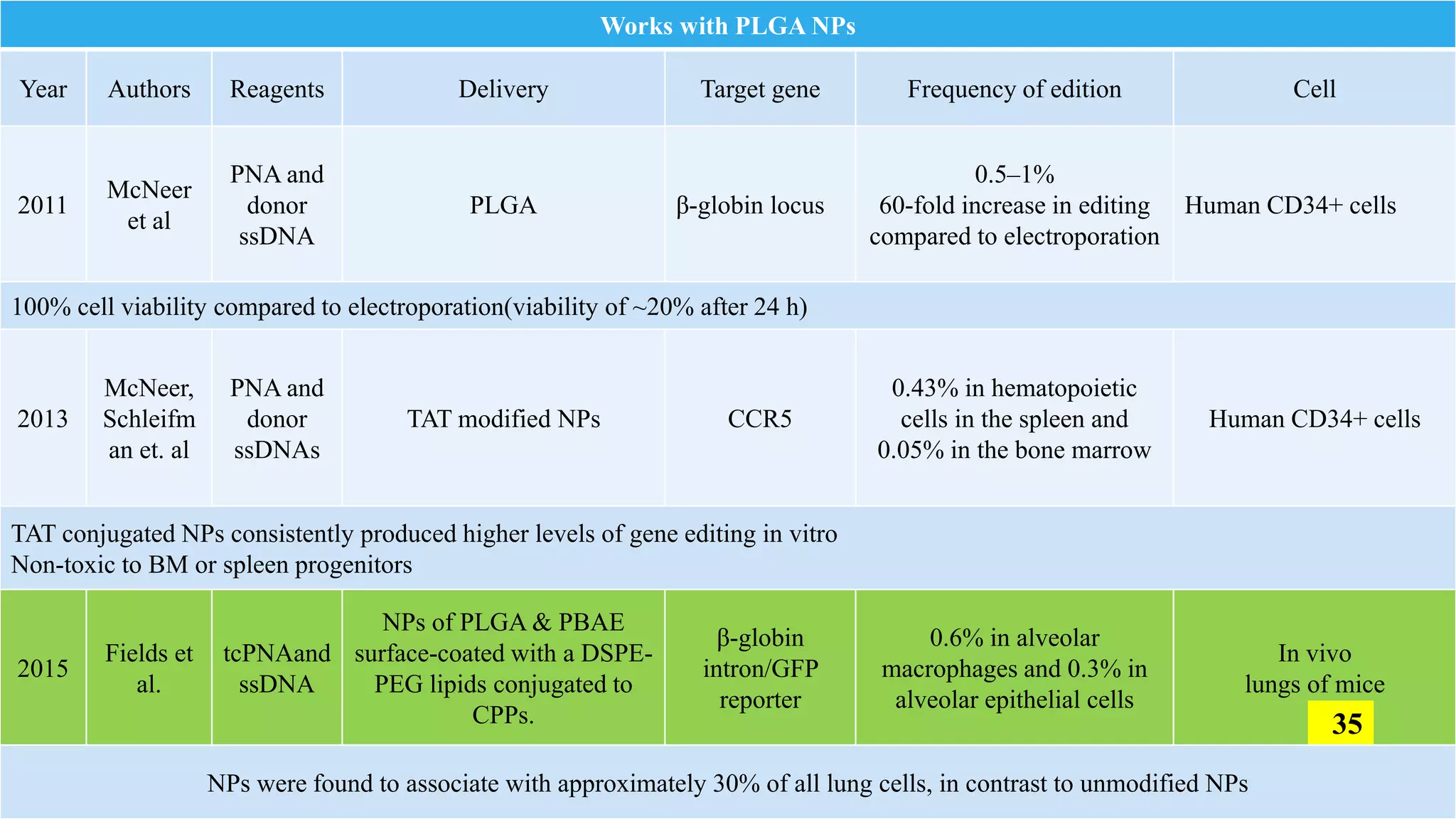
Works with PLGA NPs
Year Authors Reagents Delivery Target gene Frequency of edition Cell
2011
McNeer
et al
PNA and
donor
ssDNA
PLGA β-globin locus
0.5–1%
60-fold increase in editing
compared to electroporation
Human CD34+ cells
100% cell viability compared to electroporation(viability of ~20% after 24 h)
2013
McNeer,
Schleifm
an et. al
PNA and
donor
ssDNAs
TAT modified NPs CCR5
0.43% in hematopoietic
cells in the spleen and
0.05% in the bone marrow
Human CD34+ cells
TAT conjugated NPs consistently produced higher levels of gene editing in vitro
Non-toxic to BM or spleen progenitors
2015
Fields et
al.
tcPNAand
ssDNA
NPs of PLGA & PBAE
surface-coated with a DSPE-
PEG lipids conjugated to
CPPs.
β-globin
intron/GFP
reporter
0.6% in alveolar
macrophages and 0.3% in
alveolar epithelial cells
In vivo
lungs of mice
NPs were found to associate with approximately 30% of all lung cells, in contrast to unmodified NPs
35
36
Mechanisms of PNA mediated gene editing
• Depends on endogenous cellular factors to detect anomalous
PNA/DNA structures
• PNA editing relies on nucleotide excision repair (NER)
• Non-mutagenic repair pathway
• Removal of helix-distorting lesions
37
NER relies on a network of factors
• Context-specific recognition factors
• XPC
• CSA/CSB
• XPA/RPA
• Specialized helicases
• XPD
• XPB
• Endonucleases that generate ss nicks
• XPG
• XPF 38
XPA is a central NER factor responsible for
lesion detection and factor assembly
•XPA-depleted cell-free HeLa extracts showed
marked reductions in PNA repair and
recombination
39
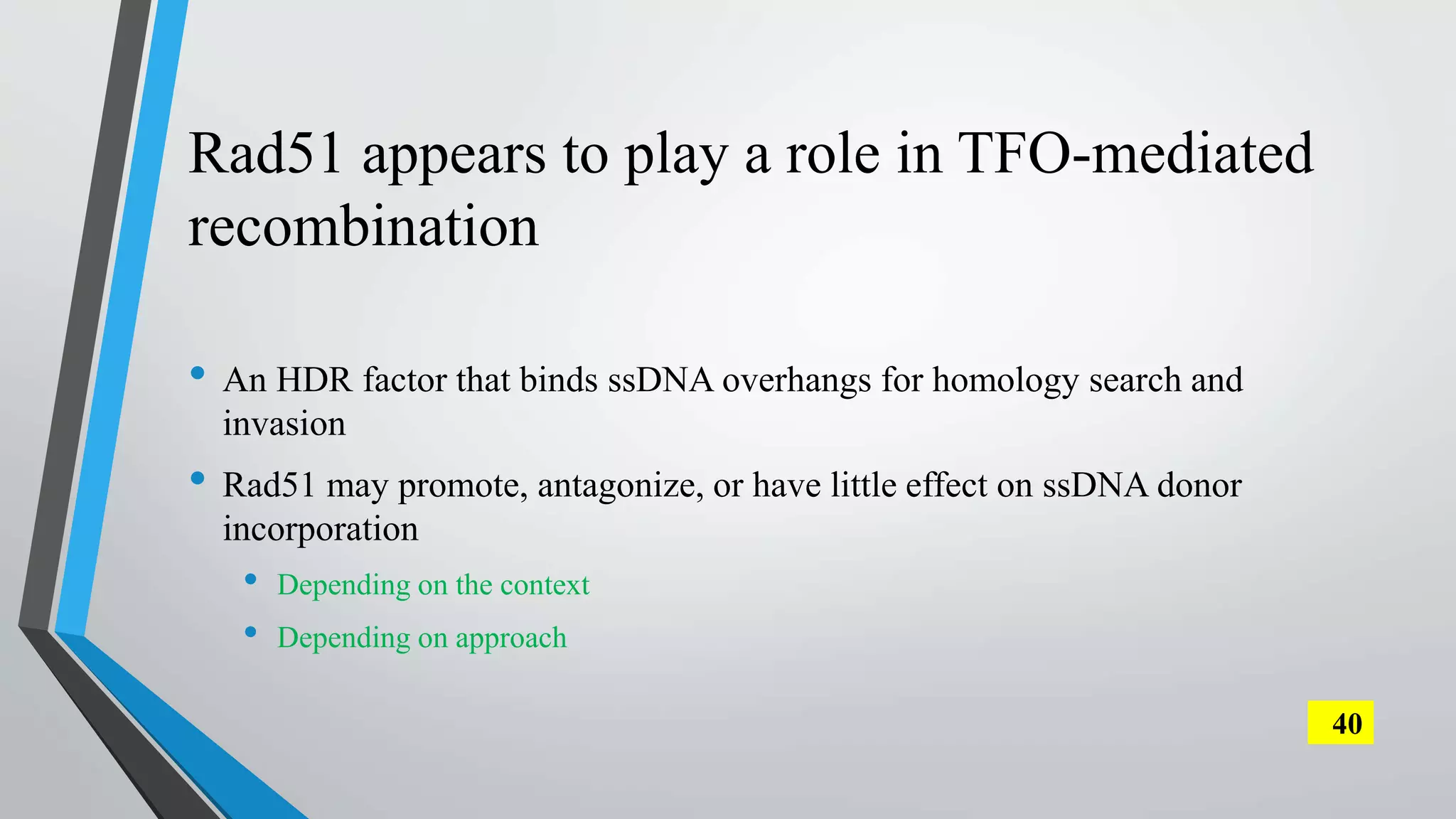
Rad51 appears to play a role in TFO-mediated
recombination
• An HDR factor that binds ssDNA overhangs for homology search and
invasion
• Rad51 may promote, antagonize, or have little effect on ssDNA donor
incorporation
• Depending on the context
• Depending on approach
40
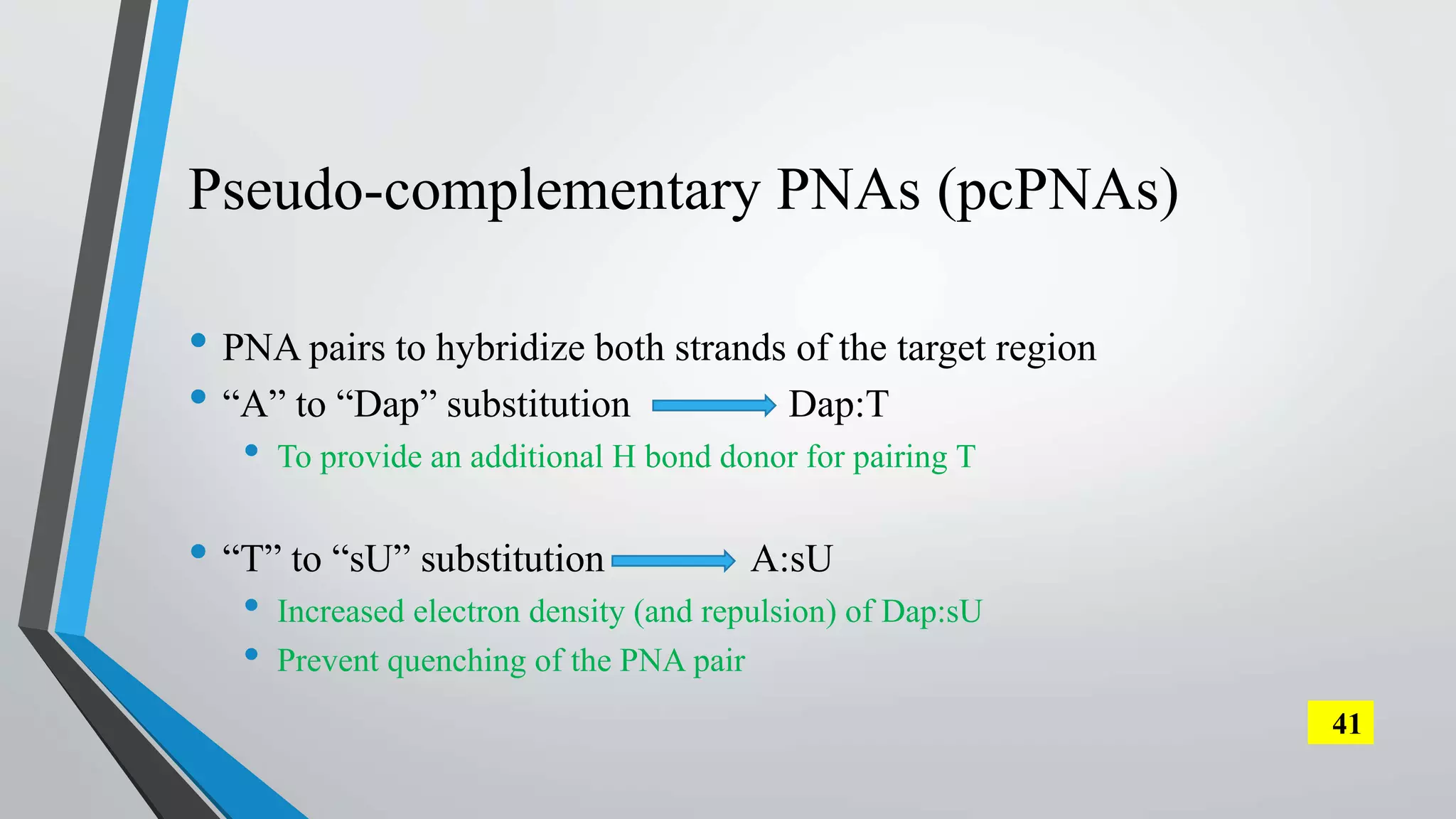
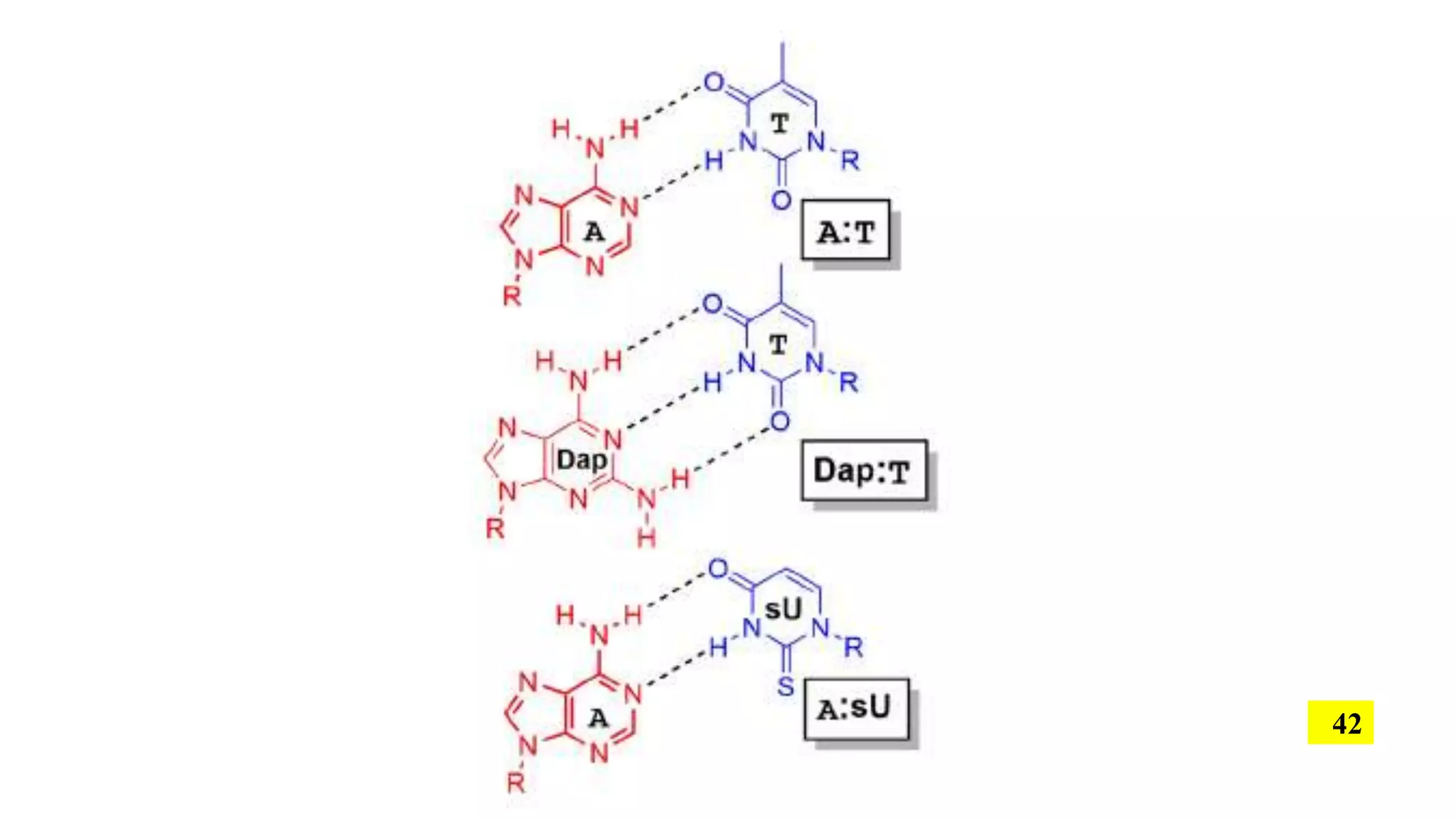
Pseudo-complementary PNAs (pcPNAs)
• PNA pairs to hybridize both strands of the target region
• “A” to “Dap” substitution Dap:T
• To provide an additional H bond donor for pairing T
• “T” to “sU” substitution A:sU
• Increased electron density (and repulsion) of Dap:sU
• Prevent quenching of the PNA pair
41
42
pcPNAs are capable of inducing targeted
recombination with a ssDNA template
•In a manner distinct from triplex-forming PNAs
•NER pathways may also contribute to pcPNA-mediated
editing
43
ssPNAs invade gDNA to target a single strand
of DNA directly by WC pairing
•No sequence restriction
•Do not need to accommodate Hoogsteen binding
44
Year Authors Reagents Delivery Target gene Frequency of edition Cell
2009
Lonkar et
al.
with a pair of
opposite strand-
binding pcPNAs
and ssDNA donor
Electroporation
GFP-IVS2-1 -
thalassemia
reporter
0.78% correctly edited, GFP+
cells by FACS
CHO
2010
Kayali,
R. et al.
anti-template
strand and anti-
coding strand 18
mer ssPNAs &
ssODNs
Transfection by
Lipofectamine
2000
splicing
mutation in the
dystrophin gene
Lipofectamine. 2000:
~3% and ~7%
Two weeks after treatment,
qPCR methods determined 2.8%
of template strand and 3.3% of
coding strand targeted alleles to
be edited.
Myoblasts derived
from a DMD mouse
model
2014
Nik-Ahd,
F.;
Bertoni et
al.
anti-template
strand and anti-
coding strand 18
mer ssPNAs &
ssODNs
Transfection by
Lipofectamine
2000
A‐to‐T
mutation in
exon 10 of the
mdx5cv
dystrophin gene
1.5% and 2.1%
frequency of dystrophin-positive
muscle fibers increased with
time
Ex vivo
Muscle Stem Cells
These results suggest the exciting possibility that polymerases may be able to use PNAs as a viable substrate to introduce
deoxynucleotides opposite PNA nucleobases. In this particular case, one could imagine MMR and BER pathways of repair implicated in
processing
45
Thank you for your attention
46

Genome editing by PNA

  • 1.
    ‫خدا‬ ‫نام‬ ‫به‬ ArefFarokhi-Fard aarreeff@ymail.com 1
  • 2.
    Peptide Nucleic Acidsand Gene Editing: Perspectives on Structure and Repair Nicholas G. Economos Stanley Oyaghire Elias Quijano Adele S. Ricciardi W. Mark Saltzman Peter M. Glazer Yale University, School of Medicine, New Haven, USA. 2 2020
  • 3.
    DNA structures: Criticalroles in gene regulation, telomere protection, and recombination • B-DNA: Right-handed double helical structure • Z-DNA: Left-handed double helical • H-DNA: Triplex DNA • G-quadruplex: Tetraplex DNA • R-loops: DNA/RNA looping hybrids 3
  • 4.
    PNA is asynthetic DNA analogues that feature a polyamide backbone • Neutrally charged polyamide backbone • Minimum repulsive negative forces between backbones • High-affinity base-paired with DNA 4
  • 5.
  • 6.
    Pre-PNA Triplex technologies toinduce specified sequence modifications • Initial experiments (1993): • Using TFOs to deliver conjugated mutagens, such as psoralen, to induce gene knockout. • Surprising finding from the other study (1993): • Triplex-forming sequences were associated with recombination events in an orientation and length-dependent manner 6
  • 7.
    Pre-PNA Template-directed recombination •Single baseediting by Chan et al (1999) •Using short ssDNA tethered to a TFO •Targeting an SV40 vector •Editing frequencies of ~0.1% 7
  • 8.
    Triplex-forming oligonucleotides (TFOs) •ssDNA that associate with the major groove of a DNA helix at polypurine stretches via Hoogsteen hydrogen bonding (H- bonding). 8
  • 9.
    Pre-PNA A proof-of-principle forusing TFOs to induce site-specific recombination • Datta et al. (2001, using cell-free extracts) • The covalent linkage between donor and TFO is not a requirement for editing! Triplex formation is the key event!!! • Strand breaks secondary to triplex repair could be responsible for forming recombination. 9
  • 10.
    Limitations of DNATFOs for genome editing • TFOs are subject to nuclease-mediated degradation • Kd ≤ 10*-7 M is necessary • Kd correlate closely with TFO length (requiring up to 30 nt for activity) Restricting the number of possible genomic targets! 10
  • 11.
    2 PNA moleculesengaged WC & HN faces of the same target strand • The seminal work (Science 1991) introducing PNAs for DNA recognition presented them as ligands for the accessible major groove of purine-rich DNA targets (like TFOs). • This study led to the surprising finding: • Pyrimidine-rich PNAs formed stable PNA2-DNA triplexes. 11
  • 12.
    PNA triplex formationin comparison to DNA TFO • TFOs bind along the exposed major groove • PNA is capable of displacing the opposite strand and creating P- loop • Exceptionally stable heterotriplex (by 2 PNA strand) relative to DNA:DNA:DNA homotriplexes 12
  • 13.
    PNA Chemistry: Higher affinity,stability & flexibility • Short (10 mer) PNAs bind with Kd ~ 10*-9 to complementary targets • Improve affinity (KD ~ 10*-12) With apposite modifications • Resistance to nucleases/proteases degradation • Ease of synthesis (similar to peptide syntheses) • Flexibility in design and conformation to optimize DNA binding efficacy 13
  • 14.
    Pseudoisocytosi instead ofC • HN pairing by PNA, shows a strict pH dependence • pKa < pH for C under physiologic conditions (un-protonated) • Acidic conditions requirement for strand invasion • Pseudoisocytosi (J) mimics the protonated form of C • (J) was introduced to facilitate pH-independent binding • strand invasion at 3-fold lower concentrations of bisPNA 14
  • 15.
  • 16.
    bisPNAs were thefirst PNAs successfully used for gene editing applications •Accelerated triplex formation relative to single pyrimidine PNAs •Highly stable triplex formation •Optimized nucleobase isomers •Improved binding kinetics 16
  • 17.
  • 18.
    Works with bisPNA YearAuthors Reagents Delivery Target gene Frequency of edition Cell 2002 Rogers et al bisPNAs tethered to short ssDNA - G to C in supFG1 plasmid 0.08% 4-fold than donor DNA alone cell-free extracts 2008 Chin et al bisPNAs & 60 mer ssDNA Co-nucleofection IVS2-1G > A placed within a single copy of the GFP gene Restored GFP expression in 0.2% of cells CHO 2011 McNeer et al. bisPNAs & ssDNA PLGA NPs β-globin IVS2 intron 1% CD34+ cells 2013 Chin et al bisPNAs & 100 mer ssDNA donors Nucleofection Promoter of the human - globin gene (-117 G > A) 1.63% CD34+ cells18
  • 19.
    Tail-clamp (tc) PNAoligomers: Extended recognition domain on the WC face of the target DNA • 2- to 3-fold lower ka for strand invasion & > 250-fold lower kd relative to bisPNAs • 10-mer extension on the PNA C-terminus: • Increase thermal stability of complex ~ 40 C • Improves strand invasion by up to 100-fold 19
  • 20.
    Works with tcPNAs YearAuthors Reagents Delivery Target gene Frequency of edition Cell 2011 Schleifm an et al tcPNAs & 2 ssDNA Nucleofection CCR5 (to introduce a stop codon) 2.46% in comparison to 0.54% (bisPNAs) THP-1 cell lines and CD34+ cells 2013 Schleifm an et al tcPNAs& 2 ssDNA PLGA NPs CCR5 (to introduce a stop codon) 0.97% PBMCs Human PBMC engrafted mice were challenged with HIV. Higher overall CD4+ T-cell counts similar to uninfected mice with concordant viral RNA levels approaching undetected levels 2013 McNeer et al tcPNAs and ssDNA systemic injection of NPs CCR5 and β-globin loci 0.43% total editing Mice engrafted with human CD34+ HSCs The first in vivo application of PNA-mediated gene editing. (>14%) in some isolated human progenitor-derived colonies. 2015 Fields et al. tcPNAand ssDNA intranasal delivery of NPs β-globin intron/GFP reporter 0.6% in alveolar macrophages and 0.3% in alveolar epithelial cells In vivo lungs of mice 2015 McNeer et al. tcPNA/DNA donors intranasal delivery of NPs F508del mutation of the cystic fibrosis CFTR gene 5.7% correction of CFTR F508del mutation in lung epithelium In vivo lungs of mice 20
  • 21.
  • 22.
  • 23.
    γ-PNA Modifications at gamma(γ)-carbon of the backbone • Accelerated association and decelerates dissociation •γ-PNA itself forms an α-helical structure there: • Reducing the self-aggregation • Improving the solubility • Forming a more stable duplex with the target DNA • Higher binding affinity to the target. 23
  • 24.
    γ-PNA Little or noneed to HN interaction, expanded genomic targeting range • Does not require significant (or any) H-bonding on the HN face of a polypurine DNA target • Enhanced H-bonding on the WC face of even mixed targets • Single, monomeric γ-PNA (15 mer) was effective for sequence- specific strand invasion 24
  • 25.
    Works with γ-PNA YearAuthors Reagents Delivery Target gene Frequency of edition Cell 2014 Bahal et al. γ-PNA and ssDNA donors NPs β-thalassemia intron IVS2/eGFP reporter ~ 4-fold higher editing frequencies over unmodified tcPNAs with identical sequences Ex vivo & in vivo mouse primary BM cells 2016 Bahal et al. γ-PNA and ssDNA donors Intravenous Injection of NPs IVS2 intron (position 654 – T > C). Frequency of 5% with a single treatment Mice contain no alleles for murine -globin and only a single copy of human - globin This was a follow up study of 2014 research. The authors described impressive disease phenotype amelioration. Treated animals demonstrated dramatic reductions in spleen size, reduced reticulocytosis, as well as a persistent, to at least 140 days, elevations in hemoglobin to wild-type ranges. 2018 Ricciardi et al γ-tcPNA 60 bp donor ssDNA PLGA NPs intraamniotic and intravenous via the vitelline vein. β-globin gene IVS2-654 mutation ~6% in total BM and ~10% in hematopoietic progenitor cells after a single in utero NP treatment. In utero • Repair pathways are highly expressed in fetal liver HSCs • Population of fetal liver HSCs is rapidly expanding, adult BM HSCs that are 90–95% quiescent • Treated mice had 100% survival 500 days after in utero NP treatment 25
  • 26.
    Web tool developedby the Vazquez group to identify polypurine •To easy identifications of PNA-triplex targeting sites across human and mouse genomes • http://utw10685.utweb.utexas.edu/tfo/ 26
  • 27.
  • 28.
    PNA delivery • Biologicalapplication is limited by an inability to passively diffuse across cellular membranes • Peptide-Mediated Delivery • Nanoparticles 28
  • 29.
    Peptide-Mediated Delivery • PNAsbearing R sidechains at α position • Enhanced perinuclear cellular uptake • R sidechains at γ position • Uptake properties were retained • Preorganizing the PNA into a right-handed helix 29
  • 30.
    Peptide-Mediated Delivery of •CPPs • Penetratin • TAT • When coupled to a TAT peptide, the PNAs were completely inactive, unless accompanied by the addition of chloroquine • R9 • Antennapedia 16 aa • pHLIP (pH (low) insertion peptide)) • As pH is reduced, pHLIP becomes protonated, resulting in a transmembrane -helix with its C- terminus inserted across the cellular membrane 30
  • 31.
    pHLIP (pH (low)insertion peptide)) •Cheng et al. (2015) delivered PNAs against oncomiR-155, resulting in significant delays in tumor growth in vivo 31
  • 32.
    Limitations of peptidedelivery • Co-delivery of donor DNA may require additional conjugatios • Need for excessively high and repeated dosing (10–50 mg/kg) • CPP • Endosomal entrapment • Requiring the use of lysosomotropic agents • pHLIP • Is not suitable for delivery to non-acidic tissues • Less effective for delivery of > 25 mer PNA 32
  • 33.
    Recent work withPNAs has focused on the development of polymeric nanoparticles (NPs) In particular for in vivo delivery 33
  • 34.
    PLGA • Biocompatible • Biodegradable •FDA approved • NP size can be tuned to alter biodistribution • Drug release from PLGA NPs is highly tunable by • Adjusting polymer mw • Adjusting ratio of lactic to glycolic acid 34
  • 35.
    Works with PLGANPs Year Authors Reagents Delivery Target gene Frequency of edition Cell 2011 McNeer et al PNA and donor ssDNA PLGA β-globin locus 0.5–1% 60-fold increase in editing compared to electroporation Human CD34+ cells 100% cell viability compared to electroporation(viability of ~20% after 24 h) 2013 McNeer, Schleifm an et. al PNA and donor ssDNAs TAT modified NPs CCR5 0.43% in hematopoietic cells in the spleen and 0.05% in the bone marrow Human CD34+ cells TAT conjugated NPs consistently produced higher levels of gene editing in vitro Non-toxic to BM or spleen progenitors 2015 Fields et al. tcPNAand ssDNA NPs of PLGA & PBAE surface-coated with a DSPE- PEG lipids conjugated to CPPs. β-globin intron/GFP reporter 0.6% in alveolar macrophages and 0.3% in alveolar epithelial cells In vivo lungs of mice NPs were found to associate with approximately 30% of all lung cells, in contrast to unmodified NPs 35
  • 36.
  • 37.
    Mechanisms of PNAmediated gene editing • Depends on endogenous cellular factors to detect anomalous PNA/DNA structures • PNA editing relies on nucleotide excision repair (NER) • Non-mutagenic repair pathway • Removal of helix-distorting lesions 37
  • 38.
    NER relies ona network of factors • Context-specific recognition factors • XPC • CSA/CSB • XPA/RPA • Specialized helicases • XPD • XPB • Endonucleases that generate ss nicks • XPG • XPF 38
  • 39.
    XPA is acentral NER factor responsible for lesion detection and factor assembly •XPA-depleted cell-free HeLa extracts showed marked reductions in PNA repair and recombination 39
  • 40.
    Rad51 appears toplay a role in TFO-mediated recombination • An HDR factor that binds ssDNA overhangs for homology search and invasion • Rad51 may promote, antagonize, or have little effect on ssDNA donor incorporation • Depending on the context • Depending on approach 40
  • 41.
    Pseudo-complementary PNAs (pcPNAs) •PNA pairs to hybridize both strands of the target region • “A” to “Dap” substitution Dap:T • To provide an additional H bond donor for pairing T • “T” to “sU” substitution A:sU • Increased electron density (and repulsion) of Dap:sU • Prevent quenching of the PNA pair 41
  • 42.
  • 43.
    pcPNAs are capableof inducing targeted recombination with a ssDNA template •In a manner distinct from triplex-forming PNAs •NER pathways may also contribute to pcPNA-mediated editing 43
  • 44.
    ssPNAs invade gDNAto target a single strand of DNA directly by WC pairing •No sequence restriction •Do not need to accommodate Hoogsteen binding 44
  • 45.
    Year Authors ReagentsDelivery Target gene Frequency of edition Cell 2009 Lonkar et al. with a pair of opposite strand- binding pcPNAs and ssDNA donor Electroporation GFP-IVS2-1 - thalassemia reporter 0.78% correctly edited, GFP+ cells by FACS CHO 2010 Kayali, R. et al. anti-template strand and anti- coding strand 18 mer ssPNAs & ssODNs Transfection by Lipofectamine 2000 splicing mutation in the dystrophin gene Lipofectamine. 2000: ~3% and ~7% Two weeks after treatment, qPCR methods determined 2.8% of template strand and 3.3% of coding strand targeted alleles to be edited. Myoblasts derived from a DMD mouse model 2014 Nik-Ahd, F.; Bertoni et al. anti-template strand and anti- coding strand 18 mer ssPNAs & ssODNs Transfection by Lipofectamine 2000 A‐to‐T mutation in exon 10 of the mdx5cv dystrophin gene 1.5% and 2.1% frequency of dystrophin-positive muscle fibers increased with time Ex vivo Muscle Stem Cells These results suggest the exciting possibility that polymerases may be able to use PNAs as a viable substrate to introduce deoxynucleotides opposite PNA nucleobases. In this particular case, one could imagine MMR and BER pathways of repair implicated in processing 45
  • 46.
    Thank you foryour attention 46

Editor's Notes

  • #21 authors transplanted marrow from tcPNA/DNA treated mice into untreated NOD-scid IL2rnull mice CCR5 modification was noted in recipient mice 10 weeks after serial transplantation
  • #26 authors transplanted marrow from tcPNA/DNA treated mice into untreated NOD-scid IL2rnull mice CCR5 modification was noted in recipient mice 10 weeks after serial transplantation
  • #41 TFOs tethered to ssDNA templates, Rad51 overexpression increases targeted recombination with an episomal vector [26]. Conversely, experiments with whole-cell extracts immunodepleted of Rad51 showed reduced recombination frequencies while Rad51 siRNA knockdown significantly reduced recombination frequencies when using dsDNA donors (plasmid), no such eect existed when using ssDNA donor molecules