Different crosses performed
      by Gregor Mendel


                 AAPD2BB
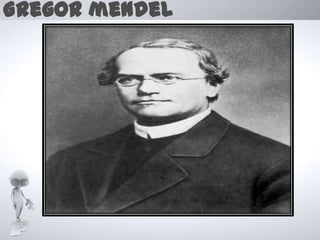
Gregor mendel
3 Hypothesis of Mendel
  „ Hereditary determinants do not
    “mix” or “contaminate each
    other”.

  „ Segregation is the method of
    separating alleles; they are
    independent from each other.

  „ Gametes produced by segregation
    come together in pairs at
    random.
Mendelian laws of
Inheritance
  1. Law of independent
     assortment
     -alleles separate
     independently to each other.

  2. Law of segregation
     -the paired genes separate in
     the formation of the
     reproductive cells. It forms
     together as a zygote.
3 Generalization of
Mendel
  1.   The f1 holds the dominant trait . In
       crossing a pure breeding variety , only
       one trait will appear in the f1 and that is
       the dominant trait.

  2. In crosses it doesn’t matter which parent
     variety contributes the
     gametes, reciprocal crosses will yield
     the same result

  3. The trait that doesn’t appear in f1 will
     appear in f2 in a 25% of each progency.

  Wild type: common/ dominant
2 traits:
  „ Morphological trait
    - It is the trait referring to the
      external or visible
      characteristics of traits; like
      phenotype.


  „ Molecular trait
    - It is the intrinsic characteristics in
      the organism; can’t be seen
      externally.
Monohyb
rid cross
• is a method of determining the
  inheritance pattern of a trait between
  two single organisms.

• is a cross between parents who are true-
  breeding for a trait

• Monohybrid inheritance is the inheritance
  of a single characteristic. The different
  forms of the characteristic are usually
  controlled by different alleles of the
  same gene.
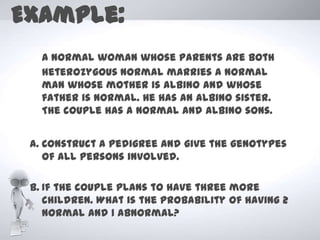
Example:
   A normal woman whose parents are both
   heterozygous normal marries a normal
   man whose mother is albino and whose
   father is normal. He has an albino sister.
   The couple has a normal and albino sons.


 a. Construct a pedigree and give the genotypes
    of all persons involved.

 b. If the couple plans to have three more
    children. What is the probability of having 2
    normal and 1 abnormal?
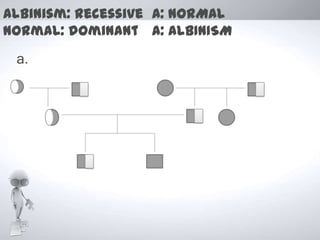
Albinism: recessive A: NORMAL
Normal: dominant a: ALBINISM
 a.
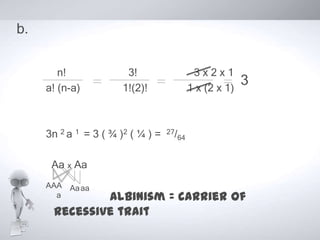
b.

        n!              3!                     3x2x1
     a! (n-a)          1!(2)!                 1 x (2 x 1)
                                                            3


     3n 2 a 1 = 3 ( ¾ )2 ( ¼ ) =   27/
                                         64


      Aa x Aa
     AAA Aa aa
       a      Albinism = carrier of
      recessive trait
Dihybrid
 cross
„ is a cross between F1 offspring of two
  individuals that differ in two traits of
  particular interest.

„ The cross between their offspring is
  referred to as a dihybrid cross, in which
  parents are both heterozygous.

„ is often used to test for dominant and
  recessive genes in two separate
  characteristics. Such a cross has a variety
  of uses in Mendelian genetics.
Example:

  • P1: yellow, round X green, wrinkled
  • F1: all yellow, round
  • F2: 9/16 yellow, round ; 3/16 yellow,
    wrinkled ; 3/16 green, round ; 1/16 green,
    wrinkled
Test cross

   „ It is a test for genotypes;
     -heterozygous - 1:1
     -homozygous ‟ 1:0

   „ This cross uses the recessive
     traits.
Example:

    1. D   x dd
    Dd Dd Dd Dd
    = DD


    2. D   x dd
    Dd Dd dd dd
    = Dd
Trihybrid
  cross
• The mating of two
  individuals, organisms, or
  strains that have different
  gene pairs that determine
  three specific traits or in
  which three particular
  characteristics or gene loci
  are being followed.
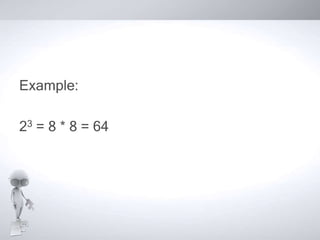
Example:

23 = 8 * 8 = 64
Fork-line method


   MEANING:
   „ The fork line method can be used by
     figuring the occurrence of each gene or
     set of genes to be found in the gamete, and
     then multiply them together.
   „ This can be multiplied by figuring each
     trait or combination of traits separate
     for both the male and female, or each
     gene individually regardless of sex.
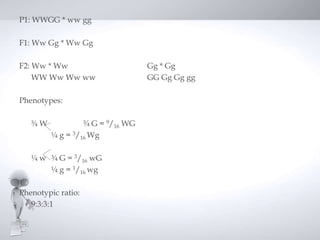
P1: WWGG * ww gg

F1: Ww Gg * Ww Gg

F2: Ww * Ww                      Gg * Gg
    WW Ww Ww ww                  GG Gg Gg gg

Phenotypes:

   ¾W            ¾ G = 9/16 WG
        ¼ g = 3/16 Wg

   ¼ w ¾ G = 3/16 wG
       ¼ g = 1/16 wg

Phenotypic ratio:
   9:3:3:1
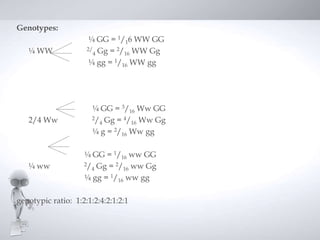
Genotypes:
                      ¼ GG = 1/16 WW GG
   ¼ WW              2/ Gg = 2/ WW Gg
                       4        16
                      ¼ gg = 1/16 WW gg


                      ¼ GG = 3/16 Ww GG
   2/4 Ww             2/ Gg = 4/ Ww Gg
                        4        16
                      ¼ g = 2/16 Ww gg

                    ¼ GG = 1/16 ww GG
   ¼ ww             2/ Gg = 2/ ww Gg
                      4        16
                    ¼ gg = 1/16 ww gg

genotypic ratio: 1:2:1:2:4:2:1:2:1
POLYHYBRID
  CROSS
• Describing an individual, organism, or
  strain that is heterozygous for more
  than three specific traits or gene pairs
  or that is the offspring of parents
  differing in more than three specific
  gene pairs.
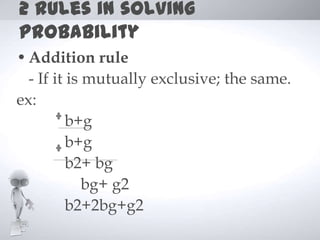
2 rules in solving
probability
• Addition rule
  - If it is mutually exclusive; the same.
ex:
          b+g
          b+g
          b2+ bg
             bg+ g2
          b2+2bg+g2
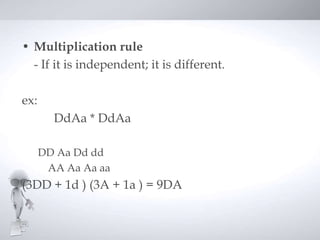
• Multiplication rule
  - If it is independent; it is different.

ex:
        DdAa * DdAa

      DD Aa Dd dd
       AA Aa Aa aa
(3DD + 1d ) (3A + 1a ) = 9DA

Genetics 120313104035-phpapp02 (2)

  • 1.
    Different crosses performed by Gregor Mendel AAPD2BB
  • 2.
  • 3.
    3 Hypothesis ofMendel „ Hereditary determinants do not “mix” or “contaminate each other”. „ Segregation is the method of separating alleles; they are independent from each other. „ Gametes produced by segregation come together in pairs at random.
  • 4.
    Mendelian laws of Inheritance 1. Law of independent assortment -alleles separate independently to each other. 2. Law of segregation -the paired genes separate in the formation of the reproductive cells. It forms together as a zygote.
  • 5.
    3 Generalization of Mendel 1. The f1 holds the dominant trait . In crossing a pure breeding variety , only one trait will appear in the f1 and that is the dominant trait. 2. In crosses it doesn’t matter which parent variety contributes the gametes, reciprocal crosses will yield the same result 3. The trait that doesn’t appear in f1 will appear in f2 in a 25% of each progency. Wild type: common/ dominant
  • 6.
    2 traits: „ Morphological trait - It is the trait referring to the external or visible characteristics of traits; like phenotype. „ Molecular trait - It is the intrinsic characteristics in the organism; can’t be seen externally.
  • 7.
  • 8.
    • is amethod of determining the inheritance pattern of a trait between two single organisms. • is a cross between parents who are true- breeding for a trait • Monohybrid inheritance is the inheritance of a single characteristic. The different forms of the characteristic are usually controlled by different alleles of the same gene.
  • 9.
    Example: A normal woman whose parents are both heterozygous normal marries a normal man whose mother is albino and whose father is normal. He has an albino sister. The couple has a normal and albino sons. a. Construct a pedigree and give the genotypes of all persons involved. b. If the couple plans to have three more children. What is the probability of having 2 normal and 1 abnormal?
  • 10.
    Albinism: recessive A:NORMAL Normal: dominant a: ALBINISM a.
  • 11.
    b. n! 3! 3x2x1 a! (n-a) 1!(2)! 1 x (2 x 1) 3 3n 2 a 1 = 3 ( ¾ )2 ( ¼ ) = 27/ 64 Aa x Aa AAA Aa aa a Albinism = carrier of recessive trait
  • 12.
  • 13.
    „ is across between F1 offspring of two individuals that differ in two traits of particular interest. „ The cross between their offspring is referred to as a dihybrid cross, in which parents are both heterozygous. „ is often used to test for dominant and recessive genes in two separate characteristics. Such a cross has a variety of uses in Mendelian genetics.
  • 14.
    Example: •P1: yellow, round X green, wrinkled • F1: all yellow, round • F2: 9/16 yellow, round ; 3/16 yellow, wrinkled ; 3/16 green, round ; 1/16 green, wrinkled
  • 15.
    Test cross „ It is a test for genotypes; -heterozygous - 1:1 -homozygous ‟ 1:0 „ This cross uses the recessive traits.
  • 16.
    Example: 1. D x dd Dd Dd Dd Dd = DD 2. D x dd Dd Dd dd dd = Dd
  • 17.
  • 18.
    • The matingof two individuals, organisms, or strains that have different gene pairs that determine three specific traits or in which three particular characteristics or gene loci are being followed.
  • 19.
  • 20.
    Fork-line method MEANING: „ The fork line method can be used by figuring the occurrence of each gene or set of genes to be found in the gamete, and then multiply them together. „ This can be multiplied by figuring each trait or combination of traits separate for both the male and female, or each gene individually regardless of sex.
  • 21.
    P1: WWGG *ww gg F1: Ww Gg * Ww Gg F2: Ww * Ww Gg * Gg WW Ww Ww ww GG Gg Gg gg Phenotypes: ¾W ¾ G = 9/16 WG ¼ g = 3/16 Wg ¼ w ¾ G = 3/16 wG ¼ g = 1/16 wg Phenotypic ratio: 9:3:3:1
  • 22.
    Genotypes: ¼ GG = 1/16 WW GG ¼ WW 2/ Gg = 2/ WW Gg 4 16 ¼ gg = 1/16 WW gg ¼ GG = 3/16 Ww GG 2/4 Ww 2/ Gg = 4/ Ww Gg 4 16 ¼ g = 2/16 Ww gg ¼ GG = 1/16 ww GG ¼ ww 2/ Gg = 2/ ww Gg 4 16 ¼ gg = 1/16 ww gg genotypic ratio: 1:2:1:2:4:2:1:2:1
  • 23.
  • 24.
    • Describing anindividual, organism, or strain that is heterozygous for more than three specific traits or gene pairs or that is the offspring of parents differing in more than three specific gene pairs.
  • 25.
    2 rules insolving probability • Addition rule - If it is mutually exclusive; the same. ex: b+g b+g b2+ bg bg+ g2 b2+2bg+g2
  • 26.
    • Multiplication rule - If it is independent; it is different. ex: DdAa * DdAa DD Aa Dd dd AA Aa Aa aa (3DD + 1d ) (3A + 1a ) = 9DA