GMF
Genetically Modify Food
PREPERED BY: MOHAMMED AHMED Akreyi
GENETICALLY MODIFIED ORGANISMS
Genetically modified organisms (GMOs) we can define it as
organisms in which the genetic material (DNA) has been
altered in a way that does not occur naturally.
The technology is often called “modern biotechnology
“genetic engineering”.
It allows selected individual genes to be transferred from
one organism into another, also between non-related
species.
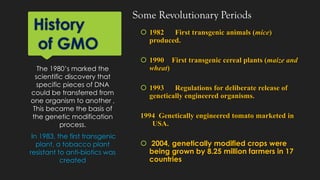
History
of GMO
 1982 First transgenic animals (mice)
produced.
 1990 First transgenic cereal plants (maize and
wheat)
 1993 Regulations for deliberate release of
genetically engineered organisms.
1994 Genetically engineered tomato marketed in
USA.
 2004, genetically modified crops were
being grown by 8.25 million farmers in 17
countries
The 1980’s marked the
scientific discovery that
specific pieces of DNA
could be transferred from
one organism to another ,
This became the basis of
the genetic modification
process.
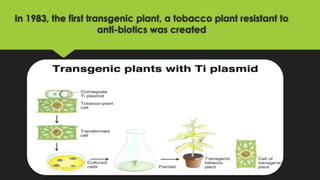
In 1983, the first transgenic
plant, a tobacco plant
resistant to anti-biotics was
created
Some Revolutionary Periods
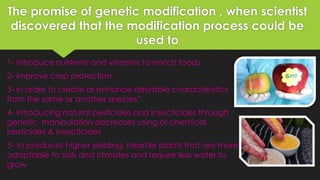
The promise of genetic modification , when scientist
discovered that the modification process could be
used to
1- introduce nutrients and vitamins to enrich foods
2- improve crop protection
3- in order to create or enhance desirable characteristics
from the same or another species”
4- introducing natural pesticides and insecticides through
genetic manipulation decreases using of chemical
pesticides & insecticides
5- to produces higher yielding, heartier plants that are more
adaptable to soils and climates and require less water to
grow
In 1983, the first transgenic plant, a tobacco plant resistant to
anti-biotics was created
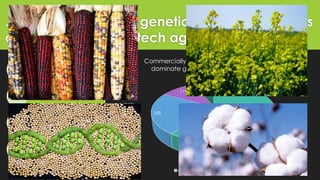
. Commercially, four genetically modified crops
dominate global biotech agriculture
soybeans
accounting for 60% of GM
crop area
maize accounting for
23% of GM crop area
cotton accounting
for 11% of GM crop area
canola accounting
for 6% of GM crop area
60%
23%
11%
6%
Commercially, four genetically modified crops
dominate global biotech agriculture100%
soybean maize cotton canola
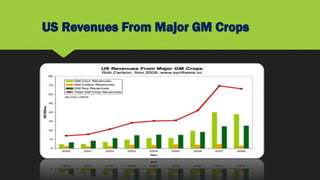
US Revenues From Major GM Crops
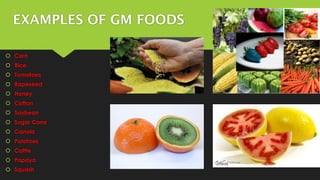
EXAMPLES OF GM FOODS
 Corn
 Rice
 Tomatoes
 Rapeseed
 Honey
 Cotton
 Soybean
 Sugar Cane
 Canola
 Potatoes
 Cattle
 Papaya
 Squash
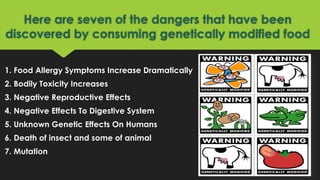
Here are seven of the dangers that have been
discovered by consuming genetically modified food
1. Food Allergy Symptoms Increase Dramatically
2. Bodily Toxicity Increases
3. Negative Reproductive Effects
4. Negative Effects To Digestive System
5. Unknown Genetic Effects On Humans
6. Death of insect and some of animal
7. Mutation
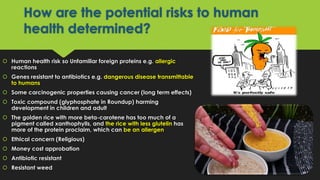
How are the potential risks to human
health determined?
 Human health risk so Unfamiliar foreign proteins e.g. allergic
reactions
 Genes resistant to antibiotics e.g. dangerous disease transmittable
to humans
 Some carcinogenic properties causing cancer (long term effects)
 Toxic compound (glyphosphate in Roundup) harming
development in children and adult
 The golden rice with more beta-carotene has too much of a
pigment called xanthophylls, and the rice with less glutelin has
more of the protein proclaim, which can be an allergen.
 Ethical concern (Religious)
 Money cost approbation
 Antibiotic resistant
 Resistant weed
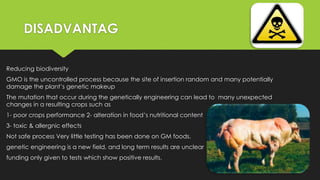
DISADVANTAG
Reducing biodiversity
GMO is the uncontrolled process because the site of insertion random and many potentially
damage the plant’s genetic makeup
The mutation that occur during the genetically engineering can lead to many unexpected
changes in a resulting crops such as
1- poor crops performance 2- alteration in food’s nutritional content
3- toxic & allergnic effects
Not safe process Very little testing has been done on GM foods.
genetic engineering is a new field, and long term results are unclear
funding only given to tests which show positive results.
Environmental problem
According EPA investigation
GMF
Increase use of pesticide and herbicide that is effect the wildlife
Gm dose not help the Clemet changes
GMO also depend in the nitrogen fertilizer which increase the greenhouse
gases
glyphosate depletes soil quality by killing the natural nutrients and organisms
that are necessary for plant development leading to plant diseases ,
glyphosate is highly invasive and can mixed with rain , air ,water soil and
ground water
Economic Effects
Genetically modified crops
may also lead to beneficial
economic effects
- Increased crop yield and
quality
- Subsequently increased
profit
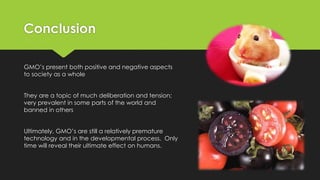
Conclusion
GMO’s present both positive and negative aspects
to society as a whole
They are a topic of much deliberation and tension;
very prevalent in some parts of the world and
banned in others
Ultimately, GMO’s are still a relatively premature
technology and in the developmental process. Only
time will reveal their ultimate effect on humans.
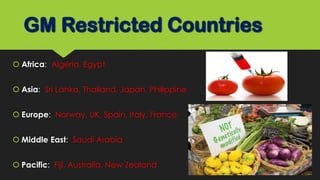
GM Restricted Countries
 Africa: Algeria, Egypt
 Asia: Sri Lanka, Thailand, Japan, Philippine
 Europe: Norway, UK, Spain, Italy, France
 Middle East: Saudi Arabia
 Pacific: Fiji, Australia, New Zealand
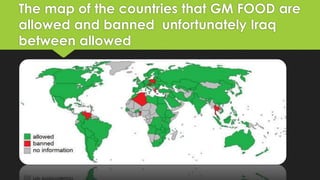
The map of the countries that GM FOOD are
allowed and banned unfortunately Iraq
between allowed
Genetically modified organisms gmo gmf

Genetically modified organisms gmo gmf

  • 1.
    GMF Genetically Modify Food PREPEREDBY: MOHAMMED AHMED Akreyi
  • 2.
    GENETICALLY MODIFIED ORGANISMS Geneticallymodified organisms (GMOs) we can define it as organisms in which the genetic material (DNA) has been altered in a way that does not occur naturally. The technology is often called “modern biotechnology “genetic engineering”. It allows selected individual genes to be transferred from one organism into another, also between non-related species.
  • 3.
    History of GMO  1982First transgenic animals (mice) produced.  1990 First transgenic cereal plants (maize and wheat)  1993 Regulations for deliberate release of genetically engineered organisms. 1994 Genetically engineered tomato marketed in USA.  2004, genetically modified crops were being grown by 8.25 million farmers in 17 countries The 1980’s marked the scientific discovery that specific pieces of DNA could be transferred from one organism to another , This became the basis of the genetic modification process. In 1983, the first transgenic plant, a tobacco plant resistant to anti-biotics was created Some Revolutionary Periods
  • 4.
    The promise ofgenetic modification , when scientist discovered that the modification process could be used to 1- introduce nutrients and vitamins to enrich foods 2- improve crop protection 3- in order to create or enhance desirable characteristics from the same or another species” 4- introducing natural pesticides and insecticides through genetic manipulation decreases using of chemical pesticides & insecticides 5- to produces higher yielding, heartier plants that are more adaptable to soils and climates and require less water to grow
  • 5.
    In 1983, thefirst transgenic plant, a tobacco plant resistant to anti-biotics was created
  • 6.
    . Commercially, fourgenetically modified crops dominate global biotech agriculture soybeans accounting for 60% of GM crop area maize accounting for 23% of GM crop area cotton accounting for 11% of GM crop area canola accounting for 6% of GM crop area 60% 23% 11% 6% Commercially, four genetically modified crops dominate global biotech agriculture100% soybean maize cotton canola
  • 7.
    US Revenues FromMajor GM Crops
  • 8.
    EXAMPLES OF GMFOODS  Corn  Rice  Tomatoes  Rapeseed  Honey  Cotton  Soybean  Sugar Cane  Canola  Potatoes  Cattle  Papaya  Squash
  • 9.
    Here are sevenof the dangers that have been discovered by consuming genetically modified food 1. Food Allergy Symptoms Increase Dramatically 2. Bodily Toxicity Increases 3. Negative Reproductive Effects 4. Negative Effects To Digestive System 5. Unknown Genetic Effects On Humans 6. Death of insect and some of animal 7. Mutation
  • 10.
    How are thepotential risks to human health determined?  Human health risk so Unfamiliar foreign proteins e.g. allergic reactions  Genes resistant to antibiotics e.g. dangerous disease transmittable to humans  Some carcinogenic properties causing cancer (long term effects)  Toxic compound (glyphosphate in Roundup) harming development in children and adult  The golden rice with more beta-carotene has too much of a pigment called xanthophylls, and the rice with less glutelin has more of the protein proclaim, which can be an allergen.  Ethical concern (Religious)  Money cost approbation  Antibiotic resistant  Resistant weed
  • 11.
    DISADVANTAG Reducing biodiversity GMO isthe uncontrolled process because the site of insertion random and many potentially damage the plant’s genetic makeup The mutation that occur during the genetically engineering can lead to many unexpected changes in a resulting crops such as 1- poor crops performance 2- alteration in food’s nutritional content 3- toxic & allergnic effects Not safe process Very little testing has been done on GM foods. genetic engineering is a new field, and long term results are unclear funding only given to tests which show positive results.
  • 12.
    Environmental problem According EPAinvestigation GMF Increase use of pesticide and herbicide that is effect the wildlife Gm dose not help the Clemet changes GMO also depend in the nitrogen fertilizer which increase the greenhouse gases glyphosate depletes soil quality by killing the natural nutrients and organisms that are necessary for plant development leading to plant diseases , glyphosate is highly invasive and can mixed with rain , air ,water soil and ground water
  • 13.
    Economic Effects Genetically modifiedcrops may also lead to beneficial economic effects - Increased crop yield and quality - Subsequently increased profit
  • 14.
    Conclusion GMO’s present bothpositive and negative aspects to society as a whole They are a topic of much deliberation and tension; very prevalent in some parts of the world and banned in others Ultimately, GMO’s are still a relatively premature technology and in the developmental process. Only time will reveal their ultimate effect on humans.
  • 15.
    GM Restricted Countries Africa: Algeria, Egypt  Asia: Sri Lanka, Thailand, Japan, Philippine  Europe: Norway, UK, Spain, Italy, France  Middle East: Saudi Arabia  Pacific: Fiji, Australia, New Zealand
  • 16.
    The map ofthe countries that GM FOOD are allowed and banned unfortunately Iraq between allowed