Genetic variation
VS
Environmental variation
By group 1: Justin, Sandra, Albert,
Jack, Phoebe, Jaizy
Table of content
These are the topics we will talk about in the presentation!
Variation What is variation and what causes it?
Genetic variation Explanations about genetic variation and what causes it
Environmental variation Explanations about environmental variation and what causes it
Effects of the variation How the 2 variations can affect on humans with examples
 Any differences between cells, individual organisms, or groups of organisms of
any species are called variation.
 Variation may be shown in physical appearance, behaviors, learning, mental
ability, and other obvious or measurable characteristics.
 There are two types of variation: genetic variation and environmental
variation.

What is variation and what causes it?
 Genetic variation is caused by the difference in DNA sequences between
individuals within a population.
 Genetic variation in a group of organisms enables some organisms to survive
better than others in the environment in which they live.
 A person’s skin color, hair color, dimples, freckles, and blood type are all
examples of genetic variation that can occur in a human population.
 In animals, genetic variation includes fur color, skin color, horns, and scales.
Genetic Variation
Causes of genetic variation
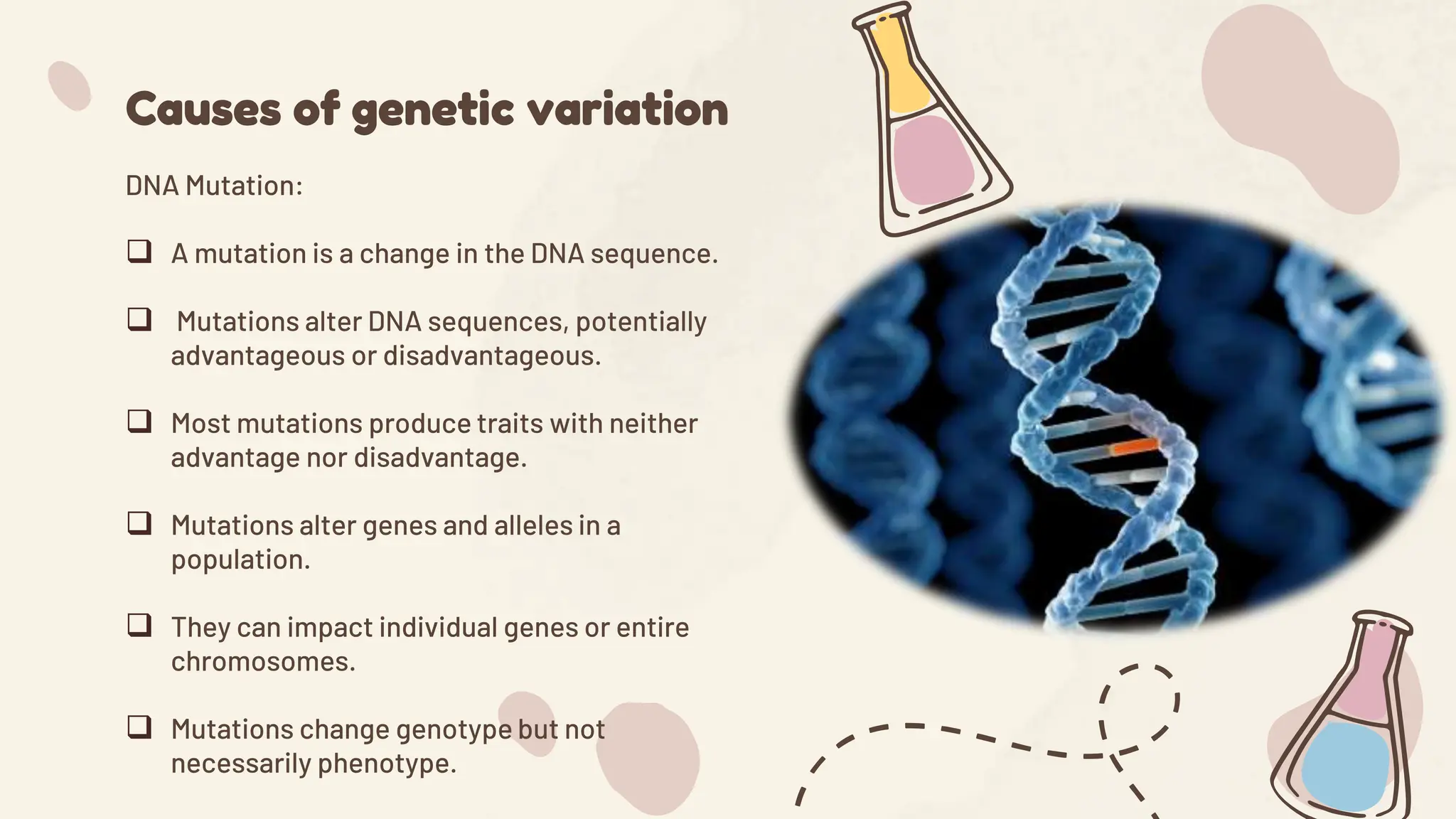
DNA Mutation:
 A mutation is a change in the DNA sequence.
 Mutations alter DNA sequences, potentially
advantageous or disadvantageous.
 Most mutations produce traits with neither
advantage nor disadvantage.
 Mutations alter genes and alleles in a
population.
 They can impact individual genes or entire
chromosomes.
 Mutations change genotype but not
necessarily phenotype.
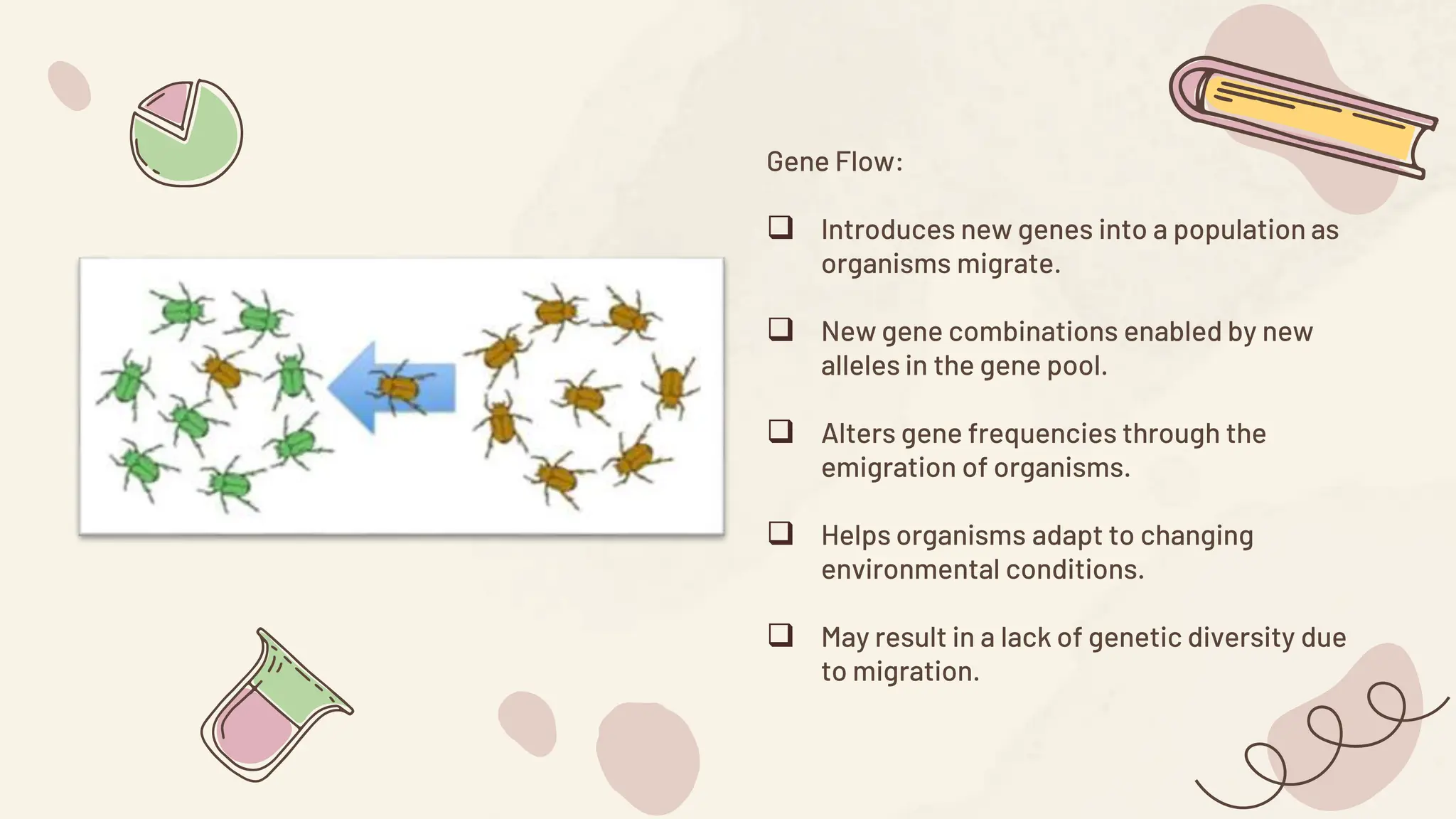
Gene Flow:
 Introduces new genes into a population as
organisms migrate.
 New gene combinations enabled by new
alleles in the gene pool.
 Alters gene frequencies through the
emigration of organisms.
 Helps organisms adapt to changing
environmental conditions.
 May result in a lack of genetic diversity due
to migration.
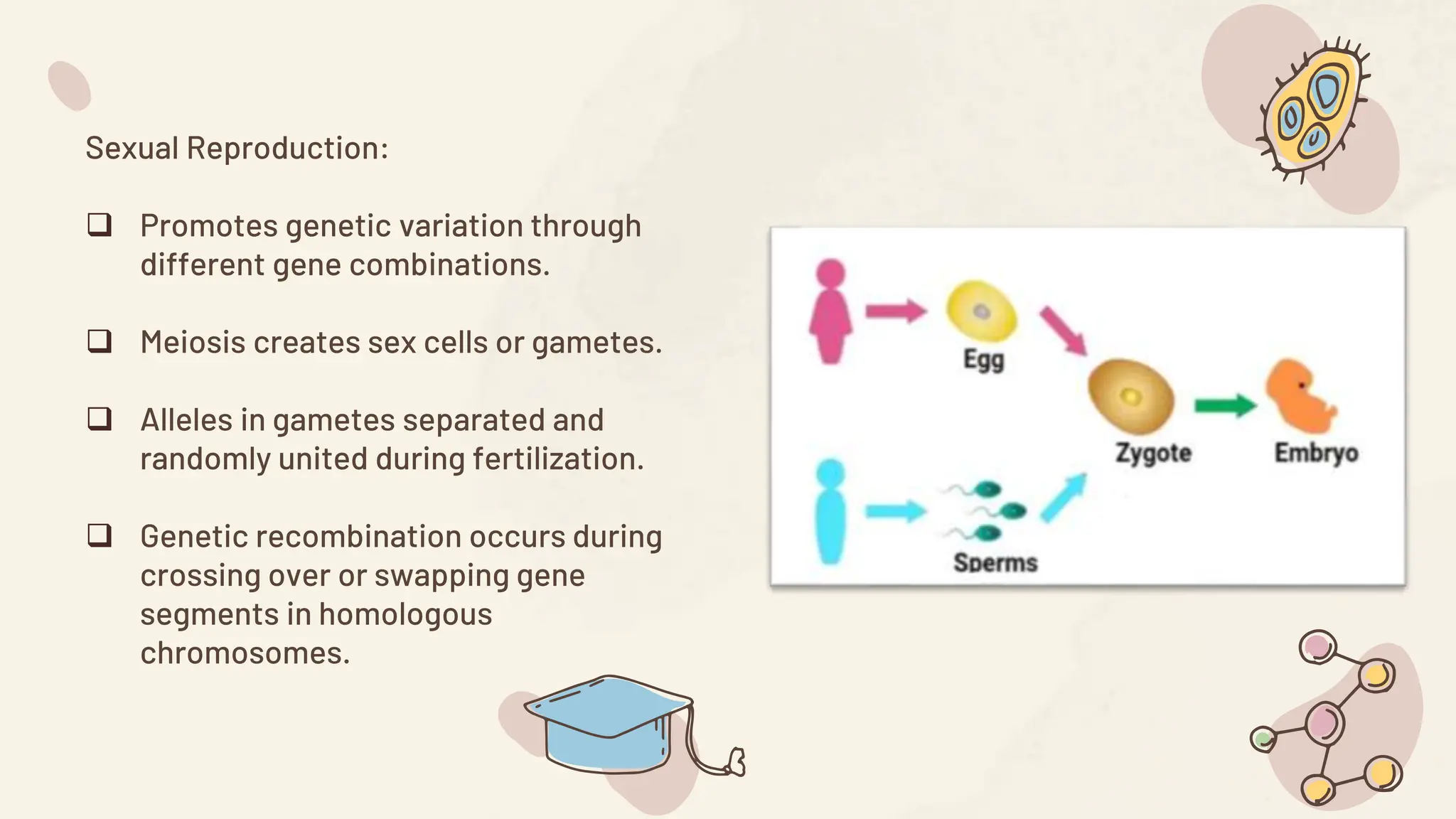
Sexual Reproduction:
 Promotes genetic variation through
different gene combinations.
 Meiosis creates sex cells or gametes.
 Alleles in gametes separated and
randomly united during fertilization.
 Genetic recombination occurs during
crossing over or swapping gene
segments in homologous
chromosomes.
 Environmental variations are differences between individuals that are not
inherited but caused by environmental factors.
 The length of your hair which you choose to grow.
 Scars caused by accidents personal to you.
 Muscle strength which depends on how much exercise you do is some kind of
environmental variation.
Environmental Variation
Causes of environmental variation
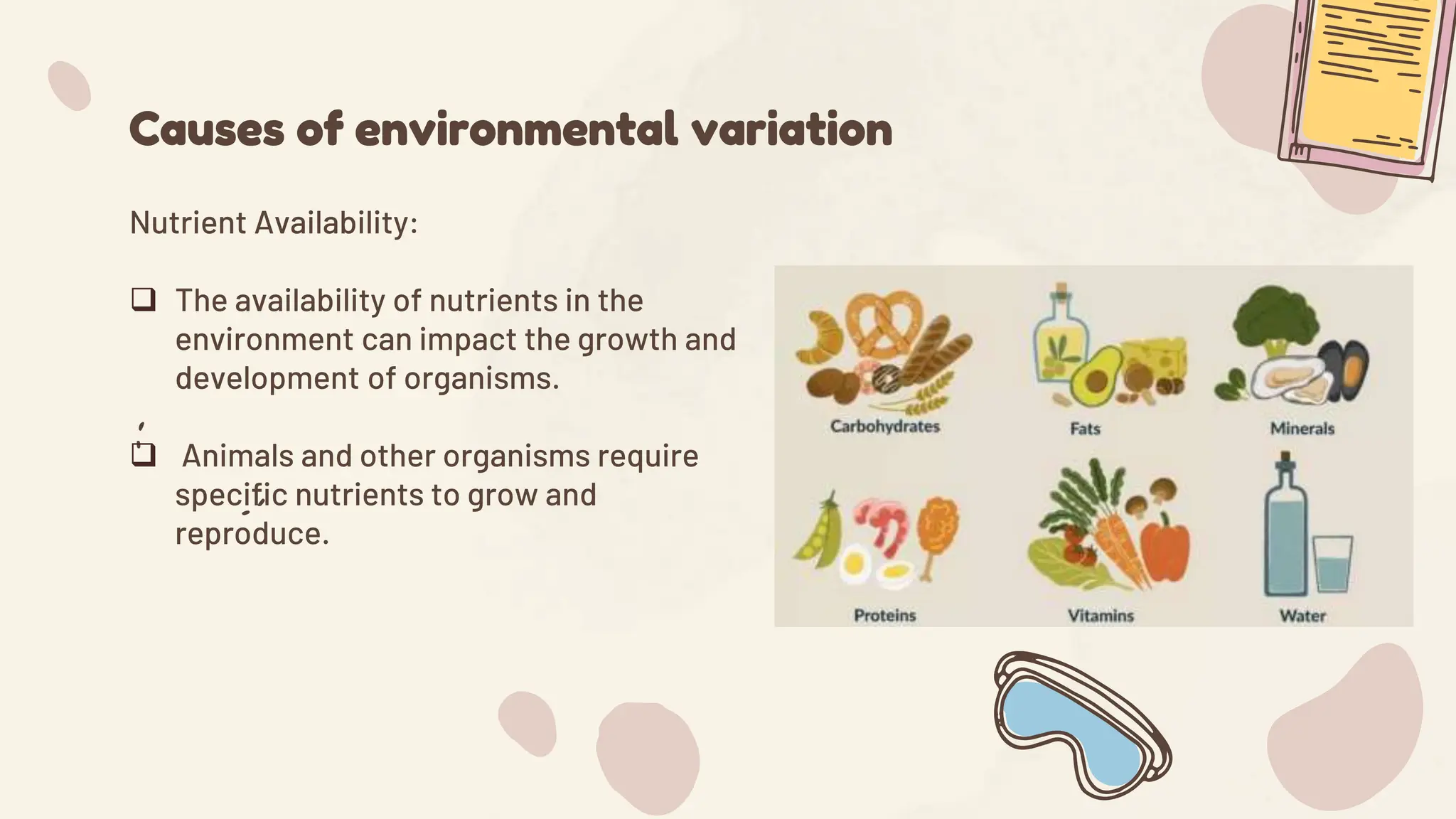
Nutrient Availability:
 The availability of nutrients in the
environment can impact the growth and
development of organisms.
 Animals and other organisms require
specific nutrients to grow and
reproduce.
 If any of these nutrients are not
available enough to meet the needs of
the organisms or population, the
chances of full growth are reduced.
 If that happens, organisms may
produce few or no offspring.
Temperature:
 The temperature in a particular
environment can affect the development
and expression of traits in the organisms.
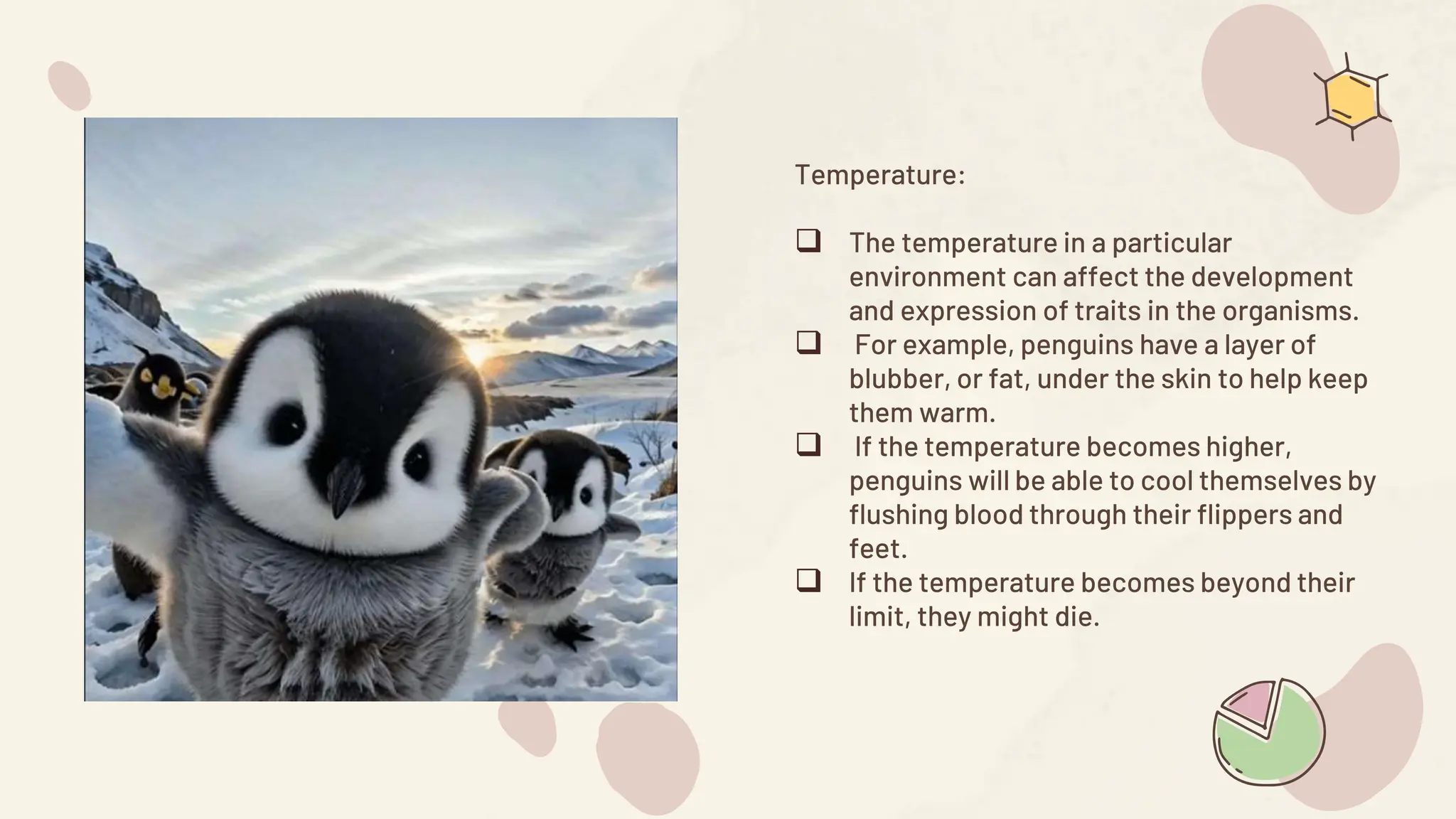
 For example, penguins have a layer of
blubber, or fat, under the skin to help keep
them warm.
 If the temperature becomes higher,
penguins will be able to cool themselves by
flushing blood through their flippers and
feet.
 If the temperature becomes beyond their
limit, they might die.
 Environmental factors come together in
many different combinations, and they
often influence one another.
 Imagine a person with a high-pressure job.
They may have high levels of stress
hormones and little time to eat healthy
meals. Together, these factors can their
risk for complex disease. But, maybe that
same person has a strong community to
help them cope with stress, and they live in
a city where they do a lot of walking. These
environmental factors could counteract
some of the negative ones.
Summary
Any differences between
cells, individual
organisms, or groups of
organisms of any species
are called variations.
Environmental variations
are differences between
individuals that are not
inherited but caused by
environmental factors.
Genetic Variation Environmental Variation
Main objectives
Jupiter is a gas giant and the biggest
planet in the Solar System. It's the
fourth-brightest object in the night sky.
It was named after the Roman god of the
skies and lightning
Despite being red, Mars is actually a cold
place. It's full of iron oxide dust, which
gives Mars its reddish cast
Venus has a beautiful name and is the
second planet from the Sun. It’s terribly
hot, even hotter than Mercury, and its
atmosphere is extremely poisonous. It’s
the second-brightest natural object in
the night sky after the Moon
Mercury is the closest planet to the Sun
and the smallest one of them all
Objective 1 Objective 2
Thank You!

Genetic variation vs environmental variation

  • 1.
    Genetic variation VS Environmental variation Bygroup 1: Justin, Sandra, Albert, Jack, Phoebe, Jaizy
  • 2.
    Table of content Theseare the topics we will talk about in the presentation! Variation What is variation and what causes it? Genetic variation Explanations about genetic variation and what causes it Environmental variation Explanations about environmental variation and what causes it Effects of the variation How the 2 variations can affect on humans with examples
  • 3.
     Any differencesbetween cells, individual organisms, or groups of organisms of any species are called variation.  Variation may be shown in physical appearance, behaviors, learning, mental ability, and other obvious or measurable characteristics.  There are two types of variation: genetic variation and environmental variation. What is variation and what causes it?
  • 4.
     Genetic variationis caused by the difference in DNA sequences between individuals within a population.  Genetic variation in a group of organisms enables some organisms to survive better than others in the environment in which they live.  A person’s skin color, hair color, dimples, freckles, and blood type are all examples of genetic variation that can occur in a human population.  In animals, genetic variation includes fur color, skin color, horns, and scales. Genetic Variation
  • 5.
    Causes of geneticvariation DNA Mutation:  A mutation is a change in the DNA sequence.  Mutations alter DNA sequences, potentially advantageous or disadvantageous.  Most mutations produce traits with neither advantage nor disadvantage.  Mutations alter genes and alleles in a population.  They can impact individual genes or entire chromosomes.  Mutations change genotype but not necessarily phenotype.
  • 6.
    Gene Flow:  Introducesnew genes into a population as organisms migrate.  New gene combinations enabled by new alleles in the gene pool.  Alters gene frequencies through the emigration of organisms.  Helps organisms adapt to changing environmental conditions.  May result in a lack of genetic diversity due to migration.
  • 7.
    Sexual Reproduction:  Promotesgenetic variation through different gene combinations.  Meiosis creates sex cells or gametes.  Alleles in gametes separated and randomly united during fertilization.  Genetic recombination occurs during crossing over or swapping gene segments in homologous chromosomes.
  • 8.
     Environmental variationsare differences between individuals that are not inherited but caused by environmental factors.  The length of your hair which you choose to grow.  Scars caused by accidents personal to you.  Muscle strength which depends on how much exercise you do is some kind of environmental variation. Environmental Variation
  • 9.
    Causes of environmentalvariation Nutrient Availability:  The availability of nutrients in the environment can impact the growth and development of organisms.  Animals and other organisms require specific nutrients to grow and reproduce.
  • 10.
     If anyof these nutrients are not available enough to meet the needs of the organisms or population, the chances of full growth are reduced.  If that happens, organisms may produce few or no offspring.
  • 11.
    Temperature:  The temperaturein a particular environment can affect the development and expression of traits in the organisms.  For example, penguins have a layer of blubber, or fat, under the skin to help keep them warm.  If the temperature becomes higher, penguins will be able to cool themselves by flushing blood through their flippers and feet.  If the temperature becomes beyond their limit, they might die.
  • 12.
     Environmental factorscome together in many different combinations, and they often influence one another.  Imagine a person with a high-pressure job. They may have high levels of stress hormones and little time to eat healthy meals. Together, these factors can their risk for complex disease. But, maybe that same person has a strong community to help them cope with stress, and they live in a city where they do a lot of walking. These environmental factors could counteract some of the negative ones.
  • 13.
    Summary Any differences between cells,individual organisms, or groups of organisms of any species are called variations. Environmental variations are differences between individuals that are not inherited but caused by environmental factors. Genetic Variation Environmental Variation
  • 14.
    Main objectives Jupiter isa gas giant and the biggest planet in the Solar System. It's the fourth-brightest object in the night sky. It was named after the Roman god of the skies and lightning Despite being red, Mars is actually a cold place. It's full of iron oxide dust, which gives Mars its reddish cast Venus has a beautiful name and is the second planet from the Sun. It’s terribly hot, even hotter than Mercury, and its atmosphere is extremely poisonous. It’s the second-brightest natural object in the night sky after the Moon Mercury is the closest planet to the Sun and the smallest one of them all Objective 1 Objective 2
  • 15.